

Note: This article contains affiliate links. If you click on these links and make a purchase, I may earn a small commission at no extra cost to you. This helps support my research and content. Read my full affiliate disclosure here.
When your 2008-2012 Honda Accord needs a catalytic converter, choosing the right unit affects emissions compliance, drivability, and long-term reliability. Fitment differences, converter cell design, and build quality influence whether the replacement clears the check engine light, restores proper oxygen sensor readings, and meets inspection standards.This guide covers six shortlisted catalytic converters selected for the 2008-2012 Accord platform. We summarize the reasons each style makes sense, explain the technical factors that matter, and outline what to expect during installation and post-repair diagnostics. Read on to understand the tradeoffs so you can pick the right converter for daily driving and emissions needs.
Looking for other parts? See all Honda Accord parts & accessories.
Top Picks at a Glance
| Best Overall The best all-around choice for most situations | ECHO AUTOMILES Catalytic Converter for Honda Accord/Acura TSX 2.4L (2008–2014) |  |
| Best Quality Built to a higher standard if you want something more solid | MagnaFlow 51441 Direct-Fit Catalytic Converter (stainless) |  |
| Best Value The sweet spot between price and what you get | SAROTIN Catalytic Converter Front Inner for 2.4L Honda Accord/Acura TSX (2008–2014) |  |
| Best Budget The cheapest option that still gets the job done reliably | PHILTOP Direct-Fit Catalytic Converter for 2008–2012 Honda Accord 2.4L |  |
| Highest Rated A top-rated pick with lots of positive feedback | FOMIUZY High Flow Front Catalytic Converter Kit for 2008–2012 Honda Accord 2.4L |  |
| Most Popular A crowd favorite that many people choose with confidence | SPEEDFusion Front Catalytic Converter for Honda Accord/TSX 2.4L (EPA Compliant) |  |
1. ECHO AUTOMILES Catalytic Converter for Honda Accord/Acura TSX 2.4L (2008–2014)

| Vehicle fitment | Honda Accord 2008–2012 L4 2.4L; Acura TSX 2009–2014 2.4L |
|---|---|
| Honeycomb cell count | 400-cell |
| Interchange part numbers | 641499, 642118 |
| Exterior | Polished |
This catalytic converter is a direct-replacement unit for 2.4L Honda Accord (2008–2012) and Acura TSX (2009–2014) applications and is packaged with the gaskets and hardware needed for installation. It uses a 400-cell honeycomb substrate and a high precious-metal loading intended to meet federal EPA emissions requirements while reducing backpressure so the engine retains close-to-factory power and fuel economy. Typical use is bolt-in replacement during an emissions or exhaust repair; several buyers report an OEM-like fit and improved drivability after install. Practical benefits include the included hardware and a design that tolerates high temperature and long service. Notable limitations are mixed reports on fitment precision and hardware quality, so some installations may require reusing original studs or minor adjustments. Also it is restricted from sale or installation in certain states, so check local regulations before buying.
Best for: Buyers who want a balanced, factory-style replacement that restores emissions compliance and keeps drivability close to stock without paying for an OEM unit.
Less Ideal for: Drivers in states with stricter local emissions regulations or those who need a perfect plug-and-play OEM match without any fitment tweaks should consider alternatives.
- Direct-fit design for 2.4L Accord and TSX applications to simplify installation
- 400-cell honeycomb substrate aimed at balancing flow and catalytic efficiency
- Includes gaskets, studs and hardware so fewer extra parts are needed
- Engineered to meet federal EPA emissions standards for reliable pollutant conversion
- Some customers report inconsistent hardware and minor fitment adjustments may be required
- Not eligible for sale or installation in several states due to local emissions rules
Verdict: A cost-conscious, EPA-compliant direct-replacement catalytic converter that restores emissions function and near-factory performance for 2.4L Accords and TSXs.
2. MagnaFlow 51441 Direct-Fit Catalytic Converter (stainless)

| Brand | MagnaFlow Exhaust Products |
|---|---|
| Model | 51441 |
| Exterior | Stainless Steel |
| OEM Part Number | 18190-R41-L01 |
| Compliance | Federal/EPA compliant |
This MagnaFlow 51441 is a direct-fit replacement catalytic converter built to match factory performance for 2008–2012 Honda Accord applications. It uses 3D-scanned, spun-body construction with laser fusion welding and includes the gaskets and hardware needed for a straightforward install, so it is suitable for DIY mechanics or professional shops. The stainless-steel manifold, mandrel-bent pipework, and flex-pipe help resist corrosion and reduce vibration while preserving exhaust flow and thermal efficiency. Because it is EPA compliant it meets federal emissions rules for OBDII-registered vehicles, but it is explicitly not for sale in some states with separate certification requirements. Expect a near-OEM fit and function with fewer leaks from the flared receivers and integrated O2 port locations, and a build aimed at longevity compared with cheaper replacements. The main limitations are regulatory fitment in states that require CARB certification and the need to confirm exact vehicle compatibility before ordering.
Best for: Drivers who want a performance-minded, long-lasting factory-replacement catalytic converter for a 2008–2012 Accord and prioritize flow and durability over lowest cost.
Less Ideal for: Drivers in states that require California/CARB certification or those needing a converter specifically certified for CARB compliance.
- Direct-fit design based on 3D scanning for accurate alignment with factory mounting points
- Stainless-steel spun-body and laser-fusion welds improve corrosion resistance and reduce leak risk
- Includes gaskets and hardware to simplify installation and avoid reusing corroded parts
- Mandrel-bent piping and flex-pipe preserve exhaust flow and reduce vibration
- Not CARB certified so cannot be used or sold in some states with stricter emissions rules
Verdict: Choose this MagnaFlow 51441 when you want a durable, performance-oriented direct-fit replacement that restores factory-level emissions control and improved exhaust flow for 2008–2012 Honda Accord applications.
3. SAROTIN Catalytic Converter Front Inner for 2.4L Honda Accord/Acura TSX (2008–2014)

| Compatible engines | 2.4L |
|---|---|
| Fitment years | Accord 2008-2012; TSX 2009-2014 |
| Body material | 409 stainless steel |
| Substrate material | Cordierite ceramic carrier |
| O2 sensor ports | 2 |
This SAROTIN front inner catalytic converter is a bolt-on direct replacement for 2.4L Honda Accord (2008–2012) and Acura TSX (2009–2014) engines, intended to clear P0420 codes and restore emissions control. It ships with two O2 sensor ports, a flex pipe, and the necessary gaskets and hardware so most installs require no cutting or welding; some vehicles may need minor heat shield or bracket adjustments. The unit uses a cordierite ceramic carrier and a 409 stainless steel shell and the listing emphasizes higher precious-metal catalyst content for improved conversion and longer life compared with basic aftermarket cores. Being EPA and OBD2 compliant means it is legal in most states and will address check-engine light issues tied to emissions performance, but it is not CARB compliant so it cannot be used in California or Colorado. Fitment reports are mostly positive with many buyers noting stock-like fit and reduced noise, though a few users reported leaks or fitment follow-up needed. Professional installation is recommended if you are not experienced with exhaust work.
Best for: Buyers who want a practical, lower-cost replacement that restores emissions function and avoids dealer prices while keeping installation straightforward and mostly bolt-on.
Less Ideal for: Drivers in CARB-regulated states or anyone needing a certified California-compliant converter should look for a CARB-approved unit instead.
- Direct bolt-on design with included gaskets and hardware reduces installation time for most cars
- EPA and OBD2 compliant so it will clear emissions-related check-engine codes in non-CARB states
- Two O2 sensor ports and flex pipe included for a closer match to factory routing
- Constructed from 409 stainless steel with a cordierite substrate and higher precious-metal catalyst content for better conversion and potentially longer life
- Not CARB compliant so it cannot be used in California or Colorado
Verdict: A practical direct-replacement catalytic converter that restores emissions control and fits 2.4L Accord/TSX models while saving money versus dealer units.
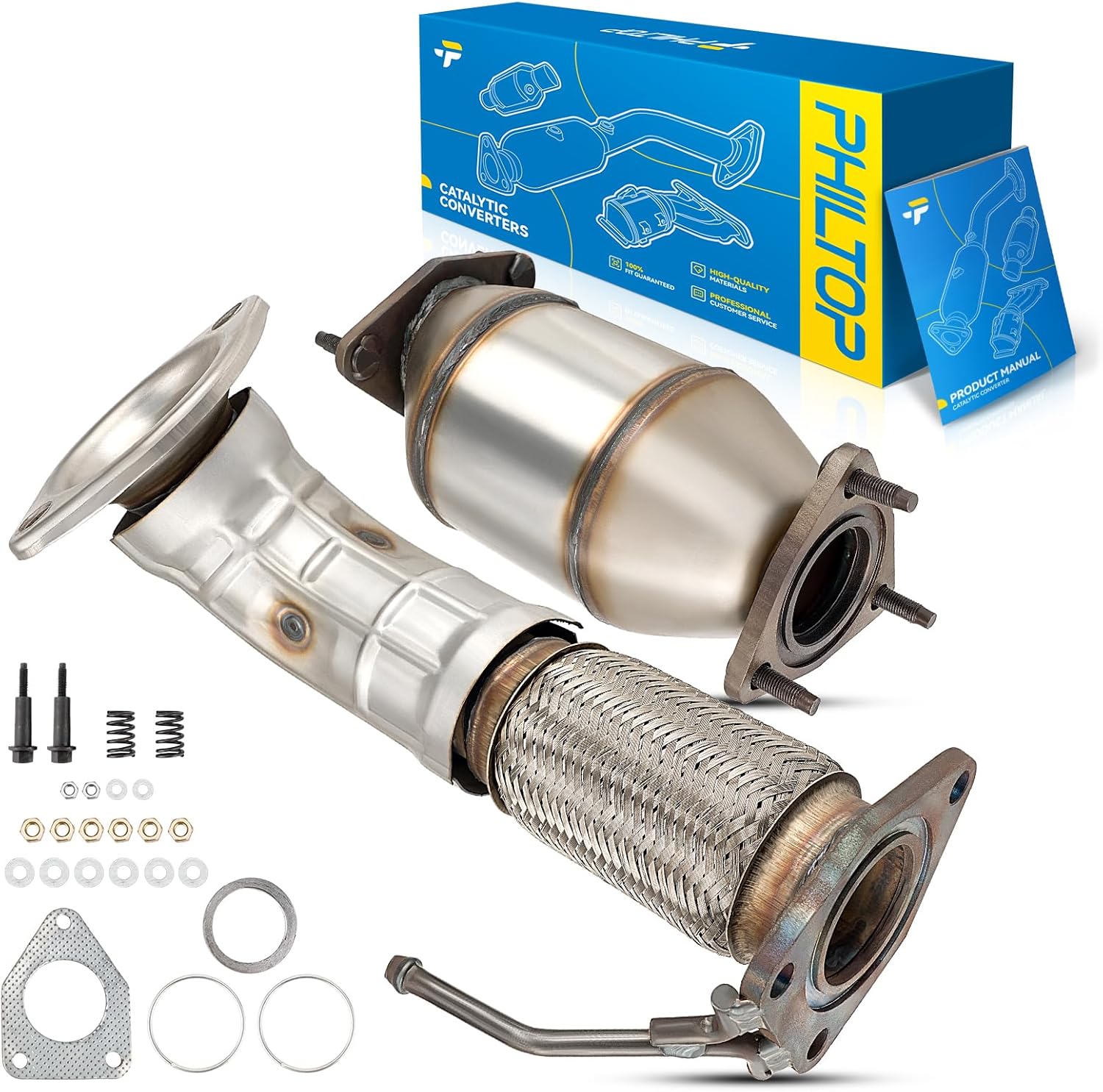
4. PHILTOP Direct-Fit Catalytic Converter for 2008–2012 Honda Accord 2.4L
| Compatible engines | 2.4L Honda Accord and TSX models listed |
|---|---|
| Position | Rear |
| Manufacturer part number | 8529EXP292TUS |
| OEM part numbers referenced | 642118,28176,41016 |
| EPA compliance | Federal emissions (not CARB) |
This PHILTOP catalytic converter is a bolt-on replacement intended for 2008–2012 Honda Accord 2.4L engines and some 2009–2014 TSX 2.4L models. It uses a high-flow ceramic honeycomb substrate treated with rare-earth stabilizer to resist heat and extend service life, and the listing says it includes OE-style gaskets and hardware for a 3–4 hour install without modification. In practice the unit aims to restore emissions control, reduce rattling from a failed converter, and lower backpressure compared with a clogged core, which can help engine response. Fit reports are mixed: many buyers found a perfect direct fit while others needed minor trimming, different clamps, or welding to achieve a leak-free joint. The converter is labeled EPA approved for federal emissions but not for California, New York, or Maine. If you want a budget-friendly factory-style replacement that can be installed by a competent DIYer or independent shop, this unit delivers core functionality, though you should verify fit for your exact VIN and be prepared to address small fitment or clamp quality issues during installation.
Best for: Buyers looking to replace a failed converter on a tight budget and willing to confirm fitment by VIN or handle minor installation adjustments themselves.
Less Ideal for: Drivers in states with stricter emissions rules or anyone who needs a guaranteed drop-in part without any possibility of additional fitting work.
- Direct-fit design with included OE-style gaskets and hardware for bolt-on installation
- High-flow ceramic honeycomb substrate aimed at reducing backpressure and improving catalytic efficiency
- EPA-compliant federal emissions model suitable for non-California-registration vehicles
- Manufacturer claims enhanced heat resistance and extended service life via rare-earth stabilizer
- Many buyers report straightforward installation and correct fitment when matched to VIN
- Some customers reported imperfect fit requiring additional clamps, trimming, or welding to seal connections
- Not approved for use in California, New York, or Maine emissions-controlled registrations
Verdict: A cost-conscious, factory-style replacement that restores emissions control and largely bolts on for DIY or shop installation when you verify fitment first.
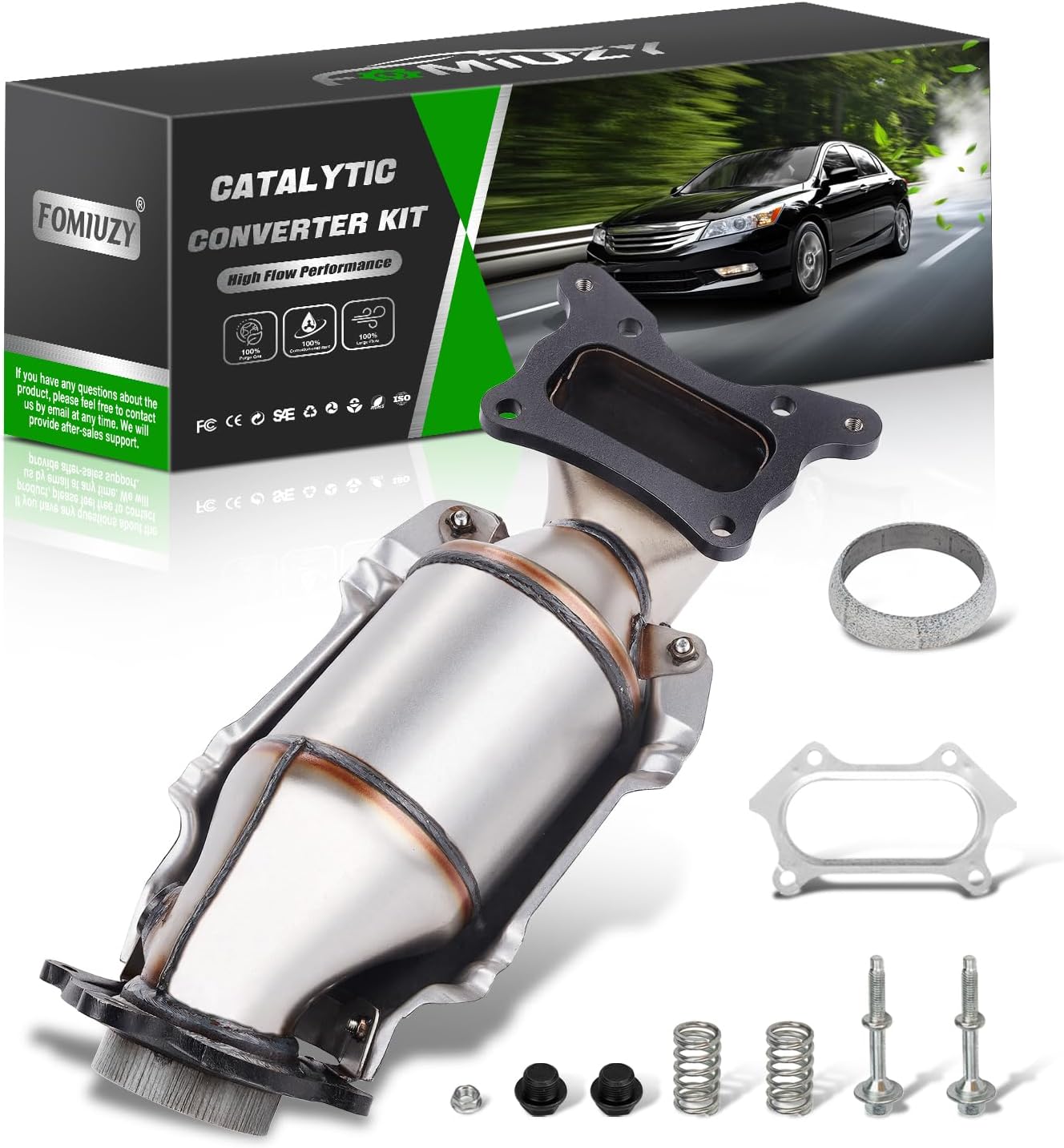
5. FOMIUZY High Flow Front Catalytic Converter Kit for 2008–2012 Honda Accord 2.4L
| Fitment | 2008–2012 Honda Accord 2.4L |
|---|---|
| Material | Stainless steel body with aluminized pipes |
| Carrier | Double-layer high-temperature ceramic |
| Included | 1 catalytic converter kit |
This FOMIUZY kit is a direct replacement front catalytic converter intended to clear P0420 codes and restore proper emissions on 2008–2012 Honda Accord 2.4L cars. It installs in place of the factory unit and is designed to bolt up and be welded for a better seal. The stainless/aluminized construction and a double-layer ceramic carrier aim to increase flow and surface area, which can improve throttle response and fuel economy compared with a clogged original. Buyers will appreciate that the part is sold as a single kit with hardware and is tested to meet factory-spec standards. Practical limitations include occasional reports of fragile oxygen-sensor wiring and mixed experiences with the manufacturer warranty process, so expect to verify sensor fit and have a mechanic check connections during installation. It is not approved for sale in certain states with stricter emissions rules.
Best for: Buyers who prioritize restoring reliable emissions performance and drivability on a 2008–2012 Accord 2.4L without paying dealer prices will find this direct replacement option practical.
Less Ideal for: Drivers in states with tougher emissions requirements or those who need a factory-certified OEM part should look for emissions-compliant or dealer-sourced alternatives.
- Direct-fit design for 2008–2012 Accord 2.4L that simplifies installation
- Stainless/aluminized piping and high-temperature ceramic carrier for corrosion resistance and improved flow
- Sold as a complete kit with mounting hardware for a one-part replacement
- Designed to resolve P0420 check-engine codes and restore emissions performance
- Not legal for sale in some states with stricter emissions regulations
- Some customers reported weak oxygen-sensor wiring and inconsistent warranty support
Verdict: A cost-effective direct-fit replacement that restores emissions function and improves exhaust flow for 2008–2012 Accord 2.4L owners seeking dependable repair without dealer pricing.
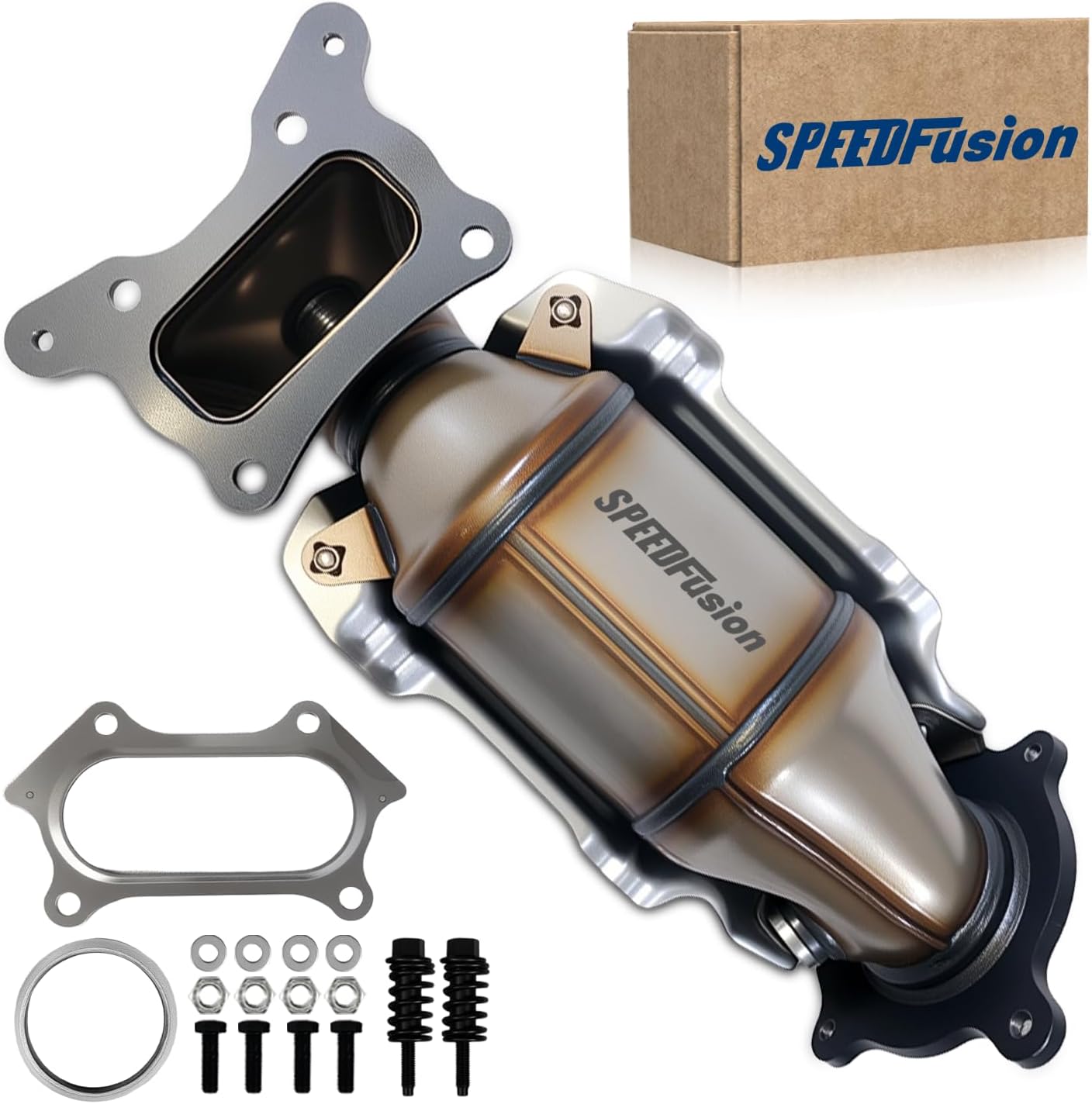
6. SPEEDFusion Front Catalytic Converter for Honda Accord/TSX 2.4L (EPA Compliant)
| Position | Front |
|---|---|
| Vehicle fitment | Honda Accord 2008-2012 2.4L; TSX 2009-2014 2.4L |
| Material | 409L stainless steel |
| Substrate | OEM-grade 400-hole ceramic with Pt/Rh/Pd coating |
| Compliance | EPA compliant (not CARB) |
This SPEEDFusion front catalytic converter replaces the factory front unit on 2.4L L4 Accords (2008–2012) and TSX (2009–2014). It is a direct fit intended for professional or experienced DIY installation and uses a stainless steel shell with an OEM-grade ceramic substrate coated with platinum, rhodium, and palladium to improve conversion efficiency. The unit is EPA compliant for vehicles that meet federal standards and is constructed with 409L stainless steel and anti-core-detachment welding for durability in typical driving conditions. In practice it should keep the check engine light related to catalyst efficiency from appearing when the original converter has failed and restore emissions performance close to factory levels. Important limitations are that it is not CARB compliant so it cannot be used where California-style regulations apply, and proper installation by a shop is recommended to avoid fitment or sensor issues. SPEEDFusion backs the part with structural and emissions-period warranties for added reassurance.
Best for: Buyers who want a practical, factory-style replacement that restores emissions performance on federal-compliant Accords and prioritize proven construction and warranty coverage.
Less Ideal for: Drivers who live in states that require CARB-compliant parts or those seeking an aftermarket performance-oriented catalytic upgrade.
- Direct-fit replacement for 2008–2012 Honda Accord and 2009–2014 TSX 2.4L reducing installation complexity
- EPA compliant for federal emissions standards where applicable
- OEM-grade 400-hole ceramic substrate with precious metal coating for improved catalytic conversion
- 409L stainless steel construction and reinforced welding designed for durability
- Includes structural and emissions-period warranties for buyer protection
- Not compliant with CARB or California-style state regulations so illegal to install in those states
Verdict: A factory-style, EPA-compliant front converter that restores emissions performance for 2008–2012 Accord 2.4L drivers who need a reliable direct-fit replacement.
Choosing the Right 2008-2012 Honda Accord Catalytic Converter: Key Factors to Consider
Fitment and Exhaust Geometry
Correct fitment is the single most important factor for the 2008-2012 Honda Accord. The Accord's exhaust routing and flange locations vary between engine and trim packages, so a direct-fit converter that matches factory bolt patterns and sensor ports reduces installation time and the need for cutting or adapter pipes.
Mismatched geometry can lead to exhaust leaks, poor sealing at flanges, and stress on downstream components. Selecting a converter that aligns with the Accord's factory hangers and pipe diameters also helps maintain proper exhaust backpressure, which affects throttle response and emission control.
Substrate Type and Catalyst Loading
The internal substrate—usually a ceramic honeycomb or metallic foil—determines how effectively exhaust gases contact the catalytic coating. Higher catalyst loading and an appropriate cell density improve conversion of hydrocarbons, carbon monoxide, and NOx, which is crucial for the Accord to meet emissions checks.
However, very dense substrates can increase backpressure. For the Accord, balance is key: a substrate that provides sufficient catalytic surface area without excessive restriction preserves engine performance and avoids triggering driveability complaints.
Oxygen Sensor Compatibility
The 2008-2012 Accord uses upstream and downstream oxygen sensors to monitor catalyst efficiency and engine mixture. A replacement converter must include the correct sensor bung locations and thread types to preserve accurate sensor readings.
Incorrect sensor placement or missing bungs will cause false oxygen sensor voltages and likely trigger the check engine light. Ensuring proper sensor positioning also aids in pass/fail emissions testing by allowing the ECU to monitor catalyst operation as designed.
Construction Quality and Corrosion Resistance
Exposure to road salt, moisture, and thermal cycling makes construction quality vital for long service life. Look for durable welds, robust flanges, and corrosion-resistant materials around the converter body and inlet/outlet sections.
Poor construction can cause premature leaks or structural failure. For owners of 2008-2012 Accords in regions with winter conditions, rust-resistant finishes and thicker metal casings help the converter survive seasonal corrosion and extend time between replacements.
Backpressure and Engine Performance
Catalytic converters introduce some restriction to exhaust flow. Excessive backpressure can reduce power and throttle response, especially at low rpm. For the Accord, maintain a converter design that minimizes restrictive flow while still offering effective catalytic conversion.
Consider how your driving habits influence the acceptable tradeoff. Daily commuters who prioritize low-end responsiveness may prefer a less restrictive core, while drivers needing strict emissions control may tolerate slightly higher backpressure for better conversion efficiency.
Legal and Emissions Compliance
Depending on local regulations, catalytic converter replacements often must meet specific emissions requirements. Choosing a unit with documented emissions performance and correct catalyst loading helps ensure the Accord will pass inspections.
Some converters are certified to particular standards; others are intended for off-road use only and are not legal for street-driven vehicles. Verify that the replacement is appropriate for road use and inspection in your jurisdiction to avoid future compliance issues.
Understanding Catalytic Converter Types
Catalytic converters for the 2008-2012 Accord fall into a few broad internal designs, each with implications for performance and longevity. Ceramic substrates provide a rigid honeycomb core with a larger surface area for catalyst washcoat, while metallic substrates offer greater thermal shock resistance and faster light-off in cold conditions.
Knowing the tradeoffs helps you choose a converter that matches your priorities. If emissions compliance in colder starts is critical, a design that heats up quickly can reduce cold-start emissions and the likelihood of a check engine light related to catalyst efficiency.
- Ceramic cores: high surface area, can be more fragile if exposed to impact
- Metallic cores: durable under thermal stress, usually better at withstanding rapid temperature changes
- High catalyst loading: improves conversion but may increase backpressure
Sensor Bungs and Wiring Considerations
The Accord's diagnostic system relies on correctly located oxygen sensors. Confirm that replacement converters provide bungs in the exact locations used by your model year and engine variant. Thread size and boss position affect whether the stock sensors can be reused without modification.
If sensor extensions or replacements are required, plan for routing and heat protection to avoid premature sensor damage. Proper wiring and heat shielding prevent false codes and ensure the ECU receives accurate feedback from the exhaust stream.
- Check upstream and downstream bung positions before ordering
- Ensure thread types match stock sensors to avoid adapters
- Use heat-resistant wiring and secured routing to prevent chafing
Installation: What to Expect
Direct-fit converters for the 2008-2012 Accord are typically bolted into place using factory-style flanges and hangers. Expect a service time that varies with rust and accessibility; seized bolts or corroded flanges can extend the job. Having penetrating fluid, replacement gaskets, and the correct torque specifications on hand reduces the chance of leaks after installation.
In some cases, slight trimming of exhaust pipes or use of couplers may be necessary for perfect alignment. If you plan to perform the swap yourself, confirm the kit includes the proper hardware and check sensor bung locations before beginning.
- Bring replacement gaskets and anti-seize for sensor threads
- Inspect hangers and rubber mounts for wear while the system is down
- Have a shop press or cutting tools available if modifications are required
Diagnosing Converter Problems on the Accord
Common symptoms of catalytic converter issues include persistent check engine light codes related to catalyst efficiency, reduced fuel economy, and a noticeable change in exhaust smell. On the 2008-2012 Accord, the ECU uses downstream oxygen sensor feedback to detect inefficient conversion, which often generates a P0420-style error when the converter is not performing as expected.
A thorough diagnosis looks at upstream sensor readings, fuel trim values, and possible upstream causes like misfires or oil burning that can damage the catalyst. Replacing the converter without fixing root causes can lead to repeat failure, so address engine health and sensor function before concluding the converter is the primary issue.
- Look for persistent diagnostic trouble codes referencing catalyst efficiency
- Check for intermittent misfires and oil or coolant contamination
- Use live sensor data to compare upstream versus downstream oxygen readings
Maintenance Tips to Extend Converter Life
Routine engine maintenance directly impacts catalytic converter longevity. Keep ignition and fuel systems in good condition to avoid unburned fuel reaching the converter, which can overheat and damage the substrate. Regular oil and coolant checks prevent contamination that degrades catalyst performance.
Avoid prolonged idling with a rich running condition and address check engine lights promptly to limit exposure to conditions that accelerate converter wear. Properly securing heat shields and inspecting for physical damage also helps prevent external damage that can compromise the unit.
- Resolve misfires and fuel system faults quickly
- Monitor oil and coolant levels to prevent contamination
- Inspect undercarriage for impact damage after road debris strikes
Still looking for the perfect fit?
Select your Honda Accord configuration to see the most relevant Catalytic Converters recommendations
How We Chose the Best 2008-2012 Honda Accord Catalytic Converter
We applied focused, vehicle-specific filters to narrow the field to catalytic converters suitable for 2008-2012 Honda Accord models. Priority criteria included direct fitment to the Accord exhaust geometry across the 2008 through 2012 model years, compatibility with the factory oxygen sensor locations, and adherence to emission control standards relevant to this generation. Durability factors reviewed were substrate material and construction methods that affect lifespan under typical driving conditions and exposure to road contaminants.Performance considerations emphasized backpressure characteristics and flow rating to avoid drivability issues or loss of low-end response. Ease of installation was evaluated by flange design, weld quality, and whether the unit supports bolt-on replacement without extensive pipe modification. Noise and heat shielding were considered where applicable to prevent heat soak of nearby components.Excluded from consideration were universal-fit components that require significant fabrication, and any units lacking clear fitment documentation for the 2008-2012 Accord. We did not weigh brand popularity alone; instead, documented fit, construction details, and emissions performance were the decisive factors.
Our full evaluation process is outlined in our review methodology.
FAQ
What are the common catalytic converter symptoms on a 2008-2012 Accord?
Owners often see a check engine light related to catalyst efficiency, reduced fuel economy, or a rotten-egg exhaust smell. Symptoms usually appear after upstream issues like misfires or oil burning have occurred.
Will replacing the catalytic converter turn off the check engine light immediately?
Sometimes the light clears quickly, but the ECU may need a few drive cycles to confirm improved catalyst efficiency. If the light persists, verify upstream sensors and engine health since those problems can keep the code active.
Can I reuse the stock oxygen sensors when installing a replacement converter?
You can usually reuse the stock sensors if the replacement provides correctly located bungs and matching thread types. Inspect sensor condition first; degraded sensors should be replaced to ensure accurate readings.
How do I know if my Accord's converter is simply clogged or permanently damaged?
A clogged converter often causes increased backpressure and reduced performance, while a damaged substrate may rattle or fail efficiency tests. Diagnostic checks of exhaust backpressure and live oxygen sensor data help distinguish between clogging and irreversible catalyst failure.
Is a direct-fit converter better than a universal unit for my Accord?
Direct-fit converters that match the Accord's flanges and sensor locations usually simplify installation and reduce the chance of leaks. Universal units may require fabrication and can introduce fitment uncertainties.
What maintenance reduces the risk of early converter failure?
Timely oil and coolant service, prompt repair of ignition or fuel system faults, and addressing any fluid leaks help protect the converter. Avoiding sustained rich running conditions also extends catalyst life.
Final Verdict
For the 2008-2012 Honda Accord, prioritize a catalytic converter that matches factory fitment, provides the correct sensor positions, and balances catalyst loading with acceptable backpressure. Address underlying engine issues before replacement to prevent repeat failures. By focusing on proper fit, durable construction, and documented emissions performance, you can restore compliant operation and maintain drivability for years of service.
Explore More:
- Check out all Honda Accord parts & accessories
- Explore Catalytic Converters Maintenance & Repair Guides
- Explore Exhaust & Emissions
- Browse all Auto Parts
