
Note: This article contains affiliate links. If you click on these links and make a purchase, I may earn a small commission at no extra cost to you. This helps support my research and content. Read my full affiliate disclosure here.
If you own a 1998-2002 Honda Accord you know the catalytic converter is critical to keeping the exhaust system running cleanly and preventing check-engine codes. Replacing a failing converter restores proper emissions control, helps the engine run more smoothly, and can prevent failed emissions inspections.This guide covers six shortlisted catalytic converters chosen for fitment and emissions performance for the 1998-2002 Accord. We evaluated compatibility, construction, and regulatory compliance so you can pick an option that fits your Accord and addresses common failure symptoms. Read on to see the factors that matter and practical steps for a confident replacement.
Looking for other parts? See all Honda Accord parts & accessories.
Top Picks at a Glance
| Best Overall The best all-around choice for most situations | ABysmauto Direct-Fit Catalytic Converter for 1998–2002 Honda Accord 2.3L |  |
| Best Quality Built to a higher standard if you want something more solid | Walker CalCat Direct-Fit Catalytic Converter (CARB Compliant) |  |
| Best Budget The cheapest option that still gets the job done reliably | Uni-Links Catalytic Converter Direct Fit for 1998–2002 Honda Accord 2.3L with Gasket Kit |  |
| Highest Rated A top-rated pick with lots of positive feedback | Walker CalCat 82996 Direct-Fit Catalytic Converter |  |
| Most Popular A crowd favorite that many people choose with confidence | DNA MOTORING Factory-Style Catalytic Converter Rear Replacement for 98-02 Honda Accord |  |
| Best Seller A high-volume bestseller chosen again and again | ECHO AUTOMILES Catalytic Converter for Honda Accord 1998–2002 2.3L L4 |  |
1. ABysmauto Direct-Fit Catalytic Converter for 1998–2002 Honda Accord 2.3L

| Fitment | 1998–2002 Honda Accord 2.3L L4 |
|---|---|
| Construction | Stainless steel shell |
| Emissions | EPA compliant (federal only) |
| Includes | Gaskets and mounting bolts |
| Warranty | 1-year |
This ABysmauto catalytic converter is a direct-fit replacement for the 2.3L four-cylinder Accord, designed to bolt onto the existing exhaust without cutting or welding. It is typically used to replace a failed or clogged converter to restore emissions control and prevent emission-related check engine lights. Notable features include a stainless steel shell for corrosion resistance, EPA federal compliance for most states, and a hardware kit with gaskets and mounting bolts to simplify installation. For DIYers and shops this reduces installation time and avoids trips for extra parts. In real-world use it should restore smoother idle and reduce exhaust odor while meeting emissions testing in states that accept federal-only converters. Limitations are the exclusion from California, Colorado, New York, and Maine registered vehicles and the one-year warranty which may be shorter than some factory-quality replacements. Buyers should confirm local emissions rules before purchasing and expect professional installation if access or rusted fasteners complicate fitment.
Best for: Buyers who want a straightforward, vehicle-specific replacement that restores emissions performance and avoids fabrication work, with an emphasis on reliable fit and easier installation.
Less Ideal for: Drivers in states that require California or state-specific certified converters or those who need a longer parts warranty should look for alternative options.
- Direct bolt-on design for 1998–2002 Honda Accord 2.3L minimizes installation work
- Includes gaskets and mounting bolts so no extra hardware is needed
- Stainless steel shell resists rust and high exhaust temperatures for longer life
- Meets federal EPA emissions standards for use outside restricted states
- Not legal for use in California, Colorado, New York, or Maine registered vehicles
Verdict: If you need a straight bolt-on replacement to restore emissions control on a 1998–2002 Accord 2.3L without welding, this unit gives a ready-to-install, rust-resistant solution.
2. Walker CalCat Direct-Fit Catalytic Converter (CARB Compliant)

| Manufacturer | Walker Exhaust |
|---|---|
| Model | Catalytic Converter |
| Manufacturer Part Number | 81767 |
| CARB EO Number | D-182-45 |
The Walker CalCat B009EKR55U is a direct-fit catalytic converter made to replace the factory unit on compatible 1998–2002 Honda Accords without fabrication. It installs using OE-style hangers, flanges and heat shields so most professional shops and experienced DIYers can bolt it in place and reuse existing mounting points. The unit is CARB approved under EO# D-182-45 for states that require California-compliant parts and uses a high-technology washcoat and precise catalyst coating to deliver consistent emissions control. Construction combines a stainless-steel body with aluminized pipe and thick flanges for corrosion resistance and durability. Be prepared to source gaskets and fasteners separately since bolts and gaskets are not included and heavily rusted original hardware can complicate removal. Also verify the exact emissions class required by your vehicle; some buyers report differences for ULEV-designated cars that need specific listings. For drivers wanting a factory-style, smog-capable replacement that focuses on emissions compliance and durability, this model is a solid choice.
Best for: Buyers who prioritize a factory-style, emissions-compliant replacement for a 1998–2002 Honda Accord and want a durable direct-fit unit they can install with basic mechanical skills or have fitted by a shop.
Less Ideal for: People looking for a universal or performance-enhancing high-flow converter beyond factory emissions specifications or those who need a specific ULEV-class unit without confirming fitment notes.
- Direct-fit design with OE-style hangers and flanges for straightforward bolt-on installation
- CARB compliant (EO# D-182-45) suitable for states that require California-standard replacement converters
- Stainless-steel body with aluminized pipe and heat shields for improved durability and corrosion resistance
- High-technology washcoat and precise catalyst coating for consistent emissions performance
- Does not include gaskets, nuts, or bolts so additional parts must be purchased before installation
- Rusted or seized factory hardware can make removal difficult and may require replacement fasteners
Verdict: Choose this Walker CalCat when you want a durable, CARB-compliant direct-fit replacement that restores factory emissions performance on 1998–2002 Honda Accords.
3. Uni-Links Catalytic Converter Direct Fit for 1998–2002 Honda Accord 2.3L with Gasket Kit

| Vehicle fitment | 1998–2002 Honda Accord 2.3L |
|---|---|
| Housing material | Stainless steel |
| Substrate | Ceramic |
| Installation | Flange-to-flange bolt-on with gasket kit |
| Compliance | EPA compliant (federal) |
This Uni-Links catalytic converter is a bolt-on, flange-to-flange replacement intended for the 1998–2002 Honda Accord 2.3L. It uses a ceramic substrate in a stainless steel housing with laser seam welding and a chromium-alloy coating to resist heat and corrosion. The unit is designed as a high-flow, free-flow converter so it can improve exhaust flow and help restore torque and acceleration compared with a clogged old converter. Installation is simplified by the included full accessory kit of gaskets and hardware and the bolt-on connections. It is marketed as EPA compliant for federal emissions standards and targeted at drivers needing a direct replacement to pass emissions inspections and resolve related diagnostic codes. Practical limitations are that some buyers report the check-engine light may persist if downstream sensors or learned codes were not addressed, and the unit cannot be shipped to certain states due to local regulations. Expect a straightforward mechanical swap but allow for sensor checks and possible reprogramming after installation.
Best for: Buyers looking for an affordable, direct-replacement catalytic converter to get a 1998–2002 Accord back to roadworthy and compliant with federal emissions standards, prioritizing a straightforward mechanical swap over premium branded options.
Less Ideal for: Drivers in states with stricter emissions regulations or anyone who needs a guaranteed fix for persistent diagnostic codes without addressing sensors or ECU adaptations first.
- Direct-fit flange-to-flange design with bolt-on connections for straightforward installation
- Includes full gasket and hardware kit so no additional parts are typically needed
- Stainless steel housing with laser welding and chromium-alloy coating for improved corrosion and heat resistance
- High-flow ceramic substrate intended to improve exhaust flow and restore torque
- May not clear a check-engine light if sensors or stored codes remain unresolved
- Cannot be shipped to several states with stricter emissions laws
Verdict: A budget-focused, direct-fit replacement that restores exhaust flow and fits 1998–2002 Accord 2.3L without major modification.
4. Walker CalCat 82996 Direct-Fit Catalytic Converter

| Material Type | Stainless Steel |
|---|---|
| CARB EO Number | D-182-67 |
| Fitment Years | 1998-2002 Honda Accord |
| Direct-Fit | Yes |
The Walker CalCat 82996 is a direct-fit catalytic converter engineered to replace the factory unit on 1998–2002 Honda Accords without cutting or fabrication. It installs using OE-style hangers, flanges, brackets and heat shields so a professional or experienced DIYer can bolt it in place and retain stock routing. Constructed from stainless steel with aluminized pipe and an optimized washcoat, the converter is built to meet CARB requirements and deliver consistent emissions control on OBDII-equipped vehicles. In practice that means predictable catalytic performance and reduced regulatory risk in states with strict emissions rules. The CalCat emphasizes durability with thicker flanges and factory-like mounting points, but it is a vehicle-specific replacement rather than a universal performance upgrade. Buyers should expect a like-for-like emissions part focused on longevity and compliance rather than increased power or reduced weight.
Best for: Buyers who prioritize a reliable, regulation-compliant replacement that restores factory emissions control and fitment on 1998–2002 Accord models.
Less Ideal for: Drivers seeking increased exhaust flow or track-focused performance upgrades should look at performance-oriented aftermarket converters instead.
- CARB compliant for use in states with strict emissions rules
- Direct-fit design with factory-style hangers and flanges for straightforward installation
- Stainless-steel construction and aluminized pipe for corrosion resistance and durability
- Optimized washcoat and OE-style coating process for consistent emissions control
- Designed as a factory-equivalent replacement so it does not provide performance gains like flow-oriented aftermarket converters
Verdict: If you need a durable, CARB-compliant, direct-fit replacement to restore factory emissions control on a 1998–2002 Honda Accord, the Walker CalCat 82996 is the reliable choice.
5. DNA MOTORING Factory-Style Catalytic Converter Rear Replacement for 98-02 Honda Accord
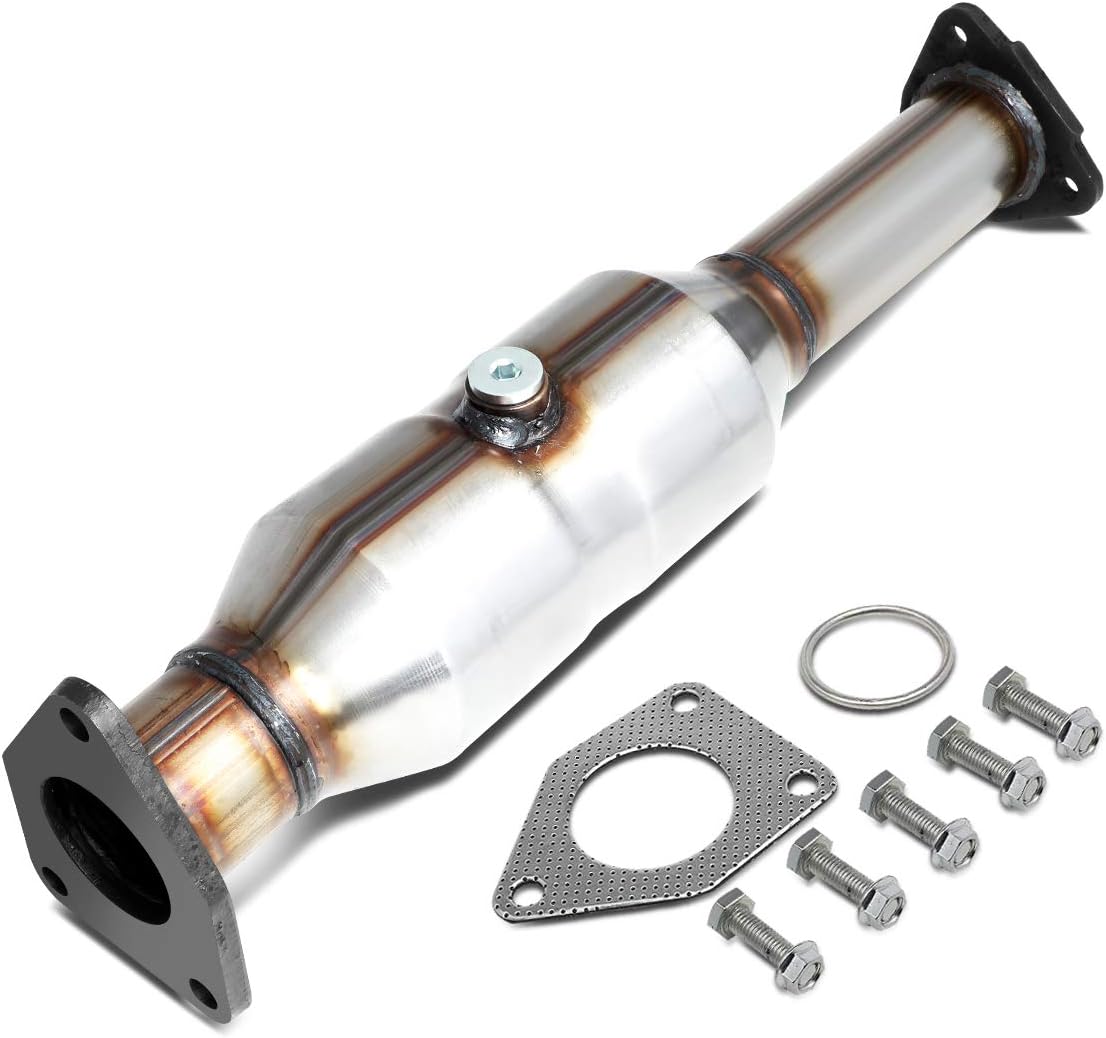
| Fitment | 1998–2002 Honda Accord 2.3 with side O2 sensor |
|---|---|
| Material | Stainless steel shell with catalyst core |
| Emissions approval | EPA OBD-II approved for federal models |
| Manufacturer | DNA MOTORING |
This DNA MOTORING catalytic converter is a direct-fit replacement intended for 1998–2002 Honda Accord 2.3 engines with the side O2 sensor. It installs in place of the factory unit and uses a stainless steel shell with mandrel bends and a catalytic core designed to restore emissions control and clear check-engine codes related to the converter. Typical use is replacing a failed or clogged converter to pass emissions testing and regain drivability. Buyers report the unit usually fits with little modification and resolves CEL issues, and the welded O2 bungs let you reuse sensors. Practical benefits include lower cost compared with dealer parts and a construction aimed at durability. Important limitations are occasional fitment and hardware mismatches that may require drilling, trimming, or different bolts, and some users have reported internal element issues after heavy use; professional installation is recommended. The unit is approved for federal emissions but is not legal for sale or use in California, New York, or Maine emissions models.
Best for: Buyers who want a budget-friendly, factory-style replacement that typically clears converter-related check-engine lights and restores emissions function while relying on peer experiences to confirm fit and performance.
Less Ideal for: Drivers who need a guaranteed OEM-level, long-term warranty-backed converter or who must meet California, New York, or Maine emissions regulations should look at certified state-legal alternatives or dealer units.
- Designed as a direct factory-style replacement for 98–02 Accord 2.3 so it often bolts into the stock location
- Stainless steel construction with mandrel bends for improved strength and flow compared with cheap patched units
- EPA OBD-II approval for federal emissions models means it can clear converter-related codes on compliant vehicles
- Lower cost than OEM dealer converters while aiming to restore power and conversion efficiency
- Welded O2 sensor bung allows reuse of existing upstream sensor in most installs
- Some listings and reviews note the supplied bolts, gasket thickness, or flange holes can be incorrect and require modification
- A few users reported internal catalyst instability or premature failure under heavy daily driving
- Not legal for sale or use in certain states with stricter emissions regulations
Verdict: A cost-conscious, factory-style replacement that usually fixes emissions faults and restores drivability for 98–02 Accord 2.3 owners when professional installation and minor fit adjustments are acceptable.
6. ECHO AUTOMILES Catalytic Converter for Honda Accord 1998–2002 2.3L L4

| Vehicle fitment | Honda Accord 1998-2002 2.3L L4 |
|---|---|
| Honeycomb cell count | 400-cell |
| Compliance | EPA compliant |
| Includes | Gaskets and hardware |
This ECHO AUTOMILES catalytic converter is a direct-replacement part made to fit the 1998–2002 Honda Accord with the 2.3L L4 engine and includes gaskets and hardware for installation. It uses a 400-cell honeycomb substrate with high precious-metal loading designed to reduce pollutants while keeping exhaust backpressure low so engine power and fuel economy are preserved. The unit is described as EPA compliant and intended to pass emissions tests when installed correctly, and the packaged gaskets simplify a like-for-like swap for a competent DIYer or shop. Limitations include state-specific sales restrictions that prevent use in California and Colorado and some other states, so buyers must confirm local rules before purchase. Also the listing does not include detailed fitment notes beyond the stated years and engine, so checking exact interchange numbers or comparing to the worn part is recommended to ensure a straightforward install.
Best for: A cautious buyer seeking a factory-style replacement that restores emissions control and keeps engine performance close to stock while avoiding complex modifications.
Less Ideal for: Do not choose this if you live in a state that bans aftermarket converters or if you need a part certified to that specific state's stricter emissions program.
- Designed as a direct-fit replacement for 1998–2002 Honda Accord 2.3L L4 with included gaskets and hardware
- 400-cell honeycomb substrate with high precious-metal loading for efficient pollutant conversion
- Engineered to be EPA compliant to help vehicles pass emissions tests
- High-flow structure reduces backpressure to help preserve engine performance and fuel economy
- Not eligible for sale or installation in California and Colorado and restricted in some other states
- Fitment guidance in the listing is limited to years and engine size so additional verification may be needed
Verdict: Choose this for a straightforward, EPA-compliant direct replacement that restores emissions performance for 1998–2002 Accord 2.3L engines.
Choosing the Right 1998-2002 Honda Accord Catalytic Converter: Key Factors to Consider
Exact Fitment And Flange Type
Exact fitment dictates whether the converter will install without modifications. For the 1998-2002 Accord, check inlet and outlet diameters, flange bolt pattern, and overall unit length. A correct match minimizes exhaust leaks and preserves proper sensor placement.
Incorrect flange type or mismatched pipe diameter often requires welding or adapters, increasing labor and potential for leaks. Confirm factory-style mounting points and oxygen sensor boss locations so you do not compromise emissions monitoring or trigger a persistent check-engine light.
Catalyst Substrate And Cell Density
The substrate material and cell density determine conversion efficiency and longevity. Converters with appropriate cell density for this Accord balance emissions reduction with acceptable exhaust flow. A substrate with too high density can increase backpressure, affecting throttle response and fuel trim on these engines.
Look for descriptions of ceramic or metallic substrates and reported cell counts; both have tradeoffs in durability and thermal tolerance. For a vehicle in this age range, a substrate that tolerates thermal cycling and road contaminants will reduce the risk of premature failure.
Emissions Compliance And Certification
Emissions-compliant converters are designed to meet regulatory limits applicable when the vehicle was sold. For a 1998-2002 Accord, confirm the unit is intended to address exhaust emissions requirements for your region. Certified units help ensure inspector tests do not fail due to poor conversion efficiency.
Non-compliant or universal-fit units may not restore original emissions performance, leaving you at risk of inspection failure or recurring diagnostic trouble codes tied to the catalyst. Check product specifications for statements about compliance rather than relying on vague marketing language.
Durability And Corrosion Resistance
Durability matters for long-term ownership and depends on shell gauge, weld quality, and protective coatings. Cars in this age range often face corrosion from road salt and moisture; a thicker shell and anti-corrosion finish reduce the chance of leaks developing.
Weld seams and mounting brackets should be robust enough to handle vibration and road impacts without cracking. Units with weak brackets or thin shells can fail prematurely, leading to exhaust leaks or dropped components that require another repair.
Oxygen Sensor Provision And Placement
Proper oxygen sensor provision and placement are essential for the engine control unit to monitor catalyst efficiency. The 1998-2002 Accord relies on upstream and downstream sensors in specific positions; replacements must allow the sensors to sit at the correct distance from the substrate.
If a converter lacks the correct sensor boss location or requires relocation, you can encounter false rich/lean readings and persistent check-engine light catalytic converter codes. Ensure the product specifies sensor boss locations that match the Accord's layout.
Installation Complexity And Serviceability
Installation complexity affects total repair time and cost. Direct-fit converters that match flange type and sensor placement typically install with basic hand tools and standard gaskets. Universal or weld-in units often need cutting, welding, or additional adapters.
Consider whether you have access to a lift, appropriate tools, or a repair shop comfortable with exhaust work on this model. Also assess serviceability—whether the unit can be easily removed for future servicing or replacement without needing major exhaust disassembly.
Common Catalytic Converter Symptoms On 1998-2002 Accords
Owners of 1998-2002 Accords may notice a range of symptoms when the catalytic converter begins to fail. Reduced power, poor fuel economy, a rotten-egg smell, or rattling from under the vehicle are common signs to monitor. Mechanical damage or substrate collapse can create a rattling noise that becomes more noticeable during acceleration.
A persistent check engine light related to catalyst efficiency is another frequent indicator. Fault codes often point to downstream oxygen sensor readings that do not change as expected, which signals reduced conversion efficiency. Addressing symptoms promptly helps prevent secondary engine or exhaust problems.
- Reduced engine power and sluggish acceleration
- Unusual exhaust odors such as sulfur or rotten eggs
- Rattling noise from under the vehicle during acceleration
- Persistent check-engine light tied to oxygen sensor or catalyst efficiency codes
Preparing Your Accord For Converter Replacement
Before purchasing a replacement, inspect the exhaust and surrounding components for rust, hangers, and heat shields that may need replacement at the same time. Ensuring hanger integrity reduces stress on flange connections and the new converter. Also verify oxygen sensor condition and wiring—faulty sensors can mask or mimic converter problems.
Gather the right tools and safety equipment, including jack stands, penetrating oil for seized bolts, and appropriate gaskets. If you plan to perform the replacement yourself, document the exhaust path and take photos of sensor locations to ensure accurate reinstallation.
- Inspect hangers, heat shields, and flange faces for corrosion
- Check oxygen sensor health and wiring connectors
- Have jack stands, penetrating oil, and correct gaskets on hand
- Take reference photos of sensor and flange orientation before removal
Emissions Testing And Post-Installation Checks
After installation, it is important to verify emissions performance and that no diagnostic trouble codes remain. Clear any pending codes and take the vehicle for a short drive cycle so the engine control unit can complete readiness checks. Monitor for the return of any check-engine light catalytic converter warnings.
If your region requires an emissions inspection, pre-test the vehicle to confirm the new converter is functioning as expected. A quick inspection of welds and flange seals after a few hundred miles can catch leaks that may develop as parts settle.
- Clear codes and complete a drive cycle to allow readiness monitors to set
- Visually inspect welds and flange gaskets after initial driving
- Pre-test for emissions inspections if applicable to your jurisdiction
When To Replace The Converter Versus Repairing The Exhaust
Deciding whether to replace the catalytic converter or repair adjacent exhaust components depends on the nature of the failure. Mechanical damage to the converter or a failed substrate typically requires replacement. Minor exhaust leaks at flange faces or damaged hangers can sometimes be repaired without replacing the converter.
Also consider the long-term condition of the exhaust system. If the piping and hangers are heavily corroded, replacing the converter while leaving adjacent failing components in place may not be a lasting solution. A holistic inspection helps determine whether a targeted repair or a broader exhaust service is the better investment.
- Replace if converter shows internal damage, substrate collapse, or persistent efficiency codes
- Repair flanges or hangers for isolated leaks when substrate is intact
- Replace adjacent corroded piping when long-term reliability is a concern
Still looking for the perfect fit?
Select your Honda Accord configuration to see the most relevant Catalytic Converters recommendations
How We Chose the Best 1998-2002 Honda Accord Catalytic Converter
Our shortlist focuses on candidates that meet the specific fitment and emissions needs of the 1998-2002 Honda Accord. We prioritized OEM-equivalent dimensions and inlet/outlet flanges to ensure direct fitment, and checked whether internal substrates and washcoat materials meet common emissions standards for this model year range. Durability criteria included shell thickness, weld quality, and corrosion-resistant coatings suited to varied climate exposure. Flow characteristics were considered to avoid excessive backpressure that can degrade drivability on this sedan's engine options.We also screened for converters designed to address common failure modes for these Accords, such as substrate degradation and oil/antifreeze contamination. Units lacking clear fitment specifications, or that required extensive custom fabrication, were excluded. Evaluation dimensions included fit accuracy, emissions performance, build quality, and expected longevity under normal driving conditions.
Our full evaluation process is outlined in our review methodology.
FAQ
How do I know if my 1998-2002 Accord catalytic converter is failing?
Common signs include reduced power, worsening fuel economy, a sulfur or rotten-egg smell, rattling noises from the converter, and a check-engine light with catalyst efficiency-related codes. A diagnostic scan that shows downstream oxygen sensor readings not changing under load often indicates reduced conversion efficiency.
Can I drive with a damaged catalytic converter on my Accord?
You can often drive short distances with a damaged converter but prolonged driving can harm engine performance and potentially cause other exhaust components to fail. Driving with a severely restricted converter can increase backpressure and risk engine damage, so address serious symptoms promptly.
Will replacing oxygen sensors fix a catalytic converter code?
Sometimes a faulty oxygen sensor will trigger codes that look like catalyst problems. Replacing a bad sensor can resolve the code if the substrate is still functioning. However, if the converter itself has lost conversion efficiency, sensor replacement alone will not clear catalyst-related codes.
Is a universal weld-in converter acceptable for a 1998-2002 Accord?
Universal weld-in units can be used but they often need precise cutting and welding to achieve correct sensor placement and flow characteristics. Direct-fit converters designed for the Accord typically reduce installation time and the risk of leaks, making them a more straightforward choice for most owners.
How long should a replacement catalytic converter last on this Accord?
Lifespan varies by driving conditions and exposure to contaminants, but a well-made converter installed in a corrosion-managed exhaust should last many years. Recurrent oil or coolant contamination, or harsh road conditions, will shorten service life and can cause premature failure.
Do I need to replace gaskets and hardware when installing a new converter?
Yes. Replacing gaskets, bolts, and any corroded hardware ensures a proper seal and reduces the likelihood of leaks. Using reused or damaged hardware increases installation risk and may necessitate further repairs.
Final Verdict
When selecting a catalytic converter for a 1998-2002 Honda Accord, prioritize exact fitment, proper oxygen sensor provision, and an internal substrate that balances emissions conversion with acceptable exhaust flow. Consider durability features like thicker shells and corrosion-resistant coatings if you drive in harsh conditions.Weighing these tradeoffs will help you choose a converter that restores emissions performance and engine behavior while minimizing installation complexity. Focus on products that clearly document fitment and emissions compliance so you can replace the unit confidently and get your Accord back to reliable operation.
Explore More:
- Check out all Honda Accord parts & accessories
- Explore Catalytic Converters Maintenance & Repair Guides
- Explore Exhaust & Emissions
- Browse all Auto Parts
