

Note: This article contains affiliate links. If you click on these links and make a purchase, I may earn a small commission at no extra cost to you. This helps support my research and content. Read my full affiliate disclosure here.
If you own a Honda Accord 2.4L and are facing reduced performance, failed emissions testing, or a persistent check engine light, choosing the right catalytic converter matters. The wrong unit can cause fitment headaches, trigger diagnostic trouble codes, or fail to reduce emissions effectively.This guide focuses on the top shortlisted catalytic converters specifically for the Honda Accord 2.4L. We examined units that prioritize correct fitment, durable construction, and verified emissions performance so you can pick an option that restores drivability and keeps exhaust emissions within required limits. Read on for the evaluation criteria and practical considerations before the product list.
Looking for other parts? See all Honda Accord parts & accessories.
Top Picks at a Glance
| Best Overall The best all-around choice for most situations | SAROTIN Rear Catalytic Converter for Honda Accord/Acura TSX 2.4L (EPA Compliant) |  |
| Best Quality Built to a higher standard if you want something more solid | Walker Ultra 16351 Direct-Fit Catalytic Converter |  |
| Best Value The sweet spot between price and what you get | ECHO AUTOMILES Catalytic Converter Compatible with Honda Accord 2.4L (2013–2017) |  |
| Best Budget The cheapest option that still gets the job done reliably | maXpeedingrods High Flow Catalytic Converter for Honda Accord 2.4L (2003–2007) |  |
| Highest Rated A top-rated pick with lots of positive feedback | MAC Front Upper Catalytic Converter with Gaskets for Honda Accord 2.4L (2013–2017) |  |
| Most Popular A crowd favorite that many people choose with confidence | FOMIUZY High-Flow Direct-Fit Front Catalytic Converter Kit for Honda Accord 2.4L |  |
| Best Seller A high-volume bestseller chosen again and again | FOMIUZY Front Catalytic Converter Kit for Honda Accord 2003–2007 2.4L |  |
1. SAROTIN Rear Catalytic Converter for Honda Accord/Acura TSX 2.4L (EPA Compliant)

| Fitment | Honda Accord 2008-2012, Acura TSX 2009-2013 2.4L |
|---|---|
| Material | 409 stainless steel with honeycomb ceramic substrate |
| Compliance | EPA compliant (not CARB) |
| Position | Front inner |
This SAROTIN catalytic converter is a direct-fit replacement designed to restore the emission control function on 2.4L Honda Accord and Acura TSX models without cutting or welding. It uses a honeycomb ceramic substrate coated with precious metals to catalyze harmful gases and is marketed as EPA compliant for federal emission-equipped vehicles. Typical use is straightforward: swap the failed unit, replace O2 sensors if prompted, and the converter should clear P0420 codes and reduce exhaust noise. The package includes the flex pipe and hardware in many cases which simplifies installation and can save shop time. Buyers should expect factory-style fitment and claimed 50k mile/5 year minimum service life. Limitations include lack of CARB approval so it is not legal in states that require CARB-compliant aftermarket parts, and some user reports note fitment or leakage issues after installation, so professional installation and inspection are recommended. Longevity will depend on driving conditions and proper upstream sensor function.
Best for: A practical buyer looking for an affordable, factory-style replacement to clear emissions codes and restore normal exhaust function on a 2.4L Accord or TSX, prioritizing straightforward installation and emissions compliance outside CARB states.
Less Ideal for: Drivers in states that require CARB-compliant parts or those who need a guaranteed factory-certified long-term warranty should look for a certified CARB unit or dealer-sourced part.
- Direct-fit design for Honda Accord 2008–2012 and Acura TSX 2009–2013 2.4L for straightforward installation
- Honeycomb ceramic substrate with precious metal coating to improve catalytic efficiency
- Sold as EPA compliant and intended to correct P0420 codes and reduce exhaust noise
- Often includes flex pipe, gaskets, and mounting hardware which reduces additional parts purchases
- Not CARB compliant so not legal for use in states that require CARB-approved aftermarket converters
- Some buyers reported post-installation leaks or fitment issues requiring additional work
Verdict: Choose this SAROTIN converter if you need an affordable, direct-fit EPA-compliant replacement to clear P0420 codes and restore emissions performance on a 2.4L Honda Accord or Acura TSX.
2. Walker Ultra 16351 Direct-Fit Catalytic Converter
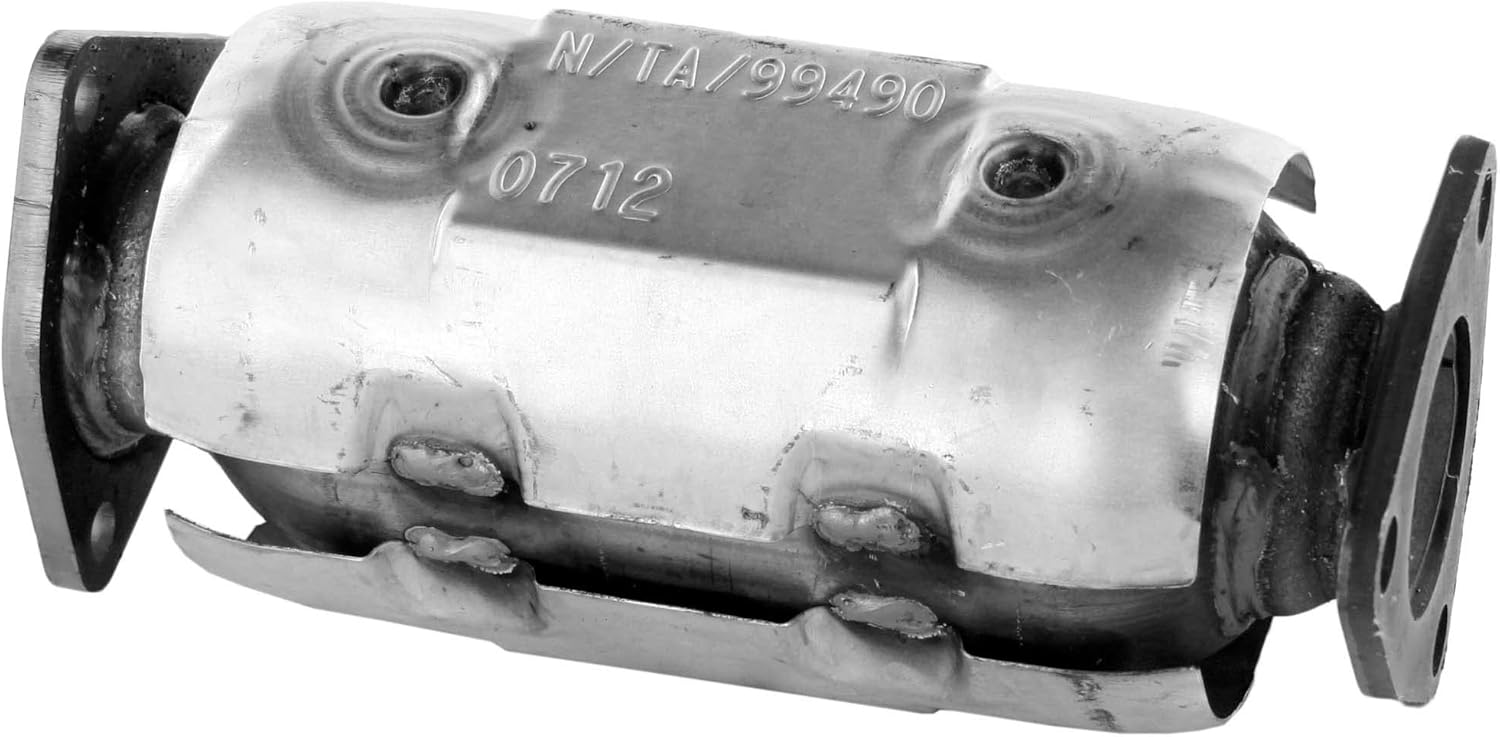
| Compatible with Vehicle Type | Car |
|---|---|
| Automotive Fit Type | Vehicle Specific Fit |
| Material Type | aluminum coated |
| Manufacturer Warranty Description | 25K Miles |
The Walker Ultra 16351 is a direct-fit catalytic converter designed as a factory-style replacement for affected Honda Accord 2.4L applications. It installs with OE-style hangers, flanges, brackets and heat shields so a competent technician can bolt it in without cutting or extensive fabrication. The internal washcoat and precious metal loading are configured to reduce tailpipe emissions to meet EPA requirements on OBDII vehicles while preserving exhaust flow for street-driven performance. Built with aluminized coatings and thick flanges, the unit aims for durability corrosive resistance compared with cheaper alternatives. In practice this makes it a sensible upgrade when you need a reliable, compliant replacement that keeps engine diagnostics and emissions systems functioning. Expect straightforward bolt-on installation in most matching Accord models, though checking exact fit notes for your year and trim is important because fitment varies across model years.
Best for: Buyers who prioritize a factory-quality, emissions-compliant replacement that restores proper exhaust flow and diagnostics on a Honda Accord 2.4L and want a mostly bolt-on solution.
Less Ideal for: If you are seeking a performance-focused race or high-flow aftermarket converter that ignores emissions compliance, this factory-style unit is not the right choice.
- Direct-fit design with OE-style hangers and flanges for bolt-on installation
- EPA-compliant for OBDII vehicles, maintaining emissions system function
- Factory-style heat shields and aluminized coating improve underbody protection and corrosion resistance
- Washcoat and precious metal load tuned to provide required emissions reduction while retaining exhaust flow
- Fitment can vary by year and trim so some vehicles may need minor adjustments or welding for final fit
Verdict: Choose the Walker Ultra 16351 when you need a dependable, factory-style catalytic converter that restores emissions compliance and bolt-on fitment for the Honda Accord 2.4L.
3. ECHO AUTOMILES Catalytic Converter Compatible with Honda Accord 2.4L (2013–2017)

| Compatible vehicles | Honda Accord 2013–2017 2.4L; Honda CR-V 2015–2016 2.4L |
|---|---|
| Substrate | 400-cell honeycomb |
| EPA compliance | Meets federal EPA standards |
| Includes | Gaskets and hardware |
This ECHO AUTOMILES catalytic converter is a direct-replacement unit designed to fit Honda Accord 2.4L models from 2013 through 2017 and some CR-V 2.4L applications without modification. It uses a 400-cell honeycomb substrate with a high precious-metal loading to reduce exhaust pollutants while keeping backpressure low so engine power and fuel economy are preserved. The kit includes the necessary gaskets and hardware for a straightforward swap, and the manufacturer claims EPA-compliant performance to help pass emissions tests. In real-world use expect similar exhaust flow and drivability to the factory unit and improved confidence at inspection time compared with worn converters. Limitations include state sale restrictions noted for California and Colorado and possible fitment differences for other model years or engine variants, so double-check interchange part numbers before ordering. Installation requires typical exhaust-handling tools and may be best handled by a shop if you are not experienced with underbody work.
Best for: Buyers wanting a straightforward, factory-style replacement that restores emissions performance and keeps exhaust flow and fuel economy close to stock for routine use and emissions testing.
Less Ideal for: Drivers in states with local emissions rules that restrict aftermarket converters or those who need a universal or performance-oriented converter for modified engines.
- Direct-fit design for specified Honda Accord 2.4L years for bolt-on installation
- 400-cell honeycomb substrate aimed at balancing filtration and exhaust flow
- Includes gaskets and hardware needed for replacement
- Designed to meet federal EPA emissions standards for reliable inspection performance
- Not eligible for sale or installation in some states including California and Colorado
- Fitment is limited to the listed years and engine; may not suit other Accord variants
Verdict: A direct-fit, EPA-compliant replacement that restores emissions control while preserving near-stock exhaust flow for Accord 2.4L owners focused on practical, hassle-minimizing repairs.
4. maXpeedingrods High Flow Catalytic Converter for Honda Accord 2.4L (2003–2007)
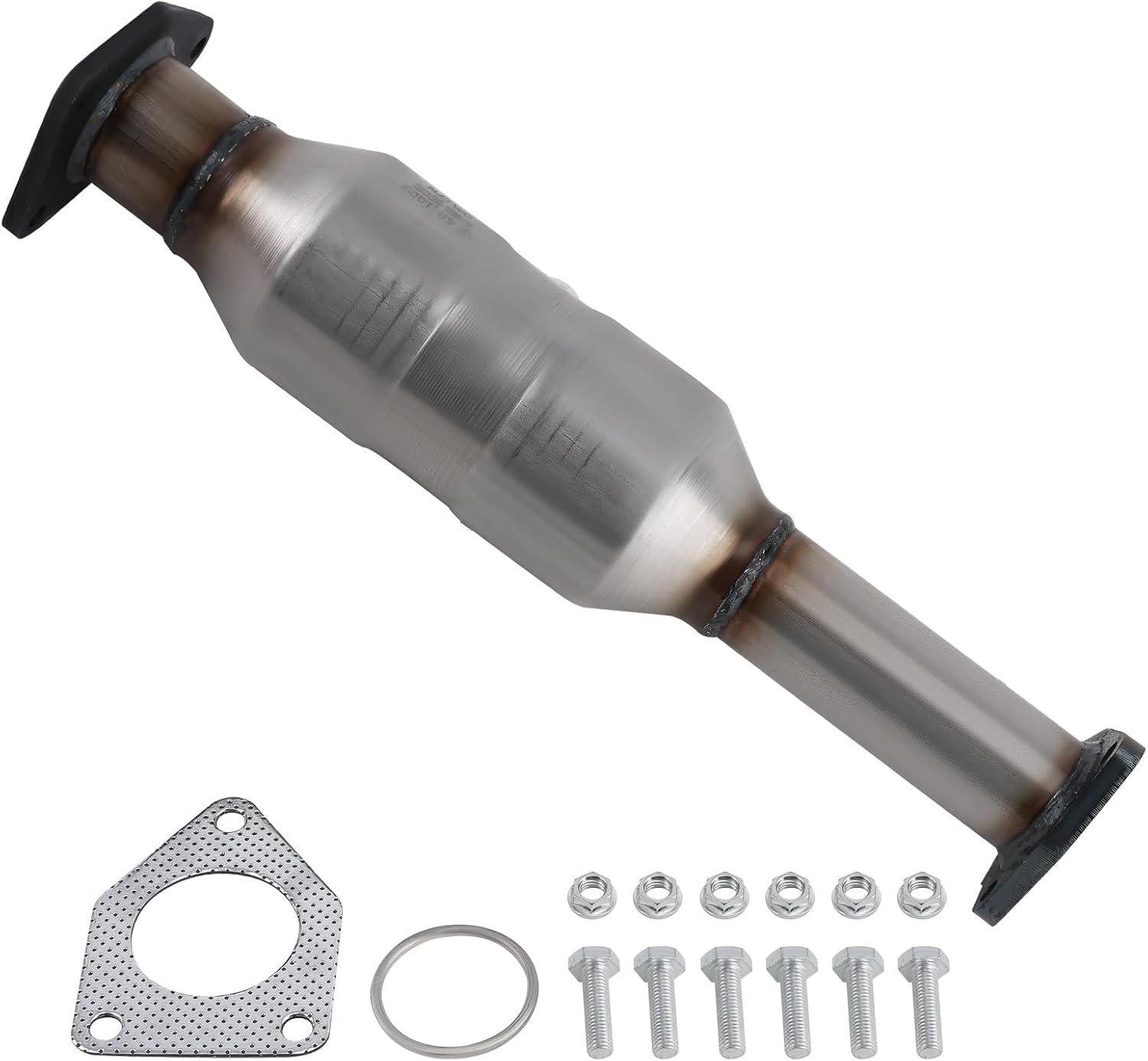
| Compatibility | Honda Accord 2.4L L4 2003-2007 |
|---|---|
| EPA compliance | Meets federal EPA standards (not for certain states) |
| Material | High-duty stainless steel |
| Catalyst | Ceramic honeycomb with Pt, Rh, Pd |
This maXpeedingrods high-flow catalytic converter is a direct-fit replacement for Honda Accord 2.4L models (2003–2007) designed to restore emissions function and clear a P0420 code. It installs into the existing exhaust with the supplied gaskets, bolts, and mounting hardware so you can reuse the factory flanges without major modifications. The unit uses a honeycomb ceramic substrate with high-load precious metal catalysts to convert CO, HC, and NOx while a higher-flow design aims to reduce backpressure and improve throttle response slightly. Construction is stainless steel for corrosion and heat resistance, which helps longevity on cars driven in dry climates. Practical benefits include emission compliance for federal testing (not for certain states), an included hardware kit that simplifies replacement, and a lower price than dealer parts. Limitations to keep in mind are occasional reports of continued P0420 codes when underlying engine issues exist and a slightly different exhaust tone compared with factory converters; performance and longevity will depend on engine condition and installation quality.
Best for: Buyers looking for an affordable, ready-to-install replacement that restores emissions function and avoids dealer-level costs while keeping the exhaust system largely factory-standard.
Less Ideal for: Anyone who needs a state-specific certified unit for California, Maine, Colorado, or New York registration or buyers who want an exact OEM-sound match and factory-specified part history.
- Direct-fit design for Honda Accord 2.4L (2003–2007) that uses original mounting points
- Includes gaskets, bolts, and hardware for a complete swap
- Stainless steel construction resists rust and high exhaust temperatures
- High-flow honeycomb substrate aims to reduce backpressure while still catalyzing emissions
- Not certified for use in California, Maine, Colorado, or New York registered vehicles
- May not clear a P0420 code if the root cause is engine misfire or oil burning
Verdict: A cost-effective direct-fit replacement that restores emissions performance for 2003–2007 Accord 2.4L owners without the dealer price.
5. MAC Front Upper Catalytic Converter with Gaskets for Honda Accord 2.4L (2013–2017)

| Fitment | Front upper for Honda Accord 2.4L 2013–2017 |
|---|---|
| Construction | 100% aluminized |
| Emissions | 48 State Approved |
| Includes | Gaskets |
This MAC front upper catalytic converter is a direct replacement built to match the factory fit and function for Honda Accord 2.4L (2013–2017). It is made from 100% aluminized construction and comes as an OE-style unit that installs in the factory location, which simplifies replacement and reduces the need for modifications. The listing notes 48-state emissions approval, meaning it meets emissions standards for most states and should restore catalytic performance after a failed or clogged converter. Buyers will appreciate the included gaskets for a more complete install and the brand's focus on a trouble-free swap. Limitations include no detailed warranty information listed and only three customer reviews visible, so long-term durability beyond restoring emissions function is not documented here. This is a practical choice when you want a straightforward, factory-quality replacement that gets the car back to emissions compliance and normal exhaust characteristics without aftermarket fitment hassles.
Best for: Buyers who prioritize restoring factory emissions performance and a trouble-free, bolt-in replacement for a 2013–2017 Honda Accord 2.4L will value this part.
Less Ideal for: Shoppers seeking a performance-oriented or high-flow aftermarket converter or those needing documented long-term warranty support should consider other options.
- Direct-fit OE-style design for straightforward installation into the factory location
- 100% aluminized construction for corrosion resistance in exhaust environments
- Includes gaskets to simplify installation and help ensure a proper seal
- 48-state emissions approval for legal compliance in most jurisdictions
- Limited publicly available user feedback on long-term durability
Verdict: A ready-to-install, factory-style replacement that restores emissions compliance and exhaust function on 2013–2017 Accord 2.4L models.
6. FOMIUZY High-Flow Direct-Fit Front Catalytic Converter Kit for Honda Accord 2.4L
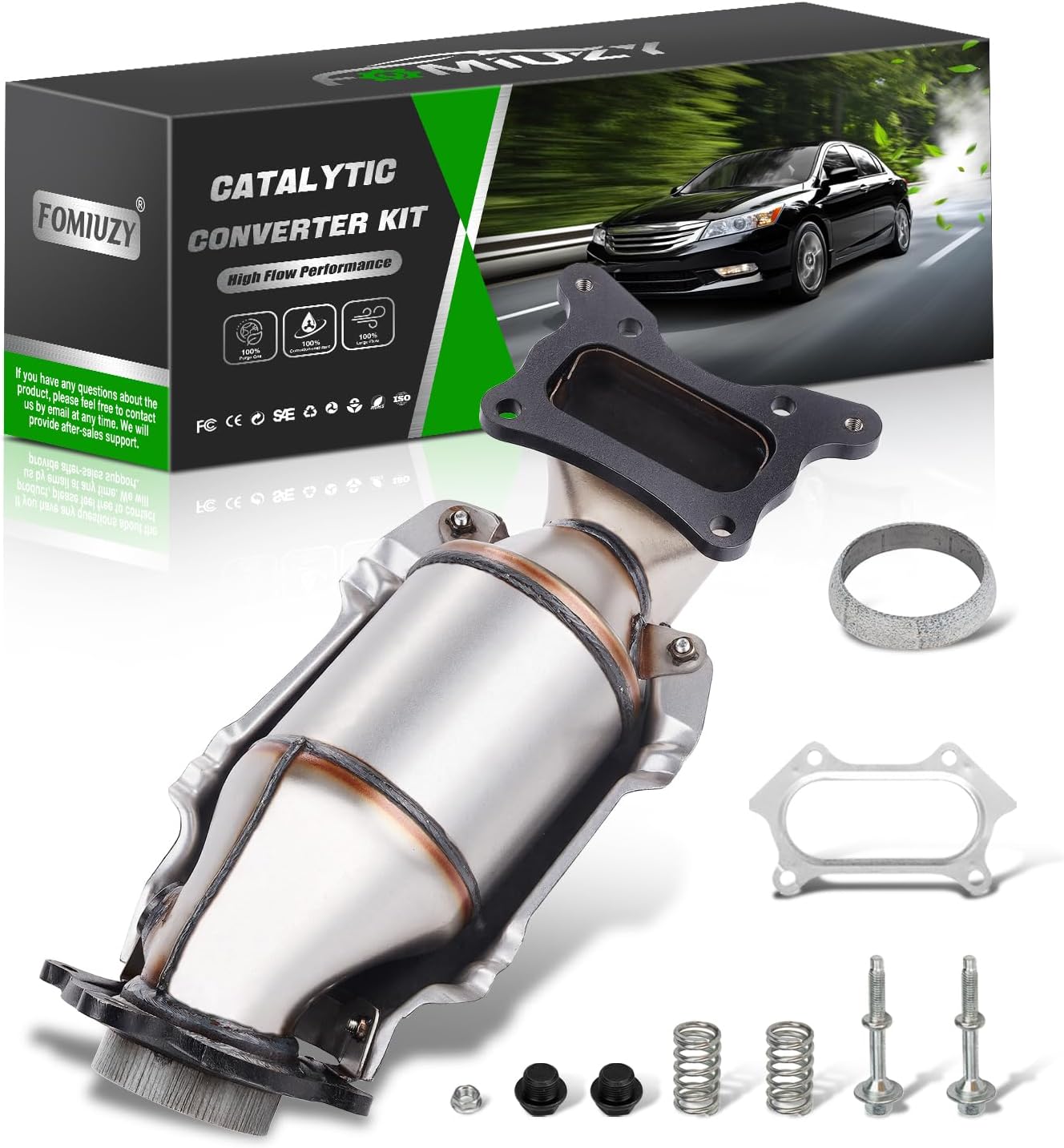
| Compatible vehicles | 2008–2012 Honda Accord 2.4L; 2009–2014 Acura TSX 2.4L |
|---|---|
| Material | Aluminized stainless steel piping |
| Catalyst carrier | Double-layer high temperature ceramic |
| Standards | Complies with OBD3 (not for sale in CA, CO, NY, ME) |
This FOMIUZY catalytic converter kit is a direct-replacement front unit intended to clear a P0420 code, restore emissions performance, and quiet exhaust noise on 2008–2012 Honda Accord 2.4L and 2009–2014 Acura TSX 2.4L. It uses aluminized stainless piping and a double-layer high temperature ceramic carrier to increase flow area while retaining catalytic function. Installation is typical for a bolt-on exhaust item and the listing recommends bolting first and welding for best sealing. In practice the part fits the original mounting points and many buyers report the check engine light and emissions failures were resolved after installation. The kit includes the converter hardware but some customers replaced the supplied gasket or oxygen-sensor pigtails for a more reliable seal. Manufacturer testing claims factory-spec performance and a lifetime warranty, though a few reviewers reported difficulty contacting support when they had post-sale issues. If you need an affordable replacement that restores emissions compliance and fitment without modifying the exhaust, this unit does the job while requiring basic exhaust tools and occasional gasket or sensor harness attention.
Best for: Buyers who want an affordable, factory-matched replacement to clear emissions faults and get a 2.4L Accord or TSX back to a passable state with minimal exhaust modification.
Less Ideal for: People seeking a long-term, warranty-backed dealer replacement or those who want custom performance tuning beyond emissions compliance should look at higher-end or OEM options.
- Direct-fit design matched to factory mounting points for 2008–2012 Accord 2.4L and 2009–2014 TSX 2.4L
- High-flow double-layer ceramic carrier aimed at improving flow and restoring emissions performance
- Aluminized stainless piping resists rust and is intended for longer service life
- Includes hardware and is designed to clear P0420 and help pass emissions tests
- Some buyers reported fragile oxygen-sensor pigtails and needed to replace sensor wiring
- Manufacturer lifetime warranty service has mixed reports about responsiveness from customers
Verdict: A cost-effective, direct-fit front catalytic converter that restores emissions compliance and fitment for 2.4L Accord/TSX owners who prioritize proven results and value.
7. FOMIUZY Front Catalytic Converter Kit for Honda Accord 2003–2007 2.4L

| Compatible vehicles | 2003–2007 Honda Accord 2.4L |
|---|---|
| Material | Aluminized stainless steel |
| Carrier | Double-layer high temperature ceramic |
| Manufacturer | FOMIUZY |
This front catalytic converter kit is a direct-replacement designed to restore emissions control and resolve a P0420 code on 2003–2007 Honda Accord 2.4L models. It installs in place of the original unit and is intended to be bolted in and welded for the best seal. The converter uses an aluminized stainless body and a double-layer high temperature ceramic carrier to increase flow area and improve oxygen storage compared with a degraded core. In practical terms that means reduced exhaust noise, restored catalytic function, and a return toward factory emissions performance and fuel economy. The kit is advertised as meeting OBD3 standards and is not sold for some states with stricter requirements. Buyers should plan for basic exhaust tools and possibly welding to ensure a leak-free installation, and note that state emissions rules may restrict use in California and a few other states.
Best for: Buyers who want a risk-averse, factory-style replacement to clear emissions faults and restore normal exhaust performance on a 2003–2007 Accord 2.4L and prefer a part built to match the original fit and function.
Less Ideal for: If you need a California-compliant or smog-exempt aftermarket solution this unit may not be appropriate, and drivers seeking a performance-oriented or universal-fit converter should look elsewhere.
- Direct-fit design made to match the original Honda Accord 2003–2007 2.4L front converter for straightforward replacement
- Stainless aluminized body resists corrosion for longer service life
- Double-layer high temperature ceramic carrier increases flow area and oxygen storage compared with a clogged core
- Factory-tested to meet or exceed OEM specifications according to the manufacturer
- Not approved for sale in states with stricter emissions standards which may limit legal use
- Installer-recommended welding for best sealing adds installation complexity for DIYers
Verdict: A straightforward, factory-matching front catalytic converter kit for 2003–2007 Accord 2.4L owners who want a reliable replacement to fix emissions faults and restore stock performance.
Choosing the Right Honda Accord 2.4L Catalytic Converter: Key Factors to Consider
Fitment and Flange Type
Correct fitment is the single most important factor for the Honda Accord 2.4L because improper mating at the exhaust flanges or incorrect pipe diameter leads to leaks, vibration, or installation rework. Verify flange bolt patterns, pipe diameter, and overall unit length to match the factory exhaust layout so installation uses factory hangers and bolts where possible.
Fitment also affects how the upstream oxygen sensors sit relative to the substrate. Sensors positioned too close or too far can produce incorrect readings and trigger check engine light catalytic converter trouble codes. Ensuring the converter aligns with factory sensor ports reduces the risk of diagnostic issues and helps maintain correct air-fuel trim.
Substrate Type and Emission Performance
Substrate composition and cell density determine how efficiently the catalytic converter reduces hydrocarbons, CO, and NOx. A properly specified substrate delivers consistent exhaust emissions catalytic converter performance across operating temperatures. Higher cell densities can improve conversion efficiency but may increase backpressure, so balance is important for the 2.4L engine to maintain performance.
Also consider the substrate coating and washcoat quality. A well-applied catalytic washcoat improves light-off characteristics so the converter reaches effective operating temperature sooner, reducing cold-start emissions. This is particularly relevant if you experience failed emissions tests or intermittent check engine light catalytic converter codes.
Backpressure and Engine Performance
Catalytic converter backpressure affects throttle response and fuel trim on the 2.4L Accord. Excessive restriction reduces engine power and can cause the engine to run hotter. Look for units that specify flow characteristics or are designed to match OEM backpressure profiles to avoid driveability issues.
If you drive primarily in stop-and-go traffic or tow light loads, a converter with moderate restriction may be acceptable. For sustained high-load driving, choose a design that minimizes flow loss while still meeting emissions requirements to preserve engine performance.
Oxygen Sensor and OBDII Compatibility
The Honda Accord 2.4L relies on upstream and downstream oxygen sensors to monitor converter efficiency. A replacement must provide correct sensor bungs in the factory locations and maintain the same sensor-to-substrate spacing to avoid false efficiency readings that trigger check engine light catalytic converter codes.
Compatibility with the vehicle's OBDII readiness monitors is also important if you are preparing for emissions testing. Ensure the converter allows the downstream sensor to read catalyst performance without false positives so monitors can run and report readiness normally.
Material and Corrosion Resistance
Materials and corrosion protection determine long-term reliability, especially in regions with road salt or high humidity. Stainless steel shells and quality internal welds resist rust and extend life. Flange materials and weld quality affect how well the unit seals to the rest of the exhaust system under repeated heating and cooling cycles.
A durable finish and proper thermal expansion design reduce the chance of cracks that lead to exhaust leaks. Consider the expected climate and driving patterns for your Accord when prioritizing corrosion resistance and construction quality.
Warranty and Documentation
Warranty coverage and clear documentation signal manufacturer confidence and help with installation decisions. A warranty that covers structural failure or substrate degradation provides assurance that the unit meets expected service life for typical driving conditions.
Documentation should include explicit fitment notes for the Honda Accord 2.4L, recommended torque values for flange bolts, and any sensor installation instructions. Clear instructions reduce installation errors and help technicians avoid unnecessary delays.
Why Catalytic Converter Fitment Matters for the 2.4L Accord
The 2.4L Accord has specific exhaust routing and sensor placements that demand an accurately matched catalytic converter. Poorly matched converters can cause leaks at flange connections, misaligned oxygen sensors, or require exhaust modifications that introduce extra failure points.
- Mismatched pipe diameter causes exhaust leaks and noise
- Incorrect sensor bung placement can trigger diagnostic trouble codes
- Exhaust rerouting may stress hangers and increase vibration
Common Symptoms of Catalytic Converter Problems
Owners often notice reduced acceleration, a drop in fuel economy, or the illumination of the check engine light. Some symptoms are subtle, such as a slight hesitation under load, while others like a rotten egg smell indicate more advanced substrate damage.
- Diminished throttle response under acceleration
- Persistent check engine light catalytic converter codes
- Reduced fuel efficiency and unusual exhaust odors
Preparing Your Accord for Replacement
Before you replace the catalytic converter, gather the correct hardware and confirm the vehicle is cold to avoid injury. Inspect the exhaust system for rusted bolts and seized hangers; replacing corroded fasteners during the job can prevent leaks later. Make sure you have access to the factory oxygen sensors and any required gaskets or hardware to avoid last-minute trips to the parts store.
- Verify sensor locations and order matching gaskets
- Have replacement bolts and anti-seize on hand
- Lift the vehicle safely and support with stands before working underneath
Installation Tips to Avoid Sensor Codes
When installing a new converter, maintain factory sensor spacing and orientation. Use anti-seize on sensor threads sparingly and torque to manufacturer specifications to avoid damaging sensor elements. After installation, clear codes and run the vehicle through real-world driving cycles to allow OBDII monitors to complete readiness checks.
- Keep upstream and downstream sensors in factory positions
- Torque sensor and flange bolts to spec
- Complete varied driving to allow OBDII monitors to set
When to Consult a Technician
If the engine shows excessive backpressure symptoms, persistent diagnostic codes after a correct-fit replacement, or you encounter structural exhaust damage, involve a qualified technician. They can perform backpressure testing, emissions bench checks, and confirm that the replacement unit meets regulatory requirements for your Accord.
- Persistent CEL after replacement indicates further diagnostics
- Backpressure testing can confirm flow restrictions
- Technician can verify compliance for emissions testing
Still looking for the perfect fit?
Select your Honda Accord configuration to see the most relevant Catalytic Converters recommendations
How We Chose the Best Honda Accord 2.4L Catalytic Converter
We prioritized candidates that meet the technical needs of the 2.4L Accord while addressing common owner concerns. Primary evaluation criteria included fitment accuracy, emission reduction capability, substrate type and durability, and compatibility with on-board diagnostics. We also considered build quality of the shell and flanges, recommended installation method, and corrosion resistance for long-term reliability.We excluded any units that did not provide clear fitment data for the 2.4L Accord or lacked documentation on substrate composition and backpressure characteristics. Units designed solely for off-road use or that deliberately disable emissions controls were not considered. Final selections balanced ease of installation, expected lifespan under normal driving, and the ability to clear catalytic-related diagnostic trouble codes without inducing excessive backpressure.
Our full evaluation process is outlined in our review methodology.
FAQ
How do I know if my catalytic converter is failing on a Honda Accord 2.4L?
Symptoms often include reduced acceleration, a steady decline in fuel economy, unusual sulfur or rotten egg odors, and illumination of the check engine light catalytic converter codes. Diagnosis typically requires reading DTCs and confirming via inspection or backpressure testing.
Will a new catalytic converter clear the check engine light?
A properly fitted and functioning catalytic converter will often resolve catalyst-related codes, but the underlying oxygen sensors and OBDII monitors must also be working. If codes persist, further diagnostics may be necessary to rule out sensor or fuel system issues.
Can I install a catalytic converter myself on the 2.4L Accord?
Many owners with basic mechanical skills can perform the replacement, provided they have the correct tools and confirm fitment. However, seized bolts, welded connections, or the need for precise sensor positioning may make professional installation the safer choice.
How long should a catalytic converter last on the Accord 2.4L?
Lifespan varies with driving conditions and environment. Under normal use and with good maintenance, converters often last many years, but exposure to contaminants, coolant leaks, or physical damage can shorten service life. Watch for symptoms rather than relying on a fixed interval.
Does replacing the catalytic converter affect emissions testing?
A correct-fit converter that meets emissions performance standards should restore the vehicle's ability to pass emissions testing. Ensure the unit allows proper downstream sensor readings and that OBDII readiness monitors have completed before testing.
What should I do if the replacement triggers new sensor codes?
Verify sensor bung placement and wiring connections, check sensor operation with a scan tool, and confirm that the substrate position matches factory specifications. If issues persist, consult a technician for further diagnostics and possible sensor replacement.
Final Verdict
Focus on fitment, substrate performance, and OBDII compatibility when choosing a catalytic converter for the Honda Accord 2.4L. Prioritize units with clear fitment documentation and an appropriate balance between conversion efficiency and backpressure to maintain engine response.Weigh the tradeoffs between durability and flow characteristics based on your driving patterns, and ensure proper installation and sensor positioning so the converter performs reliably and helps the vehicle meet emissions requirements.
Explore More:
- Check out all Honda Accord parts & accessories
- Explore Catalytic Converters Maintenance & Repair Guides
- Explore Exhaust & Emissions
- Browse all Auto Parts
