

Note: This article contains affiliate links. If you click on these links and make a purchase, I may earn a small commission at no extra cost to you. This helps support my research and content. Read my full affiliate disclosure here.
If you own a 2002-2005 Ford Explorer, choosing the right brake pads directly affects safety, pedal feel, and repair intervals. Worn or noisy pads can reduce stopping performance, increase rotor wear, and lead to costly repairs if left unchecked. This guide walks through a shortlist of the best brake pads for the Explorer across typical driving needs, from quiet daily commuting to more demanding use.The selections that follow were narrowed to seven top-rated options that fit the 2002-2005 Explorer range. Each was evaluated for stopping performance, longevity, noise characteristics, and compatibility with the Explorer's front and rear braking systems. Read on to compare features and find which pad type best matches how you drive.
Looking for other parts? See all Ford Explorer parts & accessories.
Top Picks at a Glance


1. PowerStop Z17 Front Ceramic Brake Pads with Hardware (17-833)

| Auto Part Position | Front |
|---|---|
| Compatible with Vehicle Type | Passenger Car |
| Material Type | Ceramic |
| Number of Items | 1 |
The PowerStop Z17 front ceramic brake pads are intended as a direct bolt-on replacement for everyday use on compatible SUVs and trucks. These pads use a low-dust ceramic formula with chamfered and slotted faces plus thermal scorching to speed break-in and reduce noise. Included stainless steel hardware and brake lube simplify installation and help ensure correct fitment without modifications. In normal commuting and light-duty driving the Z17s deliver consistent, predictable stopping, quieter operation than many semi-metallic pads, and noticeably less wheel dust which keeps wheels cleaner between washes. They are positioned as an OE-plus option rather than a high-performance or heavy tow pad, so they prioritize comfort and cleanliness over extreme fade resistance. Buyers should expect solid daily-driver performance and easy installation but not track-level bite or prolonged heavy towing durability.
Best for: Drivers seeking a quiet, low-dust, factory-quality front pad replacement for daily driving and light-duty use on an Explorer and similar vehicles who value comfort and clean wheels.
Less Ideal for: Drivers who routinely tow heavy loads, carry heavy payloads, or require high-temperature track braking should choose a higher-performance compound designed for severe duty.
- Direct bolt-on fit for specified vehicle applications with included stainless steel installation hardware
- Low-dust ceramic formulation helps keep wheels cleaner
- Chamfered, slotted and thermally scorched surfaces for faster break-in and reduced noise
- Includes brake lube and premium hardware to simplify installation
- Not formulated for heavy towing, track use, or sustained high-heat braking scenarios
Verdict: Choose the PowerStop Z17 pads when you want a quiet, low-dust, easy-to-install front pad that upgrades factory feel for everyday driving.
2. BOSCH QuietCast Premium Ceramic Front Brake Pad Set (BC833)

| Material | Ceramic |
|---|---|
| Auto Part Position | Front |
| Specification Met | OEM |
| Manufacturer | Bosch Automotive |
These Bosch QuietCast ceramic front brake pads deliver quiet, confident braking for everyday and spirited driving on compatible 2002–2005 Ford Explorer front axles. They use Bosch Molded Shim Technology with pre-attached multilayer rubber-core shims to reduce noise and vibration, and the ceramic friction compound balances strong stopping power with low dust for cleaner wheels. Powder-coated backing plates resist corrosion, and the set ships with hardware and synthetic lubricant to ease installation and improve slide performance. For a performance-minded driver this pad emphasizes consistent pedal feel and reduced NVH rather than maximum track-grade bite, so it suits street performance, towing light loads, and heavier suburban driving without excessive dust or noise. Expect a factory-quality fit and dependable wear life, but if you need aggressive fade resistance for racing or heavy commercial towing a higher-friction or semi-metallic race pad would be more appropriate.
Best for: Drivers who want a near-factory driving feel with quieter stops and low dust on daily-driven Explorers and prioritize reliable, comfortable braking over track-level performance.
Less Ideal for: Drivers who frequently run their vehicle on track, carry very heavy commercial loads, or need maximum high-temperature friction should consider more aggressive semi-metallic or race-oriented pads.
- Quiet operation thanks to multilayer rubber-core shims
- Ceramic compound produces low dust and consistent stopping power
- Powder-coated backing plates resist corrosion for longer service life
- Includes hardware kit and synthetic lubricant for easier installation
- Not formulated for aggressive track use or extreme fade-heavy conditions
Verdict: Choose these Bosch QuietCast front pads if you want factory-quality, quiet braking with low dust for a 2002–2005 Ford Explorer without sacrificing consistent street performance.
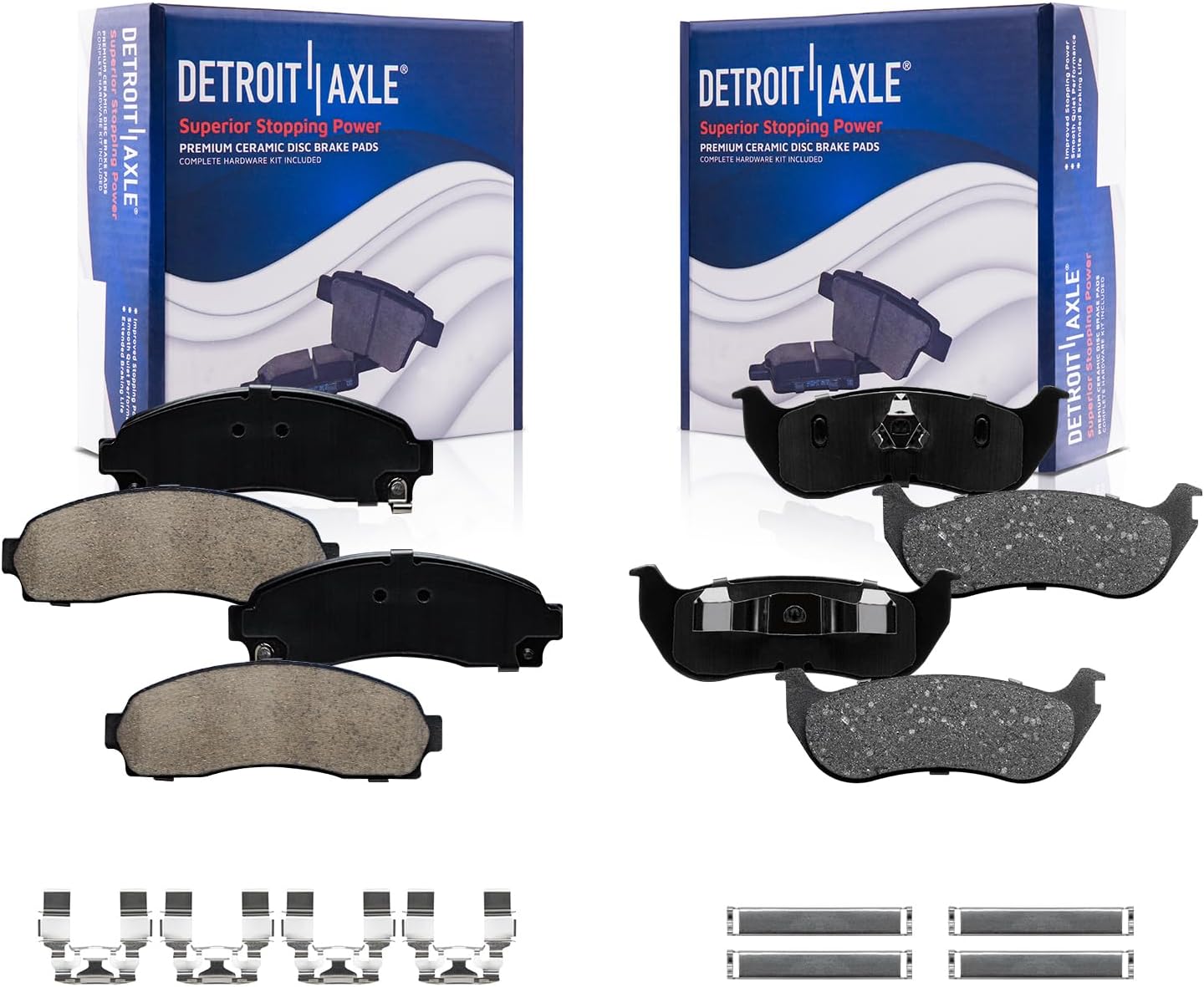
3. Detroit Axle Ceramic Brake Pads with Hardware (Front & Rear) for 2002–2005 Ford Explorer / Mercury Mountaineer
| Compatible Years | 2002-2005 |
|---|---|
| Fitment | Vehicle Specific Fit |
| Material Type | Ceramic |
| Number of Items | 4 |
This Detroit Axle kit supplies two front and two rear ceramic brake pads plus installation hardware sized for 2002–2005 Ford Explorer and Mercury Mountaineer. The ceramic compound and chamfered edges are intended to reduce noise and dust while resisting high temperatures, so braking stays consistent on longer drives and under heavier loads. Fitment is vehicle-specific, so installation should be straightforward for a DIYer with basic tools or any mechanic doing a pad-only job. The pads claim a stable friction coefficient at elevated temperatures and a surface-friendly formula that minimizes rotor scoring, which can extend rotor life. Trade-offs are typical for ceramic pads: they prioritize quietness and low dust over aggressive initial bite compared with some performance metallic compounds, and drivers who tow or frequently tow heavy loads might notice different wear or stopping feel. Overall this is a practical, direct-replacement ceramic option for Explorer owners who want quieter, low-dust everyday braking without changing rotors or calipers.
Best for: Buyers who want a quiet, low-dust direct-replacement pad set for everyday driving and easy installation on a 2002–2005 Explorer or Mountaineer.
Less Ideal for: Drivers who prioritize maximum stopping power or aggressive initial bite for track use or frequent heavy towing should consider performance-oriented metallic options instead.
- Vehicle-specific kit including both front and rear pads plus hardware for complete pad replacement
- Ceramic formulation reduces dust and noise compared with many metallic pads
- Designed for heat resistance and stable braking under elevated temperatures
- Chamfers and multi-layer backing to reduce vibration and improve pedal feel
- Ceramic pads generally provide less initial bite than aggressive metallic compounds, which may matter to performance-driven drivers
Verdict: A practical, vehicle-specific ceramic pad kit that delivers quiet, low-dust everyday braking and straightforward fitment for 2002–2005 Explorer and Mountaineer owners.
4. PHILTOP Rear Ceramic Brake Pads (D881) for Ford Explorer / Mercury Mountaineer 2002–2005

| Auto Part Position | Rear |
|---|---|
| Material Type | Ceramic |
| Included Components | 4x Rear brake pads – D881 |
| Automotive Fit Type | Vehicle Specific Fit |
These PHILTOP rear ceramic pads are a direct replacement set meant for Ford Explorer and Mercury Mountaineer models from 2002 to 2005. They are typically used as an affordable factory-style replacement when rear braking feel and cleanliness matter. The ceramic formulation is promoted for heat resistance and reduced brake fade during repeated stops or hilly driving, while the low-dust compound and optimised binder help keep wheels cleaner and reduce squeal. The pads come with precision-machined backing plates and pre-attached shims for easier installation and quieter operation, and the package lists the complete hardware needed for a bolt-on fit. As a budget-friendly option, these pads offer sensible performance for daily driving and occasional towing but may not deliver the extreme stopping power or longevity of higher-end performance compounds under aggressive use. Buyers should expect good noise control and cleaner wheels at a value price, while heavy-duty users may prefer a more performance-oriented pad.
Best for: Buyers replacing rear pads on a 2002–2005 Explorer or Mountaineer who want a clean, quiet, factory-style replacement at a lower cost and care about everyday braking performance rather than track-level stopping power.
Less Ideal for: Drivers who regularly tow heavy loads or demand aggressive braking performance should consider higher-grade performance pads instead.
- Ceramic compound formulated for reduced wheel dust and quieter operation
- Precision-machined backing plates with pre-attached shims for easier installation
- Designed to resist heat and reduce brake fade during repeated stops
- Includes a complete hardware kit for a vehicle-specific bolt-on fit
- Designed as a budget replacement so may wear faster than premium or performance pads
Verdict: A budget-friendly ceramic rear pad set that restores quiet, low-dust braking for 2002–2005 Explorer and Mountaineer owners who want reliable everyday performance.
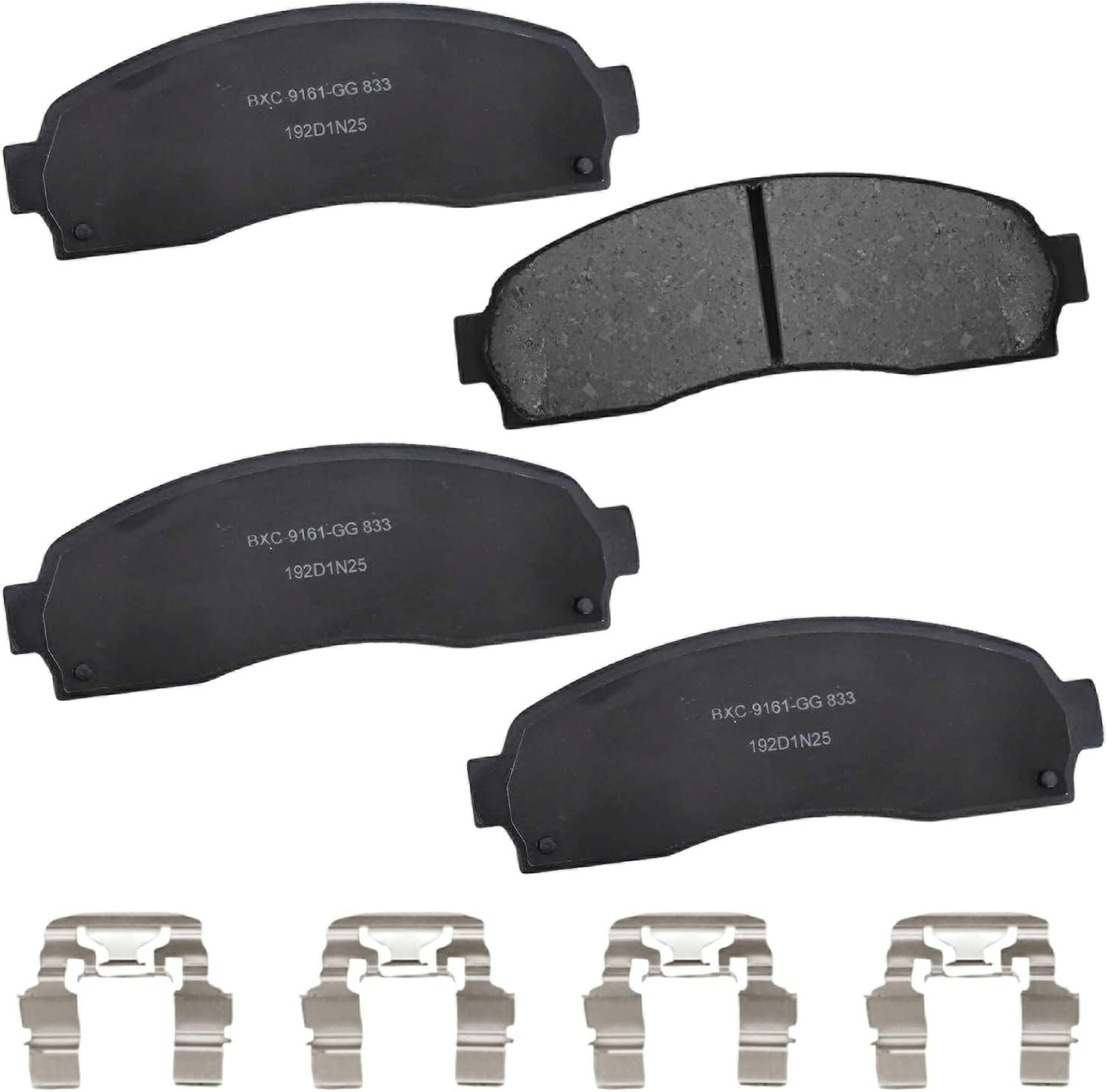
5. Bendix Premium SBC833 Ceramic Front Brake Pads with Hardware
| Auto Part Position | Front |
|---|---|
| Compatible with Vehicle Type | Cars, SUV, Truck |
| Model Number | SBC833 |
| Included Components | Brake pad set with installation hardware |
| Material Type | Copper |
These Bendix Premium SBC833 ceramic front brake pads are built as a direct-fit replacement for specified early-2000s Ford Explorer, Explorer Sport/Trac, Ranger, Mazda B-series, and Mercury Mountaineer models. They come as a single front pad set with installation hardware and are intended for everyday street use where consistent, quiet stopping matters. The ceramic formulation and copper material aim to reduce brake dust and noise while resisting fade in normal driving conditions. Bendix highlights factory-quality fit and durability, which simplifies installation and reduces the chance of fitment issues when matched to the listed vehicles. Limitations to note are that these are targeted, vehicle-specific pads so they only suit the listed model years and configurations, and ceramic pads typically prioritize smooth operation over maximum high-heat stopping power found in some semi-metallic performance compounds. If your priority is dependable, low-noise braking for daily driving on an early-2000s Explorer, these provide a straightforward reliability-oriented upgrade.
Best for: Buyers who want a reliable, quiet, and low-dust front brake pad that matches factory fit for a 2002–2005 Explorer and similar-era vehicles and value straightforward, maintenance-friendly replacements.
Less Ideal for: Drivers who routinely tow heavy loads, perform aggressive driving, or need maximum track-capable braking should consider higher‑heat semi-metallic options instead.
- Factory-style fit and form for the specified vehicle applications reduces installation fuss and fitment errors
- Ceramic-based compound lowers visible brake dust and tends to produce less noise during normal driving
- Includes installation hardware so you get a complete front pad set ready for replacement
- Designed to resist brake fade and wear for consistent everyday stopping performance
- Compatibility limited to specific early-2000s Ford, Mazda, and Mercury models so not universal
- Ceramic formulation is less suited for repeated high-temperature heavy-duty or track use compared with semi-metallic pads
Verdict: A dependable, low-noise ceramic front pad set that delivers factory-fit braking and everyday reliability for supported early-2000s Ford Explorer and related models.
6. Detroit Axle Front and Rear Drilled & Slotted Brake Rotor and Ceramic Pad Kit for 2002–2005 Ford Explorer / Mercury Mountaineer

| Fitment | 2002–2005 Ford Explorer, Mercury Mountaineer (specified rotor sizes) |
|---|---|
| Front Rotor Type | Drilled & slotted |
| Rear Rotor Type | Drilled & slotted |
| Pad Material | Ceramic |
| Includes | Rotors, pads, hardware, brake cleaner, brake fluid |
This Detroit Axle kit supplies everything needed to refresh the braking system on a 2002–2005 Ford Explorer or Mercury Mountaineer with the specified rotor sizes. The package includes two drilled and slotted front rotors, two drilled and slotted rear rotors, front and rear ceramic pads with hardware, a can of brake cleaner and a bottle of brake fluid. The drilled and slotted rotors help dissipate heat and shed moisture for more consistent braking under load, while the zinc plating helps resist surface corrosion during storage and on vehicles in wet climates. Ceramic pads reduce dust and run quieter than many semi-metallic pads, making the kit a low-noise, tidy solution for everyday driving and light towing. Fitment is machined for direct installation on the listed models so no modification should be required. Limitations: this is an aftermarket replacement kit rather than a performance or heavy-duty racing upgrade, and the drilled rotor design can be more prone to cracking under extreme repeated track use compared with some solid or high-performance variants.
Best for: Buyers who want a single, confidence-building brake refresh for a 2002–2005 Explorer/Mountaineer with proven user feedback and complete parts included rather than sourcing components separately.
Less Ideal for: Drivers who demand race‑level braking or do frequent heavy towing should look at heavy‑duty or performance rotor and pad options instead.
- Complete kit that includes front and rear rotors, pads, hardware, brake cleaner and fluid for a single purchase
- Drilled and slotted rotors improve heat dissipation and help clear moisture for more consistent stopping
- Ceramic pads designed for lower dust and quieter operation than many semi-metallic pads
- Zinc plating on rotors resists surface corrosion and reduces visible wheel rust
- Not intended for high‑performance or track use where extreme heat cycling is frequent
Verdict: An all-in-one, user-backed replacement kit that refreshes front and rear brakes on 2002–2005 Explorers/Mountaineers with quieter ceramic pads and heat-managing drilled rotors.
7. Detroit Axle Front & Rear Drilled and Slotted Brake Kit with Ceramic Pads for 2002–2005 Ford Explorer / Mercury Mountaineer

| Fitment | 2002-2005 Ford Explorer, 2002-2005 Mercury Mountaineer |
|---|---|
| Front Rotor Size | 12.01 inch (305mm) |
| Rear Rotor Size | 11.85 inch (301mm) |
| Pad Material | Ceramic |
| Warranty | 10 Year Warranty |
This Detroit Axle kit replaces both front and rear rotors and pads on 2002–2005 Ford Explorer and Mercury Mountaineer vehicles, pairing drilled and slotted rotors with ceramic brake pads and basic hardware. The rotors are zinc plated for corrosion resistance and feature ventilation and drilled/slotted faces to help dissipate heat and shed water, while the ceramic pads aim for quieter, low-dust braking during daily driving. Installation is meant to be a direct fit with machined locating holes to match factory mounting, so a professional or experienced DIYer can swap the full set in a single service interval. The package covers all four corners, which simplifies parts matching and reduces visits to multiple suppliers. Limitations to note are typical of aftermarket drilled rotors: they can be more prone to surface cracking under extreme repeated track use and ceramic pads trade some ultimate bite for quieter operation compared with higher-friction semi-metallic compounds. For routine street and towing use on these model years this kit offers an easy, full replacement option with corrosion protection and included hardware.
Best for: Buyers who want a full, factory-style brake replacement for a 2002–2005 Explorer or Mountaineer with an emphasis on quiet operation, low dust, and corrosion resistance.
Less Ideal for: Drivers who frequently do track days, heavy-duty towing at high temperatures, or demand maximum performance braking should consider high-performance rotors and semi-metallic pads instead.
- Complete kit covers both front and rear rotors and ceramic pads for a single service
- Drilled and slotted rotor faces with ventilation to improve heat dissipation and wet-weather performance
- Zinc plating on rotors helps resist corrosion and reduces visible wheel dust
- Machined locating holes for direct-fit installation to the listed vehicles
- Drilled rotors can be more susceptible to cracking under extreme repeated high-heat use
- Ceramic pads usually provide less initial bite than higher-friction semi-metallic pads
Verdict: A convenient all-in-one rotor and ceramic pad replacement tailored to 2002–2005 Explorer/Mountaineer owners seeking a quiet, corrosion-resistant factory-style brake refresh.
Choosing the Right 2002-2005 Ford Explorer Brake Pads: Key Factors to Consider
Pad Material and Compound
The pad material largely dictates stopping power, longevity, and noise. Organic compounds tend to be quieter initially but may wear faster and transfer more material to rotors. Semi-metallic compounds provide stronger bite and heat resilience, which helps on heavier Explorers or when towing, but they can produce more noise and increase rotor wear.
Ceramic-style formulations offer a balance of quiet operation and stable friction across a range of temperatures and are often less likely to dust excessively. For the 2002-2005 Ford Explorer, consider the vehicle's typical load and driving style: daily commuter Explorers benefit from quieter ceramic or low-metallic blends, while those used for heavier loads or frequent highway driving may need higher-metal-content compounds for sustained performance.
Fitment and Pad Shape
Correct fitment ensures proper caliper engagement, even wear, and safe braking. Even minor differences in pad shape, backing plate contour, or clip placement can cause installation difficulty or premature wear. For the 2002-2005 Explorer, verify that the pad set explicitly matches front or rear positions and the vehicle year range.
Pay attention to whether hardware like anti-rattle clips, shims, and wear indicators are included or will need to be reused from the old pads. Properly fitting pads reduce the risk of noise, inconsistent braking, or caliper piston misalignment, so fitment is as important as material when making a selection.
Noise and Vibration Control
Brake noise is often the first sign of an unsuitable pad for a given vehicle. Material composition, backing plate quality, and the presence of vibration-damping shims determine how loudly pads transmit pedal and braking forces. For owners of 2002-2005 Explorers who prioritize a quiet cabin, look for pads with bonded or multi-layer shims, chamfered edges, and noise-reducing friction formulas.
Vibration can also signal uneven pad transfer or glazing. Proper bedding procedures and correct pad choice help minimize squeal and grinding noises. Keep in mind that some higher-friction compounds trade reduced stopping distances for a higher likelihood of audible noise.
Wear Life and Thickness
Expected pad lifespan depends on compound, driving habits, and rotor condition. Thicker pads with more friction material naturally last longer, but compound efficiency is also crucial. For the 2002-2005 Explorer, consider how often you drive in stop-and-go traffic versus steady highway miles; city drivers will consume pads faster than highway drivers.
Check the manufacturer-stated pad thickness spec and typical mileage estimates for that compound. Also evaluate whether replacement hardware or backing plate reinforcements are supplied to prevent uneven wear. Balancing longevity against desired stopping feel will help determine the best choice for your Explorer.
Rotor Compatibility and Brake System Impact
Some pad compounds are harder on rotors and can cause scoring or accelerated rotor wear. For older vehicles like a 2002-2005 Explorer, existing rotor condition should influence pad selection. If rotors are glazed or lightly scored, certain compounds will improve bite without needing rotor replacement; other compounds may exacerbate wear and require rotor resurfacing.
Consider whether you will resurface or replace rotors when installing new pads. Choosing a pad compatible with the rotor condition avoids unnecessary work and ensures consistent braking performance. Also take into account rear versus front rotor sizes and the Explorer's typical load to match pad heat tolerance appropriately.
Installation and Hardware
Ease of installation matters for DIY owners and shops. Kits that include anti-rattle clips, new shims, and wear indicators reduce installation time and help avoid reusing worn components. For the 2002-2005 Explorer, check whether the pad set includes the correct mounting hardware for the front and rear calipers.
Also consider whether the pads require special break-in procedures or bedding to achieve rated performance. Clear installation guidance and included hardware reduce the chance of installation errors that can cause noise, uneven wear, or reduced braking efficiency.
Front Versus Rear Pad Considerations for the Explorer
Front and rear pads perform different roles on the 2002-2005 Explorer. The front pads handle the majority of braking force due to weight transfer during stops, so they typically wear faster and should be chosen for high initial bite and heat tolerance. Rear pads contribute to stability and parking brake engagement and can be tuned for quieter operation and longer life.
When selecting pads, match the material and expected wear characteristics between axle positions so braking feel remains consistent. It is common to pick a slightly more aggressive compound for the front and a quieter compound for the rear if noise is a priority, but avoid mixing materials that produce uneven pedal feel.
- Front pads need higher heat tolerance and initial bite.
- Rear pads can emphasize longevity and low noise.
- Keep front and rear friction characteristics balanced for predictable braking.
Signs Your Explorer Needs New Brake Pads
Several practical signs indicate it's time to replace brake pads on a 2002-2005 Explorer. Squealing or a high-pitched noise during light braking often means the wear indicator is contacting the rotor or the pad is glazing. Grinding sounds indicate the pad material is worn away and metal-to-rotor contact may be occurring, which requires immediate attention.
Reduced pedal response, increased stopping distance, or a spongy brake pedal can point to worn pads or problems elsewhere in the braking system. Regularly checking pad thickness against the brake pad thickness spec for your Explorer and noting any changes in pedal feel will help you replace pads before they damage rotors.
- Squeal indicates wear indicator or glazing.
- Grinding requires immediate inspection to prevent rotor damage.
- Monitor pedal feel and stopping distance for progressive wear signs.
Bedding Procedures and Break-In Tips
Proper bedding helps pads and rotors form an even transfer layer that stabilizes friction and reduces noise. For the Explorer, use a moderate procedure of gradual deceleration stops from highway speed to city speed, avoiding hard stops for the first several dozen miles after installation. This approach allows the friction material to transfer uniformly without overheating the new pads.
Avoid excessive idling or heavy braking immediately after installation. If you tow or carry heavy loads frequently with your Explorer, allow a cool-down period during the initial bedding runs to prevent glazing from overheating the pads.
- Perform several gradual stops from moderate speed to embed friction material.
- Avoid hard, repeated stops during the first bedding period.
- Allow cooling periods if operating under heavy loads.
Common Installation Pitfalls to Avoid
Improper installation can cause noise, uneven wear, and reduced braking performance. Common mistakes include reusing worn hardware, failing to apply lubricant to pad contact points, and neglecting to clean or inspect rotors before installing new pads. For the 2002-2005 Explorer, ensure caliper pins move freely and that any anti-rattle clips are correctly seated.
Another frequent oversight is not checking pad alignment with the caliper piston face. Misalignment leads to uneven contact and accelerated wear. Following manufacturer torque specs for caliper mounting and verifying parking brake operation on the rear pads will prevent post-install issues.
- Do not reuse worn clips or shims.
- Clean rotors and caliper contact surfaces before installation.
- Confirm caliper pin movement and proper pad seating.
When to Consider Rotor Resurfacing or Replacement
Rotors that are deeply scored, warped, or below minimum thickness should be resurfaced or replaced when fitting new pads. For the Explorer, minor surface glazing or light scoring can often be addressed with resurfacing, which lets new pads bed in properly and extend service life. However, if rotors are rusted through, excessively thin, or have thermal cracks, replacement is the safer choice.
If you notice vibration during braking or uneven pad wear after a pad change, check rotor runout and thickness. Pairing new pads with properly prepared rotors ensures consistent contact and reduces the chance of noise or rapid pad wear.
- Resurface lightly scored rotors before pad installation.
- Replace rotors with thermal cracks, severe scoring, or below spec thickness.
- Measure rotor runout if you experience vibration after pad replacement.
DIY Versus Professional Installation
Many Explorer owners can replace pads at home with standard tools, but the job requires attention to detail. Tasks include safely lifting the vehicle, removing wheels, retracting caliper pistons, and properly torquing fasteners. If you are comfortable with these steps and have a torque wrench, DIY replacement can be straightforward.
Professional installation is recommended if you are unsure about caliper servicing, rotor condition assessment, or brake system bleeding. A shop can also ensure correct bedding and verify that parking brake adjustments for rear pads are properly set on the 2002-2005 Explorer.
- DIY is viable with basic tools and attention to caliper care.
- Seek professional help for rotor machining or brake fluid issues.
- Always follow torque specs and safety procedures when working under the vehicle.
Still looking for the perfect fit?
Select your Ford Explorer configuration to see the most relevant Brake Pads recommendations
How We Chose the Best 2002-2005 Ford Explorer Brake Pads
We focused strictly on criteria that matter for 2002-2005 Ford Explorer owners and excluded products that do not explicitly list fitment for this year range. Our editorial process prioritized braking performance in mixed driving, measured durability estimates and pad material properties, and expected noise and vibration characteristics that affect everyday comfort. We also weighed compatibility with common rotor conditions on these Explorers, installation ease for DIYers and professional fitters, and available friction material options.Specific evaluation criteria included: stopping performance under typical urban and highway conditions, pad compound and heat tolerance, estimated wear life based on compound and thickness numbers, rotor friendliness to minimize scoring, and vibration/noise mitigation features such as shims or chamfers. We excluded pads lacking clear fitment information for 2002-2005 Explorer or products aimed only at racing use. The final list balances real-world durability, predictable pedal feel, and practical fitment for this vehicle.
Our full evaluation process is outlined in our review methodology.
FAQ
How often should I replace brake pads on a 2002-2005 Ford Explorer?
It depends on driving habits and conditions. Typical replacement intervals often range from 30,000 to 70,000 miles. City driving with frequent stops shortens pad life, while highway driving tends to extend it.
What thickness indicates my Explorer's pads need replacement?
Many manufacturers recommend replacing pads when friction material is 3 mm or less, but exact brake pad thickness spec varies. Inspect pads regularly and replace sooner if you hear wear indicators or notice reduced braking performance.
Can I mix different pad materials on front and rear axles?
Mixing materials is possible but not ideal. Keep friction characteristics similar between front and rear to preserve predictable pedal feel. If you choose different compounds, select combinations that maintain balanced braking dynamics for the Explorer.
Why do my new pads squeal after installation?
Squeal is often caused by improper bedding, lacking or damaged shims, or glazed pads. Ensure pads are properly bedded with gradual stops and check that anti-squeal shims and hardware are installed correctly.
Is it necessary to resurface rotors when changing pads on this Explorer?
Resurfacing is recommended for lightly scored or glazed rotors to ensure proper pad transfer. Replace rotors if they are below minimum thickness or have deep scoring or warping.
Are ceramic brake pads a good option for the 2002-2005 Explorer?
Ceramic-style pads offer quieter operation and lower dust levels, which suit daily-driven Explorers. However, if the vehicle regularly carries heavy loads or tows, a higher-metal-content compound may provide better sustained performance.
Final Verdict
Prioritize pad material and fitment when selecting brake pads for a 2002-2005 Ford Explorer. Balance stopping performance, noise, and longevity according to how you use the vehicle. For everyday commuting, quieter ceramic or low-metal blends often offer a comfortable mix of bite and low dust; for heavier duty use, choose compounds with higher heat tolerance.Focus on correct pad fitment, proper bedding, and rotor condition when making your final choice. Addressing those factors will deliver predictable braking, extend component life, and keep your Explorer stopping safely.
Explore More:
- Check out all Ford Explorer parts & accessories
- Explore Brake Pads Maintenance & Repair Guides
- Explore Brake System
- Browse all Auto Parts
