

Note: This article contains affiliate links. If you click on these links and make a purchase, I may earn a small commission at no extra cost to you. This helps support my research and content. Read my full affiliate disclosure here.
If you drive a 2006-2010 Ford Explorer, worn brake pads can affect stopping distance, pedal feel, and in-cabin noise. Replacing pads at the right time restores braking performance and reduces rotor wear. This guide shortlists the top pads suited to the Explorer across typical driving conditions including daily commuting, family hauling, and occasional towing.Each pick was evaluated for stopping power, longevity, noise control, and fitment for the 2006-2010 Explorer. Use the summaries and the buying guidance below to narrow choices and plan installation or service.
Looking for other parts? See all Ford Explorer parts & accessories.
Top Picks at a Glance
| Best Overall The best all-around choice for most situations | Bendix Premium SBC1158 Ceramic Front Brake Pads |  |
| Best Quality Built to a higher standard if you want something more solid | BOSCH QuietCast BC1158 Premium Ceramic Front Brake Pad Set |  |
| Best Value The sweet spot between price and what you get | Detroit Axle Ceramic Brake Pads with Hardware — Front and Rear Kit for 2006-2010 Ford Explorer / 2007-2010 Explorer Sport Trac and Mercury Mountaineer |  |
| Best Budget The cheapest option that still gets the job done reliably | HUSCH Rear Ceramic Brake Pads Kit D1109 for 2006–2010 Ford Explorer and Mercury Mountaineer |  |
| Highest Rated A top-rated pick with lots of positive feedback | Bendix Priority1 CFC1158 Ceramic Front Brake Pads with Hardware |  |
| Most Popular A crowd favorite that many people choose with confidence | SCITOO Front Brake Pad Kit, Ceramic (8-piece) |  |
| Best Seller A high-volume bestseller chosen again and again | BOSCH Blue Ceramic Rear Disc Brake Pad Set with Hardware (BE964H) |  |
1. Bendix Premium SBC1158 Ceramic Front Brake Pads

| Material | Ceramic |
|---|---|
| Auto Part Position | Front |
| Specification Met | OEM |
| Automotive Fit Type | Vehicle Specific Fit |
| Number of Items | 1 |
These Bendix Premium ceramic front brake pads are a direct replacement designed to replicate factory fit, form, and function for compatible Ford vehicles. They are intended for everyday driving and offer quieter operation and reduced dust compared with many semi-metallic pads. The ceramic material and painted backing plate help resist wear and corrosion, so you can expect steady stopping power and a reasonable service life under normal commuting and light towing. Installation is typical for a front pad change and they come as a vehicle-specific fit to simplify matching. Because they prioritize comfort and low noise, they are less aggressive than performance-oriented compounds and will not provide the same bite under repeated hard braking. For a balanced all-round buyer looking for factory-quality feel, these pads deliver predictable, comfortable braking with lower dust and noise, but drivers who regularly tow heavy loads or pursuit track braking should consider heavier-duty options instead.
Best for: Buyers who want a quiet, low-dust, factory-like replacement for daily driving and occasional light towing on a 2006–2010 Explorer.
Less Ideal for: Drivers who frequently haul heavy loads, tow long distances, or demand high-temperature stopping performance should choose a heavy-duty or performance brake compound instead.
- Factory-style fit and function for easy replacement
- Ceramic material reduces brake dust and lowers in-cabin noise
- Painted backing and corrosion resistance improve durability
- Designed for consistent braking and reduced fade during normal driving
- Less aggressive friction than semi-metallic pads for heavy-duty or track use
Verdict: A quiet, low-dust ceramic pad that restores factory braking feel for 2006–2010 Ford Explorers and similar daily drivers.
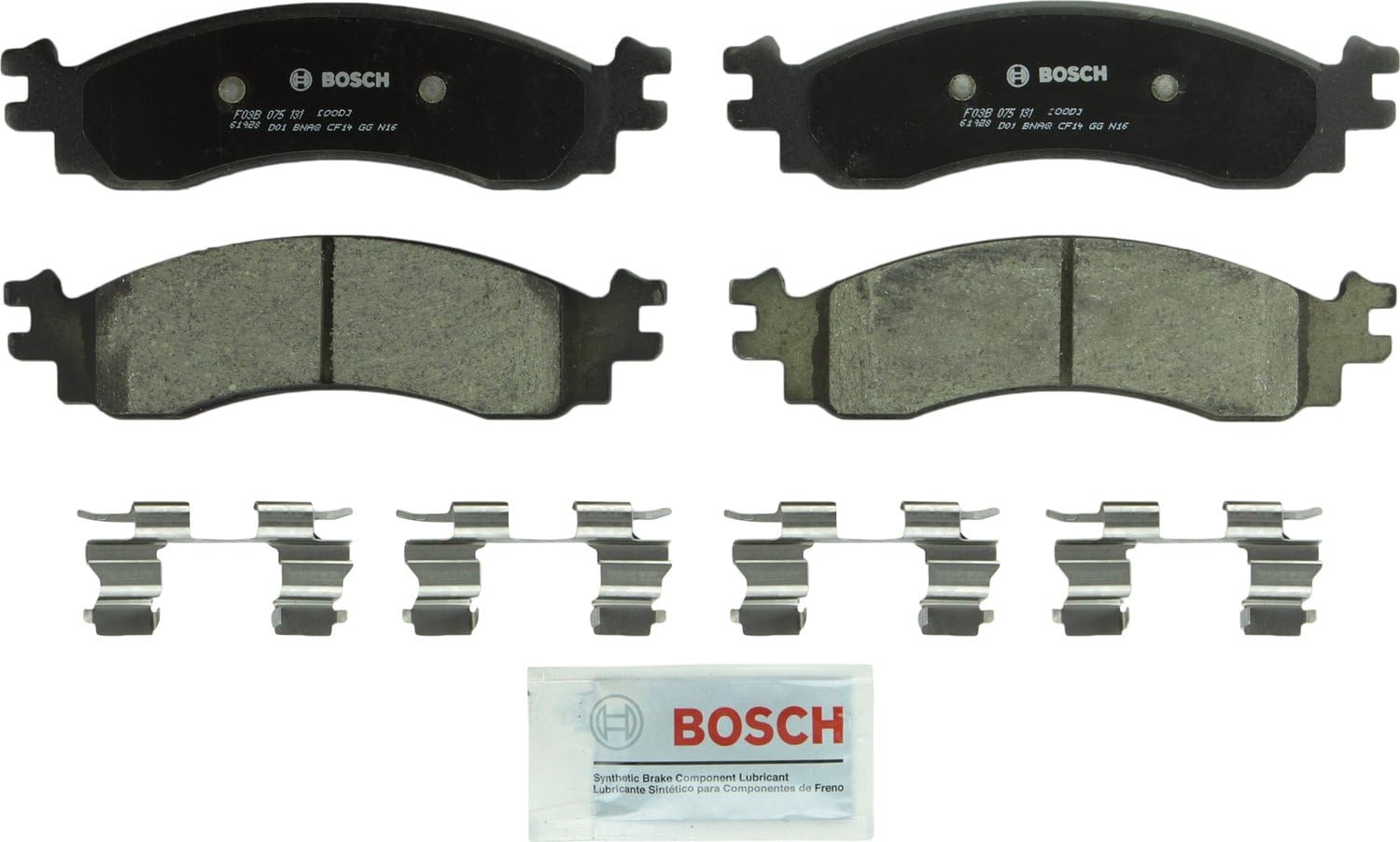
2. BOSCH QuietCast BC1158 Premium Ceramic Front Brake Pad Set
| Brand Name | Bosch |
|---|---|
| Auto Part Position | Front |
| Material Type | Ceramic |
| Automotive Fit Type | Vehicle Specific Fit |
The Bosch QuietCast BC1158 front brake pad set is designed as a direct-fit replacement for select Ford Explorers and similar models, delivering quieter stops and reduced rotor wear compared with many economy pads. In everyday use these ceramic pads provide consistent pedal feel and strong stopping power during normal commuting and highway driving, while the pre-attached multilayer rubber-core shims and powder-coated backing plates help cut vibration and corrosion for lower noise over time. Bosch bundles hardware where required and includes synthetic lubricant to ease installation and reduce caliper drag. Expect lower brake dust and a cleaner wheel appearance versus semi-metallic options, and a protective transfer layer that helps extend pad and rotor life. The pads are aimed at drivers who want factory-quality braking without aftermarket harshness, but they are not intended for track use or heavy towing where higher-temperature semi-metallic or performance pads perform better.
Best for: Drivers of 2006–2010 Ford Explorers who prioritize quiet, low-dust braking and factory-quality replacement feel for daily driving and highway use.
Less Ideal for: Enthusiasts who do frequent high-speed track days or owners who regularly tow heavy loads should choose a high-temperature or heavy-duty friction compound instead.
- Direct vehicle-specific fit for compatible front applications, simplifying installation.
- Pre-attached multilayer rubber-core shims reduce noise and vibration during braking.
- Ceramic friction formula yields low dust and consistent pedal feel for daily driving.
- Powder-coated backing plates and protective transfer layer improve corrosion resistance and pad/rotor longevity.
- Not formulated for high-temperature track or severe towing applications where semi-metallic pads perform better.
Verdict: Choose Bosch QuietCast BC1158 for a quiet, low-dust, factory-quality front brake pad replacement on 2006–2010 Ford Explorers.
3. Detroit Axle Ceramic Brake Pads with Hardware — Front and Rear Kit for 2006-2010 Ford Explorer / 2007-2010 Explorer Sport Trac and Mercury Mountaineer

| Material Type | Ceramic |
|---|---|
| Auto Part Position | Front, Rear |
| Automotive Fit Type | Vehicle Specific Fit |
| Number of Items | 4 |
| Specification Met | OEM |
These Detroit Axle brake pads are a vehicle-specific replacement kit that includes two front and two rear ceramic pads plus mounting hardware, so you get everything needed for a standard pad swap. The ceramic formula and copper fibers are intended to resist heat fade, reduce dust, and produce a quieter pedal feel compared with many semi-metallic alternatives. Chamfers and multi-layer backing are used to limit vibration and help deliver a smoother stop, while the included hardware simplifies installation for DIYers or independent shops. Because they are made to match factory fitment, they are an easy way to restore braking performance without changing rotors or calipers. Expect less rotor wear than some aggressive compounds and lower noise, but ceramic pads can sacrifice a bit of bite under hard repeated braking compared with high-performance semi-metallic options. For drivers prioritizing low dust, quiet operation, and straightforward replacement on the specified Explorer/Mountaineer models, this kit is a practical, no-surprises choice.
Best for: Buyers who want a reliable, low-dust, and quiet replacement that restores factory-like braking on 2006–2010 Explorer and related models with minimal fuss and installation complexity.
Less Ideal for: Drivers who regularly tow heavy loads, do frequent high-speed descents, or need maximum fade resistance and aggressive stopping power should consider performance-rated semi-metallic options instead.
- Complete kit includes front and rear ceramic pads plus mounting hardware for a one-purchase replacement
- Ceramic compound with copper fibers reduces dust and runs quieter than many semi-metallic pads
- Design features chamfers and multi-layer backing to reduce vibration and noise
- Formulated for improved high-temperature resistance to reduce brake fade
- Ceramic pads may provide less aggressive initial bite than performance-oriented semi-metallic compounds
Verdict: A complete, vehicle-specific ceramic pad kit that delivers quieter, lower-dust braking and an easy swap for 2006–2010 Ford Explorer and similar models.
4. HUSCH Rear Ceramic Brake Pads Kit D1109 for 2006–2010 Ford Explorer and Mercury Mountaineer

| Auto Part Position | Rear |
|---|---|
| Compatible with Vehicle Type | Car, SUV, Truck, Van |
| Number of Items | 4 |
| Material Type | Ceramic |
| Specification Met | OEM |
These HUSCH rear ceramic brake pads are a direct-fit replacement designed for the 2006–2010 Ford Explorer family and compatible Mercury models. They use ceramic friction material that the listing highlights as non-metallic, producing less brake dust and easier wheel cleaning compared with many semi-metallic pads. The pads are positioned for rear axle use and claim a high friction coefficient for shorter stopping distances and quiet operation when properly installed. Practical benefits include low dust, reduced noise, and a vehicle-specific fit that simplifies installation for DIYers or shops. Limitations to consider are that the listing does not provide measured pad thickness, heat tolerance data, or mileage expectancy, so longevity and high-load performance on towing or heavy-duty use are uncertain. Buyers replacing rear pads on these model years who prioritize cleanliness and a quiet, OEM-like feel will likely find this kit suitable, but drivers who need heavy-duty fade resistance or track-capable braking should look at performance-oriented alternatives.
Best for: Budget-minded buyers replacing rear pads on 2006–2010 Ford Explorer or equivalent Mercury models who want a quiet, low-dust, factory-style replacement that is easy to install.
Less Ideal for: Drivers who regularly tow, haul heavy loads, or run the vehicle on track and need pads rated specifically for high-temperature or heavy-duty performance.
- Ceramic material designed to produce minimal brake dust for cleaner wheels
- Vehicle-specific rear fit for 2006–2010 Ford Explorer family simplifies installation
- Marketing lists a high friction coefficient for shorter stopping distances
- Manufactured to meet factory-specification standards and includes four pads
- No published data on pad life, thermal fade resistance, or measured thickness
Verdict: A budget-friendly, low-dust ceramic rear pad kit that delivers quiet, factory-style braking for 2006–2010 Ford Explorer family vehicles.
5. Bendix Priority1 CFC1158 Ceramic Front Brake Pads with Hardware

| Auto Part Position | Front |
|---|---|
| Material Type | Ceramic |
| Included Components | (1) Bendix Priority 1 Ceramic Brake Pad Set with Installation Hardware |
| Automotive Fit Type | Vehicle Specific Fit |
These Bendix Priority1 ceramic front brake pads are built to the vehicle fitment listed and include installation hardware so you can replace the front pads without sourcing extras. They use a ceramic friction compound with shims, slots, and chamfers intended to reduce noise and provide consistent pedal feel during everyday driving and heavier loads. Typical use is street and highway driving on a 2006–2010 Ford Explorer where drivers want steady stopping power and low NVH. The pads are engineered to factory-fit dimensions and meet OEM specification claims, which simplifies installation and helps maintain brake balance. The main practical benefits are quieter operation, controlled dust compared with semi-metallic options, and a focus on reliable, fade-resistant braking under normal to moderately demanding conditions. Limitations are that ceramic pads can wear faster under extreme towing or heavy-duty repeated stops compared with some heavy-duty semi-metallic formulations, and they are not optimized for performance track use.
Best for: Drivers of 2006–2010 Ford Explorer who prioritize dependable, quiet daily braking and want a straightforward factory-style replacement.
Less Ideal for: Drivers who regularly tow heavy loads, do frequent steep descents, or need track-capable braking should consider a heavy-duty semi-metallic or performance pad instead.
- Vehicle-specific fit and included installation hardware simplify replacement
- Ceramic material and shims/slots/chamfers reduce brake noise
- Designed to meet factory specifications for consistent pedal feel
- Lower brake dust compared with many semi-metallic pads
- Ceramic compound is less suitable for heavy towing or extreme repeated high-heat stops
Verdict: A quiet, factory-fit ceramic front pad set that delivers reliable, everyday stopping performance for 2006–2010 Ford Explorer owners seeking dependable replacements.
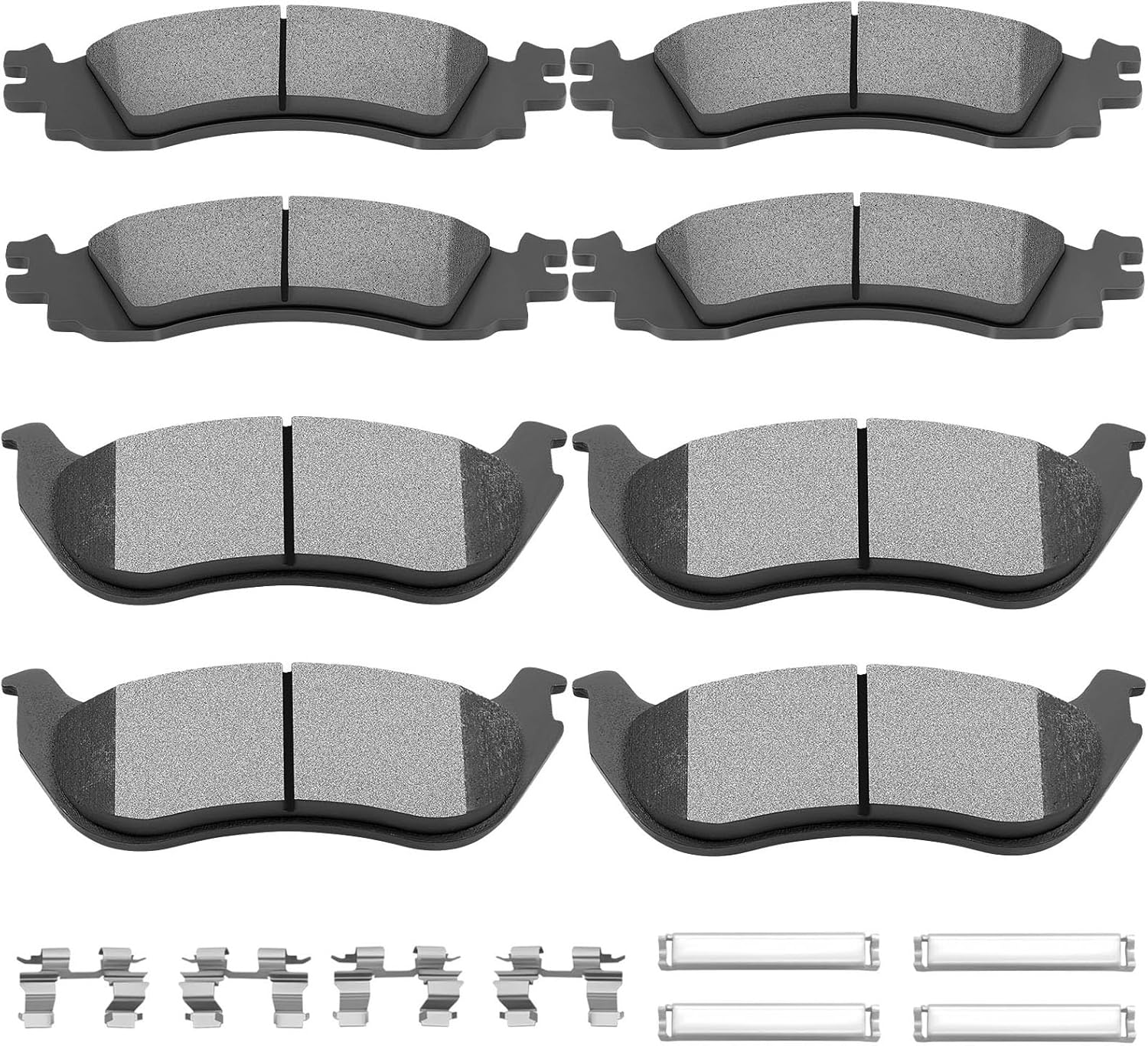
6. SCITOO Front Brake Pad Kit, Ceramic (8-piece)
| Material Type | Ceramic |
|---|---|
| Auto Part Position | Front |
| Unit Count | 8.0 Count |
| Automotive Fit Type | Vehicle Specific Fit |
These SCITOO front brake pads are a vehicle-specific ceramic kit sold as eight pieces to replace the front pads on compatible 2006–2010 Ford Explorer applications and related models. They are pre-chamfered and fitted with noise-dampening shims to reduce squeal, and the manufacturer recommends a gentle 200-mile break-in for consistent bedding and longer life. Ceramic construction keeps dust and cabin noise lower than semi-metallic options, making them a practical choice for daily driving and commuting. Installation is direct-fit with no modifications required when the correct part number is used, and the kit comes pre-treated to shorten break-in time. Limitations include the inherent lower heat capacity of ceramic material compared with heavy-duty semi-metallic pads, so they are less suited to frequent towing or aggressive driving. Buyers should verify exact caliper and brake option fitment before purchase because brake assemblies can vary within the same model year based on factory packages.
Best for: A cautious buyer seeking quiet, low-dust daily-driving brake pads for a 2006–2010 Ford Explorer who values proven fitment and positive user feedback when choosing replacement parts.
Less Ideal for: Drivers who frequently tow heavy loads, perform aggressive driving, or need high-temperature fade resistance should consider purpose-built semi-metallic or performance pads instead.
- Vehicle-specific direct-fit kit that installs without modification when matched correctly
- Ceramic material produces less brake dust and quieter operation for daily driving
- Pre-chamfered pads and noise-dampening shims to reduce squeal and initial vibration
- Pre-treated friction surface to shorten break-in time and promote consistent wear
- Ceramic formulation has lower heat tolerance than performance semi-metallic pads, so not ideal for heavy towing or track use
- Fitment can vary by factory brake option so VIN or part-number verification is necessary before ordering
Verdict: A quiet, low-dust, direct-replacement ceramic front pad kit well suited for everyday driving on 2006–2010 Ford Explorer models.
7. BOSCH Blue Ceramic Rear Disc Brake Pad Set with Hardware (BE964H)

| Auto Part Position | Rear |
|---|---|
| Material Type | Ceramic |
| Included Components | Brake Pads, hardware kit |
| Automotive Fit Type | Vehicle Specific Fit |
These Bosch Blue ceramic rear brake pads are a vehicle-specific replacement engineered for everyday driving on 2006–2010 Ford Explorer applications. They use Bosch platform-specific ceramic friction designed to give consistent stopping power, reduced brake fade, and quiet operation thanks to multi-layer shims and OE-style slots and chamfers. The set arrives ready to install with a hardware kit, synthetic lubricant and pads wrapped in a protective towel, which makes a DIY swap or shop installation simpler. A rust-inhibitive coating on the backing plates helps reduce corrosion and noisy operation over time. Because the formulation emphasizes low noise and low dust, drivers who prioritize calm, reliable braking will appreciate the feel and reduced wheel cleanup. These are not a performance racing pad, so drivers expecting aggressive track-level bite or extreme fade resistance under heavy towing should choose a different product; however for daily driving on the Explorer they offer a durable, quiet, factory-like replacement that balances longevity and comfort.
Best for: Buyers who want a quiet, factory-like rear brake replacement for a 2006–2010 Ford Explorer and prefer a low-risk, easy-to-install part with proven brand backing.
Less Ideal for: Drivers who need high-temperature track or heavy towing performance should look at performance-oriented or heavy-duty brake formulations instead.
- Platform-specific ceramic friction for consistent everyday stopping performance
- Multi-layer shims and OE-style slots/chamfers reduce noise and improve pedal feel
- Includes hardware kit and synthetic lubricant for easier installation
- Rust-inhibitive coating on backing plates to limit corrosion and squeal
- Not intended for heavy towing or high-performance track use
Verdict: A dependable, quiet factory-style ceramic rear pad set that makes replacing the Explorer’s rear brakes simple and low risk.
Choosing the Right 2006-2010 Ford Explorer Brake Pads: Key Factors to Consider
Pad Material and Friction Formula
Pad material determines how the pads generate friction, handle heat, and wear. Metallic compounds often deliver strong initial bite and high heat tolerance but can transfer more noise and accelerate rotor wear, which matters when you want to preserve factory rotors on a 2006-2010 Explorer. Ceramic-based formulas tend to produce quieter operation and gentler rotor interaction, but some ceramic blends trade a bit of initial bite for comfort.
Consider material tradeoffs against your typical driving. If you tow occasionally or drive in hilly areas, a blend with better heat resistance will maintain stopping power under load. For mostly urban and highway driving with an emphasis on quiet operation, a ceramic-oriented compound often offers the best balance for the Explorer.
Stopping Performance and Modulation
Stopping performance is not just peak deceleration but how the pad delivers brake feel and modulation. Consistent, predictable modulation lets you control stops smoothly in traffic and while towing. Some compounds provide aggressive initial bite that shortens stops but can lead to grabby feel at low speeds, which can be unsettling on a family SUV like the Explorer.
Assess how you drive: frequent city stops favor a pad that resists fade and offers linear pedal response. For highway-focused drivers, consistent highway braking and resistance to glazing matter more than an overly aggressive bite. Look for pads formulated to maintain performance across a range of temperatures and loads typical for the 2006-2010 Explorer.
Wear Life and Rotor Compatibility
Longevity influences replacement intervals and total braking system cost. Some high-friction compounds wear faster and can accelerate rotor wear, forcing rotor resurfacing or replacement sooner than expected. For the 2006-2010 Explorer, where many owners maintain original rotors, choosing pads that provide reasonable life without excessively abrading rotors helps control maintenance.
Check manufacturer guidance for expected pad thickness loss under normal driving. Also consider whether the pad backing and chamfering reduce edge wear and heat-related glazing, since those details affect how evenly a pad uses and how it interacts with the rotor surface over time.
Noise, Vibration, and Harshness (NVH)
Brake squeal and vibration are common owner complaints and are influenced by pad formulation, backing plate design, and included shims or chamfers. Excessive noise can make a safe, effective pad feel inferior and lead to unnecessary service calls. For the Explorer, which often carries passengers, minimizing squeal and harshness improves daily driving comfort.
Look for pads that include anti-squeal shims or coatings and that have backing plate designs engineered to damp vibration. Proper installation and hardware condition also matter; worn caliper hardware or missing shims will undermine even the quietest pad compound.
Fitment and Hardware Compatibility
Correct fitment is essential for safe operation and easy installation. The 2006-2010 Ford Explorer has specific pad shapes, clip placements, and hardware requirements. A pad that matches factory mounting points and comes with the correct anti-rattle clips or sensors reduces installation time and the chance of installation errors.
Consider whether the pads include required hardware or if you need to reuse or replace caliper clips, pins, and shims. Properly matched hardware ensures even pad contact and prevents uneven wear or noise that can result from mismatched components.
Heat Management and Fade Resistance
Heat buildup during repeated braking can cause fade, where stopping power declines as temperatures rise. Fade resistance depends on the friction material and backing plate construction. For Explorers used for towing, hill descent, or heavy loads, fade resistance is a higher priority than for light commuter use.
Evaluate pad compounds rated for extended high-temperature exposure and look for features like higher mass backing plates or heat-dissipating formulations. Good heat management preserves consistent pedal feel and reduces glazing that degrades performance over time.
Front Vs Rear Brake Pad Roles on the Explorer
The front and rear pads play different roles in stopping dynamics. Front pads handle the majority of braking force and therefore typically wear faster. For the 2006-2010 Explorer, ensuring the front pads match your desired stopping performance and fade resistance is especially important when towing or carrying heavy loads.
Rear pads contribute to stability and parking brake function. Selecting rear pads with balanced bite relative to the fronts helps avoid nose-dive or premature rear lockup during hard stops. When replacing pads, many owners choose matched compounds front and rear for consistent pedal feel, but pairing a slightly milder rear compound can improve low-speed modulation.
- Front pads: prioritize heat tolerance and strong initial bite for primary stopping
- Rear pads: focus on stability, parking brake engagement, and balanced wear
- Consider matched or complementary compounds for uniform pedal feel
Signs Your Explorer Needs Brake Pads Replaced
Several symptoms indicate pads are due for service. Squeal or persistent grinding noise often signals excessive wear or a missing wear indicator. Reduced pedal responsiveness, longer stopping distances, or vibration through the brake pedal under braking suggest either low pad thickness or rotor issues.
Pay attention to warning signs specific to the 2006-2010 Explorer such as recent increases in stopping distance under load or uneven wear patterns after normal service intervals. Addressing worn pads promptly protects rotors and maintains safe braking performance.
- High-pitched squeal during light braking
- Grinding noise when brakes are applied
- Spongy or soft brake pedal
- Visible pad thickness below manufacturer spec
- Pulling to one side under braking
DIY Replacement Tips for Owners
If you plan to replace pads yourself on a 2006-2010 Explorer, prepare by confirming correct pad orientation and gathering the right tools. A basic job requires a jack and stands, a torque wrench, caliper piston tool or C-clamp, and proper hardware. Inspect caliper pins, slide boots, and rotor condition while the assembly is open.
Follow break-in procedures recommended for the pad material to ensure proper bedding and to avoid glazing. Tightening torque specs and keeping fasteners clean and lubricated where appropriate prevents noise and ensures even pad wear.
- Verify proper pad fitment with the vehicle lifted before final installation
- Replace or service caliper hardware if pins are corroded or boots are damaged
- Use specified torque values on caliper bolts to avoid loosening or warping
- Perform a controlled bedding sequence after installation to mate the pad to the rotor
When to Favor Ceramic Over Semi-Metallic
Ceramic pads often excel at quiet operation, low dusting, and stable performance for daily driving. For many 2006-2010 Explorer owners who prioritize comfort and rotor longevity over maximum track-capable stopping, ceramic compounds are a practical choice.
Semi-metallic or blended compounds are preferable if you need greater heat tolerance for towing or repeated heavy braking. Choose ceramic for quieter, cleaner operation and semi-metallic if your driving includes heavier loads or frequent downhill braking.
- Ceramic: quieter, less dust, gentler on rotors
- Semi-metallic: stronger bite, better heat resistance, more dust
- Match compound choice to towing frequency and driving terrain
Fitment Checklist Before Purchase
Confirm that the pad set is specified for 2006-2010 Ford Explorer applications and matches front or rear placement. Check whether the set includes anti-rattle clips, shims, and wear indicators that align with the factory hardware. If your Explorer has factory upgrades or nonstandard calipers, double-check compatibility before buying.
Also inspect recommended pad thickness spec and compare to current measurements to set expectations for remaining life after service. Proper fitment minimizes installation headaches and reduces the chance of post-install noise or uneven wear.
- Ensure front vs rear designation matches the wheel location
- Verify inclusion of any required clips or wear sensors
- Compare pad thickness spec to OEM or current pad condition
- Confirm compatibility if your Explorer has aftermarket rotors or calipers
Still looking for the perfect fit?
Select your Ford Explorer configuration to see the most relevant Brake Pads recommendations
How We Chose the Best 2006-2010 Ford Explorer Brake Pads
We focused on criteria that matter specifically for the 2006-2010 Ford Explorer to assemble a practical shortlist of seven brake pad options. Key evaluation points included stopping performance under mixed driving conditions, pad material and heat management, expected life versus typical Explorer use, compatibility with factory rotors on the model years in scope, and NVH characteristics such as squeal and perceived pedal feel. We prioritized options that offer reliable fitment for the 2006-2010 Explorer bolt patterns and hardware layouts and that minimize rotor wear when paired with serviceable rotors.We excluded pads designed solely for racing or extreme track use and any options that require caliper modifications or nonstandard adapters. We also filtered out products with inconsistent fitment claims for the Explorer years listed. The final selections balance real-world durability, predictable braking behavior, and acceptable noise levels so that owners can match a pad to their driving patterns with confidence.
Our full evaluation process is outlined in our review methodology.
FAQ
How often should I replace brake pads on a 2006-2010 Ford Explorer?
Replacement intervals depend on driving style and load. Many owners find pads last between 30,000 and 60,000 miles. Heavier towing, frequent stop-and-go traffic, or aggressive driving can shorten that life and require earlier replacement.
What thickness indicates the pads need replacing?
A commonly used guideline is to replace pads when friction material is down to about 3 millimeters. Check both sides of the pad and inspect rotors as well since thin pads often coincide with rotor wear that may require machining or replacement.
Can I replace only the front or only the rear pads on my Explorer?
You can replace fronts or rears independently, but maintaining balanced braking is important. If fronts are replaced alone, ensure the rear pads are in reasonable condition and compatible in compound to avoid uneven pedal feel.
Why are my new pads making noise after installation?
New pad noise often comes from improper bedding, missing shims, or contaminated surfaces. Ensure hardware is tight, shims are installed, and complete a proper break-in sequence. Persistent squeal may indicate vibration that could be reduced with damping shims or anti-squeal paste applied where recommended.
Is it worth upgrading to higher-performance pads for occasional towing?
If you tow only occasionally, choose a pad with better heat resistance rather than a full high-performance racing compound. A higher-heat-capacity pad reduces the chance of fade during extended downhill braking without sacrificing daily comfort.
How do I check for uneven pad wear on the Explorer?
Visually inspect pad thickness across the entire pad surface and compare inner and outer faces. Uneven wear can result from sticking calipers, collapsed slides, or misaligned hardware. If wear is uneven, service the caliper hardware and address any sticking components before fitting new pads.
Final Verdict
Prioritize a pad that matches how you use your 2006-2010 Ford Explorer. For everyday commuting and family use, pads that emphasize quiet operation and gentle rotor interaction provide the best balance of comfort and longevity. If you tow frequently or drive in hilly terrain, favor compounds with stronger heat resistance and consistent modulation.Weigh tradeoffs among noise, rotor wear, and fade resistance when selecting pads. Focus first on correct fitment and required hardware, then choose the friction material and construction that align with your driving demands for a reliable, safe braking experience.
Explore More:
- Check out all Ford Explorer parts & accessories
- Explore Brake Pads Maintenance & Repair Guides
- Explore Brake System
- Browse all Auto Parts
