

Note: This article contains affiliate links. If you click on these links and make a purchase, I may earn a small commission at no extra cost to you. This helps support my research and content. Read my full affiliate disclosure here.
If you drive a Ford Explorer Sport Trac, choosing the right brake pads matters for safety, ride comfort, and long-term maintenance costs. The wrong pads can increase stopping distances, create excessive brake noise, or wear unevenly on this vehicle's specific front and rear brake systems. This guide shortlists the top brake pad options suited to the Sport Trac and explains the tradeoffs between stopping power, noise control, and pad life.Below you'll find a curated set of seven top choices for the Sport Trac along with the evaluation criteria used to pick them and practical advice on fitment, installation, and service intervals.
Looking for other parts? See all Ford Explorer parts & accessories.
Top Picks at a Glance
| Best Overall The best all-around choice for most situations | BOSCH QuietCast Premium Ceramic Front Disc Brake Pad Set (BC1158) |  |
| Best Quality Built to a higher standard if you want something more solid | Bendix Priority1 CFC1158 Ceramic Front Brake Pads (with Hardware) |  |
| Best Value The sweet spot between price and what you get | Detroit Axle Front Ceramic Brake Pads with Hardware (P-1158) |  |
| Best Budget The cheapest option that still gets the job done reliably | cciyu D833 Front Ceramic Brake Pads, Set of 4 |  |
| Highest Rated A top-rated pick with lots of positive feedback | Bendix Premium SBC833 Ceramic Front Brake Pads (front) |  |
| Most Popular A crowd favorite that many people choose with confidence | Detroit Axle 8‑Piece Drilled & Slotted Brake Kit with Ceramic Pads for 2006–2010 Ford Explorer/Mountaineer |  |
| Best Seller A high-volume bestseller chosen again and again | Bosch Blue BE964H Rear Ceramic Disc Brake Pad Set with Hardware |  |
1. BOSCH QuietCast Premium Ceramic Front Disc Brake Pad Set (BC1158)
| Material Type | Ceramic |
|---|---|
| Auto Part Position | Front |
| Included Components | Brake Pads |
| Automotive Fit Type | Vehicle Specific Fit |
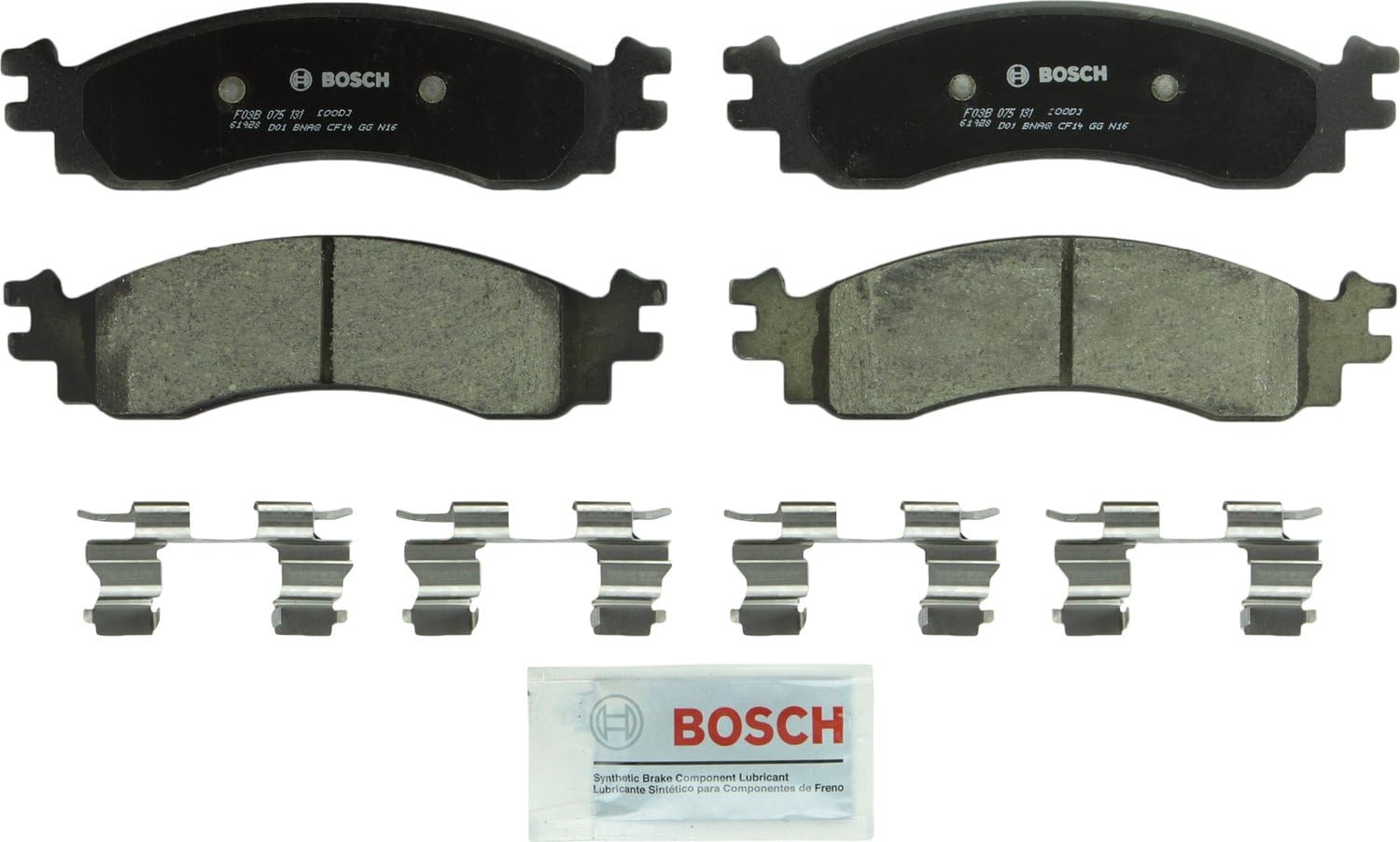
These Bosch QuietCast front brake pads are a vehicle-specific ceramic replacement designed to match factory-style performance on a single axle. They’re typically used when refreshing the front pads on compatible Explorers, Explorer Sport Trac and similar vehicles. Bosch fits each pad with an OE-style multilayer rubber-core shim to reduce noise and vibration, and the ceramic friction material is formulated for strong stopping power, low dust, and quieter operation. The kit includes pads for two wheels plus hardware where required and a small tube of synthetic lubricant for slide points, which helps installation and initial operation. Powder-coated backing plates and chamfers help resist corrosion and promote even wear. Expect good durability and low rotor wear compared with more aggressive compounds, though ceramic pads can feel slightly less bite under severe track-style braking compared with semi-metallic options. These are a solid choice if you want a quiet, low-dust, factory-like replacement for everyday driving and towing at normal passenger-vehicle duty levels.
Best for: Drivers seeking a quiet, low-dust, factory-quality front pad replacement for regular street use and light towing on compatible Explorers and Sport Tracs who prioritize everyday comfort and longevity.
Less Ideal for: People who frequently drive on track, perform aggressive braking, or need maximum fade resistance should consider high-performance semi-metallic options instead.
- OE-style multilayer rubber core shims for reduced noise and vibration
- Ceramic friction material provides low dust and consistent everyday stopping power
- Includes hardware kit and lubricant for a straightforward install
- Powder-coated backing plate resists corrosion and promotes longer service life
- Ceramic compound offers less initial bite than semi-metallic pads under extreme, track-type braking
Verdict: Choose these Bosch QuietCast front ceramic pads if you want a quiet, low-dust, factory-style replacement that delivers reliable everyday stopping for the Ford Explorer Sport Trac and similar vehicles.
2. Bendix Priority1 CFC1158 Ceramic Front Brake Pads (with Hardware)

| Brand | Bendix |
|---|---|
| Auto Part Position | Front |
| Material Type | Ceramic |
| Included Components | (1) Bendix Priority 1 Ceramic Brake Pad Set with Installation Hardware |
These Bendix Priority1 ceramic front brake pads are a vehicle-specific replacement designed to match factory fit and deliver quiet, consistent braking for everyday driving and spirited use. They come as a single pad set with installation hardware and incorporate shims, slots, and chamfers to reduce noise and ensure a precise fit in the caliper. The ceramic friction material is tuned to limit brake fade under repeated stops and maintain predictable bite, which helps on traffic-heavy commutes and when carrying moderate loads. Installation is straightforward for a competent DIYer or mechanic since the kit includes hardware and is shaped for the listed Ford applications. Expect lower dust and quieter operation compared with many semi-metallic pads, though ceramic pads can run a bit softer under extreme towing or track heat compared with heavy-duty semi-metallic compounds. For drivers wanting a near-factory feel, reduced dust, and reliable stopping in daily and performance-oriented street driving, these pads balance comfort and capability well.
Best for: Drivers who want a quiet, low-dust replacement that closely matches factory braking feel while maintaining reliable stopping on city and highway driving.
Less Ideal for: Drivers who frequently tow heavy loads or do high-heat track sessions should consider more aggressive semi-metallic or heavy-duty pads instead.
- Factory-specific fit and included hardware simplify installation
- Ceramic material produces low dust for cleaner wheels
- Shims, slots, and chamfers reduce noise for a quiet braking feel
- Formulated to resist brake fade for consistent stopping under repeated use
- Ceramic compound may be less durable than semi-metallic options under heavy towing or track use
Verdict: A near-factory-feel ceramic front pad set that delivers quiet, low-dust braking and consistent performance for street-focused Ford Explorer Sport Trac drivers.
3. Detroit Axle Front Ceramic Brake Pads with Hardware (P-1158)
| Auto Part Position | Front |
|---|---|
| Material Type | Ceramic |
| Fit Type | Vehicle Specific Fit |
| Number of Items | 1 |
| Manufacturer Warranty Description | 6-Month |
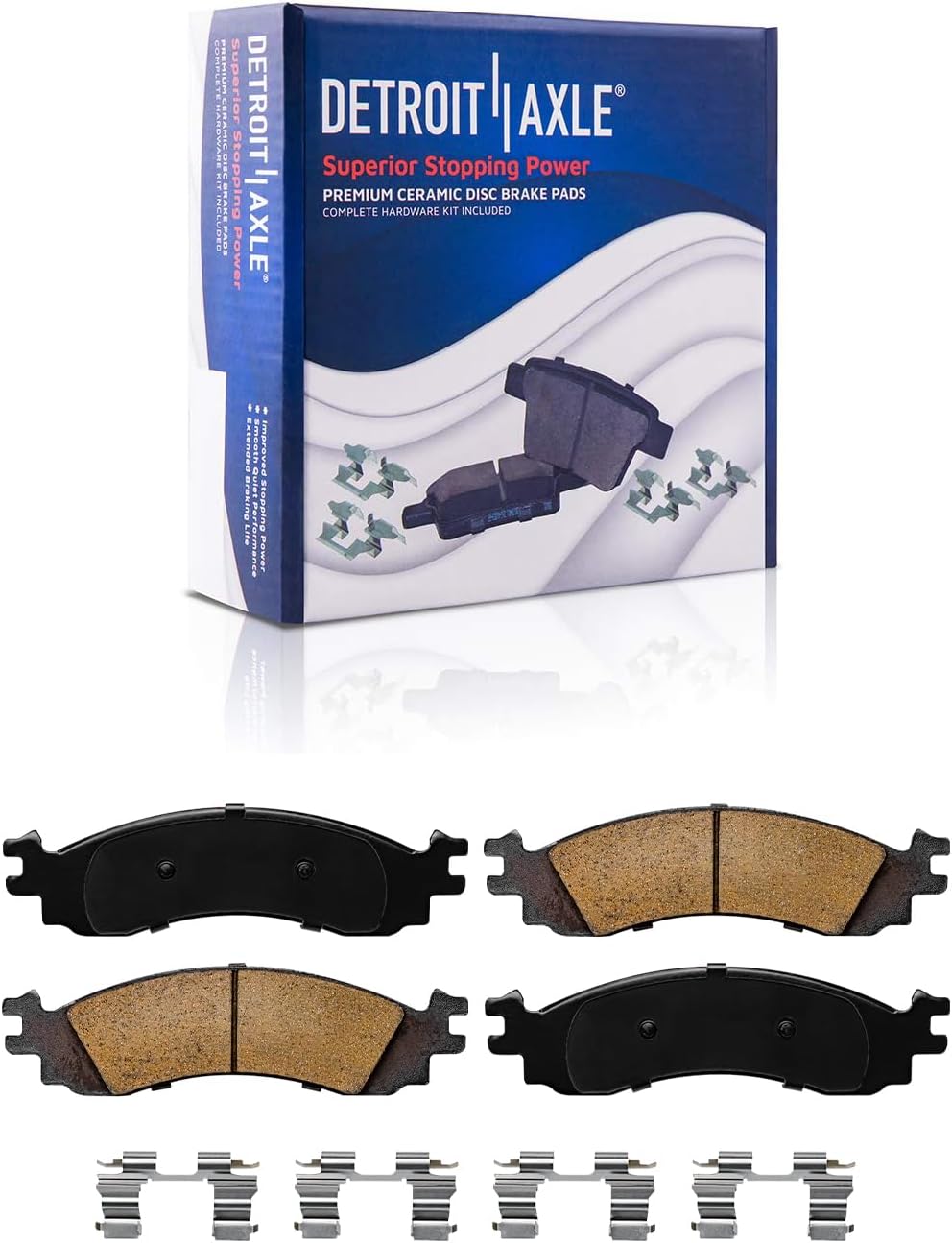
These Detroit Axle front brake pads are a direct-fit, vehicle-specific replacement sold as a kit with hardware. They use a ceramic friction formula with chamfers and multilayer material aimed at quieter operation, reduced dust, and stable braking under higher temperatures. Typical use is straightforward: swap the worn front pads for these using the included hardware to restore stopping performance and reduce rotor wear compared with abrasive metallic pads. The ceramic compound helps cut squeal and leaves less residue on wheels while the kit’s fitment list targets 2006–2010 Explorer and Mountaineer variants plus select Taurus SHO and Explorer Sport Trac models. Limitations to note are that ceramic pads can feel slightly less bite-heavy on cold stops than some semi-metallic performance pads, and this is an aftermarket replacement rather than a dealer-sourced factory part. For drivers prioritizing low noise, cleaner wheels, and a factory-like feel for daily driving, these pads are a practical option.
Best for: Drivers who want a quiet, low-dust, factory-style front brake replacement for everyday use and value straightforward fitment and included hardware.
Less Ideal for: Enthusiasts who demand aggressive cold bite or track-level stopping power should consider higher-performance semi-metallic options instead.
- Vehicle-specific fit for targeted Ford and Mercury front applications simplifies installation
- Ceramic compound reduces brake dust and noise compared with many metallic pads
- Includes installation hardware so you get pads ready to install
- Designed for high-temperature resistance to reduce fade during heavier braking
- Ceramic material can deliver a milder initial bite compared with semi-metallic performance pads
Verdict: A practical, low-noise ceramic front pad kit with hardware that restores everyday braking feel for the specified mid-2000s Ford/Mercury models.
4. cciyu D833 Front Ceramic Brake Pads, Set of 4

| Material | Ceramic |
|---|---|
| Auto Part Position | Front |
| Automotive Fit Type | Vehicle Specific Fit |
| Number of Items | 1 |
These cciyu D833 front ceramic brake pads are a budget-focused, vehicle-specific replacement sold as a four-piece kit for older Ford Explorer Sport Trac and similar vehicles. They use ceramic friction material and feature slots and chamfered edges to reduce noise and improve initial bite. In everyday use they provide quiet braking and predictable pedal feel for street driving, with emphasis on reducing vibration and wear through NVH-focused formulation. Installation is typical for front pad swaps and the kit is intended as a direct-fit replacement so mechanics can install them without modifying hardware. Limitations are that ceramic pads prioritize low noise and comfort over extreme fade resistance, so they are not aimed at towing, heavy-duty hauling, or aggressive driving; buyers should also verify exact year and part number fitment before purchase. For drivers seeking a low-cost, quiet replacement for routine city and highway use these pads deliver solid performance with minimal fuss.
Best for: Drivers looking for an affordable, quiet front brake replacement for routine commuting and light highway use on older mid-2000s SUVs and trucks who prioritize low noise and straightforward installation.
Less Ideal for: Owners who frequently tow heavy loads, drive aggressively, or need pads engineered for high-temperature track use should choose a performance-oriented or heavy-duty option instead.
- Ceramic compound designed for quiet operation and low vibration
- Slots and chamfers improve pad bite and can extend pad life
- Sold as a complete front set of four for one-axle replacement
- Vehicle-specific fit reduces installation complexity
- Ceramic formulation is less suited for heavy towing or track use where higher fade resistance is needed
Verdict: A cost-conscious, quiet ceramic front pad kit that makes a straightforward, low-noise replacement for routine street use on older Explorer Sport Trac–era vehicles.
5. Bendix Premium SBC833 Ceramic Front Brake Pads (front)
| Auto Part Position | Front |
|---|---|
| Compatible with Vehicle Type | Cars, SUV, Truck |
| Model Number | SBC833 |
| Included Components | Brake pad set with installation hardware |
| Material Type | Copper |
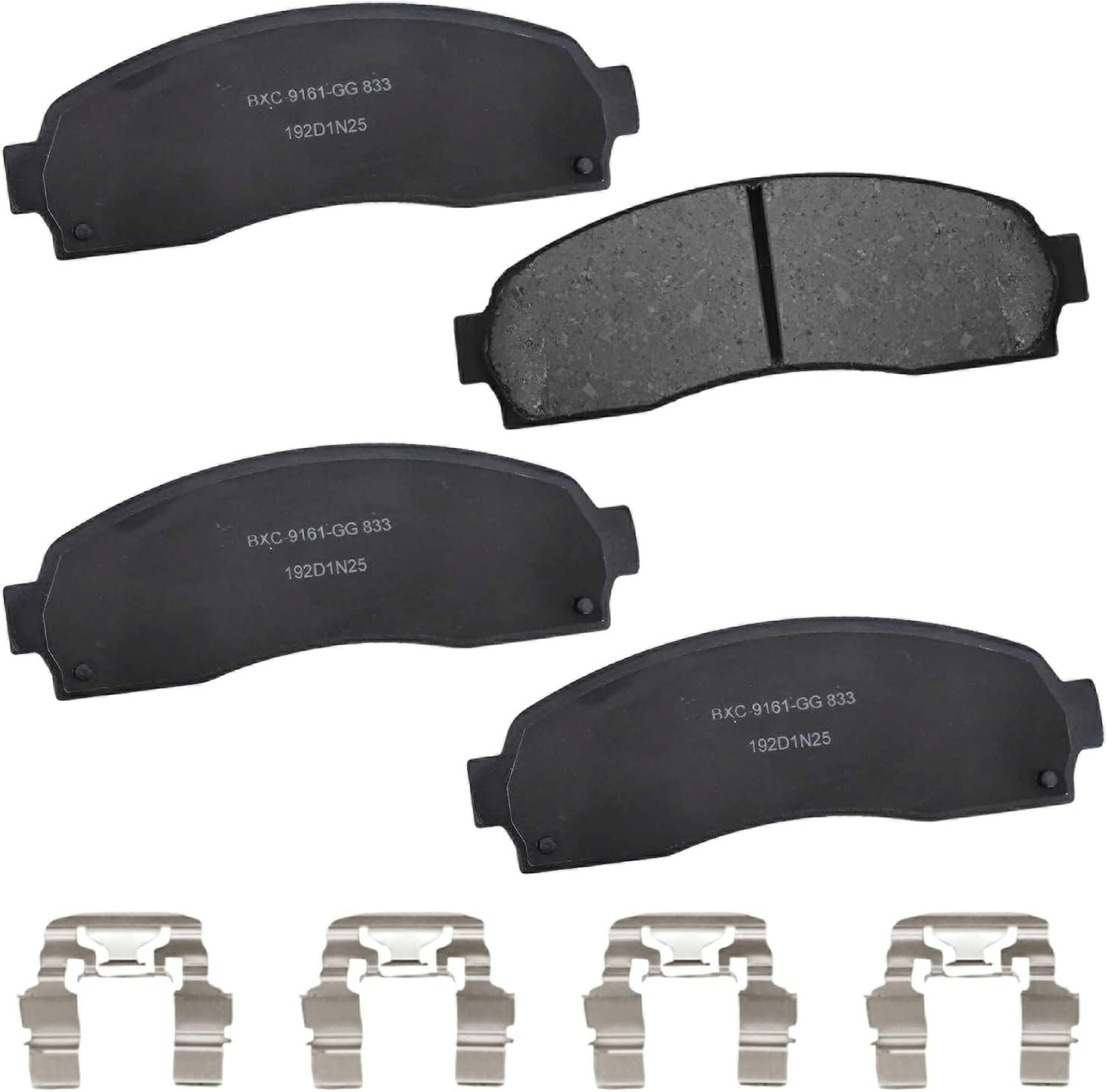
These Bendix Premium SBC833 ceramic front brake pads are a direct-fit replacement built to match factory fit, form, and function for select Ford Explorer, Explorer Sport Trac, Ranger and related Mazda/Mercury models. They are used as a front axle replacement during a service interval and include basic installation hardware for a one-kit swap. The ceramic compound and copper material aim to reduce brake fade and deliver smooth, quiet stops for daily driving, while the construction resists wear and corrosion to lengthen service life. Because the set is vehicle-specific, installation is straightforward for DIYers or technicians and restores predictable pedal feel without the bedding fuss of performance compounds. Limitations are that these are not aimed at heavy towing or aggressive track use and fitment is restricted to the listed model years and configurations, so confirm fitment before purchase.
Best for: Buyers who prioritize dependable, factory-like braking performance and low maintenance for everyday driving on the specified Explorer Sport Trac and similar models.
Less Ideal for: Drivers who need heavy-duty or performance-oriented pads for towing, racing, or aggressive driving should choose a semi-metallic or high-performance option instead.
- Factory-style fit and hardware included for straightforward installation
- Ceramic formulation reduces noise and helps maintain consistent pedal feel
- Resistant to wear and corrosion for longer service intervals
- Designed to limit brake fade during normal daily driving
- Not designed for heavy towing, repeated hard stops, or track use
Verdict: A reliable, vehicle-specific ceramic front pad set that restores factory braking feel for everyday driving on the listed Ford Explorer Sport Trac and similar models.
6. Detroit Axle 8‑Piece Drilled & Slotted Brake Kit with Ceramic Pads for 2006–2010 Ford Explorer/Mountaineer
| Fitment | 2006–2010 Ford Explorer / 2007–2010 Explorer Sport Trac / 2006–2010 Mercury Mountaineer |
|---|---|
| Kit contents | 4 rotors (front & rear drilled & slotted) and 4 ceramic brake pads with hardware |
| Rotors | Drilled and slotted with zinc plating |
| Brake pad type | Ceramic |
| Warranty | 10 Year |
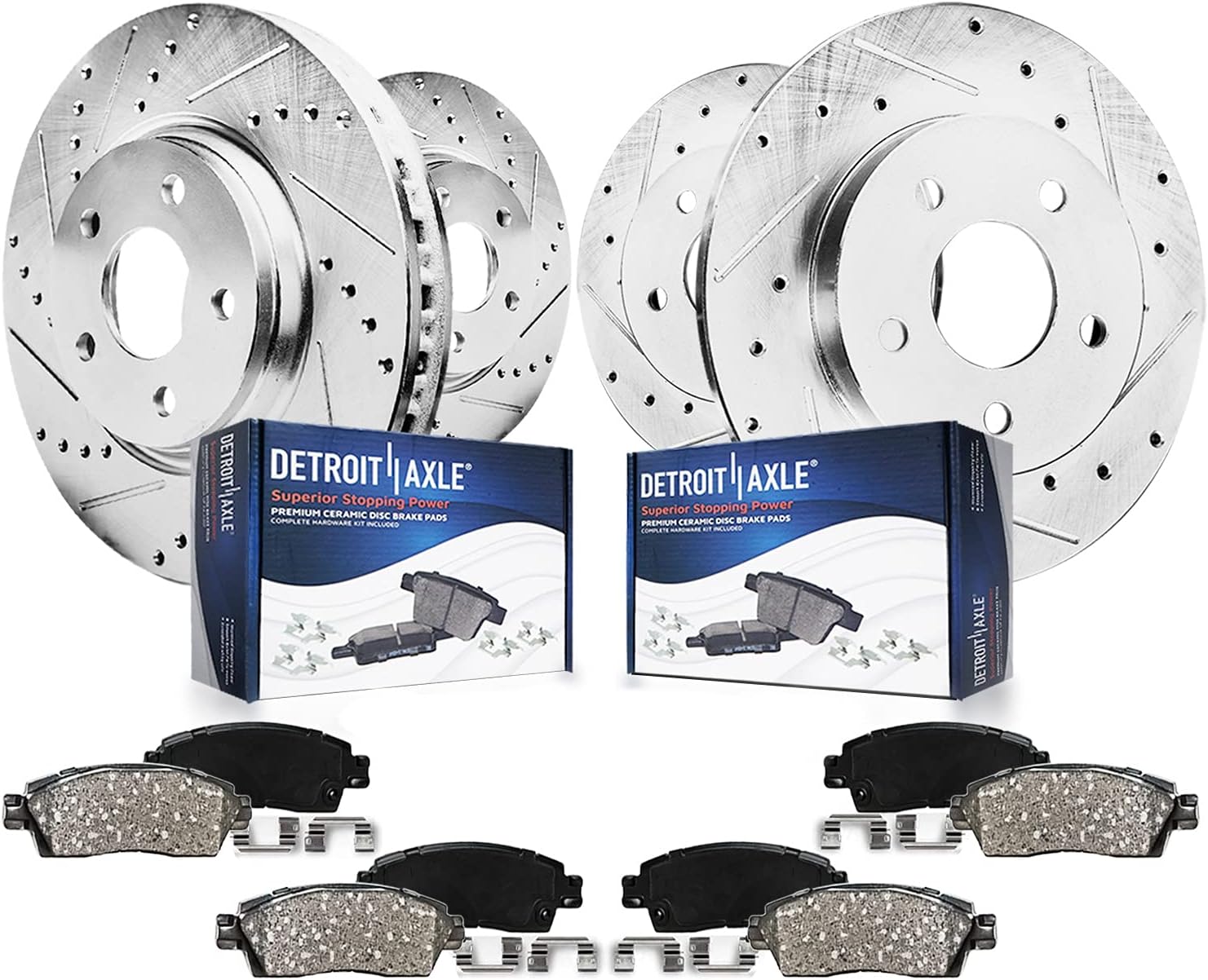
This Detroit Axle kit supplies everything needed to replace both front and rear brake rotors and pads on a 2006–2010 Ford Explorer, Explorer Sport Trac, or Mercury Mountaineer. The rotors are drilled and slotted with zinc plating to help with heat dissipation and corrosion resistance, while the included ceramic pads are formulated to produce lower dust and quieter operation than many semi‑metallic options. Installation is straightforward because the rotors are machined with alignment holes to match factory fitment and the kit includes necessary hardware. In daily driving the combination should give improved fade resistance during repeated stops and cleaner wheels over time thanks to the plating and ceramic compound. Expect typical characteristics of ceramic pads, including a slightly softer initial bite compared with performance metallic pads and somewhat reduced towing/heavy‑use longevity. For buyers focused on reliable replacement fitment, lower dust, and quieter street driving, this kit is a practical all‑in‑one option; those seeking maximum track or heavy towing performance may prefer a different pad compound.
Best for: Buyers who want a single, factory‑fit replacement package that prioritizes quiet operation, reduced dust, and dependable fitment for routine street driving and light-duty use.
Less Ideal for: Drivers who routinely tow heavy loads, haul frequently, or push brakes hard on track sessions should consider a heavier‑duty or performance‑oriented pad and rotor setup instead.
- Complete 8‑piece kit includes front and rear rotors, ceramic pads, and installation hardware for a single service
- Drilled and slotted rotors improve cooling and help evacuate gases and moisture during repeated braking
- Zinc plating reduces surface corrosion and keeps wheels cleaner from brake dust
- Ceramic pads generate less dust and run quieter than many semi‑metallic alternatives
- Ceramic pads typically offer less initial bite and lower endurance under heavy towing or track use compared with metallic performance pads
Verdict: A convenient, factory‑fit brake replacement kit that delivers quieter, lower‑dust street braking with improved cooling for everyday Explorer Sport Trac and Mountaineer use.
7. Bosch Blue BE964H Rear Ceramic Disc Brake Pad Set with Hardware

| Brand Name | Bosch |
|---|---|
| Auto Part Position | Rear |
| Material Type | Ceramic |
| Manufacturer Part Number | BE964H |
| Automotive Fit Type | Vehicle Specific Fit |
These Bosch Blue BE964H rear ceramic pads are a vehicle-specific replacement designed for everyday driving on compatible Ford Explorers and Sport Trac models. The pads use a copper-free ceramic friction formula and OE-style slots, chamfers, and multi-layer shims to reproduce factory noise damping and pedal feel while limiting dust. Bosch supplies hardware and synthetic lubricant so the set is ready to install for one axle. In practice the pads deliver quiet, consistent stops for routine commuting and towing-light duties without aggressive bite that can catch inexperienced drivers off guard. The rust-inhibitive coating helps keep the backing plates from corroding over time, which reduces squeal and fitment issues on older trucks. Expect long pad life under normal driving but a more moderate performance envelope if you frequently tow heavy loads or drive aggressively; drivers who need heavy-duty fade resistance may prefer a more performance-oriented compound. For a risk-averse buyer wanting a reliable, factory-like rear pad replacement, these are a sensible, low-drama choice.
Best for: A safety-conscious driver who wants a quiet, factory-like rear brake replacement for routine commuting and light-duty use on a Ford Explorer or Sport Trac.
Less Ideal for: Drivers who frequently tow heavy loads, perform spirited driving, or need track-capable fade resistance should choose a performance-oriented pad instead.
- Platform-specific ceramic formulation for consistent, factory-style braking behavior
- OE-style multi-layer shims and slots reduce noise and vibration
- Includes hardware and synthetic lubricant for straightforward installation
- Rust-inhibitive coating on backing plates helps prevent corrosion-related noise and fitment problems
- Not optimized for heavy towing or aggressive driving where higher fade resistance is needed
Verdict: A quiet, factory-style rear ceramic pad set that delivers reliable, low-risk stopping for Ford Explorer and Sport Trac drivers who prioritize smooth daily performance.
Choosing the Right Ford Explorer Sport Trac Brake Pads: Key Factors to Consider
Stopping Power and Initial Bite
Stopping power determines how quickly the Sport Trac will slow from highway or city speeds. Different pad compounds deliver different coefficients of friction, which affect initial bite and overall stopping distance. For a vehicle like the Explorer Sport Trac that may carry cargo or tow occasionally, you want pads that provide consistent, linear brake response rather than a grabby initial bite that surprises drivers.
Also consider how braking performance holds up under repeated stops. Pads that fade under heat will show reduced stopping power during long descents or towing. Look for compounds and construction that manage heat without dramatic loss of friction.
Longevity and Wear Rate
Pad life affects maintenance frequency and long-term cost. Brake pad wear rate depends on compound, driving style, and vehicle weight. For the Sport Trac, which can be driven in mixed city and highway conditions, choose pads designed to deliver predictable wear rather than short-lived high-friction compounds that sacrifice life for bite.
Inspecting typical mileage estimates and reported wear patterns helps set realistic expectations. Also account for rotor condition; thin or rough rotors accelerate pad wear and may require rotor service when pads are changed.
Noise, Vibration, and Harshness
Noise is a common complaint after brake pad replacement. Some materials are prone to squeal, groan, or produce vibration that is felt through the pedal or steering wheel. For daily-driven Sport Trac owners, low-noise operation is often a top priority.
Look for pads with anti-squeal shims, chamfers, or proven low-noise compounds. Proper bedding-in procedures and matching pad compounds to the rotor surface also reduce the chance of persistent noise.
Rotor Compatibility and Heat Management
How a pad interacts with the rotor affects braking consistency and rotor life. Aggressive compounds can score or glaze rotors, while softer compounds may transfer material to the rotor surface. For the Sport Trac, consider pads that handle heat well and spread thermal load to avoid hot spots that cause warping.
If you tow or carry heavy loads, choose pads with better heat dissipation and stability under high temperatures to prevent brake fade and uneven rotor wear.
Dust, Wheel Cleanliness, and Environmental Factors
Brake dust varies widely by pad compound. High-metallic compounds tend to produce more dust and more abrasive particles that can affect wheel finish. Ceramic and low-dust formulations keep wheels cleaner and reduce abrasive wear on wheel surfaces.
If you live in areas with heavy road grime, salt, or frequent rain, pick pads rated for corrosion resistance in hardware and with dust characteristics that match your maintenance preferences.
Fitment and Ease of Installation
Correct fitment for the Sport Trac's front and rear calipers is essential. Pads that match OEM backing plate dimensions and include proper clips and shims reduce installation time and prevent fitment issues. Some pads also include wear indicators that make service easier.
Consider whether installation requires special tools or caliper hardware replacement. Choosing pads that align with common service practices for the Sport Trac reduces the chance of rework and ensures correct braking performance after installation.
Front Versus Rear Pad Considerations
The front and rear brake pads on the Sport Trac serve different roles. Front pads typically handle a greater share of braking force and therefore wear faster. When selecting pads, match the compound to the demands of each axle rather than using identical pads front and rear unless a manufacturer recommends it.
Pay attention to recommended pad thickness and backing plate design for each axle. In many cases, choosing a higher-friction compound for the front and a quieter, longer-lasting compound for the rear provides a balanced feel and reduces noise.
- Front pads take most of the braking load under heavy stops.
- Rear pads help stabilize the vehicle and are often selected for durability and noise control.
- Mixing compounds can be acceptable but avoid mismatched friction levels that change brake balance.
Installing New Pads on the Sport Trac
Proper installation affects performance and noise. Clean the caliper hardware, inspect the rotors for thickness and runout, and replace or lubricate hardware as needed. Use manufacturer-recommended lubricants on backing plates and contact points, and torque caliper mounting hardware to spec.
If rotors are below the thickness spec or show visible scoring, plan for rotor resurfacing or replacement. Replacing pads without addressing rotor problems can lead to rapid wear and poor braking feel.
- Always check rotor thickness against the Sport Trac specification before installing new pads.
- Use anti-squeal grease on pad edges and shims where applicable.
- Perform a proper bedding-in procedure after installation to ensure optimal compound transfer to the rotor.
Brake Pad Bedding and Break-In Procedures
Bedding-in new pads helps create an even transfer layer on the rotor and stabilizes friction characteristics. For the Sport Trac, a typical bedding routine involves a series of moderate decelerations from varying speeds, avoiding full stops during the initial cycles.
Avoid repeated hard stops until a proper transfer layer is established. Properly bedded pads reduce the risk of squeal, uneven deposits, and inconsistent braking feel.
- Start with several gentle stops to seat the pads.
- Gradually increase braking intensity without locking wheels.
- Allow components to cool between heavy braking cycles.
Signs You Need Brake Service
Recognizing early symptoms of pad wear on the Sport Trac can prevent rotor damage and maintain braking performance. Look for reduced pedal firmness, longer stopping distances, or a spongy feel under braking.
Unusual noises such as grinding usually indicate advanced pad wear or contact with the rotor backing plate and require prompt inspection.
- Brake pad wear symptoms include reduced stopping performance and audible noise.
- Visual inspection through the wheel can reveal pad thickness and uneven wear.
- Address persistent vibration or pulsation immediately, as these can signal rotor issues.
Choosing Between Ceramic and Semi-Metallic Compounds
Ceramic pads tend to produce less dust and run quieter, making them a good fit for daily-driven Sport Trac models where comfort and clean wheels are priorities. They typically offer smooth initial bite and predictable performance in normal driving conditions.
Semi-metallic compounds often provide stronger initial bite and better heat tolerance for heavier use or occasional towing, but they can generate more dust and noise. Consider your typical driving and load conditions when selecting compound type.
- Ceramic: lower dust, quieter, consistent for everyday driving.
- Semi-metallic: higher bite, better heat resistance, more dust.
- Match compound to your driving demands and rotor condition.
Still looking for the perfect fit?
Select your Ford Explorer configuration to see the most relevant Brake Pads recommendations
How We Chose the Best Ford Explorer Sport Trac Brake Pads
We focused on criteria that matter for owners of the Ford Explorer Sport Trac and selected pads that balance safety, drivability, and long-term value. Primary evaluation points included stopping performance under wet and dry conditions, measured by reported braking feel and initial bite; pad durability and expected mileage based on material composition and real-world durability reports; noise and vibration propensity, including bedding-in behavior and tendency to squeal; rotor compatibility and the likelihood of causing uneven rotor wear on the Sport Trac's braking system; and ease of installation, including whether pads fit common Sport Trac front and rear caliper designs without modification.We also considered heat management for repeated heavy braking, dust generation that affects wheel cleanliness, and how the pad compound interacts with common rotor materials to avoid premature glazing. Exclusions included any pads that required modifications to the Sport Trac's calipers, products with insufficient fitment data, and pads with repeated reports of abnormal wear or extreme noise on this vehicle. The final list favors proven compounds and balanced performance across these vehicle-specific dimensions.
Our full evaluation process is outlined in our review methodology.
FAQ
How often should I replace brake pads on a Ford Explorer Sport Trac?
Pad replacement frequency depends on driving habits and conditions. Many drivers on mixed city and highway routes see replacement intervals between 30,000 and 60,000 miles. Heavier use, towing, or aggressive braking can shorten that interval.
What are common brake pad wear symptoms to watch for?
Typical symptoms include decreased stopping performance, a spongy or soft brake pedal, a grinding sound which may indicate worn pads contacting the rotor, and visible thinning of the pad material when inspected through the wheel.
Can I replace only the front or rear pads on the Sport Trac?
You can replace only the worn axle, but it is best to inspect both axles at the same time. Replacing pads in matched pairs on the same axle maintains predictable brake balance and reduces the chance of uneven wear or noise.
Will ceramic pads reduce brake pad noise on my Sport Trac?
Ceramic pads generally run quieter and produce less dust than semi-metallic pads, so they can reduce audible noise in everyday driving. Noise can still occur if hardware is worn or rotors are glazed, so address those issues during replacement.
What causes brake pad noise or grinding after new pad installation?
Noise after installation often results from improper bedding, missing or damaged shims, dirty hardware, or uneven rotor surfaces. Grinding specifically suggests excessively worn pads or rotor contact and should be inspected immediately.
Do I need to resurface the rotors when installing new pads?
Resurfacing or replacing rotors depends on their thickness and condition. If rotors have deep grooves, warping, or are below the thickness specification, they should be resurfaced or replaced to ensure even pad contact and prevent rapid pad wear.
Final Verdict
When selecting brake pads for the Ford Explorer Sport Trac, prioritize stopping performance, noise control, and durability relative to how you use the vehicle. If you tow or do heavy braking, favor compounds with stronger heat resistance. For everyday commuting and quieter operation, lower-dust ceramic-type compounds are a practical choice.Balance the tradeoffs between initial bite and pad life, confirm correct fitment for front and rear calipers, and address rotor condition at the same time. That approach will give you dependable braking and longer service intervals for your Sport Trac.
Explore More:
- Check out all Ford Explorer parts & accessories
- Explore Brake Pads Maintenance & Repair Guides
- Explore Brake System
- Browse all Auto Parts
