

Note: This article contains affiliate links. If you click on these links and make a purchase, I may earn a small commission at no extra cost to you. This helps support my research and content. Read my full affiliate disclosure here.
When you drive a Ford Explorer XLT you rely on its brakes for everyday safety and confident control. Choosing the right brake pads affects pedal feel, stopping distance, noise, and how often you need to service the vehicle. This guide presents the top shortlisted brake pads for the Explorer XLT, selected for fitment, durability, and predictable braking behavior.Below you will find focused evaluations that consider stopping performance, material type, and expected wear. Use these picks and the following guidance to make a practical decision for your driving conditions and maintenance preferences.
Looking for other parts? See all Ford Explorer parts & accessories.
Top Picks at a Glance
| Best Overall The best all-around choice for most situations | Detroit Axle Front Ceramic Brake Pads with Hardware for 2020-2025 Ford Explorer and 2020-2025 Lincoln Aviator |  |
| Best Quality Built to a higher standard if you want something more solid | Detroit Axle Front and Rear Drilled & Slotted Brake Kit with Ceramic Pads for Ford Explorer |  |
| Best Value The sweet spot between price and what you get | TRQ Front and Rear Ceramic Brake Pads (direct-fit) |  |
| Best Budget The cheapest option that still gets the job done reliably | SCITOO Ceramic Front Brake Pads (D1508) |  |
| Highest Rated A top-rated pick with lots of positive feedback | Bendix Priority1 CFC1508 Ceramic Front Brake Pads (front set) |  |
| Most Popular A crowd favorite that many people choose with confidence | Bendix Premium Ceramic Rear Brake Pads (SBC1611C) |  |
| Best Seller A high-volume bestseller chosen again and again | Detroit Axle Front and Rear Drilled & Slotted Brake Rotor and Ceramic Pad Kit |  |
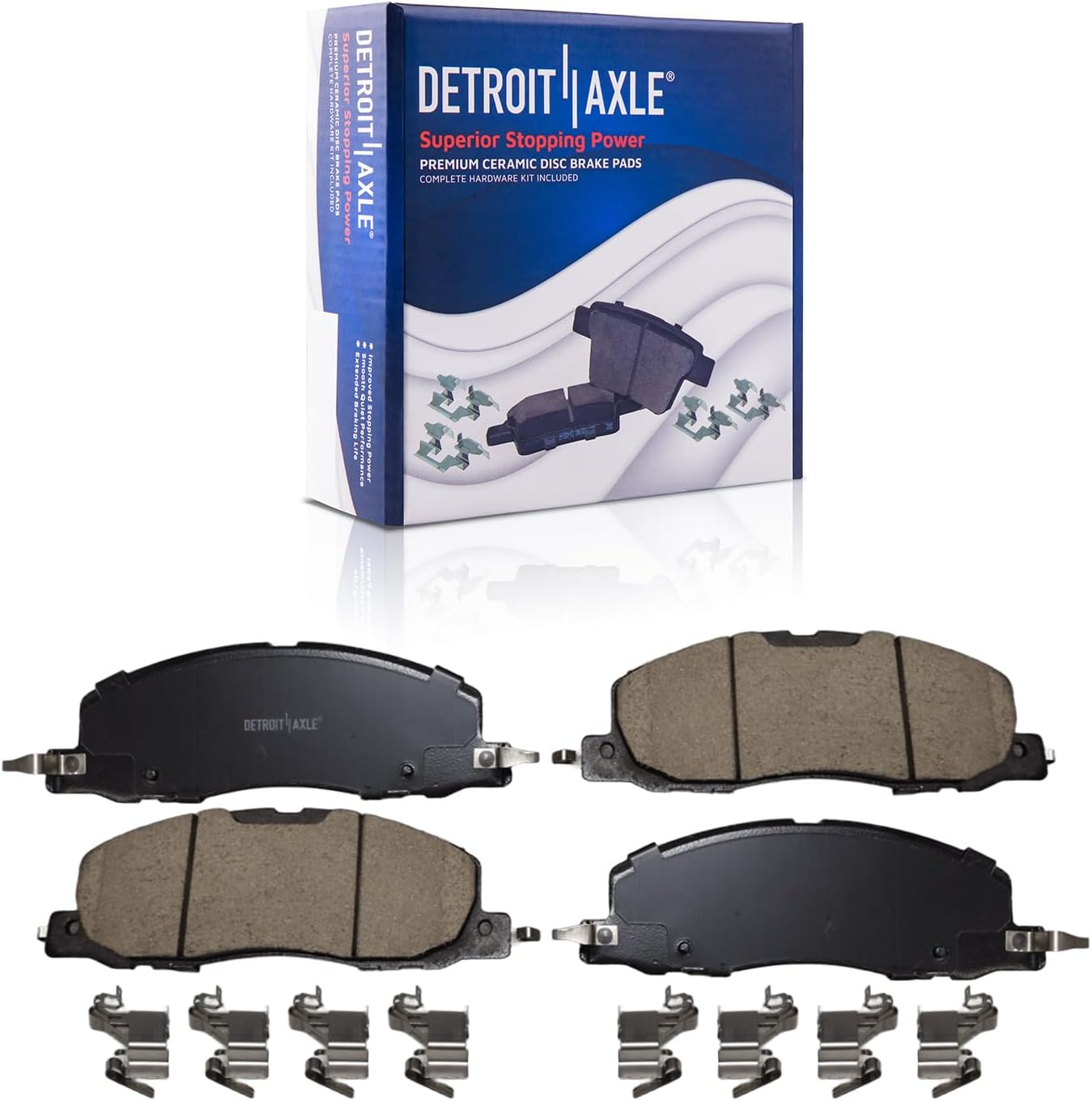
1. Detroit Axle Front Ceramic Brake Pads with Hardware for 2020-2025 Ford Explorer and 2020-2025 Lincoln Aviator
| Position | Front |
|---|---|
| Manufacturer | Detroit Axle |
| Manufacturer Part Number | P-2230 |
| Material | Ceramic |
These Detroit Axle front ceramic brake pads are a direct replacement kit that includes the two driver and passenger side pads plus necessary hardware for installation. They are intended for a range of 2020 to 2025 Ford Explorer trims and 2020 to 2025 Lincoln Aviator models specified in the fit list. The ceramic formulation and chamfered edges aim to reduce noise, lower dust, and provide stable braking performance at higher temperatures, which helps reduce fade during repeated stops. In everyday driving you can expect quieter operation and cleaner wheels compared with many semi-metallic pads, and the supplier highlights durability and rotor-friendly friction that should help preserve rotor life. Installation is typical for front pad swaps and the included hardware simplifies the job. These are aftermarket replacement parts, so drivers who want exact factory match for feel or braking bite may notice a difference versus factory-quality pads, and aggressive towing or track use would push toward higher-performance compounds.
Best for: Drivers seeking a balanced, quiet, and low-dust front pad replacement for daily driving and light towing on supported Explorer and Aviator models who value durability and cleaner wheels.
Less Ideal for: Drivers who require maximum track performance or severe towing capacity should choose a high-performance or heavy-duty brake compound instead.
- Ceramic formula designed for low noise and reduced brake dust
- Includes installation hardware for a complete front pad replacement
- High-temperature resistance to help reduce brake fade under repeated stops
- Friction compound formulated to be rotor-friendly and reduce rotor wear
- Aftermarket compound may feel different from factory pads during initial bedding
Verdict: A practical ceramic front pad kit that balances quiet operation, low dust, and durability for everyday Ford Explorer XLT driving needs.
2. Detroit Axle Front and Rear Drilled & Slotted Brake Kit with Ceramic Pads for Ford Explorer

| Fitment rotor sizes | 345mm front / 320mm rear |
|---|---|
| Includes | Front and rear drilled & slotted rotors, front and rear ceramic pads, hardware, brake cleaner, brake fluid |
| Manufacturer | Detroit Axle |
| Manufacturer Part Number | 10PR42742 |
This Detroit Axle kit supplies both front and rear drilled-and-slotted rotors plus matching ceramic pads and basic consumables so you can replace the entire brake set in one job. It is intended for Explorers that use 13.58 inch (345mm) front and 12.60 inch (320mm) rear rotors; the rotors are zinc plated to resist corrosion and have ventilation slots to shed heat and moisture. Ceramic pads and included hardware aim to reduce dust and noise compared with semi-metallic options, and the kit even includes a brake cleaner and a small bottle of brake fluid for service convenience. For someone upgrading worn stock rotors and pads, the drilled-and-slotted surfaces help with bite and fade resistance during spirited driving, while the matched pads keep pedal feel consistent. Limitations are that ceramic pads trade some ultimate high-temperature fade resistance for lower dust and noise, and this kit is scoped to specific rotor sizes and Explorer trim fits so it is not a universal option.
Best for: Drivers who want a single kit to refresh both rotors and pads on an Explorer and prioritize improved bite, cooler-running rotors, and lower dust and noise over track-focused endurance.
Less Ideal for: Racetrack-focused drivers or those who demand maximum fade resistance under repeated high-temperature stops should consider bolt-on performance-oriented pad compounds and rotors designed for track use.
- Complete kit for front and rear so you replace all rotors and pads in one install
- Drilled and slotted rotors with ventilation slots help reduce heat buildup and aid wet-weather performance
- Zinc plating improves corrosion resistance for longer visual life
- Includes ceramic pads and hardware to reduce brake dust and lower cabin noise
- Comes with brake cleaner and a small bottle of brake fluid for immediate installation service
- Ceramic pads typically offer less extreme high-temperature fade resistance than performance semi-metallic pads
Verdict: A convenient all-in-one rotor and ceramic pad kit that refreshes front and rear braking on compatible Explorers for improved cooling, reduced dust, and quieter operation.
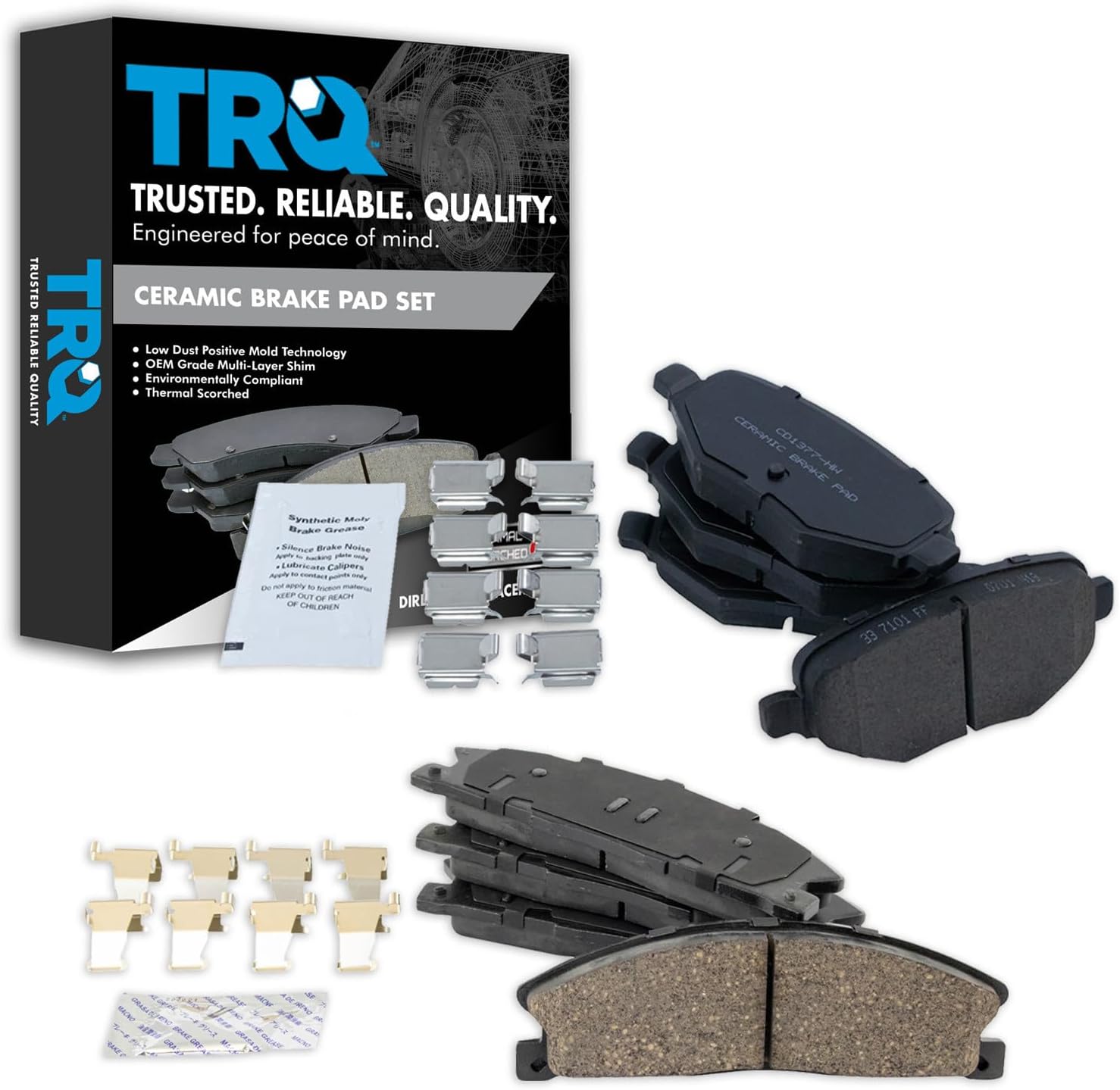
3. TRQ Front and Rear Ceramic Brake Pads (direct-fit)
| Brand Name | TRQ |
|---|---|
| Auto Part Position | Front, Rear |
| Compatible with Vehicle Type | SUV |
| Material Type | Ceramic |
These TRQ ceramic pads replace both front and rear sets with vehicle-specific, direct-fit components intended for Ford Explorer applications. Designed for lower dust and quieter braking, the ceramic compound and thermal scorching process aim to improve stopping performance and reduce wheel cleanup. TRQ bundles pre-assembled components and provides extensive DIY installation videos, which makes the kit convenient for a home mechanic to install without modifications. The pads meet factory-spec performance targets and list multiple OEM equivalent part numbers for fit confirmation. Expect cleaner wheels and a modest reduction in brake dust compared with semi-metallic pads, along with acceptable noise control. Ceramic pads can be gentler on rotors but sometimes produce slightly less initial bite under extreme load or high temperatures compared with high-performance semi-metallic options, so drivers who tow frequently or need aggressive track-level braking should consider a different compound. Overall this kit is a practical, easy-to-install replacement that balances everyday braking performance with low dust and quieter operation.
Best for: Buyers who want a practical, low-maintenance brake pad replacement that keeps wheels cleaner and is straightforward to install at home.
Less Ideal for: Drivers who regularly tow heavy loads, carry heavy payloads, or require aggressive performance braking for track use should choose a higher-friction pad designed for heavy-duty conditions.
- Full front and rear kit for one purchase and installation
- Ceramic material reduces visible brake dust for cleaner wheels
- Pre-assembled, vehicle-specific fit simplifies DIY installation
- Thermal scotching and application-specific design aim to improve stopping performance
- Ceramic compound may offer less initial bite than aggressive semi-metallic pads under heavy load or track use
Verdict: A practical, low-dust direct-fit ceramic front and rear kit that makes DIY replacement simple while delivering quieter, everyday braking performance for Explorer owners.
4. SCITOO Ceramic Front Brake Pads (D1508)

| Material Type | Ceramic |
|---|---|
| Auto Part Position | Front |
| Unit Count | 4.0 Count |
| Manufacturer Warranty Description | 1 Year |
These SCITOO front ceramic brake pads are a direct replacement designed for specific Explorer, Flex, Taurus and Lincoln front brake applications that exclude heavy-duty brake packages. They use ceramic friction material with chamfered edges, slots and pre-applied shims to reduce noise and dust compared with semi-metallic pads. Typical use is routine street driving and commuting where quiet operation and lower wheel dust are priorities. Practical benefits include consistent stopping power for daily driving, lower brake dust that keeps wheels cleaner, and a straightforward bolt-on fit when matched to the correct caliper variant. Important limitations are that fitment varies by factory brake option so you must confirm VIN or part number before buying, and ceramic pads can wear differently under heavy towing or aggressive driving compared with performance or heavy-duty pads. The kit includes four pads for the front and the manufacturer recommends a gentle 200-mile break-in to achieve optimal bedding and longevity.
Best for: Buyers looking for a budget-friendly, quiet front brake pad replacement for everyday commuting on compatible Ford Explorer and similar models who prioritize low dust and noise over track performance.
Less Ideal for: Drivers who frequently tow heavy loads, use the vehicle for aggressive driving, or who need pads matched to heavy-duty factory brake systems should consider heavy-duty or performance pads instead.
- Ceramic formula reduces visible brake dust for cleaner wheels
- Slotting and chamfered edges help control noise and heat during normal driving
- Pre-attached shims and noise-dampening features reduce squeal after installation
- Designed as vehicle-specific front replacement for the listed models for easier fitment when matched correctly
- Not compatible with heavy duty brake packages so fitment must be verified
- Ceramic material is less suited to heavy towing or aggressive track use compared with performance-oriented compounds
Verdict: A cost-conscious ceramic front pad set that delivers quieter stops and lower dust for daily-driven Ford Explorer applications when you confirm the correct fitment.
5. Bendix Priority1 CFC1508 Ceramic Front Brake Pads (front set)

| Brand | Bendix |
|---|---|
| Auto Part Position | Front |
| Material Type | Ceramic |
| Number of Items | 1 |
| Included Components | Brake pad set with installation hardware |
The Bendix Priority1 CFC1508 is a vehicle-specific ceramic front brake pad set intended as a factory-quality replacement for select Ford Explorer XLT and similar trims equipped with 325mm front rotors and solid rear rotors. It ships with installation hardware and features shims, slots, and chamfers aimed at reducing noise and vibration for a quieter braking feel. In normal use these pads deliver steady stopping power and reduced brake fade compared with worn stock pads, making them a sensible choice for daily driving and commuting. Because they are formulated to meet OEM fit, form, and function, installation is straightforward for a DIYer or a mechanic using the correct trim fitment. The main limitation is strict compatibility: these pads are only for specific trims and rotor configurations, so you must confirm your Explorer XLT has the 325mm front rotors and solid rear rotors before buying. They are ceramic, which favors low dust and quiet operation but may not be the best choice for heavy towing or aggressive performance driving.
Best for: Buyers who prioritize dependable, factory-quality braking for everyday driving and want low-noise, low-dust ceramic pads matched to the correct Explorer XLT rotor configuration.
Less Ideal for: Drivers who frequently tow heavy loads, use the vehicle for aggressive performance driving, or who have nonstandard rotor sizes or upgraded braking systems should look at heavy-duty or performance-specific pads.
- Designed to match factory fit and function for the specified rotor configuration
- Ceramic formulation produces lower dust and quieter braking
- Includes installation hardware for a complete front pad replacement
- Shims, slots, and chamfers reduce noise and help consistent pedal feel
- Fits only select trims with 325mm front rotors and solid rear rotors, so compatibility is restrictive
Verdict: A quiet, low-dust ceramic front pad set built to deliver reliable, factory-matched braking for Explorer XLT trims with 325mm front rotors.
6. Bendix Premium Ceramic Rear Brake Pads (SBC1611C)

| Material | Ceramic |
|---|---|
| Auto Part Position | Rear |
| Specification Met | OEM |
| Automotive Fit Type | Universal Fit |
These Bendix Premium ceramic rear brake pads are built as a direct-fit replacement intended to match factory fit, form, and function for compatible Ford applications. In everyday use they deliver quiet, smooth braking typical of ceramic compounds and are aimed at daily-driven SUVs and sedans where comfort and low dust matter. Notable features include machined exterior faces, ceramic friction material that resists fade, and a specification listed to meet OEM standards. The practical benefits are reduced brake dust, consistent pedal feel during normal driving, and corrosion resistance that helps the pads last longer in regular service. Limitations are that they are focused on passenger-vehicle braking needs rather than heavy towing or severe-duty use, and buyers should confirm exact vehicle fitment since the listing covers multiple Ford models. For someone replacing worn rear pads on a compatible Explorer, these offer a familiar, low-noise option that prioritizes comfort and reliable everyday stopping.
Best for: Buyers looking for a reliable, low-dust rear pad that restores factory-like braking feel on daily-driven Ford Explorers and similar vehicles, with emphasis on quiet operation and proven brand reputation.
Less Ideal for: Drivers who regularly tow heavy loads, frequently carry heavy payloads, or require high-performance track-capable braking should choose a pad formulated for severe-duty or performance use instead.
- Ceramic compound provides quieter operation and lower dust than many semi-metallic pads
- Engineered to match factory fit, form, and function for a straightforward replacement
- Machined exterior finish for consistent contact and bedding-in behavior
- Designed to resist wear and corrosion for longer service life in normal driving
- Not optimized for heavy towing, track use, or high-heat severe-duty applications
Verdict: A quiet, low-dust ceramic rear pad that restores factory-style braking for daily-driven Ford Explorers seeking dependable, comfortable stopping.
7. Detroit Axle Front and Rear Drilled & Slotted Brake Rotor and Ceramic Pad Kit

| Front Rotor Diameter | 13.86 inch (352mm) |
|---|---|
| Rear Rotor Diameter | 13.58 inch (345mm) |
| Front Pads | Ceramic P-1611 |
| Rear Pads | Ceramic P-1612 |
This Detroit Axle kit supplies both front and rear drilled and slotted rotors plus matching ceramic pads and basic hardware, intended as a direct replacement for certain Ford Explorer and related vehicles with vented rear rotors. It is typically used as a full-system refresh when rotors are warped or pads are worn, letting you replace all friction and wearing components at once. The drilled and slotted rotors help dissipate heat and resist brake fade during repeated stops, while the ceramic pads are quieter and produce less dust than many metallic compounds. The kit also includes brake cleaner and fluid to simplify installation preparation. Expect a factory-style fit and predictable stopping performance for everyday driving and heavier duty packages covered by the fitment list. Limitations: this kit is vehicle-specific and meant for direct-fit replacement rather than performance or track use, and installers should verify the heavy-duty vented rear rotor requirement before ordering.
Best for: Buyers seeking a reliable, full brake replacement that restores factory-like stopping performance and reduces dust and noise without chasing performance upgrades.
Less Ideal for: Drivers who need track-ready braking or who want to upgrade beyond direct-fit components for heavy towing or racing should choose a dedicated performance or heavy-duty kit instead.
- Complete front-and-rear set replaces rotors and pads together to ensure matched wear and feel
- Drilled and slotted rotor surfaces help with heat dissipation and water clearing under repeated braking
- Ceramic pads run quieter and generate less brake dust than many metallic pads
- Includes hardware and brake cleaner to simplify installation prep
- Designed as a direct-fit replacement for specific vehicle configurations rather than a high-performance or track-oriented upgrade
Verdict: A convenient, vehicle-specific full rotor-and-pad kit that restores quiet, reliable street braking and reduces dust for Ford Explorer setups with vented rear rotors.
Choosing the Right Ford Explorer XLT Brake Pads: Key Factors to Consider
Material Composition
The compound used in a brake pad determines how it behaves across temperatures and conditions. Ceramic compounds generally offer quieter operation and lower dust, while semi-metallic mixes typically provide stronger bite and heat tolerance. For the Explorer XLT, consider the typical driving mix; daily commuting and light towing require a balance between stopping power and noise control.
Material also affects rotor wear and how the pad beds in. Softer compounds may bed more gently but wear quicker. Harder or metallic-rich compounds can increase rotor wear yet resist fade during repeated heavy stops. Choose a material that matches your driving habits and prioritizes either longevity or maximum stopping capability.
Stopping Performance And Pedal Feel
How the pad translates pedal input into deceleration matters for driver confidence. Some compounds deliver a firm, immediate bite while others provide a more progressive feel. For the Ford Explorer XLT, predictable modulation helps when merging, towing lightly, or during sudden stops in traffic.
Look for pads with documented friction characteristics and consistent performance across a range of temperatures. Expect slight differences between front and rear pads; front pads usually handle more load and should provide reliable initial bite without excessive grab that could unsettle the vehicle.
Durability And Wear Rates
Pad life determines maintenance intervals and overall cost of ownership. Durability depends on material, driving style, and vehicle load. Explorer XLT owners who do longer highway miles or tow occasionally should favor pads with higher wear resistance to extend service intervals.
Check published pad thickness specs and typical lifespan estimates where available. Remember that rotors and calipers also influence longevity. Regular inspection for uneven wear helps catch caliper or alignment issues before they cause premature pad loss.
Noise And Dust Characteristics
Brake noise and dust are common owner concerns that affect daily satisfaction. Ceramic-style pads tend to produce less audible squeal and finer, lighter-colored dust that is easier to clean from wheels. Other compounds may generate more brake dust and occasional squeal if not bedded properly.
Consider the importance of a quiet, clean appearance versus ultimate stopping power. If wheel cleanliness and cabin noise are priorities, choose pads engineered for low dust and noise suppression, and follow recommended bedding procedures to minimize early squeal.
Fitment And Compatibility With XLT Brake Hardware
Correct fitment is essential to avoid installation issues and ensure safe operation. The Explorer XLT can come with different brake hardware options depending on build; verify pad dimensions, backing plate configuration, and any shim or wear-sensor locations against the XLT specification.
Mismatched pads can cause uneven wear, abnormal noise, or reduced performance. Confirm the pad thickness spec and mounting features align with the XLT calipers and rotors to ensure a straightforward install and consistent braking behavior.
Thermal Performance And Fade Resistance
Thermal management determines how well a pad keeps stopping power during repeated heavy braking. Heat causes friction changes that can lead to fade. For Explorer XLT owners who encounter frequent downhill runs, mountain driving, or repeated heavy stops, choose pads with solid thermal stability.
Look for compounds and backing designs that dissipate heat effectively and maintain friction at elevated temperatures. Proper bedding-in and pairing pads with undamaged, appropriately sized rotors also reduces the risk of fade under load.
Front Versus Rear Pad Roles On The Explorer XLT
Front and rear brake pads on the Explorer XLT serve different roles. The front pads handle the majority of braking force due to weight transfer during stops. As a result, front pads often wear faster and are available in formulations tuned for higher initial bite and heat resistance.
Rear pads assist in balance and stability, particularly during low-speed stops and when holding the vehicle on a grade. When selecting pads, ensure the front pads you choose offer sufficient stopping performance for heavy braking while the rear pads provide complementary modulation to maintain predictable vehicle behavior.
- Front pads typically handle more heat and load.
- Rear pads contribute to stability and parking brake function if integrated.
- Match front and rear wear rates where possible to avoid uneven maintenance cycles.
How To Verify Fitment For Your Explorer XLT
Before purchase, compare pad dimensions, backing plate shape, and any sensor or shim requirements to the vehicle's existing parts. XLT trim may have specific hardware variants, so visual confirmation and measurements prevent mismatch issues.
If a pad listing includes pad thickness specs and a pad fitment guide, use those details to cross-check against caliper clearance and rotor width. Proper fitment avoids installation rework and helps maintain intended braking geometry.
- Measure pad length, height, and thickness against the original parts.
- Confirm presence and placement of wear sensor tabs or retaining clips.
- Ensure the pad backing plate contours match the caliper piston and hardware.
Bedding-In New Pads For Best Performance
A controlled bedding-in procedure improves how new pads mate with the rotors and reduces early noise. Typical bedding involves several moderate stops from varying speeds to transfer an even layer of friction material onto the rotor surface. Avoid repeated hard stops during the initial service miles to prevent glazed surfaces and uneven deposits.
Proper bedding increases consistent stopping feel and can reduce squeal and dust. Follow the pad maker's recommended bedding steps when available, and be patient during the first 100 to 200 miles for the pads to settle.
- Start with a few moderate decelerations from city speeds.
- Finish bedding with a couple of firm stops to seat the material.
- Allow brake components to cool between repeated stops.
Maintaining Brake Health On The Explorer XLT
Regular inspections are key to spotting wear or hardware problems early. Check pad thickness, rotor condition, and caliper operation at routine service intervals. Pay attention to uneven pad wear, which can indicate caliper sticking or alignment issues.
Also monitor for symptoms like sustained vibration, unusual grinding, or a soft pedal. Addressing minor issues early can prevent more extensive repairs and maintain consistent stopping performance for the XLT.
- Inspect pad thickness visually or with a gauge every oil change or service visit.
- Check rotor surface for scoring or thickness variation.
- Verify caliper slide pins are lubricated and moving freely during brake service.
Rotor Considerations When Replacing Pads
Pads and rotors work as a system. Installing new pads on worn or warped rotors can lead to uneven contact and noise. Measure rotor thickness against the vehicle specification and inspect for runout and scoring before fitting new pads.
Surface condition and thermal history of the rotor influence bedding and ultimate pad life. Where rotors are borderline, consider resurfacing or replacement to ensure optimum performance and longevity from the new pads.
- Confirm rotor thickness meets Ford specifications before reuse.
- Check for lateral runout with a dial indicator if possible.
- Resurface or replace rotors that show significant heat spotting or grooves.
Still looking for the perfect fit?
Select your Ford Explorer configuration to see the most relevant Brake Pads recommendations
How We Chose the Best Ford Explorer XLT Brake Pads
We focused on criteria that matter specifically to Ford Explorer XLT owners and on features that influence in-service performance. Primary evaluation points included material composition and its impact on stopping feel, expected pad life and wear patterns, and noise and dust characteristics during normal driving. Fitment accuracy for XLT brake packages and rotor compatibility was confirmed conceptually to ensure the pads match common Explorer XLT configurations. We also weighed braking performance under mixed driving conditions, including highway and light towing loads, and thermal fade resistance for repeated stops.Excluded items included any pads that require hub or caliper modifications, parts incompatible with XLT brake hardware, and options lacking reliable technical specifications. We prioritized pads with clear friction ratings, recommended running-in procedures, and available pad thickness specs so owners can plan maintenance. Durability, consistent pedal modulation, and predictable brake dust levels rounded out the selection standards.
Our full evaluation process is outlined in our review methodology.
FAQ
How often should I inspect brake pads on a Ford Explorer XLT?
Inspect pads visually at least every 6 months or during routine service. Frequency depends on driving habits; heavy city driving or towing may require more frequent checks.
What are common brake pad wear symptoms to watch for on the Explorer XLT?
Common symptoms include reduced pad thickness, increased stopping distance, squealing or grinding noises, and vibration under braking. Any sudden change in pedal feel often signals a need for inspection.
Can I use ceramic pads on both front and rear of the Explorer XLT?
Ceramic pads are often suitable for both positions, offering low dust and quiet operation. Ensure the chosen ceramic pads are specified for front or rear fitment to match load and thermal requirements.
Will new pads fix brake noise on my Explorer XLT?
New pads can reduce noise if the original pads were worn or glazed. Persistent squeal may stem from hardware issues, rotor condition, or improper bedding and may require further inspection.
How do I know when pad thickness reaches the replacement point?
Measure remaining friction material; many owners replace pads when thickness approaches 3 mm to 4 mm. Manufacturer recommendations and visual wear indicators should guide the final decision.
Does replacing pads require replacing rotors on the Explorer XLT?
Not always. Rotors in good condition with sufficient thickness and no runout can be reused. Replace or resurface rotors that show scoring, heat damage, or are below thickness specifications.
Final Verdict
Prioritize pad material, proven stopping performance, and correct fitment when choosing brake pads for the Ford Explorer XLT. Balance noise, dust, and longevity against the braking demands you place on the vehicle. For routine commuting, quieter, lower-dust compounds may offer the best everyday ownership experience, while drivers who frequently tow or encounter repeated heavy braking should favor pads with stronger thermal resistance.Decide based on the tradeoffs most important to your driving: comfort and cleanliness versus raw stopping and wear life. With the right fitment and proper bedding, you can restore reliable braking performance and predictable service intervals for your Explorer XLT.
Explore More:
- Check out all Ford Explorer parts & accessories
- Explore Brake Pads Maintenance & Repair Guides
- Explore Brake System
- Browse all Auto Parts
