

Note: This article contains affiliate links. If you click on these links and make a purchase, I may earn a small commission at no extra cost to you. This helps support my research and content. Read my full affiliate disclosure here.
Replacing the rear brake pads on your Ford Explorer is one of the most effective ways to restore confident stopping performance and reduce noises or vibrations. The right rear pads affect pedal feel, braking distance under load, and how often you need to service the rear axle.This guide shortlists the top rear brake pads for Ford Explorer owners and explains the criteria used to evaluate them, including wear life, noise characteristics, and pad thickness. Use the summaries to narrow choices quickly and the buying guidance to match a pad to your driving habits and load conditions.
Looking for other parts? See all Ford Explorer parts & accessories.
Top Picks at a Glance
| Best Overall The best all-around choice for most situations | Bendix Priority1 CFC1754 Ceramic Rear Brake Pads (with Hardware) |  |
| Best Quality Built to a higher standard if you want something more solid | PowerStop Z36 Truck & Tow Rear Carbon-Fiber Ceramic Brake Pads with Hardware |  |
| Best Value The sweet spot between price and what you get | Bendix Premium SBC1754 Ceramic Rear Brake Pads |  |
| Best Budget The cheapest option that still gets the job done reliably | SUPLABEL D1377 Rear Ceramic Brake Pad Set |  |
| Highest Rated A top-rated pick with lots of positive feedback | BOSCH Blue Ceramic Rear Disc Brake Pad Set with Hardware |  |
| Most Popular A crowd favorite that many people choose with confidence | Detroit Axle Rear Ceramic Brake Pads with Hardware (P-2232) |  |
| Best Seller A high-volume bestseller chosen again and again | BOSCH QuietCast Premium Ceramic Rear Disc Brake Pad Set (BC1377) |  |
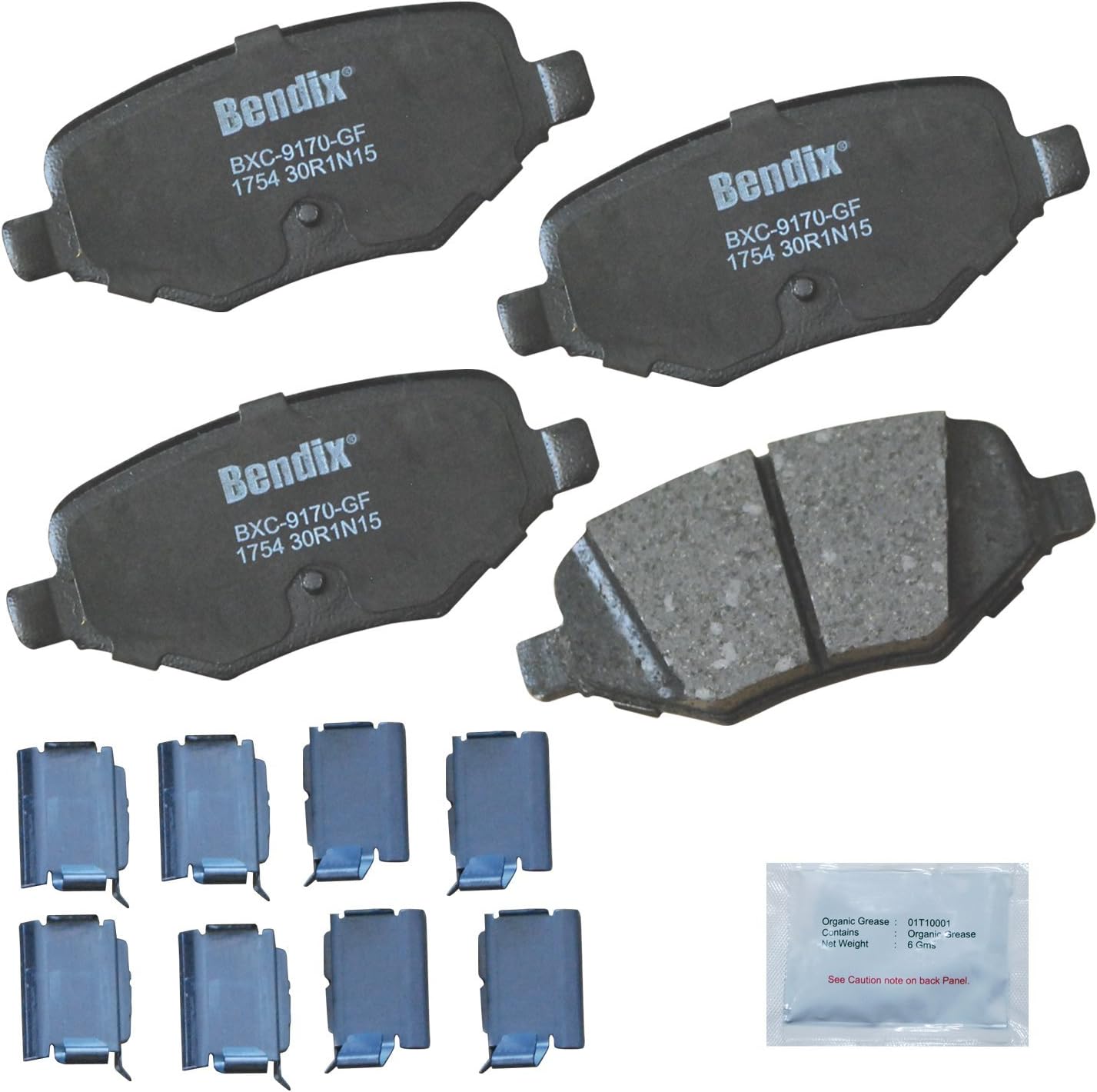
1. Bendix Priority1 CFC1754 Ceramic Rear Brake Pads (with Hardware)
| Brand Name | Bendix |
|---|---|
| Auto Part Position | Rear |
| Compatible with Vehicle Type | SUV, Truck |
| Material Type | Ceramic |
| Included Components | Pad set with installation hardware |
These Bendix Priority1 rear ceramic pads are built to match factory fit and braking feel while offering quieter operation than many semi‑metallic compounds. They are supplied with installation hardware and include design features such as shims, slots, and chamfers that reduce noise and help keep dust down. In everyday use they deliver strong stopping power and consistent pedal feel across normal commuting and light towing loads, and the ceramic friction material resists fade in typical highway driving. Expect noticeably reduced brake squeal and cleaner wheels compared with more aggressive pads, though ceramic pads usually run slightly softer against rotors than heavy‑duty semi‑metallic options. This set targets aftermarket replacement for select Ford rear applications and works well for owners seeking a quiet, confidence‑inspiring upgrade that preserves factory stopping characteristics rather than maximizing ultimate track or heavy‑haul performance.
Best for: Buyers who want a quiet, factory‑matching rear pad replacement for daily driving and light towing on supported Ford models, prioritizing low noise and consistent stopping over track-oriented performance.
Less Ideal for: Drivers who regularly tow heavy loads, do frequent aggressive braking, or want maximum fade resistance should consider heavy‑duty semi‑metallic or performance pads instead.
- Factory-quality fit and form designed for select Ford rear applications
- Ceramic friction compound provides quiet braking and lower wheel dust
- Includes installation hardware for a more complete replacement
- Shims, slots, and chamfers improve noise control and pad bedding
- Sold as a single pad set so buyers must confirm quantity needed for a full axle replacement
Verdict: A quiet, factory‑matched ceramic rear pad set for Ford owners who want reliable, low‑dust braking and a near‑OEM feel.
2. PowerStop Z36 Truck & Tow Rear Carbon-Fiber Ceramic Brake Pads with Hardware

| Auto Part Position | Rear |
|---|---|
| Automotive Fit Type | Vehicle Specific Fit |
| Included Components | Brake Pads and Installation Hardware |
| Material Type | Carbon-Fiber Ceramic, Metal, Stainless Steel |
| Manufacturer Warranty Description | 12 Month / 12,000 Mile Limited Warranty |
The PowerStop Z36 Truck & Tow rear brake pad kit upgrades factory rear pads with a carbon-fiber infused ceramic compound and includes stainless-steel installation hardware for a straightforward swap. It is intended for trucks and larger SUVs that tow, haul, or run larger wheels where extra stopping power and fade resistance matter. The carbon-fiber ceramic formulation aims to deliver stronger initial bite and consistent braking at higher temperatures while keeping dust and noise low. Stainless-steel shims and hardware help reduce vibration and simplify a DIY installation. Because these are vehicle-specific fit pads, installation is bolt-on when the correct application is selected. Limitations are that this is a rear-pad set only and does not address rotors or front braking components, so paired rotor condition and front/rear balance should be considered when upgrading; drivers who need ultimate track-level performance may prefer performance-oriented compounds and matched rotors.
Best for: Buyers who prioritize improved heavy-duty braking for towing, hauling, or vehicles with larger wheels and want a quiet, low-dust, bolt-on rear pad upgrade they can install themselves.
Less Ideal for: Drivers seeking ultimate track-focused friction materials or a full rotor-and-pad overhaul should consider dedicated performance kits or matched rotor upgrades instead.
- Carbon-fiber infused ceramic compound for stronger bite and improved high-temperature fade resistance
- Low-dust ceramic formulation keeps wheels cleaner compared with many performance pads
- Includes stainless-steel installation hardware and shims for easier, quieter bolt-on installation
- Designed as vehicle-specific rear fitment for a direct replacement on listed Ford applications
- Rear pad set only so rotors or front pads may also need replacement to restore full braking balance
Verdict: Choose these Z36 rear pads when you need a quiet, low-dust bolt-on upgrade that strengthens rear braking for towing and heavy-duty driving.
3. Bendix Premium SBC1754 Ceramic Rear Brake Pads

| Brand | Bendix |
|---|---|
| Auto Part Position | Rear |
| Compatible with Vehicle Type | Cars, SUV, Truck |
| Material Type | Ceramic |
| Included Components | Pad set with installation hardware |
These Bendix Premium ceramic rear pads are built to match factory fit and function for compatible Ford vehicles, making them a straightforward replacement during routine brake service. They come as a single pad set with installation hardware and use a ceramic friction material aimed at quiet operation and lower dust compared with semi‑metallic pads. In everyday driving the pads provide consistent stopping power and resistance to fade, which helps maintain predictable pedal feel on commutes and family driving. The included hardware simplifies installation for a DIYer or technician, and Bendix markets the pads as meeting OEM specifications and industry testing. Limitations to note are that ceramic compounds can cost more and may not perform as strongly under extreme heavy towing or track use compared with heavy‑duty semi‑metallic formulations. Also this listing covers rear application for specific Ford models, so confirming exact vehicle fitment before purchase is important.
Best for: Buyers who want a practical, low‑hassle rear pad upgrade that matches factory performance and prioritizes quiet, low‑dust operation for daily driving.
Less Ideal for: Drivers who regularly tow heavy loads, drive aggressively, or need pads tuned for track or commercial heavy‑duty use should consider a semi‑metallic or heavy‑duty alternative.
- Factory-quality fit and form for direct rear replacement on listed Ford models
- Ceramic material reduces dust and generally runs quieter than semi‑metallic pads
- Includes installation hardware for an easier swap
- Engineered to resist brake fade for consistent daily driving performance
- Not optimized for heavy towing, frequent high‑heat use, or track driving
Verdict: A practical, factory‑matching ceramic rear pad set that delivers quiet, low‑dust stopping for everyday Ford Explorer driving.
4. SUPLABEL D1377 Rear Ceramic Brake Pad Set

| Auto Part Position | Rear |
|---|---|
| Material Type | Ceramic |
| Automotive Fit Type | Vehicle Specific Fit |
| Number of Items | 1 |
These SUPLABEL rear ceramic pads are a budget-friendly replacement for the rear axle on compatible Ford and Lincoln models. They use a high-density ceramic compound with slots and chamfers intended to reduce noise, manage heat, and maintain consistent stopping power in varying weather. The kit ships with pads for two wheels and includes hardware where available, making it a straightforward swap during a routine rear brake service. In practice you can expect quieter operation than many semi-metallic pads and reasonable pad life for everyday driving, including wet and light snow conditions. Limitations are typical for economy-branded ceramic pads: they may not match premium factory-material stopping feel under heavy towing or spirited driving and the listing notes no manufacturer warranty. For owners replacing rear pads to restore normal braking at low cost, these are a practical option if you verify exact vehicle fitment first.
Best for: Buyers looking for an affordable, quiet rear brake pad replacement for everyday driving on compatible Ford Explorers and similar models who prioritize cost and reduced noise over track-level performance.
Less Ideal for: Drivers who frequently tow heavy loads, carry heavy payloads, or demand maximum fade resistance and aggressive stopping power should choose a performance-grade or heavy-duty pad instead.
- Ceramic formulation promises quieter operation compared with many semi-metallic pads
- Slots and chamfered edges help with heat dissipation and reduce squeal
- Includes pads for one axle and hardware where available for an easier installation
- Compatible with multiple Ford and Lincoln rear applications when fitment is confirmed
- No manufacturer warranty is provided
- May not offer the same fade resistance or pedal feel as higher-end replacement or factory-quality pads under heavy load
Verdict: A cost-conscious rear ceramic pad set that restores quiet, competent everyday braking on compatible Ford Explorers when you confirm fitment.
5. BOSCH Blue Ceramic Rear Disc Brake Pad Set with Hardware

| Auto Part Position | Rear |
|---|---|
| Material Type | Ceramic |
| Manufacturer | Bosch Automotive |
| Included Components | Brake Pads |
| Automotive Fit Type | Vehicle Specific Fit |
These Bosch Blue rear ceramic brake pads are engineered for everyday reliability on compatible Ford Explorer and Mercury Mountaineer rear axles. They use a copper-free ceramic friction compound and OE-style slots and chamfers to reproduce predictable stopping power with reduced brake fade during normal driving. Multi-layer shims and a rust-inhibitive backing coating help minimize noise and corrosion over time, while the included hardware and synthetic lubricant simplify installation and reduce drag at sliding points. Pads arrive protected in a shop towel and are precision manufactured to fit the vehicle-specific application, which helps avoid fitment problems during replacement. The pads are focused on street use rather than performance or heavy towing so drivers who want long-lasting, quiet service will appreciate them. If you need heavy-duty stopping for towing, track use, or substantially heavier payloads, these pads prioritize comfort and corrosion protection over extreme high-temperature performance.
Best for: Buyers who want a reliable, quiet rear pad that replicates factory braking behavior for routine street driving and prefer low maintenance and corrosion resistance.
Less Ideal for: Drivers who frequently tow heavy loads, drive aggressively, or require pads optimized for track/high-heat conditions should look at severe-duty or performance-oriented options.
- Ceramic, copper-free friction material for consistent, low-dust braking
- OE-style slots and chamfers for predictable pedal feel and efficient stops
- Multi-layer shim and synthetic lubricant reduce noise and vibration
- Rust-inhibitive backing coating helps prevent corrosion and pad degradation
- Includes hardware and arrives ready to install with protective wrapping
- Designed for everyday driving rather than heavy towing or high-temperature performance
Verdict: A factory-style ceramic rear pad set built for quiet, reliable stopping and long-term corrosion resistance on compatible Explorers.
6. Detroit Axle Rear Ceramic Brake Pads with Hardware (P-2232)

| Manufacturer | Detroit Axle |
|---|---|
| Position | Rear |
| Manufacturer Part Number | P-2232 |
| Fitment note | 2020-2025 Ford Explorer and select 2024-2025 Mustang applications |
| Kit contents | 2x Rear Ceramic Brake Pads with Hardware |
These Detroit Axle rear ceramic pads are a direct replacement-style kit intended for recent Ford Explorer models and specified Mustang fits. The kit includes two rear pads and the necessary hardware, and uses a ceramic compound aimed at lower noise, reduced dust, and stable friction at higher temperatures. In everyday driving the pads should provide smoother, quieter stops than many semi-metallic alternatives and they are formulated to minimize rotor wear. Installation is straightforward for a capable DIYer or a professional shop because the kit is positioned and supplied for rear fitment. Expect modest dust reduction and consistent braking feel during city and highway use, though ceramic pads typically produce slightly less initial bite than aggressive metallic compounds. These are a solid midrange replacement for drivers who prioritize quiet operation and rotor longevity rather than track-level stopping power.
Best for: Buyers who value quiet, low-dust braking and want a reliable factory-style replacement supported by positive user feedback and solid quality control.
Less Ideal for: Drivers who frequently tow heavy loads, drive aggressively, or require track-capable braking should consider performance-oriented metallic pads instead.
- Ceramic formula designed for lower noise and reduced brake dust
- Includes necessary rear hardware for simpler install
- High-temperature resistance to help maintain braking performance under load
- Engineered to be rotor-friendly and reduce scratching to extend rotor life
- Ceramic compound may have less initial bite compared with more aggressive metallic pads
Verdict: If you want a quiet, low-dust rear pad that preserves rotors and fits recent Ford Explorer models, this Detroit Axle ceramic kit is a dependable factory-style replacement.
7. BOSCH QuietCast Premium Ceramic Rear Disc Brake Pad Set (BC1377)

| Material Type | Ceramic |
|---|---|
| Manufacturer Part Number | F03B076463 |
| OEM Equivalent Part Number | BC1377 |
| Automotive Fit Type | Vehicle Specific Fit |
These Bosch QuietCast rear brake pads are a direct-fit replacement designed to restore braking performance while minimizing noise and dust. They use a ceramic friction formula and Bosch’s OE-style multilayer rubber-core shim to reduce squeal and vibration, and powder-coated backing plates resist corrosion for longer life. The kit ships with pads for one axle plus hardware where required and synthetic lubricant for the caliper contact points to ease installation and reduce drag. In real-world use they deliver consistent, confident stops with noticeably less dust than semi-metallic options and tend to run quieter, which is helpful for daily-driving Explorers. Expect good longevity and rotor protection thanks to the protective transfer layer Bosch describes, though ceramic pads can be slightly pricier than basic replacements and may produce a firmer pedal feel under very heavy braking. Fitment is vehicle-specific so verify the Explorer model year and trim before buying.
Best for: Buyers who prioritize quiet operation, low rotor dust, and a reliable, factory-quality replacement for routine driving and suburban or highway use.
Less Ideal for: Drivers who need maximum fade resistance for frequent towing, racing, or heavy-duty use should consider high-performance or severe-duty formulations instead.
- Engineered ceramic friction material for low dust and consistent stopping power
- OE-style multilayer rubber-core shim reduces noise and vibration
- Powder-coated backing plates and protective transfer layer improve corrosion resistance and pad/rotor life
- Includes hardware kit and synthetic lubricant for easier installation
- May cost more than basic semi-metallic pads and can feel firmer under very aggressive braking
Verdict: A quiet, low-dust, factory-quality ceramic rear pad set that restores confident stopping for everyday Ford Explorer driving.
Choosing the Right Ford Explorer Rear Brake Pads: Key Factors to Consider
Friction Material and Performance
The friction compound determines initial bite, fade resistance, and how the pads behave as they warm. For the Ford Explorer rear axle you want a compound that provides predictable stopping during city and highway driving without excessive dust.
Materials like ceramic-style formulations generally run quieter and produce less dust, while organic or semi-metallic blends can offer stronger initial bite but may be noisier. Think about your driving: if you frequently tow or carry heavy loads, prioritize compounds with better heat tolerance and fade resistance.
Pad Thickness and Service Life
Pad thickness affects how often you will need replacements and how much rotor life you preserve. Thicker pads extend service intervals but must still fit the rear caliper and maintain proper clearance.
Ask for the pad thickness spec and compare it to what the Explorer's rear caliper accepts. Thicker backing plates and friction layers usually mean longer wear life, but actual longevity depends on driving style and load. Regular inspections will confirm whether wear is uniform and whether rotors need attention during pad changes.
Noise Control and Vibration Dampening
Brake squeal and vibration are common owner complaints for the Explorer; material selection, shims, and backing-plate engineering all influence noise. Pads with multi-layer shims, chamfered edges, and sound-dampening adhesives typically reduce squeal.
If you park on hill starts or do many low-speed stops in city traffic, choose pads designed for quiet operation. Proper installation with clean hardware and correct torque on caliper bolts also matters for minimizing noise.
Rotor Compatibility and Bedding Behavior
Rear pads must mate well with the rotor surface finish and diameter to avoid uneven wear or glazing. Some pad compounds require a break-in or bedding procedure to achieve full effectiveness; others reach usable friction more quickly.
Consider whether you want a pad that requires a strict bedding process or one that performs acceptably after standard street driving. Also ensure the pad profile matches the Explorer's rear rotor to avoid edge loading and premature rotor wear.
Dust and Cleanliness
Excessive pad dust can dirty wheels and conceal rotor condition. Ceramic-style pads typically leave less visible dust on the Explorer's rear wheels than semi-metallic pads.
If curb appeal and easier wheel cleaning matter, prioritize low-dust formulations. Keep in mind that lower dust does not always mean lower performance; select a compound that balances cleanliness with braking needs.
Fitment and Installation Ease
Correct fitment for the Explorer's rear calipers is critical. Pads should align with the piston, install cleanly into the caliper bracket, and not require significant modification.
Look for pads with clear fitment documentation, included hardware or shims where applicable, and a backing plate profile that matches factory geometry. Ease of installation reduces the risk of installation errors that can lead to noise or uneven wear.
How Rear Pads Impact Explorer Braking Balance
Rear brake pads contribute more to overall braking stability than absolute stopping power, especially during light to moderate braking. On the Explorer, appropriately matched rear pads help stabilize the vehicle under deceleration and reduce nose-dive by sharing work with the front pads. Choosing rear pads that are too aggressive can upset pedal feel or lead to premature front pad wear as the system rebalances itself.
- Rear pads influence pedal firmness at low speeds
- Consistent rear friction helps prevent unwanted vehicle pitch during stops
- Balanced compounds reduce asymmetrical wear between axles
Matching Pad Compound to Driving Style
Your typical driving determines the best material choice. For predominantly highway use with occasional towing, favor compounds with higher heat tolerance and stable friction curves. For city commuting with frequent stops, quieter, low-dust compounds provide a better ownership experience without sacrificing safety.If you occasionally tow or carry heavier loads, consider rear pads specified for higher thermal capacity to resist fade during repeated decelerations.
- City driving: prioritize quiet operation and low dust
- Highway and towing: prioritize heat resistance and fade control
- Mixed driving: seek a balanced compound that manages both demands
Installation Tips to Reduce Noise and Extend Life
Proper installation is as important as pad selection. Clean the caliper hardware and rotor contact area to ensure the backing plate seats correctly. Replace or lubricate slide pins with high-temperature brake grease and torque caliper bolts to factory specifications to avoid vibration.Use new anti-rattle clips or shims when provided and ensure pads are fully seated. After installation, follow a conservative bedding procedure to mate the pad to the rotor; this helps establish uniform transfer layer and can reduce early noise and glazing.
- Clean rotor contact surfaces and hardware
- Use recommended lubricants on slide pins and contact points
- Torque fasteners to spec and replace anti-rattle clips when worn
When to Inspect Rear Pads and Rotors
Regular inspections catch wear before it affects safety. Check pad thickness at routine service intervals or if you notice changes in pedal travel, unusual noises, or increased stopping distance. Inspect for uneven wear patterns which can indicate caliper or hardware problems.Rotors should be checked for scoring, runout, and thickness against the Explorer rear rotor minimum spec during pad changes. Addressing minor rotor issues early can prevent accelerated pad wear and maintain reliable braking performance.
- Inspect pads visually every oil-change interval or at least twice a year
- Look for uneven wear, scoring, and contaminants on rotor surface
- Measure pad thickness and compare to manufacturer replacement recommendations
Considerations for Aftermarket Vs OEM-Style Pads
Aftermarket rear pads can offer different performance characteristics than factory-style pads, such as quieter compounds or longer wear. When selecting aftermarket options for the Explorer, ensure form-fit compatibility and that the pad material suits your driving conditions.Some aftermarket pads target specific outcomes like low dust or enhanced stopping power at the cost of increased noise. Decide which trait matters most and confirm that the pad does not require additional modification to the caliper or hardware.
- Verify fitment and backing plate profile
- Match material benefits to real-world use
- Expect tradeoffs between noise, dust, and longevity
Still looking for the perfect fit?
Select your Ford Explorer configuration to see the most relevant Brake Pads recommendations
How We Chose the Best Ford Explorer Rear Brake Pads
We evaluated candidate rear brake pads for the Ford Explorer using practical, vehicle-specific criteria that matter to everyday owners. Our selection focused on braking performance under normal and loaded conditions, measured durability and estimated pad life based on material type and backing-plate design, and how well a pad controls noise and vibration through friction formulation and shim design. We also considered pad thickness and bedding behavior since those affect service intervals and initial stopping feel.Other filters included consistent fitment for the Explorer rear caliper configurations and compatibility with standard rotor diameters used on the vehicle. We excluded options that did not publish pad thickness or friction class, pads meant exclusively for track use, and products with unclear fitment information. Final picks favored parts that offered a clear tradeoff between longevity, quiet operation, and predictable pedal response for the Explorer's weight and typical driving scenarios.
Our full evaluation process is outlined in our review methodology.
FAQ
How often should I check the rear brake pads on my Ford Explorer?
You should visually inspect rear pads at least twice a year or during routine service intervals. If you drive aggressively, tow frequently, or hear unusual noises, check them more often.
Can I replace only the rear pads and keep the existing rotors?
Often you can replace only the rear pads if the rotors are within thickness and runout specifications and show no deep scoring. Always measure rotor thickness and inspect for heat damage before deciding not to resurface or replace rotors.
Will switching to quieter rear pads affect stopping distance?
Quieter compounds can sometimes have slightly different initial bite but do not necessarily increase stopping distance in normal driving. Choose a pad that balances reduced noise with the braking performance you need for the Explorer.
What causes rear brake noise like grinding or squeal?
Grinding usually indicates severe wear or rotor contact with backing plate, while squeal is often due to vibration between pad and caliper or an incompatible compound. Proper installation, shims, and correct bedding reduce these issues.
Are ceramic-style rear pads a good choice for the Explorer?
Ceramic-style pads are a good option if you prioritize low dust and quiet operation. They can be slightly less aggressive under extreme heat, so consider your towing and driving patterns when choosing.
How do I know when rear brake pads are worn out?
Measure pad thickness and compare to the replacement recommendation. Also look for indicator noises, increased pedal travel, or visible metal backing plate, which all signal it is time to replace pads.
Final Verdict
Focus on the tradeoffs that matter most for your Ford Explorer: choose a rear pad compound that matches how you drive, ensure correct pad thickness for acceptable service intervals, and prioritize noise control if you do a lot of city driving. Pay attention to rotor condition and proper installation to get predictable braking and longer component life.With those priorities in mind, pick the pad that best balances durability, quiet operation, and consistent pedal feel for your typical load and driving style.
Explore More:
- Check out all Ford Explorer parts & accessories
- Explore Brake Pads Maintenance & Repair Guides
- Explore Brake System
- Browse all Auto Parts
