

Note: This article contains affiliate links. If you click on these links and make a purchase, I may earn a small commission at no extra cost to you. This helps support my research and content. Read my full affiliate disclosure here.
If you drive a Honda Accord, the rear brake pads and rotors are critical to safe, predictable braking and even wear across the axle. Worn rear hardware can cause pulling, noise, and faster wear on other components, so choosing the right rear brake pad & rotor kit keeps braking balanced and reduces follow-on repairs. This guide covers seven shortlisted rear kits selected for correct fitment, rotor thickness and finish, pad compound options, and ease of installation specific to the Accord.Below you will find our top picks for rear brake pad and rotor kits along with practical buying factors and installation tips to help you pick the right kit for your driving habits and maintenance plan.
Looking for other parts? See all Honda Accord parts & accessories.
Top Picks at a Glance
| Best Overall The best all-around choice for most situations | TRQ Rear Ceramic Brake Pad and Rotor Kit |  |
| Best Quality Built to a higher standard if you want something more solid | MAX Advanced Brakes PerformanceMAX Rear Brake Kit with Slotted Drilled Rotors and Carbon-Ceramic Pads |  |
| Best Value The sweet spot between price and what you get | Detroit Axle Rear Brake Rotor and Ceramic Pad Kit for 2011–2014 Acura TSX / 2011–2017 Honda Accord |  |
| Best Budget The cheapest option that still gets the job done reliably | Detroit Axle Rear Drilled & Slotted Brake Kit with Ceramic Pads (10.24" Rotors) |  |
| Highest Rated A top-rated pick with lots of positive feedback | Detroit Axle Rear Brake Kit with Drilled & Slotted Rotors and Ceramic Pads |  |
| Most Popular A crowd favorite that many people choose with confidence | Detroit Axle Rear Brake Kit — 11.10" Rotors and Ceramic Pads |  |
| Best Seller A high-volume bestseller chosen again and again | PowerStop Rear Brake Kit with Z17 Ceramic Pads and OE Replacement Rotors (Rear) |  |
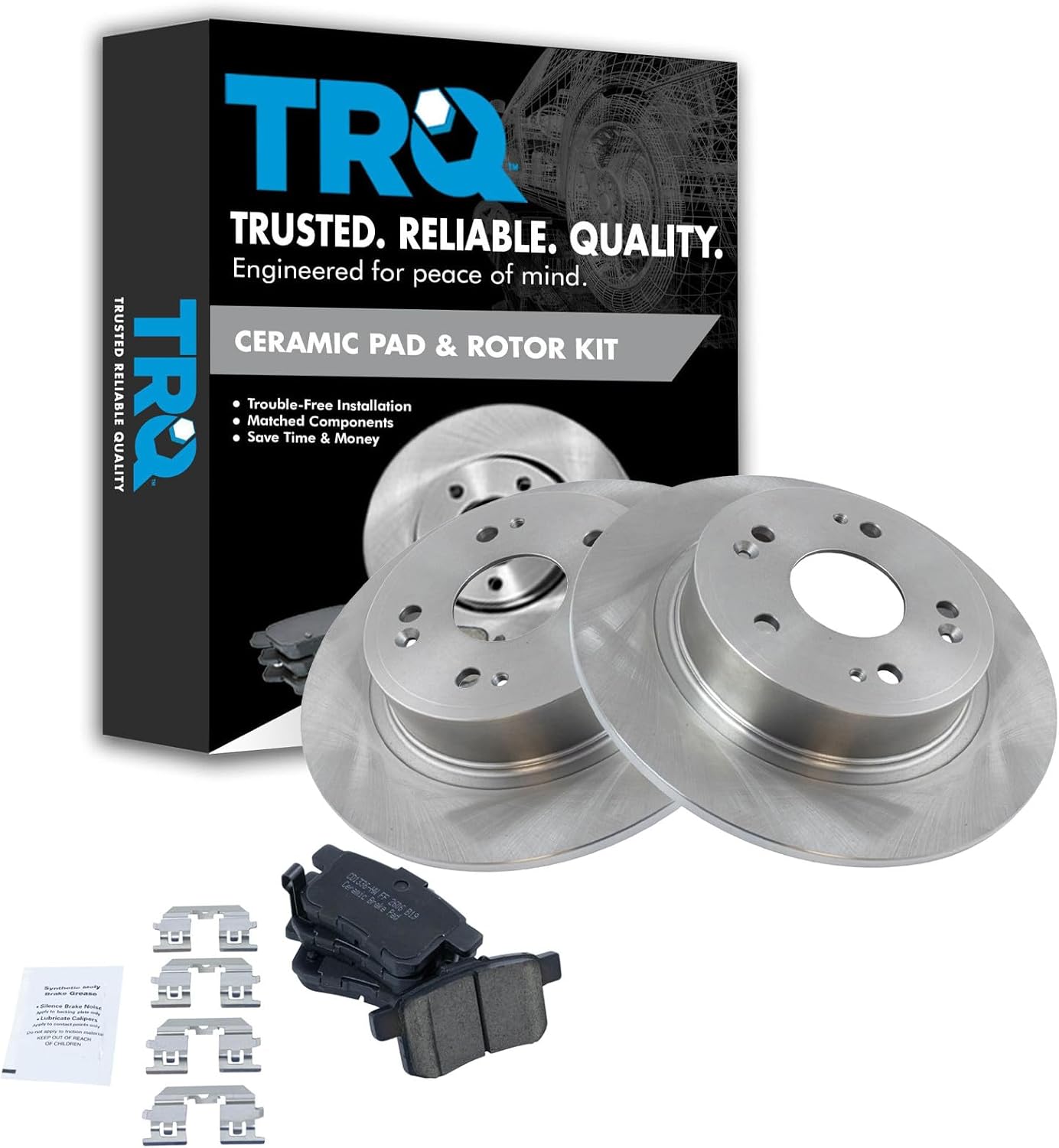
1. TRQ Rear Ceramic Brake Pad and Rotor Kit
| Included Components | 1 Rear Ceramic Brake Pad Set, 2 Rear Brake Rotors |
|---|---|
| Friction Material Composition | Ceramic |
| Rear Brake Rotor Diameter | 11.1 in. (282mm) |
| Wheel Lug Count | 5 Lug |
| Orientation | Rear |
This TRQ rear brake pad and rotor kit combines ceramic pads with two solid rotors to provide a straightforward, vehicle-specific replacement for the rear brakes. It is intended for routine on-road driving and DIY brake jobs where quieter operation and reduced pad dust are priorities. The kit includes a preassembled rear ceramic pad set and two 11.1 inch (282 mm) solid rotors sized for the listed fitments, and TRQ supplies installation videos to help with fitting. Ceramic friction typically yields quieter stops and less visible dust compared with semi-metallic pads, and the direct-fit design aims to match factory mounting points so no modification is needed. The solid rotors are suitable for everyday commuting and highway use but are not vented for heavy-load or track use. Expect a durable, OEM-style replacement that improves cleanliness and NVH for daily driving while remaining a practical option for owners doing their own brake service.
Best for: Buyers who want a balanced, all-purpose rear brake replacement that prioritizes quieter stops, cleaner wheels, and an easy DIY install for everyday driving.
Less Ideal for: Drivers who need heavy-duty braking for towing, track driving, or frequent high-temperature use should choose vented or performance-oriented rotors and pads instead.
- Includes both ceramic rear pads and matching rotors for a complete rear axle replacement
- Ceramic pads reduce brake dust and produce quieter braking than many semi-metallic pads
- Vehicle-specific direct-fit design simplifies DIY installation with no modifications
- Manufacturer provides step-by-step installation videos to assist home mechanics
- Solid (non-vented) rotors are less suited to heavy towing, track use, or repeated high-heat stops
Verdict: Choose this kit if you want a complete, direct-fit rear brake replacement that delivers quieter, cleaner braking and is friendly to DIY installers.
2. MAX Advanced Brakes PerformanceMAX Rear Brake Kit with Slotted Drilled Rotors and Carbon-Ceramic Pads

| Fitment | 2018–2023 Honda Accord (rear) |
|---|---|
| Included Components | Brake rotors, brake pads, hardware |
| Pad Material | Carbon-ceramic |
| Rotor Finish | E-coated |
| Orientation | Rear |
This PerformanceMAX rear brake kit replaces the factory rear discs and pads on 2018–2023 Honda Accord models with slotted, cross-drilled e-coated rotors and carbon-ceramic pads. It is intended for drivers who need stronger, fade-resistant braking when towing, descending long grades, or during aggressive driving. The rotors’ slots and drills help evacuate heat, gasses, and water while the black e-coating improves corrosion resistance behind open wheels. The included carbon-ceramic pads are formulated for reduced dust, quieter stops with dual-layer rubberized shims, and improved thermal stability for less fade under repeated heavy braking. Installation hardware is included so the kit can be swapped into a typical rear brake job without extra parts. Expect improved bite and cooler rotor temperatures under load, but note drilled rotors can be more prone to cracking under extreme repeated track abuse than some solid or fully slotted designs and ceramic pads may require a short bedding period to reach optimal performance.
Best for: Drivers who prioritize stronger, fade-resistant rear braking for towing, steep descents, or spirited driving and want a ready-to-install kit that reduces dust and noise.
Less Ideal for: Drivers who primarily do light daily commuting with minimal heavy braking or those who plan extensive track use should consider more track-oriented or solid rotor options instead.
- Slotted and drilled rotor design improves cooling and helps eject water and debris under heavy braking.
- E-coated finish reduces corrosion for cleaner appearance and longer rotor life behind open wheels.
- Carbon-ceramic pads offer low dust, reduced noise with dual-layer shims, and strong fade resistance.
- Includes rotors, pads, and necessary installation hardware for a complete rear brake replacement.
- Drilled holes can increase risk of stress cracking under extreme repeated high-temperature track use.
Verdict: Choose this kit to upgrade your Accord’s rear brakes for stronger, low-dust, fade-resistant stopping when towing or driving in demanding conditions.
3. Detroit Axle Rear Brake Rotor and Ceramic Pad Kit for 2011–2014 Acura TSX / 2011–2017 Honda Accord

| Fitment | 2011–2014 Acura TSX; 2011–2017 Honda Accord |
|---|---|
| Kit contents | 2 rear disc rotors and 2 rear brake pads |
| Pad material | Ceramic |
| Testing | Impact, wear, and fatigue tested |
This Detroit Axle rear brake kit supplies both rear rotors and ceramic pads so you can replace the entire braking surface at once without mixing new pads with worn rotors. The rotors are described as meeting factory-quality fit and finish and the pads use ceramic friction material, which typically gives quieter operation and less dust than semi-metallic pads. Installation is the normal bolt-on replacement for rear discs and is suitable for DIY mechanics or shops doing a routine brake job. The listing notes impact, wear, and fatigue testing and includes a long warranty, which adds confidence in durability. Limitations to consider are that the kit is sold for specific 2011–2014 Acura TSX and 2011–2017 Honda Accord rear applications only, and ceramic pads can slightly reduce initial bite compared with more aggressive compounds used on performance or heavy-load vehicles. For drivers wanting an economical, quiet, and direct-fit rear brake refresh, this kit is a practical choice.
Best for: Buyers who want a straightforward, value-focused rear brake refresh that restores stopping performance with quieter, lower-dust ceramic pads and a direct-fit replacement.
Less Ideal for: Drivers who need heavy-duty, high-temperature braking for towing, track use, or performance upgrades should choose a performance-oriented rotor and pad combination instead.
- Complete rear kit includes both rotors and ceramic pads for matched replacement
- Engineered to meet or exceed factory fit and finish for direct install
- Ceramic pads typically run quieter and produce less brake dust than semi-metallic
- Manufacturer states impact, wear, and fatigue testing and offers a long warranty
- Compatibility limited to specific Acura TSX and Honda Accord model years
- Ceramic pads may provide less initial bite than more aggressive pad compounds
Verdict: A practical, direct-fit rear rotor and ceramic pad kit that refreshes braking with quieter, lower-dust performance for the specified Acura TSX and Honda Accord years.
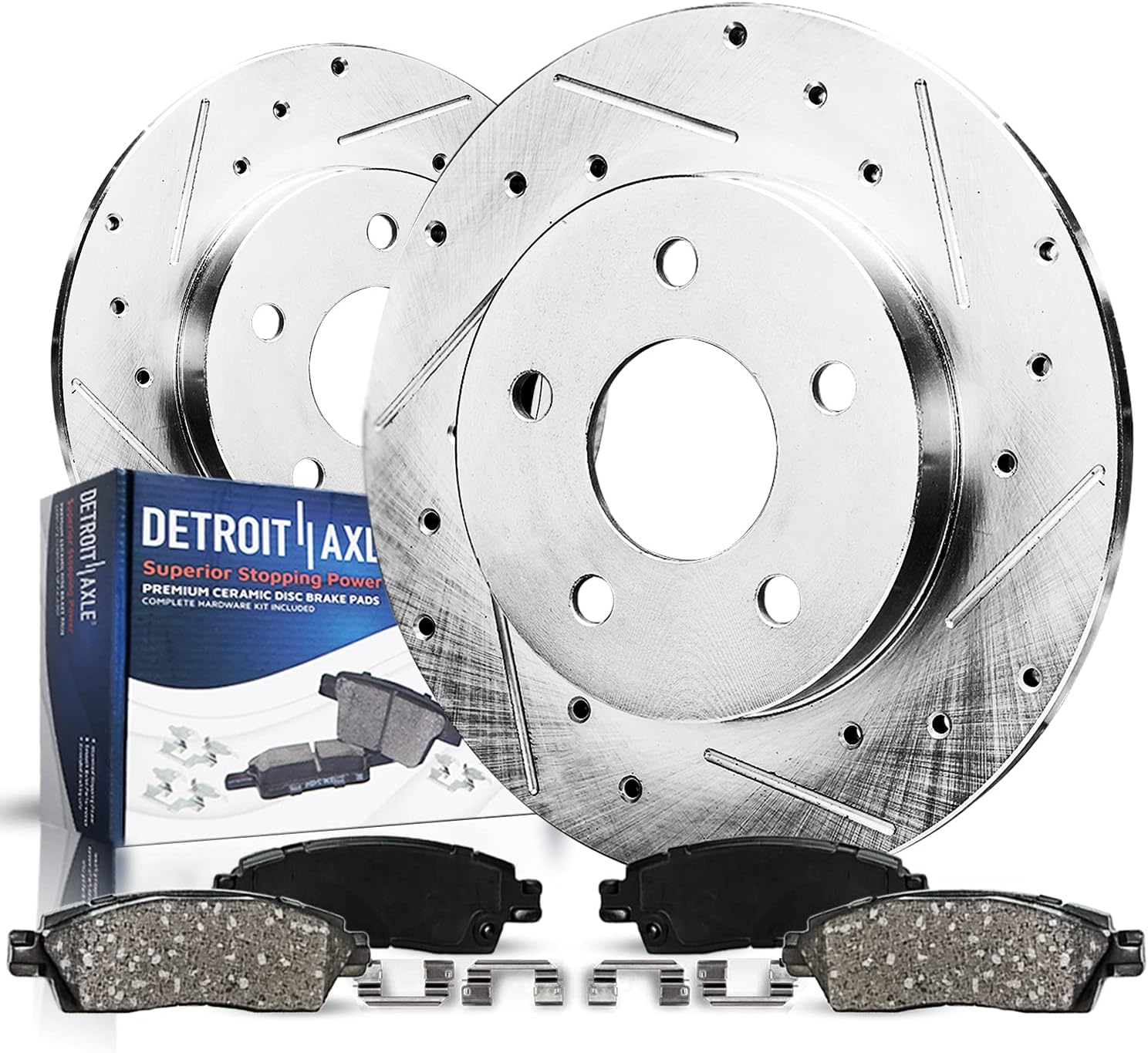
4. Detroit Axle Rear Drilled & Slotted Brake Kit with Ceramic Pads (10.24" Rotors)
| Fitment rotor size | 10.24" (260mm) rear rotors |
|---|---|
| Includes | 2 rotors and 2 ceramic rear pads with hardware |
| Orientation | Rear |
| Manufacturer warranty | 10-Year |
This Detroit Axle rear brake kit replaces the rear rotors and pads for Accords and TSX models that use 10.24 inch rear rotors. The kit includes two drilled and slotted rotors with zinc plating and ventilation slots plus a pair of ceramic rear pads and installation hardware. In daily use the drilled and slotted face helps dissipate heat and shed water for more consistent stopping, while the ceramic pads are quieter and produce less brake dust than semi-metallic alternatives. The rotors are machined with locating holes meant to fit without modification and the zinc finish helps resist visible corrosion. Buyers should note this is an aftermarket replacement designed for direct-fit applications rather than an upgrade for heavy-duty or track use, and ceramic pads generally trade a bit of ultimate fade resistance for lower noise and dust. For a budget-focused replacement that restores rear braking performance and reduces noise, this kit covers the common service items in one package.
Best for: Buyers looking for an affordable, complete rear brake replacement that restores quiet, everyday stopping and reduces brake dust on compatible Honda Accord and Acura TSX rear setups.
Less Ideal for: Drivers who frequently tow, carry heavy loads, or do repeated high-speed braking should choose a heavy-duty or performance-oriented rotor and pad combination instead.
- Includes both rear rotors and ceramic pads with hardware for a full rear service
- Drilled and slotted rotors with ventilation to improve cooling and water evacuation
- Zinc plating reduces visible corrosion and wheel-dust staining
- Machined locating holes for direct-fit installation without modifications
- Ceramic pads prioritize low noise and dust over maximum fade resistance under extreme use
Verdict: A cost-conscious, direct-fit rear brake kit that replaces rotors and pads in one purchase to restore quiet, factory-style braking on compatible Accords and TSX models.
5. Detroit Axle Rear Brake Kit with Drilled & Slotted Rotors and Ceramic Pads

| Fitment rotor diameter | 11.10 inch (282mm) Rear Rotor |
|---|---|
| Includes | 2 rotors, 2 ceramic pads, brake cleaner, brake fluid bottle |
| Pad material | Ceramic |
| Rotor type | Drilled & slotted |
| Manufacturer | Detroit Axle |
This Detroit Axle rear brake kit is built as a complete replacement for compatible Honda Accord and Acura TSX models with 11.10 inch rear rotors. The kit includes two drilled and slotted rotors, two ceramic rear pads, brake cleaner, and a small bottle of brake fluid so you have the essentials for a back-axle service. Drilled and slotted rotors help keep pad contact cleaner under spirited stops while the ceramic pads aim for quieter, low-dust operation compared with metallic pads. Detroit Axle states the rotors are manufactured to exceed factory specifications and the kit undergoes impact and wear testing, which aligns with a reliability-first buyer looking for consistent stopping performance. Expect straightforward bolt-on fit and most installs to go smoothly when your vehicle matches the listed rotor diameter. Trade-offs are the drilled rotor design can be noisier to some ears and offers modest cosmetic wear over time compared with plain rotors, but the package delivers good stopping power and durable ceramic pad life for routine driving and occasional hard braking.
Best for: Buyers who prioritize dependable, factory-quality replacements that arrive as a ready-to-install rear brake service and want low-dust, quiet braking for daily driving and occasional spirited stops.
Less Ideal for: Drivers seeking the quietest possible original-style plain rotors for heavy-duty towing or track-only applications should consider alternative rotor designs and performance-specific pad compounds.
- Complete rear kit with rotors, pads and basic fluids for one convenient service
- Drilled and slotted rotors improve heat dispersion and help evacuate gases and debris
- Ceramic brake pads are low-dust and designed for quieter, smoother stopping
- Manufacturer reports ISO-certified production and testing to support consistent quality
- Includes brake cleaner and brake fluid so fewer additional purchases are needed
- Drilled and slotted rotors can produce clicking or extra noise for some drivers
Verdict: A ready-to-install rear brake kit offering factory-quality rotors and low-dust ceramic pads for reliable, maintenance-focused replacements on compatible Accords.
6. Detroit Axle Rear Brake Kit — 11.10" Rotors and Ceramic Pads

| Rear rotor size | 11.10 inch (282 mm) |
|---|---|
| Pad type | Ceramic |
| Orientation | Rear |
| Automotive fit type | Vehicle Specific Fit |
This Detroit Axle rear brake kit supplies two vented 11.10 inch rear rotors and a pair of ceramic brake pads plus brake cleaner, a small bottle of brake fluid, and grease for installation. It is built as a vehicle-specific replacement for certain Honda Accord and Acura TSX rear setups; the rotors are zinc plated to resist corrosion and have venting to help dissipate heat during repeated stopping. The included ceramic pads aim to reduce brake dust and deliver quieter operation compared with some metallic compounds. Because the kit bundles rotors, pads, hardware and fluids it is convenient for a one-job DIY replacement or for a shop to fit both rotors and pads at once. Limitations to note are that the kit is matched to vehicles with 11.10 inch rear rotors so correct fitment is essential and the small supply of brake fluid may not be enough if you plan to fully flush the system. For buyers who want a low-fuss, factory-style replacement with extras included this kit covers the common needs for a rear brake job on the specified models.
Best for: Buyers who prioritize proven user feedback and want a bundled, vehicle-specific rear brake replacement they can install themselves or have fitted by a shop with minimal parts hunting.
Less Ideal for: Drivers who need a performance-oriented braking upgrade or vehicles with different rotor sizes should look at specialty performance pads or alternative fitments.
- Complete kit includes rotors, ceramic pads, brake cleaner, brake fluid and grease for a single rear brake job
- Vented rotors with zinc plating improve cooling and resist surface corrosion
- Vehicle-specific fitment for the listed Honda Accord and Acura TSX rear rotor size reduces installation adjustments
- Ceramic pads produce less brake dust and typically run quieter than metallic pad options
- Only fits vehicles with 11.10 inch (282 mm) rear rotors so verifying fitment is required
- Supplied bottle of brake fluid is small and may be insufficient for a full fluid flush
Verdict: A convenient, well-reviewed bundle that delivers factory-style rear rotors and ceramic pads plus installation extras for Hondas and TSX models with 11.10 inch rear rotors.
7. PowerStop Rear Brake Kit with Z17 Ceramic Pads and OE Replacement Rotors (Rear)

| Vehicle fit | Rear: 2011-14 Acura TSX, 2011-17 Honda Accord |
|---|---|
| Brake pad type | Z17 Ceramic Brake Pads |
| Rotors | OE replacement mill-balanced rotors |
| Includes | Pads, 2 rotors, rubberized shims, stainless-steel hardware |
| Position | Rear |
This PowerStop rear brake kit combines Z17 ceramic brake pads with OE-style replacement rotors and the stainless-steel hardware needed for a direct bolt-on installation. It is engineered for daily driving where quiet operation and low dust are priorities; the ceramic Z17 pads are chamfered, slotted, and thermal scorched for quicker break-in and reduced noise. The included rotors are mill-balanced and non-coated to help keep pedal feel smooth after installation. Because the kit includes shims and hardware, a homeowner with basic mechanical skills or a shop can complete the rear brake job without sourcing parts separately. Practical downsides are that the rotors are uncoated, so they can show surface rust if the car sits in wet conditions, and a minority of reviewers report premature wear or warping on some vehicles, so careful bedding and inspection after installation are advised. For routine street use on the specified Accord/TSX fits this kit provides an affordable, tidy replacement that keeps wheels cleaner than many semi-metallic options.
Best for: Buyers who prioritize a quiet, low-dust, factory-style rear brake replacement and want a complete kit that a competent DIYer or shop can install without sourcing extra parts.
Less Ideal for: Drivers seeking heavy-duty or track-oriented braking, long-term corrosion resistance, or the highest-performance materials should consider coated rotors or performance-specific pads instead.
- Complete bolt-on kit includes pads, two replacement rotors, stainless-steel hardware, and rubberized shims for straightforward installation.
- Z17 ceramic pads run quiet and produce low brake dust, helping keep wheels cleaner.
- Mill-balanced rotors are intended to preserve smooth pedal feel and reduce vibration after install.
- Rotors are non-coated and can develop surface rust faster than coated alternatives.
- Some users have reported early pad wear and rotor warping on a small number of vehicles.
Verdict: A convenient, factory-style rear brake kit that delivers quiet, low-dust stopping and a straightforward bolt-on replacement for the specified Accord/TSX models.
Choosing the Right Honda Accord Rear Brake Pad & Rotor Kit: Key Factors to Consider
Fitment and Vehicle Specifics
Correct fitment is the single most important factor when choosing a rear brake pad & rotor kit for the Accord. Rear hubs, caliper brackets, and parking-brake interfaces vary by model year and trim, so a kit must match the Accord's rear axle geometry to avoid installation problems.
Confirm the kit matches rotor diameter, bolt pattern, and hat height for the rear. Also check whether the parking brake mechanism is integrated into the rotor or requires separate hardware. A kit that omits necessary clips or the parking-brake interface can delay the job and increase costs, so verify fitment details carefully before purchase.
Rotor Material and Surface Treatment
Rotor construction and surface finish affect longevity, corrosion resistance, and the likelihood of rust-related drag. Many rear rotors are made from cast iron, but quality varies with metallurgy and finishing processes.
Look for rotors with anti-corrosion coatings on the hat and non-friction surfaces if you live in a wet or salted-road climate. Also note whether rotors are pre-drilled or slotted for bedding behavior and heat dissipation. While slotted or drilled designs can help with gas and debris evacuation under heavy use, they may increase wear on pad faces; match the rotor finish to your driving needs.
Pad Compound and Wear Characteristics
Pad material determines initial bite, dust output, noise tendency, and overall life. Ceramic-style compounds typically produce less dust and run quieter, while semi-metallic compounds often offer stronger initial bite and higher heat tolerance for spirited driving.
Consider how you drive the Accord. For routine commuting in urban and highway conditions, a low-dust ceramic-style pad balances comfort and longevity. For heavier-duty or performance-oriented use, a higher-friction semi-metallic compound may provide better fade resistance but can be noisier and more abrasive on rotors.
Rotor Thickness and Minimum Specs
Rotors wear over time and have a published minimum thickness below which they must be replaced. When selecting a kit, check the new rotor thickness and compare it to the Accord's service limits to ensure adequate future service life after machining or normal wear.
A thicker new rotor provides more margin before hitting minimum thickness, which is useful if you keep the car a long time or perform multiple resurfacing cycles. Conversely, thin replacement rotors will reach minimum thickness faster and might require earlier replacement.
Included Hardware and Ease of Installation
A complete kit should include necessary installation hardware such as caliper guide pins, boots, shims, clips, and parking-brake components when applicable. Missing items require sourcing separately and can complicate a DIY job or increase labor costs at a shop.
Consider whether the kit's rotors are pre-balanced and pre-machined from the factory or require on-vehicle resurfacing. Kits that reduce required prep work will shorten installation time and lower the chance of rework due to poor rotor runout.
Noise, Vibration, and Bedding Behavior
After replacement, some kits require a specific bedding-in procedure for optimal performance and quiet operation. Bedding helps establish a consistent transfer layer between pad and rotor, reducing noise and improving pedal feel.
Look for pad materials and rotor finishes with documented low-noise behavior and clear bedding instructions. If a kit lacks guidance, expect a period of noise or uneven feel until the surfaces mate properly. Consider anti-squeal shims and chamfered pad edges as additional features that reduce high-pitched squeal.
Understanding Rear Vs Front Brake Demands
The rear brakes on the Accord carry a different share of braking load than the front axle and are tuned to provide stability and balanced stopping. Because the rear sees less heat and pressure in normal driving, rear-specific pad compounds and rotor constructions are optimized for longevity and predictable engagement rather than maximum friction alone.
That difference means you should not simply pick a front brake kit for rear service. Rear rotors often integrate parking-brake features and have different mounting and thickness specifications. Choose a kit designed specifically for the rear to maintain handling balance and consistent pedal feel.
- Rear braking contributes to vehicle stability during deceleration.
- Rear rotors may incorporate parking brake contact surfaces not found on front rotors.
- Thermal and wear expectations differ between front and rear hardware.
When to Resurface Rotors Versus Replace Them
Deciding to resurface or replace rear rotors depends on runout, thickness, and surface condition. Resurfacing can correct minor scoring and restore a smooth contact surface if the rotor is above minimum thickness and within runout tolerance.
However, rotors that have deep grooves, severe corrosion, or are already near the minimum thickness should be replaced. Replacement guarantees a uniform surface and proper thickness for future service life, while resurfacing saves cost but reduces rotor life margin.
- Resurface if thickness and runout are within spec and damage is minimal.
- Replace if corrosion, deep scoring, or thickness limits are exceeded.
Parking Brake Integration and Cable Adjustment
Many Honda Accord rear rotors and pad assemblies interface directly with a mechanical parking brake. When installing a rear kit, inspect the parking-brake components, including the cable, return springs, and adjuster mechanism. A properly adjusted parking brake ensures full handbrake function and prevents premature pad wear.
Some kits include specific hardware for the parking brake; others expect reuse of the original components. If cables are frayed or hardware shows significant wear, replace them at the same time to avoid future problems.
- Check cable condition and adjuster clearance during installation.
- Replace worn parking-brake parts rather than reusing questionable components.
Installation Prep and Torque Procedures
Good installation practice reduces the chance of post-install noise and vibration. Clean mounting surfaces, remove corrosion from hub contact areas, and torque fasteners to Honda-specified values. Uneven mounting surface or loose rotor-to-hub fit can create runout that leads to pulsing under braking.
Follow a proper torque sequence for caliper bracket bolts and wheel lug nuts, and re-check torque after a short break-in mileage. Lubricate guide pins with high-temperature brake grease and apply anti-seize sparingly on hub contact areas to prevent future corrosion-related seizing.
- Clean hub mating surface before mounting rotors.
- Torque to factory specs and re-check after initial road miles.
- Use correct lubricants on guide pins and contact points.
Matching Pad Compound to Driving Style
Select pad material based on how you use the Accord. For mostly city and highway commuting, low-dust ceramic-like compounds provide smooth, quiet operation and long life. If you occasionally drive more aggressively or tow light loads, a higher-friction semi-metallic pad provides stronger bite and better heat tolerance.
Remember that more aggressive compounds can increase rotor wear and dust, so balance performance needs against maintenance frequency and cleanliness preferences.
- Ceramic-like pads: low dust, quiet, comfortable for daily driving.
- Semi-metallic pads: higher bite and heat resilience for spirited driving.
Break-In Procedure for New Rear Brake Kits
A proper bedding-in process helps establish an even transfer layer on new rotors and pads, reducing noise and improving initial stopping performance. Typically, bedding involves a series of gradual decelerations from moderate speeds with cooled intervals to avoid overheating the new surfaces.
Follow any manufacturer-recommended procedure included with the kit. If none is provided, a conservative approach of repeated moderate stops with cooling gaps works to seat the pads while minimizing the risk of uneven glazing or hot spots.
- Perform progressive stops with cool-down periods to seat pads.
- Avoid repeated hard stops during the initial bedding miles.
Still looking for the perfect fit?
Select your Honda Accord configuration to see the most relevant Brake Pad & Rotor Kits recommendations
How We Chose the Best Honda Accord Rear Brake Pad & Rotor Kit
We focused on criteria that matter most to Accord owners replacing rear braking hardware. First, strict fitment was a primary filter: every kit considered was evaluated for exact compatibility with the Honda Accord rear axle and required mounting points. Second, rotor specifications were assessed, including nominal diameter, minimum thickness, hat height, and whether the rotor comes pre-machined or requires resurfacing. Third, pad compound and bedding behavior were weighed, contrasting longevity, dust generation, and initial bite to match different driving styles.We also considered rotors' surface treatment and coating for corrosion resistance, and whether hardware such as shims, clips, and parking-brake components are included. Ease of installation and the typical prep work required were factored in, as well as documented owner feedback on noise and vibration after installation. Exclusions: kits without clear fitment data for the Accord rear axle, or those missing essential mounting hardware, were not considered. Our final list reflects items that met fitment, braking performance, durability, and installation practicality thresholds.
Our full evaluation process is outlined in our review methodology.
FAQ
How often should I replace rear brake pads on my Accord?
Replacement intervals vary with driving style but often range from 30,000 to 70,000 miles. City driving with frequent stops accelerates wear, while highway-focused use tends to lengthen pad life. Inspect thickness every oil change interval and replace when pad material nears the service limit.
Can I install a rear pad and rotor kit myself?
Many owners with basic mechanical skills can complete a rear kit installation using common tools, a jack, and proper jack stands. Follow torque specs, clean mating surfaces, and observe safety precautions. If you are uncomfortable with brake procedures or parking-brake adjustments, have a qualified technician handle the job.
Why does my Accord squeal after installing new rear pads and rotors?
Squeal often results from inadequate bedding, glazed pad or rotor surfaces, or missing anti-squeal shims. It usually improves after proper break-in and a few hundred miles. Persistent noise may indicate an installation issue, uneven rotor runout, or a pad compound that is prone to noise.
Do rear brake kits for the Accord include parking-brake components?
Some kits include parking-brake hardware and necessary clips, while others provide only pads and rotors. Check fitment details before purchase. If the kit omits parking-brake parts, plan to reuse or replace the existing components during installation.
Is it necessary to resurface rotors when replacing rear pads?
Resurfacing is only necessary if the rotors have minor scoring, acceptable thickness, and runout within tolerance. If rotors show deep grooves, heavy corrosion, or are near minimum thickness, replacement is the safer option. Replacing rotors with pads is common to ensure optimal mating surfaces.
Will a high performance rear brake kit change daily drivability?
A high performance kit can alter pedal feel, initial bite, and dust levels. While it may improve stopping under demanding use, it can produce more dust and noise in everyday driving. Choose a kit that balances performance improvements with acceptable daily comfort.
Final Verdict
When replacing the rear brake pad & rotor kit on a Honda Accord, prioritize correct fitment, rotor thickness, and pad compound that match your driving habits. Confirm parking-brake compatibility and ensure the kit includes necessary hardware or plan to reuse factory components. Tradeoffs typically involve noise versus bite and rotor longevity versus initial performance.Focus on a kit that delivers the right balance of durability, quiet operation, and straightforward installation for your Accord. With proper fitment and a correct bedding procedure, you will restore safe, predictable braking and avoid repeat visits for premature wear or noise issues.
Explore More:
- Check out all Honda Accord parts & accessories
- Explore Brake Pad & Rotor Kits Maintenance & Repair Guides
- Explore Brake System
- Browse all Auto Parts
