

Note: This article contains affiliate links. If you click on these links and make a purchase, I may earn a small commission at no extra cost to you. This helps support my research and content. Read my full affiliate disclosure here.
If you drive a 1998–2002 Honda Accord you already know how important predictable braking is for day-to-day safety and confidence behind the wheel. Selecting the right brake pad and rotor kit for this generation of Accord matters because fitment, rotor size, and pad compound all affect pedal feel, stopping distance, and noise.This guide presents seven shortlisted brake pad and rotor kits chosen specifically for 1998–2002 Accord applications. We focus on the fitment details that matter for this chassis, the material choices that change performance and longevity, and the typical installation considerations for both front and rear brakes. Read on to understand the evaluation criteria and what to expect during replacement so you can pick the kit that matches your driving needs and maintenance goals.
Looking for other parts? See all Honda Accord parts & accessories.
Top Picks at a Glance


1. Callahan Brake Parts Front and Rear Brake Kit for 1998–2002 Honda Accord (Rotors, Ceramic Pads, Hardware)

| Compatible vehicles | 1998–2002 Honda Accord V6 Sedan and Coupe |
|---|---|
| Included components | Front and rear rotors, front and rear ceramic pad sets, pad hardware |
| Fit type | Vehicle specific fit |
| OEM equivalent | 45251S87A00 |
This Callahan brake kit supplies matching front and rear replacement rotors plus ceramic pads and the necessary pad hardware for 1998–2002 Honda Accord V6 sedans and coupes. It is designed as a direct-fit, vehicle-specific replacement so installation follows stock mounting points and uses rotor thickness and cooling vane counts matched to factory specifications. The rotors are precision machined and balanced to reduce vibration while the slotted and chamfered ceramic pads aim to improve bite, reduce dust, and quiet operation with rubberized shims. Because the package covers both axles and includes hardware, it is convenient for doing a full service in one job and helps ensure even braking feel across the car. Limitations are usual for replacement kits: these are stock-style parts rather than performance or heavy-duty components, so drivers who want track-capable braking or more aggressive fade resistance should look at upgraded rotors and pads. For everyday driving and scheduled maintenance this kit offers a straightforward, value-focused option.
Best for: Buyers seeking a balanced, all-in-one replacement to restore factory braking performance on a 1998–2002 Honda Accord V6 who value convenience and predictable, quiet everyday braking.
Less Ideal for: Drivers who frequently tow, race, or demand track-level braking performance should consider performance rotors and high-friction pads instead.
- Complete front and rear kit includes 2 rotors and full sets of ceramic pads plus pad hardware for one-job replacement
- Direct vehicle-specific fit matching factory rotor thickness and cooling vane count for consistent braking feel
- Precision-machined and balanced rotors help minimize vibration and promote smooth stopping
- Ceramic pads with slotted and chamfered faces and rubberized shims reduce noise and dust during normal driving
- Designed as a stock replacement rather than a performance or heavy-duty upgrade
- Limited to compatible 1998–2002 Accord V6 models only
Verdict: A convenient, matched front-and-rear replacement kit that restores factory-style braking for 1998–2002 Accord V6 owners who want a quiet, reliable everyday solution.
2. R1 Concepts eLINE Front and Rear Brake Kit with Drilled Slotted Rotors and Ceramic Pads

| Fitment | 1998-2002 Honda Accord V6 (front and rear) |
|---|---|
| Rotor type | Drilled and diamond-slotted |
| Pad material | Ceramic |
| Coating | Zinc plated rotors |
| Includes | 4 rotors and 8 brake pads |
This R1 Concepts eLINE kit replaces both front and rear braking components for 1998–2002 Honda Accord V6 models, combining cross-drilled, diamond-slotted rotors with ceramic brake pads. It is supplied as a direct-fit kit intended for bolt-on installation and includes four rotors and eight ceramic pads sized to the listed vehicle. The rotors are zinc coated to resist corrosion and use drilled holes plus diamond slots to shed heat, debris, and reduce pad glazing during spirited driving or occasional towing. The ceramic pads emphasize low dust and low noise while offering consistent fade resistance for daily driving and light performance use. Practical advantages include cleaner wheels, a smoother bed-in process, and rotors designed to indicate wear via diamond-tipped slot ends. Limitations are that this is a vehicle-specific kit for the listed Accord years only and the drilled rotor design can be more prone to cracking than plain rotors under extreme track abuse; buyers seeking heavy track duty should consider purpose-built performance rotors and pads.
Best for: Buyers who want a performance-minded factory-replacement brake upgrade for a late 1990s to early 2000s Accord that improves stopping feel and keeps wheels cleaner without major modification.
Less Ideal for: Drivers who do mainly competitive track days or very high-heat braking scenarios should look at heavy-duty or motorsport-specific brake systems instead.
- Direct-fit front and rear kit tailored to 1998–2002 Accord V6 for straightforward installation
- Drilled and diamond-slotted rotors improve heat dissipation and reduce pad glazing during aggressive stops
- Zinc coating on rotors adds corrosion protection for longer visual life
- Ceramic pads produce low dust and low noise while offering reliable fade resistance
- Drilled rotor construction is less suited to sustained heavy track use where plain or two-piece rotors are preferred
Verdict: A straightforward, performance-minded direct-fit kit that upgrades braking bite and reduces wheel dust for 1998–2002 Accord owners looking for a reliable street and light-performance solution.
3. Detroit Axle Front Drilled & Slotted Brake Kit with Ceramic Pads for 1998–2002 Honda Accord V6
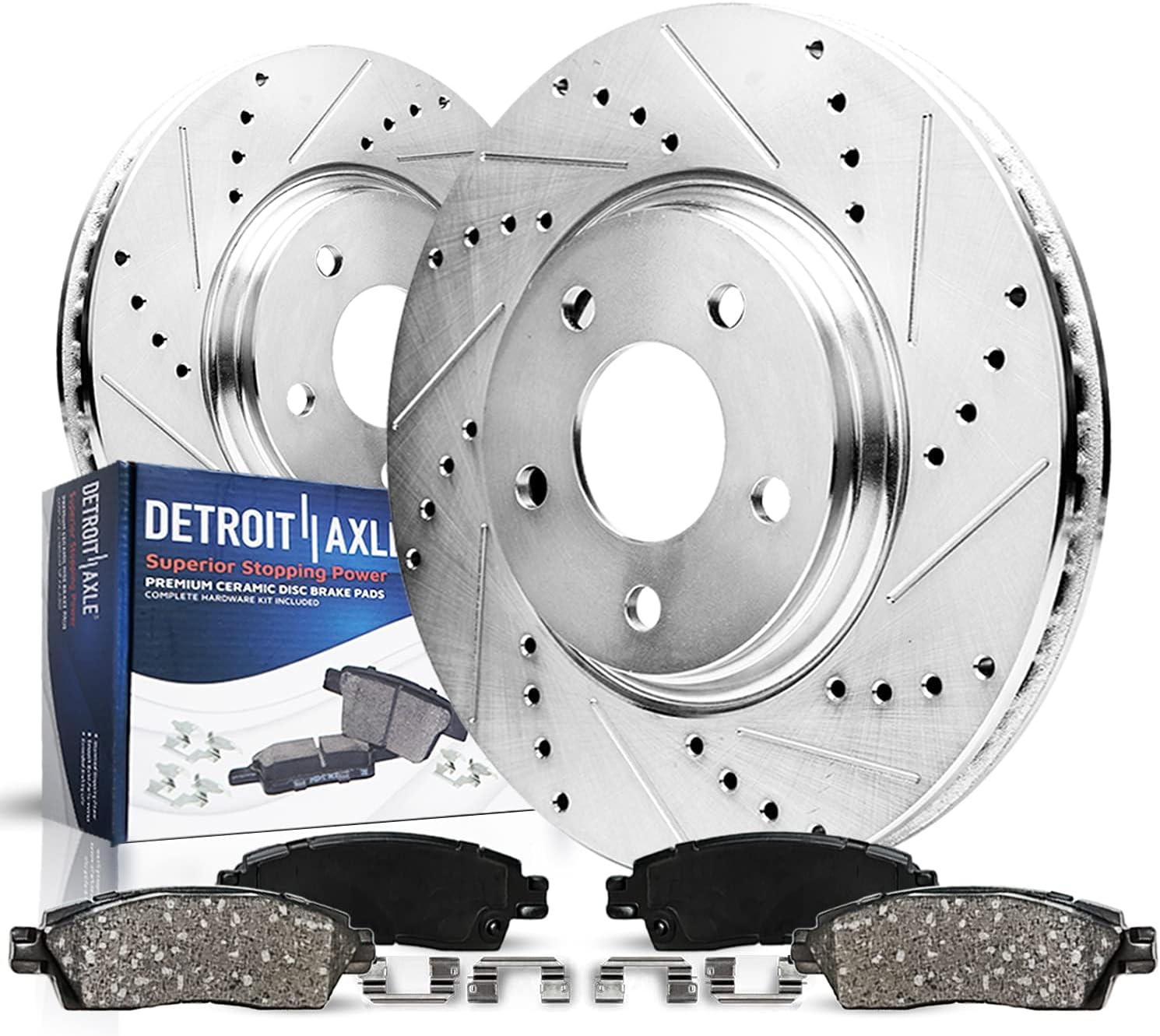
| Fitment | 1998-2002 Honda Accord V6 3.0L Front (11.10 inch / 282mm rotor) |
|---|---|
| Kit contents | 2 front drilled & slotted rotors, 2 front ceramic pads with hardware |
| Rotor finish | Silver zinc plating |
| Orientation | Front |
| Manufacturer warranty | 10-Year |
This Detroit Axle front brake kit replaces the 11.10-inch front rotors on 1998–2002 Honda Accord V6 models and bundles two drilled-and-slotted rotors with a pair of ceramic pads and mounting hardware. The rotors are zinc plated to resist visible corrosion and feature ventilation and slots to speed cooling and help shed water and pad debris during spirited or repeated stops. Ceramic pads generally run quieter and produce less dust than semi-metallic compounds, making this a tidy-looking, low-noise option for daily driving. Fitment is machined to factory locating holes so installation should be straightforward for a home mechanic or independent shop. Buyers should note drilled and slotted rotors can sometimes produce different noise or pad bedding characteristics compared with smooth rotors and some users reported minor rubbing or extra attention during bedding-in. The kit is backed by a long warranty and is positioned as a value alternative to dealer parts while keeping braking performance suitable for street and light mountain use.
Best for: A practical buyer who wants a ready-to-install front brake kit that balances improved cooling and low dust with straightforward fitment for routine driving and occasional heavy braking.
Less Ideal for: Drivers seeking a race-oriented brake upgrade or those who prefer uninterrupted, factory-smooth rotor surfaces for strictly OEM-like NVH should consider other options.
- Complete front kit with both rotors and ceramic pads plus hardware for a single install
- Drilled and slotted rotor design improves heat dissipation and helps clear water and debris
- Zinc plating reduces visible surface corrosion for a cleaner appearance
- Machined locating holes for direct fitment without modification
- Drilled and slotted rotors can require a careful bedding-in period and may produce different noise characteristics than smooth rotors
Verdict: A value-focused, ready-to-install front brake kit that improves cooling and reduces dust while offering factory-style fitment for 1998–2002 Accord V6 owners.
4. Detroit Axle Front Brake Kit for 1998–2002 Honda Accord (2.3L sedan, 4-lug)

| Fitment | 1998–2002 Honda Accord sedan 2.3L, 4-lug, front |
|---|---|
| Kit contents | 2 front rotors + 2 front ceramic brake pads |
| Rotor type | Vented, zinc plated |
| Orientation | Front |
This Detroit Axle front brake kit supplies both front rotors and ceramic pads to perform a full front brake service on compatible 1998–2002 Accord sedans. The rotors are vented for improved cooling and zinc plated to resist surface corrosion, while the ceramic pads aim to deliver quieter, smoother stops than basic metallic pads. Installation is straightforward for anyone comfortable with basic brake work and the locating holes are machined to match factory fitment so no modification is required. The kit is a good value for budget repairs or restoring worn brakes: reviewers report solid stopping power and quiet operation when caliper hardware is lubricated properly. Expect typical aftermarket variability though — some customers noted occasional warped rotors or noisy pads out of the box, so inspect parts on receipt and be prepared to address pad fit or use a caliper tool during installation. For a cost-conscious replacement that restores braking performance without upgrading to high-performance components, this kit covers the essentials.
Best for: Buyers replacing worn front brakes on a 1998–2002 Accord who prioritize saving money while getting a full, factory-fit replacement kit and quieter ceramic pads.
Less Ideal for: Drivers seeking track-capable or heavy-duty braking upgrades or those who want a premium rust-free coated rotor should look at performance or ceramic-coated alternatives.
- Complete front service package with two rotors and matching ceramic pads
- Vented rotors improve heat dissipation for typical driving
- Zinc plating helps resist surface corrosion during storage and initial use
- Machined locating holes for direct fitment to factory hubs
- Ceramic pads provide quieter, smoother stops compared with generic metallic pads
- Some reported quality variability including warped rotors or noisy pads in a minority of shipments
- Not a high-performance option; intended as a budget replacement rather than track use
Verdict: A practical, budget-friendly kit that gives 1998–2002 Accord sedan owners a complete, factory-fit front brake replacement with quieter ceramic pads.
5. Detroit Axle Front Brake Kit for 1998–2002 Honda Accord 3.0L (Rotors + Ceramic Pads)

| Fitment | 1998-2002 Honda Accord V6 3.0L (11.10 inch front rotor) |
|---|---|
| Kit contents | 2 front rotors and 2 front ceramic pads (hardware included) |
| Rotor feature | Vented and slotted |
| Finish | Zinc plated |
This Detroit Axle kit supplies two front vented disc rotors and two ceramic front pads with the hardware needed for direct replacement on 1998–2002 Honda Accord V6 3.0L models with 11.10 inch rotors. The rotors are zinc plated to resist corrosion and feature ventilation slots to help dissipate heat and reduce moisture buildup during repeated stops. Ceramic pads are quieter and produce less dust than semi-metallic compounds, making the kit a low-noise, low-dust option for daily driving. Fitment is machined to match factory locating holes so installation should be straightforward for a DIYer or a shop without modification. The parts are positioned as a factory-style replacement focused on dependable stopping rather than performance braking on a track. Buyers should note this is a standard replacement kit that prioritizes corrosion resistance and quiet operation over aggressive bite or heavy-duty fade resistance for towing or spirited driving.
Best for: Buyers who want a dependable, low-noise factory-style front brake replacement for a 1998–2002 Accord V6 and value corrosion resistance and predictable everyday stopping.
Less Ideal for: Drivers who need aggressive fade resistance or track-oriented braking performance should look at performance rotors and pads instead.
- Zinc-plated rotors resist corrosion and help keep wheel area cleaner
- Vented, slotted rotor design improves heat dissipation under repeated stops
- Ceramic pads run quietly and generate less brake dust than metallic pads
- Machined locating holes for direct fit and straightforward installation
- Designed as a factory-style replacement so it is not optimized for high-performance or heavy towing use
Verdict: A reliable, low-noise front brake replacement kit that restores factory-style stopping and adds corrosion resistance for 1998–2002 Accord V6 models.
6. Detroit Axle Brake Rotor and Ceramic Pad Kit for 1998–2002 Honda Accord V6
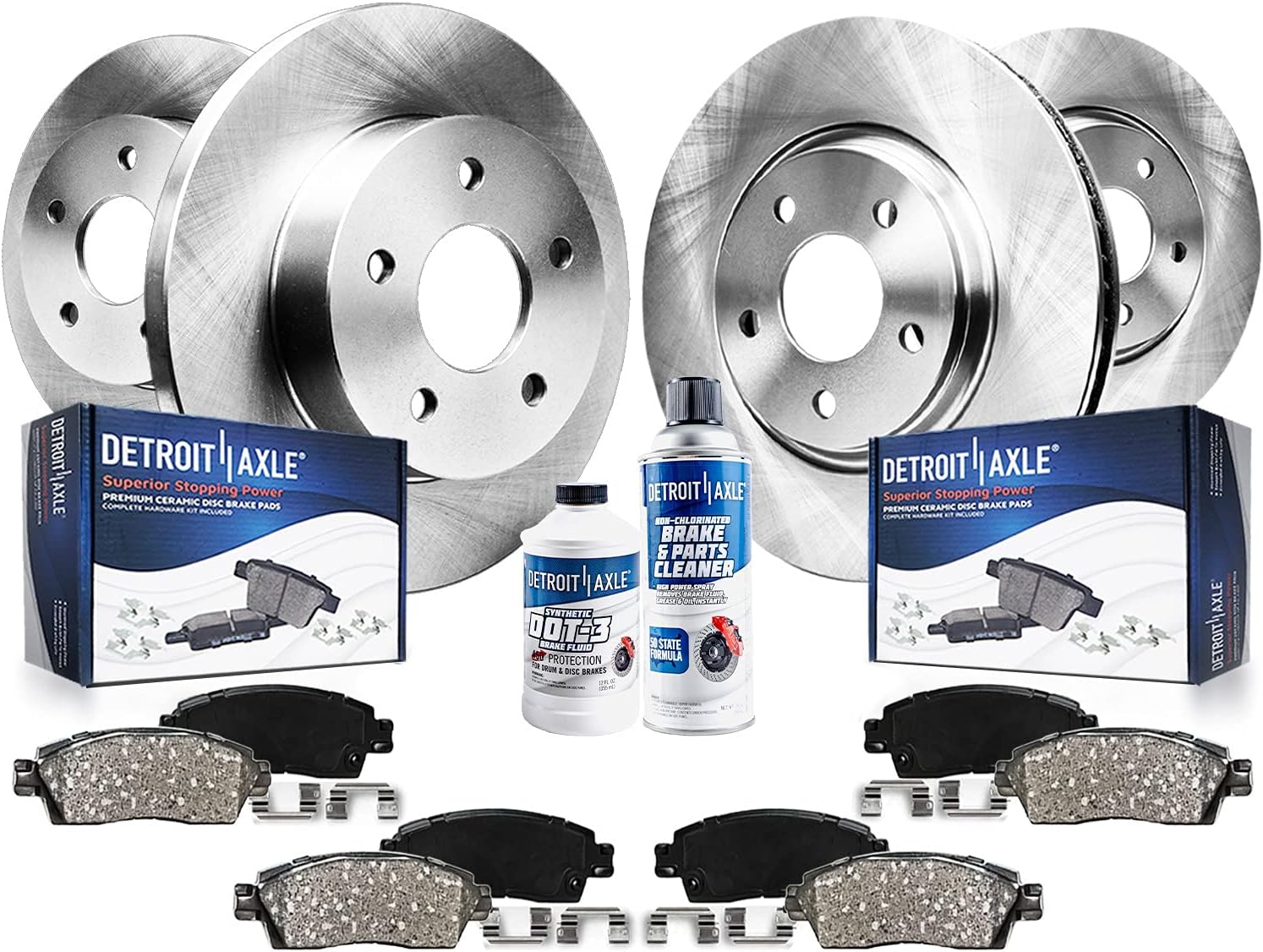
| Fitment | 1998–2002 Honda Accord V6 (rear disc) |
|---|---|
| Pad type | Ceramic |
| Rotor features | Vented, zinc plated |
| Kit contents | Front and rear rotors, front and rear pads, hardware, brake cleaner, brake fluid |
| Warranty | 10 Year |
This Detroit Axle kit supplies everything needed to refresh the braking system on 1998–2002 Honda Accord V6 models with rear discs. It includes two front and two rear machined rotors, front and rear ceramic pads with hardware, a can of brake cleaner and a bottle of brake fluid. The rotors are vented and zinc plated to help cooling and resist corrosion while the ceramic pads are low-noise and free of metallic content for quieter operation and reduced dust. Fitment is vehicle-specific and many owners report straightforward installation and OEM-like fit. Practical benefits include getting rotors and pads matched for consistent bite and the convenience of included consumables so you can complete the job without extra parts. Limitations to note are occasional hardware fitment tolerances reported by some buyers and that the kit does not include rotor mounting screws for vehicles that require them, so you may need tools or replacement fasteners during installation.
Best for: Buyers who prioritize proven user feedback and want a single kit that covers rotors and pads for a factory-style refresh on a 1998–2002 Accord V6, and who prefer a low-noise ceramic pad option with included consumables.
Less Ideal for: Those seeking upgraded performance rotors or pads for heavy track use or aggressive driving should choose purpose-built performance parts instead.
- Complete set: front and rear rotors, pads, installation hardware, brake cleaner and brake fluid included
- Vented, zinc-plated rotors designed for improved cooling and corrosion resistance
- 100% ceramic pads for quieter braking and reduced brake dust
- Vehicle-specific fitment intended to match factory mounting and reduce installation adjustments
- Some buyers reported minor hardware fitment issues such as small front clips that required adjustment
- Rotor mounting screws are not provided for vehicles that use them, which may require drilling or purchasing fasteners
Verdict: If you want a complete, user-validated kit to replace both rotors and pads on a 1998–2002 Accord V6 with quiet ceramic pads and corrosion-resistant rotors, this Detroit Axle set is a convenient factory-style solution.
7. Detroit Axle Front Drilled & Slotted Brake Kit with Ceramic Pads for 1998–2002 Honda Accord 3.0L
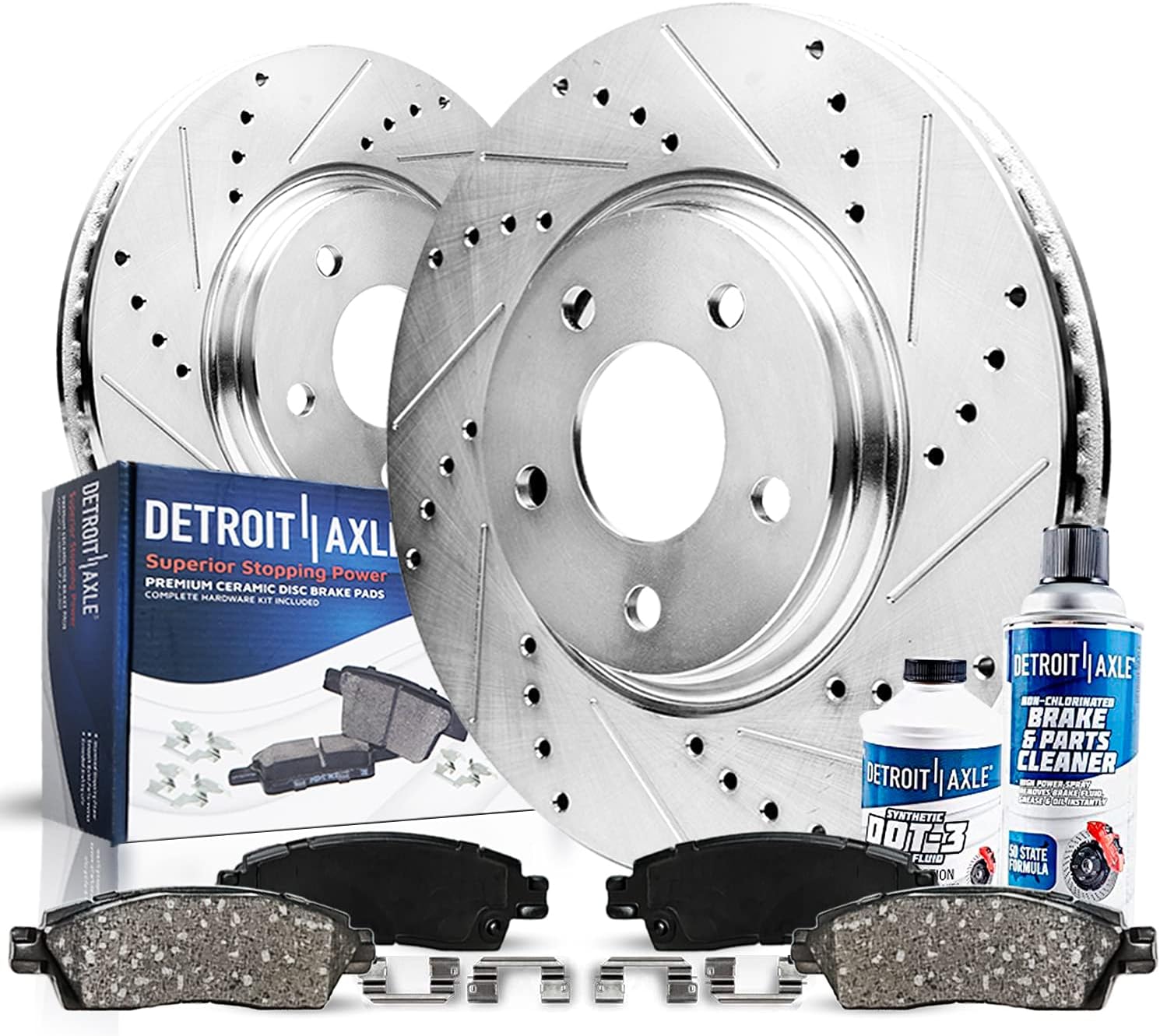
| Fitment | 1998-2002 Honda Accord V6 3.0L (front) |
|---|---|
| Kit contents | 2 drilled & slotted rotors, 2 ceramic pads, hardware, brake cleaner, brake fluid |
| Rotor type | Drilled and slotted, zinc plated |
| Orientation | Front |
| Manufacturer warranty | 10 Year |
This Detroit Axle kit supplies everything needed to replace the front brakes on a 1998–2002 Honda Accord with the 3.0L V6. It ships with two drilled and slotted rotors, a pair of ceramic pads with hardware, a 10 oz brake cleaner and a 12 oz bottle of brake fluid so DIYers can complete a straightforward job without sourcing extra parts. The rotors are zinc plated to resist corrosion and feature ventilation slots to help dissipate heat for improved fade resistance during heavier use. Ceramic pads provide quieter, low-dust operation and the kit’s machine-located holes mean the parts fit with factory-quality alignment. Some users report the pads and rotors take a couple of weeks of bedding in before they stop making noise, and drilled/slotted rotors can be a bit louder than plain rotors. Also note the included fluid is DOT 3 which may not match every vehicle’s DOT 4 requirement. For routine street driving and confident stopping power, this is a convenient, nearly complete replacement kit for the specified Accord V6 fitment.
Best for: Buyers who prioritize a straightforward, risk-minimizing replacement that arrives with all common consumables and fits the specified Accord V6 without modification.
Less Ideal for: Drivers who need DOT 4 fluid prefilled, prefer plain non-drilled rotors for silence, or who want high-performance track-specific brake components.
- Complete kit includes rotors, pads, hardware, brake cleaner and fluid for one-stop installation.
- Drilled and slotted rotors with ventilation help improve cooling and reduce brake fade under heavier use.
- Zinc plating on rotors improves corrosion resistance and keeps wheel area cleaner.
- Ceramic pads are low-dust and generally quieter in normal operation.
- Machined locating holes and included hardware deliver a fit that aligns with factory mounting points.
- Included brake fluid is DOT 3 which may not match vehicles that require DOT 4.
- Drilled and slotted rotors and new pads can be noisy during an extended bedding-in period.
Verdict: A convenient, factory-fit front brake kit that gives 1998–2002 Accord V6 owners a nearly complete, corrosion-resistant rotor and ceramic pad replacement in one purchase.
Choosing the Right 1998-2002 Honda Accord Brake Pad & Rotor Kit: Key Factors to Consider
Pad Material and Compound
Pad compound determines initial bite, fade resistance, dust levels, and lifespan. For a 1998–2002 Accord, everyday driving often favors ceramic or low-metallic compounds that provide predictable pedal feel, lower dust, and quieter operation. Aggressive metallic compounds offer higher initial bite but can produce more noise and rotor wear, which may not suit a commuter-oriented Accord.
Think about your driving: frequent highway commuting with heavy loads benefits from compounds with better fade resistance, while city driving and parking lot maneuvers prioritize low dust and low noise. Matching the compound to rotor finish and break-in procedure also reduces squeal and uneven wear, so plan compound choice alongside your installation approach.
Rotor Construction and Surface Finish
Rotor thickness, material quality, and surface finish affect heat dissipation, resistance to warping, and braking consistency. For the 1998–2002 Accord, rotors should meet factory diameter and thickness specifications and have consistent machining tolerances to minimize runout after installation.
Coated or zinc-plated hat areas resist corrosion and simplify future service, while a properly machined friction surface helps new pads bed in smoothly. If a rotor is thinner than service limits it should be replaced rather than resurfaced. Consider vented versus solid designs only as they match factory configurations for front and rear positions on this vehicle.
Fitment and Hardware Completeness
Correct fitment is essential: rotor diameter, hub bore, lug pattern, and caliper clearance must match the 1998–2002 Accord specifications. Kits that include mounting hardware, shims, anti-rattle clips, and new wheel studs where applicable reduce installation time and eliminate scavenging parts.
Missing hardware can lead to improper pad seating, noise, or early wear. Verify whether the kit covers front, rear, or both axle positions and whether it is built for your Accord's specific braking setup. For owners doing a DIY replacement, a complete kit avoids an extra trip to the parts store.
Noise, Vibration, and Harshness (NVH) Management
Brake noise and vibration are common owner complaints after replacement. For the 1998–2002 Accord, NVH control depends on pad backing plate quality, anti-rattle hardware, and proper shims. Good kits will include or specify shim layers and bedding instructions that reduce the likelihood of squeal.
Pad shape and chamfering, along with rotor surface finish, influence vibration patterns. Choosing a kit with known NVH features reduces the chance of post-install noise and improves perceived quality, especially important in a mid-size sedan where refinement matters.
Durability and Maintenance Needs
Durability covers pad wear rate and rotor longevity under the type of driving the Accord sees. Higher mileage commuters will value compounds and rotors that resist glazing and heat-related wear. Consider how often you are willing to service the brakes and whether you prefer rotors that can be resurfaced or replaced.
Some rotors are designed to be resurfaced within safe thickness limits, while others should be replaced once worn. Evaluate expected maintenance intervals and whether the kit simplifies future servicing by including replaceable hardware or wear indicators.
Installation Difficulty and DIY Considerations
Installation complexity can influence total cost and outcome. For the 1998–2002 Accord, routine replacement of pads and rotors is within reach for many DIYers, but some kits require specific tools, attention to caliper piston retraction, or torque sequences to avoid issues.
Look for clear fitment guides, included hardware, and whether the kit requires braking system bleeding or special bedding procedures. If you plan to install the kit yourself, choose options that match your mechanical comfort level and ensure you have the torque specifications and service manual references for this vehicle.
Front Versus Rear Kit Differences
The front and rear brake systems on the 1998–2002 Accord have distinct roles and wear characteristics. Front brakes handle most of the stopping load; therefore front kits typically use larger rotors and more aggressive pad compounds to dissipate heat and maintain stopping power. Rear kits are usually smaller, wear more slowly, and may incorporate parking brake interfaces that need correct fitment.
- Confirm which axle a kit covers before buying.
- Front kits often require heavier-duty compounds and vented rotors.
- Rear kits may include parking brake hardware or require different rotor thickness.
Bedding-In New Pads and Rotors for Best Performance
Proper bedding breaks in both pads and rotors so the contact surface mates correctly and reduces noise and uneven wear. A typical bedding procedure involves progressive moderate stops from highway speed down to lower speeds, repeated several times, followed by cool-down periods. Skipping or rushing bedding increases the risk of squeal, glazing, and suboptimal stopping performance.
- Perform several gradual stop cycles to transfer pad material.
- Avoid repeated hard stops during the initial bedding period.
- Allow components to cool between bedding cycles to prevent overheating.
When to Resurface Rotors Vs Replace
Resurfacing can correct minor surface imperfections if the rotor remains above the minimum thickness specification for the 1998–2002 Accord. However, excessive warpage, deep scoring, or rotors at or below minimum thickness should be replaced. Modern kits often come with replacement rotors sized to OEM specs to avoid the ambiguity of machining.
- Measure rotor thickness against factory service limits before resurfacing.
- If lateral runout exceeds accepted tolerances, replacement is safer than machining.
- Consider replacement when rotors show heat cracking or deep grooves.
Common Causes of Brake Noise After Replacement
Noise after installing new pads and rotors can stem from improper hardware, lack of shims, poor bedding, or mismatched pad compound and rotor finish. For the 1998–2002 Accord, inspect anti-rattle clips, backing plate contact, and ensure caliper slider pins are lubricated and torqued correctly. Using recommended bedding procedures and quality hardware reduces the chance of squeal or vibration.
- Check that hardware is correctly oriented and secured.
- Use high-temperature brake lubricant where specified on contact points.
- Confirm rotor faces are clean and free of protective oils before installation.
High-Performance Options for Enthusiast Drivers
If you use your Accord for spirited driving or occasional track days, look for kits that specify higher thermal capacity, dimpled or slotted rotors, and semi-metallic compounds intended to resist fade. These parts improve repeated stopping performance but may increase dust and noise compared with touring-oriented compounds. Ensure any high-performance kit matches the factory rotor dimensions and does not exceed caliper clearance limits on this vehicle.
- High-performance rotors help dissipate heat during repeated heavy braking.
- Expect tradeoffs in noise and dust when selecting more aggressive pad compounds.
- Verify wheel and caliper clearance for thicker or differently vented rotors.
Still looking for the perfect fit?
Select your Honda Accord configuration to see the most relevant Brake Pad & Rotor Kits recommendations
How We Chose the Best 1998-2002 Honda Accord Brake Pad & Rotor Kit
To build this list we applied vehicle-specific filters and performance criteria so each kit is appropriate for 1998–2002 Honda Accord fitment and use. We started by confirming correct rotor diameter, bolt pattern, and caliper compatibility for this Accord generation, then prioritized kits that include both pads and rotors to simplify installation and ensure matched wear characteristics.Key evaluation criteria included pad compound and expected lifespan, rotor construction and runout tolerances, noise- and dust-reduction design features, and whether the kit includes hardware and shims needed for a proper install. We also considered ease of installation for DIY owners and the availability of service documentation or fitment guides specific to this car.Kits were excluded if they required machining beyond standard resurfacing limits, if fitment was ambiguous for the 1998–2002 Accord, or if essential hardware was missing. The final picks reflect a balance between stopping performance, longevity, and installation practicality for this vehicle.
Our full evaluation process is outlined in our review methodology.
FAQ
How do I confirm a kit fits my 1998–2002 Accord?
Check the kit's listed vehicle fitment against your Accord's model year range and axle position. Verify rotor diameter, hub bore, and whether the kit is for the front or rear axle. Installation guides or fitment charts provided by the manufacturer can help confirm compatibility.
Can I resurface my current rotors instead of installing a kit?
You can resurface rotors if they are above the minimum thickness and have no heat cracks. However, resurfacing removes material and may not correct severe runout. If the rotor is near service limits or shows deep scoring, replacement is the safer option.
Will ceramic pads reduce brake dust on my Accord?
Ceramic pads typically produce less dust than metallic compounds and often deliver quieter performance. They may wear slightly differently and offer good day-to-day braking for a 1998–2002 Accord, but they might not perform as well under extreme, repeated high-heat conditions.
Do I need to replace hardware and shims when changing pads and rotors?
Replacing worn hardware and shims is recommended to ensure proper pad seating and reduce noise. Reusing corroded or damaged clips and pins can lead to uneven wear or rattling, so kits that include new hardware simplify the job and improve long-term performance.
What causes a pulsing brake pedal after replacement?
Pedal pulsing often indicates rotor lateral runout or uneven thickness variation. It can also result from improper braking torque sequence or failing to torque wheel lug nuts to specification. Measuring rotor runout and following correct installation torque values usually resolves the issue.
How often should I check brake wear on a 1998–2002 Accord?
Inspect pads and rotors at regular service intervals or if you notice changes in pedal feel, noise, or stopping distance. For typical driving, visual checks every 12,000 to 15,000 miles are reasonable, but heavy city driving or towing may require more frequent inspections.
Final Verdict
When replacing brakes on a 1998–2002 Honda Accord prioritize correct fitment, appropriate pad compound, and rotors that meet factory thickness and machining tolerances. Balance your choice between low-noise, low-dust compounds for daily driving and higher-capacity materials if you routinely demand stronger braking performance.Ultimately choose the kit that aligns with how you drive and how often you want to service the brakes, and be sure to follow proper installation and bedding procedures to get reliable, quiet stopping power from your Accord.
Explore More:
- Check out all Honda Accord parts & accessories
- Explore Brake Pad & Rotor Kits Maintenance & Repair Guides
- Explore Brake System
- Browse all Auto Parts
