

Note: This article contains affiliate links. If you click on these links and make a purchase, I may earn a small commission at no extra cost to you. This helps support my research and content. Read my full affiliate disclosure here.
Replacing the front brake pads and rotors on your Honda Accord is one of the most effective ways to restore confident stopping and reduce vibration or noise. The right front brake pad & rotor kit can improve pedal feel, extend component life, and simplify installation compared with buying parts separately. This guide covers seven carefully shortlisted kits that fit the Accord and explains the factors that matter when choosing pads and rotors for everyday driving, commuting, and occasional spirited use.Below you will find the top options we considered and the evaluation criteria used to narrow the field, followed by practical guidance on installation considerations and long-term maintenance.
Looking for other parts? See all Honda Accord parts & accessories.
Top Picks at a Glance
| Best Overall The best all-around choice for most situations | Detroit Axle Front Brake Kit with Drilled & Slotted Rotors and Ceramic Pads |  |
| Best Quality Built to a higher standard if you want something more solid | Detroit Axle Brake Kit for 2013–2017 Honda Accord — Drilled & Slotted Rotors with Ceramic Pads (Front & Rear) |  |
| Best Value The sweet spot between price and what you get | Detroit Axle Front Brake Kit for 2003–2010 Honda Accord (11.10 in Rotors) |  |
| Best Budget The cheapest option that still gets the job done reliably | Detroit Axle Front Brake Kit for 1998–2002 Honda Accord (2.3L sedan, 4-lug) |  |
| Highest Rated A top-rated pick with lots of positive feedback | Detroit Axle Front Brake Kit — Drilled & Slotted Rotors with Ceramic Pads | |
| Most Popular A crowd favorite that many people choose with confidence | Detroit Axle Front and Rear Brake Rotor and Ceramic Pad Kit for 2008–2012 Honda Accord |  |
| Best Seller A high-volume bestseller chosen again and again | Callahan Front Brake Kit — Front Rotors with Ceramic Pads and Hardware |  |
1. Detroit Axle Front Brake Kit with Drilled & Slotted Rotors and Ceramic Pads
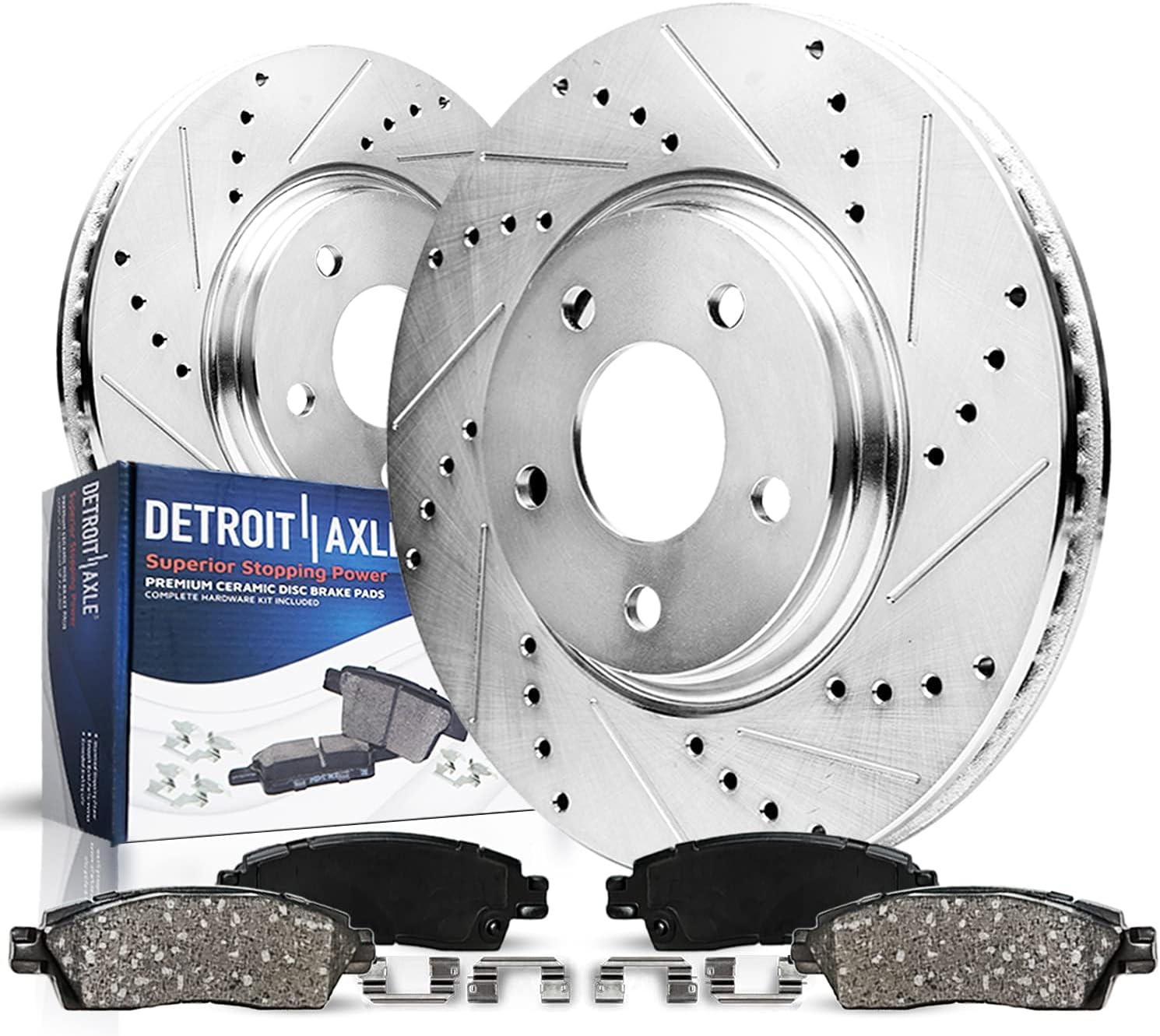
| Rotor diameter | 11.10" (282mm) |
|---|---|
| Orientation | Front |
| Compatible with Vehicle Type | Car |
| Manufacturer Warranty Description | 10-Year |
This Detroit Axle front brake kit supplies a matched pair of drilled and slotted 11.10 inch rotors plus ceramic brake pads intended as a straightforward replacement for a range of Honda Accord and Civic front applications. Installation is typical for a factory-style replacement: the rotors bolt on in place of the originals and the pads install into the calipers with existing hardware. The drilled and slotted rotor pattern helps with heat dissipation and gas removal under repeated stops, while the ceramic pads aim to reduce dust and noise compared with some semi-metallic pads. Detroit Axle says the components are tested for wear and fatigue and the kit carries a long warranty, which is reassuring for regular street driving and commuting. Expect OEM-like fit and braking feel without performance brake upgrades; the design favors consistent everyday stopping over track use. Buyers should ensure the exact vehicle fitment before ordering because the listing covers many model years and configurations.
Best for: Buyers who want a dependable, factory-quality front brake replacement that balances braking performance, low dust, and predictable pedal feel for daily driving and commuting.
Less Ideal for: Drivers seeking race-oriented stopping power, heavy-duty towing brakes, or owners who want an aggressive performance upgrade should consider dedicated performance rotors and pads instead.
- Matched rotor and pad set for a single axle simplifies replacement
- Drilled and slotted rotors improve heat dissipation during repeated stops
- Ceramic pads typically produce less brake dust and quieter operation than many metallic pads
- Designed and tested to meet factory-style fit and function for listed Honda models
- Not engineered for high‑stress track or heavy towing applications where performance pads and larger rotors are preferable
Verdict: A practical, factory-style front brake kit that gives reliable everyday stopping with low dust and improved heat control for Honda Accord and Civic drivers.
2. Detroit Axle Brake Kit for 2013–2017 Honda Accord — Drilled & Slotted Rotors with Ceramic Pads (Front & Rear)

| Fitment | 2013–2017 Honda Accord 4-cylinder (front & rear) |
|---|---|
| Rotors | Drilled and slotted, zinc plated |
| Pads | Ceramic |
| Includes | Rotors, pads, hardware, 12oz DOT3 brake fluid, 10oz brake cleaner |
This Detroit Axle kit bundles front and rear drilled and slotted rotors with ceramic brake pads plus installation hardware, a bottle of DOT3 brake fluid and brake cleaner so you can replace the whole stopping system in one job. It is intended for 2013–2017 Honda Accord four-cylinder configurations and the rotors are zinc plated to resist surface corrosion. In real-world use the slotted and drilled rotor design helps dissipate heat and reduce pad glazing during spirited driving while ceramic pads offer quieter operation and lower dust compared with many metallic compounds. The included hardware and fluids simplify a DIY swap, but there are no printed installation instructions in the box so beginners should follow a reliable procedure or video. Expect slightly more noise and a short break-in period typical of drilled/slotted rotors; some installers prefer higher-performance pad compounds if they regularly push braking hard on track. For performance-minded Accord owners this kit gives a substantial braking upgrade over worn factory parts at a competitive value, with the convenience of a full front-and-rear replacement package.
Best for: Drivers who want a performance-minded, full front-and-rear brake refresh for a 2013–2017 Honda Accord and prioritize improved heat control and cleaner operation over purely track-focused compounds.
Less Ideal for: Drivers seeking a dedicated race or track braking setup who need aggressive friction materials and high fade resistance should choose a performance rotor and pad package designed specifically for track use.
- Complete kit includes front and rear rotors, pads, mounting hardware, DOT3 brake fluid and brake cleaner for a one-stop replacement
- Drilled and slotted rotors improve heat dissipation and help prevent pad glazing during aggressive driving
- Ceramic pads produce less dust and generally quieter operation than semi-metallic pads
- Zinc plating on rotors reduces surface rust and keeps rotors looking cleaner during road use
- No printed installation instructions included, so DIYers need to reference external guides or videos
- Drilled and slotted rotors can produce more audible noise than smooth rotors under some conditions
Verdict: A complete, value-focused front-and-rear kit that gives 2013–2017 Accord owners better heat management and cleaner, quieter braking for spirited street driving.
3. Detroit Axle Front Brake Kit for 2003–2010 Honda Accord (11.10 in Rotors)

| Fitment | 2003–2010 Honda Accord with 11.10 in (282 mm) front rotors |
|---|---|
| Kit contents | 2 front rotors, 2 front ceramic pads, hardware |
| Rotor feature | Vented with ventilation slot |
| Finish | Silver zinc plated |
| Orientation | Front |
This Detroit Axle kit supplies two vented front rotors and a set of ceramic brake pads with the necessary hardware for a direct replacement on specified Honda Accord years that use 11.10 inch rotors. The rotors are zinc plated to resist corrosion and feature ventilation slots to help shed heat and moisture during repeated stops. Ceramic pads are quieter and produce less initial dust than many semi-metallic options, so daily driving and commuting feel smooth and tidy. The kit is intended as a straightforward, budget-conscious factory-style replacement rather than an upgrade for track use. Fitment is machined to match locating holes for an OEM-style install, though some reviewers noted occasional mismatched clips so keep your original hardware if concerned. Expect typical bedding-in procedures and routine pad dust; performance is sensible for street driving but heavy towing or aggressive driving will benefit from higher-spec components.
Best for: Buyers who want a straightforward, cost-effective factory-quality front brake replacement for a daily-driven Accord and value quiet, low-dust operation.
Less Ideal for: Not the best choice for drivers who demand track-capable stopping performance or who regularly subject brakes to heavy loads or aggressive driving.
- Complete kit includes both rotors, ceramic pads, and hardware for a single front axle replacement
- Vented, slotted rotors help with cooling and moisture evacuation under repeated braking
- Zinc plating improves corrosion resistance and keeps wheels cleaner compared with bare rotors
- Ceramic pads are generally quiet and produce less visible dust than many alternatives
- Included hardware clips have occasional fitment mismatches reported by some users
Verdict: A practical, budget-friendly front brake replacement that restores quiet, OEM-style stopping and reduced dust for everyday Honda Accord driving.
4. Detroit Axle Front Brake Kit for 1998–2002 Honda Accord (2.3L sedan, 4-lug)

| Fitment | 1998–2002 Honda Accord Sedan 2.3L, 4 lugs |
|---|---|
| Kit contents | 2 front rotors + 2 front ceramic pads w/ clips |
| Rotor type | Vented, zinc plated |
| Orientation | Front |
This Detroit Axle kit supplies both front rotors and ceramic pads to replace worn braking components on 1998–2002 Honda Accord 2.3L sedans with 4 lugs. The rotors are vented for faster heat dissipation and zinc plated to resist surface corrosion, while the ceramic pads aim to deliver quieter, smoother stops than generic metallic pads. The kit arrives with locating holes machined to factory-style tolerances and includes pad clips so you have the main hardware needed for a straightforward replacement. For a budget-conscious buyer this is a practical option: parts fit well in customer reports, install easily with basic shop tools, and provide noticeably improved stopping over worn originals. Expect typical aftermarket limitations such as occasional shipping damage or one-off warped rotors and variable pad life compared with premium brands. Also some installations require a caliper piston tool to compress the piston, which is commonly rented or found in a basic toolset. If you want an affordable, full-front replacement that balances performance and cost, this kit covers the essentials without extras.
Best for: Drivers replacing worn front brakes on a 1998–2002 Accord who prioritize a full, low-cost parts swap that fits and performs better than heavily worn components.
Less Ideal for: People seeking top-tier longevity or track-level performance should consider premium or performance-focused brake options instead.
- Includes both front rotors and ceramic pads for a complete front-brake refresh
- Vented rotors and zinc plating help cooling and resist surface corrosion
- Machined locating holes for factory-style fit and included pad clips simplify installation
- Ceramic pads provide quieter, smoother stopping compared with many metallic pads
- Some buyers report occasional damaged or warped rotors arriving from shipment
- Pad life appears to vary and can be shorter than higher-end aftermarket options
Verdict: An affordable, complete front rotor and ceramic pad kit that delivers factory-style fit and quieter stopping for 1998–2002 Accord owners on a budget.
5. Detroit Axle Front Brake Kit — Drilled & Slotted Rotors with Ceramic Pads
| Rotor diameter | 11.81 inch (300mm) |
|---|---|
| Orientation | Front |
| Compatible with Vehicle Type | Car |
This Detroit Axle front brake kit supplies two drilled and slotted 11.81 inch rotors plus two ceramic front pads intended as a direct replacement for a range of Honda and Acura vehicles. The rotors are engineered to meet or exceed factory specifications and the drilled and slotted surface helps dissipate heat and resist glazing during repeated stops. Paired ceramic pads aim to deliver quieter, smoother braking and longer pad life compared with basic metallic pads. Installation follows standard front-brake replacement procedures and the kit is useful for owners refreshing a worn braking system or upgrading to rotors that manage heat better under everyday driving. Practical benefits include improved fade resistance during spirited driving and reduced brake dust with ceramic compounds. Limitations are that the kit is specific to the listed applications and rotor size, so fitment must be confirmed for your exact year and trim, and drilled/slotted rotors can be noisier under some conditions than plain rotors.
Best for: Buyers who prioritize dependable, factory-style braking performance and want a long-lasting, low-dust ceramic pad paired with rotors that handle heat better for everyday and occasional spirited driving.
Less Ideal for: Drivers seeking a performance or track-focused upgrade should consider higher-spec sport rotors and pads tuned specifically for repeated high-temperature track use.
- Drilled and slotted rotors improve heat dissipation and help reduce brake fade.
- Ceramic brake pads offer quieter operation and lower dust compared with typical metallic pads.
- Built to exceed factory specification for fit and finish to simplify replacement and maintain braking performance.
- Fitment is specific to listed Honda and Acura applications and requires verification for exact year and trim.
Verdict: A reliable, factory-style front brake refresh that pairs heat-managing drilled and slotted rotors with quieter, longer-lasting ceramic pads for everyday Honda Accord braking needs.
6. Detroit Axle Front and Rear Brake Rotor and Ceramic Pad Kit for 2008–2012 Honda Accord
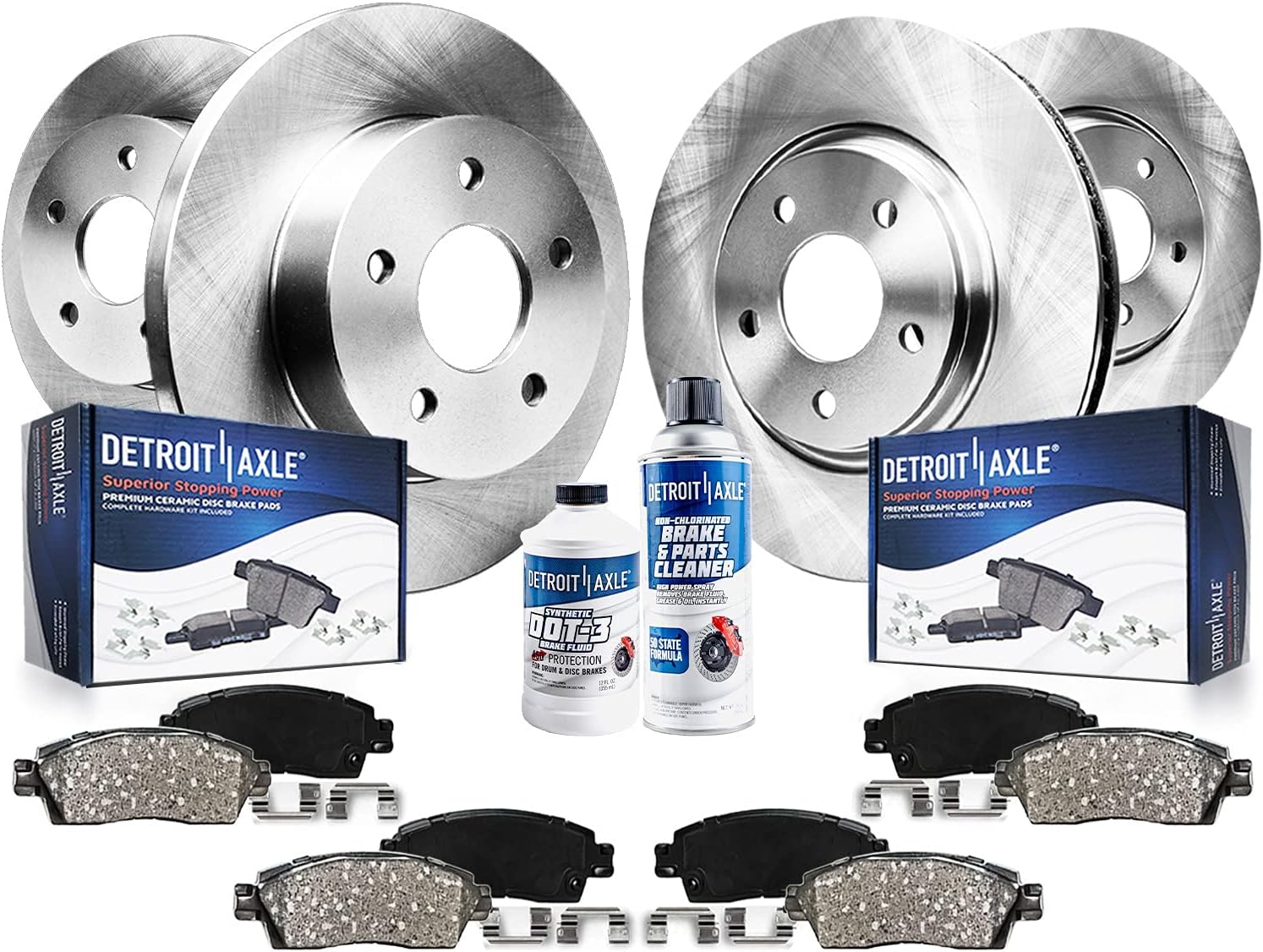
| Fitment | 2008–2012 Honda Accord (11.10 inch front/rear rotors) |
|---|---|
| Rotors | Vented, zinc plated |
| Pads | Ceramic (front and rear) |
| Includes | Brake cleaner spray and 12oz brake fluid bottle |
This Detroit Axle kit supplies everything needed to replace both front and rear rotors and pads on 2008–2012 Honda Accord (11.10 inch rotors) in one purchase. The kit includes vented, zinc-plated rotors front and rear, ceramic pads with hardware, a can of brake cleaner and a bottle of brake fluid so you can perform a full four-wheel service without hunting down extras. Vented rotors and the zinc finish help resist corrosion and speed cooling, while the machined locating holes aim to simplify fitment and reduce the need for modification. Ceramic pads deliver quieter, low-dust operation compared with semi-metallic options, making them a good choice for everyday street driving. Reported installation is straightforward for a DIYer and the included hardware generally fits factory calipers, though a few users noted occasional bracket or clip fitment issues and the kit does not include rotor retaining screws. This is a solid value for owners who want a full, factory-quality replacement set and the convenience of an all-in-one kit, but professional installation or attention to hardware details may be needed for a handful of vehicles.
Best for: Buyers who want a single purchase to replace all four rotors and pads on a 2008–2012 Accord and prefer a quiet, low-dust ceramic setup backed by many user reports of good fit and performance.
Less Ideal for: If you need a performance-oriented pad compound for track use or require a kit that supplies every small fastener and gloves, look for a specialist or higher-end kit that lists those extras.
- Complete four-wheel kit including front and rear rotors, pads, basic hardware, brake cleaner and brake fluid
- Zinc-plated vented rotors resist corrosion and aid cooling for consistent braking
- Ceramic brake pads offer low noise and reduced brake dust compared with many factory replacements
- Does not include rotor mounting screws which some vehicles require for reassembly
- Occasional fitment issues reported with front pad clips or hardware that may need replacement or adjustment
Verdict: A practical all-in-one replacement kit for 2008–2012 Accord owners who want quiet, low-dust ceramic pads and corrosion-resistant vented rotors with most installation essentials included.
7. Callahan Front Brake Kit — Front Rotors with Ceramic Pads and Hardware

| Included Components | Brake Rotors, Brake Pads |
|---|---|
| Automotive Fit Type | Vehicle Specific Fit |
| Orientation | Front |
| Manufacturer Warranty Description | 1 year manufacturer warranty |
This Callahan front brake kit supplies a matched set of two front replacement rotors plus four ceramic brake pads and the necessary pad hardware for direct-fit installation on supported Honda models. It is intended as a stock replacement, with rotors precision machined and balanced to restore smooth braking and ceramic pads shaped with slots and chamfers to reduce noise and assist quick bedding. The included hardware and pad backing plate grease recommendations simplify installation and help ensure correct fit without extra parts. Practical benefits include OEM-style fitment, quieter braking with reduced dust compared with semi-metallic pads, and a short break-in period reported by many installers. Limitations to consider are that fitment is vehicle-specific so you must confirm the exact year and trim match, and one review flagged wrong rotor size on an older Accord which suggests checking rotor diameter before installation; the listing does not show rotor diameter. The kit comes with a one year manufacturer warranty and is best suited for everyday street driving rather than track use or heavy towing where heavy-duty or performance rotors and pads would be preferable.
Best for: Buyers seeking a reliable, factory-replacement front brake kit that restores everyday braking performance with low noise and dust and who prioritize a straightforward, OEM-like repair.
Less Ideal for: Drivers who need high-performance or heavy-duty braking components for track use, aggressive driving, or heavy towing should choose upgraded performance rotors and pads instead.
- Complete matched kit with rotors, ceramic pads, and pad hardware for direct fit installation
- Rotors precision machined and balanced to restore smooth, vibration-free braking
- Ceramic pads are slotted and chamfered to help reduce noise and brake dust
- Designed to meet or exceed factory specifications and matched to OEM cooling vane count
- Rotor diameter is not listed in the product specs which can lead to fitment surprises for some model years
- Not intended for heavy-duty, high-heat use such as track days or towing
Verdict: A convenient, factory-style front brake kit that restores quiet, dependable everyday braking with an OEM-fit replacement.
Choosing the Right Honda Accord Front Brake Pad & Rotor Kit: Key Factors to Consider
Pad Material and Performance
Pad composition directly affects how the Accord will stop, how the pads wear, and whether they generate noise during city driving. Ceramic pads are quieter and produce less dust, which keeps wheels cleaner and reduces airborne particulates around the front of the car. Metallic or semi-metallic pads offer stronger initial bite and better heat tolerance for occasional hard stops, but they can be noisier and wear rotors faster.
Consider your typical driving: mostly commuting and moderate highway use leans toward ceramic-oriented compounds for comfort and longevity. If you push the car harder or frequently tow light loads, a higher metallic content can maintain consistent braking under increased thermal stress. Also look for pad formulations that list friction coefficients and recommended operating temperatures so you can match the pad to your driving style.
Rotor Type and Heat Management
Rotor design influences how heat is dispersed during repeated stops and how susceptible the rotor is to warping or cracking. Plain, solid rotors are fine for light commuting, but vented, slotted, or cross-drilled designs help evacuate heat and gases for more consistent braking during sustained use. Slotted or drilled rotors can also help clear dust and moisture from the pad face, reducing glazing and improving bite.
For a Honda Accord used mostly on public roads, vented rotors with corrosion-resistant coatings are usually the best compromise between performance and longevity. If you occasionally perform spirited driving, choose rotors with features that increase cooling without introducing excessive noise or accelerated pad wear.
Rotor Finish and Corrosion Resistance
Front rotors are exposed to road salt, water, and brake dust, which can accelerate corrosion and reduce service life. A protective finish or coating on the rotor hat and hub area helps prevent rust that can make future removal difficult and degrade fitment. Some kits include fully coated rotors or at least coated hats while leaving the friction surface uncoated to preserve pad bedding.
Prioritize coatings that are durable and tolerant of heat cycling rather than purely cosmetic plating. Corrosion resistance reduces the chance of uneven mounting and helps maintain wheel alignment and ABS sensor performance over time.
Included Hardware and Ease of Installation
Kits that include new mounting hardware, shims, and anti-rattle clips reduce installation time and the risk of reusing worn components that compromise performance. Caliper guide pins, bolts, and miscellaneous clips often corrode or lose their anti-rattle function and should be replaced during a front brake job to ensure correct pad seating and quiet operation.
Also consider whether the kit provides clear instructions or supports the common procedures for the Accord, such as caliper piston retraction and torque specs. Fewer missing parts means less time at the garage and lower chance of installation-related noise or uneven wear.
Compatibility and Correct Fitment
Exact fitment to front-specific Honda Accord brake carriers, calipers, and hub dimensions is essential. Differences in rotor diameter, thickness, or pad backing plate shape can cause installation headaches or unsafe conditions. Verify that the kit matches the Accord model year and any factory options that affect brake size.
Double-check stamped dimensions and any listed vehicle fitment notes before purchase. Proper fitment also affects ABS and parking brake interactions, so adherence to factory specifications minimizes troubleshooting after installation.
Noise, Vibration, and Harshness Controls
Brake noise after replacement is a common concern for Accord owners. Design details such as chamfered pad edges, noise-damping shims, and bedding procedures influence whether squeal or vibration develops. Some pad compounds are formulated to minimize audible squeal while retaining adequate stopping force.
Consider pads that include anti-rattle hardware and quality shims, and follow recommended bedding-in procedures to reduce noise risk. If you already experience vibration under braking, inspect rotor runout and thickness variation as part of your decision-making, since material choices and rotor machining tolerance affect NVH outcomes.
Understand Factory Specifications for the Accord
Before choosing a front brake pad & rotor kit, verify the Accord's factory rotor diameter, minimum thickness, and pad shape for your model year and trim. Using the correct OEM dimensions avoids fitment issues and ensures ABS and wheel speed sensor behavior remain consistent.
Check whether your Accord originally came with vented front rotors and whether any optional sport packages altered rotor size or caliper configuration. Matching those factory characteristics simplifies installation and preserves braking balance between the front and rear axles.
- Confirm rotor diameter and thickness
- Match pad backing plate shape to caliper
- Verify whether a coated rotor hat is preferred for corrosion resistance
When to Resurface Rotors Instead of Replacing
Resurfacing rotors can be a cost-effective option when runout and thickness variation are minimal and the rotor remains above the manufacturer's minimum thickness. However, resurfacing removes material and can accelerate future wear or reduce the rotor's ability to dissipate heat.
For the Accord, consider resurfacing only if the rotor surface has light scoring and thickness is well above the minimum specification. Deep scoring, visible cracks, or significant taper are signs that replacement with new rotors is the safer long-term choice.
- Resurface for light scoring and sufficient thickness
- Replace for deep grooves, cracks, or excessive runout
- Always measure final thickness against manufacturer minimums
Ceramic Vs Metallic Pads: Making the Tradeoff
Ceramic pads typically offer quieter operation and less dust, which benefits daily-driven Accords used for commuting. They tend to be gentler on rotors, leading to longer rotor life in normal driving. In contrast, metallic or semi-metallic pads provide stronger initial bite and higher heat tolerance for more demanding braking scenarios.
Select ceramic compounds for comfort and longevity in everyday use. If you regularly subject the brakes to harder stops or sustained braking, consider a higher metallic content to maintain consistent pedal feel during heat build-up.
- Choose ceramic for low noise and low dust
- Choose metallic for higher heat resistance and bite
- Consider hybrid compounds for mixed-use driving
Bedding Procedure and Break-In Tips
Proper bedding of new pads and rotors helps establish an even transfer layer and reduces the chance of vibration or uneven wear. A typical bedding sequence includes progressive moderate stops from speed to load the pad, followed by a series of firmer stops to transfer material evenly across the rotor surface.
After bedding, avoid repeated hard stops from high speed for a short break-in window to allow materials to stabilize. Follow any manufacturer recommendations included with your kit for cooling intervals and torqueing wheel fasteners to final spec after initial mileage.
- Start with several moderate stops to heat components gradually
- Perform a series of firmer stops to complete the transfer layer
- Re-torque wheels after initial 50 to 100 miles
Maintenance Tips to Extend Kit Life
Routine inspections of pad thickness and rotor condition help you catch uneven wear early. Clean away accumulated dust and check the caliper hardware for signs of seized pins or corroded clips that can cause uneven pad contact and premature wear.
Use corrosion-resistant lubricant on guide pins during reassembly and replace any worn anti-rattle clips. Regularly inspect for scoring and monitor brake pedal feel; any pulsing under braking may indicate rotor runout that needs attention.
- Inspect pad thickness every oil change interval
- Lubricate caliper guide pins and replace worn hardware
- Address pulsing or vibration promptly to avoid further damage
Still looking for the perfect fit?
Select your Honda Accord configuration to see the most relevant Brake Pad & Rotor Kits recommendations
How We Chose the Best Honda Accord Front Brake Pad & Rotor Kit
We focused on fitment, braking performance, durability, and ease of installation to create a practical shortlist of front brake pad and rotor kits for the Honda Accord. Fitment was confirmed against factory specifications for pad shape, rotor diameter and thickness, and mounting fit to avoid fitment surprises at installation. Braking performance was assessed using manufacturer material specs and user feedback that reflects real-world stopping distance, initial bite, and fade resistance under normal and spirited driving conditions. Durability criteria included pad wear rate, rotor resistance to warping and scoring, and the presence of protective coatings that limit corrosion.We also weighed noise and vibration controls such as chamfers, slots, and shims because driver comfort during city and highway driving matters for this vehicle. Ease of installation was judged by whether the kits include hardware, clear instructions, and matched components to reduce labor time. Exclusions: we excluded any kits that did not meet OEM fit standards, lacked clear material specification, or were designed only for track use without streetable characteristics. The final list balances longevity, braking consistency, and practical installation for Accord owners.
Our full evaluation process is outlined in our review methodology.
FAQ
How often should I replace front pads and rotors on an Accord?
Pad life depends on driving habits but often ranges from 30,000 to 70,000 miles. Rotors usually last longer but may need replacement sooner if they develop deep grooves or runout. Regular inspections will help determine the right interval for your driving.
Can I replace only the pads and resurface the rotors?
You can resurface rotors if they are above the minimum thickness and have only light scoring. Deep grooves, taper, or heat cracks mean replacement is safer. Always measure thickness and runout before deciding.
Will ceramic pads stop as well as metallic pads on my Accord?
Ceramic pads often provide adequate stopping power for everyday driving while being quieter and cleaner. Metallic pads can offer stronger initial bite and better heat tolerance under heavier use. The right choice depends on your typical braking demands.
What causes brake noise after replacement and how can I prevent it?
Noise can come from poor bedding, missing or worn shims, uneven rotor surface, or aggressive pad compounds. Prevent noise by using kits with quality shims, following correct bedding procedures, and ensuring rotors are true and within thickness specs.
Is it necessary to replace caliper hardware when installing a new kit?
Replacing corroded guide pins, clips, and anti-rattle hardware is recommended because old hardware can cause uneven pad wear and noise. Many kits include necessary hardware to simplify the process and improve outcomes.
How do I know if my rotor needs resurfacing or replacement?
Measure rotor thickness and compare it to the manufacturer minimum. Light surface scoring can often be resurfaced if there is sufficient thickness. Replace rotors with deep grooves, cracks, or excessive runout to maintain safe braking.
Final Verdict
prioritize correct fitment, pad material, and rotor condition when choosing a front brake pad & rotor kit for your Honda Accord. Think about whether you value quiet, low-dust operation or need greater heat resistance for spirited stops. Include new hardware when possible and follow a proper bedding procedure to reduce noise and ensure even wear.Balance short-term cost savings against the long-term benefits of better corrosion resistance and consistent braking. Prioritize safety and predictable pedal feel to choose the kit that best matches how you drive your Accord.
Explore More:
- Check out all Honda Accord parts & accessories
- Explore Brake Pad & Rotor Kits Maintenance & Repair Guides
- Explore Brake System
- Browse all Auto Parts
