

Note: This article contains affiliate links. If you click on these links and make a purchase, I may earn a small commission at no extra cost to you. This helps support my research and content. Read my full affiliate disclosure here.
If you own a 2018-2022 Honda Accord, choosing the right brake pads matters for everyday safety, pedal feel, and how often you need replacements. The Accord's weight and braking system respond differently depending on pad material and thickness, so picking pads that match your driving style and the vehicle's demands can reduce noise, improve stopping, and extend rotor life.This guide covers seven shortlisted options that suit the 2018-2022 Accord, and explains the evaluation criteria used to narrow the field. Read on for practical guidance on stopping performance, durability, fitment, and expected maintenance to help you pick pads that meet your priorities.
Looking for other parts? See all Honda Accord parts & accessories.
Top Picks at a Glance
| Best Overall The best all-around choice for most situations | PowerStop K8166 Z23 Front and Rear Brake Kit with Drilled & Slotted Rotors |  |
| Best Quality Built to a higher standard if you want something more solid | Bendix Premium SBC2115 Ceramic Front Brake Pads |  |
| Best Value The sweet spot between price and what you get | Wagner QuickStop ZD2102 Rear Ceramic Brake Pad Set |  |
| Best Budget The cheapest option that still gets the job done reliably | SCITOO D2102 Rear Ceramic Brake Pads Kit (4 pcs) |  |
| Highest Rated A top-rated pick with lots of positive feedback | Bendix Priority1 CFC1654 Ceramic Front Brake Pads |  |
| Most Popular A crowd favorite that many people choose with confidence | Detroit Axle Front Brake Kit with Drilled & Slotted Rotors and Ceramic Pads |  |
| Best Seller A high-volume bestseller chosen again and again | PowerStop Z23 Carbon-Fiber Ceramic Rear Brake Pads (Z23-2102) |  |
1. PowerStop K8166 Z23 Front and Rear Brake Kit with Drilled & Slotted Rotors

| Included components | Front and rear Z23 pads, drilled & slotted rotors, installation hardware |
|---|---|
| Pad material | Z23 carbon-fiber ceramic |
| Rotor finish | Silver zinc dichromate plated |
| Fitment | Vehicle specific fit for 2018-2025 Honda Accord variants listed |
This PowerStop K8166 kit is a full front-and-rear brake upgrade designed as a direct replacement for specified Honda Accord models. It pairs Z23 carbon-fiber ceramic pads with drilled-and-slotted, zinc-plated rotors and includes stainless-steel hardware and rubberized shims for a straightforward bolt-on install. In everyday use the Z23 pads deliver stronger, more consistent stopping power than typical factory replacements while staying quiet and producing very little dust. The drilled and slotted rotors help dissipate heat during repeated stops and the zinc plating improves corrosion resistance compared with uncoated rotors. Installation is uncomplicated because the kit matches pads and rotors and supplies the needed hardware, but some installers note occasional noise issues on certain cars, so careful bedding and correct torque are recommended. This kit is aimed at drivers who want a noticeable performance and appearance upgrade over stock brakes without changing brake lines or calipers, though drivers seeking track-focused compounds or an ultra-long service life under heavy towing load may want a different specification.
Best for: A balanced buyer who wants a clear upgrade over factory brakes for daily driving and occasional spirited use, prioritizing stronger stopping power, low dust, and a straightforward DIY or mechanic installation.
Less Ideal for: Drivers who spend large amounts of time on track, tow heavily, or require an extreme-duty compound for continuous high-temperature use should consider heavier duty or dedicated track brake options.
- Complete front-and-rear kit with matching pads, rotors, hardware, and shims for easy bolt-on installation
- Z23 carbon-fiber ceramic pads offer stronger pedal feel with low noise and minimal brake dust
- Drilled and slotted rotors improve cooling and help prevent brake fade during repeated stops
- Zinc plating on rotors provides added corrosion resistance compared with bare rotors
- Some users report intermittent noise or clacking on certain vehicles that may require attention during installation or bedding
Verdict: Choose this kit if you want a matched, bolt-on brake upgrade for compatible Accords that improves stopping power, reduces dust, and looks more performance-oriented than stock components.
2. Bendix Premium SBC2115 Ceramic Front Brake Pads

| Material | Ceramic |
|---|---|
| Auto Part Position | Front |
| Specification Met | OEM |
| Automotive Fit Type | Vehicle Specific Fit |
Bendix Premium SBC2115 ceramic front pads are a vehicle-specific replacement designed to match factory fit and function for select Acura and Honda models. They are intended for everyday driving and commuting, giving a smooth, confident pedal feel and consistent stopping power without the harsh noise some pad compounds produce. Notable features include a machined exterior, ceramic friction material for low dust and quiet operation, and delivered hardware like shims and clips in many kits. In real-world use these pads reduce vibration and brake fade during normal city and highway driving and are durable enough to give respectable mileage before replacement. Limitations: they are tuned for passenger cars and daily-driving duty rather than aggressive track braking, so drivers seeking maximum high-temperature friction or ultra-high-performance bedding may prefer a sport or semi-metallic option. Also the kit does not include brake grease, so prepare to apply lubricant to contact points during installation.
Best for: Buyers who prioritize quiet, low-dust daily driving and want a direct factory-quality replacement for 2018–2024 Honda/Acura front brakes. Ideal for commuters and owners focused on reliable, predictable stopping in city and highway use.
Less Ideal for: Drivers who need track-capable or heavy towing brake performance should consider performance-oriented semi-metallic pads designed for sustained high heat instead.
- Vehicle-specific fit that matches factory fit and function
- Ceramic formulation yields quiet operation and low brake dust
- Machined exterior and included shims/clips aid fitment and reduce vibration
- Durable construction for reliable daily-driving performance
- Not formulated for extreme high-temperature or track-focused braking
Verdict: Choose these Bendix Premium ceramic front pads for quiet, low-dust, factory-quality braking on compatible Honda and Acura daily drivers.
3. Wagner QuickStop ZD2102 Rear Ceramic Brake Pad Set

| Auto Part Position | Rear |
|---|---|
| Compatible with Vehicle Type | Car |
| Material Type | Ceramic |
| Automotive Fit Type | Vehicle Specific Fit |
| Model Number | ZD2102 |
The Wagner QuickStop ZD2102 rear brake pad set is a ceramic, vehicle-specific replacement intended to bring back consistent, quiet stopping performance on 2018–2022 Honda Accord rear brakes. These pads use a 100% post-cure process and an application-specific design to deliver steady friction over their life while minimizing vibration and noise for a smoother ride in everyday driving. The ceramic formulation reduces rotor wear compared with many semi-metallic pads, and most applications include stainless-steel hardware and OE-style lubricant to simplify installation and reduce squeal. For DIYers and professional installers the pads fit like a factory replacement and are optimized for street use rather than track abuse. Limitations are typical of ceramic street pads: they prioritize low noise and rotor longevity over extreme fade resistance under heavy repeated high-temperature stops, so drivers who regularly tow, haul, or do aggressive driving may prefer a more performance-oriented compound.
Best for: Buyers who want a quiet, factory-like rear brake replacement that restores predictable everyday braking and minimizes rotor wear on a daily-driven Accord.
Less Ideal for: Drivers who frequently tow, carry heavy loads, or do aggressive/high-speed braking should consider a performance-oriented pad instead.
- Vehicle-specific fit for rear application on compatible Accords
- Ceramic compound reduces rotor wear and keeps braking quiet
- 100% post-cure process for consistent friction through pad life
- Includes stainless-steel hardware and OE-style lubricant in most applications
- Not formulated for extreme track use or heavy towing where high-temperature fade resistance is required
Verdict: Choose these Wagner rear ceramic pads if you want a quiet, factory-quality replacement that restores consistent, everyday braking for 2018–2022 Honda Accord rear brakes.
4. SCITOO D2102 Rear Ceramic Brake Pads Kit (4 pcs)

| Auto Part Position | Rear |
|---|---|
| Compatible with Vehicle Type | Acura TLX 2021-2022; Honda Accord 2018-2022; Civic 2020-2022; Insight 2019-2022 |
| Material Type | Ceramic |
| Number of Items | 4 |
These SCITOO D2102 rear ceramic brake pads are a direct replacement-style kit for specific 2018–2022 Honda Accord and compatible Acura/Honda models. Supplied as a four-piece rear set with hardware, the pads use a ceramic-based compound with slots, chamfers, and shims to reduce noise, improve initial bite, and limit wheel dust. In everyday driving the pads should deliver quiet, predictable stopping and keep wheels cleaner than many semi-metallic options. They are marketed as meeting OEM-equivalent specifications and produced in certified facilities, which supports consistent fit and performance for the listed vehicles. Expect typical benefits for a ceramic pad: low dust, comfortable pedal feel, and reduced vibration under normal use. Limitations are that ceramic pads can wear faster under aggressive/high-heat driving than performance metallic pads, and this kit is vehicle-specific so fitment must be confirmed against your exact model and year before purchase.
Best for: Buyers looking for an affordable, factory-style rear pad replacement that emphasizes quiet operation and low wheel dust for daily driving of their 2018–2022 Accord or the listed compatible models.
Less Ideal for: Drivers who frequently tow, carry heavy loads, or regularly push brakes hard on track sessions should consider higher-performance metallic options instead.
- Vehicle-specific fit for listed 2018–2022 Accord and compatible models
- Ceramic compound designed for low dust and quieter operation
- Slots, chamfers, and shims included to reduce noise and improve brake bite
- Supplied as a complete rear 4-piece kit with necessary hardware
- Not optimized for sustained high-temperature or heavy towing use where metallic pads perform better
Verdict: A budget-friendly, vehicle-specific ceramic rear pad kit that delivers quiet, low-dust daily braking for 2018–2022 Accord owners.
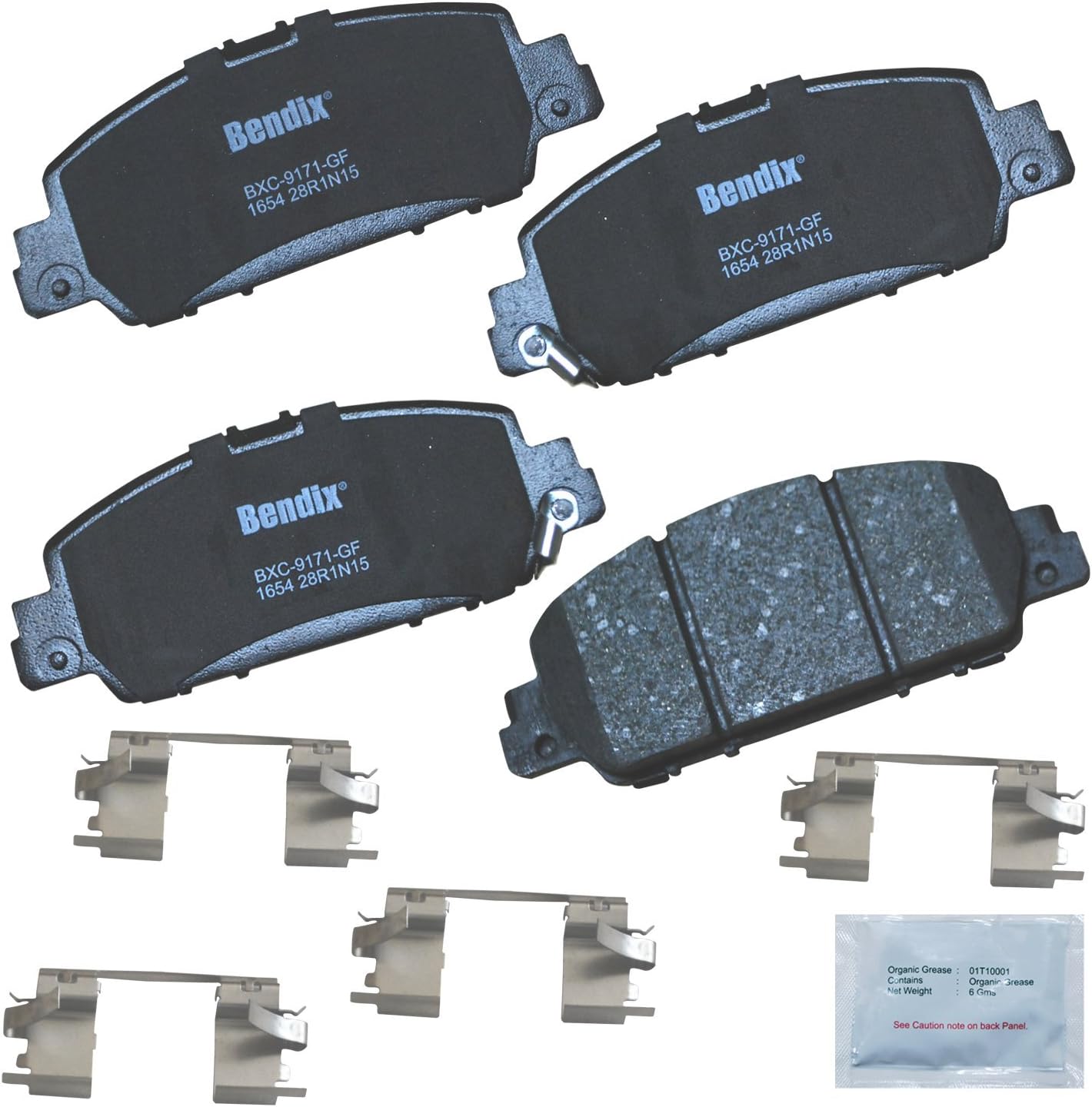
5. Bendix Priority1 CFC1654 Ceramic Front Brake Pads
| Brand Name | Bendix |
|---|---|
| Auto Part Position | Front |
| Material Type | Ceramic |
| Included Components | (1) Bendix Priority 1 Ceramic Brake Pad Set with Installation Hardware |
These Bendix Priority1 CFC1654 ceramic front brake pads are a factory-spec replacement designed to reproduce original fit and braking feel while offering quieter operation. They are typically used as a direct front pad swap on compatible Honda Accords and similar models and include installation hardware to simplify fitment. Notable features include ceramic friction material, precision shims, slots, and chamfers aimed at reducing noise and controlling dust. In real-world driving the pads deliver consistent bite and good heat resistance for everyday commuting and moderate loads, helping reduce fade during repeated stops. Because they are engineered to meet OEM specifications, installation is straightforward and they integrate well with factory calipers and rotors. Expect lower noise and cleaner wheels compared with many semi-metallic pads, though ceramic material can wear a bit faster under aggressive, track-style driving. These pads balance quiet operation, predictable stopping, and reliability for drivers prioritizing dependable, low-noise replacement parts for daily-driven Accords from the specified years.
Best for: Drivers who want a reliable, low-noise factory-quality front pad replacement for daily-driven 2018–2022 Honda Accords and value predictable, fade-resistant braking in normal use.
Less Ideal for: Enthusiasts who do frequent high-speed track sessions or heavy towing should consider more aggressive semi-metallic or performance-oriented pads instead.
- Ceramic friction material for quieter braking and reduced wheel dust
- Designed to meet factory fit, form, and function for straightforward installation
- Includes installation hardware for a complete front pad service
- Shims, slots, and chamfers reduce noise and improve pedal feel consistency
- Ceramic compound may wear faster than semi-metallic pads under heavy track or towing use
Verdict: A dependable, quiet, factory-quality ceramic front pad replacement that prioritizes consistent, low-noise braking for daily-driven 2018–2022 Honda Accords.
6. Detroit Axle Front Brake Kit with Drilled & Slotted Rotors and Ceramic Pads
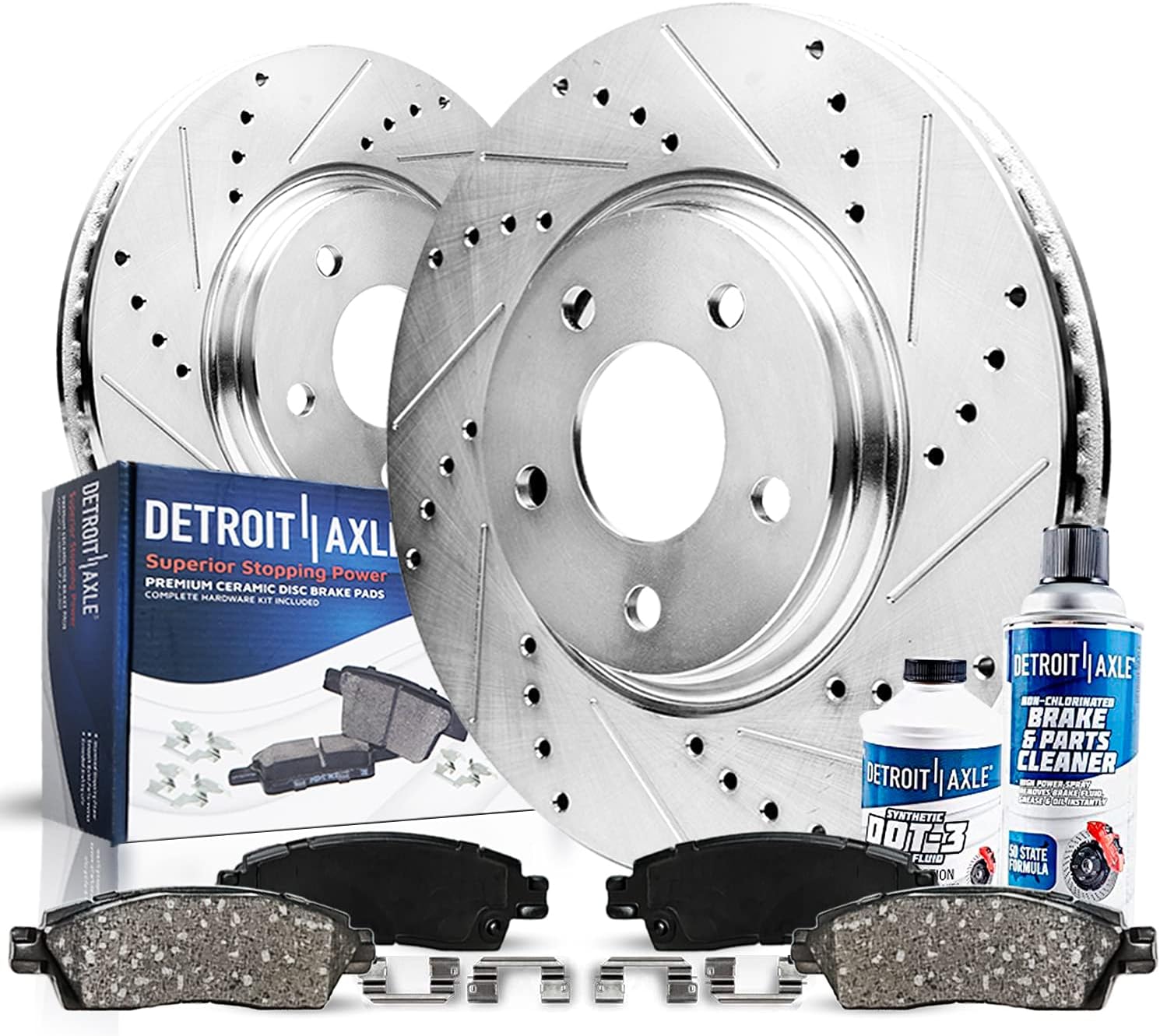
| Rotor size | 11.54 inch (293 mm) |
|---|---|
| Kit includes | 2 rotors, 2 pads, hardware, 12 oz brake fluid, 10 oz brake cleaner |
| Pad type | Ceramic |
| Rotor style | Drilled and slotted |
| Brand | Detroit Axle |
This Detroit Axle front brake kit packages everything needed for a front brake refresh: two drilled and slotted rotors, ceramic brake pads, installation hardware, a bottle of brake fluid and a bottle of brake cleaner. It is intended for direct replacement on compatible vehicles and is commonly used by DIYers and independent shops to restore stopping performance and eliminate rotor vibration. The drilled and slotted rotors help with heat dissipation and water removal under spirited driving or wet conditions while the ceramic pads aim for quiet, low-dust operation. Including new clips, pins and anti-seize simplifies installation and reduces the chance of reusing worn hardware. A practical limitation is that long-term wear life and resistance to heavy track use will depend on driving style since ceramic pads favor comfort over extreme performance. Also some buyers reported occasional fitment or packaging omissions, so verify the kit contents before installation.
Best for: Buyers who want a complete, factory-replacement style front brake refresh with clear user feedback and reduced risk of post-install issues will appreciate this kit.
Less Ideal for: Drivers who need maximum track-oriented stopping power or repeated high-temperature performance should consider a performance-oriented brake pad and rotor option instead.
- Complete kit with rotors, pads, hardware, brake fluid and cleaner reduces additional shopping
- Drilled and slotted rotors improve heat dissipation and help prevent brake fade in demanding conditions
- Ceramic pads are generally quiet and produce less brake dust than semi-metallic options
- Includes new clips, pins and anti-seize to simplify installation and improve fitment
- Ceramic pads prioritize quietness and low dust over maximum high-temperature stopping for track use
- Some reviewers reported missing items or minor fitment adjustments during installation
Verdict: A ready-to-install front brake kit that restores factory-quality stopping with quiet ceramic pads and upgraded drilled and slotted rotors, ideal for buyers focused on reliable, well-reviewed replacements.
7. PowerStop Z23 Carbon-Fiber Ceramic Rear Brake Pads (Z23-2102)

| Material | Carbon Fiber, Ceramic |
|---|---|
| Auto Part Position | Rear |
| Specification Met | OEM |
| Automotive Fit Type | Vehicle Specific Fit |
The PowerStop Z23 rear carbon-fiber ceramic pads are a direct-fit upgrade intended to replace factory rear pads on supported Honda and Acura models. They combine a low-dust ceramic compound infused with carbon fiber and a thermal-scorched surface to speed break-in and deliver stronger bite without upsetting everyday drivability. The pads ship with stainless-steel installation hardware and ceramic lubricant to simplify a DIY brake job and help reduce squeal. In everyday use these pads aim to cut visible wheel dust and reduce noise compared with some stock or economy ceramic options while keeping a smooth pedal feel suitable for commuting and highway driving. Limitations to note are that these are rear pads only and intended as a vehicle-specific replacement, so you must confirm fitment for your Accord year and trim; they also do not turn your car into a performance braking system for track use. For a risk-averse buyer seeking reliable, quieter stopping with minimal dust on a daily-driven Accord, they are a practical factory-quality upgrade.
Best for: Buyers who want a quiet, low-dust, factory-quality rear pad upgrade for daily-driven Accords and similar models and prefer parts that fit with minimal fuss.
Less Ideal for: Drivers seeking track-capable or heavy-duty towing brakes should look at performance or heavy-duty pad and rotor combinations instead.
- Vehicle-specific fit for supported Honda and Acura rears for straightforward replacement
- Carbon-fiber infused ceramic compound reduces visible brake dust
- Thermally scorched surface and chamfers speed break-in and help reduce noise
- Includes stainless-steel hardware and ceramic lubricant for easier installation
- Sold as rear pads only so you may need to replace fronts separately
Verdict: A straightforward rear-pad upgrade for Accord drivers who want quieter, low-dust braking with an easy fit and included hardware.
Choosing the Right 2018-2022 Honda Accord Brake Pads: Key Factors to Consider
Pad Material and Friction Characteristics
Pad material determines the friction curve, heat tolerance, and dust generation. Organic, semi-metallic, and ceramic formulations behave differently under the loads typical of the 2018-2022 Accord. Semi-metallic pads often provide stronger initial bite at higher temperatures but can increase rotor wear and dust, while ceramic pads usually offer quieter operation and less dust at the cost of slightly reduced bite under extreme braking.
Understanding the friction characteristics helps you match the pad to how you drive. Daily commuting with occasional highway stops benefits from compounds that provide stable, predictable pedal feel and usable bite from cold. If you frequently tow or make repeated hard stops, prioritize a material with better heat resistance and a flatter friction curve to avoid fade.
Fitment and Pad Thickness Spec
Correct fitment is critical on the Accord to prevent uneven wear, noise, and poor braking performance. Pads must match the caliper profile and backing plate mounting points for the 2018-2022 model years. Pad thickness specifications influence service life and the number of future replacements you may expect; thicker new pads generally allow more usable life before reaching the minimum thickness spec.
Always verify the pad thickness spec against the Accord's service limits. Using pads with substantially different thickness or incorrect contours can change caliper piston travel and may trigger uneven bedding or premature wear. Proper fit also ensures hardware and shims align to control noise and vibration.
Noise and Vibration Control
Brake noise and vibration are common concerns for Accord owners, especially as pads bed in or when hardware is missing. Compounds with a tendency to chatter or produce high-frequency noise can be distracting and may indicate poor mating with the rotor surface. Good backing plate design, anti-rattle clips, and well-applied shims help mitigate these issues.
Consider pads that include quality shims or have a reputation for quiet operation if you prioritize comfort. Note that bedding technique and rotor condition also influence noise, so factor in whether a rotor service will accompany the pad replacement.
Longevity and Wear Patterns
Expected pad life affects maintenance intervals and long-term cost of ownership. Wear rates vary by compound, driving style, and vehicle weight. For the Accord, which is commonly used for daily driving and commuting, a pad that strikes a balance between longevity and consistent friction yields the best value.
Look for pads with predictable wear rather than those that exhibit rapid thickness loss after initial use. Consistent, even wear reduces the chance of glazing and uneven rotor scoring. Consider reported miles-to-replacement averages for the 2018-2022 Accord to set realistic expectations for service intervals.
Dust and Rotor Friendliness
Brake dust affects wheel appearance and can accelerate rotor surface contamination. Some pad compounds produce heavy black dust that adheres to wheels, while others produce lighter, finer dust that is easier to clean. Rotor friendliness refers to how aggressively the pad wears the rotor surface during normal operation.
If you prefer low-maintenance wheels and want to avoid frequent cleaning, choose pads that are formulated for low dust. If preserving rotors is a priority, favor compounds that balance bite with rotor-friendly transfer films to minimize grooving and scoring over time.
Installation Hardware and Compatibility
Proper installation hardware ensures pads seat correctly and remain stable over their service life. For the Accord, verify that the chosen pads include or are compatible with the correct anti-rattle clips, retaining pins, and any model-year-specific shims. Missing or incorrect hardware can cause noise, uneven wear, and reduced braking performance.
Also consider whether the pads require additional steps like rotor resurfacing, bedding procedures, or new caliper slides. Pads that match the Accord's existing hardware reduce installation time and the risk of post-install issues, while pads that require additional components should be accounted for in planning the job.
Understanding Brake Pad Compounds for the Accord
Different pad compounds change how the Accord responds at the pedal. Ceramic pads typically offer quieter operation and lower dust levels, which is useful for daily-driven Accords where noise and wheel cleanliness matter. Semi-metallic compounds deliver stronger bite and heat tolerance for more demanding braking but may produce more dust and rotor wear.
Matching the compound to your driving pattern is the best way to avoid tradeoffs. For mostly city and highway driving, prioritize consistent cold bite and low noise. For more aggressive driving, look for materials that resist fade and maintain friction under repeated heavy stops.
- Ceramic: quieter, less dust, stable for commuting
- Semi-metallic: higher initial bite, better heat resistance
- Organic: softer feel, typically shorter life and lower dust
When to Replace Brake Pads on a 2018-2022 Accord
Replacement intervals depend on driving style, environment, and pad compound. Many owners find pads need replacement somewhere in the mid tens of thousands of miles range under mixed driving, but heavy city stop-and-go traffic shortens that life. Visually inspect pad thickness and monitor pedal feel and stopping distance.
Brake pad wear symptoms include decreased pedal responsiveness, squealing at light braking, and reduced stopping power. If you notice grinding sounds, that often indicates pads are at or below the minimum thickness and require immediate attention.
- Check pad thickness during routine service or tire changes
- Listen for high-pitched squeal sensors or changes in pedal feel
- Address grinding noises immediately to avoid rotor damage
Front Versus Rear Pad Considerations
The Accord uses different loads front to rear, so front pads typically experience higher stress and wear faster. When selecting pads, consider prioritizing higher heat-tolerant compounds for the front axle while using quieter, lower-dust compounds at the rear if you value comfort and cleanliness.
Replacing pads in matched sets when appropriate helps maintain balanced braking. If you replace only the front or rear, ensure the new compound is compatible with the pads remaining on the vehicle to avoid inconsistent pedal feel.
- Front pads: higher load, prioritize stopping power and heat resistance
- Rear pads: lower load, prioritize stability and low noise
- Avoid mixing compounds with widely different friction characteristics
Bedding Procedures and Initial Break-In
Proper bedding helps transfer a consistent friction layer to the rotor surface and reduces noise and uneven wear. Follow the manufacturer-recommended bedding steps for the chosen pad compound. A typical process involves a series of moderate stops from varying speeds to gradually raise pad and rotor temperature.
Skipping bedding can result in glazing, uneven transfer films, and higher noise. After installation, avoid very hard stops until the bedding cycle is complete and check for any unusual noises or vibrations that could indicate improper fitment.
- Perform progressive stops rather than sudden hard braking during break-in
- Inspect for even pad contact and initial bedding signs after a short drive
- Re-torque hardware after initial bedding mileage per service specs
Maintenance Tips to Extend Pad and Rotor Life
Routine upkeep extends service life and keeps braking consistent. Keep caliper slides and hardware clean and lubricated with appropriate high-temperature grease to ensure even wear. Inspect rotors for scoring and runout; resurfacing or replacing rotors when necessary prevents uneven pad wear.
Addressing minor squeals with proper shims and hardware prevents misdiagnosed issues from escalating. Regular checks during tire rotations or oil changes are a good time to monitor pad thickness and hardware condition.
- Lubricate caliper slides and backing plate contact points
- Check rotors for runout and scoring at each pad change
- Replace or service hardware to prevent noise and uneven wear
Aftermarket Fitment and Compatibility Notes
Aftermarket pads vary in backing plate design, shim quality, and stated thickness. When selecting an aftermarket option for the 2018-2022 Accord, confirm explicit compatibility with the model years in the scope. Ensure the mounting points and pad contour match the caliper to avoid fitment issues.
Consider whether the aftermarket option includes new hardware or if you will reuse existing clips and pins. In some cases, higher-quality hardware can be purchased separately to improve fit and reduce noise if the chosen pads do not include them.
- Verify contour and mounting point match for 2018-2022 Accord fitment
- Confirm included shims and anti-rattle hardware or plan to reuse OEM pieces
- Check stated pad thickness against the vehicle's service limits
Still looking for the perfect fit?
Select your Honda Accord configuration to see the most relevant Brake Pads recommendations
How We Chose the Best 2018-2022 Honda Accord Brake Pads
We focused on factors that directly affect performance and ownership for the 2018-2022 Honda Accord. Our evaluation prioritized stopping power under normal commuting and occasional harder stops, measured material durability trends, and how pad choices influence rotor wear and dust production. We also considered fitment reliability with the Accord's caliper geometry and available pad thickness specifications, along with typical noise and vibration tendencies for different pad compounds.Selection filters excluded any pads that do not explicitly list fitment for the 2018 through 2022 Accord platform or that require caliper modification. We did not include specialty race-only compounds that sacrifice daily drivability. The shortlist favored pads that balance consistent friction coefficients, service life, and manageable dust and noise levels. Other relevant dimensions we weighted were backing plate quality, shims and anti-rattle hardware, and manufacturer-stated bedding procedures. Finally, we checked common user reports on wear rates, noise, and fit to validate expected real-world behavior.
Our full evaluation process is outlined in our review methodology.
FAQ
How do I identify brake pad wear symptoms on my Accord?
Common symptoms are a persistent squeal during light braking, decreased pedal responsiveness, and a change in stopping distance. A grinding noise usually means pads are worn to the backing plate and should be inspected immediately.
How often should brake pads be replaced on a 2018-2022 Accord?
Replacement frequency depends on driving conditions and pad compound, but many owners see replacement in the mid tens of thousands of miles under mixed driving. City driving with frequent stops shortens this interval.
Can I mix different pad compounds between front and rear?
Mixing compounds is possible but not ideal. Because the front and rear experience different loads, choose compatible compounds that produce similar pedal feel to avoid inconsistent braking behavior.
Will new pads reduce brake pad noise grinding?
If the noise is due to worn pads, new correctly fitted pads typically eliminate grinding. However, noise can also come from hardware or rotor condition, so inspect shims, clips, and rotor surfaces when replacing pads.
Are ceramic brake pads a good choice for the Accord?
Ceramic pads are often a good fit for daily-driven Accords because they tend to be quieter and produce less dust. They may offer slightly less initial bite under extreme braking compared with some semi-metallic options.
How important is pad thickness specification when choosing replacements?
Pad thickness affects usable life and caliper piston travel. Ensure new pads match the Accord's specified dimensions so you maintain correct clearance and avoid premature wear or altered braking feel.
Final Verdict
Focus on matching pad material and thickness to your driving style and the Accord's braking demands. Prioritize fitment and hardware quality to avoid noise and uneven wear, and give attention to bedding and rotor condition during installation.Balance stopping performance against longevity and dust when choosing pads for the 2018-2022 Accord. With those priorities in mind, you can select a pad that meets your safety and maintenance goals with confidence.
Explore More:
- Check out all Honda Accord parts & accessories
- Explore Brake Pads Maintenance & Repair Guides
- Explore Brake System
- Browse all Auto Parts
