

Note: This article contains affiliate links. If you click on these links and make a purchase, I may earn a small commission at no extra cost to you. This helps support my research and content. Read my full affiliate disclosure here.
Upgrading or replacing the brake pads on your Honda Accord Coupe matters for safety, pedal feel, and everyday drivability. The right pads affect stopping distance, noise, dust, and how often you need to service the brakes. This guide lists seven carefully shortlisted options that cover common needs for the Accord Coupe, from low-noise daily use to heavier-duty street driving.Each candidate was evaluated for stopping performance, longevity, rotor friendliness, and fitment to the Coupe configuration. Read on to compare the top choices and find the pads that match how you drive and maintain your Accord Coupe.
Looking for other parts? See all Honda Accord parts & accessories.
Top Picks at a Glance
| Best Overall The best all-around choice for most situations | Detroit Axle 8pc Brake Kit for 2013–2017 Honda Accord (Front 11.54" / Rear 11.10" Rotors) |  |
| Best Quality Built to a higher standard if you want something more solid | PowerStop K6516 Z23 Carbon-Fiber Ceramic Front and Rear Brake Kit (Drilled & Slotted) |  |
| Best Value The sweet spot between price and what you get | BOSCH Blue Ceramic Front Disc Brake Pad Set with Hardware (BE1654H) |  |
| Best Budget The cheapest option that still gets the job done reliably | PowerStop Z16 Evolution Front Ceramic Brake Pads (16-914) |  |
| Highest Rated A top-rated pick with lots of positive feedback | Bendix Priority1 CFC1654 Ceramic Front Brake Pads with Hardware | 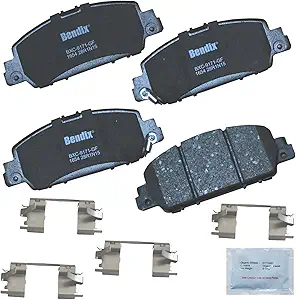 |
| Most Popular A crowd favorite that many people choose with confidence | Detroit Axle Brake Kit for 2013–2017 Honda Accord — Drilled & Slotted Rotors with Ceramic Pads (Front & Rear) |  |
| Best Seller A high-volume bestseller chosen again and again | Bosch QuietCast BC1451 Premium Ceramic Rear Brake Pad Set |  |
1. Detroit Axle 8pc Brake Kit for 2013–2017 Honda Accord (Front 11.54" / Rear 11.10" Rotors)

| Manufacturer | Detroit Axle |
|---|---|
| Manufacturer Part Number | 8PR42430 |
| Compatible with Vehicle Type | Car |
| Automotive Fit Type | Vehicle Specific Fit |
| Orientation | Dual |
This Detroit Axle kit supplies both front and rear rotors plus matching ceramic pads so you can refresh the entire braking system in one job. It is a vehicle-specific fit for 2013–2017 Honda Accord Coupe and Sedan variants that use 11.54-inch front and 11.10-inch rear rotors. In typical use the kit replaces worn rotors and pads to restore pedal feel and stopping power; ceramic pads aim to reduce dust and noise compared with cheaper semi-metallic options. The rotors and pads are marketed as meeting or exceeding factory specification and the set includes everything needed for a front-and-rear brake service without sourcing individual parts. Practical benefits include coordinated wear characteristics and simplified servicing when doing both axles at once. Limitations are that the kit is tied to the listed rotor sizes and Accord configurations so you must confirm fitment for your exact trim and model year, and ceramic pads may warm up slightly differently than factory material under heavy repeated stops.
Best for: Buyers who want a balanced, all-around brake upgrade that replaces pads and rotors together for consistent performance and easy servicing on the specified 2013–2017 Accord models.
Less Ideal for: Drivers who need a performance-oriented track pad or an application outside the listed Accord configurations should look for specialized or different-fitment options.
- Complete front-and-rear kit includes rotors and ceramic pads for a single, coordinated service
- Vehicle-specific fit for 2013–2017 Honda Accord models using the listed rotor sizes
- Ceramic pads typically produce less brake dust and quieter operation than many semi-metallic pads
- Manufactured with testing and claimed to meet or exceed factory fit and performance standards
- Compatibility limited to Accord variants that use the specified rotor diameters so fit must be checked against your vehicle trim
Verdict: A convenient, vehicle-specific front-and-rear rotor and ceramic pad kit that refreshes braking on 2013–2017 Honda Accord models with the listed rotor sizes.
2. PowerStop K6516 Z23 Carbon-Fiber Ceramic Front and Rear Brake Kit (Drilled & Slotted)

| Included Components | Z23 carbon-fiber ceramic pads, drilled & slotted rotors, installation hardware |
|---|---|
| Manufacturer Part Number | K6516 |
| Warranty | 3 year / 36,000 mile limited warranty |
| Automotive Fit Type | Vehicle Specific Fit |
This PowerStop K6516 kit replaces both front and rear brake pads and rotors with Z23 carbon-fiber ceramic pads and drilled-and-slotted rotors designed for Honda Accord models listed in the fitment. It is intended as a bolt-on performance upgrade for everyday driving and spirited use, providing stronger initial bite and reduced dust compared with many stock replacements. The rotors are precision-machined from G3000 metallurgy with drilled holes and slots to help vent heat and clear gas or debris, while a silver zinc plating helps resist surface rust. The kit includes rubberized shims, stainless-steel hardware, and basic brake grease to simplify a DIY installation. In practice you get quieter, lower-dust braking and more consistent stopping in stop-and-go traffic and occasional aggressive stops, but some installers report the supplied grease packet is minimal and a proper bed-in procedure is required. Fitment confusion has appeared in a few listings, so confirm the exact Honda Accord submodel before installing.
Best for: A buyer who wants a clear performance improvement over factory replacements for a Honda Accord coupe while keeping daily drivability, quieter operation, and lower dust as priorities.
Less Ideal for: Drivers looking for track-only racing compounds or heavy towing solutions should choose purpose-built racing or heavy-duty kits instead.
- Complete front-and-rear kit includes pads, drilled-and-slotted rotors, shims and stainless hardware for one-stop installation.
- Carbon-fiber reinforced ceramic Z23 pads aim for stronger bite with low dust and reduced noise in daily driving.
- Drilled and slotted G3000 rotors improve heat dissipation and help prevent brake fade under heavier use.
- Silver zinc dichromate plating on rotors provides corrosion resistance for longer visual life.
- Some buyers report the included packet of brake grease is insufficient for a full installation.
- Fitment information has been inconsistent in listings so wrong-vehicle purchases have occurred.
Verdict: Choose this PowerStop kit when you want a straightforward, factory-fit upgrade that delivers stronger, lower-dust braking and improved heat control for a Honda Accord coupe.
3. BOSCH Blue Ceramic Front Disc Brake Pad Set with Hardware (BE1654H)

| Material Type | Ceramic |
|---|---|
| Auto Part Position | Front |
| Model Number | BE1654H |
| Automotive Fit Type | Vehicle Specific Fit |
Bosch Blue ceramic front brake pads are built for everyday driving and aim to replicate factory braking feel with lower noise and reduced dust. They come as a complete axle set with hardware and synthetic lubricant, plus OE-style slots, chamfers, and a multi-layer shim to cut vibration and squeal. The ceramic friction compound is platform specific, which helps deliver consistent braking and reduced fade in normal and moderately demanding driving. Rust-inhibitive backing and precision manufacturing make installation straightforward and help maintain reliable fit and long service life. Some users report quiet operation and minimal dust from day one, though a few noted noise after several thousand miles, so results can vary with driving style and installation. These pads are a practical, factory-quality replacement for Accord coupe drivers who want predictable, low-noise braking without moving to high-performance compounds.
Best for: Buyers seeking a reliable, low-noise factory-quality replacement for daily-driven Honda Accord coupe brakes who prioritize quiet operation and long-lasting, hassle-free installation.
Less Ideal for: Drivers who need aggressive, high-temperature stopping for track days, heavy towing, or commercial use should choose a performance or heavy-duty pad instead.
- Platform-specific ceramic formulation tuned for typical passenger driving
- Includes hardware kit and synthetic lubricant for ready-to-install convenience
- OE-style multi-layer shim and slots/chamfers for improved noise control
- Rust-inhibitive coating on backing plates to reduce corrosion and prolong pad life
- Not designed for heavy towing or track use where high-temperature performance is required
Verdict: A practical, factory-quality ceramic front pad set that delivers quiet, OEM-like braking for daily-driven Honda Accord coupes.
4. PowerStop Z16 Evolution Front Ceramic Brake Pads (16-914)
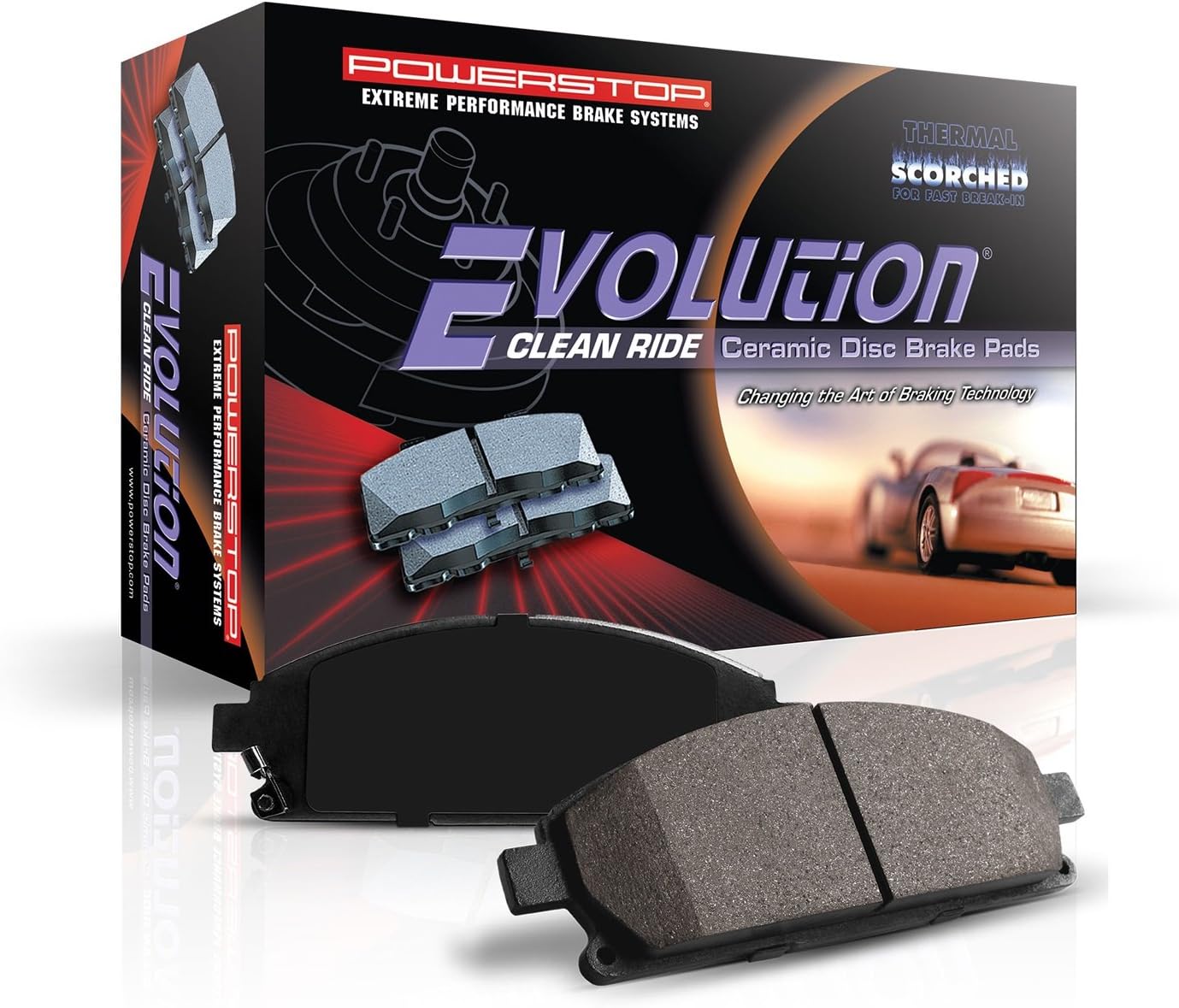
| Auto Part Position | Front |
|---|---|
| Material Type | Ceramic |
| Automotive Fit Type | Vehicle Specific Fit |
| Model Number | 16-914 |
| Manufacturer Warranty Description | 91 Day / 3,000 Mile Warranty |
The PowerStop Z16 Evolution front ceramic brake pads are a budget-friendly replacement designed for everyday driving on compatible Honda and Acura models. They use a low-dust ceramic compound, chamfers, slots, and dual-layer rubberized shims to reduce noise and keep wheels cleaner than many standard pads. The pads are thermal scorched for faster break-in and molded for consistent wear, so braking feels predictable in commuting and stop-and-go traffic. Installation is straightforward for a DIYer since these are a vehicle-specific fit and bolt-on like factory-style pads, although installation hardware is not included. Practical benefits include quieter operation, minimal dust buildup, and dependable stopping for routine driving. Limitations are that these are intended as a stock-style replacement rather than a high-performance or heavy-duty option, and users needing hardware or more aggressive braking under repeated hard stops will want a different product. The included documentation notes a limited warranty and OEM-level specification compliance for daily-use scenarios.
Best for: Drivers looking for an affordable, quiet, low-dust front pad replacement for daily commuting and routine use who prefer an easy bolt-on swap.
Less Ideal for: Drivers who frequently tow, carry heavy loads, or require aggressive track-level braking performance should choose a heavier-duty or performance pad instead.
- Low-dust ceramic formulation helps keep wheels cleaner.
- Rubberized shims, chamfers, and slots reduce noise and vibration.
- Thermal scorched and molded for faster break-in and consistent wear.
- Does not include installation hardware in the box.
Verdict: A cost-effective, low-dust ceramic front pad that delivers quiet, dependable stopping for daily-driven Honda and Acura vehicles.
5. Bendix Priority1 CFC1654 Ceramic Front Brake Pads with Hardware
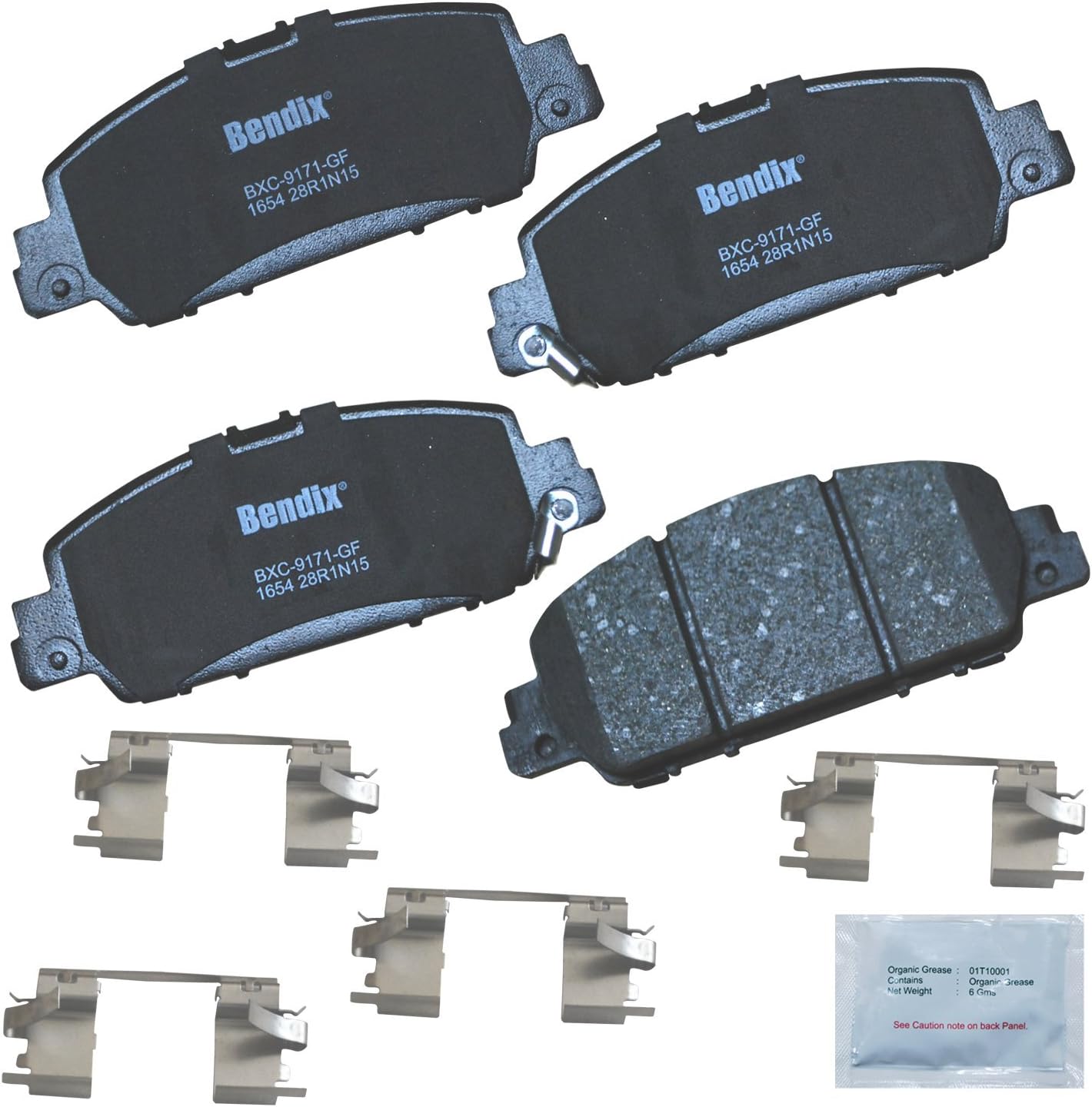
| Brand Name | Bendix |
|---|---|
| Auto Part Position | Front |
| Material Type | Ceramic |
| Included Components | (1) Bendix Priority 1 Ceramic Brake Pad Set with Installation Hardware |
| Model Number | CFC1654 |
The Bendix Priority1 CFC1654 ceramic front brake pads are a factory-style replacement designed to return dependable, quiet stopping performance for everyday driving. Intended as a front pad set that includes installation hardware, they use ceramic friction material plus slots, chamfers, and shims to reduce noise and provide consistent bite across normal commute and highway use. The formulation is tuned to resist fade under higher temperatures and heavier loads compared with basic organic pads, which helps preserve pedal feel during repeated stops. Because they are built to meet OEM fit, form, and function expectations, installation is straightforward for a routine pad change and they pair well with stock rotors. Limitations are that ceramic pads can produce less initial cold bite than certain semi-metallic performance pads and they are not targeted at track use or heavy towing where extreme thermal capacity is required. For drivers seeking a quiet, reliable daily-driver replacement that closely matches factory behavior, these pads are a practical choice.
Best for: Drivers who prioritize reliable, quiet daily braking and want a direct, factory-like replacement for routine street driving.
Less Ideal for: Enthusiasts who need track-capable stopping or owners who frequently tow heavy loads should choose a higher-temperature semi-metallic or performance pad instead.
- Ceramic friction material for quiet operation and low dust
- Includes installation hardware for a complete front pad change
- Engineered to meet factory-fit specifications for straightforward installation
- Design features shims, slots, and chamfers to reduce noise and improve pad seating
- Less aggressive initial bite and lower extreme-heat capacity than semi-metallic or track-focused pads
Verdict: A quiet, factory-style ceramic front pad set that delivers reliable, everyday stopping for Accord drivers seeking dependable OEM-like performance.
6. Detroit Axle Brake Kit for 2013–2017 Honda Accord — Drilled & Slotted Rotors with Ceramic Pads (Front & Rear)

| Fitment | 2013–2017 Honda Accord (4‑cylinder Coupe/Sedan variations listed) |
|---|---|
| Rotor type | Drilled & slotted |
| Pad material | Ceramic |
| Includes | Front and rear rotors and pads, hardware, 12 oz brake fluid, 10 oz brake cleaner |
| Manufacturer | Detroit Axle |
This Detroit Axle kit supplies everything needed to replace both front and rear brake rotors and pads on 2013–2017 Honda Accord coupes with 4‑cylinder brakes. The package includes drilled and slotted rotors for better heat dissipation, ceramic pads for quieter, low‑dust operation, basic mounting hardware, a 12 oz bottle of DOT3 brake fluid, and a can of brake cleaner to simplify installation. In real use the rotors and pads deliver noticeably improved stopping feel and consistency compared with worn factory parts, and the slotted/drilled surfaces help reduce fade on repeated stops. Installation is straightforward for a DIYer with common tools, though the kit does not include detailed step‑by‑step instructions and rotor boxes are not labeled by axle, so plan accordingly. Buyers report some initial bedding‑in noise typical of drilled rotors that settles after a short break‑in period. Overall this is a practical, full‑coverage replacement kit for Honda Accord owners who want a single purchase that replaces both axles and supplies useful fluids and cleaner.
Best for: Buyers who rely on peer feedback and want a complete, DIY‑friendly replacement that improves stopping performance and reduces dust without specialist parts sourcing.
Less Ideal for: Drivers who expect factory‑silent, track‑focused performance or who prefer a fully professional install with labeled parts and shop labor included.
- Full kit replaces front and rear rotors and pads in one purchase
- Drilled and slotted rotors improve heat dissipation and reduce brake fade
- Ceramic pads offer quieter operation and lower dust than semi‑metal options
- Includes brake fluid, cleaner, and mounting hardware to simplify installation
- No printed step‑by‑step installation instructions or axle labeling in the packaging
Verdict: A complete, DIY‑friendly brake replacement kit that upgrades stopping performance and reduces dust while including the fluids and hardware needed for a full front‑and‑rear swap.
7. Bosch QuietCast BC1451 Premium Ceramic Rear Brake Pad Set
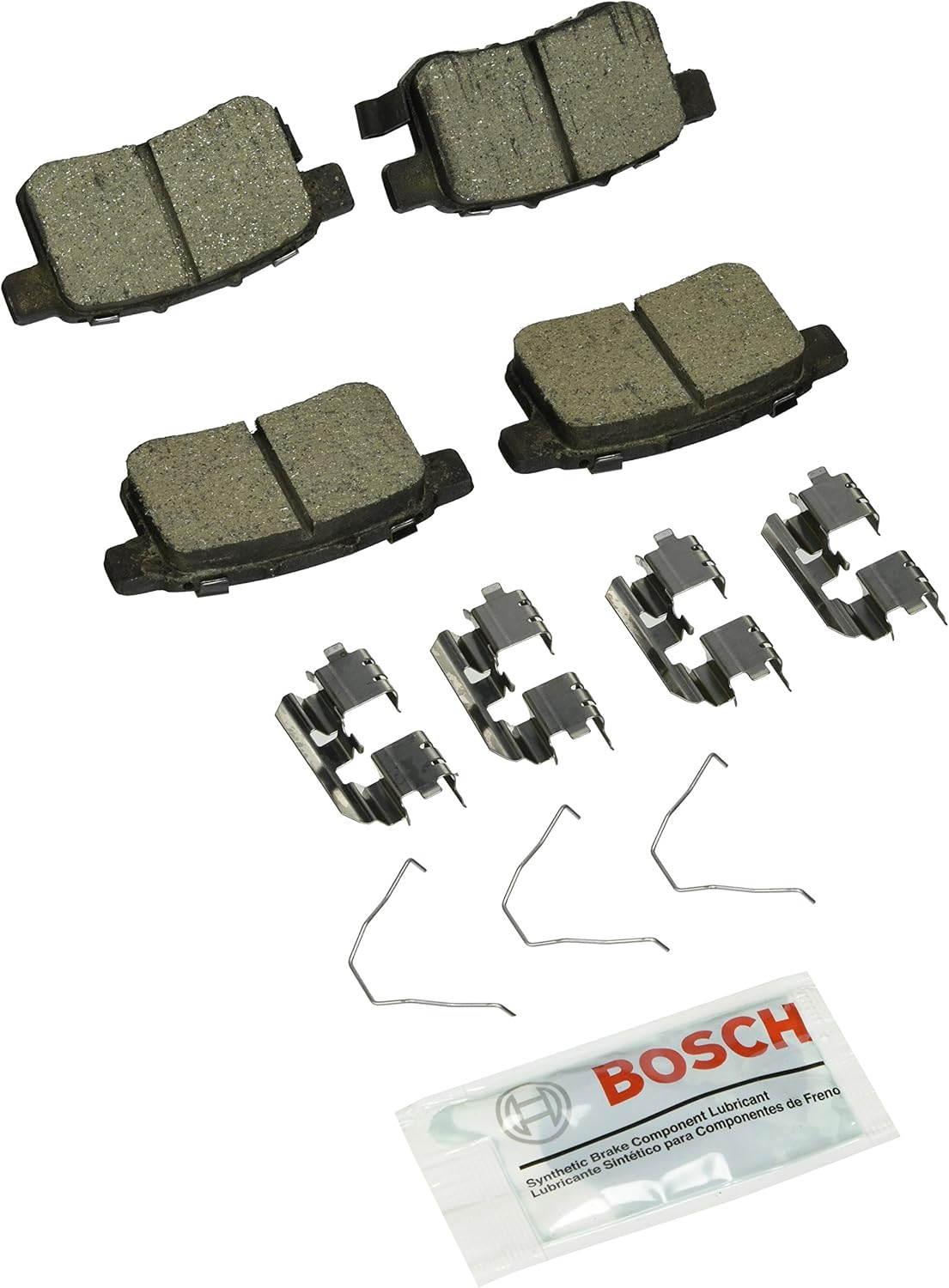
| Material | Ceramic |
|---|---|
| Auto Part Position | Rear |
| Specification Met | OEM |
| Automotive Fit Type | Vehicle Specific Fit |
These Bosch QuietCast rear pads are a ceramic, vehicle-specific replacement intended to restore factory-like braking on compatible Accords and TSXs. They install as a direct fit for one axle and come with the usual hardware and lubricant, so a do-it-yourselfer can complete the job without sourcing extra parts. Notable features include pre-attached multilayer rubber-core shims to reduce noise, powder-coated backing plates to resist corrosion, and chamfers and slots that help with bedding and dust control. In practice the pads deliver quiet, firm stops with low dust, and the included springs and hardware help prevent the rear-pad rattle some Accords experience. The kit does not change braking performance beyond factory targets, so drivers wanting more aggressive track-oriented bite should look elsewhere. Also check exact fitment for your trim and model year before buying since compatibility is vehicle-specific and may vary by brake configuration.
Best for: Buyers who prioritize a reliable, quiet factory-style replacement for rear brakes on compatible Honda or Acura models and prefer a low-risk, ready-to-install kit.
Less Ideal for: Drivers seeking performance-oriented pads for track use or significantly stronger stopping power should consider performance brake compounds instead.
- Vehicle-specific fit and hardware included for a one-axle installation
- Ceramic friction material gives quiet operation and low dust
- Pre-attached multilayer rubber-core shims reduce noise and improve durability
- Powder-coated backing plates resist rust for longer service life
- Not designed for track or heavy performance use; matches factory performance rather than exceeding it
Verdict: Choose these Bosch QuietCast rear pads when you want a quiet, low-dust, factory-quality replacement that fits your Honda Accord Coupe with minimal fuss.
Choosing the Right Honda Accord Coupe Brake Pads: Key Factors to Consider
Stopping Performance
Stopping performance determines how quickly and predictably your Accord Coupe can decelerate. This factor includes initial bite, how the friction level changes as the pads heat up, and resistance to fade during repeated stops. For daily driving you want a pad compound that delivers strong initial bite for confidence at lower temperatures and retains braking power during longer descents or spirited runs.
Consistency is crucial: uneven or rapidly changing friction makes the pedal feel unpredictable. Consider how you use the Coupe, such as commuting in stop and go traffic versus occasional canyon runs, and choose a compound that matches those demands. Manufacturers often list friction coefficients and recommended operating temperature ranges that can help match pad performance to your driving style.
Noise and Vibration
Brake noise and vibration affect comfort and perceived quality on the Accord Coupe. High metallic content pads or poorly damped backing plates can produce squeal under light braking. Many pads include shims, chamfers, and noise-damping materials to reduce squeal and harshness. When quiet operation is a priority, look for compounds and hardware designed to minimize vibration transfer to the caliper and chassis.
Noise also depends on rotor condition and installation quality. Clean mating surfaces, correct torque on caliper bolts, and proper bedding-in help reduce squeal. If the Coupe is driven in urban settings where frequent light braking occurs, choosing a low-noise pad can make day-to-day driving more pleasant.
Rotor Wear and Dust
How aggressively pads wear the rotors matters for maintenance costs and part longevity. Some high-friction or aggressive compounds can accelerate rotor wear, requiring earlier resurfacing or replacement. For Accord Coupe owners who prefer to preserve OEM rotors, choose pads formulated to be rotor-friendly while still delivering acceptable stopping power.
Brake dust levels also impact wheel appearance and cleaning frequency. Ceramic-based compounds typically generate finer, lighter-colored dust that is easier to clean, whereas semi metallic pads can produce darker, heavier deposits. Consider whether reduced dust or lower rotor wear is more important for your driving habits and maintenance preferences.
Pad Longevity and Service Interval
Pad life affects how often you bring the car in for service and the total cost of ownership. Longevity depends on compound hardness, driving style, and operating conditions. Urban drivers who experience frequent stopping will see shorter pad life than highway drivers. Reviewing expected thickness change rates and manufacturer estimates helps set realistic replacement intervals.
Also factor in the ease of inspection and replacement: pads that wear evenly are simpler to assess, and designs that allow reuse of hardware or include quality clips and pins reduce labor time. Plan replacements around other scheduled maintenance to minimize downtime for the Accord Coupe.
Fitment and Compatibility
Correct fitment to the Honda Accord Coupe Coupe configuration is essential for safe operation. Pads must match the caliper shape, backing plate height, and any sensor or wear-indicator provisions used on the Coupe. Improper fitment can cause uneven wear, noise, or even interference with wheel rotation.
Verify the pad set corresponds to your specific model year and Coupe trim when selecting replacements. Also consider whether the pad requires additional hardware such as shims, anti rattle clips, or specific torque procedures during installation to ensure reliable, trouble-free operation.
Material Type and Operating Temperatures
Pad material—ceramic, semi metallic, or organic—shapes braking feel, dust, and temperature tolerance. Ceramic pads generally offer quieter operation and less dust, performing well at typical street temperatures. Semi metallic pads provide stronger fade resistance and higher heat capacity, beneficial if you occasionally push the Coupe harder or encounter mountain driving. Organic or low metallic blends prioritize pedal feel and quietness but may wear faster under heavier use.
Consider the typical operating temperature range you expect. If you do spirited driving or towing, choose a material with higher thermal capacity. For everyday commuting and city use, a ceramic or low metallic compound often gives the best balance of noise control and longevity.
Brake Pad Bedding And Break-In Tips
Proper bedding of new brake pads is essential to achieve consistent performance and long rotor life on the Accord Coupe. A correct bedding process helps transfer an even layer of friction material onto the rotor surface, improving initial bite and reducing the risk of glazing or vibration.
A typical break-in routine involves a series of moderate stops from progressively higher speeds without bringing the vehicle to a full stop. Avoid heavy, repeated panic stops during the first few miles, and allow cooling periods between aggressive stops to prevent overheating. Inspect rotor surfaces after bedding for even transfer and check torque on caliper hardware.
- Start with several gentle stops from low speed to seat the pads.
- Perform a few stronger stops from highway speed, but allow cooling intervals.
- Recheck hardware torque and look for even rotor transfer after initial bedding.
Interpreting Brake Pad Wear Symptoms
Recognizing early wear symptoms helps you address issues before they become safety concerns. Common signs include reduced pad thickness, a change in pedal travel, unusual noises, or increased stopping distance. Visual inspection through the wheel spokes can often reveal remaining pad thickness.
Grinding or metal-on-metal noises usually indicate that the friction material has worn away and the backing plate is contacting the rotor. Squeal under light braking can indicate glazing or a need for better hardware installation. Regular inspections at oil changes or tire rotations help catch wear early.
- Check pad thickness visually; replace before backing plate contact.
- Note any change in pedal feel or increased stopping distance.
- Investigate persistent squeal or grinding immediately.
Front Vs Rear Brake Pads On The Accord Coupe
Front pads typically do more of the braking work due to weight transfer during deceleration, so they often wear faster than rear pads. When servicing the brakes on the Coupe, inspect both axles but prioritize front pad condition if the fronts show heavier wear.
That said, mismatched compounds between front and rear can affect balance and ABS modulation. Using compatible material types front and rear helps maintain predictable pedal feel and long term stability of the braking system.
- Expect front pads to require replacement more frequently than rear pads.
- Match compound characteristics between front and rear when possible.
- Replace pads in pairs on the same axle to preserve balanced braking.
Checking Brake Pad Thickness And When To Replace
Brake pad thickness spec varies by pad design, but a common practical guideline is to replace pads before the friction material reaches 3 millimeters to avoid rotor damage. Measure thickness at the thinnest visible point and account for any wear indicators fitted to the pad set.
If you hear grinding or see deep grooves on the rotor surface, replace the pads immediately and inspect the rotors for scoring. Keeping records of mileage and replacement intervals helps predict when the next service will be needed for the Accord Coupe.
- Replace pads before friction material is under about 3 mm.
- Use visual checks through the wheel or during tire service.
- Address grinding noises immediately to prevent rotor damage.
Aftermarket Pads Versus OEM-Style Replacements
Aftermarket pads offer a range of compounds and performance targets, from quiet ceramic blends to higher-friction street compounds. OEM-style replacements aim to match the original balance of noise, dust, and pedal feel for the Accord Coupe. Your choice depends on whether you prioritize factory-like comfort or need a specific performance attribute.
When selecting aftermarket options, verify fitment specifics and look for pads engineered to be rotor-friendly and to include necessary hardware. Quality control and consistent compound formulation are key to avoiding premature wear or unexpected noise on the Coupe.
- OEM-style pads maintain original NVH and pedal characteristics.
- Aftermarket pads can offer enhanced stopping or lower dust depending on compound.
- Confirm fitment and included hardware when choosing aftermarket options.
Installation And Torque Considerations
Correct installation practices ensure reliable operation and reduce the chance of noise or uneven wear. Clean the caliper bracket contact points, apply the appropriate lubricant to sliding surfaces, and ensure shims and anti rattle clips are fitted as intended for the design.
Torque caliper and wheel fasteners to the vehicle manufacturer specifications for the Accord Coupe. Improper torque can cause warped rotors, squeal, or unsafe braking behavior. After installation, test the brakes at low speed to confirm proper operation before returning to normal driving.
- Clean mating surfaces and apply specified lubricant sparingly.
- Install shims and clips to reduce noise and vibration.
- Use manufacturer torque specs for caliper and wheel fasteners.
Still looking for the perfect fit?
Select your Honda Accord configuration to see the most relevant Brake Pads recommendations
How We Chose the Best Honda Accord Coupe Brake Pads
We narrowed the field by applying criteria that matter specifically for Honda Accord Coupe owners. First, fitment accuracy was non negotiable; candidates had to match the Accord Coupe caliper and rotor setup to avoid clearance or sensor issues. Stopping performance was assessed across typical street and light spirited driving scenarios, focusing on initial bite, fade resistance, and consistent pedal feel. Durability and expected pad life were compared using manufacturer data and common service intervals so selections reflect real-world replacement rhythms.Rotor compatibility and dust generation were important because the Accord Coupe often runs on alloy wheels where dust is visible; we favored pads that minimize excessive rotor wear and avoid glazing. Noise and vibration characteristics were evaluated to favor pads with appropriate shims and backing plate design for quiet operation. Finally, we excluded pads intended only for track racing or heavy commercial use since those applications change compound priorities and service requirements. The final list emphasizes balanced options suitable for street use, occasional spirited driving, and reliable everyday performance.
Our full evaluation process is outlined in our review methodology.
FAQ
How often should I check brake pads on my Accord Coupe?
Check pad thickness at least every oil change or tire rotation, which is often every 5,000 to 10,000 miles depending on your schedule. Drivers who do a lot of city driving should inspect pads more frequently since stop and go traffic increases wear.
Can I mix different pad materials front and rear?
Mixing materials is generally not recommended because it can change braking balance and pedal feel. If you must mix temporarily, try to match the friction characteristics as closely as possible and plan to replace both axles with compatible compounds soon.
What does a grinding noise from the brakes usually mean?
Grinding typically indicates the friction material is worn down to the backing plate or that debris is trapped between pad and rotor. Inspect the pads and rotors promptly; continued grinding risks severe rotor damage.
Are ceramic pads a good choice for everyday driving?
Ceramic pads are often a good match for daily driving because they produce less dust and tend to be quieter. They also offer stable performance at normal street temperatures, though they may not handle extreme repeated high temperature use as well as some semi metallic compounds.
How can I tell if my pads are causing uneven rotor wear?
Look for uneven thickness across the rotor surface, scoring, or hot spots. Uneven wear can result from sticking calipers, misaligned pads, or incompatible pad compounds. Address the root cause rather than just replacing pads to prevent recurrence.
Do I need new hardware when replacing pads?
New mounting hardware, shims, and anti rattle clips are not always required but replacing worn hardware improves fit and reduces noise. Inspect clips and pins during service and replace any parts showing corrosion, deformation, or excessive wear.
Final Verdict
When choosing brake pads for your Honda Accord Coupe, prioritize fitment accuracy, stopping consistency, and the right material for your driving habits. Balance noise, dust, and rotor wear against the level of performance you need. If daily comfort and low dust matter most, aim for a quieter ceramic or low metallic option; if you do occasional spirited driving, consider a compound with higher fade resistance.Decide based on how you drive and maintain the Coupe, and plan replacements before pads reach thin levels to protect rotors. With the right priorities, you can select pads that deliver safe, predictable braking and reasonable service intervals for your Accord Coupe.
Explore More:
- Check out all Honda Accord parts & accessories
- Explore Brake Pads Maintenance & Repair Guides
- Explore Brake System
- Browse all Auto Parts
