

Note: This article contains affiliate links. If you click on these links and make a purchase, I may earn a small commission at no extra cost to you. This helps support my research and content. Read my full affiliate disclosure here.
If you drive a Honda Accord V6, choosing the right brake pad and rotor kit matters for safety, pedal feel, and long-term maintenance. Worn pads and warped rotors can cause vibration, reduced stopping power, and uneven wear that leads to costly repairs. This guide narrows the field to the top kits specifically for the Accord V6, focusing on front and rear fitment, braking performance, and noise control.The shortlisted kits cover typical replacement scenarios and performance upgrades while addressing pad material, rotor design, and installation fitment. We evaluated each option based on stopping power, durability, and how well the kit integrates with common Accord V6 braking systems. Read on to find which kit matches your driving style and maintenance goals.
Looking for other parts? See all Honda Accord parts & accessories.
Top Picks at a Glance


1. Max Advanced Brakes StyleMAX Front & Rear Cross-Drilled Rotor and Ceramic Pad Kit for 2003–2007 Honda Accord (V6/2.4L)

| Compatible Models | 2003–2007 Honda Accord 2.4L/3.0 V6 (specified fitment) |
|---|---|
| Included Components | Front and rear rotors, brake pads, hardware |
| Pad Material | Carbon-infused ceramic |
| Rotor Type | Cross-drilled rotors |
| Automotive Fit Type | Vehicle Specific Fit |
This StyleMAX kit combines cross-drilled rotors and carbon-infused ceramic pads to provide a full, vehicle-specific brake replacement for compatible 2003–2007 Honda Accords. The rotors are drilled to help dissipate heat and reduce fade during frequent stops, while the ceramic pads are formulated for lower dust and quieter operation at low speeds. The kit ships with both front and rear rotors, eight pads, and installation hardware for a direct bolt-on replacement, making it suitable for a DIY swap or a shop install. In practice the pads should keep wheels cleaner and reduce annoying squeal thanks to dual-layer rubberized shims, and the rotor finish aims to ease bedding-in and limit vibration. Expect improved, consistent pedal feel in daily city and highway driving, and better resistance to fade during light towing or heavier commuting. The main limitations are that drilled rotors can be prone to cracking under extreme track or heavy-duty thermal stress and ceramic pads may deliver slightly less initial bite compared with aggressive metallic compounds.
Best for: A balanced buyer looking for a factory-style replacement that upgrades daily braking feel and reduces dust and noise without moving to track-focused components.
Less Ideal for: Not a good choice for drivers who need race or heavy-duty commercial braking where slotted or thicker track-rated rotors and high-friction metallic pads are required.
- Complete kit includes front and rear rotors, pads, and hardware for direct bolt-on replacement
- Cross-drilled rotors improve heat dissipation to help reduce brake fade in repeated-stop driving
- Carbon-infused ceramic pads produce lower dust and reduced low-speed noise
- Includes dual-layer rubberized shims to help minimize pad noise and vibration
- Cross-drilled rotors are less suitable for heavy track use due to higher risk of stress cracking
Verdict: Choose this kit if you want a complete, vehicle-specific rotor and ceramic pad replacement that lowers dust and noise while improving everyday braking consistency.
2. Detroit Axle Front and Rear Drilled & Slotted Brake Kit with Ceramic Pads
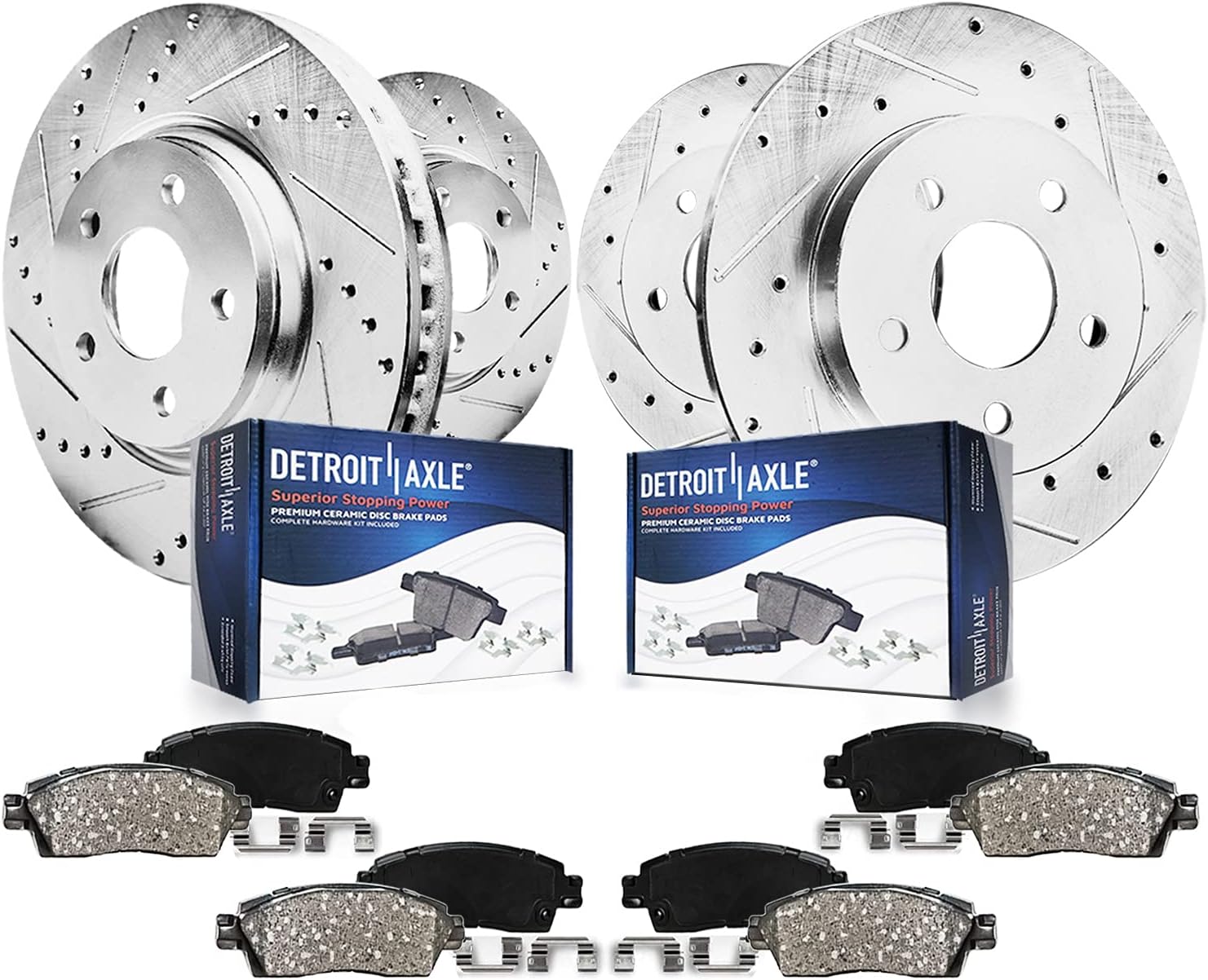
| Fitment | 2004-2008 Acura TSX; 2003-2007 Honda Accord (3.0L, disc rear) |
|---|---|
| Rotor type | Drilled and slotted, vented |
| Brake pads | Ceramic, front and rear included |
| Finish | Silver zinc plated |
| Warranty | 10 Year Warranty |
This Detroit Axle kit supplies four drilled and slotted rotors plus matching ceramic pads and hardware to replace both front and rear braking components on the specified Honda Accord 3.0L and Acura TSX models. The rotors are zinc plated to resist surface corrosion and feature vented, drilled and slotted faces to help dissipate heat and clear moisture for more consistent stopping under repeated heavy use. The kit includes front and rear ceramic pads with mounting hardware, so it is typically used as a complete axle-to-axle replacement during a brake service. Benefits in real-world driving include stronger fade resistance on spirited or hilly roads, reduced rotor glazing, and lower visible rust after short-term use. Fitment is vehicle-specific and the rotors are machined with accurate locating holes to match factory mounting. Limitations reported by some users include occasional fit or quality control issues and isolated pad squeal that may need minor adjustment. Expect a straightforward DIY install for mechanically experienced owners but check rotor sizes and contents before beginning the job.
Best for: Enthusiasts looking to upgrade braking performance and heat management on a Honda Accord V6 or Acura TSX while keeping a near-factory fit and straightforward installation.
Less Ideal for: Buyers who want a track-only compound or aggressive racing pads should look for performance-specific kits; those unwilling to verify included parts before installation may be better served by professional installation or dealer-sourced kits.
- Complete front and rear kit includes rotors, ceramic pads, and hardware for one-stop replacement
- Drilled and slotted vented rotors improve heat dissipation and reduce fade during performance driving
- Zinc plating helps resist surface corrosion and keeps rotors cleaner-looking after installation
- Machined locating holes for vehicle-specific fit reduce the need for modifications
- Some reviewers reported occasional fitment or packaging errors and missing parts in isolated cases
- A few users experienced pad squeal that required minor filing or adjustment to eliminate noise
Verdict: Choose this kit if you want a full front-and-rear rotor and ceramic pad upgrade that improves heat control and day-to-day stopping performance while maintaining vehicle-specific fit.
3. TRQ Ceramic Front and Rear Brake Pad and Rotor Kit for 2003-2007 Honda Accord V6

| Friction Material Composition | Ceramic |
|---|---|
| Front Brake Rotor Venting Type | Vented |
| Rear Brake Rotor Venting Type | Solid |
| Wheel Lug Count | 5 Lug |
| Compatible with Vehicle Type | Car |
This TRQ kit supplies both front and rear ceramic brake pads plus matching rotors, intended as a direct-fit replacement for certain 2003–2007 Honda Accord V6 configurations. It is typically used when performing a paired pad-and-rotor service to restore braking performance and eliminate uneven wear from mixing old rotors with new pads. Notable features include ceramic friction material for quieter operation and reduced dust, premium pad bonding, vented front rotors and solid rear rotors sized to the factory diameters, and vehicle-specific fit numbers listed for easy confirmation. In practice the kit simplifies a DIY replacement because it bundles all four pads and four rotors and is designed to match factory braking characteristics. Expect quieter braking and less wheel cleanup compared with semi-metallic pads, though ceramic compounds can cost slightly more and may produce a different initial bite feel compared with performance-oriented friction. The set is aimed at routine maintenance and restoring factory-quality stopping power rather than high-performance or track use.
Best for: Buyers who want a straightforward, factory-quality replacement to restore daily driving braking performance and minimize dust and noise while simplifying a one-stop DIY service.
Less Ideal for: Drivers seeking aggressive track-level braking, heavy-duty towing upgrades, or sport-oriented friction should consider performance-specific pads and rotors instead.
- Complete kit with front and rear pads plus matched rotors for a single service interval
- Ceramic friction formulation reduces brake dust and tends to run quieter than semi-metallic pads
- Vehicle-specific fit and listed OEM equivalent numbers simplify correct fitment
- Vented front rotors help with heat dissipation during normal driving
- Designed for regular street driving and not optimized for track or heavy towing applications
Verdict: A complete, vehicle-specific ceramic pad-and-rotor kit that makes restoring quiet, low-dust, factory-style braking on a Honda Accord V6 simple and convenient.
4. Detroit Axle Front Brake Kit for 1998–2002 Honda Accord 3.0L (Rotors + Ceramic Pads)

| Fitment | 1998–2002 Honda Accord V6 (11.10 in front rotor size) |
|---|---|
| Kit contents | 2 front rotors, 2 front ceramic pads, hardware |
| Rotor feature | Vented and slotted, zinc plated |
| Orientation | Front |
This Detroit Axle kit supplies two front vented disc rotors and a set of ceramic brake pads plus hardware for 1998–2002 Honda Accord V6 models that use 11.10-inch rotors. The rotors are zinc plated to resist corrosion and have ventilation slots for quicker cooling and moisture removal, while the ceramic pads aim to reduce dust and noise compared with semi-metallic compounds. Installation is intended to be bolt-on with machined locating holes matched to factory patterns so no modification should be needed. For a budget-focused brake job this kit covers the common wear items and offers features meant to extend rotor life and keep wheel appearance cleaner. Expect competent everyday stopping performance and lower dust levels, but do not expect performance braking for track use or heavy towing scenarios where high-temperature fade resistance is critical. Also the kit is specific to the 11.10-inch rotor variant so confirm rotor size before buying.
Best for: Buyers replacing worn front brakes on a 1998–2002 Accord V6 who want a cost-conscious, straightforward replacement that reduces dust and restores everyday braking performance.
Less Ideal for: Drivers seeking high-performance, track-capable brake components or those who need a kit for a different rotor size or vehicle configuration should look elsewhere.
- Complete front kit includes two rotors, ceramic pads, and installation hardware
- Zinc plating on rotors helps resist corrosion and reduces visible wheel dust
- Vented, slotted rotors improve cooling and help disperse moisture for consistent performance
- Designed for the 11.10-inch rotor variant only so incorrect rotor size will make it incompatible
Verdict: A budget-friendly, bolt-on front brake kit that refreshes stopping performance and cuts dust for 1998–2002 Accord V6 owners using 11.10-inch rotors.
5. Detroit Axle Brake Rotor and Ceramic Pad Kit for 2003–2007 Honda Accord V6 (Front & Rear)
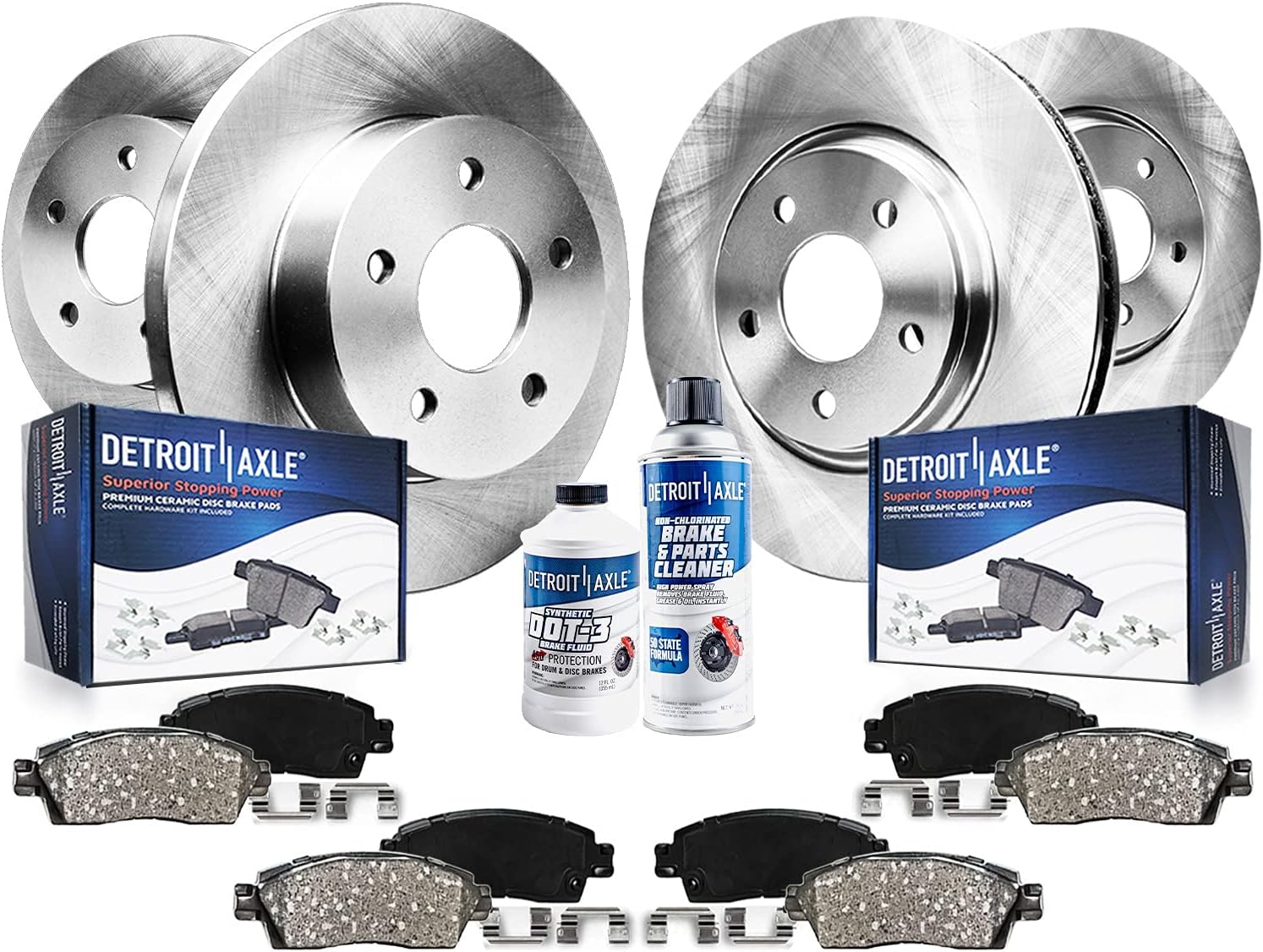
| Fitment | 2003–2007 Honda Accord V6 with rear disc brakes |
|---|---|
| Front Rotor Size | 11.10 inch (282mm) |
| Rear Rotor Size | 10.23 inch (260mm) |
| Brake Pad Type | 100% ceramic (no metallic content) |
This Detroit Axle kit bundles front and rear rotors with matching ceramic pads and basic consumables to perform a full brake job on 2003–2007 Honda Accord V6 cars with rear disc brakes. The rotors are machined with ventilation for improved heat dissipation and zinc plated to resist corrosion, while the included ceramic pads aim for quieter operation and low metallic dust. Installation is straightforward because the kit is supplied with hardware and rotors sized to the listed fitment, and the package even includes brake cleaner and fluid to finish the job. Buyers report good fit and braking performance that restores confidence after warped or worn parts, and the 10 year warranty gives extra peace of mind. Expect some variability in rotor finish received and occasional pad dust or noise under heavy stop-and-go driving; a few users noted faster surface rust in certain climates. This is a practical, value-oriented option for owners who want a factory-quality replacement set without paying dealer rates, especially if you plan to do the work yourself or have a trusted shop handle the swap.
Best for: Buyers who prioritize a reliable, factory-quality brake replacement and want a full kit that restores braking performance and fits without modification; good for owners who prefer doing the job themselves or overseeing a standard shop installation.
Less Ideal for: Not the best choice for drivers seeking high-performance or track-oriented braking upgrades or those who need corrosion-resistant coatings beyond zinc plating for harsh coastal environments.
- Complete kit includes front and rear rotors, front and rear ceramic pads, installation hardware, brake cleaner and brake fluid
- Rotors are vented and zinc plated for improved cooling and corrosion resistance
- Ceramic pads offer lower metallic dust and generally quiet operation
- Designed and machined to match factory locating holes for direct fit installation
- 10 year warranty provides long-term reassurance
- Some customers received smooth rotors instead of drilled and slotted finish as pictured
- A few reports of accelerated surface rust in certain environments
- Pads can produce dust and occasional noise under heavy stop-and-go use
Verdict: A full, factory-fit brake rotor and ceramic pad package that reliably restores stopping performance on 2003–2007 Accord V6s while delivering strong value and a long warranty.
6. Detroit Axle Front & Rear Drilled and Slotted Brake Kit for 2003–2007 Honda Accord (V6)

| Front rotor size | 11.10 inch (282mm) |
|---|---|
| Rear rotor size | 10.23 inch (260mm) |
| Pad material | Ceramic |
| Included consumables | Brake cleaner and DOT3 fluid |
| Fitment | 2003–2007 Honda Accord V6 rear-disc models |
This Detroit Axle kit bundles both front and rear drilled-and-slotted rotors with matching ceramic pads and a small set of consumables so you can replace all four corners in one job. It is sized for 11.10 inch front and 10.23 inch rear rotors and is intended for V6 Accord models with rear discs; the pack includes hardware clips, a can of brake cleaner and a bottle of DOT3 fluid. Drilled-and-slotted rotors help dissipate heat and shed moisture which is useful if you do some spirited driving or tow occasionally, while the ceramic pads aim for low noise and predictable bite on street use. Fitment is vehicle-specific and customers report reliable fit and strong stopping power when installed and bedded properly. Expect a DIY-friendly install if you have basic tools, though the kit ships without detailed instructions and some hardware bags may need inspection before use. A few buyers noted occasional packaging or minor hardware mismatches that required contacting support, but replacements were reported as handled satisfactorily.
Best for: Buyers who prioritize proven customer feedback and want a full front-and-rear replacement kit for a 2003–2007 Accord V6 so they can do the job themselves or have a shop swap all four corners at once.
Less Ideal for: People who need factory-sourced parts or who lack basic mechanical tools and experience should consider having a professional install or choosing a different option.
- Complete kit covering front and rear rotors plus pads and basic consumables for a one-stop replacement.
- Drilled and slotted rotor design improves cooling and helps remove surface contaminants during repeated heavy use.
- Ceramic pads are designed for quieter operation and consistent street braking feel.
- Vehicle-specific fitment reduces the chance of fit issues compared with generic kits.
- No printed installation instructions included in the box which can frustrate less experienced DIYers.
- Some customers reported occasional incorrect or poor-fitting small hardware pieces in the accessory packs.
Verdict: If you want a single, vehicle-specific kit with drilled-and-slotted rotors and ceramic pads backed by many positive customer experiences, this Detroit Axle set is a strong, DIY-friendly choice for 2003–2007 Accord V6 owners.
7. PowerStop KOE1043 Front Brake Kit — Z17 Ceramic Pads with OE Replacement Rotors

| Brand | PowerStop |
|---|---|
| Position | Front |
| Pad Type | Z17 Ceramic Brake Pads |
| Rotor Finish | Machined |
| Automotive Fit Type | Vehicle Specific Fit |
This PowerStop front brake kit combines Z17 ceramic brake pads, two mill-balanced replacement rotors, and stainless-steel installation hardware to provide a complete bolt-on front brake refresh. It is designed for daily driving and installs using the factory mounting points with no modifications required. The Z17 ceramic pads are low-dust, chamfered and slotted for quicker break-in, quiet operation, and reduced wheel soiling, while the rotors are precision milled to minimize vibration and preserve ride quality. Included hardware and rubberized shims simplify the install for a DIYer or independent shop. Buyers should note a few practical limits: some customers report hardware pieces that do not match OEM shapes exactly and a small number of fitment mismatches on certain model years, so confirm vehicle fitment carefully before starting work. For routine drivers looking for a quiet, cleaner-stopping pad and a direct rotor replacement, this kit covers the front brakes in one package and keeps installation straightforward.
Best for: A cautious buyer who values quiet, low-dust braking and wants a full front replacement in one boxed kit for routine daily-driven Honda V6 Accord applications, with the intent to install it personally or have a local shop fit it.
Less Ideal for: Drivers seeking high-performance or track-oriented brake compounds or exact OEM hardware replication should consider performance-specific pads or sourcing exact-matching hardware separately.
- Complete front kit includes pads, two rotors and stainless-steel hardware for a single install job
- Z17 ceramic pads are low-dust, chamfered and slotted for quieter braking and easier bedding
- Mill-balanced rotors are precision machined to reduce vibration and help maintain smooth pedal feel
- Some hardware clips and shims may not match OEM shapes exactly which can require reusing factory pieces
- A few customers reported fitment errors on specific model years so fit confirmation is essential
Verdict: Buy this kit if you want a quiet, low-dust, complete front brake replacement that installs like a factory swap for compatible Honda Accord V6 models.
Choosing the Right Honda Accord V6 Brake Pad & Rotor Kit: Key Factors to Consider
Pad Compound and Performance
Pad compound determines initial bite, fade resistance, dust production, and longevity. Ceramic compounds usually offer quieter operation and lower dust at the cost of slightly less initial bite in some situations, while metallic or semi-metallic compounds often provide stronger stopping power and better heat tolerance for spirited driving.
For an Accord V6, choose a compound that matches your typical driving. Daily commuters may value low dust and quiet operation to keep wheels clean and minimize noise. Drivers who tow, carry heavy loads, or occasionally push the car will benefit from a compound with higher fade resistance. Consider how the chosen compound affects rotor wear and whether the pads will produce abrasive wear on rotors over time.
Rotor Type and Construction
Rotors come in solid, vented, slotted, and drilled designs, each affecting heat dissipation, longevity, and noise. Vented rotors help keep braking temperatures down on heavier vehicles and during repeated stops, which matters for the V6 when carrying extra weight or driving in hilly areas. Slotted or drilled faces can aid gas and debris evacuation, improving wet braking and initial bite, but they may wear pads faster.
Pay attention to rotor metallurgy and surface finish. Higher-quality rotors have tighter runout tolerances and truer machining, which reduces the risk of vibration and uneven pad wear. Some rotors are designed to be resurfaced when worn; others are thinner and should be replaced when below minimum thickness. Verify whether the rotor design is compatible with resurfacing and how that choice affects long-term maintenance costs.
Fitment and Included Hardware
A kit that fits the Accord V6 precisely prevents installation delays and post-install issues like uneven wear or noise. Look for kits that specify front or rear application clearly and include pad shims, clips, bolts, and sensors where required. Missing hardware can lead to incorrect pad retraction, increased noise, or safety concerns.
Also consider rotor hat compatibility and any required hub preparations. Correct fitment reduces the chance of rotor runout and helps maintain consistent braking performance. If you plan to do the job yourself, prioritize kits that include clear instructions and all necessary accessories to complete a front brake kit replacement or rear brake rotor and pads swap without extra parts hunting.
Noise, Vibration, and Harshness Control
Brake noise after replacement is a common complaint, often caused by poor pad bedding, lack of shims, or incompatible pad compounds. Look for kits that include anti-squeal shims, chamfered pad edges, and a bedding procedure to reduce the chance of squeal and vibration. Properly matched pads and rotors minimize harmonic vibrations that create audible noise.
Vibration can also stem from rotor runout or uneven pad transfer layers. Selecting rotors with good machining tolerances and pads with consistent compound formulation reduces the risk. Consider whether the kit provides guidance on break-in to establish an even pad transfer layer and thereby improve both noise and stopping consistency.
Longevity and Maintenance
Consider how long pads and rotors are likely to last under your driving profile. Certain compounds and rotor finishes prioritize longevity, while others prioritize bite or heat dissipation. For Accord V6 drivers who want lower lifetime cost, longer-wearing pads and rotors that can be resurfaced offer value. For those prioritizing peak performance, plan for more frequent replacement.
Also assess serviceability: rotors with sufficient thickness for resurfacing can extend rotor lifetime and reduce waste. Check whether the kit makes future maintenance straightforward by using standard hardware and retaining original mounting points. Understand expected wear rates and plan inspection intervals accordingly.
Installation and Compatibility With Vehicle Systems
Installation complexity varies by kit. Some kits are direct bolt-on replacements designed for typical DIY front brake kit replacement, while others might require additional adaptors or professional tools. Verify that the kit accommodates the Accord V6 brake caliper design and any vehicle-specific sensors or backing plates.
Compatibility with the vehicle's ABS and electronic braking features is also important. Kits should not interfere with wheel speed sensors or pad-wear indicators. If you use aftermarket wheels or have modified suspension, confirm that rotor diameter and hat profile still clear your wheel and caliper package.
When to Replace Pads and Rotors on an Accord V6
Brake pads and rotors show wear in predictable ways: thin pads, a pulsating pedal, squeal during braking, or visible scoring on rotor surfaces. Regular visual inspections and listening for changes in pedal feel help you catch issues before they affect safety. For many Accord V6 owners, replacing pads and rotors together ensures even wear and restores original stopping performance.
Consider replacement intervals based on driving style. Heavy city traffic with frequent stops accelerates pad wear, while highway driving is gentler on braking components. If you feel vibration under braking or notice a decrease in stopping power, plan for a front brake kit replacement and inspect rear components at the same time to maintain balanced braking.
- Check pad thickness and rotor surface every 12,000 miles or during tire rotations.
- Replace rotors if runout causes pedal pulsation or if thickness is below the stamped minimum.
- Swap front and rear components in pairs to preserve balanced braking feel.
Ceramic Vs Metallic Pads for Daily Driving and Performance
Ceramic pads are popular among daily drivers for quiet operation and lower dust generation. They produce less rotor wear in many use cases and maintain predictable performance at normal temperatures. For most Accord V6 owners who prioritize tidy wheels and low noise, ceramic kits are a practical choice.
Metallic or semi-metallic pads deliver higher friction under heavy braking and better thermal stability. They can be preferable if you frequently drive in hilly terrain, carry heavier loads, or occasionally perform spirited driving. Be aware that metallic pads may create more dust and slightly more noise, and they can accelerate rotor wear compared with ceramic compounds.
- Choose ceramic for quietness, lower dust, and smoother daily braking.
- Choose metallic/semi-metallic for higher fade resistance and stronger bite under load.
Resurfacing Rotors Versus Replacing Them
Deciding whether to resurface a rotor or install a new one depends on remaining thickness, extent of scoring, and runout. Resurfacing can save money and extend rotor life if the rotor is above minimum thickness and the machine shop can correct minor runout. However, repeated machining reduces thickness and may eventually force replacement.
For the Accord V6, evaluate rotors for heat cracks, deep grooves, or uneven wear. If rotors have been machined multiple times previously or show evidence of heat damage, replacement is the safer option. New rotors paired with fresh pads often deliver the most consistent pedal feel and reduce initial bedding time.
- Resurface when runout and scoring are minor and thickness remains well above minimum.
- Replace when rotors show heat cracking, deep grooves, or insufficient remaining thickness.
Bedding In New Pads and Rotors
Proper bedding creates an even transfer layer of pad material on the rotor surface, which improves bite, reduces noise, and evens wear. A typical bedding routine involves a series of progressive stops from moderate speeds without coming to a full stop, allowing components to cool between cycles. Follow the specific bedding instructions included with the kit for best results.
Avoid aggressive one-stop bedding methods that can overheat new rotors or pads. For the Accord V6, a careful, short sequence of controlled stops after installation will usually establish a stable transfer layer and minimize brake noise after replacement.
- Perform several progressive stops from about 30 to 40 mph, then allow cooling.
- Avoid hard repeated stops immediately after installation to prevent glazing or uneven transfer.
Upgrading to a High Performance Brake Kit
If you want stronger stopping power or improved fade resistance, a high performance brake kit may be appropriate. These kits focus on stiffer pad compounds, improved rotor cooling features, and sometimes thicker rotor sections to handle heat. For street-driven Accord V6s, choose upgrades that retain acceptable noise and dust levels for daily use.
Consider whether upgrades require supporting changes such as upgraded brake fluid or improved cooling ducts. For most owners, moderate performance upgrades provide measurable benefits without the trade-offs of race-only components. Ensure any high performance selection remains compatible with Accord V6 calipers and wheel clearance.
- Match performance upgrades to actual driving needs to avoid unnecessary wear or noise.
- Verify clearance with wheels and confirm compatibility with ABS and sensors.
Still looking for the perfect fit?
Select your Honda Accord configuration to see the most relevant Brake Pad & Rotor Kits recommendations
How We Chose the Best Honda Accord V6 Brake Pad & Rotor Kit
We prioritized criteria that matter specifically for Honda Accord V6 owners and for the brake pad & rotor kit category. Primary considerations included stopping performance under normal and emergency braking, measured by predicted pedal bite and fade resistance; rotor quality, including material, venting, and runout tolerances; and pad compound characteristics related to wear rate, dust generation, and noise. Fitment accuracy for front or rear Accord V6 brake assemblies and included hardware or shims was another crucial filter to avoid fitment issues during installation.Durability and maintenance needs were evaluated by looking at expected pad life and rotor serviceability, including whether rotors are designed for resurfacing or are better replaced outright. Installation friendliness and the presence of necessary hardware or instructions were also weighted, since many owners perform their own front brake kit replacement or rear rotor and pads swap. Finally, we considered performance-oriented options for drivers who want improved braking without compromising daily drivability.We excluded kits that lack clear vehicle-specific fitment information, those missing essential hardware for a complete replacement, and options intended exclusively for professional race use. The result is a focused set of kits that balance real-world braking performance, longevity, and ease of installation for the Honda Accord V6.
Our full evaluation process is outlined in our review methodology.
FAQ
How often should I replace brake pads on my Accord V6?
It depends on driving habits, but many drivers inspect pads every 12,000 miles and expect replacement between 30,000 and 70,000 miles. Frequent city driving and towing shorten pad life, while highway cruising extends it.
Can I replace pads and rotors myself on an Accord V6?
Yes, many owners perform a front brake kit replacement or rear rotor and pads swap with common hand tools. Ensure you have the correct fitment, proper torque specs, and follow a bedding procedure. If unsure about caliper service or measuring rotor runout, consult a professional.
Will ceramic pads stop as well as metallic pads in emergency braking?
Ceramic pads generally provide adequate stopping power for everyday driving, but metallic or semi-metallic pads often offer stronger initial bite and better fade resistance under repeated heavy braking. The best choice depends on whether you prioritize quiet operation or peak braking performance.
Do I need to resurface rotors when installing new pads?
Not always. If rotors are within thickness limits, free of deep grooves, and have acceptable runout, new pads can be installed without resurfacing. However, machining rotors can be beneficial when surfaces are uneven or if you experience pedal pulsation after replacement.
Why are my brakes noisy after replacement?
Brake noise after replacement often results from improper bedding, missing shims, uneven pad transfer, or incompatible pad compounds. Proper installation, using anti-squeal hardware, and following the recommended break-in procedure usually reduce squeal and vibration.
Does upgrading rotors require different wheel clearance on the Accord V6?
Some upgraded rotors or thicker hats can change clearance with certain wheels. Always check physical clearance with your wheel design and verify that the rotor diameter and hat profile are compatible with Accord V6 calipers and wheel offsets.
Final Verdict
When choosing a brake pad & rotor kit for a Honda Accord V6, prioritize compound characteristics that match your driving style, rotor quality that controls heat and minimizes runout, and a kit with correct fitment and included hardware. Balance noise and dust preferences against stopping performance and longevity. For most owners, matched pad compounds and rotors that allow proper bedding provide the best combination of safety, comfort, and service life. Use the decision factors above to pick a kit that restores confident braking and meets your maintenance expectations.
Explore More:
- Check out all Honda Accord parts & accessories
- Explore Brake Pad & Rotor Kits Maintenance & Repair Guides
- Explore Brake System
- Browse all Auto Parts
