

Note: This article contains affiliate links. If you click on these links and make a purchase, I may earn a small commission at no extra cost to you. This helps support my research and content. Read my full affiliate disclosure here.
If you own a Honda Civic EK and face emissions problems or a persistent check-engine light, selecting the right catalytic converter matters for reliability and legal compliance. A properly matched catalytic converter restores exhaust emissions control, prevents recurring engine-trouble codes, and avoids fitment headaches at installation. This guide covers the top shortlisted catalytic converters chosen for the Civic EK backing up why each option stands out for fit and emission performance. Read on for the evaluation criteria and practical tips to help you pick the best converter for your EK.
Looking for other parts? See all Honda Civic parts & accessories.
Top Picks at a Glance
| Best Quality Built to a higher standard if you want something more solid | Walker Ultra 15863 Direct-Fit Catalytic Converter |  |
| Best Value The sweet spot between price and what you get | ACZCR Catalytic Converter Direct-Fit for Honda Civic 1.6L (1996–2000) |  |
| Best Budget The cheapest option that still gets the job done reliably | FortunaFlow Catalytic Converter Front Compatible with Honda Civic 1996–2000 1.6L |  |
| Highest Rated A top-rated pick with lots of positive feedback | The Exhaust Doctor Direct-Fit Catalytic Converter for 1999–2000 Civic/Acura EL 1.6L |  |
| Most Popular A crowd favorite that many people choose with confidence | PULCHERFLOW Catalytic Converter for 1996–2000 Honda Civic 1.6L |  |
1. Walker Ultra 15863 Direct-Fit Catalytic Converter

| Vehicle Service Type | Car |
|---|---|
| Automotive Fit Type | Vehicle Specific Fit |
| Manufacturer | Tenneco (Dynomax, Walker, Thrush) |
The Walker Ultra 15863 is a direct-fit catalytic converter designed for 1996–1998 Honda Civic and 1997–1998 Acura EL applications that need EPA-compliant emissions control. It installs like a factory replacement, using OE-style hangers, flanges and heat shields so a professional or experienced DIY technician can bolt it in without cutting or welding. The internal washcoat and precious metal loading are specified to reduce tailpipe emissions to meet OBDII requirements while maintaining smooth exhaust flow. Its thick flanges and stainless-steel construction aim to resist corrosion and vibration under normal driving, which helps retain performance and reduce rattles. Buyers focused on performance will appreciate that the unit preserves factory exhaust routing and backpressure characteristics, keeping drivability and throttle response close to stock. Limitations include mixed long-term corrosion reports from some users and the fact that it is an emissions part rather than a performance upgrade, so it will not increase power beyond restoring proper exhaust flow and emissions function.
Best for: Drivers who want a factory-style, emissions-compliant replacement that preserves original exhaust flow and drivability while fitting without fabrication.
Less Ideal for: People seeking a horsepower or performance upgrade should look at performance-oriented aftermarket converters or full exhaust modifications instead.
- Direct-fit design with OE-style hangers and flanges for straightforward bolt-on installation
- EPA-compliant for OBDII vehicles, providing required emissions reduction
- Stainless-steel construction and thick flanges for improved durability and vibration resistance
- Some users report rust or weld-area corrosion over long-term use
Verdict: Choose the Walker Ultra 15863 when you need a bolt-on, EPA-compliant catalytic converter that restores factory exhaust flow and emissions control for older Civic EK models.
2. ACZCR Catalytic Converter Direct-Fit for Honda Civic 1.6L (1996–2000)

| Compatibility | 1996–2000 Honda Civic 1.6L |
|---|---|
| Material | Stainless steel housing |
| Carrier | Honeycomb ceramic |
| Regulatory | EPA compliant (not CARB) |
This ACZCR catalytic converter is a direct-fit replacement for 1996–2000 Honda Civic 1.6L engines, built with a stainless steel shell and a honeycomb ceramic carrier to restore exhaust emissions control. It installs in place of the factory unit and is intended for use when the original converter is clogged, damaged, or triggering a check-engine light. The stainless construction aims to resist bending and corrosion while the ceramic honeycomb and added precious metals target efficient conversion of exhaust gases to meet EPA standards. It is sold as EPA compliant but not CARB compliant, so it is suitable only in states that allow aftermarket EPA converters. Practical buyers will appreciate the OEM-style fitment references and straightforward purpose: restore emissions performance and drivability without modifying the exhaust. Expect the usual limitations of aftermarket converters, including potential differences in long-term durability compared with higher-end branded units and ineligibility for sale in CARB-restricted states.
Best for: Buyers who want a no-frills, direct replacement to restore emissions control and drivability on a 1996–2000 Civic 1.6L and prioritize fit and regulatory compliance outside CARB states.
Less Ideal for: Do not choose this part if you need a CARB-compliant unit, want an OEM-branded converter, or expect the highest-end longevity under extreme duty cycles.
- Direct-fit design matched to the listed Honda Civic 1.6L years for straightforward replacement
- Stainless steel housing for improved resistance to corrosion and damage
- Honeycomb ceramic carrier with precious metal coating for effective exhaust conversion
- Meets EPA compliance for sale/use outside CARB-restricted states
- Not CARB compliant so not legal for sale or installation in CARB states
- Long-term durability may vary compared with higher-end OEM-equivalent branded converters
Verdict: A straightforward EPA-compliant direct-fit replacement to reliably restore emissions function on 1996–2000 Honda Civic 1.6L models.
3. FortunaFlow Catalytic Converter Front Compatible with Honda Civic 1996–2000 1.6L
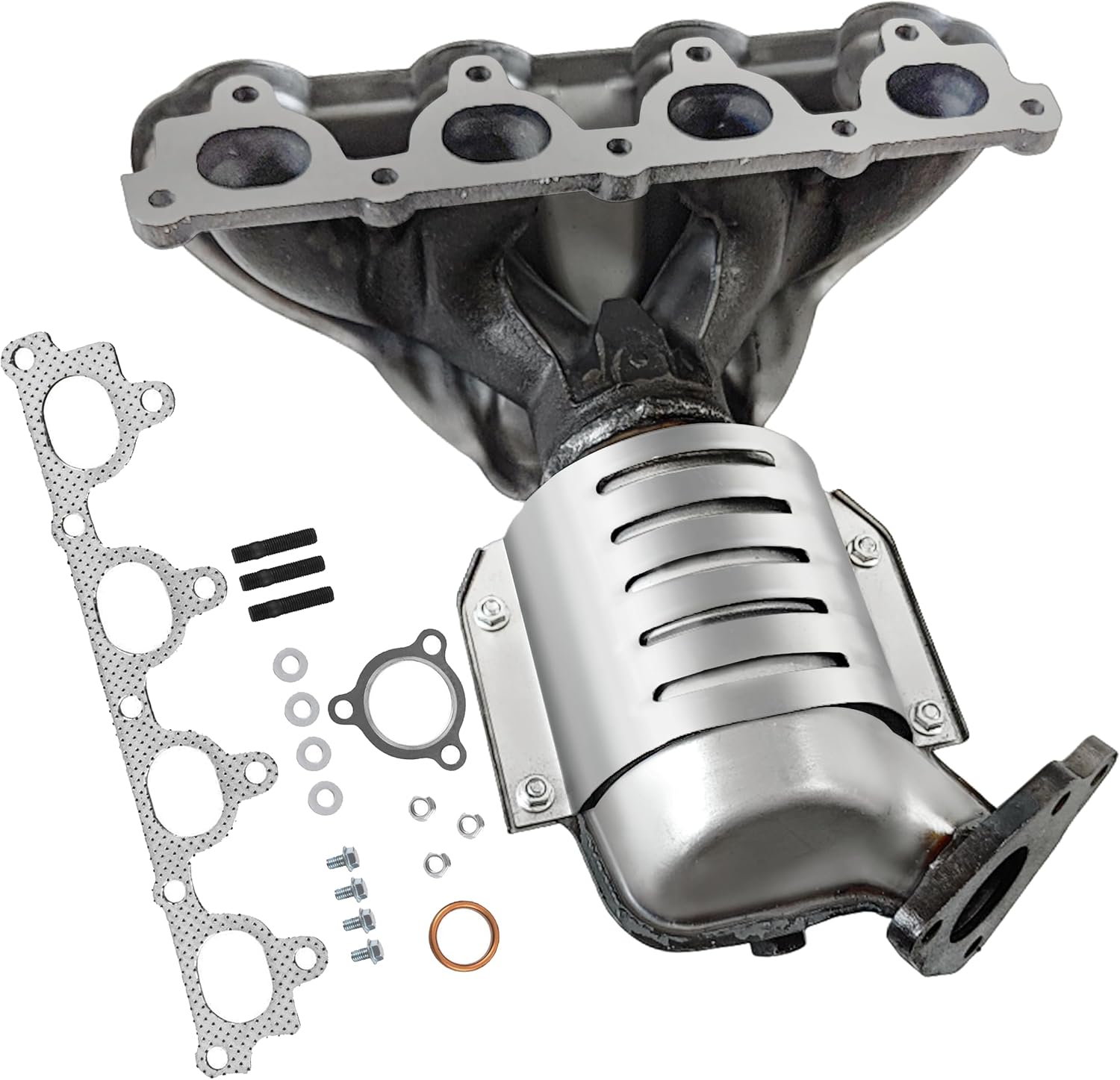
| Brand | FortunaFlow |
|---|---|
| Model | HCR96001.6 |
| Position | Front |
| Exterior | Machined |
This FortunaFlow catalytic converter is a direct-fit front replacement made for 1996–2000 Honda Civic 1.6L engines. It installs using the supplied gaskets and hardware and the flange is machined to match factory mounting points so no custom fabrication is typically required. The unit is stainless steel with CNC MIG welds designed to resist heat and keep the structure rigid under normal driving conditions. It is intended to clear P0420/P0430 codes and help the vehicle pass OBD-II emissions checks when the original converter has failed. Because it is an aftermarket high-flow design, expect improved exhaust flow compared with a clogged old converter, though it is not approved for sale in certain states with stricter emissions rules. For budget-conscious repairs this part offers a cost-effective path to restored emissions function, but buyers in restricted states should seek a compliant option and installers should verify fit with the vehicle before purchase.
Best for: Drivers looking for an affordable, ready-to-install replacement to restore emissions function on a 1996–2000 Civic 1.6L who prioritize a low-cost repair over state-specific emissions certification.
Less Ideal for: Owners located in states with stricter emissions regulations or buyers who require a federally or state-certified emissions part should consider compliant alternatives.
- Direct-fit front replacement with supplied gaskets and hardware for straightforward installation
- Stainless steel construction and CNC MIG welding for stronger, heat-resistant structure
- Designed to address P0420/P0430 diagnostics and improve chances of passing OBD-II emissions checks
- Not legal for sale or installation in certain states with stricter emissions regulations
Verdict: A budget-friendly, direct-fit front catalytic converter that restores emissions performance for 1996–2000 Honda Civic 1.6L models.
4. The Exhaust Doctor Direct-Fit Catalytic Converter for 1999–2000 Civic/Acura EL 1.6L

| Brand | The Exhaust Doctor |
|---|---|
| Manufacturer Part Number | TED99082 |
| Fits | 1999–2000 Civic EX & Si 1.6L; 1999–2000 Acura EL 1.6L |
| Item Weight | 5.99 pounds |
This direct-fit catalytic converter is built to replace a failed unit on 1999–2000 Honda Civic EX and Si models and the 1999–2000 Acura EL 1.6L. It installs as a bolt-on unit and ships with the necessary hardware and a gasket flange so most mechanically inclined owners or a shop can complete the swap without fabrication. In use it restores catalytic function, clears related check-engine codes, and helps vehicles pass emissions inspections. Buyers report accurate fitment in most cases, though there are occasional alignment quirks with the oxygen sensor boss on some cars and a few owners noted shorter long-term life on prolonged storage or heavy use. The practical benefits are straightforward: an affordable way to get an older Civic back to compliant exhaust operation without modifying headers or pipes. Expect a factory-replacement style part that trades high-end longevity for value and ease of installation compared with more expensive OEM or premium aftermarket converters.
Best for: Buyers who prioritize getting an older Civic back to emissions-compliant operation with a straightforward, low-cost replacement that bolts on and minimizes installation hassle.
Less Ideal for: People seeking a long-term premium or lifetime catalytic upgrade or those who expect guaranteed multi-year durability should consider higher-end replacements or dealer units instead.
- Direct-fit design for 1999–2000 Civic EX/Si and 1999–2000 Acura EL 1.6L for straightforward installation
- Includes gaskets and hardware so no additional parts are typically required for bolt-on replacement
- Restores catalytic function and helps clear emissions-related check-engine codes
- Good value compared with dealer or specialty shop replacement units
- Some users reported premature failure after months of service in a few cases
- Oxygen sensor boss orientation may not match every vehicle leading to minor alignment work
Verdict: A budget-friendly direct-fit converter that gets 1999–2000 Civics back to emissions compliance quickly and with minimal installation fuss.
5. PULCHERFLOW Catalytic Converter for 1996–2000 Honda Civic 1.6L
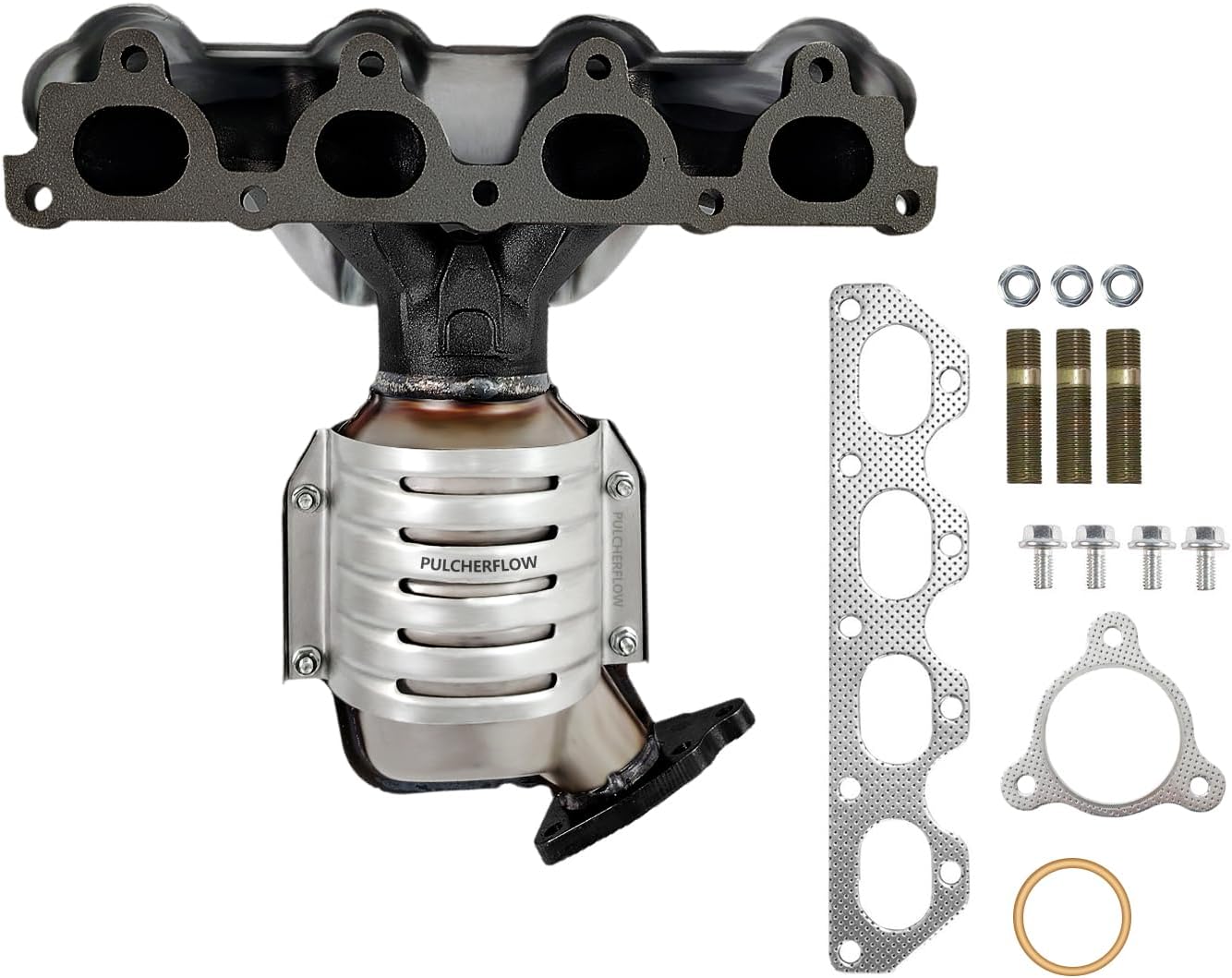
| Vehicle fitment | 1996–2000 Honda Civic 1.6L l4 |
|---|---|
| EPA compliance | Meets U.S. EPA requirements for federal models |
| Material | Stainless steel shell |
| Interchange number | 642597 |
This PULCHERFLOW catalytic converter is a direct-fit front unit designed to replace the factory piece on 1996–2000 Honda Civic 1.6L models. It installs using the factory bolt locations and ships with gaskets and bolts so most DIYers or independent shops can swap it in without fabrication. The converter uses an enlarged ceramic substrate with increased precious metal loading to improve conversion efficiency and reduce tailpipe emissions, and its stainless steel shell and mandrel-bent piping aim to resist corrosion and high heat. Reviewers report generally good fitment and that the part often arrives ready to bolt on, though several buyers noted occasional alignment or thread-fit issues that required chasing threads or minor rework. The unit is EPA compliant for federal emissions models but is not CARB-legal for certain states. For Civic owners seeking an affordable, ready-to-install replacement that restores emissions control, this is a practical option, but be prepared to clean or re-tap some fastener holes on lower-cost builds and confirm state compliance before purchase.
Best for: Buyers who prioritize restoring emissions capability on an EK-era Civic with a straightforward, mostly bolt-on replacement and who value documented user experience over unknown aftermarket claims.
Less Ideal for: Drivers in states that require CARB-compliant parts or buyers who need a guaranteed factory-quality fit without any possibility of minor thread or alignment adjustments.
- Direct-fit design with included gaskets and bolts simplifies installation
- Enlarged ceramic substrate and higher precious metal loading for improved emissions conversion
- Stainless steel shell and mandrel-bent piping improve corrosion and heat resistance
- EPA compliant for federal emissions models
- Not CARB legal and cannot be used in some states
- Some units show fitment or thread-quality issues that may require minor rework during installation
Verdict: A budget-friendly, bolt-on replacement that restores emissions control for 1996–2000 Civic 1.6L models while offering good performance when buyers accept occasional minor fitment cleanup.
Choosing the Right Honda Civic EK Catalytic Converter: Key Factors to Consider
Exact Fitment and Flange Style
Exact fitment matters because the Civic EK has specific exhaust dimensions and flange orientations. A converter that matches the stock flange and pipe diameter reduces the need for cutting, welding, or additional adapters. Proper fitment also ensures correct exhaust flow and prevents leaks that can trigger check-engine codes.
When fitment is wrong, installers may need to modify the exhaust, increasing labor time and the chance of leaks or misalignment. Verify flange bolt pattern, inlet and outlet pipe diameters, and whether the unit includes gaskets or new hardware. For vehicles with factory heat shields or close clearances under the body, confirm the converter body length and mounting points match the EK layout to avoid rubbing or contact.
Substrate Type and Cell Density
The internal substrate and its cell density determine how effectively the converter converts pollutants. Ceramic honeycomb substrates differ from metallic ones in thermal mass and shock resistance. Cell density, measured in cells per square inch (CPSI), affects surface area contact with exhaust gases; too low may under-process emissions, too high can increase backpressure.
For the Civic EK, choose a substrate and cell density that balance emissions reduction with acceptable exhaust flow for the engine size. Higher-end substrates offer better conversion efficiency at lower temperatures, which matters for shorter trips or intermittent city driving where the converter may not reach peak operating temperature quickly.
Oxygen Sensor Compatibility
The Civic EK uses oxygen sensors upstream and sometimes downstream of the catalytic converter to monitor efficiency. A replacement converter must provide proper bung locations and thread sizes to accept the stock sensors without relocation. Incorrect sensor placement can cause erroneous readings, trigger the check-engine light, or impair fuel trim adjustments.
Ensure the converter either includes predrilled bungs in the correct positions or that the installer is prepared to drill and weld sensor bungs in the correct locations. Wiring harness length and connector accessibility are also practical concerns during installation in the tight underbody spaces of the EK.
Emissions Certification and Compliance
Legal emissions requirements vary by region, and the right catalytic converter should meet applicable standards for the Civic EK. Certified units indicate they have been tested to reduce hydrocarbons, carbon monoxide, and nitrogen oxides to required levels. Choosing a compliant converter helps avoid failed emissions tests and related fines or registration issues.
Look for documentation of compliance or testing where required by local regulations. Even where formal certification is not mandated, manufacturer data on conversion efficiency provides an important performance signal. Prioritizing converters with clear emissions performance data reduces the risk of repeat failures at inspection.
Durability and Corrosion Resistance
Converters operate in a harsh environment with high temperatures and road-salt exposure. Construction quality, including stainless steel casings, robust welding, and corrosion-resistant coatings, extends service life on the Civic EK. Poor materials or thin housings can lead to cracking, rust-through, or flange failure.
Consider units with thicker shell gauges and protective finishes when the vehicle sees winter roads or coastal exposure. Thermal shock resistance of the substrate is also important if the car alternates between cold starts and high-load driving, which can stress internal components and cause substrate breakage over time.
Installation and Serviceability
Ease of installation affects labor time and cost and can influence whether you can reuse existing hardware. Bolt-on converters with matching flanges and included gaskets reduce workshop hours. Units that allow sensor reuse and provide clear instructions simplify the job for independent shops or experienced DIYers.
Serviceability also includes availability of replacement gaskets and whether the converter can be removed without disturbing other exhaust components. For front-pipe or manifold-adjacent converters, check clearance around heat shields and subframe elements to ensure technicians can access fasteners without excessive disassembly.
Common Catalytic Converter Symptoms on the Civic EK
Recognizing failure signs early can save repair time and avoid secondary engine issues. Typical symptoms include a persistent check-engine light with codes indicating catalyst efficiency below threshold, reduced engine performance, or an unusual rotten-egg smell from the exhaust. Excessive exhaust noise or rattling, especially when the converter internals break apart, is another common indicator.
Some symptoms are easily mistaken for other issues. Sluggish throttle response or poor fuel economy may originate from a clogged converter that increases backpressure rather than an engine mechanical fault. Observing when symptoms occur, such as only after long highway runs or during cold starts, helps narrow the cause.
- Check-engine light with OBD-II codes indicating catalytic efficiency issues
- Reduced acceleration or engine hesitation under load
- Strong sulfur or rotten-egg odor from exhaust
- Rattling noise from under the vehicle indicating loose substrate
Inspection Steps Before You Replace
Before replacing the converter, perform a few targeted checks to confirm the diagnosis. Scan for trouble codes and note oxygen sensor readings in closed-loop and open-loop conditions. A diagnostic scan provides evidence that the catalyst is not reducing emissions effectively.
Physically inspect the converter for external damage, rust-through, or evidence of leaks at flange joints. If safe to do so, start the engine and listen for rattles or feel for exhaust leaks near the flanges. These quick checks prevent unnecessary replacement when the issue lies elsewhere, such as a failed oxygen sensor or a simple exhaust leak.
- Run an OBD-II scan for catalyst efficiency or oxygen sensor codes
- Visually inspect for rust, holes, or exhaust leaks at flanges
- Feel or listen for rattles with the engine idling and revving
- Monitor upstream and downstream O2 sensor voltages to assess conversion
Installation Considerations for the EK Chassis
The Civic EK has limited underbody clearance in several areas, so plan for safe vehicle support and adequate workspace. Front converters near the manifold may require heat shield removal or temporary drop of adjacent components to access fasteners. Using the correct flange alignment and torque specs helps prevent leaks after installation.
If welding is required, ensure a qualified technician handles the job and that oxygen sensor bungs are positioned correctly afterward. For bolt-on replacements, verify flange faces are clean and use new gaskets to ensure a reliable seal. Consider anti-seize on bolts exposed to high temperatures to ease future removal.
- Support vehicle safely on jack stands or a lift with adequate clearance
- Remove or reposition heat shields to access manifold or front-pipe fasteners
- Use new gaskets and follow manufacturer torque specifications
- Confirm oxygen sensor placement before final assembly
How Converter Choice Affects Engine Management
A converter that closely matches the original backpressure and sensor placement helps maintain stable fuel trims and engine performance. A severely restrictive unit raises exhaust backpressure, which can lead to power loss and altered engine load calculations. Conversely, converters that are too free-flowing may not provide enough substrate contact time for efficient pollutant conversion.
Proper oxygen sensor readings depend on downstream sensor placement relative to the catalytic substrate. If the sensor is too far upstream or downstream, the engine control unit may misinterpret conversion efficiency and make incorrect fueling adjustments, which can trigger emissions-related fault codes or affect drivability.
- Match backpressure characteristics to preserve engine performance
- Maintain correct sensor locations to ensure accurate ECU readings
- Consider how substrate choice impacts warm-up conversion efficiency
Maintaining Your New Catalytic Converter
Once installed, regular care helps extend converter life. Avoid using unapproved fuel additives or leaded fuel substitutes that can contaminate catalyst surfaces. Address engine misfires, oil consumption, or coolant leaks promptly because these conditions can foul the substrate and reduce conversion efficiency.
Periodic visual inspections for damage and checking for leaks at flanges during routine service visits help catch early issues. If you frequently drive short trips, allow occasional longer runs to bring the converter to optimal operating temperature, which helps burn off deposits and maintain catalyst activity.
- Address misfires and oil or coolant leaks immediately
- Avoid fuel additives not specified for catalytic converter use
- Include visual converter checks in routine underbody inspections
- Occasional long drives help achieve optimal operating temperatures
Still looking for the perfect fit?
Select your Honda Civic configuration to see the most relevant Catalytic Converters recommendations
How We Chose the Best Honda Civic EK Catalytic Converter
We focused on criteria that directly affect long-term performance and legal emissions compliance on the Honda Civic EK. Primary filters included exact fitment to the EK exhaust geometry and flange patterns, verified substrate type and cell density for effective emissions reduction, and compatibility with onboard oxygen sensor locations used on the EK. Durability factors such as corrosion-resistant construction, thermal stability of the substrate, and weld quality were prioritized to limit premature failure. Emissions performance and certifications or compliance with relevant standards were required to ensure the converter actually reduces hydrocarbons, CO, and NOx as intended. Ease of installation was evaluated via bolt-on fitment or minimal modification notes and whether oxygen sensor bungs are properly located. Finally, we screened out universal-fit assemblies that require extensive cutting or fabrication and any units lacking clear fitment information for the Civic EK. The resulting shortlist represents converters that meet fitment, emissions, durability, and installation practicality for this vehicle.
Our full evaluation process is outlined in our review methodology.
FAQ
How can I tell if the catalytic converter is causing my check-engine light?
Often the car stores codes related to catalyst efficiency or oxygen sensor readings. A scan showing low conversion efficiency or voltage patterns where the downstream sensor mirrors the upstream one suggests a failing converter. Confirm with visual and functional checks before replacing the unit.
Is it necessary to replace oxygen sensors when installing a new converter?
It depends. If the sensors are within service life and show normal operation, they can be reused. However, worn or slow sensors can mask converter performance and may trigger codes soon after installation, so consider condition and age when deciding.
Can a clogged catalytic converter cause reduced acceleration on the Civic EK?
Yes. A clogged converter increases backpressure, which can restrict exhaust flow and reduce engine power. Symptoms often include hesitation under load and poor throttle response, especially at higher engine speeds.
Will a new converter fix a persistent rotten-egg smell from the exhaust?
A new converter can eliminate sulfur odors caused by a failing substrate that no longer processes sulfur compounds properly. But ensure underlying issues, such as fuel system problems, are addressed so the new converter is not contaminated.
Are there special fitment points to check on the EK chassis during installation?
Yes. Check flange bolt patterns, inlet and outlet pipe diameters, and the position of any heat shields or braces that could interfere with installation. Also verify oxygen sensor bung positions to match the vehicle's wiring and sensor threads.
How long does a typical catalytic converter last on a Civic EK?
Lifespan varies with driving conditions and maintenance. Properly functioning converters can last many years, but factors like persistent engine misfires, oil consumption, or severe corrosion can significantly shorten service life.
Final Verdict
When selecting a catalytic converter for a Honda Civic EK, prioritize exact fitment, correct oxygen sensor placement, and verified emissions performance. Balance substrate characteristics with desired flow to avoid creating too much backpressure while ensuring efficient pollutant conversion. Also factor in corrosion resistance and installation ease to minimize future service needs. By focusing on these tradeoffs, you can choose a converter that restores emissions control and maintains reliable engine operation for the EK.
Explore More:
- Check out all Honda Civic parts & accessories
- Explore Catalytic Converters Maintenance & Repair Guides
- Explore Exhaust & Emissions
- Browse all Auto Parts
