

Note: This article contains affiliate links. If you click on these links and make a purchase, I may earn a small commission at no extra cost to you. This helps support my research and content. Read my full affiliate disclosure here.
Picking the right synthetic engine oil for your Subaru Outback matters because the oil you run affects cold-start behavior, fuel economy, and long-term engine wear. For Outback owners, matching the correct synthetic viscosity and formulation to your driving conditions and the vehicle's service recommendations helps preserve performance and reduce the chance of premature wear.This guide presents six shortlisted synthetic engine oils that fit the Outback's needs and explains the criteria we used to evaluate them, including viscosity suitability, wear protection, and compatibility with Subaru-recommended intervals. Read on to see the attributes that matter most and how each option addresses common Outback use cases.
Looking for other parts? See all Subaru Outback parts & accessories.
Top Picks at a Glance
| Best Overall Engine Oil The top all-around synthetic oil balancing performance and protection | Subaru Synthetic Motor Oil SAE 0W-20 5 Quart (SOA427V1325) |  |
| Best Budget Engine Oil A low-cost synthetic option that still meets key specs | Valvoline Advanced Full Synthetic SAE 0W-20 Motor Oil, 5 qt |  |
| Best Premium Engine Oil A higher-end synthetic formulated for maximum protection and longevity | Mobil 1 Extended Performance Full Synthetic Motor Oil 0W-20, 5 Quart |  |
| Best High-Mileage Engine Oil Formulated additives that protect seals and reduce oil burn in older engines | Mobil 1 High Mileage Full Synthetic Motor Oil 0W-20, 5 Quart |  |
| Best 0W-20 Engine Oil A low-viscosity synthetic matched to 0W-20 viscosity requirements | Castrol EDGE 0W-20 Full Synthetic Motor Oil, 5 Quart Jug |  |
| Best Long-Life Engine Oil Formulated for extended drain intervals and sustained protection | Castrol EDGE Extended Performance 5W-30 Full Synthetic Motor Oil, 5 Quart |  |
1. Subaru Synthetic Motor Oil SAE 0W-20 5 Quart (SOA427V1325)
Best Overall Engine Oil
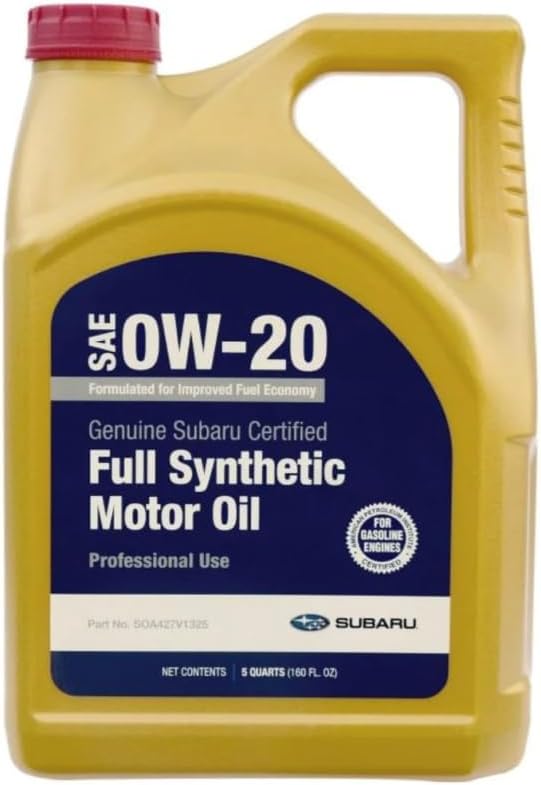
| Viscosity Level | Low to Medium |
|---|---|
| Compatible with Vehicle Type | Car |
| Liquid Volume | 5 Quarts |
| Flash Point | 227 Degrees Celsius |
This is Subaru branded synthetic 0W-20 motor oil sold in a 5-quart bottle and intended as a factory-quality replacement for routine oil changes. It provides low-viscosity protection ideal for modern Subaru four-cylinder engines, helping with cold starts and maintaining viscosity stability at operating temperature. Typical use is drain-and-fill maintenance during scheduled service intervals in compatible Subaru models. Notable features include manufacturer specification fitment and a flash point listed at 227 degrees Celsius, which indicates good thermal tolerance. Practical benefits include direct compatibility with Subaru engine requirements and convenience of a five-quart pack that covers a full oil change without mixing brands. Limitations are that the listing does not include detailed performance ratings like API or ILSAC certifications on the label copy provided here, and as a vehicle-specific, factory-branded oil it may cost more than some aftermarket equivalents despite offering manufacturer-matched formulation.
Best for: Drivers who maintain Subaru vehicles and prefer using factory-brand fluids to match service specifications and simplify maintenance.
Less Ideal for: Shoppers seeking the lowest-cost synthetic oil or those who need oils specified for non-Subaru makes or higher viscosity grades.
- Factory-branded formulation matched to Subaru engine requirements
- 0W-20 viscosity supports cold-start protection and stable operation
- Five-quart container provides enough fluid for a complete oil change
- Good thermal tolerance with a listed flash point of 227 degrees Celsius
- Product information does not explicitly list industry certifications on the provided label copy
- Typically priced higher than many aftermarket synthetic oils
Verdict: The best all-around synthetic engine oil that balances wear protection, viscosity stability, and value for most drivers and maintenance routines.
2. Valvoline Advanced Full Synthetic SAE 0W-20 Motor Oil, 5 qt
Best Budget Engine Oil

| Viscosity | 0W-20 |
|---|---|
| Size | 5 QT |
| Meets | ILSAC GF-7A, API SP |
| Flash Point | 200 Degrees Celsius |
Valvoline Advanced Full Synthetic 0W-20 is a ready-to-use 5 quart jug of full synthetic engine oil designed for routine oil changes in modern gasoline engines. It meets ILSAC GF-7A and API SP requirements and lists several manufacturer specifications, so it provides the baseline protections manufacturers expect while helping fuel economy with its low-viscosity 0W-20 grade. In practice it flows well at cold starts to reduce wear, includes additives aimed at deposit control and heat resistance, and claims stronger wear and heat protection compared with industry test baselines. For a Subaru Outback that calls for 0W-20, this oil covers required specs and is straightforward to use during DIY or shop changes. The practical downsides are that it is a general multi-vehicle formulation rather than a Subaru-specific fluid and higher-mileage engines may want formulations targeted to older seals and deposits. Overall it is a sensible, spec-compliant synthetic option if you want solid protection without premium specialty additives.
Best for: Buyers who prioritize meeting manufacturer specs and reliable day-to-day protection for a Subaru Outback without paying for specialty or premium formulations.
Less Ideal for: Drivers looking for oils formulated specifically for high-mileage engines, extended drain intervals, or specialty performance additives should consider other options.
- Meets ILSAC GF-7A and API SP standards required by many modern engines
- Full synthetic formula with improved low-temperature flow for reduced cold-start wear
- Additive package aimed at wear reduction, deposit control, and heat protection
- Available in a 5 quart size convenient for a full oil change
- General-purpose formulation rather than a Subaru-targeted or high-mileage specific oil
Verdict: The best budget synthetic engine oil for buyers who want required manufacturer specs and basic protection without paying premium prices.
3. Mobil 1 Extended Performance Full Synthetic Motor Oil 0W-20, 5 Quart
Best Premium Engine Oil

| SAE J300 Viscosity Grade | 0W-20 |
|---|---|
| Container Type | Bottle |
| Compatible with Vehicle Type | Car |
| Liquid Volume | 5 Quarts |
Mobil 1 Extended Performance 0W-20 is a premium full-synthetic motor oil designed to deliver long-life protection, thermal stability, and deposit control for modern gasoline engines. In use it reduces friction and helps limit sludge and varnish buildup, supports quick cold starts, and resists breakdown at high temperatures. Notable features include Mobil 1’s Triple Action+ formula, claimed protection up to 20,000 miles or one year, and ILSAC GF-6 compliance for LSPI and timing chain wear mitigation. For a Subaru Outback this grade supports modern engine tolerances and helps maintain fuel economy while offering strong high-temperature protection up to 500°F and low-temperature flow to -40°F. The practical benefits are longer oil-change intervals, improved engine cleanliness, and consistent protection under towing or highway driving. Important limitations are that manufacturer service intervals and warranty requirements should be followed and some drivers may prefer more frequent changes in severe-duty or high-mileage engines; extended-interval claims depend on proper maintenance and driving conditions.
Best for: Drivers of a Subaru Outback who prioritize maximum thermal protection, engine cleanliness, and the convenience of longer oil change intervals and are willing to choose a premium lubricant to protect modern engines.
Less Ideal for: Drivers who prefer strict, short-interval maintenance schedules, those with heavily modified engines requiring specialized lubricants, or owners who need lower-cost conventional or semi-synthetic options.
- Premium full-synthetic formulation for extended oxidation and thermal stability
- Designed for long drain intervals up to 20,000 miles or 1 year when used per manufacturer guidance
- Meets ILSAC GF-6 for protection against LSPI and timing chain wear in modern engines
- Extended-interval recommendation may not suit severe-service or very high-mileage engines where more frequent changes are safer
Verdict: The best premium synthetic engine oil for drivers willing to pay more for advanced additives, superior shear stability, and the highest thermal protection.
4. Mobil 1 High Mileage Full Synthetic Motor Oil 0W-20, 5 Quart
Best High-Mileage Engine Oil

| Viscosity | 0W-20 |
|---|---|
| Size | 5 Quart |
| Model | Extended Performance |
| Vehicle Service Type | Car |
| SAE J300 Viscosity Grade | 0W-20 |
Mobil 1 High Mileage 0W-20 is designed for older, higher-mileage engines and aims to reduce wear, condition seals, and control oil breakdown between longer service intervals. You pour it like any motor oil during an oil change; its Triple Action Formula focuses on cleaning deposits, preventing sludge, and reducing friction so components run cooler and stay cleaner. Notable features include formulations that claim up to 10,000 miles between oil changes under specified conditions, low-temperature flow to aid cold starts, and compatibility with modern gasoline engines including turbocharged and multi-valve configurations. In practice this product benefits drivers who want to restore seal pliability and reduce consumption while improving thermal control in an aging Subaru Outback engine. Limitations include reliance on manufacturer guidance for extended drain intervals and that individual results for oil consumption and deposit control will vary with engine condition and driving habits.
Best for: Someone who drives an older Subaru Outback and prioritizes protecting a high-mileage engine while reducing deposits, oil consumption, and the need for frequent oil changes.
Less Ideal for: Drivers who strictly follow short, manufacturer-recommended drain intervals or those using non-gasoline engines should consider alternatives matched to their service schedule or engine type.
- Formulated specifically for engines with over 75,000 miles to help condition seals and reduce leaks.
- Full-synthetic 0W-20 provides strong cold-start flow and high-temperature protection for modern gasoline engines.
- Designed to help remove sludge and deposits to improve engine cleanliness and potentially extend engine life.
- Claims extended protection up to 10,000 miles between changes under recommended conditions.
- Extended drain interval claims depend on meeting vehicle manufacturer recommendations and real-world driving conditions.
Verdict: The best high-mileage synthetic oil for engines with higher miles that need extra seal conditioning, wear reduction, and control of oil consumption.
5. Castrol EDGE 0W-20 Full Synthetic Motor Oil, 5 Quart Jug
Best 0W-20 Engine Oil

| Viscosity Grade | 0W-20 |
|---|---|
| Container Type | Jug |
| Liquid Volume | 5 Quarts |
| Approvals | API SQ/SP/SN PLUS/SN, ILSAC GF-7 |
Castrol EDGE 0W-20 is formulated to provide low-temperature flow for easier cold starts while maintaining a stable viscosity at operating temperatures to protect moving parts. Typical use is in passenger cars and light trucks that require 0W-20 grade oil; you pour it at service intervals to reduce friction, control sludge, and help preserve engine cleanliness. Notable features include Castrol's additive technology aimed at extended oil life, claimed high-temperature resistance, and approvals that cover current API and ILSAC 0W-20 requirements plus several manufacturer tests. In practice this means improved fuel efficiency compared with thicker oils and robust wear protection during sustained highway driving. Limitations are that long drain interval claims depend on driving conditions and manufacturer service schedules and that some vehicles require manufacturer-specific approvals beyond general 0W-20 specifications. For owners prioritizing cold-start performance and steady fuel-economy gains, this oil is a strong candidate, but always follow the vehicle maker's recommended service intervals and spec requirements.
Best for: Drivers who prioritize cold-start protection and measurable fuel-economy benefits from a 0W-20 synthetic while using an oil that meets current industry specs.
Less Ideal for: Owners who must strictly follow manufacturer-prescribed fluids with unique factory certifications or who prefer oils formulated specifically for heavy towing, racing, or off-road stress.
- Meets API SQ/SP/SN PLUS/SN and ILSAC GF-7 approvals for modern engines
- Designed for low-temperature flow to improve cold-start lubrication
- Additive package aimed at reducing sludge and providing high-temperature stability
- Supports fuel economy improvements compared with higher-viscosity oils
- Extended drain interval claims depend on real-world driving and should not replace manufacturer service schedules
Verdict: The best 0W-20 synthetic engine oil for owners who need low-temperature flow and fuel-economy benefits while meeting 0W-20 viscosity specs.
6. Castrol EDGE Extended Performance 5W-30 Full Synthetic Motor Oil, 5 Quart
Best Long-Life Engine Oil

| Viscosity Level | Low to Medium |
|---|---|
| Compatible with Vehicle Type | Car, Gasoline and Light Duty Diesel, Hybrids, Truck |
| Container Type | Jug |
| Liquid Volume | 160 Fluid Ounces |
Castrol EDGE Extended Performance 5W-30 is a full synthetic motor oil engineered to protect engines over extended drain intervals. It is typically used as a long-life service oil for modern gasoline and light-duty diesel engines, including daily-driven or touring vehicles that benefit from fewer oil changes. The formula emphasizes thermal stability and wear protection, supported by Castrol's proprietary additives that the brand says allow extended drains up to 25,000 miles under specified conditions. In use you can expect strong resistance to high-temperature breakdown, reduced sludge buildup, and sustained film strength that helps keep moving parts separated during heavy loads or sustained highway driving. Practical benefits include potential time savings from less frequent oil changes and maintenance of engine cleanliness that supports consistent performance. Limitations include the need to follow vehicle manufacturer guidance for drain intervals and specifications, since extended intervals depend on driving conditions and warranty requirements, and some owners may prefer more conservative change schedules for high-stress or modified engines.
Best for: Drivers who prioritize longer service intervals and want a synthetic oil with a robust additive package to maintain protection between changes for routine and highway use.
Less Ideal for: Drivers who follow strict manufacturer-recommended short drain intervals, operate in severe-duty or heavily modified vehicles, or need an oil matched to a different viscosity or factory-required formulation.
- Formulated for extended drain intervals with additive chemistry aimed at long-term protection
- High thermal stability to resist breakdown and reduce sludge under sustained high temperatures
- Enhanced wear protection to help preserve engine components during heavy loads
- Universal fit for gasoline and light-duty diesel engines including hybrids and trucks
- Extended 25,000-mile drain claim depends on following specific conditions and may not apply to all vehicles
- Not a substitute for following manufacturer service schedules or specification requirements
Verdict: The best long-life synthetic engine oil for drivers who prefer extended drain intervals and robust additive packs that maintain protection over longer service periods.
Choosing the Right Subaru Outback Synthetic Engine Oil: Key Factors to Consider
Viscosity Grade
Viscosity determines how the oil flows at different temperatures and directly affects cold-start protection and high-temperature film strength. For the Outback, choosing the correct grade, such as 0W-20 or 5W-30 where recommended, helps ensure the engine receives adequate lubrication on startup in cold weather while still maintaining a protective film at operating temperature.
Selecting a too-thick oil can increase drag and reduce fuel economy, while a too-thin oil may not maintain adequate film thickness under high load or temperature, potentially increasing wear. Consider your typical climate and driving patterns when selecting a viscosity: colder climates benefit from lower cold-start numbers, while towing or heavy-load use may justify a higher hot-viscosity grade.
Wear Protection and Additives
Anti-wear additives and base oil quality influence how well the lubricant resists metal-to-metal contact under load, protecting bearings, camshafts, and piston rings. For Subaru Outbacks driven in mixed commuting and highway conditions, robust anti-wear chemistry reduces long-term wear and can preserve engine performance.
Look for oils with proven zinc and phosphorus levels where appropriate, balanced detergents to control deposits, and dispersants that keep contaminants suspended. Oils with improved shear stability maintain their protective viscosity over time, which is especially important if you aim for longer drain intervals.
Cold-Start Performance
Cold-start protection matters for preserving components during the brief window between engine start and full oil circulation. Synthetic oils typically flow faster at low temperatures than conventional oils, lowering wear during start-up. For Outback owners in regions with cold winters, choosing a synthetic with low winter viscosity ratings helps reduce start-up wear and improves drivability until the engine reaches operating temperature.
Consider how frequently short trips occur. If you often run many short errands, cold-start protection becomes more influential because the engine spends more time in transient conditions where rapid lubrication matters.
High-Temperature Stability and Oxidation Resistance
An oil's ability to resist thermal breakdown and oxidation affects how long it can protect the engine without thickening or forming deposits. Subaru Outbacks used for long highway trips or towing can expose the oil to sustained heat; oils with strong shear stability and antioxidant packages maintain viscosity and keep engine deposits low.
Oxidation-resistant formulations reduce sludge formation around piston crowns and valve areas, supporting consistent performance and cleaner internals over the life of the oil between changes.
Compatibility With Emissions and Seals
Modern engines rely on emission-control equipment such as catalytic converters and oxygen sensors, and rubber seals that can be sensitive to some additive chemistries. Choosing a synthetic oil formulated to be compatible with emission systems helps avoid catalytic converter fouling and ensures sensor readings remain stable.
Seal-compatible formulations help prevent leaks in older or high-mileage Outbacks. If your vehicle has accumulated miles, selecting an oil tailored for seal conditioning can reduce the risk of new leaks forming after an oil change.
Service Interval and Oil Longevity
Some synthetic oils are engineered for extended drain intervals, but actual interval decisions should align with Subaru recommendations and your driving habits. Oils that advertise longer life typically rely on stronger base stocks and robust additive packages to resist breakdown and maintain protective properties over time.
If you frequently drive short distances, tow, or operate in dusty environments, shorter intervals may be prudent despite an oil's long-life claims. Match oil longevity expectations to how you use your Outback and to the manufacturer's maintenance schedule.
Which Viscosity Should I Use in My Outback?
Subaru typically specifies certain viscosity ranges for its engines; the right choice depends on your model year and regional climate. For most owners, a 0W-20 synthetic provides excellent cold-start flow and modern fuel-economy benefits, while 5W-30 can offer extra film strength under sustained high-load conditions.
If you live where temperatures dip well below freezing, favor lower winter-rated oils to reduce start-up wear. Conversely, if you frequently tow, carry heavy loads, or drive in hot environments, consider a higher hot-viscosity grade within Subaru's allowed range to maintain protective film thickness.
- 0W-20: Best for cold starts and maximizing fuel economy
- 5W-30: Better high-temperature film strength for heavy use
- Follow the vehicle's owner manual when in doubt
Synthetic Vs Conventional Oils for the Outback
Synthetic engine oils typically offer superior low-temperature flow, better shear stability, and longer-lasting additive performance compared with conventional oils. For the Outback, these traits translate to reduced start-up wear, steadier viscosity under heat, and potentially longer safe intervals between changes when matched to driving conditions.
If your Outback has high mileage or an older engine, a modern synthetic formulated for higher-mileage applications can help with seal conditioning and deposit control, while still providing the baseline protections expected from synthetic base stocks.
- Improved cold-start protection
- Stronger resistance to thermal breakdown
- Often better for extended drain intervals when used properly
How Driving Habits Affect Oil Choice
City commuting with frequent short trips increases the proportion of cold starts and transient engine operation, making low-temperature performance and detergency more important. If most of your driving is highway cruising, maintaining viscosity and oxidation resistance at sustained temperatures becomes a higher priority.
Towing or carrying heavy loads raises engine stress and operating temperatures, which favors oils with higher hot-viscosity and strong anti-wear chemistry. Tailor your oil selection to the way you actually use your Outback rather than a one-size-fits-all approach.
- Short trips: prioritize cold-flow and deposit control
- Highway miles: prioritize thermal stability and longevity
- Towing/heavy loads: prioritize higher hot-viscosity and anti-wear protection
High-Mileage Considerations
For Outbacks with elevated mileage, look for synthetics formulated to manage oil consumption and to condition seals without compromising additive performance. High-mileage-focused formulations often include tailored detergents and seal conditioners intended to reduce minor leaks and keep older engines running clean.
However, moving to a thicker oil solely because of mileage is not always the best solution. Follow the engine's tolerances and consider incremental changes only when necessary, monitoring consumption and leak behavior after a change.
- Seal conditioning additives can reduce new leaks
- Monitor oil consumption after switching formulations
- Do not exceed viscosity recommendations unless advised
Oil Change Basics for the Outback
Regardless of the synthetic you choose, adhere to Subaru's service intervals as a baseline and adjust for severe driving conditions. Proper oil changes include using the correct filter, inspecting for leaks, and confirming the correct oil level after the engine reaches operating temperature where applicable.
Keep records of oil changes and the specific viscosity used; this helps identify trends in consumption or leak development and informs future oil choices.
- Use the correct oil filter and torque the drain plug to spec
- Verify oil level after warming the engine when recommended
- Track changes to spot consumption or leak issues early
Still looking for the perfect fit?
Select your Subaru Outback configuration to see the most relevant Engine Oils recommendations
How We Chose the Best Subaru Outback Synthetic Engine Oil
We focused on attributes that matter specifically to Subaru Outback owners and selected six synthetic engine oils that meet Subaru service requirements and typical owner needs. Our evaluation emphasized lubricant performance in real-world conditions, cold-start protection, and oil longevity under the kinds of mixed highway and light off-road driving many Outback owners do. We prioritized oils that provide proven wear protection for modern engine materials and valve-train components and that maintain viscosity under heat to protect turbocharged or naturally aspirated variants.Concrete criteria included viscosity grade options relevant to Subaru recommendations, high-temperature shear stability, anti-wear additive chemistry, compatibility with emission-control systems, and suitability for extended drain intervals where applicable. We also considered formulations targeted for higher-mileage engines and oils engineered for improved fuel economy.We excluded any formulations that do not meet modern API or ILSAC performance standards or that are not recommended by Subaru for the Outback's engines. Oils that rely on outdated additive packages or lack manufacturer data on shear stability and volatility were not considered.
Our full evaluation process is outlined in our review methodology.
FAQ
Can I switch from conventional oil to synthetic in my Subaru Outback?
You can usually switch to synthetic without issue. Synthetic oils flow better at low temperatures and offer improved high-temperature stability. Monitor for leaks or changes in consumption, especially on older engines, and follow Subaru maintenance recommendations.
How often should I perform an oil change with synthetic oil in the Outback?
Follow Subaru's recommended intervals as the baseline, then adjust for your driving conditions. Many synthetics can safely extend intervals under normal driving, but frequent short trips, towing, or dusty conditions may warrant shorter intervals.
Is 0W-20 safe for all Subaru Outback engines?
0W-20 is commonly recommended for many modern Outback engines because of its cold-flow and fuel-economy benefits. Confirm the recommended viscosity in your owner's manual for your specific model year and engine, since recommendations can vary.
Will synthetic oil improve fuel economy in my Outback?
Synthetic oils can reduce internal friction and improve cold-start efficiency, which may yield modest fuel-economy gains. The actual improvement depends on driving habits and the chosen viscosity grade.
Should I choose a high-mileage synthetic for an older Outback?
High-mileage formulations often include additives for seal conditioning and deposit control that can benefit older engines. They can help reduce minor leaks and clean deposits, but monitor oil consumption and engine behavior after switching.
Does synthetic oil affect the catalytic converter or emission systems?
Modern synthetic oils formulated to meet API and ILSAC standards are designed to be compatible with emission-control systems. Avoid oils with inappropriate additive levels and follow specifications to minimize the risk of sensor fouling or converter issues.
Final Verdict
Choose a synthetic oil that aligns with Subaru's viscosity recommendations and your typical driving conditions. Prioritize the correct viscosity for your climate, strong anti-wear protection for towing or heavy use, and oxidation resistance for long highway miles.Balance the desire for longer drain intervals against real-world factors like short-trip frequency and towing. By focusing on viscosity, wear protection, and oil longevity, you can confidently select a synthetic oil that preserves your Outback's performance and engine life.
Explore More:
- Check out all Subaru Outback parts & accessories
- Explore Fluids & Chemicals
- Browse all Accessories
