

Note: This article contains affiliate links. If you click on these links and make a purchase, I may earn a small commission at no extra cost to you. This helps support my research and content. Read my full affiliate disclosure here.
Picking the right engine oil for your 2026 Subaru Outback matters for daily drivability, long-term durability, and fuel efficiency. Whether you drive a low-mileage commuter or a higher-mileage family hauler across varied climates, oil choice affects cold starts, deposit control, and wear protection specific to Subaru boxer engines. This guide shortlist includes the top options for the 2026 Outback within the 2020-present fitment scope and explains why each oil type is suitable.Below we cover how we evaluated viscosity, additive chemistry, and long-term protection so you can match an oil to your driving patterns and maintenance plan before performing an oil change or scheduling service.
Looking for other parts? See all Subaru Outback parts & accessories.
Top Picks at a Glance
| Best Overall Engine Oil Our top pick balancing protection, viscosity choices, and reliability | Subaru Synthetic Motor Oil SAE 0W-20 5 Quart (SOA427V1325) |  |
| Best Budget Engine Oil Lowest-cost options that still meet API/ILSAC specs for protection | Valvoline Advanced Full Synthetic SAE 0W-20 Motor Oil, 5 qt |  |
| Best OEM Oil Change Kit Complete kits that include genuine oil, a filter, and crush gasket | Subaru Genuine Oil Change Kit with Filter, Gasket, and 5 qt Synthetic SAE 0W-20 |  |
| Best 0W-16 Engine Oil Very low-viscosity synthetic oils formulated for cold starts and fuel economy | Subaru 0W-16 Synthetic Oil Change Kit with Filter & Gasket (5 Quart) |  |
| Best 0W-20 Engine Oil Common full-synthetic oils in the popular 0W-20 viscosity for many engines | Castrol EDGE 0W-20 Full Synthetic Motor Oil, 5 qt |  |
| Best 5W-30 Engine Oil Higher-viscosity synthetic options suited to turbocharged or heavier-duty engines | Castrol EDGE 5W-20 Advanced Full Synthetic Motor Oil, 5 Quart Jug |  |
| Best 6-Quart / Large Capacity Kit Larger multi-quart kits or eco-packs that cover full service and extra capacity | Subaru 6-Quart Synthetic Motor Oil 0W-20 with Genuine Oil Filter and Gasket Kit |  |
1. Subaru Synthetic Motor Oil SAE 0W-20 5 Quart (SOA427V1325)
Best Overall Engine Oil
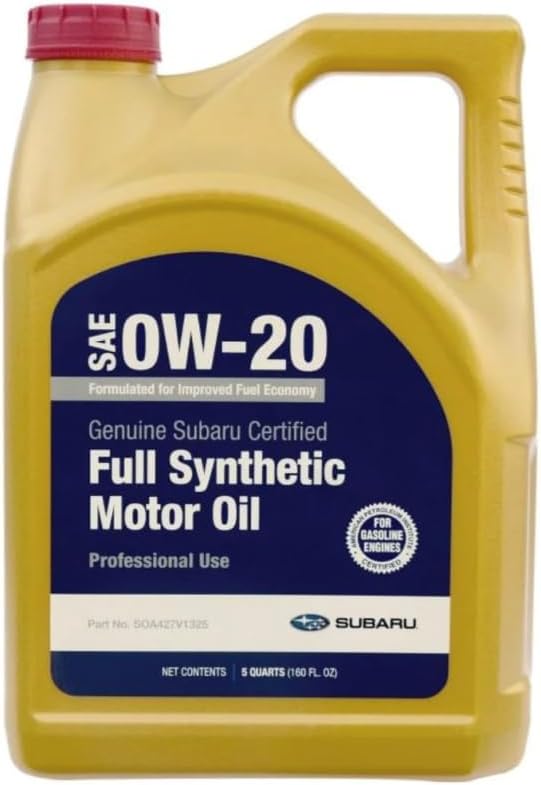
| Viscosity Level | Low to Medium |
|---|---|
| Compatible with Vehicle Type | Car |
| Flash Point | 227 Degrees Celsius |
| Liquid Volume | 5 Quarts |
This Subaru-branded 0W-20 synthetic motor oil is formulated to meet the viscosity and performance needs of many Subaru four-cylinder engines. Packaged in a 5-quart bottle, it is sized to refill a typical oil change without mixing brands. It delivers low-temperature flow for easier cold starts and stable film strength at operating temperature thanks to its low-to-medium viscosity rating and synthetic base. Typical use is straightforward: pour during routine oil service for vehicles that specify 0W-20 and that accept factory-replacement fluids. Practical benefits include factory compatibility, predictable viscosity behavior across seasons, and a clean single-product option that avoids cross-compatibility guesswork. Limitations are that it is a vehicle-specific, brand-labeled OEM fluid so buyers should confirm Subaru compatibility for their exact engine variant and model year, and there is no information here about additive package details or extended drain intervals compared with aftermarket high-mileage or performance oils.
Best for: DIYers who want a dependable, factory-aligned 0W-20 oil for routine maintenance on Subaru four-cylinder engines and prefer using a brand-labeled product to ensure compatibility.
Less Ideal for: Drivers seeking specialty formulations such as high-mileage, extreme-performance, or extended-drain oils should consider purpose-built aftermarket alternatives.
- Factory-branded formula matched to Subaru specifications for compatible engines
- Full synthetic base offers reliable cold-start flow and stable high-temperature protection
- 5-quart bottle size covers a full oil change for most DIY services
- Low-to-medium viscosity helps improve fuel efficiency while maintaining lubrication
- No detailed additive or service-interval information provided compared with specialty oils
Verdict: The go-to choice for most DIY mechanics who want dependable protection, broad temperature performance, and a product that fits common Subaru-compatible viscosity specs.
2. Valvoline Advanced Full Synthetic SAE 0W-20 Motor Oil, 5 qt
Best Budget Engine Oil

| Viscosity | 0W-20 |
|---|---|
| Size | 5 QT |
| Meets | ILSAC GF-7A, API SP |
| Manufacturer | Valvoline |
Valvoline Advanced Full Synthetic 0W-20 is a five-quart jug of full synthetic engine oil designed to protect modern gasoline engines through everyday driving and routine oil-change intervals. It meets multiple industry and manufacturer specifications including ILSAC GF-7A, API SP, and several OEM requirements, so it is suitable for cars that call for 0W-20 viscosity. The formula emphasizes stronger wear protection, improved deposit control, and better heat resistance than baseline industry standards, and it flows easily at low temperatures to reduce cold-start wear. For a Subaru Outback requiring 0W-20, this oil delivers predictable protection and helps maintain fuel economy during normal commuting and light highway duty. The practical compromise is that this jug is positioned as an advanced full synthetic rather than a budget blend, so while it offers robust protection it may not be the lowest-cost option per quart among economy oils intended strictly for routine changes.
Best for: Shoppers who want a dependable, spec-compliant 0W-20 full synthetic that protects daily-driven Subaru Outbacks without worrying about specialized high-mileage or performance formulations.
Less Ideal for: Buyers whose sole priority is the lowest upfront cost per oil change or who need a specialized oil for extended-interval, high-mileage, or severe-duty use.
- Meets ILSAC GF-7A and API SP plus several OEM specifications for broad compatibility with gasoline engines
- Full synthetic formulation enhances low-temperature flow and wear protection at cold starts
- Claims improved deposit control and thermal protection compared with industry baseline
- Available in a convenient 5 quart size suitable for a full Subaru Outback oil change
- Positioned as advanced full synthetic so it may cost more than basic budget conventional or blended oils
Verdict: For shoppers prioritizing price, this slot covers affordable oils that meet required industry specs and perform acceptably for routine oil-change intervals.
3. Subaru Genuine Oil Change Kit with Filter, Gasket, and 5 qt Synthetic SAE 0W-20
Best OEM Oil Change Kit

| Viscosity Grade | 0W-20 |
|---|---|
| Container Type | Bottle |
| Compatible Vehicles | Select Subaru Forester, Outback, Impreza, Ascent, Legacy, Crosstrek |
| Liquid Volume | 5 quarts |
This Subaru oil change kit supplies everything needed for a factory-quality service on supported Subaru 4-cylinder models: a genuine engine oil filter, a crush gasket, and five quarts of Subaru SAE 0W-20 synthetic motor oil. It is intended for do-it-yourself owners or technicians who want to follow manufacturer recommendations and maintain warranty or service records. The kit simplifies maintenance by matching the correct oil grade and providing OEM filter and gasket parts, reducing the risk of fitment issues or seal leaks. Using genuine parts helps ensure filtration performance and consistent viscosity in cold starts and everyday driving. Limitations: the kit is vehicle-specific so you must confirm fitment against your model and engine, and it only covers one oil change for engines that require different capacities or turbo configurations. Also it does not include tools, disposal materials, or installation instructions beyond standard owner manual guidance.
Best for: Buyers who prioritize using factory-specified parts and want a one-box, hassle-free oil change that matches Subaru service recommendations for compatible 4-cylinder models.
Less Ideal for: People who need oil and filter for non-listed engines, turbo variants, or multiple vehicles; shop technicians who prefer bulk oil and separate filters for high-volume service.
- Includes genuine Subaru oil filter and crush gasket for factory fit and seal
- Supplies five quarts of manufacturer-recommended SAE 0W-20 synthetic oil
- Vehicle specific kit reduces guesswork for compatible Subaru 4-cylinder models
- Helps maintain manufacturer service standards and consistent oil viscosity in cold conditions
- Only fits specified Subaru 4-cylinder models and may not match turbo or different-capacity engines
Verdict: Choose this slot when you want a factory-style oil change bundle with the correct quarts, OEM filter, and gasket for an all-in-one service.
4. Subaru 0W-16 Synthetic Oil Change Kit with Filter & Gasket (5 Quart)
Best 0W-16 Engine Oil

| Viscosity | 0W-16 |
|---|---|
| Liquid Volume | 5 quarts |
| Brand | Subaru |
This genuine Subaru kit packages everything needed for an oil change using factory-quality 0W-16 synthetic oil: five quarts of Subaru SOA427V3000 0W-16 and a matching engine oil filter plus crush gasket. It is intended for owners who want factory-spec fluids and filter fitment for specified Subaru models and makes DIY service straightforward by matching OEM part numbers. The thin 0W-16 viscosity improves cold-start flow and helps reduce friction for marginal fuel-economy gains in modern engines. Including the correct filter and gasket reduces the chance of compatibility issues during installation. The kit is focused on routine maintenance rather than extended service intervals, so users should still follow the vehicle’s recommended change schedule. If you prefer a different synthetic blend or aftermarket performance oils with alternate additives, this OEM kit offers factory assurance over aftermarket variability rather than specialized formulation choices.
Best for: Buyers who prioritize factory-spec fluids and parts for routine maintenance on supported Subaru models and want a simple, guaranteed-fit oil change kit.
Less Ideal for: Drivers seeking specialty performance oils, motorsport-oriented formulations, or extended-drain synthetic options should consider aftermarket alternatives.
- Includes factory-specified 0W-16 synthetic oil formulated for modern Subaru engines
- Comes with the correct Subaru oil filter and crush gasket to ensure proper fit and sealing
- Five-quart supply matches a full drain and fill for most applications covered by the kit
- OEM parts reduce uncertainty about compatibility and maintain factory maintenance standards
- Kit follows standard service intervals and does not advertise extended-life oil formulations
Verdict: This pick is for buyers who need the thinnest recommended viscosity for modern engines to improve cold-start flow and maximize fuel economy.
5. Castrol EDGE 0W-20 Full Synthetic Motor Oil, 5 qt
Best 0W-20 Engine Oil

| Viscosity Level | Low to Medium |
|---|---|
| Compatible with Vehicle Type | Car, Hybrids, Truck |
| Container Type | Jug |
| Liquid Volume | 5 Quarts |
Castrol EDGE 0W-20 is a full synthetic engine oil formulated to protect modern gasoline engines while helping improve fuel economy. It is typically used as the primary engine lubricant for passenger cars and light trucks that call for a 0W-20 viscosity, providing low-temperature flow at start-up and stable film strength at operating temperature. Notable features include Castrol's additive technology aimed at reducing sludge and wear, claimed extended drain performance, and licensing to contemporary industry specifications including API and ILSAC GF-7. In real-world use you can expect easier cold starts, consistent oil pressure under load, and cleaner internals compared with conventional oils. The main practical limitation is that it is specific to engines requiring 0W-20 and offers no benefit over other approved 0W-20 synthetics when a manufacturer mandates a different spec; drivers should always follow Subaru's recommended oil grade and spec. Packaged in a 5-quart jug, it is convenient for DIY changes and routine maintenance.
Best for: Drivers who prioritize year-round fuel efficiency and strong wear protection in a low-viscosity synthetic for routine maintenance of their Subaru Outback.
Less Ideal for: Owners who must follow a different oil viscosity or a specific proprietary manufacturer oil specification should choose the oil recommended by Subaru instead.
- Full synthetic formulation that supports low-temperature flow and high-temperature stability
- Formulated to reduce sludge and deposits for cleaner engine internals
- Licensed to modern industry specs including API and ILSAC GF-7
- 5-quart jug size suitable for a full oil change without needing multiple containers
- Only appropriate for engines specified to use 0W-20 viscosity
- Claims of extended drain intervals depend on driving conditions and manufacturer recommendations
Verdict: Select this slot if you want a widely used low-viscosity synthetic that balances year-round protection with fuel-efficiency advantages.
6. Castrol EDGE 5W-20 Advanced Full Synthetic Motor Oil, 5 Quart Jug
Best 5W-30 Engine Oil
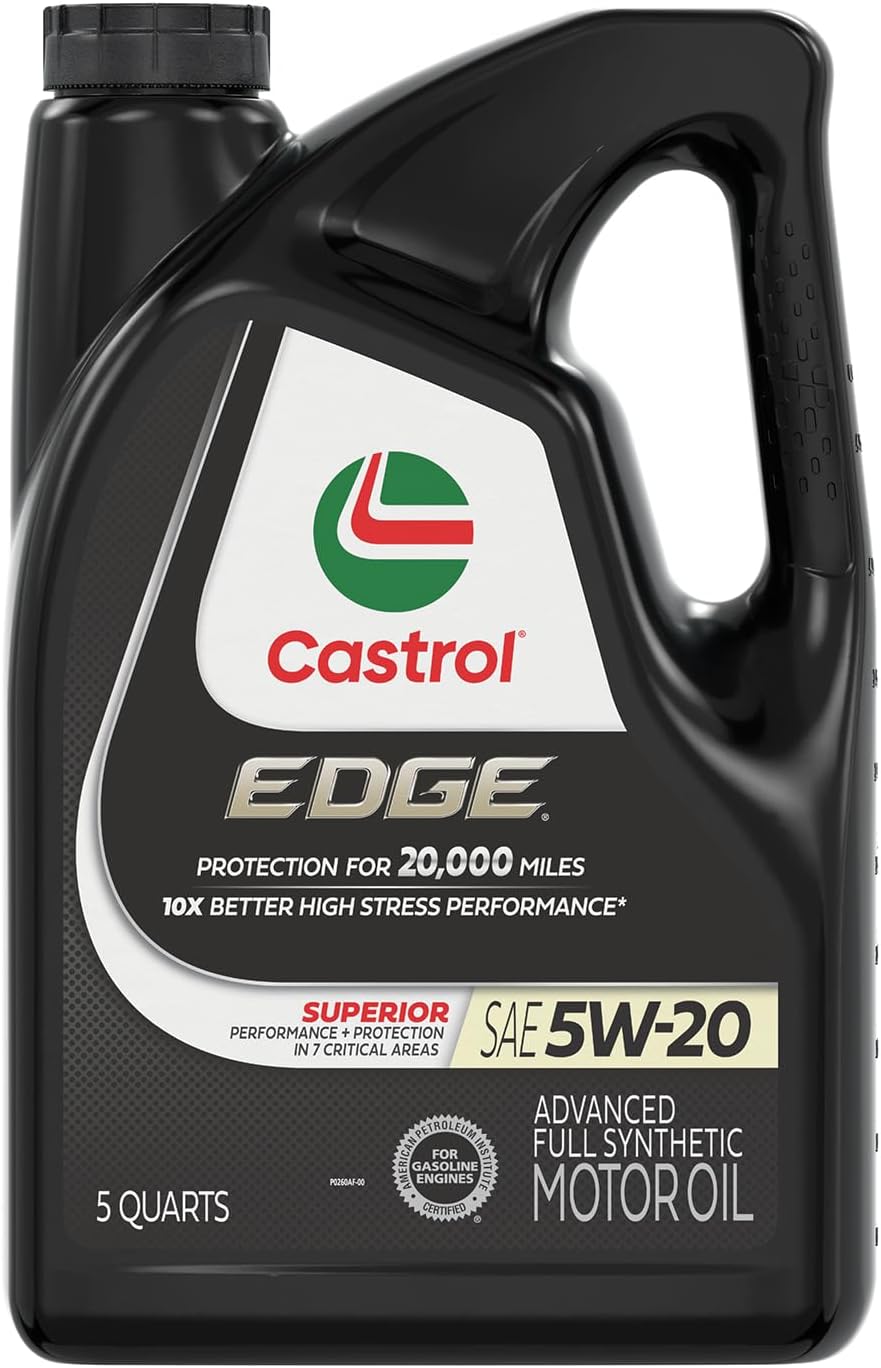
| SAE Viscosity Grade | 5W-20 |
|---|---|
| Container Type | Jug |
| Liquid Volume | 5 Quarts |
| Compatible Vehicle Type | Car, Truck |
Castrol EDGE 5W-20 is a full synthetic motor oil designed to protect engines from wear while maintaining stable viscosity at high temperatures. It is used like any quarts-per-change engine oil: drain the old oil, replace the filter, and refill to the manufacturer recommended level. Notable features include Castrol’s proprietary additive technology aimed at reducing sludge and deposits, improved high temperature performance, and extended oil life claims that support longer intervals between changes. In real-world use this oil helps keep moving parts lubricated, resists breakdown under heat, and can support marginal gains in fuel economy by reducing friction. Limitations for the scope of thicker 5W-30 needs are clear: this 5W-20 grade is lighter at operating temperature than 5W-30 and therefore is not the thicker synthetic grade targeted for hotter-running or heavily tuned engines that call for 5W-30; check your vehicle’s specification before choosing a different viscosity. The product comes in a 5 quart jug and carries broad vehicle fit guidance for cars and trucks.
Best for: Buyers who prioritize factory-recommended 5W-20 viscosity, engine cleanliness, and extended drain intervals for everyday driving and mild performance use.
Less Ideal for: Owners running hotter, heavily tuned, or turbocharged engines that require the thicker 5W-30 grade should choose a 5W-30 synthetic instead.
- Full synthetic formulation for better high temperature stability and reduced sludge
- Proprietary additives designed for wear protection and engine cleanliness
- Suitable for longer oil change intervals per manufacturer claims
- Packaged in a 5 quart jug that covers most oil change needs
- Viscosity grade is 5W-20 so it is thinner at operating temperature than 5W-30 oils and not ideal where 5W-30 is specified
Verdict: This pick targets owners seeking a thicker synthetic grade for hotter running conditions, turbo/tuned engines, or models that specify 5W-30.
7. Subaru 6-Quart Synthetic Motor Oil 0W-20 with Genuine Oil Filter and Gasket Kit
Best 6-Quart / Large Capacity Kit

| Viscosity Level | 0W-20 (Low to Medium) |
|---|---|
| Container Type | Bottle |
| Liquid Volume | 6000 ml |
| Automotive Fit Type | Vehicle Specific Fit |
This kit is designed to let you perform a complete oil service without mixing bottles: it includes six quarts of Subaru 0W-20 synthetic motor oil plus a genuine Subaru engine oil filter and crush gasket. It is packaged for vehicle-specific fitment and aimed at modern Subaru 4-cylinder engines covered in the fitment list. In practice the full-quart supply simplifies home maintenance or a quick shop service because you get factory-quality lubricant and filter matched to Subaru specifications. Notable features include genuine OEM filter elements intended to trap microscopic contaminants and the factory crush gasket for a proper drain seal. The main practical benefit is convenience and assurance of factory-compatible parts for models that require 6 quarts of oil. Limitations are that the kit is specific to certain Subaru 4-cylinder years and configurations, so verify the fitment for your Outback before buying, and buyers needing a different viscosity or turbo-specific oil will need a different kit.
Best for: Buyers who want a single, vehicle-specific kit that supplies enough factory-quality oil and the correct Subaru filter and gasket to complete a full service on compatible Subaru 4-cylinder cars.
Less Ideal for: Drivers who need turbo-specific oil, a different viscosity, or who own vehicles outside the listed model years should choose a different product.
- Complete 6-quart supply lets you finish a full oil change without buying extra bottles
- Includes a genuine Subaru engine oil filter for factory-quality filtration
- Crush gasket included for correct drain sealing and leak prevention
- Factory-matched 0W-20 oil formulation suitable for Subaru 4-cylinder engines listed in fitment
- Fitment limited to specified Subaru 4-cylinder model years and is not suitable for turbocharged engines requiring different oil
Verdict: Pick this option when you need a bigger supply—multi-quart packs or 6‑quart kits—to complete a full service without buying multiple single bottles.
Choosing the Right 2026 Subaru Outback Engine Oil: Key Factors to Consider
Viscosity Rating and Climate
Viscosity affects oil flow at startup and protection at operating temperature. For the 2026 Subaru Outback and the 2020-present range, choose a viscosity grade that matches ambient temperatures you commonly encounter.
Lower first-number grades improve cold-start flow and reduce wear during short trips in colder climates, while higher second-number grades maintain film strength under sustained highway speeds and hotter conditions. Using the incorrect viscosity can increase engine wear or reduce fuel economy, so consult the owner's maintenance recommendations and weight your local winter and summer temperatures when selecting between options such as 0W-20 and 5W-30.
Synthetic Vs Conventional Base Stocks
Synthetic motor oils typically offer better thermal stability, lower volatility, and improved flow characteristics compared with conventional oils. For Subaru boxer engines, synthetics help maintain consistent lubrication film strength and resist breakdown during high-load or long-distance driving.
If you prioritize extended drain intervals, consistent fuel economy, and strong cold-start protection, synthetic formulations are generally preferable. Conventional oils may be acceptable for light use or older engines with very high mileage, but they usually require shorter service intervals and can form deposits more readily under severe conditions.
Manufacturer Approvals and Industry Specs
Verify that the oil meets Subaru recommendations and relevant industry standards. Look for API service categories and ILSAC or manufacturer-specified approvals where applicable for the 2026 Outback and the 2020-present models.
These specifications ensure the additive package and performance characteristics have been tested for wear protection, emissions system compatibility, and deposit control. Using oils without appropriate approvals can affect warranty considerations and long-term engine health.
Additive Package and Deposit Control
A robust additive suite helps keep the engine clean and protects key components. Detergents and dispersants prevent sludge and varnish, anti-wear additives protect camshafts and bearings, and friction modifiers influence fuel economy.
For direct-injection and boxer engines, deposit control around piston rings and valve trains is important to maintain compression and oil consumption levels. Consider oils with proven detergent performance and low volatility to reduce the chance of varnish and sludge during mixed driving cycles.
Mileage Considerations and High-Mileage Formulas
As mileage increases, engines can develop greater internal clearances and higher oil consumption. High-mileage engine oils include conditioners that help reduce leaks and address seal hardening, and they often have formulations aimed at controlling consumption.
For Outbacks with significant miles, a high-mileage-specific formulation may help maintain sealing and reduce oil use between changes. However, monitor consumption and condition; if an engine is burning oil excessively, address underlying mechanical causes in addition to selecting an appropriate oil.
Service Interval and Oil Change Practices
How frequently you change oil affects the value of extended-drain formulations. If you perform regular oil changes on schedule, you may prioritize basic protection and cost. If you prefer longer intervals, choose oils with proven oxidation resistance and shear stability.
Also consider filter quality and driving conditions: frequent short trips, towing, or dusty roads accelerate contamination and may require shorter intervals regardless of oil choice. Match your oil selection to the maintenance routine you can reliably follow.
Choosing the Right Viscosity for Your Driving Conditions
Selecting the correct viscosity is the first step in matching an oil to your Outback. If you live in consistently cold regions or frequently start the vehicle in subfreezing temperatures, choose a lower cold-grade rating to improve circulation during startup. For mild climates and heavier loads, a slightly higher operating-grade viscosity can preserve film strength on long highway runs.
Consult the owner's maintenance recommendations for baseline guidance, then adjust based on your driving patterns. Short trips, stop-and-go traffic, and frequent towing place different demands on the oil than steady highway driving, and those factors may tip the balance toward one viscosity over another.
- Cold climates benefit from lower cold-start viscosity for reduced wear
- Hot or heavy-load driving favors higher operating viscosity for film strength
- Follow manufacturer guidelines as a starting point before adjusting for conditions
When to Consider High-Mileage or Condition-Specific Oils
High-mileage formulations include seal conditioners and additives designed to address common wear patterns in older engines. If your Outback has accumulated significant miles and you notice increased oil consumption or minor leaks, a high-mileage oil can be a useful interim measure.
For engines with normal consumption and healthy compression, standard synthetic oils often provide superior oxidation stability. Reserve high-mileage products for when you need the specific benefits they offer, and continue to monitor engine condition after switching.
- High-mileage oils can help reduce leaks and consumption in aging engines
- They are not a substitute for mechanical repairs if consumption is excessive
- Monitor oil levels closely after switching to assess effectiveness
Oil Change Intervals and Maintenance Best Practices
Oil change frequency should reflect both the oil type and your driving habits. Synthetic oils can often support longer intervals because they resist breakdown, but severe driving conditions require more frequent service. Always pair oil changes with a quality filter replacement to ensure contaminants are removed.
Record the date, mileage, and oil used at each service to track patterns in consumption and performance. If you perform an oil change yourself, follow torque specifications and use correct drain plug and filter seals to avoid leaks.
- Use a high-quality filter with every change
- Log oil changes to identify consumption trends
- Adjust intervals for towing, off-road, or frequent short-trip driving
Synthetic Blends Vs Full Synthetic: Practical Differences
Synthetic blends can offer a middle ground between conventional and full synthetic oils, providing better cold-start performance and stability at a lower cost than full synthetics. For many Outback owners, blends are an acceptable compromise when budget constraints are a factor.
Full synthetic oils deliver the best thermal and oxidative stability, which supports longer service intervals and marginally better fuel economy in some conditions. If you prioritize maximum protection, particularly for modern engines, full synthetics are the safer long-term choice.
- Blends may be suitable for routine daily driving with regular changes
- Full synthetics are preferred for extended drains and harsh conditions
- Consider local climate and driving style when deciding between formulations
Understanding Labels: API, ILSAC, and Manufacturer Guidance
Oil labels list important certifications and performance claims. API service categories and ILSAC designations indicate tested protection levels for wear, deposits, and emissions. Ensure the oil meets the categories recommended for the 2026 Outback and the 2020-present model range.
Manufacturer guidance may specify preferred viscosity grades or approvals. While many oils are backward-compatible with older specs, selecting an oil that explicitly meets recognized standards reduces uncertainty and aligns with warranty and maintenance expectations.
- Check API and ILSAC labels for industry-tested performance
- Prefer oils that meet manufacturer's recommended viscosity and specs
- Avoid oils with unclear or missing certification information
Still looking for the perfect fit?
Select your Subaru Outback configuration to see the most relevant Engine Oils recommendations
How We Chose the Best 2026 Subaru Outback Engine Oil
We selected oils based on criteria that matter for the 2026 Subaru Outback and the broader 2020-present model range. Key evaluation points included viscosity compatibility, lubricant base and additive package, OEM and industry specifications, thermal and shear stability under mixed driving conditions, and protection for the horizontally opposed boxer engine design. We prioritized oils that support cold-start performance, deposit control, and sustained film strength during highway cruising and towing scenarios relevant to Outback owners.We also considered suitability for varying mileage levels and the presence of detergents, dispersants, and anti-wear additives that reduce valve train and bearing wear. Oils lacking required manufacturer or industry certifications, or those with unclear viscosity or base-stock information, were excluded. Data sources included technical specifications, SAE viscosity classifications, and independent lab stability indicators when available. The final shortlist represents a balance of daily driving reliability, long-drain stability, and compatibility with the engine's needs within the stated model years.
Our full evaluation process is outlined in our review methodology.
FAQ
How often should I change the engine oil in a 2026 Subaru Outback?
It depends on the oil type and driving conditions. Synthetic oils can often support longer intervals, but frequent short trips, towing, and severe conditions require more frequent changes. Follow the owner's maintenance schedule as a baseline and adjust based on actual use.
Can I switch between 0W-20 and 5W-30 in my Outback?
Switching viscosity grades is possible if both meet manufacturer recommendations for the vehicle and climate. However, consider how your driving habits and local temperatures affect protection; consult the owner's guidance and avoid changes that could increase oil consumption or wear.
Is synthetic motor oil necessary for the 2026 Outback?
Synthetic motor oil offers superior thermal stability and cold-start protection, which benefit modern engines. While not strictly required in every situation, synthetics are recommended for drivers seeking longer drain intervals, better fuel economy, and stronger protection under varied driving.
Should I use a high-mileage oil if my Outback has over 100,000 miles?
High-mileage oils can help by conditioning seals and reducing minor leaks or consumption. They are a practical option for older engines, but they do not replace the need for mechanical repairs if wear or consumption is severe.
Does switching oil brands affect engine health?
Switching between reputable oil formulations that meet the right specifications is generally fine. Allow a short break-in period and monitor oil levels; sudden changes in consumption or performance may indicate other engine issues.
What should I check after an oil change on my Outback?
Verify the oil level after a short run and check for leaks around the drain plug and filter. Also confirm the correct viscosity and that a proper filter was installed. Keep a record of the service date and mileage.
Final Verdict
Prioritize viscosity compatibility, manufacturer specifications, and the oil base when choosing engine oil for your 2026 Subaru Outback within the 2020-present scope. Consider full synthetic oils for the best protection, especially if you seek longer drain intervals or drive in varied climates. High-mileage formulations can be helpful for older engines but are not a substitute for needed mechanical repairs.Weigh the tradeoffs between cold-start flow, operating film strength, and additive benefits to match an oil to your driving style. With those priorities in mind, you should be able to select an oil that balances protection, fuel economy, and maintenance convenience for your Outback.
Explore More:
- Check out all Subaru Outback parts & accessories
- Explore Fluids & Chemicals
- Browse all Accessories
