

Note: This article contains affiliate links. If you click on these links and make a purchase, I may earn a small commission at no extra cost to you. This helps support my research and content. Read my full affiliate disclosure here.
Your 2005-2009 Subaru Outback has specific needs driven by its age, mileage, and engine design. Using the right engine oil affects cold starts, long-term wear, and fuel economy. This guide looks at the top options compatible with the 2005-2009 Outback and explains why those choices matter for daily driving, towing, and high-mileage ownership. We shortlisted six top-rated engine oils and evaluated them across real-world concerns like viscosity match, protection against wear, and compatibility with recommended service intervals.Below you will find the shortlisted options and clear criteria to help you pick the oil best suited to how you drive and maintain your Outback.
Looking for other parts? See all Subaru Outback parts & accessories.
Top Picks at a Glance
| Best Overall Engine Oil Top-performing synthetic oil that balances protection, viscosity, and price | Mobil 1 Advanced Full Synthetic Motor Oil 5W-20, 5 Quart |  |
| Best Budget Engine Oil Lowest-cost option that still meets manufacturer viscosity and specs | Castrol GTX Full Synthetic 5W-30 Motor Oil, 5 Quart Jug |  |
| Best 0W-20 Engine Oil Low-viscosity oil for improved cold-start performance and fuel economy | Castrol EDGE High Mileage 0W-20 Full Synthetic Motor Oil, 5 qt |  |
| Best 5W-30 Engine Oil Mid-viscosity synthetic suited for wider temperature ranges and durability | Castrol EDGE 5W-30 Advanced Full Synthetic Motor Oil, 5 Qt |  |
| Best High-Mileage Engine Oil Formulated for engines with many miles to reduce leaks and wear | Castrol EDGE High Mileage 5W-20 Full Synthetic Motor Oil, 5 qt |  |
| Best Multi‑Quart Eco Pack Larger multi-quart pack that lowers per-quart cost for DIYers | Castrol EDGE 5W-30 Advanced Full Synthetic Motor Oil, 6-Quart EcoPack | 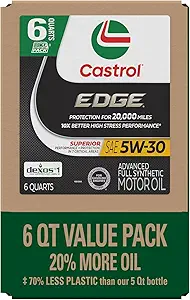 |
1. Mobil 1 Advanced Full Synthetic Motor Oil 5W-20, 5 Quart
Best Overall Engine Oil

| SAE Viscosity Grade | 5W-20 |
|---|---|
| Type | Full Synthetic |
| Liquid Volume | 4.73 Liters |
| Compatible Vehicle Type | Car, Truck |
Mobil 1 5W-20 is designed to protect engines across a wide range of driving conditions and supports extended drain intervals up to 10,000 miles or one year as stated by the manufacturer. For a 2005–2009 Subaru Outback, this grade offers reliable low-temperature flow for easier cold starts and fast oil circulation, while the synthetic formulation resists oxidation and helps control deposit formation. The oil meets current ILSAC GF-6 performance markers that target issues like low-speed pre-ignition and timing chain wear, which are relevant to modern engines and can benefit longevity. Practical benefits include strong high-temperature protection, improved heat control, and consistent viscosity under load, making it a good fit for routine DIY oil changes. Limitations to note are grade selection and manufacturer guidance: some Subaru engines from that era specify 5W-30 or other viscosities depending on engine and climate, so confirm the factory-recommended viscosity before switching to 5W-20, and follow any service interval recommendations rather than relying solely on the extended-change claims.
Best for: A DIYer seeking a top-tier synthetic oil that prioritizes engine protection, cold-start performance, and the option for longer drain intervals for regular highway and mixed driving with a 2005–2009 Subaru Outback.
Less Ideal for: Drivers who prefer to strictly adhere to original factory-specified viscosities for every operating condition or who are following shop-prescribed short-interval service schedules.
- Full synthetic formula that resists oxidation and sludge for cleaner engines
- Good low-temperature flow for easier cold starts
- Meets ILSAC GF-6 standards addressing LSPI and timing chain wear
- Rated for extended protection up to 10,000 miles or one year per manufacturer guidance
- Viscosity choice may not match every 2005–2009 Subaru Outback engine or climate; verify owner manual specifications
Verdict: Choose this slot for the single best oil choice that offers strong wear protection, reliable cold starts, and broad compatibility for most DIY maintenance jobs.
2. Castrol GTX Full Synthetic 5W-30 Motor Oil, 5 Quart Jug
Best Budget Engine Oil

| Viscosity grade | 5W-30 |
|---|---|
| Volume | 5 Quarts |
| Type | Full Synthetic |
| Meets specifications | API SP, ILSAC GF-7 |
| Compatible vehicle type | Car, Truck |
Castrol GTX Full Synthetic 5W-30 is a full synthetic engine oil designed to reduce wear, resist viscosity breakdown, and control sludge in everyday and severe driving conditions. In practice you pour this 5 quart jug during routine maintenance or an oil change to provide protection for up to the manufacturer-recommended interval; Castrol advertises endurance for 10,000 miles between changes under certain conditions. The formula targets seven critical areas including high-temperature stability, sludge control, and wear protection, and it meets modern specifications such as API SP and ILSAC GF-7 as well as GM and Ford approvals. For a 2005–2009 Subaru Outback this oil offers the factory-quality protection needed for regular highway and mixed driving while helping maintain engine cleanliness and fuel efficiency. The main limitation is that extended intervals depend on driving habits and Subaru's maintenance recommendations, so stick to the service schedule appropriate for your Outback and driving conditions.
Best for: A practical Subaru Outback owner who wants a factory-quality full synthetic 5W-30 that meets modern specs and delivers reliable protection for routine highway and mixed-use driving.
Less Ideal for: Drivers planning aggressive extended oil-change intervals beyond manufacturer guidance or those who require vehicle-specific dealer-only formulations should consult Subaru recommendations or a specialist product.
- Full synthetic formula for better high-temperature stability and reduced viscosity breakdown
- Advertised protection against sludge and engine wear to help keep engines cleaner
- Meets current industry specs including API SP and ILSAC GF-7 and several OEM approvals
- 5 quart jug size covers most single oil changes without needing multiple containers
- Extended 10,000-mile change interval is conditional and may not apply for all driving patterns or Subaru recommendations
Verdict: Pick this when you want an affordable motor oil that meets required specs and gives acceptable protection between routine oil changes.
3. Castrol EDGE High Mileage 0W-20 Full Synthetic Motor Oil, 5 qt
Best 0W-20 Engine Oil
| SAE J300 Viscosity Grade | 0W-20 |
|---|---|
| Compatible with Vehicle Type | For vehicles with over 75,000 miles |
| Liquid Volume | 5 Quarts |
| Unit Count | 160.0 Fluid Ounces |
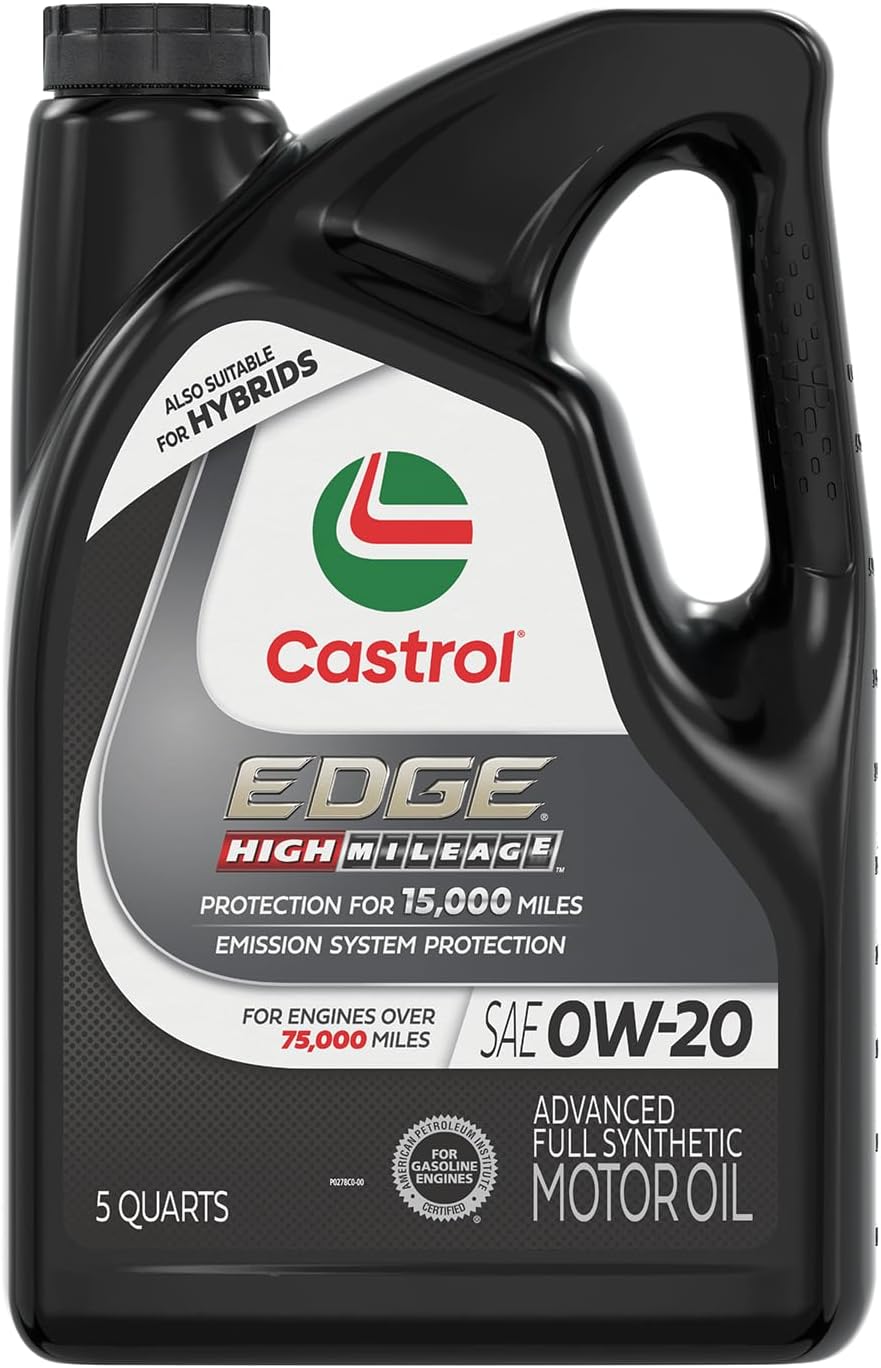
Castrol EDGE High Mileage 0W-20 is a full synthetic motor oil tailored for vehicles with over 75,000 miles and is designed to improve lubrication right after cold starts while addressing wear, deposits, and emission system concerns. In everyday use on a 2005–2009 Subaru Outback this oil will flow quickly at low temperatures for faster oiling on startup and aims to reduce sludge and oil burnoff that older engines commonly face. Notable features include phosphorus replacement technology intended to be gentler on the catalytic converter, additives targeting corrosion and timing chain wear, and a claim of up to 15,000 miles between oil changes under recommended conditions. The practical benefits are smoother startup protection, reduced deposit formation, and potential modest fuel economy gains due to the 0W-20 viscosity. Trade-offs include reliance on manufacturer service intervals and the fact that extended drain claims depend on driving habits and vehicle condition, so more frequent checks are prudent for high‑mileage Subarus.
Best for: Drivers of 2005–2009 Subaru Outbacks who prioritize quicker oil circulation at cold starts and want an oil formulated to address common high‑mileage issues while retaining modest fuel‑economy benefits.
Less Ideal for: Drivers who prefer very frequent conventional oil changes, have severe oil consumption or engine leaks, or need a different viscosity than 0W-20 for their Subaru configuration.
- Fast low-temperature flow for quicker lubrication on cold starts
- Additives formulated to reduce sludge, leaks, and oil burnoff in older engines
- Phosphorus replacement technology to lessen impact on the catalytic converter
- Formulated for extended drain intervals under proper conditions
- Extended 15,000‑mile drain interval may not suit all driving styles or aging engines
Verdict: Use this slot for oils formulated as 0W-20 when the goal is faster oil circulation on cold starts and modest fuel-economy gains.
4. Castrol EDGE 5W-30 Advanced Full Synthetic Motor Oil, 5 Qt
Best 5W-30 Engine Oil

| SAE J300 Viscosity Grade | 5W-30 |
|---|---|
| Liquid Volume | 5 Quarts |
| Compatible with Vehicle Type | Car, Truck |
| Unit Count | 160.0 Fluid Ounces |
Castrol EDGE 5W-30 is a full synthetic engine oil designed to maintain a slightly thicker protective film at operating temperature, making it a good choice for engines that see higher heat or heavier loads. It is used like any conventional engine oil: drain the old oil, replace the filter, and refill with the specified 5 quarts. Key features from the formulation include enhanced thermal stability to resist breakdown at high temperature, additives aimed at reducing sludge and deposits, and anti-wear chemistry to protect moving parts under pressure. In practice that translates to cleaner combustion chambers, consistent viscosity through long intervals, and less metal-to-metal wear during spirited driving or sustained highway loads. It carries industry approvals beyond current API and ILSAC standards and is marketed for extended drain capability. Limitations to note are that extended-change claims depend on driving conditions and service intervals recommended by the vehicle maker, and some owners tracking fuel economy gains may see modest differences depending on engine condition and driving style.
Best for: Buyers who want a 5W-30 oil that stays a bit firmer at operating temperature to protect engines under higher heat or heavier loads, and who prioritize engine cleanliness and wear protection.
Less Ideal for: Drivers who strictly follow short, frequent oil-change schedules for warranty reasons or those required to use a different viscosity by the vehicle manufacturer should choose a product that matches their exact service spec.
- Full synthetic formula for better high-temperature stability and reduced sludge formation
- Formulated to provide stronger wear protection under high load conditions
- Maintains 5W-30 viscosity for consistent protection and potential fuel economy benefits
- Available in a 5 quart jug suitable for most passenger car oil changes
- Extended drain interval claims vary with driving conditions and must follow manufacturer service recommendations
Verdict: Select this slot for 5W-30 oils when you need a slightly thicker operating viscosity that helps protect under higher temperatures and heavier loads.
5. Castrol EDGE High Mileage 5W-20 Full Synthetic Motor Oil, 5 qt
Best High-Mileage Engine Oil

| SAE J300 Viscosity Grade | 5W-20 |
|---|---|
| Compatible with Vehicle Type | For vehicles with over 75,000 miles |
| Container Type | Bottle |
| Liquid Volume | 160 Fluid Ounces |
Castrol EDGE High Mileage 5W-20 is a full synthetic oil formulated to help older engines maintain sealing, reduce deposits, and limit oil burnoff. It is typically used during routine oil service in vehicles showing higher mileage and light oil consumption; pour it in during an oil change and expect the same fill volume and service intervals as recommended for 5W-20. Notable features include Castrol’s Phosphorus Replacement Technology to lower phosphorus levels that can harm the catalytic converter, dispersants and detergents to control sludge, and additives aimed at corrosion and timing-chain wear protection. For a 2005–2009 Subaru Outback that calls for 5W-20, this oil offers cleaner operation and reduced volatility compared with conventional oils, which can help with modest oil consumption and preserve emission system components. Limitations: it is a universal 5W-20 and does not replace checking Subaru’s specific service requirements for synthetic grade or alternative viscosities under heavy towing or extreme climates.
Best for: Drivers of 2005–2009 Subaru Outbacks looking to reduce oil consumption and protect emission components while extending the life of a higher-mileage engine.
Less Ideal for: Those running nonstandard viscosities for extreme climates, heavy towing, or aftermarket engine modifications should consider oils matched to those specific demands instead.
- Formulated specifically for high-mileage engines to help condition seals and reduce oil burnoff
- Phosphorus Replacement Technology reduces harmful phosphorus to protect the catalytic converter
- Detergents and dispersants help control sludge and keep older engines cleaner
- Addresses timing-chain and general wear protection to extend engine life
- Specified only in 5W-20 viscosity so not suitable if a different factory viscosity is required
Verdict: This slot is for oils blended to condition seals, reduce burn-off, and protect older engines showing higher mileage and small oil consumption.
6. Castrol EDGE 5W-30 Advanced Full Synthetic Motor Oil, 6-Quart EcoPack
Best Multi‑Quart Eco Pack
| SAE Viscosity Grade | 5W-30 |
|---|---|
| Container Type | Jug |
| Compatible with Vehicle Type | Car |
| Liquid Volume | 192 Fluid Ounces |
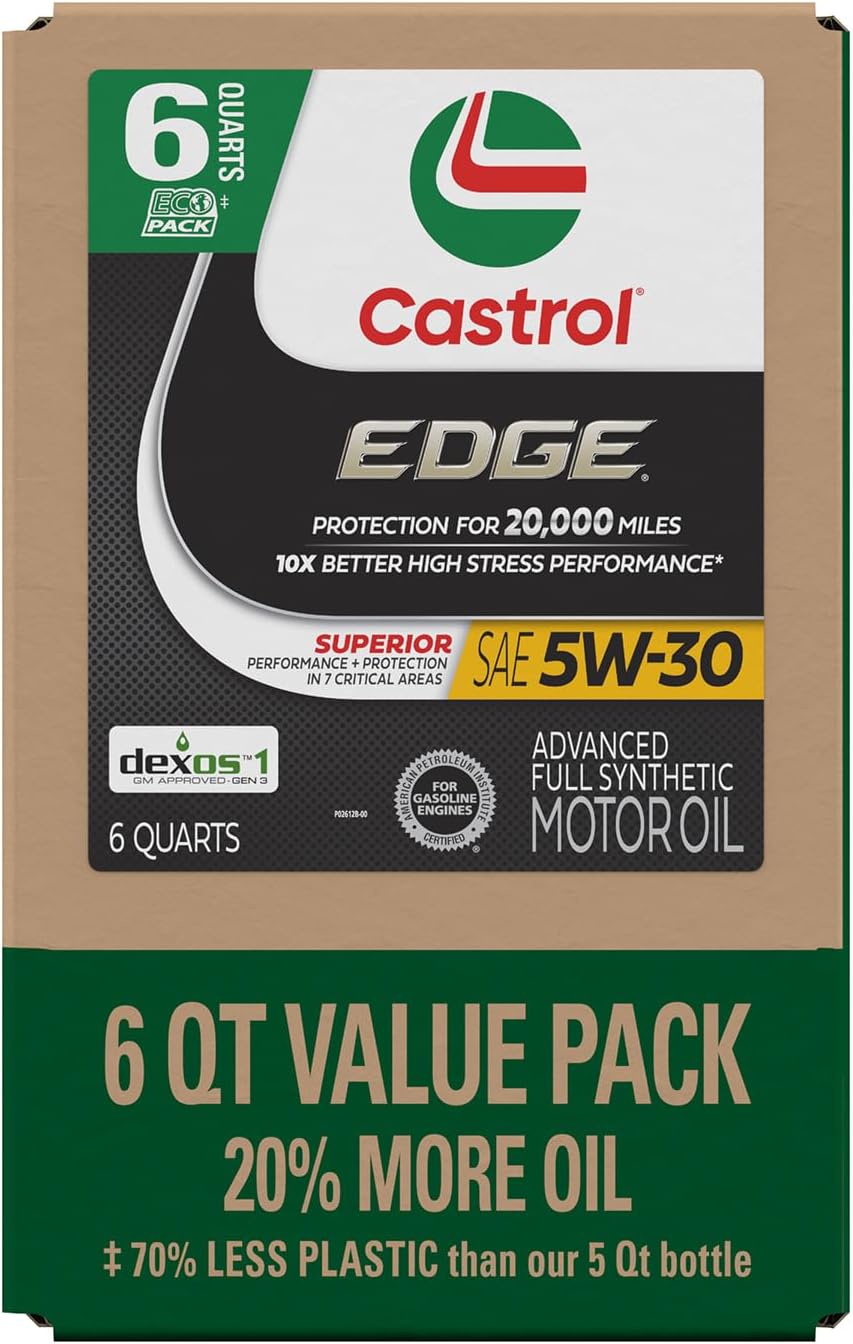
This Castrol EDGE 5W-30 6-quart EcoPack is a full synthetic motor oil formulated to protect engines while stretching oil-change intervals, making it a practical choice for routine self-service maintenance on a 2005–2009 Subaru Outback. The formula targets high-temperature stability, wear protection, and deposit control to keep an older engine cleaner and preserve performance. It also includes phosphorus reduction chemistry to be gentler on the emission system and catalytic converter. The large 6-quart pack cuts per-quart costs and reduces packaging compared with single jugs, so you can keep enough oil on hand for multiple changes. Note that the 5W-30 viscosity should match your owner's manual or mechanic recommendation for your Outback's engine and climate; users who require a different viscosity or factory-specified oil should choose accordingly. For DIYers who do regular oil changes, this pack balances protection and convenience.
Best for: Owners who perform their own regular oil changes on a 2005–2009 Subaru Outback and prioritize lower per-quart cost and having multiple changes' worth of factory-quality full synthetic oil on hand.
Less Ideal for: Buyers who need a different viscosity grade for specific engine variants or who must strictly follow a manufacturer-specified alternative oil formulation.
- Six-quart eco pack reduces per-quart cost and provides enough oil for multiple DIY changes
- Full synthetic formulation aimed at high-temperature stability and sludge prevention
- Claimed additive chemistry to reduce leaks, burnoff, and engine deposits
- Phosphorus reduction technology designed to be kinder to the emission system
- Viscosity is fixed at 5W-30 so it may not match all Subaru Outback engine recommendations or climate needs
Verdict: This slot fits bundled or eco-pack oil offerings that cut per-quart price and are ideal for owners who do frequent self-service oil changes.
Choosing the Right 2005-2009 Subaru Outback Engine Oil: Key Factors to Consider
Viscosity Grade and Cold-Start Performance
Viscosity determines how easily the oil circulates on startup and how well it protects at operating temperature. For the 2005-2009 Outback, selecting the correct SAE grade reduces wear during cold starts and helps maintain proper oil pressure.
Thicker oils can protect high-mileage engines by maintaining film strength at operating temperature, while lower-viscosity oils improve cold-flow for better pumpability in cold climates. Consider the climates you drive in and the engine's current condition. If you live where temperatures drop sharply, an oil with stronger low-temperature flow will minimize wear at startup. Conversely, if your Outback has high mileage or shows signs of oil consumption, choosing a slightly higher operating viscosity within Subaru guidelines can help maintain oil pressure and reduce leakage.
Synthetic Vs Conventional Formulation
Full-synthetic oils offer more uniform molecules, better thermal stability, and stronger protection against oxidation. For an aging 2005-2009 Outback engine, synthetic formulations can provide extended protection during long highway runs and resist breakdown during high-heat conditions, which matters for longevity.
Conventional oils and synthetic blends can still be appropriate when following interval and mileage expectations, and they are sometimes preferable if an engine has specific seals or consumes oil. Weigh benefits like extended drain tolerance and film strength against factors such as existing engine condition and maintenance habits to decide which formulation fits your car.
Additives and Anti-Wear Protection
Additive packages — including anti-wear agents, detergents, and dispersants — play a major role in keeping the Outback's engine clean and protected. Anti-wear additives help protect cam lobes, lifters, and bearing surfaces that are critical to the boxer engine design used in these models.
Detergents and dispersants keep sludge and varnish from forming, which matters for engines that have seen variable maintenance histories. Choose oils with robust detergent content if the vehicle has longer oil-change intervals or previous evidence of deposit formation. Corrosion inhibitors and seal conditioners can also help preserve older gaskets and reduce leaks.
Mileage and Engine Condition
The current mileage of your Outback should influence your oil choice. High-mileage engines often benefit from formulations that include seal conditioners and slightly higher viscosity ranges to reduce oil consumption and help maintain compression.
If the engine has low miles and a clean service history, lower-viscosity full-synthetic oils can provide the best fuel economy and cold-start protection. For engines with higher miles or known oil consumption, look for oils labeled for high-mileage use or those that balance thicker operating viscosity with additives that protect seals and reduce blow-by-related wear.
Manufacturer Recommendations and Warranty Considerations
Always cross-check oil viscosity and performance specs against Subaru's recommendations for the 2005-2009 Outback. Using an oil within the manufacturer's specified grades helps maintain oil pressure, emissions performance, and general engine health. It also aligns with any remaining warranty or service documentation you may follow.
Where Subaru specifies multiple acceptable grades based on climate, choose the grade that best fits your driving conditions and seasonal extremes. If you deviate from factory recommendations for performance reasons, do so with an understanding of potential tradeoffs in seal compatibility and oil consumption.
Recommended Viscity Choices by Climate and Use
Choosing a viscosity depends on both the climate where you drive and how you use the vehicle. For temperate climates with moderate winters, a mid-range grade that balances cold start flow and operating protection is appropriate. In colder regions, prioritize lower cold-flow numbers to reduce wear during start-up.
If you tow, haul, or frequently drive at sustained highway speeds, select an oil with strong high-temperature film strength to protect bearings and cam components. For high-mileage daily drivers, a formulation that maintains slightly higher operating viscosity can help reduce oil consumption and preserve pressure.
- Cold climates: favor oils with superior low-temperature pumpability.
- Hot climates or heavy loads: prioritize high-temperature film strength.
- High mileage: consider oils with seal conditioners and higher operating viscosity.
When to Consider a High-Mileage Formula
High-mileage engine oils include additives aimed at shrinking or conditioning seals, reducing leaks, and controlling oil consumption. If your Outback has notable oil consumption, visible seepage, or higher than average miles, a high-mileage formula can help address these issues without requiring mechanical intervention immediately.
These formulas also tend to include detergents that neutralize deposits that accumulate over time. They are not a cure-all for mechanical problems, but they can extend service life and improve drivability for owners who want to postpone engine overhauls.
- Useful for engines with over 75,000 miles or signs of seepage.
- Helps reduce visible oil consumption and improve compression retention.
Oil Change Intervals and Monitoring
Oil change frequency should reflect the oil formulation and driving conditions. Full-synthetic oils often allow longer intervals due to better oxidation resistance, but for older engines it is prudent to monitor oil level and condition closely rather than simply extending intervals.
Check oil level between changes and inspect for unusual smells or exhaust smoke that could indicate consumption or contamination. Adjust interval lengths if you routinely drive in severe conditions like frequent short trips, stop-and-go traffic, or on dusty roads.
- Inspect oil level monthly for high-mileage vehicles.
- Short trips and cold-weather driving increase the need for more frequent changes.
Seal Compatibility and Leak Prevention
Aging engines may have brittle or softened seals; some modern formulations include conditioners that help maintain seal pliability and reduce leaks. When selecting oil for a 2005-2009 Outback, ensure the formulation is compatible with common elastomers used in Subaru engines to avoid accelerated deterioration.
If you notice new leaks after switching oils, revert to a formulation tested on similar engines and monitor. The right oil can slow leak progression, but it cannot permanently repair degraded seals.
- Look for oils that note compatibility with older engines or include seal conditioners.
- Monitor for new leaks after any oil change, especially when switching formulations.
Fuel Economy Tradeoffs
Lower-viscosity oils can yield small fuel economy gains by reducing parasitic drag, but they must still provide sufficient film strength for the Outback's engine. The net fuel benefit is most noticeable on highway drives and with modern full-synthetic formulations.
If maximum fuel economy is a priority, choose a lower-viscosity synthetic that still meets wear protection needs. For older or worn engines, prioritize protection over marginal fuel savings.
- Expect modest fuel gains with lower-viscosity full-synthetic oils.
- Prioritize protection if the engine shows wear or consumes oil.
Still looking for the perfect fit?
Select your Subaru Outback configuration to see the most relevant Engine Oils recommendations
How We Chose the Best 2005-2009 Subaru Outback Engine Oil
We selected oils by applying vehicle-specific technical and practical filters to ensure each pick suits the 2005-2009 Subaru Outback engine characteristics. Key criteria included viscosity compatibility with Subaru-recommended grades for this year range, proven wear protection in similar flat-four and boxer-style engines, and compatibility with common maintenance intervals for older vehicles. We prioritized oils formulated to control sludge and deposits in engines with moderate to high miles and those that maintain viscosity under varied temperatures typical for owners who drive year-round.Additional evaluation dimensions included additive package quality for anti-wear and corrosion inhibition, compatibility with seals and gaskets found in aging engines, and suitability for conventional, synthetic blend, or full-synthetic preferences based on durability needs. Oils were also judged on cold-flow properties for start-up protection and on how they support fuel economy without compromising film strength.We excluded any formulations lacking appropriate viscosity grades for the 2005-2009 Outback, oils without clear performance specifications, and products intended exclusively for diesel engines. The final list focuses on options that balance protection, longevity, and everyday drivability for this specific Subaru model.
Our full evaluation process is outlined in our review methodology.
FAQ
What viscosity should I use for a 2006 Outback in cold climates?
For cold climates, choose an oil with stronger low-temperature flow characteristics within Subaru's recommended viscosity range. Lower cold-start viscosities improve pumpability and reduce wear during startup, which matters if temperatures frequently fall below freezing.
Can I switch from conventional to full-synthetic in my high-mileage Outback?
You can switch to full-synthetic, and many owners do for better thermal stability and oxidation resistance. However, monitor for changes in oil consumption or leaks after switching, and consider a gradual transition if the engine has significant wear.
How often should I check oil level on a 2005-2009 Outback?
Check oil level at least once a month for higher-mileage or older engines, and before long trips. Regular checks help catch consumption trends early and prevent damage from low oil.
Is a high-mileage oil necessary if my Outback has 90,000 miles?
High-mileage oil can be beneficial at 90,000 miles because it includes seal conditioners and additives that address consumption and deposits. It is a useful maintenance choice but not a substitute for addressing underlying mechanical issues.
Will switching to a lower-viscosity oil improve fuel economy noticeably?
Lower-viscosity oils can provide modest fuel economy improvements, especially on steady highway driving. The gains are usually small and should be balanced against the need for adequate protection in an older engine.
Final Verdict
Pick an engine oil that matches the Outback's operating conditions and the engine's current condition. For colder climates or frequent short trips, prioritize low-temperature flow. For high-mileage engines or those showing oil consumption, favor formulations that offer slightly higher operating viscosity and seal-conditioning additives.Balancing viscosity, formulation type, and additive package will yield the best combination of protection and drivability. Prioritize engine protection over marginal fuel economy gains if the motor shows signs of wear, and monitor oil level and condition closely after any change to maintain reliability.
Explore More:
- Check out all Subaru Outback parts & accessories
- Explore Fluids & Chemicals
- Browse all Accessories
