

Note: This article contains affiliate links. If you click on these links and make a purchase, I may earn a small commission at no extra cost to you. This helps support my research and content. Read my full affiliate disclosure here.
Choosing the right oil for your Subaru Outback 2.5i matters for everyday reliability, fuel economy, and long-term engine health. The 2.5i engine responds to correct viscosity, additive chemistry, and oil-change cadence, so picking an appropriate oil can reduce wear, control deposits, and keep performance steady across seasons.This guide presents five shortlisted engine oils suited to the Subaru Outback 2.5i. We considered cold-start protection, high-temperature stability, compatibility with Subaru recommendations, and suitability for higher-mileage engines. Read on to see the evaluation criteria used and practical notes to help you select the right oil for your driving habits and maintenance schedule.
Looking for other parts? See all Subaru Outback parts & accessories.
Top Picks at a Glance
| Best Overall Engine Oil The best all-around oil balancing protection, efficiency, and longevity | Subaru Synthetic Motor Oil SAE 0W-20, 5-Quart (SOA427V1325) |  |
| Best Budget Engine Oil A low-cost oil that still meets basic protection standards | Castrol GTX Full Synthetic 0W-20 Motor Oil, 5 Quart |  |
| Best Premium Engine Oil A higher-end formulation offering extra protection and longer drain intervals | Mobil 1 High Mileage Full Synthetic Motor Oil 0W-20, 5 Quart |  |
| Best Full Synthetic Engine Oil A fully synthetic formulation for maximum thermal stability and protection | Valvoline Advanced Full Synthetic SAE 0W-20 Motor Oil, 5 qt |  |
| Best High-Mileage Engine Oil Formulated to condition seals and reduce oil consumption in older engines | Valvoline MaxLife Full Synthetic High Mileage 5W-20 Motor Oil (5 qt) |  |
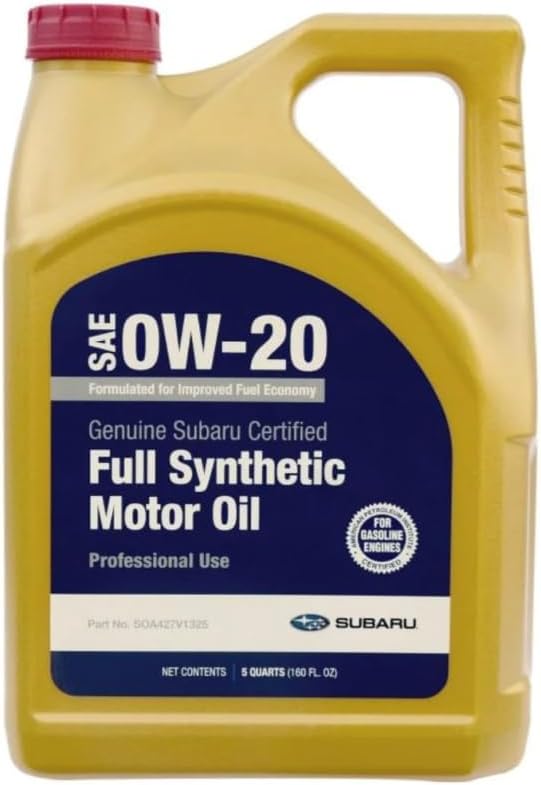
1. Subaru Synthetic Motor Oil SAE 0W-20, 5-Quart (SOA427V1325)
Best Overall Engine Oil
| Viscosity Grade | SAE 0W-20 |
|---|---|
| Liquid Volume | 5 Quarts |
| Compatible with Vehicle Type | Car |
| Flash Point | 227 Degrees Celsius |
This Subaru synthetic 0W-20 is a factory-quality motor oil formulated for modern Subaru flat-four engines and sold in a 5-quart container for complete service fills. It provides low-viscosity flow at cold starts for easier cranking and rapid oil circulation, while its formulation supports stable film strength at operating temperature to reduce wear on bearings and valvetrain parts. Typical use is routine oil and filter changes on Subaru 2.5-liter naturally aspirated engines; the 0W-20 grade helps with fuel-efficiency gains compared with thicker oils and meets the thermal and viscosity needs of the platform. Because this is a genuine Subaru part, fitment and formulation are matched to factory recommendations, simplifying service decisions. Limitations are that it is a single SAE grade so drivers who run their Outback harder or use extended drain intervals may prefer oils with different specifications or aftermarket performance formulations. Also this brand-specific oil may be priced higher than equivalent synthetic blends from independent manufacturers.
Best for: Drivers who prioritize following factory service recommendations for their Subaru and want a genuine, straightforward synthetic oil choice for routine maintenance of the 2.5i engine.
Less Ideal for: Drivers seeking high-mileage formulations, motorsport or turbocharged performance oils, or extended drain-interval oils should consider specialty aftermarket options instead.
- Factory-formulated for Subaru engines to match manufacturer recommendations
- 0W-20 viscosity offers improved cold-start flow and potential fuel-efficiency benefits
- Sold in a 5-quart container suitable for a full oil change without mixing
- Full synthetic base provides stronger film protection and thermal stability than conventional oil
- Single SAE grade may not suit heavy-duty or high-performance driving and extended drain intervals
Verdict: The best overall engine oil delivers the optimum mix of wear protection, thermal stability, and fuel-efficiency benefits for most drivers and maintenance schedules.
2. Castrol GTX Full Synthetic 0W-20 Motor Oil, 5 Quart
Best Budget Engine Oil

| SAE viscosity grade | 0W-20 |
|---|---|
| Liquid volume | 5 Quarts |
| Item type | Full Synthetic Motor Oil |
| Meets specs | API SP, ILSAC GF-6 |
Castrol GTX Full Synthetic 0W-20 is a full synthetic motor oil intended for routine oil changes in modern cars and light trucks. It is used like any conventional 5-quart jug: pour during an oil change to restore correct engine lubrication and protect moving parts. Notable features include a 0W-20 viscosity grade for cold-start protection, additives targeted at sludge control and high-temperature stability, and claims of extended protection up to 10,000 miles between changes under recommended intervals. In practice the oil delivers strong wear protection and keeps engines clean compared with older conventional oils, while resisting viscosity breakdown during higher-temperature operation. The product meets several industry specifications including API SP and ILSAC GF-6 and lists compatibility with manufacturer requirements such as GM dexos1 Gen 3 and relevant Ford specs. The main trade-off for budget-focused buyers is that while this provides excellent protection, it is a full synthetic formula so it may cost more than entry-level conventional oils, though its durability can offset change frequency for DIYers who follow regular maintenance schedules.
Best for: Cost-conscious DIYers who change their oil on a regular schedule and want reliable wear protection and sludge control without hunting for premium specialty fluids.
Less Ideal for: Drivers who only accept manufacturer-specific or alternative viscosity recommendations should choose oils specified by their vehicle maker instead of a single universal 0W-20 product.
- 0W-20 grade provides strong cold-start lubrication and fuel-efficiency benefits
- Formulated to reduce engine wear and resist viscosity breakdown at high temperatures
- Claims improved sludge protection to help keep engines cleaner over time
- Meets key industry specifications including API SP and ILSAC GF-6
- Full synthetic formulation can be pricier than basic conventional oils
Verdict: The best budget engine oil provides dependable wear protection and acceptable performance at a lower price for cost-conscious DIYers who change oil regularly.
3. Mobil 1 High Mileage Full Synthetic Motor Oil 0W-20, 5 Quart
Best Premium Engine Oil

| Viscosity | 0W-20 |
|---|---|
| Brand | Mobil |
| Vehicle Service Type | Car |
| Size | 5 Quart |
| Model | Extended Performance |
This Mobil 1 High Mileage 0W-20 is a premium full-synthetic oil aimed at engines with higher mileage and longer service intervals. It uses Mobil 1’s Triple Action Formula to reduce friction, prevent sludge and deposits, and help control oxidation so oil life can be extended up to 10,000 miles under recommended conditions. The 0W-20 viscosity gives strong cold-start protection and helps maintain stable film strength at operating temperatures, while the formulation is claimed to lower engine temperatures and support timing chain and LSPI protection compliant with modern GF-6 standards. For a Subaru Outback 2.5i, this oil can help maintain cleanliness and reduce wear in older engines while supporting fuel economy. Note that extended drain claims depend on driving conditions and following manufacturer service recommendations, and some users may prefer following Subaru’s specified intervals rather than stretching drains to the maximum interval stated by the brand.
Best for: Drivers of a Subaru Outback 2.5i who prioritize long oil life, engine cleanliness, and stronger protection for higher-mileage engines while aiming to reduce maintenance frequency.
Less Ideal for: Drivers who strictly follow factory-recommended short service intervals or who prefer non-synthetic oils and those seeking oils specified for unusually heavy-duty towing or motorsport use.
- Full-synthetic formulation for strong oxidation and deposit control
- Formulated for extended drain potential up to 10,000 miles under recommended conditions
- 0W-20 viscosity offers excellent cold-start protection and stable operating film
- Meets ILSAC GF-6 for LSPI and timing chain protection relevant to modern engines
- Extended drain recommendation depends on driving style and may not match manufacturer-specified intervals
Verdict: The best premium engine oil is formulated for superior oxidation control, extended drain potential, and enhanced protection under heavier loads or longer service intervals.
4. Valvoline Advanced Full Synthetic SAE 0W-20 Motor Oil, 5 qt
Best Full Synthetic Engine Oil

| Viscosity | 0W-20 |
|---|---|
| Size | 5 QT |
| Flash Point | 200 Degrees Celsius |
| SAE J300 Viscosity Grade | 0W-20 |
| Manufacturer | Valvoline |
Valvoline Advanced Full Synthetic 0W-20 is a modern synthetic motor oil designed to keep engines cleaner and better protected across a range of driving conditions. It is typically used as a factory-quality replacement during oil changes where a 0W-20 grade is required; the formula emphasizes low-temperature flow to limit wear at cold starts and contains additives aimed at deposit control and heat resistance. Practical benefits for a Subaru Outback 2.5i include improved cold-start protection for morning drives, reduced sludge formation for longer intervals between heavy maintenance, and a formulation that supports fuel economy compared with thicker oils. The oil meets current ILSAC and API specifications and lists multiple OEM specifications, which helps with compatibility for vehicles specifying 0W-20. Limitations are that it is only appropriate where manufacturer guidance calls for 0W-20 and that owners seeking specialty high-mileage or diesel-specific formulas should choose a product tailored to those needs.
Best for: Buyers who prioritize maximum cold-start protection, sludge control, and factory-quality full synthetic performance for regular driving and mixed conditions in a Subaru Outback 2.5i.
Less Ideal for: Drivers looking for a specialized high-mileage conditioning formula, diesel oils, or who need a different viscosity than 0W-20 should consider other products.
- Flows well at low temperatures to reduce wear during cold starts
- Claimed improved wear protection versus industry standards for engine longevity
- Additive package targets deposit control and heat resistance to keep engines cleaner
- Meets ILSAC GF-7A and recent API specifications and several OEM requirements
- Only suitable where 0W-20 viscosity is specified so not universal for all engines
Verdict: The best full synthetic engine oil offers the highest level of sludge control, flow at low temperatures, and protection for engines run in varied conditions.
5. Valvoline MaxLife Full Synthetic High Mileage 5W-20 Motor Oil (5 qt)
Best High-Mileage Engine Oil

| SAE J300 Viscosity Grade | 5W-20 |
|---|---|
| Liquid Volume | 5 Quarts |
| Compatible with Vehicle Type | Car, Truck |
| Viscosity Level | Low to Medium |
Valvoline MaxLife Full Synthetic 5W-20 is a high-mileage motor oil designed to protect engines with significant mileage by reducing wear, defending against sludge, and helping manage oil leaks and consumption. It is typically used at oil change intervals in vehicles that have passed the 75,000-mile mark, where hardened seals and increased wear become concerns. The formula includes anti-wear additives and seal conditioners intended to soften and condition gaskets, which can reduce minor leaks and slow oil consumption. Valvoline states improved heat protection and sludge resistance versus industry baselines, which helps maintain cleanliness and reduce thermal breakdown in older engines. As a full synthetic, it also offers consistent low-temperature flow and stable film strength under load. Trade-offs are minimal for this class: it is a vehicle-specific viscosity of 5W-20, so confirm Subaru Outback engine oil spec recommendations before switching, and benefits tied to seal conditioning are gradual rather than instant fixes for major leaks.
Best for: Buyers with Subaru Outback 2.5i that have crossed high-mileage thresholds and want an oil focused on conditioning seals and limiting oil consumption while preserving engine life.
Less Ideal for: Drivers who prefer sticking strictly to factory-recommended oil grades for warranty reasons or who need a different viscosity than 5W-20 should consider alternatives.
- Formulated specifically for high-mileage engines with seal conditioners to help reduce minor oil leaks
- Full synthetic base provides superior heat resistance and stable film strength
- Claims measurable improvements in wear protection and sludge defense versus industry standards
- Available in 5 quart bottle with anti-glug pour spout for cleaner refills
- Only available in SAE 5W-20 viscosity for this listing so not suitable if your engine calls for a different grade
Verdict: The best high-mileage engine oil contains additives to help reduce leaks, condition gaskets and seals, and manage oil consumption in higher-mileage engines.
Choosing the Right Subaru Outback 2.5I Engine Oil: Key Factors to Consider
Viscosity Grade and Climate
Viscosity determines how the oil flows at cold start and how well it maintains a protective film at operating temperature. For the Subaru Outback 2.5i, selecting the correct viscosity grade affects fuel economy, start-up wear, and oil pressure.
In colder climates, a lower cold-viscosity rating helps with faster circulation on startup and reduces crankshaft wear. In hotter or high-load conditions, the high-temperature viscosity index must be sufficient to prevent thinning and maintain hydrodynamic lubrication. Choosing a grade that matches manufacturer guidance while considering local temperatures will help protect bearings, rings, and cam components.
Synthetic Versus Conventional Bases
Synthetic motor oils generally provide better oxidative stability, cleaner combustion chamber behavior, and more consistent viscosity over a wide temperature range. For the 2.5i engine, synthetic bases can improve fuel economy slightly and resist breakdown during extended drain intervals.
Conventional oils may be acceptable for low-mileage, light-use vehicles on short oil-change intervals, but they deteriorate faster under heat and stress. Consider synthetic blends if you want some performance benefits at a midrange cost, or full synthetics for maximum protection and thermal stability for the Outback 2.5i.
Additive Chemistry and Deposit Control
Additives control wear, neutralize acids, and keep pistons, rings, and valves clean. For Subaru engines, good detergency and dispersant performance reduce sludge and varnish that can harm oil passages and variable valve components.
Anti-wear agents like zinc dialkyldithiophosphate and friction modifiers protect cam lobes and bearings, while antioxidant additives slow oil breakdown. Choosing an oil with an effective additive package helps maintain engine efficiency and reduces the chance of deposit-related issues as mileage accumulates.
Compatibility With Emissions and Seals
Oils interact with emissions control systems, PCV components, and engine seals. Some formulations can accelerate seal hardening or contribute to oil consumption, while others are specifically balanced to protect seals and catalytic system function.
For the Outback 2.5i, select oils that meet typical automotive API and manufacturer-recommended specifications to avoid adverse effects on emissions equipment. Oils designed for lower volatility reduce consumption and help maintain stable tailpipe emissions.
High-Mileage Considerations
Higher-mileage engines often exhibit increased clearances and minor oil consumption. Oils formulated for high-mileage engines contain conditioners that can swell seals slightly to reduce leaks and include higher levels of anti-wear additives to protect worn components.
If your Outback 2.5i has significant miles on the clock, choose an oil with seal conditioners and a balanced additive set to address leak prevention and sustain compression. However, be aware these oils can change engine oil consumption behavior and should be chosen with knowledge of the engine's current condition.
Service Interval and Warranty/Specification Compliance
How often you change oil affects which formulation makes sense. Longer drain intervals benefit from oils with strong oxidation resistance and shear stability. Short-interval users can use oils optimized for immediate protection rather than extended longevity.
Always ensure the oil meets the vehicle manufacturer's recommended specifications. Compliance with recognized industry standards indicates the oil has been tested for fundamental performance such as wear protection, deposit control, and viscosity retention.
Choosing the Right Viscosity for Everyday Driving
Viscosity choice balances cold-start protection and high-temperature film strength. For typical daily driving in moderate climates, a mid-range grade that the manufacturer endorses provides the best compromise between fuel economy and wear protection.
If you frequently encounter cold mornings, prioritize a grade with strong low-temperature flow to reduce start-up wear. Conversely, if you regularly tow, carry heavy loads, or drive long highway stretches, make sure the high-temperature viscosity remains stable to protect bearings and pistons.
- Check your owner manual for the recommended and alternate viscosities.
- Use lower cold-cranking viscosity in consistently cold climates.
- Prefer oils with a high viscosity index for thermal stability under load.
Synthetic Oils and Longevity
Full synthetic oils offer improved resistance to thermal breakdown and better shear stability. That can translate to steadier oil pressure and less deposit formation over time, which benefits the tight tolerances of the 2.5i engine.
If you expect longer drain intervals or want consistently clean internals, synthetics often make the most sense. They also help with cold starts and maintain protective film at higher operating temperatures.
- Synthetic oils typically resist oxidation longer than conventional oils.
- They can improve cold-flow characteristics and reduce start-up wear.
When to Consider High-Mileage Formulations
High-mileage engine oils include additives aimed at conditioning seals and reducing leaks. They can be beneficial if your Outback 2.5i has noticeable oil seepage or rising oil consumption compared with factory levels.
However, if the engine is showing no signs of leakage and consumption remains within expected limits, standard formulations with strong detergency and anti-wear properties are usually sufficient.
- Look for seal conditioners if you see minor leaks around gaskets.
- Monitor consumption after switching; high-mileage oils can alter leak behavior.
Oil Change Intervals and Real-World Maintenance
Your driving pattern should determine how often you change oil. Short, stop-and-go trips and heavy-duty use increase contamination and may require more frequent changes. Highway driving is gentler on oil and allows for longer intervals when using quality synthetic oils.
Also consider the oil filter quality and perform routine inspections for leaks and consumption. Keeping a consistent maintenance log helps you assess whether a particular oil is performing as expected in your Subaru Outback 2.5i.
- Adjust intervals based on driving habits rather than calendar alone.
- Use a high-quality filter and check for leaks at each oil change.
Understanding Additives and What They Do
Additive packages are the invisible difference between oils. Detergents keep combustion by-products suspended so they do not form deposits; dispersants handle soot and oxidation byproducts. Anti-wear additives protect metal-to-metal contact points, and friction modifiers can slightly improve fuel economy.
When evaluating oils for the Outback 2.5i, focus on balanced additive chemistry that protects cam lobes, bearings, and piston rings without compromising emissions controls or causing seal hardening.
- Detergents and dispersants maintain cleanliness.
- Antioxidants preserve oil life under heat.
- Anti-wear agents protect high-contact components.
Monitoring Oil Health Between Changes
Regular visual checks of oil level and basic inspection of color and smell can reveal early problems. Dark oil alone is not necessarily a problem, but milky or frothy oil indicates coolant contamination and needs immediate attention.
For more rigorous monitoring, consider periodic oil analysis to track wear metals and contamination. That data helps you determine whether your chosen oil and service cadence are protecting the engine as expected.
- Check level monthly and top up with the same viscosity if needed.
- Watch for changes in consumption and unusual smells.
Still looking for the perfect fit?
Select your Subaru Outback configuration to see the most relevant Engine Oils recommendations
How We Chose the Best Subaru Outback 2.5I Engine Oil
We shortlisted engine oils using vehicle-specific mechanical priorities for the Subaru Outback 2.5i and applied objective editorial filters to ensure relevance and reliability. First, we prioritized viscosity grades that match Subaru recommendations and common operating conditions for the 2.5i engine. Second, we evaluated oil base and additive packages, giving preference to synthetic formulations and additive blends that improve wear protection, deposit control, and oxidation resistance.Third, we assessed cold-start performance and low-temperature flow characteristics since many owners encounter variable climates. Fourth, we considered thermal stability and shear resistance to maintain film strength under highway and towing loads. Fifth, compatibility with emissions systems and seals was a factor to avoid risks to catalytic converters or valve guides. Finally, we favored oils with documented industry certifications and standardized performance claims.We excluded non-automotive lubricants, motorcycle-specific oils, and products lacking clear spec sheets. The resulting picks reflect a balance of viscosity suitability, long-term protection, and practical maintenance considerations for the Subaru Outback 2.5i.
Our full evaluation process is outlined in our review methodology.
FAQ
What viscosity should I use in my Subaru Outback 2.5i?
Use the viscosity range recommended by Subaru in the owner manual adjusted for your climate. Colder climates benefit from lower cold-viscosity grades for better start-up flow, while hotter conditions may require oils with stronger high-temperature film strength.
Is full synthetic oil necessary for the Outback 2.5i?
Full synthetic oils are not strictly necessary but offer advantages like better thermal stability and improved cold-start performance. They are a good choice if you plan longer drain intervals or want added protection under heavy use.
Can I switch to a high-mileage oil if my Outback has many miles?
Yes, high-mileage formulations can help condition seals and reduce minor leaks in older engines. Monitor oil consumption after switching, because these oils can change leak and consumption behavior.
How often should I change the oil in an Outback 2.5i?
Oil-change frequency depends on driving habits. Short trips and stop-and-go traffic usually require more frequent changes than extended highway driving. Follow Subaru recommendations as a baseline and adjust based on usage and oil type.
Will using a different viscosity void my warranty?
Using a viscosity outside the manufacturer's recommendations can risk coverage for oil-related failures. Stay within the recommended viscosity range and ensure the oil meets required industry specifications.
How can I tell if an oil is harming seals or causing consumption?
Watch for increased oil consumption, visible leaks at gaskets, or oil seepage around seals. If consumption rises after an oil change, revert to a formulation known to be compatible with Subaru engines and consult a technician.
Final Verdict
For the Subaru Outback 2.5i, prioritize an oil that matches the manufacturer-recommended viscosity while taking into account your climate and driving habits. Synthetic oils generally offer stronger thermal and cold-start protection, while high-mileage formulations address leak and consumption concerns in older engines.Balance the tradeoffs between longevity, cold-flow performance, and additive chemistry when choosing oil. Follow a maintenance cadence that fits your driving pattern, monitor oil condition and consumption, and select an oil that meets the right specifications to keep the 2.5i running reliably over time.
Explore More:
- Check out all Subaru Outback parts & accessories
- Explore Fluids & Chemicals
- Browse all Accessories
