

Note: This article contains affiliate links. If you click on these links and make a purchase, I may earn a small commission at no extra cost to you. This helps support my research and content. Read my full affiliate disclosure here.
Your Subaru Forester depends on the right synthetic engine oil to protect internal parts, preserve fuel economy, and support reliable cold starts. Using an oil that matches Forester specifications and the way you drive helps avoid premature wear, reduces sludge risk, and keeps oil consumption predictable.This guide shortlists seven top synthetic engine oils suitable for Subaru Forester owners across typical driving conditions. We evaluated each option on viscosity suitability, long-term wear protection, and compatibility with Subaru service intervals so you can pick the best fit for city driving, highway miles, or higher-mileage engines. Read on for the evaluation criteria and practical buying guidance before the product list.
Looking for other parts? See all Subaru Forester parts & accessories.
Top Picks at a Glance
| Best Overall Engine Oil A balanced, top-performing full synthetic with broad compatibility | Mobil 1 High Mileage Full Synthetic Motor Oil 0W-20, 5 Quart |  |
| Best Budget Engine Oil An affordable full-synthetic option that still meets modern specs | Castrol GTX Full Synthetic 0W-20 Motor Oil, 5 Quart Jug |  |
| Best 0W-20 Engine Oil Low-viscosity synthetic suited for engines requiring 0W-20 viscosity | Royal Purple 0W-20 High Performance Synthetic Motor Oil – 5 qt |  |
| Best 0W-16 Engine Oil Extra-low-viscosity synthetic for latest low-viscosity engine specs | Subaru Synthetic Motor Oil SAE 0W-16 5-Quart Container (SOA427V3100) |  |
| Best 5W-30 Engine Oil Versatile 5W-30 full-synthetic for engines and high-temp protection | Subaru Synthetic 5W-30 Motor Oil 5-Quart Bottle (SOA427V1425) |  |
| Best OEM Subaru Engine Oil Genuine OEM-labeled synthetic oil sold singly or in kits | Subaru Synthetic Motor Oil SAE 0W-20 5 Quart (SOA427V1325) |  |
| Best Oil Change Kit (oil + Filter) Complete kit with quarts of synthetic oil plus filter and gasket included | Subaru Oil Change Kit with Genuine Filter, Crush Gasket, and 5 qts 0W-20 Synthetic Oil |  |
1. Mobil 1 High Mileage Full Synthetic Motor Oil 0W-20, 5 Quart
Best Overall Engine Oil

| Viscosity | 0W-20 |
|---|---|
| Brand | Mobil |
| Vehicle Service Type | Car |
| Size | 5 Quart |
| Model | Extended Performance |
This Mobil 1 High Mileage 0W-20 is a full-synthetic motor oil intended to protect older engines while delivering good cold-start flow and extended drain capability. It is commonly used in routine oil changes for vehicles with higher mileage to help reduce deposits, control oxidation, and maintain lower running temperatures. Key features include Mobil 1’s Triple Action formula, multi-grade 0W-20 viscosity for easy starting in cold weather, and a formulation claimed to protect for up to 10,000 miles between changes. In real-world use the oil helps keep internal parts cleaner and can improve fuel economy slightly compared with thicker conventional oils, while still offering protection for modern engines including turbocharged variants. The limitation for this article’s scope is fitment: use only in Subaru Forester engines specified by the manufacturer for 0W-20; owners of engines requiring a different viscosity should follow Subaru’s recommendations. The product is a strong choice for people wanting a dependable, high-mileage synthetic that balances protection, cleanliness, and cold-weather performance.
Best for: DIY-minded Forester owners who prioritize a proven full-synthetic oil that balances engine protection, cold-start performance, and the potential for longer service intervals.
Less Ideal for: Owners who need a different viscosity than 0W-20 or who prefer short, frequent oil-change schedules regardless of manufacturer claims.
- Full-synthetic formula designed to reduce sludge and deposits in higher-mileage engines
- 0W-20 viscosity for reliable cold-start flow and improved fuel economy
- Formulated to help lower engine operating temperatures
- Supports extended change intervals up to 10,000 miles as claimed by the manufacturer
- Extended drain interval is a manufacturer claim and may not suit all driving conditions or service schedules
Verdict: For DIY mechanics who want a reliable, all-around full-synthetic motor oil that balances protection, cold-start flow, and fuel-economy benefits.
2. Castrol GTX Full Synthetic 0W-20 Motor Oil, 5 Quart Jug
Best Budget Engine Oil

| SAE J300 Viscosity Grade | 0W-20 |
|---|---|
| Liquid Volume | 5 Quarts |
| Compatible with Vehicle Type | Car, Truck |
| Automotive Fit Type | Universal Fit |
| Item Type Name | Full Synthetic Motor Oil |
Castrol GTX Full Synthetic 0W-20 is a full-synthetic engine oil formulated to reduce wear, resist viscosity breakdown, and help control sludge in everyday driving. It is typically used for routine oil changes in passenger vehicles where 0W-20 is the recommended grade and can be poured directly from the included 5-quart jug. Notable features include a formulation aimed at high-temperature stability and claimed extended protection up to 10,000 miles between changes under certain conditions, plus compliance with API SP and ILSAC GF-6 specifications and manufacturer Ford and GM listings. In practical terms this oil offers strong anti-wear and cleaning benefits that help keep an engine running smoothly and maintain fuel economy by reducing internal friction. Limitations are that extended drain intervals depend on driving conditions and manufacturer recommendations, so owners should follow Subaru guidance rather than assuming maximum intervals, and this single-viscosity grade only fits engines specified for 0W-20.
Best for: Buyers who want an affordable full-synthetic 0W-20 that meets modern industry standards and provides reliable everyday protection for a Subaru Forester, prioritizing value over longest possible service intervals.
Less Ideal for: Owners planning unusually long drain intervals, track use, or those who need a different viscosity than 0W-20 should choose a product matched to those requirements or follow Subaru service specs.
- Meets current API SP and ILSAC GF-6 standards for modern gasoline engines.
- Formulated for improved wear protection and sludge control compared with industry baselines.
- Sold in a 5-quart jug so it covers a full service for most Subaru Forester oil capacities.
- Claims strong high-temperature stability to resist viscosity breakdown during hard use.
- Widely available and backed by a known brand with documented performance claims.
- Extended 10,000-mile change interval is conditional and may not align with Subaru manufacturer recommendations.
Verdict: For buyers who need a low-cost synthetic oil that meets current API/ILSAC standards and delivers solid protection on a tight budget.
3. Royal Purple 0W-20 High Performance Synthetic Motor Oil – 5 qt
Best 0W-20 Engine Oil
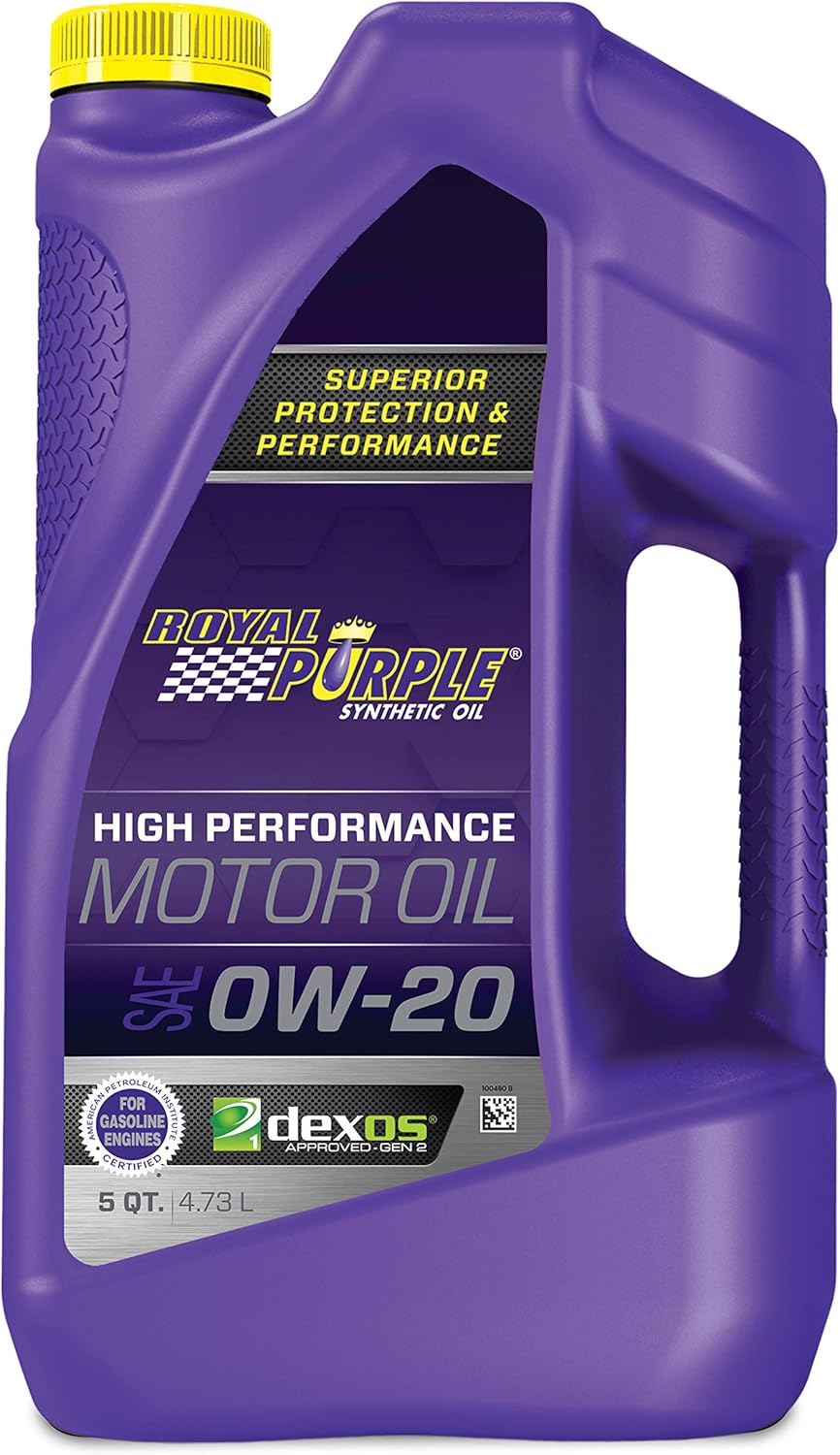
| Viscosity | 0W-20 |
|---|---|
| Liquid Volume | 4.73 Liters |
| API License | API SN / ILSAC GF-5 / Dexos1 1 compatible |
| Container Type | Bottle |
This Royal Purple 0W-20 is a full synthetic motor oil designed to protect engines while improving fuel efficiency and cold-start flow. It is typically used as a direct replacement for factory 0W-20 oils in cars and trucks specified for that viscosity and installs like any standard oil change. Notable features include proprietary additive chemistry that reduces metal-to-metal wear, minimizes sludge and deposits, and addresses low speed pre-ignition concerns in turbocharged GDI engines. Practical benefits you can expect are stronger startup protection, better long-term cleanliness of the valvetrain and pistons, and potential small gains in fuel economy thanks to a low coefficient of friction. Limitations are that it is an aftermarket high-performance blend, so users should follow manufacturer guidance on drain intervals and compatibility with specific engine warranties, and its premium formulation may cost more than basic synthetics. Overall it is aimed at drivers who want a performance-oriented synthetic 0W-20 for everyday and demanding driving conditions.
Best for: Drivers who prioritize strong cold-start protection and reduced engine wear and want a high-performance synthetic 0W-20 for daily driving or more demanding conditions.
Less Ideal for: Buyers who prioritize the lowest possible purchase cost or who must strictly adhere to a dealer-approved oil spec for warranty reasons should consider alternatives.
- Full synthetic formulation for improved cold-start flow and fuel efficiency
- Additive package that reduces metal-to-metal wear and helps prevent sludge
- Formulated to address LSPI in modern turbocharged GDI engines
- Compatible with standard oil-change procedures and vehicle-specific fitment
- Premium performance focus can mean higher cost than basic synthetic 0W-20 options
Verdict: For owners seeking a synthetic 0W-20 formulation that offers excellent cold-start flow and is ideal for engines specified to run 0W-20.
4. Subaru Synthetic Motor Oil SAE 0W-16 5-Quart Container (SOA427V3100)
Best 0W-16 Engine Oil

| Viscosity | 0W-16 |
|---|---|
| Container size | 5 Quart |
| Manufacturer | Subaru |
| Item model number | SOA427V3100 |
This Subaru-branded 0W-16 synthetic motor oil is the factory-recommended low-viscosity oil supplied in a 5-quart container for compatible recent Subaru models. It is designed for routine oil changes to meet the lubrication and viscosity specs called for in newer Subaru powertrains, helping maintain cold-start protection and supporting fuel efficiency benefits associated with 0W-16 grades. Typical use is direct fill during service intervals where the owner manual specifies 0W-16; the five-quart volume suits a full oil change for most small Subaru engines with room for top-off. Using the manufacturer-formulated fluid reduces uncertainty about spec compliance and simplifies maintenance for owners who prefer factory-specified products. The product does not list additive chemistry or certifications on the listing, so technicians should confirm API/ILSAC approvals and capacities against the service manual before use. Packaged as a single 5-quart container, it is straightforward for DIY changes but may be more than needed for partial top-offs.
Best for: Drivers who prioritize using the manufacturer-recommended low-viscosity oil to meet Subaru service specifications and want a ready-to-use 5-quart container for regular oil changes.
Less Ideal for: Buyers seeking detailed specification sheets or aftermarket performance formulations with explicit API/ILSAC callouts should consider products that list those approvals directly.
- Factory-formulated to Subaru specifications for recent models
- Low-viscosity 0W-16 grade supports improved cold-start flow and potential fuel economy gains
- Five-quart container covers a full oil change for most small Subaru engines
- Clear product labeling with manufacturer part number for easy parts matching
- Listing does not show detailed performance approvals or additive package information
Verdict: For drivers who need the newest low-viscosity 0W-16 synthetic oil to meet modern OEM requirements and improve fuel efficiency.
5. Subaru Synthetic 5W-30 Motor Oil 5-Quart Bottle (SOA427V1425)
Best 5W-30 Engine Oil
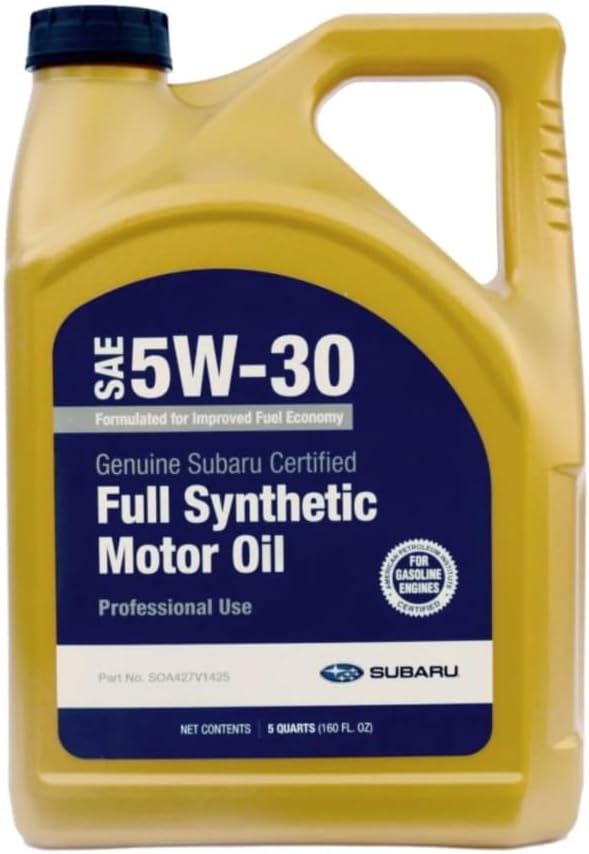
| Manufacturer | Subaru |
|---|---|
| Viscosity | 5W-30 |
| Item model number | SOA427V1425 |
This is Subaru's factory synthetic 5W-30 motor oil packaged in a five-quart bottle designed for routine oil changes and higher-heat driving. It matches Subaru specifications and is intended for use in Subaru turbocharged models such as WRX and STI as well as certain Forester and Legacy GT years listed by the manufacturer. For DIYers the single five-quart container makes topping off or a single oil change straightforward, and the synthetic formulation offers good cold-start flow at 5W and sustained protection at operating temperature. Using the manufacturer-branded oil gives confidence that it meets Subaru's additive and viscosity expectations, which can simplify service decisions. The main limitation is that it is a single viscosity choice, so drivers who prefer 0W-20 or a different viscosity for extreme cold or fuel-economy priorities will need an alternative. Also this is the factory-branded option rather than a performance-focused aftermarket blend, so drivers chasing specialized friction modifiers or motorsport oils should look elsewhere.
Best for: DIY Subaru owners who want a factory-branded synthetic 5W-30 that covers everyday driving and higher-heat conditions and prefer the reassurance of using the manufacturer's recommended oil.
Less Ideal for: Drivers who prioritize the absolute lowest viscosity for maximum fuel economy in very cold climates or those seeking specialty motorsport or performance aftermarket oil formulations.
- Full synthetic 5W-30 formulation provides good cold-start flow and high-temperature protection
- Factory-branded formulation matched to Subaru vehicle requirements
- Five-quart bottle is convenient for a single full oil service or DIY top-up
- Suitable for turbocharged Subaru engines listed in the fitment notes
- Only offered in a single viscosity so not ideal for owners who need 0W-20 or other grades
Verdict: For DIYers who prefer the broader operating-temperature protection of a 5W-30 synthetic oil for everyday and higher-heat driving.
6. Subaru Synthetic Motor Oil SAE 0W-20 5 Quart (SOA427V1325)
Best OEM Subaru Engine Oil
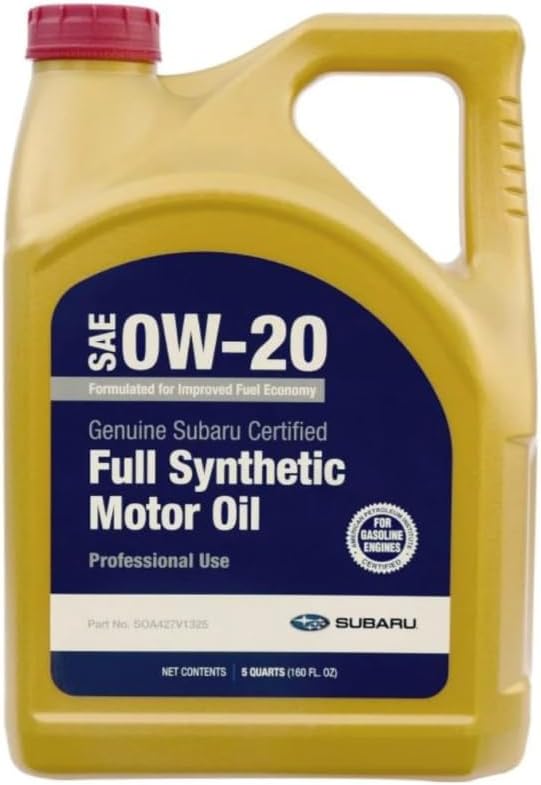
| Viscosity Level | Low to Medium |
|---|---|
| Container Type | Bottle |
| Compatible with Vehicle Type | Car |
| Liquid Volume | 5 Quarts |
| Flash Point | 227 Degrees Celsius |
This Subaru-branded synthetic motor oil is a factory-specified 0W-20 formulation packaged in a 5-quart container for routine oil changes. It is designed to meet Subaru service recommendations for compatible naturally aspirated and some turbocharged engines in current Subaru models and is typically used during scheduled maintenance to maintain lubrication, cold-start protection, and fuel efficiency. Notable features include its OEM branding and vehicle-specific fit designation, which give installers confidence it matches the manufacturer's viscosity and performance expectations. The 0W-20 viscosity provides easy cold starts and helps reduce friction under normal driving, while the five-quart size covers most full oil change needs without buying multiple bottles. Limitations are that it is a single viscosity option so owners who need a different grade for modified engines or extreme climates will need another product, and purchasing factory-branded oil can be pricier than equivalent aftermarket synthetics that meet the same specifications.
Best for: Subaru owners who want the reassurance of factory-branded synthetic oil and prefer using a manufacturer-specified fluid for routine maintenance and service intervals.
Less Ideal for: Drivers running heavily modified engines, competing in extreme motorsport conditions, or those needing a different viscosity for severe climates should consider specialty or alternative synthetic oils.
- Factory-branded formulation matched to Subaru service recommendations
- 0W-20 viscosity offers strong cold-start protection and helps improve fuel economy
- Five-quart bottle size covers most full oil change requirements
- Vehicle-specific fit designation simplifies correct selection for Subaru models
- Only available in a single 0W-20 grade, not suitable if a different viscosity is required
- Typically more expensive than equivalent aftermarket synthetic oils
Verdict: For owners who prioritize factory-branded synthetic oil and want an OEM-specified fluid for peace of mind and fitment confidence.
7. Subaru Oil Change Kit with Genuine Filter, Crush Gasket, and 5 qts 0W-20 Synthetic Oil
Best Oil Change Kit (Oil + Filter)

| Viscosity grade | 0W-20 |
|---|---|
| Liquid Volume | 5 quarts |
| Compatible vehicles | Forester, Outback, Impreza, Ascent, Legacy, Crosstrek |
| Automotive fit type | Vehicle Specific Fit |
This kit supplies everything needed for a single DIY oil change on supported Subaru 4-cylinder models: five quarts of factory-spec 0W-20 synthetic motor oil, a genuine Subaru engine oil filter, and the crush gasket. It is designed for straightforward home maintenance—pour the supplied oil, install the OEM filter, replace the drain plug gasket, and top to the correct level per the owner’s manual. The genuine filter and gasket reduce the risk of fitment or sealing issues that sometimes occur with aftermarket parts, and using the manufacturer-recommended viscosity helps preserve valve timing and engine protection in typical driving. The main limitation is vehicle fitment: the kit targets specific Subaru 4-cylinder models and years, so confirm compatibility before buying. Also it provides a single oil capacity option; vehicles with different capacities or turbo engines may need different quantities or parts. For DIYers who prefer factory-quality components and a one-package oil change, this kit keeps the process simple and reliable.
Best for: DIY Subaru owners who want a single, factory-matched package that contains the correct oil quantity, filter, and gasket to complete a one-stop oil change on compatible 4-cylinder models.
Less Ideal for: Shoppers with turbocharged models, vehicles that require a different oil capacity, or technicians who prefer to mix components from different brands should look elsewhere.
- Includes five quarts of manufacturer-specified 0W-20 synthetic oil for correct viscosity
- Genuine Subaru oil filter reduces fitment and quality uncertainty compared with aftermarket filters
- Crush gasket included for a proper drain plug seal during installation
- Vehicle-specific fit reduces compatibility guesswork for supported Subaru 4-cylinder models
- Only sized for a single oil change quantity and specific 4-cylinder Subaru applications, not for turbo or different-capacity engines
Verdict: For DIY mechanics who want a single purchase that includes the correct quantity of synthetic oil plus the matching filter and crush gasket for a one-stop oil change.
Choosing the Right Subaru Forester Synthetic Engine Oil: Key Factors to Consider
Viscosity and Cold-Start Performance
Viscosity determines how quickly oil circulates on startup and how well it protects tight clearances. For Subaru Forester engines, choose a viscosity grade recommended by Subaru for your model year and typical climate. Lower-number grades flow faster at low temperatures to reduce wear during cold starts, while higher-number grades can maintain film strength at elevated operating temperatures.
Consider seasonal needs if you routinely start the vehicle in freezing conditions. Multi-grade synthetic oils offer broad protection across temperature ranges, so selecting the correct grade affects both immediate wear during startup and long-term bearing protection under load. Matching viscosity to the engine and climate reduces oil consumption and helps maintain consistent oil pressure readings.
Wear Protection and Additive Chemistry
Additive packages determine an oil's ability to prevent metal-to-metal contact and minimize wear. Look for oils with robust anti-wear additives and detergents that keep combustion byproducts dispersed and engine internals clean. For turbocharged Forester variants or engines that frequently operate at higher loads, stronger anti-wear and anti-foaming properties are particularly important.
Effective additives also help resist varnish and sludge buildup, preserving oil passages and variable valve timing components. Good detergent and dispersant balance supports longer drain intervals by keeping contaminants in suspension until the next oil change.
Manufacturer Specifications and Compatibility
Always confirm that the oil meets Subaru-recommended specifications, including API and ILSAC ratings where applicable. Using an oil that does not meet the vehicle manufacturer's requirements can affect engine longevity and potentially impact warranty coverage for newer Foresters.
Compatibility also covers seal and gasket friendliness. Some formulations can cause hardening or shrinkage of older seals, increasing leak risk in higher-mileage engines. Choosing oils with proven compatibility reduces the chance of oil leaks and helps maintain proper oil pressure over time.
Thermal and Oxidation Stability
Oils that resist thermal breakdown and oxidation maintain viscosity and protective properties over extended use. Foresters that do a lot of highway driving or towing-like loads will benefit from oils with strong high-temperature stability to prevent viscosity loss and sludge formation.
Oxidation-resistant formulations support longer service intervals and protect piston rings and cylinder walls from carbon deposits. This stability is also important when the engine experiences repeated high-load episodes, as it keeps the oil from thickening or breaking down prematurely.
Fuel Economy and Friction Modifiers
Some synthetic oils include friction-reducing additives designed to improve fuel economy by reducing parasitic drag in the engine. For owners who prioritize mileage, choosing an oil marketed for fuel economy can yield small but measurable improvements over time.
Balance this benefit against wear protection needs. Low-friction formulations can be excellent for daily commuting and light loads, but engines that require stronger film strength under stress might need a formulation with a different additive balance to protect critical components.
High-Mileage Considerations
Higher-mileage Foresters often have increased oil consumption and may show minor leaks or hardening seals. Oils designed for high-mileage engines include conditioners that help soften seals and reduce seepage while providing cleaning detergents to address accumulated deposits.
These formulations may also contain targeted anti-wear chemistry to protect older engine components. If your Forester has significant mileage, prioritize oils that explicitly address seal conditioning and deposit control to extend engine life and maintain compression.
Which Viscity to Use in Different Climates
Selecting the right viscosity grade depends on ambient temperatures where you drive. In colder climates, lower cold-cranking viscosities help the oil flow quickly at startup, minimizing wear. For moderate to warm regions, a slightly thicker grade can preserve film strength during extended highway runs.
Refer to Subaru's viscosity recommendations for your Forester model year, then choose a synthetic oil within that range. Synthetic formulations consistently provide better flow at low temperatures and maintain viscosity at high temperatures compared with conventional oils.
- Cold climates: prefer lower zero or five-weight low-temperature performance
- Warm climates: ensure adequate high-temperature film strength
- Mixed climates: multi-grade synthetics offer balanced performance year-round
Oil Change Interval Best Practices
Oil change intervals depend on your driving patterns, engine condition, and the type of synthetic oil used. Short trips and start-stop traffic accelerate contamination and water accumulation in the crankcase, warranting shorter intervals compared with mostly highway driving.
Follow Subaru maintenance schedules for baseline intervals, then adjust for severe service if applicable. Use oil analysis or inspection of the oil's appearance and level as additional signals to determine whether earlier servicing is necessary.
- Short-trip driving typically requires more frequent oil changes
- Highway mileage allows longer intervals when using oxidation-resistant synthetics
- Monitor oil level and color between changes to catch increased consumption or contamination
High-Mileage Engine Care for the Forester
If your Forester has high miles on the odometer, choose a synthetic formulation that targets seal condition and deposit control. These oils often include additives that help reduce leaks and remove sludge, which can be beneficial for engines with worn components.
Also pay attention to oil consumption trends. Increased consumption can signal engine wear or ring issues, and selecting an oil with better film strength and seal conditioning can help stabilize consumption rates.
- Consider oils labeled for high-mileage applications for engines with visible leaks
- Regularly check and top off oil between services to prevent running low
- Combine oil care with air-filter and PCV system checks to reduce contaminant ingress
Synthetic Oil and Emissions-System Health
Modern Forester engines rely on clean combustion and healthy catalytic systems. Synthetic oils that burn cleaner and leave fewer deposits support consistent emissions control performance and help preserve oxygen sensor and catalyst life.
Avoid formulations with excessive ash content if your Forester has sensitive aftertreatment systems. Choosing oils that meet current API and ILSAC specs helps ensure compatibility with emissions hardware.
- Low deposit oils help maintain catalyst and O2 sensor performance
- Check API/ILSAC ratings to ensure emissions-system compatibility
- Proper oil selection reduces the risk of fouling sensors over time
Practical Tips for Changing Forester Engine Oil
When performing an oil change, always confirm the correct viscosity and specification for your Forester year and engine. Replace the oil filter with a high-quality unit and torque the drain plug and filter to the correct values to avoid leaks.
Use clean funnels and ensure all surfaces are free of old gasket material. After the change, run the engine briefly and verify oil pressure and absence of leaks, then recheck the level after the vehicle cools.
- Always use a correct-spec filter and inspect the old one for metal particles
- Tighten components to manufacturer torque specs to avoid overtightening
- Dispose of used oil responsibly at an approved facility
Still looking for the perfect fit?
Select your Subaru Forester configuration to see the most relevant Engine Oils recommendations
How We Chose the Best Subaru Forester Synthetic Engine Oil
We focused on attributes that directly affect Subaru Forester owners in real-world driving. Primary evaluation criteria included viscosity fit and cold-start performance, wear protection and additive chemistry, compatibility with Subaru-recommended service intervals and oil change practices, thermal and oxidation stability under sustained highway cruising, and suitability for higher-mileage engines where applicable. We also considered manufacturer specifications for API/ILSAC standards and whether the oil supports emissions-system health, including seal compatibility to limit leaks.To build the shortlist we filtered out oils lacking clear viscosity options for Forester engines and any formulations that do not meet current API or ILSAC performance standards. We excluded conventional-only formulations and specialty racing blends that are inappropriate for normal Forester use. Our selection emphasizes oils that balance protection, fuel economy, and extended drain interval capability consistent with Subaru maintenance recommendations.Finally, we weighted long-term durability metrics and common user needs such as cold-weather startup performance and compatibility with higher-mileage engines to ensure the picks suit a broad range of Forester owners.
Our full evaluation process is outlined in our review methodology.
FAQ
How often should I change synthetic oil in my Subaru Forester?
It depends on driving conditions. Under normal highway driving, many synthetics can safely reach Subaru's standard intervals, while short-trip or severe service requires more frequent changes. Check level and condition regularly.
Can I switch from conventional oil to synthetic in my Forester?
Yes. Switching to synthetic is generally safe and can improve cold-start protection and thermal stability. Monitor seals and oil consumption after the switch, especially in very high-mileage engines.
Which oil viscosity is best if I live in a cold climate?
A lower cold-cranking viscosity such as a 0W or 5W grade helps with cold starts. Choose a multi-grade synthetic within Subaru's recommended viscosity range for your model year to ensure adequate protection at operating temperature.
Is a high-mileage synthetic oil worth it for an older Forester?
Often yes. High-mileage formulations include seal conditioners and detergents that can reduce leaks and clean deposits, which benefits older engines. The effectiveness depends on the engine's existing condition.
Will switching to a lower-viscosity synthetic improve fuel economy?
It can provide modest gains because lower-viscosity oils reduce internal drag. However, improvements are usually small and should be balanced against the need for sufficient film strength under load.
Final Verdict
Prioritize an oil that matches Subaru's recommended viscosity and meets current API/ILSAC performance specifications. For most Forester owners, the best synthetic balances cold-start flow, sustained high-temperature protection, and additive chemistry that preserves seals and cleans deposits. If your vehicle has high miles or shows oil consumption, favor high-mileage formulations with conditioners and stronger anti-wear properties.Weigh tradeoffs between fuel-economy focused low-friction oils and formulations emphasizing film strength. Follow Subaru service intervals and monitor oil level and condition to make an informed choice that extends engine life and maintains dependable performance.
Explore More:
- Check out all Subaru Forester parts & accessories
- Explore Fluids & Chemicals
- Browse all Accessories
