

Note: This article contains affiliate links. If you click on these links and make a purchase, I may earn a small commission at no extra cost to you. This helps support my research and content. Read my full affiliate disclosure here.
If you own a Subaru Forester with a manual gearbox, choosing the right transmission fluid matters for shift quality, gear life, and long-term reliability. Manual gearboxes rely on the fluid to lubricate gears and synchromesh, control friction for clean shifts, and help carry heat away during heavy use.This guide covers the top shortlisted manual transmission fluids for the Subaru Forester Manual across common driving scenarios. We evaluated each option against real-world needs like viscosity stability, wear protection, and compatibility with Subaru-specified friction properties. Read on to see which fluids meet those criteria and why they might suit your Forester.
Looking for other parts? See all Subaru Forester parts & accessories.
Top Picks at a Glance
| Best Overall Transmission Fluid A balanced, widely recommended fluid that fits most manual transmissions | Subaru 75W-90 Extra S Gear & Transmission Fluid (5 Quart Pack) |  |
| Best Budget Transmission Fluid An inexpensive option that covers basic protection and acceptable shift feel | Valvoline Synchromesh Manual Transmission Fluid, 1 Quart |  |
| Best 75W‑90 Manual Gear Oil Viscosity-specific GL‑4/75W‑90 oils made for manual gearboxes and diffs | Subaru 75W-90 High Performance Gear & Transmission Fluid, 1 Quart (SOA427V1700) |  |
| Best Full‑Synthetic Manual Fluid Advanced synthetic manual transmission fluids for long life and smoother shifts | Red Line MT-90 75W-90 GL-4 Synthetic Manual Transmission Fluid, 1 Quart (4-Pack) |  |
| Best Single‑Quart Bottle Choice Single-quart bottles for topping off or one-off manual fluid changes | Red Line 75W80 GL-4 Manual Transmission Gear Oil, 1 Quart |  |
| Best Bulk / Case Pack Multi‑quart packs for full-service jobs or stocking the garage affordably | Valvoline Synchromesh Manual Transmission Fluid, 1 qt, 6‑pack |  |
1. Subaru 75W-90 Extra S Gear & Transmission Fluid (5 Quart Pack)
Best Overall Transmission Fluid

| Viscosity | 75W90 |
|---|---|
| Specification | GL‑5 |
| Unit Count | 160.0 Fluid Ounces |
| Material | Synthetic |
This genuine Subaru 75W‑90 Extra S gear oil is a factory-replacement synthetic formulated for manual transmissions and differentials that call for 75W‑90 GL‑5 fluid. Packaged as five one‑quart bottles, it is intended for DIY service of 5‑ and 6‑speed Subaru manual gearboxes and rear differentials. Customers report smoother shifting and reduced gear noise after service, which aligns with the product focus on high‑pressure protection and consistent viscosity at operating temperatures. Being a brand‑specific fluid, it removes compatibility guesswork for Subaru owners and matches the manufacturer's recommendation. Limitations are that it is specified for manual transmissions only and is a GL‑5 product, so it may not be the right choice where a different spec or automatic transmission fluid is required. Also this is a factory fluid rather than a performance blend, so users seeking extreme-temperature race applications may prefer a specialized gear oil.
Best for: DIY Subaru owners who want a dependable, factory-recommended transmission fluid for routine service and smoother, quieter shifting in their manual gearboxes.
Less Ideal for: People needing a fluid for automatic transmissions, non‑Subaru gearboxes that require a different spec, or enthusiasts seeking specialty race formulations.
- Factory-recommended formulation for Subaru manual transmissions, removing fitment uncertainty
- Synthetic GL‑5 base offers strong film strength and wear protection under load
- Sold as five one‑quart bottles making it convenient for full services and future top‑ups
- Intended only for manual transmissions and not suitable for automatics or applications requiring other fluid specs
Verdict: The all-around pick for DIY mechanics who want a dependable transmission fluid that balances compatibility, protection, and smooth shifting in a range of manual gearboxes.
2. Valvoline Synchromesh Manual Transmission Fluid, 1 Quart
Best Budget Transmission Fluid

| Item Type Name | Manual Transmission Fluid |
|---|---|
| Material | Synthetic |
| Liquid Volume | 1 Quarts |
| Flash Point | 390 Degrees Celsius |
Valvoline Synchromesh is a synthetic manual transmission fluid aimed at restoring smooth shifts and protecting gears in manual gearboxes. It is designed to provide enhanced load carrying, extreme pressure resistance, anti-foam properties, corrosion protection, and stable performance across a broad temperature range. Typical use is as a top-up or routine service fill in manual transmissions that call for an API GL-4 type fluid and compatible OEM part numbers; the bottle size makes it convenient for one-quart top-ups during home maintenance. Practical benefits include improved synchronizer feel during shifts and reliable wear protection under higher loads, which helps extend transmission life without needing specialty racing or long-drain formulations. Limitations are that it is a general multi-vehicle MTF rather than a Subaru-specific factory fluid, so fit should be confirmed against your Forester manual transmission specifications and part numbers before use, and it is intended for routine maintenance rather than extended-interval or heavy-duty performance upgrades.
Best for: Home mechanics who want an affordable, synthetic manual transmission fluid to restore smooth shifting and protect a Subaru Forester’s manual gearbox during routine service.
Less Ideal for: Drivers seeking a long-drain, specialty racing, or heavy-duty transmission fluid intended for modified or competition vehicles should consider performance-oriented alternatives.
- Full synthetic formulation for stable flow and temperature resistance
- Formulated for synchronizer performance to improve shift feel
- Provides extreme pressure and wear protection for gears under load
- Convenient 1-quart bottle suitable for top-ups and DIY maintenance
- Not marketed as a Subaru-specific factory replacement so compatibility should be checked against Forester requirements
Verdict: Choose this if you need a low-cost fluid that restores shifting and protects gears for routine maintenance without premium additives or long drain intervals.
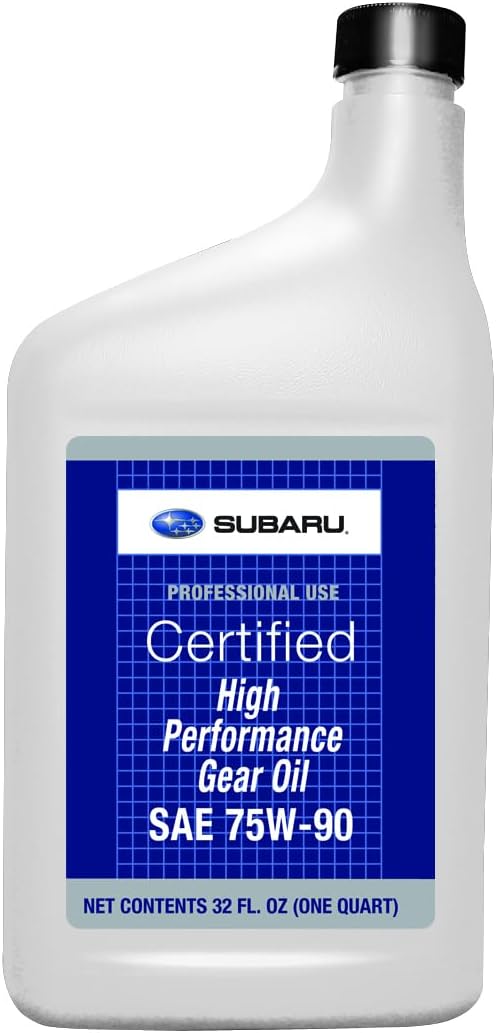
3. Subaru 75W-90 High Performance Gear & Transmission Fluid, 1 Quart (SOA427V1700)
Best 75W‑90 Manual Gear Oil
| Material | Synthetic |
|---|---|
| Viscosity | 75W-90 |
| Liquid Volume | 1 Quarts |
| Manufacturer Part Number | SOA427V1700 |
This is Subaru's genuine 75W-90 synthetic gear and transmission fluid intended for manual gearboxes and differentials. It is used like any manual-transmission lubricant: drain and refill the gearbox or differential to the vehicle maker's fill level and service interval. Notable features include a factory-formulation designed to reduce the common 3-4 shift grind reported on higher-mileage 5-speed WRX units and a synthetic base for consistent viscosity under load. In use it offers smoother, more positive shifts and helps protect gear teeth and bearings during heavy driving or towing. Supplied in a one-quart bottle, it is convenient for single-bottle top-ups or small service jobs. Limitations are that it is a single-spec viscosity grade, so it only applies where 75W-90 is specified, and buying multiple quarts for full transmission or differential jobs can be less economical than larger container options.
Best for: Buyers who need a direct factory-replacement 75W-90 gear oil for Subaru manual transmissions and want a product aimed at reducing shift grind and preserving gearbox durability.
Less Ideal for: People who need other viscosity grades or who prefer to buy large-volume containers for multiple services should look elsewhere.
- Factory-formulated for Subaru manual transmissions and differentials
- Synthetic base maintains stable 75W-90 viscosity under load
- Reported to reduce 3-4 shift grind in higher-mileage 5-speed Subaru transmissions
- Convenient 1-quart bottle for top-ups and small service jobs
- Available only in single-quart packaging which can be less cost-effective for full-service needs
Verdict: Pick this when your transmission spec calls for 75W‑90 gear oil—these formulations protect gears under load and help stop common manual-transmission shift problems.
4. Red Line MT-90 75W-90 GL-4 Synthetic Manual Transmission Fluid, 1 Quart (4-Pack)
Best Full‑Synthetic Manual Fluid

| Viscosity | 75W90 |
|---|---|
| SAE J300 Viscosity Grade | 75W-90 |
| Material | Synthetic |
| Liquid Volume | 128 fluid ounces |
Red Line MT-90 is a full-synthetic 75W-90 GL-4 gear lubricant aimed at manual transmissions and transaxles. It is typically used as a direct-fill or service fluid where GL-1, GL-3, or GL-4 specifications are called for and when brass synchros need protection from reactive sulfurs in heavier GL-5 oils. In real-world use this oil delivers smoother, quicker shifts—especially when cold—thanks to its synchronizer-friendly friction properties, and its synthetic base offers higher thermal stability and resistance to shear compared with conventional gear oils. The 4-quart pack makes it convenient for DIY drain-and-refill jobs and for keeping a spare on hand. Limitations include that it is a GL-4 formulation, so it should not replace fluids specifically required to meet GL-5 or limited-slip specifications, and compatibility must be confirmed against the vehicle maker's manual before use. Expect longer drain intervals and consistent shift feel under higher temperature or load conditions when replacing conventional gear oil with this product.
Best for: A DIYer who prioritizes thermal stability and longer drain intervals and wants a transmission fluid that improves shift quality and protects synchronizers during routine service.
Less Ideal for: People who must meet GL-5 specifications, limited-slip requirements, or who need a manufacturer-specified fluid not listed for GL-4 use.
- Full-synthetic base offers strong thermal stability and shear resistance
- Formulated GL-4 friction characteristics improve synchronizer feel and reduce notchy shifts
- Safe for brass synchros because it lacks reactive sulfurs found in many GL-5 oils
- Sold in a 4-quart pack convenient for DIY drain-and-refill maintenance
- Not suitable where GL-5 or specific limited-slip gear oil is required
Verdict: Designed for DIYers who want maximum thermal stability and extended drain intervals, these full-synthetic fluids improve synchronizer performance and resist breakdown under high stress.
5. Red Line 75W80 GL-4 Manual Transmission Gear Oil, 1 Quart
Best Single‑Quart Bottle Choice

| Viscosity | 185 |
|---|---|
| Flash Point | 232 Degrees Celsius |
| Material | Synthetic |
| Liquid Volume | 32 Fluid Ounces |
This Red Line 75W80 GL-4 gear oil is a full-synthetic manual transmission lubricant sold in a convenient 1-quart bottle for topping off or small jobs. It is designed for GL-1/3/4 applications and emphasizes balanced friction control so synchronizers shift quickly while protecting brass synchros that can be damaged by aggressive GL-5 chemistries. Typical use is topping a manual gearbox after a drain or adding a single quart when diagnosing leaks or mixing to reach the correct fill; the synthetic base improves thermal stability and wear protection compared with conventional gear oils. Notable features from the listing include a high flash point and synthetic formulation, both helpful for long-term stability under load. The main limitation is that this specific grade is GL-4 and intended where GL-4 is required, so it is not a universal replacement for GL-5 differentials or gearsets that call for a different additive chemistry. The quart bottle makes it easy to store and pour small amounts without committing to a full gallon.
Best for: Buyers who need a single-quart solution for topping off or partial service on manual transmissions and who prioritize synchromesh-friendly, synthetic protection.
Less Ideal for: People who need a GL-5 or axle-specific gear oil, or those performing a full-service refill who prefer buying larger-volume containers for multiple quarts.
- Full-synthetic formulation for improved thermal and wear protection
- Balanced friction control aimed at quicker, smoother shifts for manual synchronizers
- GL-4 chemistry that is safe for brass synchros found in many manual transmissions
- Packaged as a single 1-quart bottle ideal for topping off or small repairs
- Not suitable where GL-5 or other specific gear oil chemistries are required
Verdict: This slot highlights convenient 1‑quart bottles ideal for topping off, small repairs, or when you only need a single quart for a partial service.
6. Valvoline Synchromesh Manual Transmission Fluid, 1 qt, 6‑pack
Best Bulk / Case Pack

| Recommended Uses For Product | Transmission Fluid |
|---|---|
| Specific Uses For Product | Lubricating Manual Transmissions |
| Unit Count | 192 Fluid Ounces |
| Liquid Volume | 1 quarts |
This 6‑pack of Valvoline Synchromesh provides multiple quarts of manual transmission fluid in easy‑pour bottles so you can complete a full gearbox service or keep spares on hand. It is designed specifically for lubricating manual transmissions and is packaged to reduce mess during fluid changes. For routine maintenance the bulk packaging is convenient: one purchase covers several drain and refill intervals and saves trips to buy single quarts. Practical benefits include factory‑quality formulation aimed at smooth shifting and wear protection and bottle packaging that makes pouring into the fill/inspection hole simpler. Limitations are that the listing provides no detailed spec sheet or vehicle compatibility by model year, so you should confirm the fluid meets your Forester manual transmission requirements before use. This is a straightforward choice if you want a reputable brand in a case pack rather than single bottles.
Best for: Buyers who plan to perform multiple manual transmission fluid changes or want to stock up ahead of scheduled maintenance and prioritize convenience and brand reliability.
Less Ideal for: If you need a fluid specified to a particular Subaru Forester model year or factory specification, choose a product with explicit compatibility documentation or consult your service manual first.
- Six 1‑quart bottles let you complete a full manual transmission service and keep spares.
- Formulated for manual transmissions to promote smooth shifting and reduce wear.
- Bottle packaging is easy to pour and reduces spillage compared with bulk drums.
- Product listing does not include detailed compatibility specs or explicit Subaru Forester fitment guidance.
Verdict: Choose a bulk or case pack when you need several quarts for a full transmission service or want to stock up for future maintenance at a lower per‑quart cost.
Choosing the Right Subaru Forester Manual Transmission Fluid: Key Factors to Consider
Viscosity Grade And Temperature Stability
Viscosity determines how the fluid flows at different temperatures, which directly affects shift feel and lubrication. On cold starts a too-thick fluid can make shifts feel notchy, while a too-thin fluid at operating temperature can reduce film strength and increase wear.
For a Subaru Forester Manual, pick a fluid with a viscosity range that preserves consistent film strength across ambient conditions you normally encounter. Look for products with proven shear stability so the viscosity does not drop significantly after hours of operation. Temperature stability also ties to protection during towing or spirited driving when the gearbox runs hotter than usual.
Friction Characteristics And Synchro Compatibility
Manual transmissions use synchronizers to match gear speeds during shifts, and fluid friction properties influence how those synchros engage. Fluids with inappropriate friction modifiers can cause slipping, hard shifts, or accelerated synchro wear.
Select a transmission fluid formulated for manual gearboxes with friction characteristics compatible with Subaru synchronizers. Technical documentation or OEM approvals often indicate suitability. When friction behavior is balanced you will notice consistent, smooth shifts and reduced risk of gear grinding over time.
Anti-Wear Additives And Gear Protection
Gears and bearings in a manual gearbox are subject to high contact pressures. Effective anti-wear chemistry, such as zinc and phosphorus compounds in appropriate concentrations, builds a protective film that reduces metal-to-metal contact under load.
For Forester owners who tow, haul, or drive aggressively, prioritize fluids with robust anti-wear packages and evidence of extreme pressure performance. These additives can slow gear pitting and scoring, extending transmission life when combined with correct service intervals.
Seal Compatibility And Material Protection
Transmission seals and gaskets are made from elastomers that can swell, harden, or degrade when exposed to incompatible chemistries. Seal deterioration leads to leaks and contamination, which compromise gearbox health.
Choose fluids that state compatibility with common OEM seal materials or provide industry-standard approvals. This reduces the risk of seal-related leaks and maintains internal lubrication integrity over long service periods.
Thermal And Oxidation Resistance
Heat accelerates oxidation and sludge formation, which thickens fluid and impairs lubrication. A formulation with strong thermal and oxidation resistance will retain functional properties through long service intervals and under sustained loads.
For Foresters used in stop-and-go traffic or mountain driving, thermally stable fluids help prevent viscosity breakdown and corrosive byproducts. Check technical literature for oxidation tests and recommended drain intervals to match your usage patterns.
Service Life And Change Interval Guidance
Service interval recommendations affect long-term cost and gearbox condition. Some fluids are designed for extended drain intervals, while others expect more frequent changes to preserve additive effectiveness.
Consider how often you are willing to service the transmission and choose a fluid with a documented change interval that fits that schedule. More frequent changes with a standard fluid can be as effective as an extended-life fluid that claims longer intervals, so factor maintenance habits into the decision.
Understanding Subaru Manual Transmission Requirements
Subaru manual transmissions have specific friction and lubricant needs that influence shift feel and component longevity. Understanding the gearbox design and the role of the fluid will help you match a product to the Forester's mechanical demands.
Technical sheets and OEM service manuals typically specify a viscosity range and may reference approved fluid specifications. When matching fluids, prioritize those that align with Subaru guidance for manual gearboxes rather than relying on generic ATF or CVT formulations.
- Manual fluid must balance lubrication with the correct friction for synchronizers
- Shear stability and viscosity retention are important for consistent performance
- Seal compatibility prevents leaks and long-term contamination
When To Change Forester Manual Transmission Fluid
Change intervals depend on driving conditions. Normal commuting may allow longer intervals, while towing, frequent hill driving, or track use increases thermal and mechanical stress on the fluid and gearbox.
Inspect fluid condition during routine maintenance. Fluid that appears dark, gritty, or has a burnt odor indicates oxidation and should be replaced regardless of mileage. Refer to the vehicle service schedule as a baseline and shorten intervals when operating under severe conditions.
- Baseline schedule from maintenance guide is a starting point
- Shorten intervals for heavy loads or aggressive driving
- Visual and odor checks can detect early degradation
DIY Fluid Change Tips For Forester Owners
Preparing properly makes a fluid change faster and reduces contamination risk. Work on a level surface, gather appropriate tools, and warm the transmission slightly with a short drive to help fluid drain more completely. Use a clean container for old fluid and avoid introducing dirt into the fill port.
Follow torque specs for fasteners and properly tighten the fill plug to avoid leaks. If you are unsure about the correct fill level procedure, consult the Subaru service manual or a qualified technician for guidance to prevent overfill or underfill conditions.
- Warm the vehicle briefly before draining for better flow
- Use OEM-specified fill procedure to set correct fluid level
- Dispose of used fluid according to local regulations
Signs Your Forester Needs A Transmission Fluid Service
Watch for changes in shift feel such as grinding, notchy engagement, or slipping during gear changes. These symptoms can indicate low fluid level, degraded fluid friction properties, or internal wear. Early attention can prevent more serious damage.
Other indicators include unusual noises from the gearbox, fluid leaks under the vehicle, or metal particles in the drained fluid. If you observe any of these, perform a fluid inspection and service as needed.
- Hard or notchy shifts can signal degraded fluid or synchro wear
- Leaking fluid or metal debris requires immediate attention
- Regular fluid checks help catch issues early
Matching Viscosity To Climate And Driving Style
Colder climates demand fluids that remain fluid enough at low temperatures to permit smooth shifting at start-up. Conversely, hotter environments or aggressive driving require fluids that keep viscosity under high heat to preserve film strength.
Select a viscosity grade that reflects your primary climate and driving habits. If you drive the Forester in a range of temperatures, choose a formulation with a broad operating range and proven shear stability to maintain consistent performance.
- Low-temperature flow improves cold-shift quality
- High-temperature viscosity retention protects gears under load
- Shear-stable formulations reduce viscosity loss over time
Still looking for the perfect fit?
Select your Subaru Forester configuration to see the most relevant Transmission Fluids recommendations
How We Chose the Best Subaru Forester Manual Transmission Fluid
We prioritized fluids that meet Subaru OEM specifications and proven industry performance benchmarks for manual gearboxes. Our selection filters focused on four to six concrete dimensions relevant to Forester owners: viscosity grade and temperature stability, friction and synchro compatibility, anti-wear additive packages, and thermal/oxidation resistance. We also considered material compatibility with seals and shift feel under light and heavy loads.Testing history and manufacturer technical data were reviewed to confirm claimed properties such as shear stability and high-temperature protection. We excluded fluids designed explicitly for continuously variable transmissions or automatic transmissions unless the formulation clearly states suitability for manual gearboxes. Fluids lacking published technical sheets or failing to specify compatibility with Subaru manual gear ratios were not considered. The result is a set of options that balance shifting performance, longevity, and protection for Forester manual transmissions.
Our full evaluation process is outlined in our review methodology.
FAQ
Can I use automatic transmission fluid in a Subaru Forester manual gearbox?
Some ATF formulations are not suitable for manual synchronizers and can alter shift feel or accelerate synchro wear. Use a fluid specified for manual gearboxes or explicitly listed as compatible with Subaru manual transmissions.
How often should I replace manual transmission fluid in a Forester?
Frequency depends on driving conditions. Under normal driving, follow the service schedule as a baseline, but shorten intervals for towing, frequent mountain driving, or heavy load use. Inspect fluid condition visually and by smell to decide if an earlier change is needed.
Will a higher-viscosity fluid make shifts smoother in cold weather?
A higher-viscosity fluid can make cold shifts feel stiffer because it flows less freely at low temperatures. For cold climates choose a fluid with appropriate low-temperature properties to avoid harsh initial shifting while still protecting gears at operating temperature.
What are the signs of worn synchronizers versus bad fluid?
Bad fluid often causes generalized issues such as notchy shifts or slipping that improve after a fresh service. Worn synchronizers typically produce persistent grinding on specific gear changes and may not resolve after a fluid change alone. Inspecting drained fluid for metal particles can help distinguish wear-related problems.
Is it acceptable to top off manual transmission fluid between services?
Occasional top-offs are fine if the same compatible fluid is used and the level is maintained correctly. Repeated low-level top-offs without addressing leaks or contamination can mask underlying issues, so investigate persistent loss rather than rely on topping off.
Final Verdict
Prioritize a manual transmission fluid that matches Subaru's specifications for the Forester, focusing on the right viscosity range, friction behavior for smooth synchro operation, and a strong anti-wear additive package. Balance thermal stability and seal compatibility with the service interval you are willing to follow.Choosing a fluid involves tradeoffs between extended drain convenience and proactive maintenance. If you use the Forester for heavy-duty tasks or spirited driving, favor fluids with proven high-temperature protection and anti-wear chemistry; for normal commuting, a fluid that meets OEM friction and viscosity guidance will keep shifts smooth and the gearbox healthy.
Explore More:
- Check out all Subaru Forester parts & accessories
- Explore Fluids & Chemicals
- Browse all Accessories
