

Note: This article contains affiliate links. If you click on these links and make a purchase, I may earn a small commission at no extra cost to you. This helps support my research and content. Read my full affiliate disclosure here.
Picking the right oil for a Subaru Forester Non-turbo matters for everyday reliability, fuel efficiency, and long-term engine health. Using an oil with the proper viscosity and additive package helps protect bearings, valve trains, and piston rings under the specific thermal and load conditions typical of the Forester Non-turbo powertrain.This guide shortlists six top-rated engine oils that suit the Forester Non-turbo configuration. We evaluated each option for cold-start performance, wear protection, and compatibility with Subaru service intervals so you can choose a formula that fits your driving style and maintenance plan. Read on for the factors we weighed and practical guidance for service and selection.
Looking for other parts? See all Subaru Forester parts & accessories.
Top Picks at a Glance
| Best Overall Engine Oil A balanced, widely compatible synthetic oil with strong protection and OEM approvals | Subaru Synthetic Motor Oil SAE 0W-20, 5 Quart (SOA427V1325) |  |
| Best Budget Engine Oil An affordable full-synthetic or blend option that covers basic protection needs | Castrol GTX Full Synthetic 5W-20 Motor Oil, 5 Quart |  |
| Best OEM 0W-20 Engine Oil Genuine-spec 0W-20 synthetic formulation recommended by OEMs for modern engines | Subaru Engine Oil Change Kit with Genuine 0W-20 Synthetic Oil, Filter, and Gasket |  |
| Best 0W-16 Engine Oil Ultra-low-viscosity synthetic for the newest low-friction engine designs | Subaru Synthetic Motor Oil SAE 0W-16, 5 Quart |  |
| Best Oil Change Kit (Oil + Filter) Complete oil-change packs that include quarts, OEM filter, and crush gasket | Subaru Oil Change Kit: 6 qt Synthetic SAE 0W-20 with Genuine Filter & Crush Gasket |  |
| Best Single-Quart Bottle Individual 1-quart bottles for topping off, mixing, or uneven capacities | Subaru Genuine 0W-20 Synthetic Motor Oil, 1 Quart (SOA427V1310) |  |
1. Subaru Synthetic Motor Oil SAE 0W-20, 5 Quart (SOA427V1325)
Best Overall Engine Oil
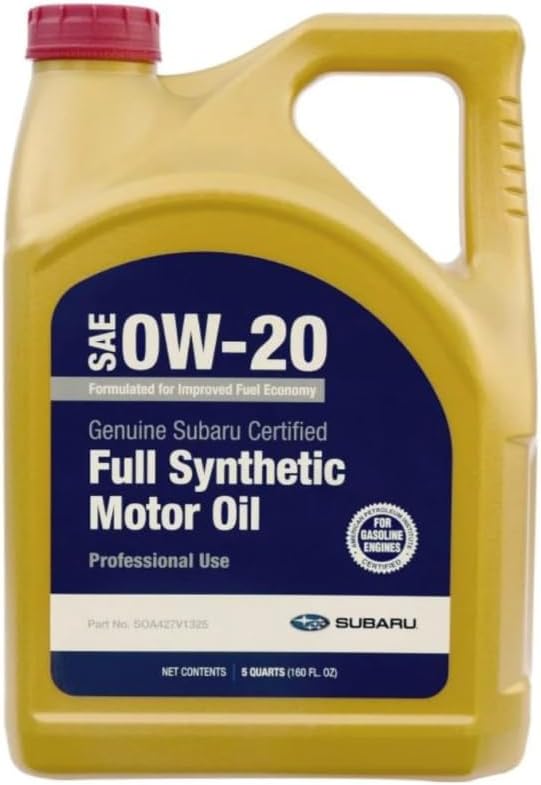
| Viscosity | SAE 0W-20 |
|---|---|
| Liquid Volume | 5 Quarts |
| Container Type | Bottle |
| Compatible with Vehicle Type | Car |
| Flash Point | 227 Degrees Celsius |
This Subaru-branded synthetic 0W-20 is a straightforward factory-quality motor oil packaged in a 5-quart container for routine oil changes. It meets Subaru specifications for modern naturally aspirated engines and is intended for regular service intervals in compatible models. The low-viscosity 0W-20 improves cold-start flow and helps maintain fuel economy while the synthetic base offers thermal stability at higher operating temperatures. Practical benefits include factory compatibility, easy pour packaging, and a single-bottle capacity that covers a typical oil change for many Subaru four-cylinder engines. Limitations are that it is a vehicle-specific, factory-formulated option rather than a universal aftermarket blend, so buyers should confirm fitment for turbocharged models or non-Subaru vehicles. Also it does not list specific performance certifications on the label in the provided data, so users who require particular industry approvals should verify before purchase.
Best for: DIY owners who perform routine oil changes on Subaru four-cylinder non-turbo models and prioritize factory-formulated lubrication for straightforward, reliable protection.
Less Ideal for: Drivers who need an oil specified for turbocharged engines or who require documented third-party performance certifications should consider other oils with those stated approvals.
- Factory-formulated for Subaru engines requiring 0W-20 viscosity
- Synthetic base improves cold-start protection and thermal stability
- 5-quart bottle size matches common DIY oil change needs
- Product details do not list specific industry performance certifications in the provided information
Verdict: The go-to choice for most DIY mechanics who want broad protection, proven performance, and easy availability for routine oil changes.
2. Castrol GTX Full Synthetic 5W-20 Motor Oil, 5 Quart
Best Budget Engine Oil

| Viscosity | 5W-20 |
|---|---|
| Size | 5 Quarts |
| Brand | Castrol |
| SAE J300 Viscosity Grade | 5W-20 |
| Meets specifications | API SP, ILSAC GF-6 |
Castrol GTX Full Synthetic 5W-20 is a full synthetic engine oil intended to protect modern gasoline engines from wear, high-temperature breakdown, and sludge. It is typically used during routine oil changes where the vehicle calls for 5W-20 viscosity. The formula emphasizes wear protection and high-temperature stability, which helps maintain engine cleanliness and supports longer drain intervals compared with conventional oils. For everyday driving in a naturally aspirated Subaru Forester that specifies 5W-20, this oil provides reliable lubrication, keeps deposits down, and can help preserve fuel economy by reducing friction. Limitations include that it is a single-viscosity grade (5W-20) so it must match the Forester's specified viscosity, and synthetic oils can mask engine issues like leaks that become apparent with thinner fluids. Also, any extended-interval claims depend on following manufacturer service recommendations rather than stretching intervals beyond what the vehicle maker prescribes.
Best for: Drivers who want the lowest cost per quart while keeping factory-quality protection for regular maintenance on a naturally aspirated Forester that specifies 5W-20.
Less Ideal for: Drivers who require a different viscosity grade, who use severe duty or high-performance driving beyond regular commuting, or who prefer oils specifically marketed for turbocharged engines.
- Full synthetic formulation for strong high-temperature stability and reduced sludge formation
- Claims improved wear protection to help extend engine life under normal driving
- Suitable for longer oil-change intervals when following manufacturer guidance
- Meets common industry specifications including API SP and ILSAC GF-6
- Only available in 5W-20 viscosity which must match the vehicle specification to be appropriate
- Manufacturer oil-change interval recommendations should be followed rather than assuming very long drains
Verdict: Choose this pick if you prioritize low cost per quart while still getting acceptable engine protection for regular maintenance intervals.
3. Subaru Engine Oil Change Kit with Genuine 0W-20 Synthetic Oil, Filter, and Gasket
Best OEM 0W-20 Engine Oil

| SAE Viscosity Grade | 0W-20 |
|---|---|
| Container Type | Bottle |
| Compatible Vehicles | Select Subaru models (4-cyl non-turbo) |
| Liquid Volume | 5 quarts |
This kit supplies everything needed for a standard oil change on supported Subaru four-cylinder models: five quarts of Subaru-branded 0W-20 synthetic motor oil, a genuine Subaru oil filter, and a replacement crush gasket. It is designed for routine DIY maintenance or quick shop service and follows Subaru viscosity recommendations to maintain proper lubrication and engine protection in cold starts and normal driving. Using factory-specified oil and filter helps ensure compatibility with Subaru engines and supports manufacturer guidance for service intervals. The main practical benefit is convenience: the single kit removes the guesswork about correct oil grade and includes the filter and gasket sized for current Subaru applications. Limitations are that fitment is specific to certain model years and non-turbo four-cylinder engines, and the kit does not include drain plug washer or tools, so buyers should verify capacity and whether additional small parts are needed before starting the job.
Best for: Buyers who want to use factory-specified 0W-20 synthetic oil and genuine Subaru filter components for routine maintenance on supported Subaru four-cylinder models.
Less Ideal for: Do not choose this kit if you own a turbocharged Subaru engine, a non-listed model year, or if you need extra consumables like a drain plug washer or tools included.
- Includes five quarts of factory-specified 0W-20 synthetic oil matched to Subaru recommendations
- Contains a genuine Subaru oil filter and crush gasket for correct fit and sealing
- Kit consolidates parts needed for a routine oil change, simplifying purchase decisions
- Fitment limited to specified Subaru model years and four-cylinder, non-turbo configurations
Verdict: Pick this slot when you want factory-specified 0W-20 synthetic oil that matches manufacturer viscosity and warranty recommendations.
4. Subaru Synthetic Motor Oil SAE 0W-16, 5 Quart
Best 0W-16 Engine Oil

| Viscosity | 0W-16 |
|---|---|
| Package size | 5 Quart |
| Manufacturer | Subaru |
This is Subaru-branded synthetic SAE 0W-16 motor oil sold in a 5-quart container and made to meet the specifications for newer Subaru engines that require the lowest viscosity for improved fuel economy and cold-start protection. It is typically used during routine oil changes for vehicles that call for 0W-16, providing thin flow at startup and stable film strength at operating temperature. Notable features include the factory branding and the OEM part number, which simplifies parts matching and service records. In real-world use the oil should deliver easier cold starts, slightly better highway fuel economy versus heavier oils, and predictable compatibility with Subaru engine seals and systems. Limitations are inherent to the viscosity choice: 0W-16 prioritizes efficiency and low-temperature flow over maximum high-temperature film thickness, so it is best for modern engines specified for this grade rather than older, high-mileage engines that may benefit from a thicker oil.
Best for: Buyers who need a factory-specified 0W-16 synthetic for routine service on Subaru engines and prioritize easy cold starts and improved fuel economy.
Less Ideal for: Drivers with high-mileage or modified engines that typically require thicker oils or who need extreme high-load protection should consider a different viscosity or specialty formulation.
- Factory-branded formulation that matches Subaru part number for straightforward fitment
- 0W-16 viscosity improves cold-start flow and can help marginally reduce fuel consumption
- Sold in a 5-quart container which covers most oil change capacities without multiple purchases
- Synthetic base provides stable protection across normal operating temperatures
- Very low viscosity may not provide ideal film thickness for older high-mileage engines
Verdict: Select this option if your engine calls for 0W-16 or you want the lowest-viscosity synthetic for improved fuel economy and cold starts.
5. Subaru Oil Change Kit: 6 qt Synthetic SAE 0W-20 with Genuine Filter & Crush Gasket
Best Oil Change Kit (Oil + Filter)

| Brand Name | Subaru |
|---|---|
| Viscosity Level | Low to Medium (0W-20) |
| Liquid Volume | 6000 ml |
| Compatible with Vehicle Type | Car |
This kit packages everything needed for a single oil service on supported Subaru 4-cylinder vehicles: six quarts of factory-recommended 0W-20 synthetic oil, a genuine Subaru engine oil filter, and the crush gasket. Designed for DIY routine maintenance, the kit simplifies preparation by matching the correct oil viscosity and quantity called out for those engines and including the filter and gasket so you do not hunt for separate parts. Using factory-quality oil and filter helps protect the engine by removing microscopic contaminants and maintaining recommended viscosity in cold starts and normal driving. The practical benefits are convenience and confidence that components meet Subaru specifications, which can be especially helpful if you follow Subaru service intervals. Limitations are narrow fitment to certain non-turbo 4-cylinder Subaru models and the single-service quantity, so it is not intended for multiple changes or vehicles with different oil requirements.
Best for: DIYers who want a ready-to-use, vehicle-specific oil change kit that eliminates parts guessing and ensures they have the correct oil volume and OEM filter for a single service.
Less Ideal for: People working on turbocharged Subaru engines, owners of vehicles outside the listed model years, or those needing supplies for multiple service intervals should look elsewhere.
- Includes the correct six-quart quantity of factory 0W-20 synthetic oil for one service
- Genuine Subaru oil filter and crush gasket included to match factory replacement parts
- Simplifies a DIY oil change by bundling oil, filter, and gasket in one package
- Factory-formulated oil helps protect engine wear and cold-start performance
- Fitment is limited to specific Subaru 4-cylinder, non-turbo models and years
- Contains only one service worth of oil, so multiple vehicles or extra top-offs require additional purchases
Verdict: This pick is for DIYers who prefer a one-stop kit with the correct oil quantity plus filter and gasket for a convenient service.
6. Subaru Genuine 0W-20 Synthetic Motor Oil, 1 Quart (SOA427V1310)
Best Single-Quart Bottle

| SAE J300 Viscosity Grade | 0W-20 |
|---|---|
| Container Type | Bottle |
| Compatible with Vehicle Type | Car |
| Liquid Volume | 32 fluid ounces |
This genuine Subaru 0W-20 synthetic oil is a factory-formulated one-quart bottle intended for topping off or replacing oil in Subaru engines that specify 0W-20. It delivers the expected benefits of a low-viscosity synthetic: easier cold starts, stable viscosity across temperature ranges, and resistance to oxidation and deposits so the engine stays cleaner over time. The single-quart packaging makes it convenient to carry as a spare, add the exact small amount needed for a top-off, or match the vehicle's specified capacity during partial changes. Because it is Subaru-branded and vehicle-specific, it is engineered to meet the manufacturer recommendations for compatibility and performance. The main limitation is packaging size: this is a single quart, so it is not intended for full multi-quart changes without multiple bottles, and buyers should follow Subaru oil-change intervals and spec guidance when using it.
Best for: Buyers who want a manufacturer-branded single-quart oil to top off between services, keep a matched spare in the vehicle, or add a precise small amount during maintenance.
Less Ideal for: Users planning to perform complete multi-quart oil changes frequently or those who prefer bulk containers for frequent DIY servicing.
- Factory-formulated to meet Subaru specifications for 0W-20 performance
- Single-quart bottle is convenient for topping off or keeping a spare onboard
- Synthetic formulation resists oxidation and helps prevent varnish and deposit buildup
- Low-viscosity 0W-20 improves cold-start protection and consistent flow in varied temperatures
- Single-quart size makes full oil changes less convenient unless multiple bottles are purchased
Verdict: Choose a single-quart bottle when you need to top off between changes, match exact capacity, or keep spare oil on hand.
Choosing the Right Subaru Forester Non-turbo Engine Oil: Key Factors to Consider
Viscosity and Cold-Start Performance
Viscosity determines how quickly oil circulates at startup and how well it protects at operating temperature. For a Subaru Forester Non-turbo, rapid pump-up at low temperatures reduces wear during the critical first moments after ignition. A lower winter-grade number like 0W helps flow in cold climates, while the higher second number such as 20 or 30 ensures a stable film at operating temperature.
Choosing the right viscosity is a tradeoff between cold-start protection and high-temperature film strength. If you drive primarily in cold weather or frequently take short trips, favor oils with better low-temperature flow. If you carry heavy loads or tow occasionally, a slightly higher hot-grade viscosity can help maintain film thickness under stress.
Base Oil Type and Additive Chemistry
Base oil—conventional, synthetic blend, or full synthetic—affects oxidation resistance, volatility, and overall longevity. Full synthetic oils typically offer better shear stability and oxidative stability, which helps maintain viscosity and performance between changes. Additives such as detergents, dispersants, anti-wear agents, and friction modifiers further influence deposit control and wear protection.
For the Forester Non-turbo, additive balance matters because the engine benefits from detergency that prevents sludge while anti-wear chemistry protects lifters and cam components. Consider formulas with proven anti-wear additives and robust detergent packages if your driving includes a lot of stop-and-go traffic or extended idling.
Manufacturer Specifications and Warranty Considerations
Always cross-check oil specifications against Subaru recommendations for the Forester Non-turbo. The correct API and ILSAC or OEM approvals indicate the oil meets minimum performance standards for factors like emissions system compatibility and engine protection. Using an oil that matches manufacturer specs helps maintain correct operation of emissions components and may influence warranty considerations.
When selecting an oil, confirm it lists the necessary approvals or industry ratings. Oils lacking clear specifications should be treated with caution because they may not deliver the protection or compatibility expected for Subaru engines.
Change Interval and Longevity
Different oils support different drain intervals. Full synthetics generally allow longer intervals due to better resistance to oxidation and breakdown, while conventional oils may require more frequent changes. Your driving patterns—highway miles versus short trips—affect degradation rate and therefore the appropriate change interval for the Forester Non-turbo.
If you prefer extended intervals, choose oils with demonstrated oxidative and thermal stability. For primarily short-trip urban driving, shorter intervals are safer even with high-quality synthetics because frequent cold starts accelerate contaminant accumulation.
Fuel Economy and Friction Characteristics
Some motor oils are formulated to reduce internal friction and improve fuel economy slightly. For a Forester Non-turbo, small gains in miles per gallon can add up over time, especially for daily drivers. These oils often use specific base stocks and friction modifiers to reduce parasitic losses.
Bear in mind that oils optimized strictly for fuel economy may use different additive balances that slightly alter wear protection. Evaluate the tradeoff between marginal fuel savings and long-term engine protection based on your priorities.
Compatibility With High Mileage Engines
If your Forester Non-turbo has high miles, look for oils and formulations that support seal conditioning and reduced oil consumption. High mileage-specific formulations often include conditioners to help reduce leaks and additives that address increased wear or blow-by.
However, high-mileage additives can sometimes alter oil viscosity or change deposit behavior, so consider whether the engine benefits from conditioner packages or if standard synthetic oils with strong anti-wear properties are a better fit.
Which Viscosity Fits Your Climate and Driving
Select viscosity based on the temperature extremes you encounter and the typical engine load. In consistently cold climates, a 0W-grade oil improves cold-start circulation. In milder regions, a 5W oil balances cold-start flow with slightly thicker film at temperature.
Consider the hot-grade number in relation to how you drive. A 20 hot-grade offers lower friction and slightly better fuel economy, while a 30 hot-grade can provide a thicker protective film during extended high-load operation.
- Cold climates: favor 0W-20 or 0W-30 for rapid pumpability
- Moderate climates: 5W-20 or 5W-30 balances flow and protection
- Frequent high-load driving: consider the higher hot-grade for extra film strength
Synthetic Versus Conventional: Practical Tradeoffs
Full synthetic oils generally deliver better oxidation resistance, lower volatility, and improved shear stability. That translates into better protection between changes and typically cleaner engine internals. For the Forester Non-turbo, synthetics often help with consistent cold starts and longer service intervals.
Conventional or synthetic-blend oils remain viable for owners who adhere to shorter change intervals and prefer lower upfront cost. Blends can be a middle ground, providing some synthetic benefits while reducing expense compared with full synthetics.
- Synthetics: better longevity, colder flow, and stability
- Blends: compromise performance with moderate cost
- Conventional: suitable if you change oil frequently per service schedule
Service Best Practices for Forester Non-turbo Owners
Follow Subaru's maintenance schedule for the Forester Non-turbo and use the recommended oil viscosity and spec. Check the oil level regularly and top up with the same type and viscosity if needed between changes. When you change oil, replace the filter and inspect for unusual metal particles or milky discoloration that indicates coolant contamination.
Record change dates and mileage to maintain consistent intervals. If you switch oil types, consult the vehicle manual for any required break-in or flushing guidance and avoid mixing incompatible formulations when possible.
- Always replace the oil filter at each change
- Monitor oil level and color monthly
- Keep a maintenance log with dates and mileage
Addressing Oil Consumption and Seal Condition
Moderate oil consumption can be normal on higher-mileage Forester Non-turbo engines. If you notice a sudden increase, investigate for leaks, degraded valve cover gaskets, or worn piston rings. Choosing an oil formulated for high-mileage engines can help condition seals and reduce minor seepage.
Be cautious with additives that promise to stop leaks; some may alter oil characteristics. Prioritize oils with proven seal-conditioning components and keep close track of consumption after switching formulas.
- Track oil consumption between changes
- Use high-mileage formulations if small leaks or seepage appear
- Investigate sudden increases in consumption promptly
How Oil Choice Affects Emissions System Longevity
The right oil minimizes ash and deposit formation that can accelerate wear on emissions components. Oils meeting the correct industry specifications help ensure compatibility with catalytic converters and oxygen sensors, which is important for emissions performance over time.
Avoid oils with additive packages that are not aligned with vehicle specifications, since excess ash or unexpected chemistry can contribute to catalyst or sensor fouling on older Forester Non-turbo models.
- Check oil approvals and API/ILSAC ratings for emissions compatibility
- Prefer low-ash formulations where recommended
- Monitor exhaust behavior after switching oil types
Still looking for the perfect fit?
Select your Subaru Forester configuration to see the most relevant Engine Oils recommendations
How We Chose the Best Subaru Forester Non-turbo Engine Oil
We prioritized criteria that reflect how engine oil affects performance and longevity in the Subaru Forester Non-turbo. Key evaluation points included viscosity performance across temperatures, additive chemistry for wear and deposit control, and compatibility with Subaru-specified service intervals. We also considered shear stability to ensure the oil retains film strength under prolonged loads, and fuel-economy impact for drivers focused on efficiency.We filtered for oils with documented cold-start pumpability and detergent/dispersant systems that limit sludge formation under mixed driving. Products that required different service procedures or formulations outside common Non-turbo maintenance recommendations were excluded. We did not include oils formulated exclusively for forced-induction engines, nor did we consider products lacking clear viscosity or specification data. The final list reflects a balance of protection, drivability, and practical service considerations specific to the Forester Non-turbo.
Our full evaluation process is outlined in our review methodology.
FAQ
How often should I change the oil on a Subaru Forester Non-turbo?
Change intervals depend on oil type and driving. Many owners follow 5,000 to 7,500 miles for conventional oils and 7,500 to 10,000 miles for full synthetics, but shorter intervals are advisable for frequent short trips or severe conditions.
Can I switch between 0W-20 and 5W-30 in my Forester Non-turbo?
Switching viscosities is possible but should respect Subaru recommendations and local climate. Moving to a thicker hot-grade may help under heavier loads, while a lower winter grade improves cold starts. Avoid frequent back-and-forth changes without reason.
Is a high mileage engine oil necessary for an older Forester Non-turbo?
High mileage oils can help condition seals and reduce minor leaks, which benefits older engines with moderate wear. They are not strictly necessary for every high-mileage Forester, so weigh the seal-conditioning benefits against your engine's condition.
Will switching to full synthetic improve fuel economy?
Full synthetics can reduce internal friction and sometimes deliver modest fuel-economy gains. The improvement is usually small and depends on driving patterns, but synthetics often provide other benefits, such as better cold-start protection and longer longevity.
What signs indicate an oil-related problem in the Forester Non-turbo?
Watch for abnormal oil consumption, milky or frothy oil that could indicate coolant mixing, metal particles in the drain plug, or excessive smoke from the exhaust. Any of these signs warrants inspection and potentially an oil analysis or mechanical diagnosis.
Should I use an oil with fuel-economy claims for daily commuting?
Oils marketed for fuel economy can be a sensible choice for commuting because they reduce friction. Balance that benefit against wear protection and choose a formulation that still meets the engine protection specifications recommended for the Forester Non-turbo.
Final Verdict
Focus on viscosity and specification compliance when selecting engine oil for your Subaru Forester Non-turbo. Choose a base oil type that fits your driving pattern: full synthetic for longer intervals and better cold-start protection, or blends/conventional if you prefer shorter service intervals. Prioritize oils that meet the correct industry approvals and offer strong anti-wear and detergent packages.Weigh tradeoffs between marginal fuel-economy benefits and long-term protection, and adjust your change interval to match driving conditions. With these priorities in mind, you can pick an oil that preserves reliability and performance for the Forester Non-turbo.
Explore More:
- Check out all Subaru Forester parts & accessories
- Explore Fluids & Chemicals
- Browse all Accessories
