

Note: This article contains affiliate links. If you click on these links and make a purchase, I may earn a small commission at no extra cost to you. This helps support my research and content. Read my full affiliate disclosure here.
Choosing the right engine oil for a 2019-2024 Subaru Forester matters more than you might think. The wrong viscosity or formulation can affect fuel economy, cold-start behavior, and long-term engine wear. Whether you drive in cold climates, tow occasionally, or have higher mileage on the odometer, the correct oil helps keep the boxer engine running smoothly.This guide covers our top five shortlisted engine oils suited for the Forester across the 2019 to 2024 model years. We evaluated oils for protection, viscosity performance, and compatibility with Subaru service intervals so you can make an informed choice. Read on for a concise breakdown of what matters and how to pick the best option for your driving needs.
Looking for other parts? See all Subaru Forester parts & accessories.
Top Picks at a Glance
| Best Overall Engine Oil A well-rounded synthetic oil with broad performance and protection | Subaru Synthetic Motor Oil SAE 0W-20, 5 Quart |  |
| Best Budget Engine Oil Affordable full-synthetic or synthetic-blend that still meets key specs | Valvoline Advanced Full Synthetic SAE 0W-20 Motor Oil, 5 qt |  |
| Best Genuine OEM Engine Oil Factory-formulated oil sold in OEM-sized containers or kits for exact fit | Subaru Genuine Oil Change Kit with Filter, Gasket, and 5 qt SAE 0W-20 Synthetic Oil |  |
| Best Oil + Filter Change Kit Complete oil-change kits that include quarts, filter and drain washer | Subaru Synthetic Oil Change Kit with Filter and Gasket SAE 0W-20 (6 Quarts) |  |
| Best High‑Mileage Engine Oil Formulated for engines with elevated miles to reduce leaks and wear | Castrol EDGE High Mileage 0W-20 Full Synthetic Motor Oil, 5 Quart |  |
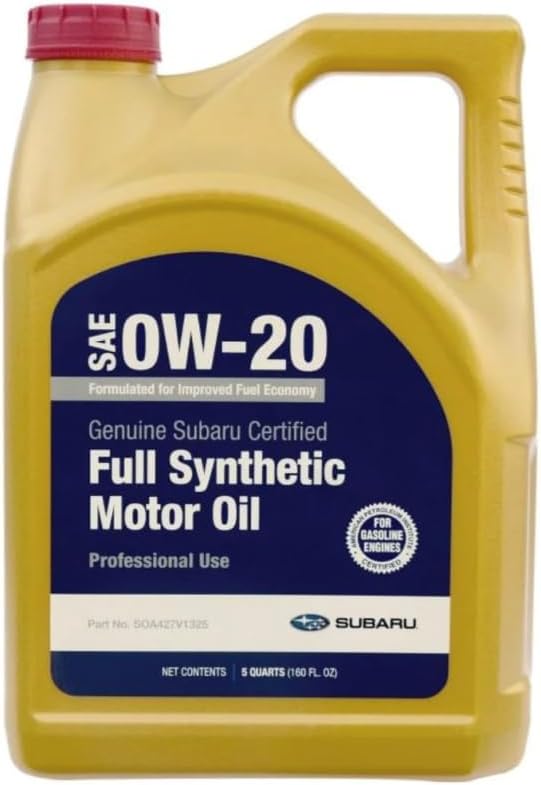
1. Subaru Synthetic Motor Oil SAE 0W-20, 5 Quart
Best Overall Engine Oil
| Viscosity Level | Low to Medium |
|---|---|
| Compatible with Vehicle Type | Car |
| Container Type | Bottle |
| Liquid Volume | 5 Quarts |
This Subaru-branded synthetic 0W-20 is a factory-quality motor oil supplied in a 5-quart container and intended for routine DIY oil changes on compatible Subaru models. It is formulated for low-temperature flow to help cold starts and provides a viscosity targeted at modern Subaru four-cylinder engines, helping preserve clearances and support fuel economy. Typical use is straightforward: drain the old oil, replace the filter, and refill with this OEM-formulation 0W-20 to meet Subaru service recommendations. Notable features include a vehicle-specific fitment focus and a flash point of 227 degrees Celsius, which indicates thermal stability under normal operating conditions. Practical benefits include compatibility with Subaru service intervals and the convenience of a five-quart pack that covers a single oil change for many four-cylinder Subaru engines. Limitations are that it is a single viscosity grade so it is only appropriate where 0W-20 is specified, and buyers seeking extended-drain specialty oils or aftermarket performance formulations should look elsewhere.
Best for: DIY Subaru owners who prioritize using manufacturer-formulated oil for regular maintenance and want a straightforward, vehicle-specific 0W-20 for routine oil changes.
Less Ideal for: Drivers looking for extended-drain, high-mileage, or performance-tuned oil formulations should consider specialty aftermarket options instead.
- Factory-formulated for Subaru engines to match manufacturer recommendations
- 0W-20 viscosity supports improved cold-start flow
- Five-quart container is convenient for a full DIY oil change
- Thermally stable flash point suitable for normal operating conditions
- Only available in 0W-20 so not suitable where a different viscosity is required
Verdict: The pick for readers who want the best all-around synthetic oil that balances cold-start flow, wear protection, and longevity for regular DIY oil changes.
2. Valvoline Advanced Full Synthetic SAE 0W-20 Motor Oil, 5 qt
Best Budget Engine Oil

| Viscosity | 0W-20 |
|---|---|
| Size | 5 QT |
| Meets | ILSAC GF-7A, API SP/SN |
Valvoline Advanced Full Synthetic 0W-20 is a 5-quart motor oil designed to protect gasoline engines by improving low-temperature flow, reducing wear at cold starts, and resisting deposits and thermal breakdown. It is typically used at routine oil changes for vehicles that call for 0W-20 viscosity and modern API/ILSAC specifications. The formula claims stronger wear protection, better deposit defense, and improved heat resistance compared with industry baselines, which helps keep an engine cleaner and can support slightly better fuel economy. Notable features include full synthetic base stocks and additives tuned for cold-start protection and sludge control. For owners of 2019–2024 Subaru Forester models that specify 0W-20 and meet the listed service approvals, this oil delivers factory-quality protection without requiring specialized service intervals or procedures. Limitations: it must match Subaru's required specifications for a given Forester engine and model year, and using the wrong viscosity or spec could affect warranty coverage or engine performance.
Best for: Buyers seeking an affordable full synthetic 0W-20 that aligns with manufacturer viscosity and common API/ILSAC specs for routine oil changes on 2019–2024 Subaru Forester vehicles.
Less Ideal for: Drivers who require oils with specialized Subaru factory approvals not shown on this product or who follow extended service intervals specified by the dealer should consult dealer recommendations or Subaru-approved oils.
- Full synthetic formula for improved cold-start flow and wear protection
- Claims enhanced deposit control and heat resistance compared with industry standards
- Available in a common 5-quart size suitable for a full oil change
- Meets multiple modern API and ILSAC service specifications
- Not all Forester engine variants list manufacturer-specific approvals on the label so buyers should verify compatibility with their exact model year and engine code
Verdict: For shoppers who need a low-cost oil that meets manufacturer viscosity and API/service specifications without sacrificing basic engine protection.
3. Subaru Genuine Oil Change Kit with Filter, Gasket, and 5 qt SAE 0W-20 Synthetic Oil
Best Genuine OEM Engine Oil

| Viscosity Grade | 0W-20 |
|---|---|
| Liquid Volume | 5 quarts |
| Compatible with Vehicle Type | Subaru Forester, Outback, Impreza, Ascent, Legacy, Crosstrek |
| Automotive Fit Type | Vehicle Specific Fit |
This Subaru genuine oil change kit provides everything needed for an OEM-quality service: a factory engine oil filter, crush gasket, and five quarts of Subaru-branded 0W-20 synthetic motor oil. It is designed for vehicle-specific fitment on many Subaru 4-cylinder models and is intended for DIY maintenance or dealer-standard topping up. Using the factory filter and matching oil simplifies meeting the manufacturer recommended specifications and helps ensure consistent viscosity and protection under Subaru operating conditions. The included gasket and full oil volume make a single oil change straightforward, and buyers get the confidence of factory-specified parts rather than aftermarket substitutes. Limitations are that the kit targets specific Subaru 4-cylinder model years and engine types so confirm fitment for your exact vehicle, and it contains only one filter and gasket so it is intended for one service interval only. Also confirm oil capacity in your owner’s manual before starting the change to avoid overfill or shortfall.
Best for: Buyers who want factory-specified oil and filter to maintain manufacturer recommendations and avoid mixing aftermarket formulations, especially those performing their own scheduled oil service.
Less Ideal for: People seeking bulk oil for multiple services, non-Subaru vehicles, or users who prefer extended-life, high-mileage, or specialty performance oils beyond the factory 0W-20 specification.
- Includes factory-spec Subaru 0W-20 synthetic oil matched to Subaru recommendations
- Comes with genuine Subaru engine oil filter and crush gasket for proper sealing
- Contains five quarts so it supplies the typical fill for a single 4-cylinder service
- Vehicle-specific fit reduces uncertainty about compatibility and installation
- Fits only certain Subaru 4-cylinder models and model years so must confirm compatibility before purchase
Verdict: Recommended for owners who prefer factory-specified formulations and packaging to maintain warranty compliance and exact spec matching.
4. Subaru Synthetic Oil Change Kit with Filter and Gasket SAE 0W-20 (6 Quarts)
Best Oil + Filter Change Kit

| Viscosity Level | Low to Medium (0W-20) |
|---|---|
| Container Type | Bottle |
| Compatible with Vehicle Type | Car |
| Liquid Volume | 6000 ml |
This kit supplies everything needed for a single oil-and-filter change on supported Subaru 4-cylinder models: six quarts of factory-formula 0W-20 synthetic oil, a genuine Subaru oil filter, and the crush gasket. It is designed for straightforward DIY service—pour the supplied quarts to top up per the vehicle manual, install the OEM-style filter, and replace the gasket for a clean seal. The use of genuine Subaru parts reduces uncertainty about fitment and filtration performance compared with generic aftermarket kits. Practical benefits include correct viscosity matched to modern Subaru engines and the convenience of a single package that avoids multiple trips to buy parts. Limitations are that the kit is vehicle-specific so you must confirm model and engine compatibility and that it only covers one service; you will need another kit or separate oil for additional changes. Also confirm your vehicle's exact oil capacity if you plan to fully drain and refill, since variations across engines can affect how much oil is needed.
Best for: DIY-minded Subaru owners who want a ready-to-use, factory-compatible oil and filter package that saves time sourcing correct parts for a single service.
Less Ideal for: Professional shops that service multiple vehicle types or owners who need bulk oil or multi-service supplies rather than a one-change kit.
- Complete single-service kit includes six quarts of manufacturer-formula 0W-20 oil plus a genuine Subaru oil filter and crush gasket.
- Factory-compatible oil viscosity tailored for modern Subaru 4-cylinder engines.
- Simplifies DIY maintenance by bundling correct parts and quantity in one package.
- Fits a limited range of Subaru 4-cylinder models so confirm compatibility before purchase.
- Contains exactly six quarts which may not match every engine's full drain capacity in all conditions.
Verdict: Ideal for DIY mechanics who want a one-box solution with the right quarts, OE-compatible filter, and gasket for a single service.
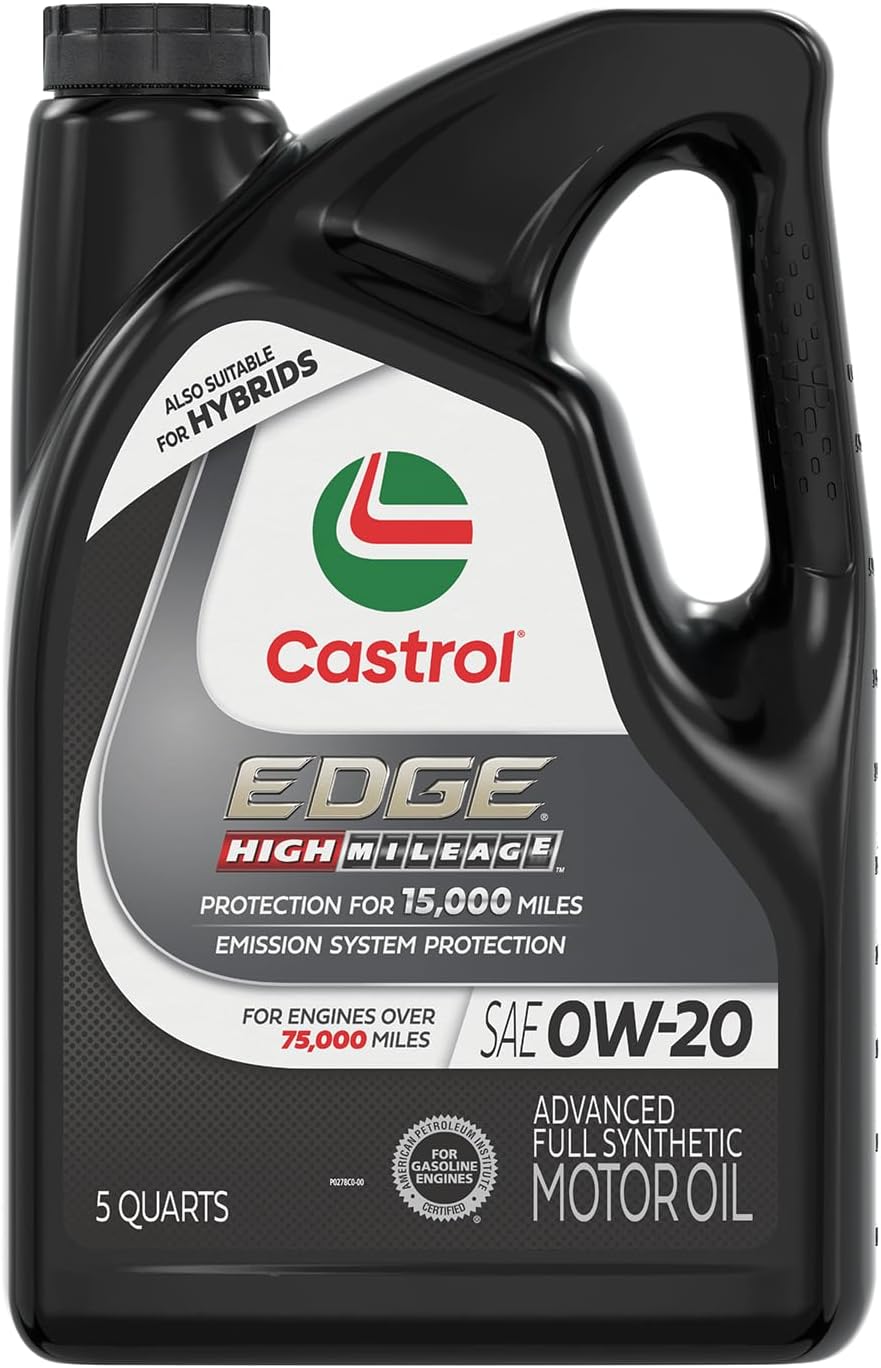
5. Castrol EDGE High Mileage 0W-20 Full Synthetic Motor Oil, 5 Quart
Best High‑Mileage Engine Oil
| SAE J300 Viscosity Grade | 0W-20 |
|---|---|
| Compatible with Vehicle Type | For vehicles with over 75,000 miles |
| Container Type | Bottle |
| Liquid Volume | 5 Quarts |
Castrol EDGE High Mileage 0W-20 is a full synthetic motor oil engineered for higher-mileage engines and intended to replace or top up factory-spec 0W-20 oil. It contains additives aimed at conditioning seals and reducing oil consumption while also addressing common high-mileage concerns such as sludge, corrosion, and friction wear. Typical use is routine oil changes or top-ups in older vehicles where maintaining compression and limiting leaks matters; Castrol advertises extended drain capability up to 15,000 miles or one year depending on service conditions. The formula includes phosphorus replacement technology to reduce harmful phosphorus levels and help protect the catalytic converter and emission components. In practice this oil delivers the low-viscosity start-up protection of 0W-20 while adding targeted chemistry for aging engine internals, but drivers should follow Subaru manufacturer intervals and service recommendations rather than relying solely on extended drain claims. It is a pragmatic choice when you want a factory-quality 0W-20 with extra high-mileage additives for a 2019-2024 Forester.
Best for: Drivers of higher-mileage Subaru Forester models who want a factory-quality 0W-20 that adds seal conditioning and protection for older engine components while maintaining modern low-viscosity performance.
Less Ideal for: Drivers who prefer strictly following Subaru's specified oil change intervals without considering oils marketed for extended drains or who require a different viscosity than 0W-20.
- Formulated specifically for vehicles with over 75,000 miles to address aging-engine issues
- 0W-20 viscosity provides strong cold-start protection and fuel-efficient flow
- Includes additives to condition seals and reduce oil consumption
- Phosphorus replacement technology reduces harmful phosphorus to help protect emission components
- Extended drain claim of 15,000 miles may not align with manufacturer service intervals and driving conditions
Verdict: Designed for higher-mileage engines, this oil contains additives to condition seals, reduce oil consumption, and protect older components.
Choosing the Right 2019-2024 Subaru Forester Engine Oil: Key Factors to Consider
Viscosity Grade and Climate
Viscosity determines how the oil flows at cold startup and how it maintains a lubricating film at operating temperature. For the Forester, a lower low-temperature viscosity helps reduce wear during cold starts and improves fuel economy in stop-and-go driving. However, maintaining sufficient high-temperature viscosity is important to protect bearings and cam components under sustained highway speeds or heavy loads.
Choose a grade that matches your local climate and driving pattern. If you frequently drive in subfreezing temperatures, prioritize a 0W-rated formula for easier cold pumping. In milder climates, 5W grades can offer a balance between startup protection and oil film strength. Always verify the viscosity recommendation against Subaru guidance for the specific model year and engine variant.
Synthetic Versus Conventional
Synthetic motor oils provide more consistent viscosity control, better oxidation resistance, and superior cold-start performance compared with conventional oils. For modern Forester engines, synthetics help maintain thin, protective films while resisting breakdown during extended or high-temperature operation, which supports longer drain intervals when allowed by service schedules.
Conventional oils may be suitable for low-mileage, low-stress use but typically require shorter intervals and offer less protection under severe conditions. For most Forester owners who value longevity, fuel economy, and stable performance across temperature extremes, a high-quality synthetic or synthetic blend is the safer choice.
Detergent and Dispersant Performance
Detergents and dispersants keep combustion byproducts, soot, and varnish from accumulating on critical engine parts. In the horizontally opposed Subaru engine, deposits can affect oil passages and valve areas, so effective cleaning chemistry matters for preserving performance and avoiding late-life issues.
Look for oil formulations with robust detergent packages and proven sludge-control characteristics. Good dispersancy is particularly important for owners who do frequent short trips or experience periodic heavy load driving, as those conditions promote contaminant buildup.
Seal Compatibility and Additive Compatibility
Different oils use different additive chemistries that can affect compatibility with engine seals and gaskets. Oils that are incompatible can cause hardening or swelling of seals over time, leading to leaks. Subaru engines are sensitive to these materials, so selecting oils formulated for modern passenger-car rubber and elastomers reduces risk.
Also consider compatibility with any fuel-system or emission-control treatments you use. Avoid mixing oils with unknown additive packages or introducing aftermarket treatments that could disrupt the oil chemistry.
High-Mileage Considerations
If your Forester has higher mileage, focus on oils that address wear and seal conditioning. High-mileage formulations typically include additives that help condition seals, reduce blow-by effects, and maintain compression. These oils can mitigate leaks and restore some flexibility to aging gaskets.
However, high-mileage oils sometimes change viscosity slightly or include friction modifiers that alter feel and noise. Evaluate whether the benefits for older engines outweigh any small shifts in oil behavior for your vehicle.
Manufacturer Specifications and Service Interval
Always cross-check oil choices against Subaru's published specifications for the 2019-2024 Forester. Meeting the recommended spec ensures proper protection and warranty compliance in many regions. The specified oil grade and performance category directly influence recommended service intervals.
Service interval considerations are pragmatic: longer intervals can be acceptable with high-quality synthetics and stable service conditions, but severe duty, frequent towing, or many cold starts may require shorter intervals. Choose an oil that both meets Subaru specs and aligns with how you actually drive the vehicle.
Choosing Between 0W-20 and 5W-30 for Your Forester
The Forester's recommended grades can vary by engine variant and climate, so understand the tradeoffs between 0W-20 and 5W-30. 0W-20 improves cold-start protection and can yield better fuel economy, especially in colder climates, while 5W-30 offers a thicker film at high operating temperatures and may be preferable in hot climates or for more demanding driving.
If you see frequent highway trips, heavy loads, or towing-like stress, a 5W-30-grade option can provide extra high-temperature protection. For predominantly city driving and cold winters, 0W-20 helps reduce wear during startup and improves driveability up to normal operating conditions.
- 0W-20: Better cold flow, potential fuel economy gains
- 5W-30: Stronger high-temperature film and stress protection
- Match grade selection to climate and driving style
When to Consider High-Mileage Formulations
High-mileage oils are designed for vehicles with significant miles and common wear patterns. For a Forester with higher mileage you may notice small oil leaks, reduced compression, or increased oil consumption; specialized formulations can help mitigate those issues by conditioning seals and improving ring sealing.
Plan to test a high-mileage option for a few oil changes to judge its effect on consumption and leak behavior. If your vehicle performs well on standard formulations, the high-mileage tradeoffs such as different friction modifiers may not be necessary.
- Best for sealing minor leaks and reducing blow-by
- May slightly alter engine noise or feel due to additives
- Evaluate over multiple drain intervals for real effect
Oil Change Frequency and Service Practices
Follow Subaru's recommended service intervals adjusted for your driving conditions. Short trips, frequent cold starts, extended idling, or dusty conditions justify more frequent changes. Using a higher-quality synthetic can extend intervals safely in many cases, but only if the oil meets required specifications and you monitor oil condition and consumption.
Always replace the oil filter at each service and check for leaks, unusual noises, or rapid oil consumption between changes. Keep records of changes and oil types used to help diagnose future issues and to maintain consistent maintenance history.
- Replace filter at every oil change
- Monitor oil level between services
- Shorten intervals for severe duty or heavy use
Cold-Start and Short-Trip Driving Tips
Short trips prevent the engine from reaching full operating temperature and can accelerate contaminant buildup. For these driving patterns, prioritize oils with strong cold-flow properties and good dispersant chemistry so combustion byproducts do not accumulate rapidly.
Allow the engine to warm up briefly before demanding heavy acceleration and consider slightly shorter drain intervals if most trips are under 10 miles. These small habits and the right oil selection help preserve the boxer engine's longevity.
- Use low-temperature viscosity oils for frequent cold starts
- Consider shorter service intervals for mostly short trips
- Warm the engine gently before heavy acceleration
Monitoring Oil Health Between Changes
Regularly check oil level and color to spot consumption or contamination early. A steady drop in level or very dark oil between services can indicate leaks, burning oil, or excessive soot that may require attention. For owners using extended drain intervals, occasional oil analysis can provide objective data on wear metals and contamination.
Keep notes on oil consumption rates and any changes in engine performance. That history helps you choose whether to stick with the current formulation or try an alternative that addresses specific symptoms like consumption or deposit formation.
- Check level monthly or every few fuel fill-ups
- Consider oil analysis for extended-interval users
- Record consumption trends to spot developing issues
Still looking for the perfect fit?
Select your Subaru Forester configuration to see the most relevant Engine Oils recommendations
How We Chose the Best 2019-2024 Subaru Forester Engine Oil
To assemble this list we applied a vehicle-focused editorial filter tailored to the Subaru Forester 2019 through 2024. We prioritized oils that meet Subaru specifications and common service intervals while screening for formulations that address the vehicle's horizontally opposed engine demands. Primary evaluation criteria included viscosity behavior across temperature ranges, wear protection under typical Forester load profiles, and compatibility with OEM seals and gaskets.We also assessed thermal and oxidation resistance to judge long-term stability, detergent and dispersant chemistry for cleanliness, and suitability for either normal, cold-climate, or higher-mileage use. Real-world factors such as cold-start pumping, fuel economy impact, and drain interval expectations were considered. Oils that lacked clear spec compliance for the Forester, or that showed known compatibility issues with boxer engines or Subaru-required standards, were excluded. The result is a curated set of options that cover common Forester use cases without recommending any specific brand names here.
Our full evaluation process is outlined in our review methodology.
FAQ
What viscosity oil should I use in a 2019-2024 Forester in cold climates?
In cold climates a 0W-rated oil typically provides better cold-start protection. 0W-20 is commonly chosen for improved cold pumping and fuel economy, but check Subaru's specific recommendation for your engine and model year before switching.
Can I switch from conventional to full synthetic in my Forester?
You can usually switch to a full synthetic if the oil meets Subaru specifications. Many owners switch without issues and benefit from better thermal stability and cold-start performance. Follow standard procedures and monitor for leaks or unusual consumption after the first few changes.
How often should I change the oil on a 2019-2024 Forester?
Follow Subaru's service interval guidance as a baseline. For severe driving conditions, frequent short trips, or heavy use, shorten intervals. High-quality synthetics may allow longer intervals if they meet the required specs and oil condition is monitored.
Is a high-mileage oil necessary for an older Forester?
High-mileage oils can help condition seals and reduce minor leaks on older engines, but they are not always necessary. If your Forester shows increased consumption or small leaks, a high-mileage formulation may be beneficial; otherwise standard synthetic options often remain suitable.
Will a different oil grade affect my fuel economy?
Yes, lower-viscosity oils like 0W-20 generally offer a small fuel economy advantage over thicker grades by reducing internal friction. The actual difference depends on driving style and conditions and is usually modest.
Final Verdict
Prioritize oils that meet Subaru specifications and match the Forester's operating climate and driving demands. Choose viscosity based on cold-start needs and high-temperature protection requirements, and consider synthetic formulations for better stability and longer service life.Balance service interval preferences with real driving patterns: longer intervals are appropriate with proven synthetics and stable conditions, while severe duty and frequent short trips justify more frequent changes. With those priorities in mind you can select an engine oil that preserves performance and minimizes long-term wear for your 2019-2024 Subaru Forester.
Explore More:
- Check out all Subaru Forester parts & accessories
- Explore Fluids & Chemicals
- Browse all Accessories
