

Note: This article contains affiliate links. If you click on these links and make a purchase, I may earn a small commission at no extra cost to you. This helps support my research and content. Read my full affiliate disclosure here.
Upgrading your Subaru Forester Wilderness with a lift kit can unlock better ground clearance, room for larger tires, and improved approach angles for trail driving. For Wilderness owners who use their Forester off road or want a more confident stance on rough pavement, the right lift changes how the vehicle rides and performs.This guide covers six shortlisted lift kits chosen for their fitment, durability, and effect on handling for the Forester Wilderness. We evaluate ride quality, installation considerations, suspension geometry, and compatibility to help you narrow options and prepare for a confident upgrade.
Looking for other parts? See all Subaru Forester parts & accessories.
Top Picks at a Glance
| Best Overall Lift Kit A balanced, easy‑to‑install lift kit that fits well and performs reliably | ReadyLIFT 69-99210 2" SST Lift Kit for Subaru Forester (2019–2023) |  |
| Best Budget Lift Kit Lowest-cost spacer-style kits that restore clearance without breaking the bank | Protune Suspension Front 2" / Rear 1.5" Lift Kit for Subaru Forester 2019–2023 |  |
| Best Vehicle-Specific Lift Kit Kits engineered for a single model year range with tailored fit and hardware | RisingTuning 40mm Polyurethane Lift Spacers Kit for Subaru Forester/Crosstrek/Ascent |  |
| Best 3" High-Lift Kit Higher‑range spacer kits that deliver around three inches of lift for big tire fitment | maXpeedingrods 3" Lift Kit Strut Spacer Kit for Subaru Forester/Impreza/Legacy/Outback |  |
| Best CNC Aluminum Spacers Lightweight, machined aluminum spacer kits with precision tolerances and corrosion resistance | Wsays 3" CNC Billet Aluminum Suspension Lift Spacers |  |
| Best Polyurethane Spacer Kit Durable polyurethane spacers that prevent metal‑on‑metal contact and resist squeaks | DEALPAREX 1.6-inch (40mm) Front Strut Spacers Polyurethane Lift Kit for Subaru |  |
1. ReadyLIFT 69-99210 2" SST Lift Kit for Subaru Forester (2019–2023)
Best Overall Lift Kit

| Fit years | 2019-2023 |
|---|---|
| Lift height | 2.0" front, 1.5" rear |
| Included components | SST lift kit |
| Material | Alloy Steel |
| Automotive fit type | Vehicle Specific Fit |
This ReadyLIFT SST lift kit is a bolt-on solution engineered for the 2019–2023 Subaru Forester to add 2.0 inches of front lift and 1.5 inches at the rear. It uses offset fabricated steel top mount strut extensions and upgraded sway bar end-links to preserve camber and caster and keep the factory ride and handling feel. Typical use is for owners who want more rocker and underbody clearance for light off-road trails or to run beefier 225/65-17 tires on 17×8 wheels with a +38 mm offset. Installation is straightforward and faster than many competitors because it avoids cradle drops and permanent modifications, making it friendly to competent DIYers. The kit is made in the USA from heavy-duty alloy steel so it feels robust, but some tire brands or aggressive tread patterns may require minor trimming. If you want a reliable, reversible lift that balances clearance, tire fitment, and everyday ride quality, this kit delivers without complicating alignment or handling.
Best for: Buyers who want a reliable, bolt-on lift to gain extra ground clearance and run larger tires while keeping near-factory ride and handling, and who are comfortable with a straightforward DIY installation.
Less Ideal for: People seeking a large suspension overhaul, heavy-duty off-road use, or bigger lifts that require new shocks, extensive suspension changes, or professional fabrication should consider different solutions.
- Vehicle-specific design preserves factory camber and caster using offset spacers
- Bolt-on installation that avoids cradle drops and can be completed faster than many kits
- Upgraded sway bar end-links improve sway bar function without relocation brackets
- Supports 225/65-17 tires on 17×8 wheels with a +38 mm offset for increased traction and clearance
- Made from heavy-duty alloy steel and manufactured in the USA
- Minor trimming may be required depending on tire brand and tread pattern
Verdict: The go-to choice for most DIYers looking for a reliable, bolt‑on lift solution that improves clearance while keeping ride quality and installation straightforward.
2. Protune Suspension Front 2" / Rear 1.5" Lift Kit for Subaru Forester 2019–2023
Best Budget Lift Kit
| Fits | Subaru Forester 2019-2023 |
|---|---|
| Maximum Lifting Height | 2 inches front / 1.5 inches rear |
| Material Type | Steel |
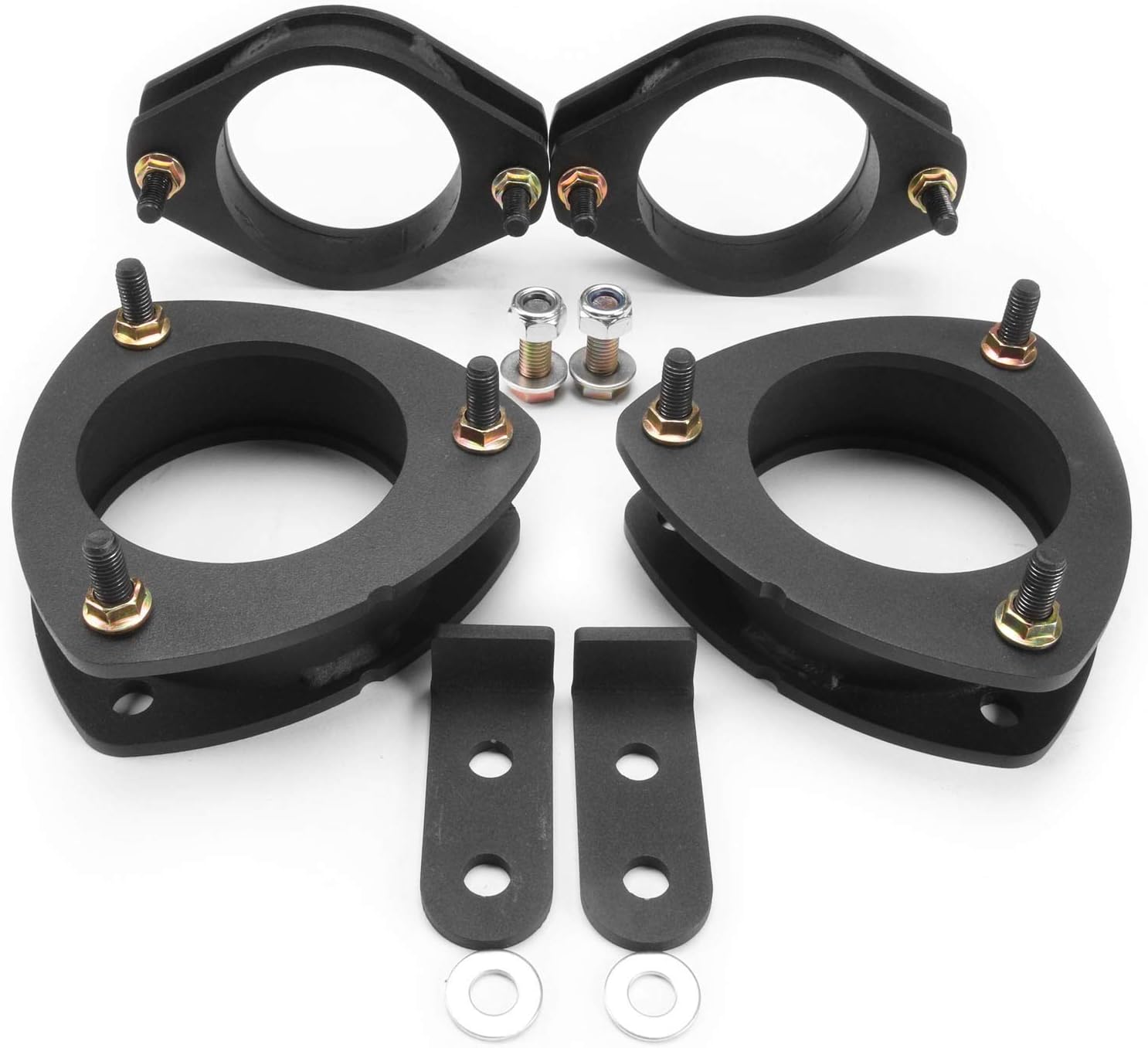
| Included Components | Spacers and sway bar relocation links |
This kit provides a straightforward way to lift a 2019–2023 Subaru Forester without changing springs or shocks. It uses steel front and rear spring mount spacers plus included sway bar relocation links so you can retain factory-style mounting and avoid more invasive suspension work. Installation is bolt-on and ships with a digital PDF; alignment is recommended after fitting. The heavy duty powder-coated steel construction should resist corrosion and handle daily driving and light off-road use, and the kit is intended to preserve factory ride comfort because it does not alter spring rates. Practical limitations include a modest lift amount that only allows mild tire upsize and the kit does not address shock length or geometry for serious off-road loads, so wheel travel and handling can feel different if you push the vehicle hard. This is best when you want the cheapest, simplest way to gain clearance and fit slightly larger tires with minimal parts and shop time.
Best for: Buyers who want the least expensive, low-effort way to raise a Forester a couple inches for extra clearance and slightly larger tires while keeping installation and parts simple.
Less Ideal for: Drivers planning heavy off-road use, large tire upgrades, or who want revised suspension geometry and longer shocks should choose a more comprehensive lift system.
- Bolt-on spacers and sway bar relocation allow a simple installation with no spring cutting or new shocks required
- Steel construction with powder coat for durability against road corrosion
- Includes sway bar end links to keep stock mounting and steering response close to factory
- Digital installation PDF provided so a competent DIYer or local shop can complete the job quickly
- Limited lift height suitable only for mild tire upsizing and light off-road use
Verdict: Choose this if you want the cheapest bolt‑on way to raise ride height and fit larger tires while keeping parts and installation simple.
3. RisingTuning 40mm Polyurethane Lift Spacers Kit for Subaru Forester/Crosstrek/Ascent
Best Vehicle-Specific Lift Kit

| Lift height | 40mm (1.6 Inches) |
|---|---|
| Fitment | Forester (5th gen), Crosstrek (2nd & 3rd gen), Ascent/Evoltis (1st gen) |
| Material Type | Polyurethane (SCU-PFL-100, Shore A 93A) |
| Included components | Front and rear strut spacers, reinforced stud bolts, fitting kit |
This RisingTuning lift kit uses 40mm polyurethane spacers for front and rear struts plus reinforced stud bolts and a fitting kit to raise ride height on supported Subaru models. It installs by placing the spacers on top of the strut assemblies to increase ground clearance and is intended to improve off-road clearance, reduce risk of scraping low body parts, and allow larger tires or mud rubber. The spacers are molded from a high-hardness polyurethane that resists corrosion and adds a modest damping effect compared with metal spacers. The kit is vehicle-targeted for Forester (5th gen), Crosstrek (2nd and 3rd gen), and Ascent/Evoltis (1st gen), which helps reduce fitment guesswork and includes extra studs where the factory holes differ. Important practical points: you will need a spring compressor and likely wheel alignment after installation, and the actual clearance gain can vary from the nominal spacer thickness due to suspension geometry changes. This is a budget-friendly way to raise clearance without replacing springs but it does not replace a full suspension lift or upgraded shocks.
Best for: Buyers who prioritize a vehicle-specific, low-cost way to gain about 40mm of ride height on supported Subaru models and want included hardware to simplify installation.
Less Ideal for: Drivers seeking a full suspension overhaul, larger travel, or improved damping from upgraded shocks should consider a complete lift or suspension kit instead.
- Vehicle-targeted fitment for Forester (2021–2024), Crosstrek (2nd/3rd gen) and Ascent/Evoltis reduces guesswork during installation
- Polyurethane construction resists corrosion and adds a small damping effect compared with metal spacers
- Includes reinforced stud bolts and a fitting kit to address differences in stud hole fitment
- Raises ground clearance to improve off-road clearance and allow for larger tires without replacing springs
- Does not include shocks or springs so it is not a full suspension lift and may change handling characteristics
- Manufacturer does not provide a warranty in the product details
Verdict: Pick a vehicle‑specific kit when you want parts and mounting hardware that are made to match your car’s suspension geometry and reduce fitment headaches.
4. maXpeedingrods 3" Lift Kit Strut Spacer Kit for Subaru Forester/Impreza/Legacy/Outback
Best 3" High-Lift Kit

| Maximum Lifting Height | 3 inches |
|---|---|
| Material Type | Carbon Steel |
| Automotive Fit Type | Vehicle Specific Fit |
| Included Components | strut spacers |
This maXpeedingrods lift kit uses machined carbon steel spacers to raise the suspension roughly 3 inches front and rear, letting you run larger, more aggressive tires and gain extra ground clearance for rough trails. Installation is designed to be bolt-on: the spacers mount on top of the struts with the provided hardened studs and bolts so you avoid spring compressors or full strut disassembly, but the manufacturer recommends professional installation and alignment. The kit is vehicle-specific for older Subaru Forester, Impreza, Legacy and Outback models and includes front and rear spacers plus hardware. In practice the kit delivers a notable height increase but the listed spacer thickness is not a 1:1 match to lift height, so expect some variation depending on your vehicle and load. Because this is a spacer-style lift it raises ride height without changing spring or damper rates, so handling and ride comfort can feel different and an alignment and possibly shock/tire upgrades are common follow-ups. No installation instructions are included, so plan for a shop or experienced DIYer.
Best for: Drivers who want maximum ground clearance on older Subaru Forester/Impreza/Legacy/Outback models so they can run much larger tires and tackle rough, off-road routes while accepting that further suspension tuning may follow.
Less Ideal for: Those looking for a full suspension overhaul, improved on-road handling, or a plug-and-play kit that includes shocks or spring rate changes should consider a complete lift system instead.
- Adds about 3 inches of lift front and rear for noticeably increased ground clearance
- Machined carbon steel spacers and hardened studs provide durable, long-lasting components
- Bolt-on design avoids spring compressors and full strut disassembly
- Includes necessary studs and bolts so no separate hardware purchase is required
- No printed installation instructions included, professional installation recommended
- Spacer lift does not change springs or dampers so ride and handling can be affected without additional suspension upgrades
Verdict: Opt for this category if your priority is maximum ground clearance and the ability to run much larger tires than stock.
5. Wsays 3" CNC Billet Aluminum Suspension Lift Spacers
Best CNC Aluminum Spacers

| Material Type | Aluminum |
|---|---|
| Maximum Lifting Height | 3 inches |
| Auto Part Position | Top |
These Wsays lift spacers are machined from 6061 billet aluminum and are designed to sit between the strut top hats to deliver up to 3 inches of lift on supported Subaru models. Installation is a simple bolt-on process using the included bolts, making them a quick way to increase ride height without replacing struts or springs. The CNC construction gives tighter tolerances and improved corrosion resistance compared with basic steel spacers, so they should stay true and look cleaner over time. The listing warns the lift amount is achieved through spacer ratios rather than a one-to-one thickness relationship, and additional components or adjustments may be needed depending on your vehicle and any prior modifications. No printed instructions are included, so plan for a professional installation or experience with suspension work. These spacers are a practical option if you want a lightweight, factory-quality-feeling lift piece for a Subaru that fits the specified model years, but they are not a complete suspension kit and will not address shock damping or alignment needs by themselves.
Best for: Buyers who prioritize a lighter, corrosion-resistant machined spacer to raise a compatible Subaru and prefer a bolt-on component that preserves existing suspension hardware.
Less Ideal for: Drivers seeking a complete suspension solution, improved shock damping, or who are uncomfortable modifying strut assemblies without professional help.
- CNC billet 6061 aluminum construction for lighter weight and corrosion resistance
- Bolt-on design installs between strut top mounts for relatively quick fitting
- Includes necessary bolts so fewer parts are needed to begin installation
- Machined tolerances provide a precise fit compared with generic stamped spacers
- Does not include installation instructions and may require professional installation
- Raises ride height only and does not change damping or spring rates
Verdict: Choose machined aluminum spacers when you want a lighter, more corrosion‑resistant lift component with tighter manufacturing tolerances than plain steel.
6. DEALPAREX 1.6-inch (40mm) Front Strut Spacers Polyurethane Lift Kit for Subaru
Best Polyurethane Spacer Kit

| Included components | 2x strut spacers, fitting kit |
|---|---|
| Material Type | Polyurethane |
| Auto Part Position | Front |
| Automotive Fit Type | Vehicle Specific Fit |
This DEALPAREX kit adds about 1.6 inches (40 mm) of front lift using two polyurethane spacers that mount to the strut assembly. Installation is a simple bolt-on job for anyone comfortable removing the strut or having a shop press the top mount, and the kit ships with a fitting kit to ease installation. Made from high-density polyurethane, the spacers resist corrosion and are quieter than metal options, so you get a firmer but less noisy increase in clearance for light off-road use or to run larger tires. Because the lift is concentrated at the front, expect a slight change in vehicle rake and handling that may require alignment after fitting; this kit does not modify rear suspension. The product is vehicle-specific for recent Subaru models and is best for drivers who want a modest, reversible lift without complex suspension changes. It is not a substitute for a full suspension upgrade if you need major articulation or heavy-duty off-road capability.
Best for: Buyers who want a quiet, corrosion-resistant way to gain modest front ground clearance on recent Subaru models with a simple bolt-on installation and minimal long-term maintenance.
Less Ideal for: Drivers who need full suspension overhauls, significant articulation, or large increases in lift for heavy off-road use should consider complete suspension kits instead.
- Provides a modest 1.6 inch (40 mm) front lift to increase ground clearance for light off-road use
- High-density polyurethane construction resists corrosion and reduces road noise compared with metal spacers
- Includes fitting kit and two strut spacers for a straightforward bolt-on installation
- Front-only lift so rear ride height and suspension geometry are unchanged
Verdict: Select a polyurethane kit if you want quieter operation and corrosion resistance from coil spacers while retaining an easy bolt‑on install.
Choosing the Right Subaru Forester Wilderness Lift Kit: Key Factors to Consider
Lift Height and Tire Fitment
Lift height must match your goals for clearance and tire size while staying within the Forester Wilderness suspension's safe operating range. Small lifts are typically 1 to 1.5 inches and often allow modestly larger tires with minimal changes to suspension geometry. Larger lifts increase clearance but can require changes to control arms, sway bar end links, or alignment settings to avoid undue stress on components.
Think about the actual tire diameter you plan to run and any trimming or fender modifications that could be needed. Consider how lift height affects approach, breakover, and departure angles for trail use. Also account for vehicle loading: roof gear, cargo, and passenger weight interact with lift height and can change rubbing or suspension limits in real driving conditions.
Ride Quality and Damping
A lift changes the Forester Wilderness suspension geometry and often affects ride comfort. Kits that simply add spacers without addressing damping can produce a floaty or harsh ride, especially on bumpy roads. Conversely, kits that include or pair well with upgraded shocks or struts can preserve or even improve how the vehicle handles rough terrain.
Consider whether a kit is designed to work with the stock dampers or whether upgraded dampers are recommended. Evaluate how the kit affects rebound and compression behavior and how that translates to both off-road control and daily driving comfort.
Alignment and Steering Geometry
Raising the body or suspension alters wheel camber, toe, and steering link angles. Proper alignment is critical to prevent premature tire wear and to keep steering predictable. Some lift kits maintain factory geometry with included drop brackets or adjustable components; others require aftermarket control arms or caster correction plates.
Ask what alignment work is needed after installation and whether the kit provides the needed hardware to maintain safe steering geometry. If the kit changes tie rod angles or track width, make sure those changes are reversible or correctable.
Installation Complexity and Tools Required
Installation difficulty varies widely. Bolt-on spacer kits can be installed with common tools and basic mechanical skills, while more comprehensive kits may require spring compressors, hydraulic lifts, or professional help. Some kits call for cutting, drilling, or temporary removal of components.
Plan for whether you will install the kit yourself or use a shop. Factor in the time, tools, and ancillary parts such as alignment or replacement fasteners. Knowing the installation complexity ahead of time prevents surprises and helps budget for labor if needed.
Durability and Corrosion Resistance
Trail use and seasonal road conditions expose lift kit components to water, mud, and salt. Hardware and brackets should use corrosion-resistant finishes, robust welds, and hardened fasteners. Components that flex or bear load should be designed to resist fatigue over many miles of mixed driving.
Also consider warranty terms and whether replacement hardware is readily available. Durability matters most if you drive frequently off road or in harsh climates because repair or replacement visits can become costly and inconvenient.
Legal and Warranty Considerations
Raising a vehicle can affect local regulations and may impact certain warranty coverage. Some owners need to ensure their modifications remain within legal height limits for inspections or insurance requirements. Others prefer kits that do not require permanent alterations that could complicate future resale.
Check vehicle-specific guidance for allowable modifications and consider documenting the installation professionally. Understanding potential warranty implications and inspection issues helps avoid unexpected hassles later.
How Lift Choices Affect Off-Road Performance
Lift height and suspension design directly influence how the Forester Wilderness negotiates obstacles. More ground clearance lowers the risk of underbody contact on rocks and rutted trails, but excessive lift without proper damping can make the vehicle less predictable on uneven terrain.
Well-chosen lifts also allow larger tires that increase sidewall cushioning and traction. However, pairing tire upgrades with the right suspension setup is important to keep steering response and axle articulation in balance.
- Moderate lifts improve approach and departure angles with less impact on handling.
- Higher lifts broaden tire options but may require suspension link changes to preserve articulation.
- Tire selection should be coordinated with lift height to avoid rubbing and maintain gearing.
Practical Steps Before Buying a Lift
Measure current ride height and identify how you use the Forester Wilderness. Note whether you regularly carry heavy gear, tow, or add rooftop cargo. These factors change the lift you should choose and whether a softer or firmer damping setup is preferable.
Check wheel offset and backspacing limits to ensure planned tire widths will clear the fenders and suspension. Also verify whether your chosen lift requires additional items like extended brake lines, sway bar links, or camber correction components.
- Document current tire size and suspension condition.
- Decide on a target tire diameter and width before selecting a kit.
- Ask whether the kit includes all necessary hardware for a safe installation.
Installation Tips and Common Pitfalls
If you plan DIY installation, follow torque specs and use proper spring compression tools when applicable. Reusing old fasteners that are stretched or corroded can compromise safety. Always perform a full alignment after installation to restore correct toe and camber settings.
Common pitfalls include underestimating required clearance for larger tires, neglecting sway bar and track bar geometry changes, and skipping post-installation inspections. A short test drive after installation to check for unusual noises or handling changes can catch issues early.
- Replace worn bushings and fasteners during installation to avoid future failures.
- Perform a professional alignment even if the vehicle feels acceptable after the lift.
- Inspect brake lines and ABS sensor wiring for adequate slack and protection.
Tire and Wheel Considerations After a Lift
A lift creates space for larger tires but your wheel selection matters to avoid contact points. Consider backspacing and offset that keep the tire centered in the wheel well while preserving suspension clearance. Wider tires can improve traction but may change steering effort and fuel economy.
Retain an eye on speedometer and gearing changes when increasing tire diameter. Many owners choose modestly larger, more aggressive all-terrain tires rather than extreme off-road rubber to preserve daily drivability.
- Confirm recommended tire sizes for your chosen lift height.
- Balance wheel offset to prevent rubbing on control arms or fenders.
- Consider re-gearing or recalibrating the speedometer if tire diameter changes significantly.
Maintaining a Lifted Forester Wilderness
Regular inspections become more important after a lift. Check fasteners, bushings, and shocks for wear every few thousand miles, and especially after hard off-road use. Greaseable fittings and replaceable bushings extend service life and simplify repairs.
Be mindful of alignment checks after heavy off-road trips. Early detection of uneven tire wear or loose hardware prevents costly downstream repairs and preserves safe handling.
- Inspect suspension fasteners after the first 100 miles and then at regular intervals.
- Monitor tire wear patterns and correct alignment issues promptly.
- Keep spare parts for common wear items accessible if you frequently off-road.
Still looking for the perfect fit?
Select your Subaru Forester configuration to see the most relevant Lift Kits recommendations
How We Chose the Best Subaru Forester Wilderness Lift Kit
Our selection process focused on components and outcomes that matter for the Subaru Forester Wilderness. We prioritized lift kits that maintain proper suspension travel and alignment, minimize negative changes to steering geometry, and support common larger tire sizes used on this model. Durability and corrosion resistance were next: hardware and mounting brackets must resist road salt and trail abrasion. Ride quality was evaluated by how a kit balances increased height with damping and control; kits that preserved predictable handling scored higher. Installation practicality was considered, including whether the kit requires cutting, specialized tools, or additional suspension modifications.We excluded lifts that do not explicitly support the Forester Wilderness configuration or that require major chassis modification beyond normal bolt-on procedures. We also avoided kits that only offer a cosmetic spacer without addressing control arms, struts, or alignment needs where applicable. Final picks reflect a balance of reliable fitment, real-world ride behavior, and long-term serviceability for owners focused on trail use and daily driving.
Our full evaluation process is outlined in our review methodology.
FAQ
How much lift can I safely add to a Forester Wilderness?
It often depends on the specific suspension components and intended use. Small lifts around one inch typically preserve factory geometry, while larger lifts may require control arms or alignment corrections. Consider how you load the vehicle and whether you are prepared for additional suspension modifications.
Will a lift kit affect my gas mileage or on-road handling?
Yes. Increased ride height and larger tires usually increase aerodynamic drag and rolling resistance, which can reduce fuel economy. Handling can feel different; a properly tuned kit can minimize negative effects, but expect some change in steering feel and body roll depending on the lift design.
Can I install a lift kit myself on a Forester Wilderness?
Some kits are designed for DIY installation if you have mechanical skills and the right tools. More involved kits that alter suspension links, require spring compressors, or need chopping and welding are better left to professionals. Plan for a follow-up alignment regardless of who installs it.
Do I need to change shocks when I lift the vehicle?
Often a good idea. Stock shocks may not provide optimal damping at increased ride heights. Many owners pair lifts with upgraded shocks tuned for additional travel or altered spring rates to retain predictable ride and control.
Will a lift kit allow me to fit much larger tires on my Forester Wilderness?
A lift creates room for larger tires, but the extent depends on lift height, wheel offset, and inner fender clearance. Moderate increases are common without major trimming, while large jumps in tire diameter may require additional modifications to prevent rubbing.
Final Verdict
Choosing the right lift for your Subaru Forester Wilderness is about balancing the clearance and tire benefits you want against changes to ride quality, steering geometry, and maintenance needs. Prioritize a kit that preserves or corrects suspension alignment and pairs well with appropriate damping to retain predictable handling.Focus on realistic lift heights that match your trail use and tire plans, budget for professional alignment and any required hardware, and inspect components regularly after installation. With those tradeoffs in mind, you can select a lift that enhances off-road capability while keeping daily driving comfortable and reliable.
Explore More:
- Check out all Subaru Forester parts & accessories
- Explore Suspension & Steering
- Browse all Accessories
