

Looking for the perfect fit?
Select your Ford F-150 configuration to see the most relevant Engine Oils recommendations
Note: This article contains affiliate links. If you click on these links and make a purchase, I may earn a small commission at no extra cost to you. This helps support my research and content. Read my full affiliate disclosure here.
Picking the right engine oil for a Ford F-150 affects longevity, fuel efficiency, and how well the truck handles cold starts and towing loads. Whether you drive a daily commuter, a work rig, or a high-mileage vehicle, the oil you choose influences maintenance intervals and long-term engine condition. This guide shortlists seven top options and explains the evaluation criteria buyers care about, including viscosity, additive chemistry, and compatibility with Ford specifications. Read on to see which oils made the list and why they are suitable choices for common F-150 use cases.
Looking for other parts? See all Ford F-150 parts & accessories.
Top Picks at a Glance
| Best Overall The best all-around choice for most situations | Motorcraft 5W-30 Engine Oil — 5-Quart Jug |  |
| Best Quality Built to a higher standard if you want something more solid | Mobil 1 Turbo Diesel Truck Full Synthetic Motor Oil 5W-40, 1 Gal |  |
| Best Value The sweet spot between price and what you get | Schaeffer Supreme 9000 Full Synthetic Gasoline Engine Oil 5W-20, 1 Quart |  |
| Best Budget The cheapest option that still gets the job done reliably | Valvoline Advanced Full Synthetic SAE 0W-20 Motor Oil (1 qt, pack of 6) |  |
| Highest Rated A top-rated pick with lots of positive feedback | Motorcraft SAE 5W-20 Synthetic Blend Motor Oil – 5 Quart Jug |  |
| Most Popular A crowd favorite that many people choose with confidence | Motorcraft SAE 10W-30 Super Duty Diesel Motor Oil, 5 Quart |  |
| Best Seller A high-volume bestseller chosen again and again | Valvoline Full Synthetic High Mileage with MaxLife Technology SAE 5W-30 Motor Oil (3 × 5 qt) |  |
Motorcraft 5W-30 Engine Oil — 5-Quart Jug
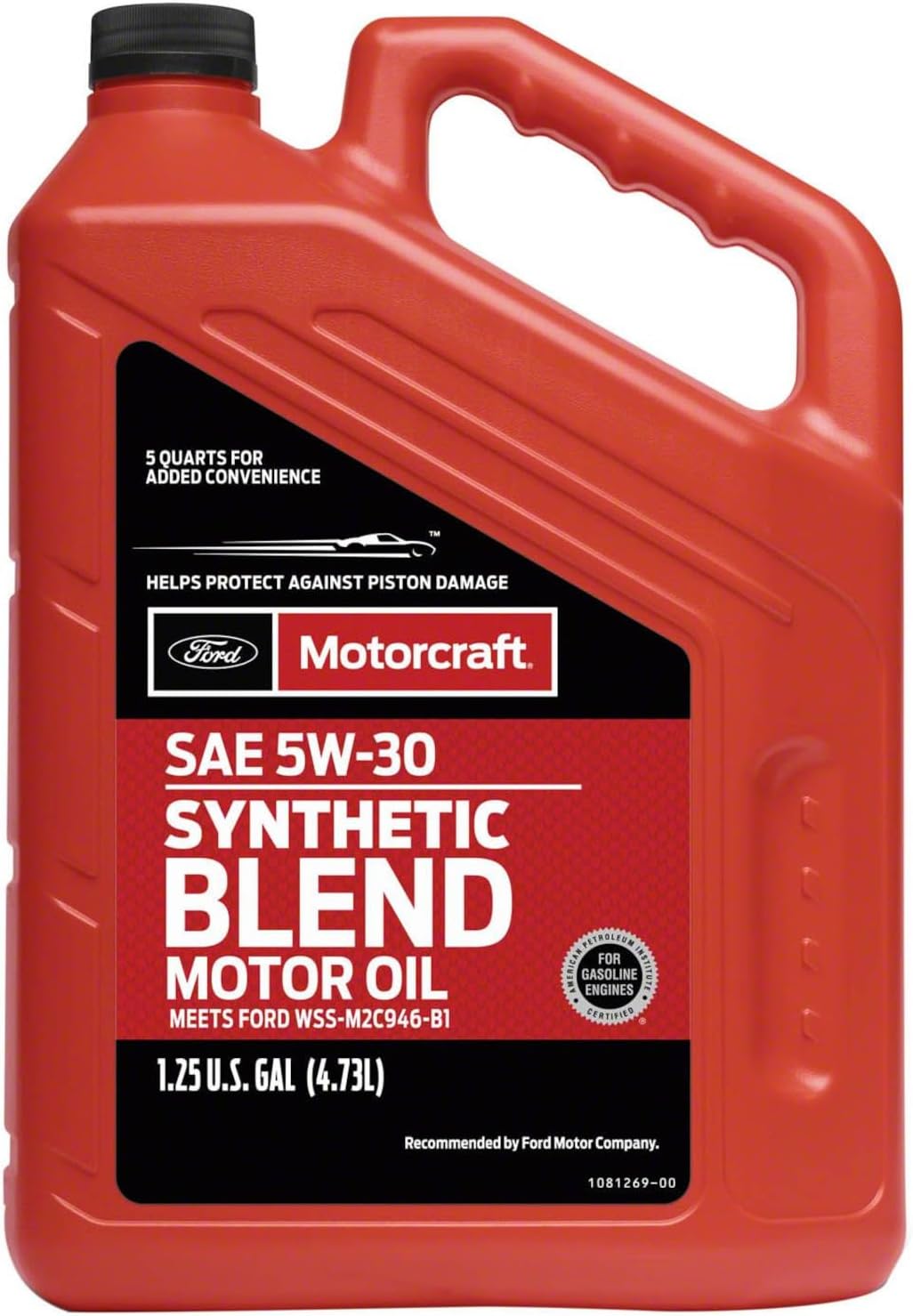
| Viscosity | 5W-30 SAE Grade |
|---|---|
| Vehicle Service Type | Car, SUV, Truck, Van |
| Size | 5-Quart Jug |
| Flash Point | 446 Degrees Fahrenheit |
This Motorcraft 5W-30 jug is the factory-quality engine oil formulation intended for Ford vehicles and other compatible passenger vehicles. It is used like any standard motor oil: pour into the engine during routine oil changes to lubricate moving parts, control wear, and help maintain fuel economy and cold-start performance. Notable features include the SAE 5W-30 viscosity grade that supports good cold-weather flow and a flash point listed for thermal stability. The 5-quart jug size matches typical one-time fill volumes for many trucks and light vehicles, so you can complete a full change without opening multiple containers. Because this is Motorcraft brand oil, it aligns with factory service recommendations for Ford engines and simplifies parts planning. Limitations are few: the listing does not specify API or Ford specification numbers on the product detail panel here, so installers should verify compatibility with the F-150 model year and engine before using it in vehicles that require a specific spec. The product is straightforward and practical for routine maintenance when it matches vehicle requirements.
Best for: Balanced owners who prioritize maintaining factory-quality service intervals and want a straightforward, no-fuss oil change solution for an F-150.
Less Ideal for: Drivers who need a specific certified oil (for example a required Ford spec or specialty synthetic formulation) should verify the required spec or choose a product that explicitly lists that certification.
- Factory-brand formulation tuned for Ford vehicles
- 5-quart jug covers a typical full oil change without extra containers
- 5W-30 viscosity provides reliable cold-start flow and everyday protection
- High flash point indicating good thermal stability during operation
- Product details on the listing do not show specific API or Ford specification numbers which are important for some model years
Verdict: A practical factory-brand 5W-30 in a 5-quart jug that fits routine F-150 oil changes when it meets the vehicle's required specification.
Mobil 1 Turbo Diesel Truck Full Synthetic Motor Oil 5W-40, 1 Gal

| SAE J300 Viscosity Grade | 5W-40 |
|---|---|
| Container Type | Jug |
| Compatible with Vehicle Type | Truck |
| Item Type Name | Full Synthetic Motor Oil |
Mobil 1 Turbo Diesel Truck 5W-40 is a full synthetic heavy-duty motor oil designed to protect high-performance diesel engines under severe duty cycles. It is typically used in turbocharged diesel pickups and mixed-fleet operations where long drain intervals and stable protection at high temperatures are important. Notable features include engineered thermal and oxidative stability to resist high-temperature deposits, formulation to reduce low-temperature sludge, and good cold-start pumpability that helps reduce wear on startup. In practical use this oil keeps engines clean, smooths turbocharged operation, and supports extended drain schedules for drivers who put heavy miles on their trucks. The product is positioned for diesel applications but can be applied across modern light- and heavy-duty diesel use cases where manufacturer approvals and mixed-fleet compatibilities are required. A limitation is that the 5W-40 grade is targeted at diesel engines and may not match every gasoline-engine viscosity recommendation, so verify Ford F-150 engine requirements before selecting this grade.
Best for: Performance-oriented buyers who prioritize engine protection and extended drain capability for heavy-use trucks and mixed-fleet diesel applications.
Less Ideal for: Owners seeking a gasoline-focused engine oil matched to Ford F-150 gasoline engine factory viscosity recommendations should consider a grade specified for their engine instead.
- Full synthetic formulation offers strong thermal and oxidative stability to resist high-temperature deposits
- Good low-temperature pumpability improves cold starts and reduces initial wear
- Formulated for long drain intervals suitable for heavy-duty and high-mileage applications
- Designed for mixed-fleet use and meets demanding manufacturer specifications for many diesel engines
- Viscosity grade 5W-40 is optimized for diesel engines and may not be ideal for all Ford F-150 gasoline engines
Verdict: A high-performance full synthetic 5W-40 oil built to protect turbo diesel truck engines under severe duty and support extended drain intervals.
Schaeffer Supreme 9000 Full Synthetic Gasoline Engine Oil 5W-20, 1 Quart

| Viscosity | 5W-20 |
|---|---|
| Vehicle Service Type | Truck |
| Size | 1 Quart |
| SAE J300 Viscosity Grade | 5W-20 |
Schaeffer Supreme 9000 is a full synthetic 5W-20 engine oil designed to lower friction, limit sludge and keep combustion chambers cleaner than conventional oils. For a Ford F-150 that calls for 5W-20, this oil is used like any engine oil during routine oil changes and is intended to provide stronger protection during stop-and-go driving and under higher under-hood temperatures. Notable features include a performance additive package, friction modifiers such as molybdenum compounds, and a viscosity index improver to maintain film strength at elevated temperatures. In practice that means smoother cold starts, reduced metal-to-metal wear, and potentially cleaner internals between services. The main limitations are that this bottle is a single quart so multiple bottles are needed for a full F-150 oil change, and fit only applies if the vehicle manufacturer permits 5W-20; owners of F-150s requiring a different viscosity must choose another oil. This oil prioritizes engine protection and cleanliness over supplying extra volume per package, so expect to buy several quarts for a complete service.
Best for: Practical optimizers who value lasting engine protection and cleaner internals for everyday driving and light towing, and who prioritize cost-effective maintenance over buying bulk single-pack fluids.
Less Ideal for: Drivers who prefer buying in bulk or need a different viscosity than 5W-20 for their Ford F-150 should consider other options.
- Full synthetic formulation for better high-temperature stability and protection
- Contains friction modifiers to reduce wear and smooth cold-start noise
- Formulated to resist sludge and keep engine internals cleaner
- Suitable for gasoline engines including turbocharged and supercharged units
- Sold in single-quart bottles so you must purchase multiple units for a full F-150 oil change
- Viscosity is fixed at 5W-20 so it is not appropriate for F-150 engines that require a different grade
Verdict: A protection-focused 5W-20 full synthetic that delivers cleaner engines and reduced wear but requires buying multiple quarts for a full F-150 oil change.
Valvoline Advanced Full Synthetic SAE 0W-20 Motor Oil (1 qt, pack of 6)

| SAE J300 Viscosity Grade | 0W-20 |
|---|---|
| Compatible with Vehicle Type | Car, Truck |
| Liquid Volume | 6 Quarts |
| Container Type | Bottle |
Valvoline Advanced Full Synthetic 0W-20 is a factory‑quality full synthetic motor oil packaged as six 1‑quart bottles for topping off or oil changes. It is formulated to meet ILSAC GF‑6A, API SP and GM dexos1 Gen3 where required, and advertises improved wear protection, deposit control, and cold‑start flow compared with conventional oils. Typical use for an F-150 with a 0W-20 factory fill would be routine maintenance, extended protection in stop‑and‑go commuting, and topping off between changes. The product claims 40% better wear protection and 25% better deposit protection versus industry standards, which translates to reduced engine wear and cleaner internals over time. Because it is a true full synthetic, it flows well at low temperatures and helps with fuel economy and engine responsiveness. The limitation for some F-150 owners is viscosity: only 0W-20 is supplied here, so trucks requiring 5W‑30, 5W‑20, or other grades should choose a matching grade instead; also this listing is a multi‑bottle pack which may be more than needed for a single service on larger engines that require more quarts.
Best for: Budget‑conscious owners looking for a reputable full synthetic that delivers strong everyday protection and allows easy top‑offs without buying single large containers.
Less Ideal for: Owners whose Ford F-150 specifies a different viscosity grade or who prefer buying a single large jug per oil change should consider other grade options or container sizes.
- Full synthetic formula for improved cold‑start flow and engine protection
- Meets ILSAC GF‑6A, API SP and GM dexos1 Gen3 approvals where applicable
- Pack of six 1‑quart bottles is convenient for topping off between services
- Manufacturer claims stronger wear and deposit protection versus industry standards
- Only available in SAE 0W‑20 grade in this listing, not suitable if your F-150 requires a different viscosity
- Pack quantity may exceed the amount needed for a single oil change on larger engines
Verdict: A reputable full synthetic 0W‑20 sold in six 1‑quart bottles that gives budget buyers factory‑level protection and easy top‑offs for routine F-150 maintenance.
Motorcraft SAE 5W-20 Synthetic Blend Motor Oil – 5 Quart Jug

| SAE J300 Viscosity Grade | 5W-20 |
|---|---|
| Container Type | Jug |
| Liquid Volume | 5 Quarts |
| Automotive Fit Type | Vehicle Specific Fit |
This Motorcraft SAE 5W-20 synthetic blend is a factory-recommended motor oil supplied in a 5-quart jug for routine oil changes on compatible Ford family vehicles. It is formulated from synthetic/hydro-processed base oils and performance additives to reduce engine deposits, control oxidation and turbocharger buildup, resist low-temperature gelling, and limit foaming. In everyday use it provides friction-reducing protection that can help lower wear and improve fuel economy compared with heavier grades like 5W-30. The product meets Ford WSS-M2C960-A1 and SN PLUS performance classifications and is intended for gasoline and flex-fuel engines listed in Ford's fitment notes. Practical benefits include factory-quality fitment, predictable performance for scheduled maintenance, and the convenience of a 5-quart container for a single full service. Limitations are narrow viscosity choice and vehicle fitment specific to select Ford, Lincoln, and Mercury models, so confirm this grade matches the F-150 year and engine before buying.
Best for: Reliability-focused owners who prioritize factory-spec maintenance and predictable service intervals for their Ford vehicles.
Less Ideal for: Drivers seeking multi-grade flexibility or those with engines that require a different viscosity or a fully synthetic oil for high-performance or extreme towing conditions.
- Factory-recommended formulation engineered for Ford gasoline and flex-fuel engines
- Synthetic blend base oils and additives reduce deposits, oxidation, and wear
- Meets WSS-M2C960-A1 and SN PLUS specifications for modern engine protections
- 5-quart jug provides enough oil for a full service without separate bottles
- Only available in a single viscosity grade (5W-20) which may not suit all F-150 engines
Verdict: A factory-recommended 5W-20 synthetic blend that gives reliability-focused Ford owners a dependable, service-ready oil for compatible engines.
Motorcraft SAE 10W-30 Super Duty Diesel Motor Oil, 5 Quart

| Viscosity | 10W-30 |
|---|---|
| Brand | Motorcraft |
| Vehicle Service Type | Car |
| Size | 5 Quart Jug |
| SAE J300 Viscosity Grade | 10W-30 |
This Motorcraft 10W-30 motor oil is a factory-quality engine lubricant supplied in a 5-quart jug for routine changes. It is designed for use in cars and light trucks that call for a 10W-30 viscosity and is intended to provide dependable lubrication, wear protection, and compatibility with Ford and Lincoln engine designs. Typical use is straightforward: pour during a scheduled oil change or keep a spare jug for convenient top-ups. Notable features include the familiar Motorcraft formulation and packaging sized for a single full change on many V6 and V8 engines. The practical benefits are consistency with factory recommendations, predictable performance in everyday driving, and easy handling from the jug. Limitations are intrinsic to the grade: 10W-30 is less appropriate than lower-viscosity oils for very cold starts and it is not a specialty synthetic blend specified for extended drain intervals, so users wanting maximum fuel economy or very long oil-change intervals may prefer alternate formulations.
Best for: Convenience-driven owners who prioritize using a factory-recommended, ready-to-use oil that makes regular maintenance quick and predictable.
Less Ideal for: Drivers seeking a winter-optimized low-viscosity oil or owners who want a high-mileage synthetic with extended drain capability should consider other formulations.
- Factory-quality formulation engineered for Ford and Lincoln engines
- Convenient 5-quart jug sized for a standard oil change
- Consistent 10W-30 viscosity suitable for everyday driving and load conditions
- Well-known brand with a long track record and many positive user reports
- 10W-30 viscosity is not optimized for very cold climates compared with lower-viscosity oils
- Not positioned as a long-drain synthetic for extended oil-change intervals
Verdict: Motorcraft 10W-30 in a 5-quart jug is a convenient, factory-quality choice for routine oil changes on Ford vehicles.
Valvoline Full Synthetic High Mileage with MaxLife Technology SAE 5W-30 Motor Oil (3 × 5 qt)

| Size | 5 qt (Pack of 3) |
|---|---|
| Viscosity | SAE 5W-30 |
| Compatible with Vehicle Type | Car, Truck |
| Flash Point | 433 Degrees Fahrenheit |
| Unit Count | 480.0 Fluid Ounces |
Valvoline Full Synthetic High Mileage 5W-30 is a full synthetic engine oil designed to protect aging engines and reduce common high‑mileage problems. It is typically used during routine oil changes for trucks like the Ford F-150 that have passed roughly 75,000 miles and need extra protection against wear, leaks, and sludge. The formula includes anti‑wear additives, detergents, and seal conditioners that help reduce oil consumption and rejuvenate hardened seals, which can cut down on drip leaks and top‑offs between services. It meets modern API and ILSAC specifications so it will work with current engine technology while offering enhanced deposit control and corrosion resistance. Practical benefits for an F-150 include steadier cold starts, reduced engine noise, and less sludge buildup in older V6 and V8 powerplants. The main limitation is that its advantages are aimed at higher‑mileage engines; drivers of new or low‑mileage F-150s may not see measurable benefits compared with a standard full synthetic formulated for newer engines.
Best for: Risk‑averse mainstream buyers who prioritize long‑term engine preservation and want a trusted, technician‑recommended oil for higher‑mileage Ford F-150s.
Less Ideal for: Owners of new or low‑mileage F-150s seeking a standard synthetic for factory‑interval maintenance should consider a general full synthetic formulated for newer engines instead.
- Formulated specifically for high‑mileage engines to reduce wear and oil consumption
- Includes seal conditioners to help treat and prevent oil leaks in aging engines
- Full synthetic base with detergents for improved deposit and sludge control
- Meets modern API SP and ILSAC GF‑6A standards for compatibility with current engine technology
- Benefits are targeted at engines with significant mileage and may be unnecessary for new engines
- Pack size is three 5‑quart bottles which may be more than needed for a single change on some F-150 configurations
Verdict: A proven full synthetic high‑mileage oil that helps extend the life of Ford F-150 engines by reducing wear, leaks, and deposits.
Choosing the Right Ford F-150 Engine Oil: Key Factors to Consider
Viscosity Grade
Viscosity affects oil flow at different temperatures and influences cold-start protection and high-temperature film strength. Choosing the correct SAE grade helps ensure adequate lubrication during both startup and sustained highway or towing operation. Check your vehicle manual for the recommended viscosity range and consider local climate when selecting a grade.
OEM Specification and Approvals
Ford-issued specifications indicate oils tested to meet the engine's sealing, wear, and emissions system needs. Using oils that cite the correct manufacturer specs reduces the risk of compatibility issues with seals, filters, or emission hardware. Look for clear spec references on technical data sheets.
Additive Chemistry
Detergents, antiwear agents, and viscosity modifiers determine how well an oil resists deposits and reduces friction. A robust additive package can protect piston rings, bearings, and turbo components during heavy loads and prolonged use. Consider formulations that emphasize deposit control and wear protection for demanding driving.
Synthetic Vs Conventional Base
Full synthetics typically offer better low-temperature flow, thermal stability, and longer drain potential than conventional oils. Conventional oils may be acceptable for less demanding use but often require shorter intervals. Match the base stock to your driving patterns and maintenance preferences.
High-Mileage Considerations
Engines with higher miles may benefit from oils formulated with conditioners that help protect seals and reduce oil consumption. High-mileage formulations often include extra detergents or seal-swelling additives to address common wear-related issues. Evaluate whether a high-mileage focused oil suits your truck's current condition.
Towing and Heavy Loads
Frequent towing elevates engine stress and temperature, increasing the need for stable film strength and oxidation resistance. Choose oils with proven thermal stability and strong antiwear properties to protect bearings and piston components during sustained high-load operation. Consider oils rated for extended protection under increased thermal stress.
Why the Right Ford F-150 Engine Oil Matters
Choosing the correct Ford F-150 engine oil affects more than just lubrication. The right formulation protects bearings and valve train components, controls deposits on piston rings, maintains viscosity under load, and supports cold starts. For modern F-150 engines with turbochargers, direct injection, or cylinder deactivation systems, oil must meet specific performance and emission system compatibility needs.
Using oil matched to your F-150's engine design and operating conditions helps preserve fuel economy, reduce wear during towing or hauling, and limit sludge and varnish buildup. That means picking oil by more than just viscosity numbers; you want a product that aligns with the truck's service requirements and the way you use it.
- Protects against wear under varied loads and temperatures
- Helps maintain fuel economy and emissions system health
- Reduces deposits that cause performance degradation over time
Understanding Base Oil Types and Formulations
Engine oils are built on different base stocks and additive packages. Full synthetic formulations offer improved oxidation resistance, shear stability, and flow at low temperatures compared with conventional motor oil. Those properties can be especially useful if you do a lot of short trips, cold-weather starting, or frequent towing.
Synthetic blends aim to strike a balance between cost and performance, while conventional oils still meet basic engine protection needs for low-stress driving. For F-150 owners considering oils for engines with higher mileage, there are formulations specifically designed to address seal conditioning and reduce oil consumption.
- Full synthetics: best for temperature extremes, stability, and long drain intervals
- Synthetic blends: compromise between protection and cost
- Conventional: suitable for light use and older engines with routine maintenance
How Climate and Driving Habits Influence Oil Choice
Ambient temperature and driving style change the demands placed on engine oil. In cold climates, oils with better low-temperature flow help reduce start-up wear and speed up oil circulation. In hot environments or under heavy load, an oil with strong high-temperature viscosity retention prevents thinning and maintains a protective film.
Driving habits also matter. Frequent short trips, stop-and-go traffic, and lots of idling accelerate contamination and moisture buildup, making oils with robust detergent and dispersant chemistry more valuable. Conversely, long highway miles at steady speeds favor oils that deliver low friction and consistent viscosity to maximize fuel efficiency.
- Cold weather: prioritize low-temperature pumpability
- Hot weather and heavy loads: prioritize high-temperature shear stability
- Stop-and-go vs highway: balance detergency vs friction reduction
Interpreting Specifications, Approvals, and Viscosity Labels
Always cross-reference the Ford F-150 engine oil recommendations in the owner's manual. Ford specifies viscosity grades and often lists required performance specifications or OEM approvals. The two-number viscosity rating, such as 5W-30, indicates cold-cranking viscosity and operating-temperature viscosity; follow the manual guidance for your engine and climate.
Beyond viscosity, look for oils that meet industry and manufacturer performance standards. API, ILSAC, and ACEA ratings and any Ford-specific approvals indicate the oil has passed laboratory and engine tests relevant to durability, emission system compatibility, and deposit control. Reading the label will help you match the formulation to the truck's service needs.
- Viscosity grade tells you cold start and high-temp behavior
- Manufacturer approvals ensure compatibility with Ford engines
- Performance ratings indicate tested protection against wear and deposits
Practical Maintenance Guidance and Scheduling
Follow the maintenance interval recommended in your F-150 owner's manual for oil change frequency. Useful factors that influence interval adjustments include engine use, towing frequency, and local driving patterns. When you do an engine oil change, also replace the oil filter and inspect for leaks, coolant contamination, or unusual metal particles in the drained oil.
For trucks used for towing, frequent short trips, or heavy idling, shortening oil change intervals provides an extra margin of protection. Conversely, if you use a full synthetic that meets Ford's specs and you mostly drive steady highway miles, you can often follow extended intervals specified by the manufacturer. Keep clear maintenance records and monitor oil condition periodically.
- Change oil and filter per owner's manual and adjust for severe service
- Inspect drained oil for color and metal particles to catch developing issues
- Keep maintenance records to validate warranty and resale value
DIY Oil Change Tips and Safe Practices for F-150 Owners
If you perform your own oil maintenance, prepare the truck on level ground, use proper jack stands if lifting, and allow the engine to cool slightly for safer draining. Use the correct drain plug torque and a quality replacement filter sized for your F-150 engine. Dispose of used oil and filters at an appropriate collection facility.
Measure the fill quantity specified for your engine and top off carefully to avoid overfilling. After running the engine briefly, recheck the dipstick and look for leaks around the filter and drain plug. Record the date, mileage, oil type, and filter part to help track maintenance history.
- Use correct oil capacity and filter for your specific F-150 engine
- Check for leaks after the initial post-change run
- Recycle used oil and filters responsibly at a local collection point
How We Chose the Best Ford F-150 Engine Oil
We focused on factors that matter specifically to Ford F-150 owners and the engine designs commonly found in these trucks. Primary evaluation criteria included viscosity suitability across ambient temperatures, compatibility with Ford specification requirements, additive chemistry for wear and deposit control, and performance under towing or heavy-load conditions. We also considered suitability for higher-mileage engines, whether the oil supports extended drain intervals, and how well it protects during cold starts. Products were excluded if they lacked clear documentation of specification compliance or failed to provide detailed viscosity and additive information. We prioritized oils with transparent technical datasheets and clear guidance for engine protection, while excluding niche or poorly documented formulations that do not provide reliable fitment or spec information for the F-150 platform.
Our full evaluation process is outlined in our review methodology.
FAQ
How often should I change the engine oil in my Ford F-150?
Oil-change intervals depend on the oil type, driving conditions, and engine age. Under normal driving, many synthetic oils allow longer intervals than conventional oils, but frequent towing, idling, or short trips may justify more frequent changes. Follow the vehicle manual recommendations and consider more frequent service when operating under severe conditions.
Can I switch between synthetic and conventional oil in my F-150?
You can switch between synthetic and conventional oils, but it is best to follow the manufacturer's guidance and use oils that meet the correct specifications. Switching is generally safe if the new oil matches the recommended viscosity and spec. If your engine has high oil consumption or leaks, consult maintenance guidance before changing formulations.
Does high-mileage oil really help older F-150 engines?
High-mileage oils often include seal conditioners and targeted additives that can reduce oil consumption and protect worn components. They can be beneficial for engines showing increased oil use or minor leaks, but results vary by engine condition. Consider high-mileage formulations as one part of a broader maintenance approach.
What oil viscosity is best for cold climates?
Lower cold-temperature viscosity, indicated by the first number in the SAE grade, improves cold-start flow and reduces startup wear. In cold climates, choose a grade with a lower winter rating to help ensure rapid oil circulation on startup, while still meeting the engine's high-temperature requirements.
Does using a different oil affect emissions equipment?
Oil chemistry can influence deposit formation and compatibility with emission control systems. Using oils that meet manufacturer specifications helps ensure they do not contribute to increased emissions system deposits. Avoid formulations that lack clear compliance statements with required specifications.
Final Verdict
Choosing the right engine oil for a Ford F-150 means balancing viscosity, specification compliance, and additive chemistry against the truck's typical use. Prioritize oils that match Ford recommendations for viscosity and spec approvals if you routinely tow, drive in extreme temperatures, or have a higher-mileage engine. Remember that synthetics offer better cold-start flow and thermal stability, while high-mileage formulas can help address wear-related issues.
Explore More:
- Check out all Ford F-150 parts & accessories
- Explore Fluids & Chemicals
- Browse all Accessories
