

Note: This article contains affiliate links. If you click on these links and make a purchase, I may earn a small commission at no extra cost to you. This helps support my research and content. Read my full affiliate disclosure here.
Upgrading or replacing the turbocharger on a 2015-2020 Ford F-150 affects drivability, towing capability, and engine longevity. Whether you need a direct replacement after a failure or want a targeted performance upgrade, picking the right turbocharger matters because it determines spool characteristics, boost control, and thermal durability under heavy use.This guide presents six shortlisted turbochargers chosen for fitment and reliability on 2015-2020 Ford F-150 models. We evaluate each option for fit, spool and boost behavior, and long-term serviceability to help you decide which path—replacement, rebuild, or upgrade—best matches your goals. Read on to see the factors we considered before the product recommendations.
Looking for other parts? See all Ford F-150 parts & accessories.
Top Picks at a Glance
| Best Overall The best all-around choice for most situations | DOFOCH Twin Turbocharger Kit for 2013–2016 Ford F-150 3.5L V6 |  |
| Best Quality Built to a higher standard if you want something more solid | TURBOKOO Twin Turbocharger Kit for 3.5L EcoBoost (left and right) |  |
| Best Value The sweet spot between price and what you get | DOFOCH Left and Right Turbocharger Kit for Ford 3.5L EcoBoost (2013–2016) |  |
| Best Budget The cheapest option that still gets the job done reliably | labwork Left Driver Side Turbocharger Replacement for 3.5L EcoBoost |  |
| Highest Rated A top-rated pick with lots of positive feedback | maXpeedingrods Twin Turbocharger Set for Ford F-150 2.7L EcoBoost (2015–2017) |  |
| Most Popular A crowd favorite that many people choose with confidence | GELUOXI K03 Twin Turbochargers — Left & Right Replacement for 3.5L EcoBoost Ford 2013–2016 |  |
DOFOCH Twin Turbocharger Kit for 2013–2016 Ford F-150 3.5L V6

| Compatible engines | 3.5L EcoBoost V6 (2013–2016 Ford F-150 and related models) |
|---|---|
| Material | Cast iron |
| Included parts | Left and right turbocharger kit |
| Manufacturer | DOFOCH |
This DOFOCH twin turbocharger kit replaces both left and right turbo units on 3.5L EcoBoost V6 Ford trucks and related applications. The kit uses cast iron housings, which favors high temperature resistance and long service life compared with lighter materials. Installation is the typical turbo swap: remove the failed cores, fit the new units and connect oil and coolant lines and gaskets. Buyers will appreciate that the kit targets both turbos so boost balance and matching are handled at once rather than replacing a single side. Reported benefits include restored power and drivability when installed correctly. Common real-world issues from user reports include occasional early failures, oil leaks, and inconsistent quality control, so careful inspection and correct line/gasket installation are important. The manufacturer offers a one-year guarantee, but some buyers have had difficulty contacting support. For a balanced buyer looking to replace worn or failed turbos with a factory-style cast-iron option, this kit is a practical choice if you accept the possibility of variable unit-level quality and verify fitment before installation.
Best for: Buyers who want a factory-style, cost-conscious replacement for both turbos on a 3.5L EcoBoost truck and prioritize restoring stock performance and drivability.
Less Ideal for: Shoppers seeking a high-performance upgrade, precision-balanced remanufactured units, or guaranteed manufacturer support should consider higher-end or professional remanufactured options instead.
- Sold as a matched left and right turbocharger kit for balanced boost and straightforward replacement
- Cast iron construction for improved heat resistance and durability
- Direct fit for specified 3.5L EcoBoost V6 applications so it replaces factory turbo geometry
- Includes OE part number compatibility to help confirm fitment
- Targets common symptoms like loss of power and rough running when original turbos fail
- Mixed quality control reported by multiple users leading to occasional premature failures
- Some customers experienced oil leaks requiring additional gasket or line work
- Manufacturer support and warranty responsiveness reported as unreliable in some cases
Verdict: A matched, cast-iron replacement twin-turbo kit that restores stock boost and drivability for 3.5L EcoBoost F-150s when you want an affordable factory-style swap.
TURBOKOO Twin Turbocharger Kit for 3.5L EcoBoost (left and right)

| Compatible engines | Ford 3.5L EcoBoost |
|---|---|
| Fitment years | F-150 2013-2016, Expedition 2015-2017, Transit 2015-2020 |
| Turbine material | Inconel713C |
| Compressor wheel | Billet |
This twin turbocharger kit replaces both left and right units on Ford 3.5L EcoBoost trucks and vans and is aimed at restoring or improving forced-induction performance. It uses a billet compressor wheel and an Inconel713C turbine wheel rated for very high exhaust temperatures, plus a high-temp turbine housing and high-speed balancing to reduce vibration. In practice the kit is used when a worn or damaged turbo needs direct replacement or when an owner wants a more heat-resistant aftermarket unit. The upgraded materials should improve durability under heavy load and repeated boost cycles, while the balanced rotating assembly helps reduce spool lag and bearing wear. Installation requires standard turbo removal and reinstallation steps and may be best handled by a shop if you do not have turbo experience. These are economy-priced aftermarket replacements built to factory-quality tolerances rather than a full performance-stage upgrade, so peak power gains will depend on supporting mods and tuning.
Best for: Drivers who prioritize heat-resistant, durable turbo components and want a direct aftermarket replacement to maintain or modestly improve performance under sustained boost.
Less Ideal for: Buyers seeking a drop-in high-horsepower performance turbo or those who prefer a dyno-proven stage upgrade with tuning included should look elsewhere.
- Includes both left and right turbochargers for complete replacement
- Billet compressor wheel for improved strength and responsiveness
- Inconel713C turbine wheel and high-temp housing for better heat resistance
- VSR high-speed balancing to reduce vibration and extend bearing life
- Not a plug-and-play performance upgrade; significant power gains require additional tuning and supporting modifications
Verdict: Choose this twin turbo kit if you need a durable, heat-resistant aftermarket replacement for the 3.5L EcoBoost that restores reliable boost performance.
DOFOCH Left and Right Turbocharger Kit for Ford 3.5L EcoBoost (2013–2016)

| Brand | DOFOCH |
|---|---|
| Model | TURBO-003 |
| Manufacturer Part Number | 53039880469 53039700470 |
| Compatible Engines | 3.5L EcoBoost (Ford) |
This DOFOCH turbocharger kit supplies left and right units intended as direct replacements for 3.5L EcoBoost Ford engines from the mid-2010s. Typical use is a like-for-like swap when original turbos are worn or damaged; the listing highlights aluminum compressor housings and iron turbine housings to resist heat and wear. Buyers should expect the usual benefits of a functioning turbocharger: restored boost, improved throttle response and potential fuel-efficiency gains compared with a failing unit. The kit comes with test documentation for vibration checks and appears to include studs and gaskets for some connections, though reviewers note the exhaust manifold gasket may not be included. Fitment reports from buyers indicate straightforward installation and good fit for F-150 and similar Ford applications. Limitations are typical of aftermarket replacements: long-term reliability versus higher-cost factory-quality units is still to be proven and you should verify part numbers before ordering. Overall this is a cost-focused replacement option that aims to restore factory performance without the OEM price tag.
Best for: Buyers looking to restore factory boost and drivability on a mid-2010s 3.5L EcoBoost while keeping costs down, and who prioritize a practical, budget-conscious repair over paying for dealer-priced parts.
Less Ideal for: If you want a verified long-term performance upgrade or are rebuilding a high-mileage engine for long-term reliability, consider higher-end or dealer-sourced turbochargers instead.
- Made with aluminum compressor housing and iron turbine housing for heat and wear resistance
- Sold as matched left and right turbochargers to replace both units at once
- Includes vibration test documentation and hardware like studs which simplifies installation
- Multiple buyer reports of direct fit and restored engine performance
- May not include the exhaust manifold gasket so additional parts could be required
- Aftermarket unit so long-term durability may not match higher-cost factory-quality turbos
Verdict: A budget-focused matched left/right turbocharger kit that restores factory boost and fitment for mid-2010s 3.5L EcoBoost engines without the OEM price.
labwork Left Driver Side Turbocharger Replacement for 3.5L EcoBoost
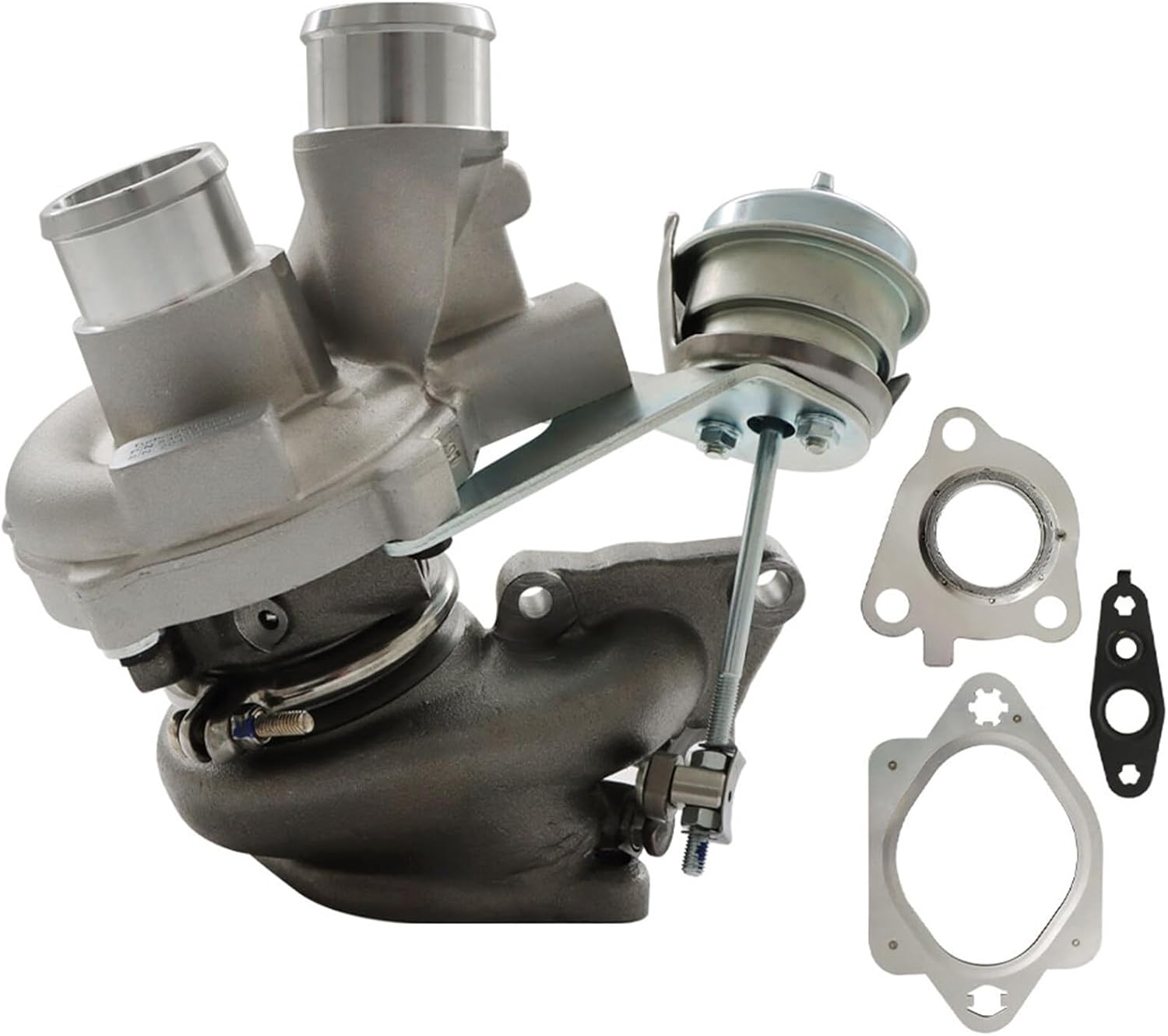
| Fitment | Replacement for F-150 3.5L EcoBoost 2014-2016; Transit/Expedition/Navigator 2015-2017 |
|---|---|
| Manufacturer | labwork |
| Manufacturer Part Number | 1-6989413-106134 |
| OEM Part Number | 53039880469 |
This labwork left driver-side turbocharger is a direct replacement for 3.5L EcoBoost applications and is intended to restore turbo function and drivability on affected Ford trucks and vans. It installs in place of the factory unit, so a competent DIYer or a shop can swap it in without major modifications. The listing highlights improved fuel efficiency and faster throttle response compared with a worn turbo, and the part supports the common OEM part numbers for F-150, Expedition, Navigator, and Transit models in the specified years. Practical benefits include bringing back lost power and drivability and avoiding the higher cost of an OEM replacement. Expect typical downsides of aftermarket turbos: limited long-term durability data compared with factory-quality units and possible variation in fitment or internal balancing that could require careful inspection at installation. The unit is moderately heavy and ships with standard turbo mounting interfaces, but buyers should confirm the exact part number and have seals and gaskets on hand for a clean install.
Best for: Buyers looking to fix a failed left-side 3.5L EcoBoost turbo without paying OEM prices and who prioritize getting the vehicle back on the road affordably.
Less Ideal for: If you need a long-term performance upgrade or an extensively tested factory-quality replacement, a higher-end or dealer turbocharger may be a better choice.
- Direct-replacement design for 3.5L EcoBoost left driver-side turbochargers
- Designed to restore boost, throttle response, and improve fuel efficiency
- Matches common OEM part numbers for compatible Ford models for easier verification
- Simpler installation compared with custom or modified turbochargers
- Aftermarket unit with limited publicly available long-term durability data
- May require replacement of seals and gaskets and careful fitment check during installation
Verdict: A cost-conscious direct-replacement left turbo that restores boost and drivability for 3.5L EcoBoost Ford vehicles without the premium of dealer parts.
maXpeedingrods Twin Turbocharger Set for Ford F-150 2.7L EcoBoost (2015–2017)

| Fitment | Ford F150 2.7L V6 2015-2017 |
|---|---|
| Cooling Type | Water+Oil Cooling |
| Actuator Type | Vacuum Actuator |
| Thrust Bearing | 270 Degrees |
| OE Part Numbers | FL3Z-6K682-E/B/D/A/C |
This twin turbocharger kit from maXpeedingrods is built as a direct factory replacement for the 2.7L EcoBoost V6 used in 2015–2017 Ford F-150 trucks. It replaces both left and right units and is designed for straightforward installation without modifications, restoring boost response and eliminating common turbo symptoms like smoking or rattling. Key features include water and oil cooling, ductile iron turbine housings rated for high exhaust temperatures, and forged aluminum compressor wheels for improved airflow stability. The package ships with gaskets but not the exhaust mounting bolts, so plan to reuse hardware or source fasteners separately. For drivers prioritizing reliability, the turbo uses a 270 degree thrust bearing and vacuum actuator for consistent operation under varied driving. Expect renewed factory-level performance and durability when installed correctly, though long-term dependability will depend on proper oil supply, installation torque, and maintenance. This is a practical replacement option when you need to get a 2.7L F-150 back to factory boost and drivability quickly.
Best for: Buyers who need a reliable, direct-replacement turbo set to restore factory boost and drivability on a 2.7L F-150 and who prioritize straightforward installation and durable construction.
Less Ideal for: Not a match for owners seeking performance upgrades beyond stock behavior or for vehicles outside the 2015–2017 2.7L F-150 scope.
- Direct-fit design for 2015–2017 Ford F-150 2.7L EcoBoost to simplify installation
- Ductile iron turbine housings and alloy turbine wheel rated for high exhaust temperatures
- Forged aluminum compressor wheel with aerodynamic profile for stable boost response
- Includes both left and right turbochargers plus gaskets for a full replacement
- Does not include exhaust mounting bolts, which may need to be sourced separately
Verdict: A practical, factory-replacement twin-turbo set that restores reliable boost and drivability for 2015–2017 Ford F-150 2.7L EcoBoost trucks.
GELUOXI K03 Twin Turbochargers — Left & Right Replacement for 3.5L EcoBoost Ford 2013–2016

| Engine fitment | 3.5L EcoBoost V6 (twin turbo) |
|---|---|
| Turbo model | K03 |
| Compatible years | 2013–2016 Ford 3.5L applications |
| Manufacturer | GELUOXI |
| OEM part references | DL3E6C879AD / DL3E6K682AE / 53039880469 / 53039880470 |
These GELUOXI K03 turbochargers are a direct-replacement pair intended for the 3.5L EcoBoost twin-turbo engines used in select Ford trucks and SUVs from 2013 through 2016. They install in place of the factory units and are typically fitted by a professional technician due to oil and coolant line routing and calibration needs. The kit lists multiple factory part numbers for left and right turbos and advertises K03 internals, heat-resistant materials, and the potential for noticeable increases in horsepower and torque when correctly installed. Real-world feedback is mixed: several owners report an immediate power boost and smooth performance after installation, while others encountered fitment issues with coolant fittings and threaded fasteners that required modification. Because this is a full turbo pair, expect to refresh oil lines and follow break-in and lubrication procedures to avoid premature wear. This option is attractive for budget-focused owners who need a replacement set and are comfortable verifying fitment and handling minor installation adjustments, but it may require extra attention compared with a factory-quality remanufactured unit.
Best for: Buyers who prioritize cost-effective replacement turbochargers and want a full left-and-right set for a 3.5L EcoBoost engine while relying on peer feedback to gauge real-world fit and performance.
Less Ideal for: Drivers who want a guaranteed factory-quality remanufactured unit or who need a bolt-in plug-and-play swap without any possibility of fitting adjustments should consider other options.
- Sold as a left and right turbo pair to replace both units at once
- Lists multiple factory part numbers making it easier to verify compatibility
- K03 turbo model with heat-resistant components aimed at durability under boost
- Several buyers report clear power and torque improvements after installation
- Some customers reported incorrect coolant/oil fitting holes and fastener fitment requiring modification
- Quality consistency appears variable based on user reports
Verdict: A budget-minded full left-and-right K03 turbocharger pair that can restore or increase power on 3.5L EcoBoost Fords if you verify fitment and handle installation carefully.
Choosing the Right 2015-2020 Ford F-150 Turbocharger: Key Factors to Consider
Fitment and Mounting
Correct physical fit is the first priority for any 2015-2020 Ford F-150 turbocharger. The turbo must align with factory manifolds, oil and coolant feed and drain points, and intercooler plumbing. An otherwise capable turbo that requires manifold modification or custom piping increases install cost, complicates emissions systems, and can introduce leak points.
Consider whether the unit is a direct bolt-on or needs adapter flanges. Direct-fit choices reduce installation time and maintain stock clearances around the heat shield and steering components. If an adapter is necessary, check flange orientation and whether the drain flows by gravity to the correct sump port to avoid oil pooling and premature bearing wear.
Compressor and Turbine Sizing
Compressor and turbine wheel sizes determine how quickly the turbospools and the engine's usable power band. For the 2015-2020 F-150, choices that mimic the stock map keep low-end torque and towing responsiveness intact. Oversized compressors can delay spool, creating turbo lag that undermines everyday drivability, while undersized units can choke at higher boost and limit peak power.
Review the compressor map where available, and select a unit whose efficiency island matches the engine's airflow at your target boost and RPM range. For towing-focused owners, prioritize quicker-spooling turbines; for performance-focused owners chasing top-end power, a larger compressor may be acceptable if you also plan supporting upgrades.
Thermal Durability and Materials
Turbochargers operate in extreme heat, and thermal performance is critical on a truck that tows or works in hot conditions. Materials, coatings, and housing designs all influence heat soak and fatigue life. Look for turbos built from high-temperature alloys in turbine housings and with balanced rotors that resist creep at elevated temperatures.
Heat management features such as integrated coolant passages, thermal barriers, or ceramic coatings on the turbine housing can reduce heat transfer to nearby components and help maintain oil life. Proper thermal design also affects shaft bearing life, so prioritize units with engineering aimed at extended high-load operation rather than short-term peak power.
Bearing Type and Serviceability
The type of bearing—ball bearing or journal (plain) bearing—affects spool response, durability, and service options. Ball bearings typically offer faster spool and better transient response, which can improve throttle feel on the F-150. Journal bearings are common and can be robust when oil supply is kept clean, but they may produce slightly slower spool characteristics.
Serviceability includes whether the cartridge is replaceable and whether rebuild kits are available. For trucks used in heavy-duty conditions, the ability to replace wear components like seals and bearings without replacing the entire housing reduces lifecycle cost. Confirm that the turbo supports standard rebuild procedures and that parts are accessible through common rebuild kits.
Boost Control and Wastegate Design
A well-matched wastegate and boost control scheme ensures predictable boost levels and protects the engine from overboost. For the 2015-2020 F-150, factory charge control and the ECU expect specific boost ramp characteristics. A turbo with a poorly sized internal wastegate or inadequate external wastegate provision can cause hunting, boost creep, or unexpected spikes under load.
Consider whether the turbo offers a hydraulic or electronic actuator option and how easy it is to tune the actuator preload. If you plan modest upgrades, an actuator that is adjustable or compatible with the stock control system avoids the need for major tuning. Also evaluate whether the housing supports a recirculation path to manage transient pressure safely.
Compatibility With Maintenance and Repair Practices
Maintenance norms for trucks should guide turbo selection. Many F-150 owners prefer units that allow routine inspection and straightforward servicing without removal of major components. Compatibility with common oil change intervals and oil filtration practices reduces risk of contamination-related failures.
Check whether the turbo requires special lubricants, rare fasteners, or uncommon gasket materials. Units that accept standard fittings and have documented instructions for break-in and service are easier to keep running long-term. Also consider warranty support and whether rebuild or reman options are commonly available in the aftermarket to extend service life affordably.
When To Replace Versus Rebuild
Deciding between replacement and rebuild depends on the extent of internal damage and long-term plans for the vehicle. Rebuild kits can restore a turbo that shows wear but has intact housings and minimal shaft play. If the turbine or compressor blades are cracked or the center housing is warped, a full replacement is safer.
Rebuild is often cost-effective for daily-driven trucks with otherwise healthy engines, while replacement is preferable when you expect higher boost levels or want an upgrade with a different compressor/turbine pairing. Factor in turnaround time, availability of quality rebuild kits, and whether you have a trusted shop familiar with turbo cartridge work.
- Rebuild if bearings, seals, or the cartridge are the only worn components
- Replace if blades, housings, or oil passages are damaged or corroded
- Consider replacement for significant performance upgrades to ensure matched components
Common Turbocharger Symptoms and Diagnosis
Recognizing turbocharger failure signs early saves engine damage. Typical symptoms include unusual exhaust smoke, loss of boost pressure, excessive oil consumption, and a high-pitched whistle that changes with engine load. Diagnosing the root cause requires inspection of oil supply and drain, intake and intercooler plumbing, and physical checks for shaft play or blade damage.
A boost leak test and smoke test of the intake tract help isolate whether the symptom is a failed turbo or a related piping issue. Check the oil feed line for sludge and the drain for blockages; restricted oil flow is a common failure mode that can mimic mechanical damage.
- Look for blue or gray exhaust smoke under boost for oil seal issues
- Perform a boost leak test to rule out intercooler or piping failures
- Inspect oil feed and drain passages for blockages or contamination
Installation Considerations and Typical Labor
Installation complexity varies by unit but most 2015-2020 F-150 turbochargers are installed using factory mounting points. Plan for removal of heat shields, routing of cooler lines, and careful torquing of manifold studs. Proper pre-lubrication of the turbo and correct torque sequences reduce the risk of early failure.
Typical labor includes draining coolant and oil, removing intake and exhaust connections, and ensuring the oil drain has a clear gravity path back to the sump. Post-install checks should include verifying oil pressure to the turbo, inspecting for leaks at all flanges, and performing a controlled warm-up cycle before heavy loads are applied.
- Pre-oil the turbo cartridge before initial start to protect bearings
- Verify oil and coolant lines are clean and properly torqued
- Perform a staged break-in with mild load cycles to seat seals
Supporting Modifications to Match an Upgrade
If you select a turbocharger upgrade rather than a like-for-like replacement, plan supporting modifications to maintain reliability and performance. Common supporting changes include an upgraded intercooler to handle higher charge temperatures, reinforced intake piping to prevent collapse under boost, and improved oil cooling to sustain bearing life during heavy towing.
Electronic controls may also need calibration to match the new compressor flow and wastegate characteristics. Even modest boost increases can benefit from a stronger oil supply and an inspection of the exhaust system to ensure backpressure does not negate gains.
- Consider a larger or more efficient intercooler for higher boost levels
- Upgrade oil cooling if you expect sustained heavy loads or towing
- Plan for ECU or actuator adjustments to stabilize boost control
Rebuild Kits, Parts Availability, and Warranty Considerations
Evaluate rebuild kit availability before committing to a turbo. Kits that include bearings, seals, and gaskets let you restore a worn unit at lower cost. Confirm that kits match the specific cartridge geometry of the 2015-2020 F-150 turbo to avoid mismatched tolerances that cause early failure.
Warranty coverage varies; check terms for coverage of shaft failure, housing cracks, and seal leaks. Longer warranty periods can reflect confidence in manufacturing quality, but also review what conditions void coverage, such as oil contamination or improper installation.
- Ensure rebuild kit components are genuine-fit or properly specified replacements
- Review warranty terms for exclusions tied to installation or oil service intervals
- Keep documentation of oil changes and service to support potential warranty claims
Still looking for the perfect fit?
Select your Ford F-150 configuration to see the most relevant Turbochargers recommendations
How We Chose the Best 2015-2020 Ford F-150 Turbocharger
We prioritized options that deliver correct fitment and predictable boost behavior on 2015-2020 Ford F-150 engines. Primary evaluation criteria included direct bolt-on compatibility with stock manifolds and housings, verified compressor and turbine sizing for appropriate spool and power bands, and thermal management features such as improved cooling passages or materials rated for prolonged high-temperature operation.Durability and serviceability were key filters. We looked for designs with accessible oil and coolant ports, robust bearing systems, and options that support rebuilds or cartridge replacement. We also assessed expected longevity under typical F-150 loads like highway towing and light-duty hauling, emphasizing units with proven fatigue resistance and balanced rotor assemblies.Noise, vibration, and harshness considerations were included to avoid units that introduce excessive whistle or driveline vibration. We excluded turbos that require major exhaust or intake modifications, custom ECU tuning, or structural changes to the engine bay. Finally, we favored turbos whose documented installation and maintenance demands align with owner-level repairs or routine shop service rather than extensive fabrication.
Our full evaluation process is outlined in our review methodology.
FAQ
How long does a turbocharger last on a 2015-2020 F-150?
Turbocharger life depends on maintenance and usage. With regular oil changes and proper oil pressure, many units last well over 100,000 miles. Heavy towing, contaminated oil, or repeated high-temperature operation can shorten lifespan significantly.
What are the typical causes of turbocharger failure on these trucks?
Common causes include oil starvation from clogged feed or drain lines, ingestion of debris through the intake, and thermal fatigue from repeated high-load cycles. Poor maintenance and delayed oil changes are frequent contributors.
Can I install a replacement turbocharger myself?
Owners with mechanical experience can perform the swap, but it requires careful handling of oil and coolant lines, correct torqueing, and pre-lubrication. If you are not comfortable with these tasks, a professional installation reduces the risk of early failure.
Is a rebuild kit a reliable long-term fix?
A properly performed rebuild using quality components can restore function and extend service life. Its durability depends on root-cause correction, such as fixing oil flow or intake contamination, and using correct parts and tolerances.
Will upgrading the turbo affect towing performance?
Yes, turbo characteristics influence low-end torque and spool behavior. An upgrade aimed at peak power may reduce low-speed responsiveness unless matched with appropriate compressor and turbine sizing and supporting changes like an upgraded intercooler.
What should I budget for turbocharger install cost on these models?
Install costs vary with labor rates and whether supporting parts are replaced. Expect higher labor for units requiring additional piping or manifold work. Plan for inspection of oil and coolant lines and possible replacement of related gaskets and fittings during the job.
Final Verdict
For the 2015-2020 Ford F-150, prioritize a turbocharger that balances spool characteristics with durable materials and straightforward fitment. Match compressor and turbine sizing to how you use the truck—quicker-spooling units for towing and daily driving, larger compressors for peak power when you also upgrade supporting hardware.Focus on thermal durability, proper oil feed and drain routing, and serviceability such as rebuild kit availability. That approach helps you avoid common failure modes and choose a turbo that meets your performance goals without compromising long-term reliability.
Explore More:
- Check out all Ford F-150 parts & accessories
- Explore Turbochargers Maintenance & Repair Guides
- Explore Engine
- Browse all Auto Parts
