

Note: This article contains affiliate links. If you click on these links and make a purchase, I may earn a small commission at no extra cost to you. This helps support my research and content. Read my full affiliate disclosure here.
Keeping the Ford F-150 5.4L running smoothly depends on choosing engine oil that matches how you drive and the conditions you face. The wrong oil can reduce protection during towing, accelerate wear in high-mileage engines, or make cold starts harder. This guide covers seven carefully shortlisted engine oils suited to the 5.4L configuration, selected for their viscosity options, additive chemistry, and real-world suitability for pickup use.Below you will find options that prioritize durability, cold-weather starting, and protection under load, followed by clear buying guidance so you can pick the right oil for your F-150 5.4L. Read on to see how we evaluated each choice and what to consider for your next oil change.
Looking for other parts? See all Ford F-150 parts & accessories.
Top Picks at a Glance
| Best Overall Engine Oil Top pick that balances protection, specs, and price for most owners | Valvoline Advanced Full Synthetic 5W-30 Motor Oil, 5 qt |  |
| Best Budget Engine Oil Lowest-cost option that still meets required OEM specifications and coverage | Motorcraft XO SAE 5W-20 Full Synthetic Motor Oil, 1 Qt. |  |
| Best Full-Synthetic Engine Oil Premium synthetic formulation focused on maximum engine wear and temperature protection | Castrol EDGE 5W-30 Full Synthetic Motor Oil, 5 qt |  |
| Best 5W-20 Engine Oil Viscosity-specific pick for owners who need 5W-20 viscosity and low-temp flow | Mobil 1 High Mileage Full Synthetic Motor Oil 5W-20, 5 Quart |  |
| Best 5W-30 Engine Oil Viscosity-specific pick for drivers preferring the 5W-30 viscosity range | Pennzoil Platinum Full Synthetic Motor Oil 5W-30 (5-Quart) |  |
| Best OEM Motorcraft Engine Oil Factory-specified oil option that matches manufacturer recommendations and warranties | Motorcraft SAE 5W-20 Synthetic Blend Motor Oil, 5-Quart Jug |  |
| Best Oil-change Kit Engine Oil Complete kit that bundles oil, filter, and extras for a single service | Red Line 5W-20 Full Synthetic Oil Change Kit for Ford F-150 5.4L (2008–2010) |  |
Valvoline Advanced Full Synthetic 5W-30 Motor Oil, 5 qt
Best Overall Engine Oil

| SAE J300 Viscosity Grade | 5W-30 |
|---|---|
| Container Type | Jug |
| Compatible with Vehicle Type | Car, Truck |
| Liquid Volume | 5 Quarts |
Valvoline Advanced Full Synthetic 5W-30 is a full synthetic engine oil aimed at everyday and severe-duty driving. It is used like any conventional oil for routine DIY changes and top-offs and meets current industry and manufacturer specifications needed for modern gasoline engines. Notable features include a high-quality synthetic base and additive boosters designed to reduce wear, control deposits, and resist thermal breakdown; Valvoline cites stronger wear protection, improved deposit defense, and enhanced heat tolerance versus industry standards. In practice that translates to cleaner internals over longer intervals, better protection at high engine temperatures and improved cold-start flow to reduce startup wear. For a Ford F-150 with a 5.4L gasoline engine this 5W-30 grade covers a common viscosity requirement while providing robust additive performance for towing and frequent short trips. Limitations are typical for any single-grade choice: owners who must follow a specific Ford service spec should verify Ford WSS compatibility for their model year, and drivers running extreme duty cycles or modified engines may prefer specialized grades or heavier viscosities.
Best for: DIY owners of a Ford F-150 5.4L who prioritize a dependable, full synthetic 5W-30 that improves cold-start protection and long-term engine cleanliness for routine maintenance.
Less Ideal for: Drivers who need a different viscosity for extreme temperatures, those with heavily modified or high-performance engines that require specialty oils, or anyone required to use a different Ford-specified viscosity by model year.
- Full synthetic base oils for better low-temperature flow and cold-start protection
- Additive package claimed to deliver stronger wear protection versus industry standards
- Improved deposit control and thermal stability for cleaner engines over time
- Meets modern API and ILSAC specifications and lists Ford WSS-M2C961-A1 among supported specs
- Single viscosity grade may not suit every climate or heavily modified engine
- Some reported packaging or sealing issues in isolated cases
Verdict: The best all-around engine oil choice that delivers reliable wear protection, correct viscosity coverage, and strong chemical performance for typical DIY maintenance.
Motorcraft XO SAE 5W-20 Full Synthetic Motor Oil, 1 Qt.
Best Budget Engine Oil

| Liquid Volume | 1 Quarts |
|---|---|
| Container Type | Bottle |
| Automotive Fit Type | Vehicle Specific Fit |
| Size | 1 Qt. |
Motorcraft XO 5W-20 is a full synthetic motor oil sold in one-quart bottles and formulated to meet factory specifications for fit, form, and function. It is used like any standard engine oil for oil changes in vehicles that call for 5W-20 viscosity, offering the benefits of synthetic base stocks such as improved cold-start flow and stable protection at operating temperature. Notable features include a factory-brand formulation and vehicle-specific fitment claims, which give confidence for owners who prefer brand-matched fluids. In practice this oil delivers predictable lubrication, helps keep used-oil cleanliness reasonable between services, and is easy to source in small quantities for single-bay maintenance. Limitations are its small 1-quart container size, which means multiple bottles are needed for larger oil pans, and there is no extended-capacity packaging here for long-interval maintenance or fleet use.
Best for: Drivers who prioritize keeping service costs low while still using a factory-brand full synthetic oil for regular oil changes on vehicles that require 5W-20.
Less Ideal for: Drivers who need bulk supply for frequent long-interval servicing or fleet maintenance should choose larger-volume or long-life oil options.
- Full synthetic formulation for improved cold-start flow and thermal stability
- Manufactured by Motorcraft to match factory specifications for fit and function
- Convenient single-quart bottles for topping off or small single-vehicle jobs
- Only sold in 1 quart size which requires multiple bottles for a full oil change on larger engines
Verdict: A wallet-friendly oil that meets the engine's spec and offers acceptable protection for drivers who want to save on frequent oil changes.
Castrol EDGE 5W-30 Full Synthetic Motor Oil, 5 qt
Best Full-Synthetic Engine Oil

| SAE Grade | 5W-30 |
|---|---|
| Volume | 5 Quarts |
| Approvals | dexos1 Gen 3, ILSAC GF-7 |
| Compatible Vehicle Type | Car, Truck |
Castrol EDGE 5W-30 is a full synthetic motor oil designed to protect high-output and frequently stressed engines. In everyday DIY use you pour it in like any factory-replacement oil and it performs as a long‑life service oil thanks to additives that resist breakdown and limit sludge. Notable features include a 5W-30 viscosity grade suited to many modern engines, manufacturer approvals including dexos1 Gen 3 and ILSAC GF-7, and marketing claims for extended drain capability and high temperature stability. Practically that means reliable cold starts, stable film strength under heat and pressure, and better resistance to deposits compared with many conventional oils. For a 5.4L truck engine that sees towing, heavy loads, or spirited driving this oil helps reduce wear and maintain cleanliness between changes, though extended 20,000 mile drain intervals will depend on your driving and service conditions and may be overly optimistic for hard use. Packaging choices vary so pick the container style you prefer for easier handling during DIY service.
Best for: DIYers who prioritize maximum thermal stability and wear protection for higher-output or frequently stressed Ford 5.4L engines and who perform their own oil changes.
Less Ideal for: Drivers who strictly follow short, heavy-duty service intervals or those who prefer different viscosity grades specified by their engine under certain climates should consider alternatives.
- Full synthetic formulation offers strong thermal stability and film strength under high load
- Meets dexos1 Gen 3 and ILSAC GF-7 plus multiple OEM test requirements for broad compatibility
- Formulated to resist sludge and deposits to help keep older or stressed engines cleaner
- 5 quart jug provides enough oil for most DIY oil changes on a V8 without opening multiple bottles
- Manufacturer claim of 20,000 mile drain interval is conditional and not suitable for all heavy-duty or high-output use
Verdict: A full-synthetic oil chosen for DIYers who want top-tier thermal stability and wear protection, especially for higher-output or hard-driven engines.
Mobil 1 High Mileage Full Synthetic Motor Oil 5W-20, 5 Quart
Best 5W-20 Engine Oil

| SAE J300 Viscosity Grade | 5W-20 |
|---|---|
| Compatible with Vehicle Type | Car |
| Liquid Volume | 160 Fluid Ounces |
| Item Type Name | Full Synthetic Motor Oil |
This Mobil 1 High Mileage 5W-20 is a full-synthetic engine oil designed to reduce friction, control deposits, and help lower operating temperatures in older engines. It is typically used during routine oil service to replace factory-quality 5W-20 oil in vehicles that benefit from a lower viscosity for cold start protection and improved fuel economy. Notable features include Mobil 1’s Triple Action Formula for deposit control and a claimed ability to protect for up to 10,000 miles between changes under recommended conditions. For a Ford F-150 5.4L specifically, the low-viscosity 5W-20 helps quicker oil flow at startup and can reduce wear during cold starts compared with heavier oils, while the high-mileage additives aim to condition seals and reduce leaks on engines with more miles. Limitations are that extended drain intervals depend on driving patterns and the engine’s condition, and some users may prefer a heavier grade if the 5.4L has significant oil consumption or manufacturer guidance calls for a different viscosity.
Best for: Buyers who need a genuine 5W-20 synthetic oil for start-up protection and who want high-mileage additives to help preserve an older Ford F-150 5.4L and potentially extend time between services.
Less Ideal for: Drivers whose 5.4L engine has heavy oil consumption, severe duty cycles, or that require a different viscosity per manufacturer recommendations should consider an alternate grade or service interval.
- Full-synthetic base provides strong wear protection and thermal stability
- Formulated to help remove sludge and keep internal parts clean
- 5W-20 viscosity ensures faster flow at cold start for reduced start-up wear
- Additives targeted for high-mileage engines to help condition seals and limit leaks
- Extended 10,000-mile change interval is conditional and may not apply to all driving or severe service conditions
Verdict: A 5W-20 formulation intended for buyers who require that lower-viscosity grade for proper start-up protection and fuel-efficiency goals.
Pennzoil Platinum Full Synthetic Motor Oil 5W-30 (5-Quart)
Best 5W-30 Engine Oil

| SAE Viscosity | 5W-30 |
|---|---|
| Container Type | Bottle |
| Unit Count | 160.0 Fluid Ounces |
| Compatible Vehicle Type | Car |
Pennzoil Platinum 5W-30 is a full synthetic motor oil formulated via a gas-to-liquid process to deliver stable viscosity at operating temperatures and strong piston cleanliness. For DIY mechanics it works as a direct replacement in engines calling for 5W-30, and is especially useful when you want a slightly thicker operating film for high-temperature stability or tight-clearance tolerances. Notable features include a 15,000-mile protection guarantee under specified conditions, compatibility with major OEM specs including GM dexos1 Gen 3 and Ford WSS-M2C971-A1, and lab claims for reduced wear and improved fuel economy. In practice the oil flows well at cold starts while maintaining protection in heat, and customers report smoother idle and reduced piston deposits after switches from lesser oils. Limitations to consider are the warranty enrollment requirements and exclusions for severe or racing use, and you should follow vehicle oil-life monitoring rather than assuming extended drains without verifying compatibility with your engine and filter choice.
Best for: DIY mechanics who prefer a full synthetic 5W-30 that maintains a slightly thicker operating film for better high-temperature stability and cleaner pistons, and who follow oil-life monitoring and OEM guidance when setting service intervals.
Less Ideal for: Drivers seeking oils formulated specifically for racing, heavy-duty commercial use, or nonstandard high-performance modifications should choose a purpose-built product instead.
- Full synthetic formula made with natural gas base for consistent high-temperature stability
- Meets or exceeds common OEM specifications including Ford WSS-M2C971-A1 and GM dexos1 Gen 3
- Designed to keep pistons cleaner and reduce wear based on industry test results
- Balanced cold-flow properties for reliable cold starts while providing a thicker operating film at temperature
- Extended 15,000-mile protection requires enrollment and has several exclusions
- Not intended for racing or commercial severe-service applications
Verdict: A 5W-30 oil aimed at DIY mechanics who want a slightly thicker operating viscosity for higher-temperature stability or specific engine tolerances.
Motorcraft SAE 5W-20 Synthetic Blend Motor Oil, 5-Quart Jug
Best OEM Motorcraft Engine Oil

| SAE J300 Viscosity Grade | 5W-20 |
|---|---|
| Container Type | Jug |
| Liquid Volume | 5 Quarts |
| Compatible with Vehicle Type | Car, SUV, Truck, Van |
This Motorcraft 5W-20 synthetic blend is the factory-branded motor oil intended for use in many Ford family gasoline engines. It is formulated from synthetic/hydroprocessed base stocks and performance additives to resist high-temperature oxidation, reduce deposits and protect turbochargers while helping lower friction compared with thicker grades. Typical use is routine engine oil changes on vehicles listed by the manufacturer that call for SAE 5W-20; one 5-quart jug covers most single oil changes for V6 and V8 engines with standard fill volumes. The product meets Ford specification WSS-M2C960-A1 and SN PLUS so it addresses modern concerns like low speed pre-ignition. Practical benefits include factory-spec compatibility for scheduled service, good high- and low-temperature performance, and broad dealer acceptance. Limitations are inherent to the grade: it is a 5W-20 blend, so drivers who need a full synthetic or different viscosity for heavy towing, extended drain intervals, or nonlisted engines should choose the appropriate alternative.
Best for: Buyers who prioritize factory-approved fluids and want an oil that matches Ford service schedules and warranty expectations for vehicles calling for SAE 5W-20.
Less Ideal for: Drivers planning heavy towing, extended oil change intervals beyond factory recommendations, or those who require a different viscosity or full synthetic formulation.
- Factory-recommended formulation that meets Ford specification WSS-M2C960-A1
- Synthetic/hydroprocessed base stocks and additives reduce deposits and protect against oxidation
- Lower friction characteristics compared with 5W-30 and 10W-30, which can improve fuel economy
- Sold in a 5-quart jug sized to cover a standard single oil change
- Synthetic blend rather than full synthetic, so it may not offer the longest possible drain intervals
Verdict: An OEM-branded oil selection for buyers who prioritize factory-approved formulations and compatibility with service schedules and warranty expectations.
Red Line 5W-20 Full Synthetic Oil Change Kit for Ford F-150 5.4L (2008–2010)
Best Oil-change Kit Engine Oil
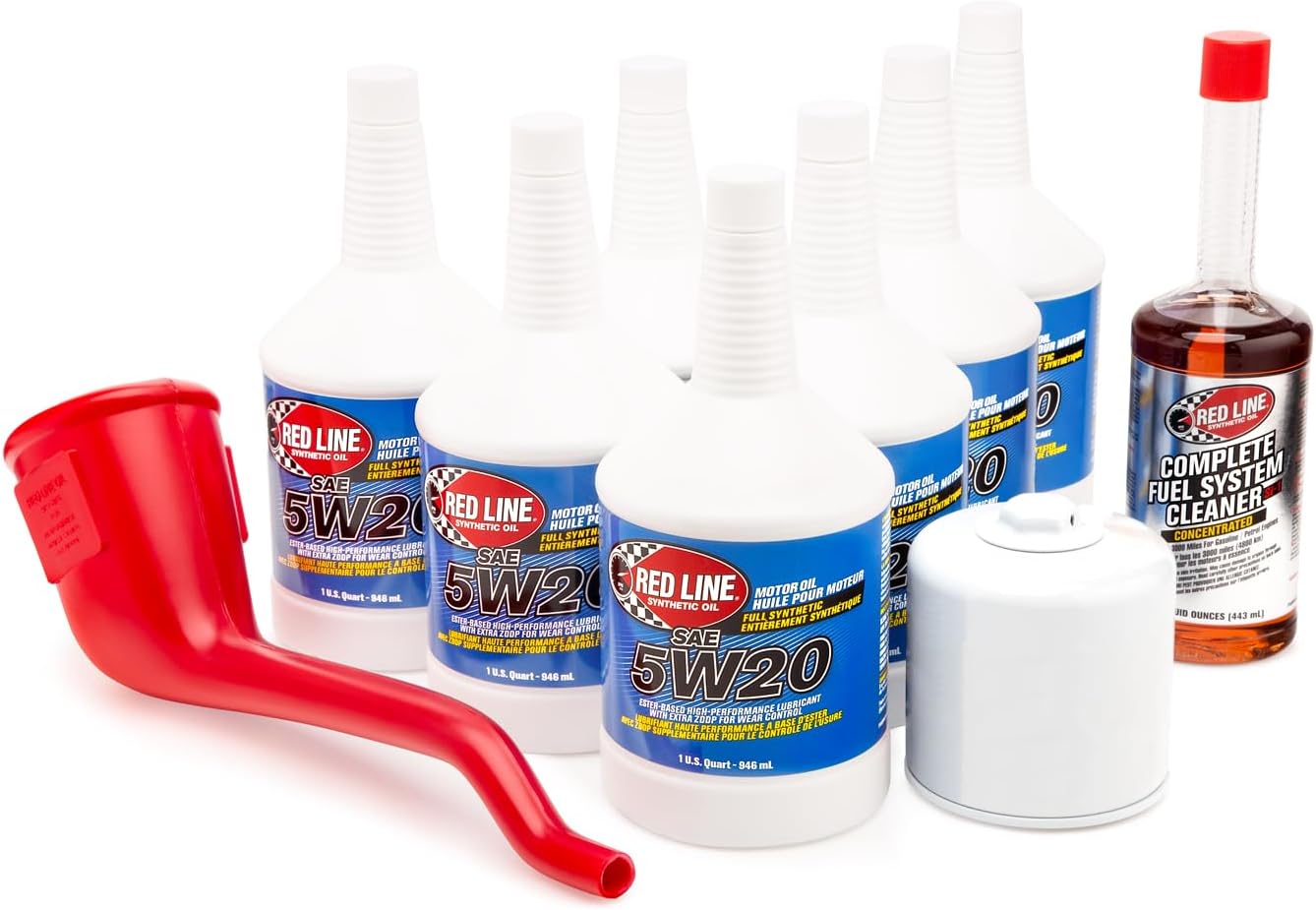
| Viscosity | 5W-20 |
|---|---|
| Liquid Volume | 7 Quarts |
| Included Components | Oil, oil filter, fuel system cleaner, funnel |
| Compatible with Vehicle Type | Truck |
This Red Line kit bundles everything needed for a DIY oil change on 2008–2010 Ford F-150 trucks with the 5.4L V8. It supplies seven quarts of Red Line 5W-20 full synthetic motor oil plus a high-quality oil filter, a bottle of SI-1 fuel system cleaner, and a funnel so you do not have to mix parts from multiple sources. The full synthetic 5W-20 is suitable for normal highway and light towing duty and offers cold-start flow and high-temperature stability compared with conventional oils. The included fuel cleaner is a useful add-on for older engines that may have deposit buildup. Because the kit provides full quarts, it may contain slightly more oil than some owners need depending on the truck's exact capacity, so confirm the service manual before topping off. Overall the kit simplifies parts sourcing, reduces trips to the store, and is targeted at hands-on owners who prefer a single packaged solution for a complete service.
Best for: DIY owners of 2008–2010 Ford F-150 5.4L V8 who want a single boxed solution that supplies oil, filter, and useful service extras to complete an oil change at home.
Less Ideal for: Those who prefer buying oil and parts separately to match exact measured capacities or who use a different viscosity than 5W-20 should choose other options.
- Includes full seven quarts of 5W-20 full synthetic oil sized for a complete change
- Comes with a quality oil filter to replace the factory filter during service
- Adds a bottle of fuel system cleaner to help clean injectors and combustion deposits
- Includes a funnel to make pouring easier and reduce spills
- Kit may supply more oil than the truck's exact fill capacity so users must verify capacity to avoid overfill
Verdict: A packaged oil-change kit for DIYers who prefer buying a single bundled solution containing the correct oil volume, filter, and useful service extras.
Choosing the Right Ford F-150 5.4L Engine Oil: Key Factors to Consider
Viscosity and Cold-Start Performance
Viscosity affects oil flow at startup and protection at operating temperature. For the 5.4L engine you want an oil that flows quickly enough during cold starts to lubricate bearings and valvetrain components, yet remains viscous enough at high temperature to maintain an oil film under load.
Choosing the right grade, such as a multigrade viscosity recommended in the vehicle manual, helps balance these needs. If you regularly operate in cold climates, prioritize oils with superior low-temperature pumpability to reduce wear during the first critical seconds after start. For hotter climates or sustained towing, confirm the oil maintains sufficient high-temperature viscosity to avoid excessive thinning.
Base Oil Type and Additive Chemistry
The base oil—conventional, synthetic blend, or full synthetic—determines baseline resistance to oxidation and shear. Full synthetic formulations usually offer better thermal stability and longer life, which helps resist breakdown during heavy loads and stop-and-go driving common to pickup use.
Additive packages matter for dispersancy, detergency, antiwear protection, and corrosion inhibition. Oils with robust antiwear additives protect bearings and cam lobes under heavy torque, while detergents and dispersants keep soot and combustion byproducts suspended to reduce sludge formation. Seal conditioners can help with older engines that have hardened gaskets or seals.
High-Temperature Shear Stability
Shear stability measures how well the oil maintains its viscosity under mechanical stress and heat. The 5.4L often sees long periods at elevated temperature when towing or hauling, and oil that thins under shear provides less hydrodynamic film thickness to protect moving parts.
An oil with good shear stability preserves protective viscosity and helps prevent metal-to-metal contact. This matters for preserving bearing clearances and reducing wear on high-load components. Look for oils that retain their viscosity indexes after testing or that specify boosted shear resistance in technical data.
Deposit Control and Engine Cleanliness
Deposit control covers an oil's ability to prevent varnish, lacquer, and sludge in the combustion and oil-circulation systems. The 5.4L can develop deposits on intake components and in lifter galleries if exposed to oils with weak dispersant systems.
An effective detergent and dispersant package keeps combustion byproducts soluble and prevents sticky residues on critical parts. Better deposit control translates to smoother idle, more consistent valve operation, and reduced risk of performance degradation over time. For higher-mileage 5.4L engines, deposit control can be especially important to avoid accelerating wear in aging components.
Compatibility With Engine Seals And Gaskets
Oil formulations interact with engine seals and gaskets. Some high-performance or specialty oils contain seal-swelling agents designed to condition older rubber components, which may reduce leaks on higher-mileage engines. Conversely, oils with aggressive detergents and solvent properties could worsen leaks in some aging seals.
Considering whether your 5.4L is new, well-maintained, or high-mileage helps inform which formulations to prefer. If you already have minor seepage, a formulation that conditions seals can be helpful. For newer engines, choose an oil that meets factory material compatibility recommendations to avoid unexpected seal softening or shrinkage.
Service Intervals And Oil-Change Practicality
How long an oil retains protective properties influences your maintenance schedule and total operating costs. Some synthetics and synthetic blends are formulated for extended drain intervals and resist oxidation longer; others are intended for standard oil-change cycles.
Consider how you use the truck—frequent short trips, highway commuting, or heavy towing—and select an oil whose recommended drain interval matches your maintenance preferences. Extended-interval oils can reduce downtime between changes, but you should balance that against the importance of fresh oil for deposit control and for high-mileage engines that may benefit from more frequent changes.
Choosing The Right Viscosity For The 5.4L
Viscosity choice should reflect your local climate and how you use the truck. The owner's manual provides the baseline recommended grades; those grades ensure adequate film strength across typical temperature ranges for the 5.4L.
For winter starts, lower cold-temperature viscosity helps reduce start-up wear. For heavy towing or sustained highway speeds, a higher high-temperature viscosity grade helps maintain protection under load. Match the grade to seasonal conditions or consider switching between grades seasonally if you live in an area with wide temperature swings.
- Use manufacturer-recommended grades as a baseline.
- Favor lower winter viscosities for frequent cold starts.
- Choose oils with stronger high-temp viscosity retention for towing.
Synthetic Versus Conventional: When Each Makes Sense
Full synthetic oils offer better oxidation resistance and thermal stability, which benefits engines that see prolonged high temperatures or extended drain intervals. They also typically flow better at low temperatures, improving protection during cold starts.
Conventional or synthetic blend oils can be suitable if you follow standard service intervals and prefer a lower-cost option. For older or high-mileage 5.4L engines, certain blends formulated with seal conditioners may help reduce minor leaks while still providing acceptable protection.
- Synthetic: best for stability, long drains, and severe duty.
- Blends: cost-effective, can include seal conditioning benefits.
- Conventional: acceptable for routine use with regular changes.
High-Mileage Considerations For Older 5.4L Engines
If your F-150 5.4L has high mileage, prioritize formulations that focus on seal care and deposit control. Additives that condition seals can limit seepage, while strong detergents help keep internal passages clean to maintain oil pressure and valve operation.
High-mileage specific oils sometimes include extra antiwear additives and antioxidants. These features can reduce the rate of oil breakdown and protect components that may have experienced some wear, helping extend useful engine life when combined with proper maintenance.
- Look for seal conditioners if you have minor oil seepage.
- Choose oils with strong detergency to manage combustion byproducts.
- Consider more frequent changes if the engine shows signs of sludge.
Preparing For Towing And Heavy Loads
Towing places sustained thermal and mechanical stress on the engine. Oils that resist viscosity loss under heat and shear and maintain stable film strength are important to protect bearings, camshafts, and piston rings when you tow trailers or haul heavy payloads.
When you expect regular towing, choose oils with proven high-temperature performance and consider monitoring oil condition more frequently. Keep an eye on oil level and condition after heavy use and adhere to drain intervals that match the severity of your operation.
- Monitor oil level before and after towing trips.
- Prefer formulations with high-temperature shear resistance for towing.
- Increase inspection frequency under severe duty.
Cold Climate Maintenance Tips
In cold climates, rapid oil circulation at startup is crucial to reduce wear. Use oils with lower cold viscosity ratings and make sure the oil pump can prime quickly during low-temperature starts. Preheating the engine during extreme cold can also reduce startup stress.
Thinner low-temperature grades help, but do not compromise on the recommended high-temperature protection. Seasonal switching between grades is a practical approach for drivers facing both very cold winters and hot summers.
- Choose an oil with strong low-temperature flow characteristics.
- Consider seasonal viscosity changes for extreme temperature swings.
- Perform regular battery and starter checks to reduce hard starts.
Monitoring Oil Condition Between Changes
Regular checks of oil level and visual condition can reveal early signs of degradation or contamination. Look for changes in color, presence of metal particles, or a milky appearance that indicates coolant ingress.
Use a routine schedule to inspect the oil and, if available, track oil analysis results to detect wear trends. Early detection of issues allows you to address them before they cause damage and helps you decide whether to shorten oil-change intervals for your 5.4L.
- Check level and appearance monthly or before long trips.
- Consider oil analysis for engines with elevated mileage or severe duty.
- Adjust change intervals based on observed oil condition.
Still looking for the perfect fit?
Select your Ford F-150 configuration to see the most relevant Engine Oils recommendations
How We Chose the Best Ford F-150 5.4L Engine Oil
We focused on evaluation criteria that matter for a Ford F-150 5.4L owner and for the operational stresses common to full-size pickups. Primary filters included viscosity range and cold-flow performance, because the 5.4L has specific start-up and torque demands. We prioritized base oil type and additive package to judge high-temperature shear stability and deposit control under towing and hauling loads. Compatibility with Ford engine seals and resistance to sludge and varnish were also assessed through manufacturer service specifications and third-party laboratory reports. Thermal stability and oxidation resistance were included to predict service life and oil-change intervals under highway and heavy-duty duty cycles. We also considered formulations marketed for high-mileage engines where applicable, since many 5.4L trucks accrue substantial miles.We excluded oils that lack clear viscosity options appropriate for the 5.4L or that do not meet common industry performance specifications. Products were not selected based on brand recognition or price alone. Instead, the shortlist reflects oils that balance cold-start behavior, protection under load, and long-term engine cleanliness—dimensions that matter most for an F-150 5.4L owner planning routine oil changes or extended service intervals.
Our full evaluation process is outlined in our review methodology.
FAQ
How often should I change the oil in a Ford F-150 5.4L?
It depends on driving conditions. Under normal highway use, follow the vehicle manual intervals. If you tow frequently, drive in severe stop-and-go traffic, or have a high-mileage engine, shorten intervals and inspect oil condition more often.
Can I switch between conventional and synthetic oil in my 5.4L?
Yes, you can switch between types, but do so at an oil change. Modern engines tolerate switching. If the engine is older with known leaks, choose a formulation that is compatible with existing seals and watch for any change in seepage after the switch.
What viscosity is best for cold-weather starting with the 5.4L?
A lower cold-temperature viscosity grade improves startup flow. Use the manufacturer's recommended winter viscosities for your climate and consider switching to a lower cold-grade during very cold months to reduce start-up wear.
Are high-mileage formulations worth it for an older F-150 5.4L?
Often they are useful. High-mileage oils include seal conditioners and detergents that can help reduce minor leaks and manage deposits. Their benefits depend on the engine's current condition and maintenance history.
Will a full synthetic oil improve towing durability for the 5.4L?
Full synthetics typically resist thermal breakdown and shear better than conventional oils, which helps when towing. That said, proper viscosity selection and regular monitoring are equally important for preserving engine components under load.
Final Verdict
Prioritize the viscosity grade and base oil type that match how you use the F-150 5.4L. For cold climates and frequent short trips, favor oils with better low-temperature flow. For towing, sustained highway use, or extended drain goals, choose formulations with proven high-temperature stability and shear resistance. High-mileage engines often benefit from seal-conditioning additives and stronger detergency.Balance your maintenance routine with the oil's intended service interval and monitor oil condition between changes. Focusing on those tradeoffs will help you select the right engine oil for reliable performance and long-term engine protection in your Ford F-150 5.4L.
Explore More:
- Check out all Ford F-150 parts & accessories
- Explore Fluids & Chemicals
- Browse all Accessories
