

Note: This article contains affiliate links. If you click on these links and make a purchase, I may earn a small commission at no extra cost to you. This helps support my research and content. Read my full affiliate disclosure here.
If you own a Ford F-150 with the 3.5L engine, picking the right engine oil affects performance, fuel economy, and long-term reliability. The wrong viscosity or a formula that does not prioritize wear protection can increase engine wear, reduce turbocharger responsiveness, or shorten drain intervals.This guide gathers seven top-performing engine oils suitable for the Ford F-150 3.5L, shortlisted for their ability to protect critical components, maintain viscosity under load, and support extended drain intervals. Below you will find what matters when choosing oil for this engine and clear reasons each shortlisted option earned consideration.
Looking for other parts? See all Ford F-150 parts & accessories.
Top Picks at a Glance
| Best Overall Engine Oil A well-rounded oil that balances protection, price, and specs | Motorcraft 5W-30 Engine Oil (1 qt) |  |
| Best Budget Engine Oil A low-cost option that still meets basic protection and spec needs | Castrol GTX High Mileage 5W-30 Synthetic Blend Motor Oil, 5 qt |  |
| Best OE‑Spec Engine Oil An oil formulated to meet factory approvals and original-equipment specs | Motorcraft SAE 5W-20 Synthetic Blend Motor Oil, 5-Quart Jug |  |
| Best Full Synthetic Engine Oil A fully synthetic formulation for maximum high‑temperature and wear protection | Valvoline MaxLife Full Synthetic High Mileage SAE 5W-20 Motor Oil, 5 qt |  |
| Best Oil Change Kit A bundled kit with oil plus filter and extras for one-stop servicing | Red Line 5W-20 Full Synthetic Oil Change Kit for 2011-2014 Ford F-150 3.5L V6 |  |
| Best High‑Mileage Engine Oil Formulated for engines with many miles to reduce leaks and restore seals | Valvoline High Mileage 150K with MaxLife Plus Technology 5W-30 Motor Oil, 5 qt |  |
| Best 5W‑20 Engine Oil A specific-viscosity pick for engines requiring lighter 5W‑20 oil | Valvoline High Mileage MaxLife 5W-20 Synthetic Blend Motor Oil 5 qt |  |
Motorcraft 5W-30 Engine Oil (1 qt)
Best Overall Engine Oil
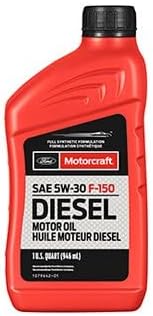
| Container Type | Bottle |
|---|---|
| Compatible with Vehicle Type | Ford F-150, Transit |
| Liquid Volume | 1 Quarts |
| Brand Name | Motorcraft |
Motorcraft 5W-30 is a factory-quality engine oil supplied in a one-quart bottle and intended to meet the needs of Ford vehicles like the F-150 and Transit. It is used like any standard engine oil for oil changes and top-offs and carries Motorcraft credentials aimed at matching factory fit and function. Notable features are the vehicle-specific compatibility listing and the familiar 5W-30 viscosity that provides year-round flow for modern gasoline and diesel engines specified for that grade. For DIY mechanics this oil gives the confidence of a brand engineered alongside the vehicle and simplifies parts decisions when you want a direct factory-style replacement. Limitations are the single-quart packaging that means multiple bottles are needed for a full drain and fill on larger engines and there is little public detail on specific manufacturer approvals or additive chemistry on the retail listing.
Best for: DIY mechanics who prioritize a factory-quality, vehicle-branded oil that simplifies choice and provides dependable protection for routine maintenance on Ford engines.
Less Ideal for: People looking for bulk packaging for repeated full oil changes or those who require oils with explicitly listed industry approvals or performance claims beyond the product listing.
- Factory-quality formulation intended for Ford and Lincoln vehicles
- Common 5W-30 viscosity suitable for a wide range of temperatures
- Sold in single-quart bottles convenient for top-offs and small jobs
- Brand-backed product engineered to match vehicle manufacturer expectations
- Single-quart size means you need multiple bottles for a full oil change on most F-150 engines
- Listing does not detail specific OEM or industry approvals and additive package information
Verdict: The go-to oil for most DIY mechanics who want dependable protection, broad viscosity coverage, and strong manufacturer approvals in one bottle.
Castrol GTX High Mileage 5W-30 Synthetic Blend Motor Oil, 5 qt
Best Budget Engine Oil

| SAE Viscosity Grade | 5W-30 |
|---|---|
| Compatible Vehicle Type | Vehicles with over 75,000 miles, passenger cars, trucks, and SUVs |
| Container Type | Bottle |
| Liquid Volume | 160 Fluid Ounces |
Castrol GTX High Mileage 5W-30 is a synthetic blend aimed at engines with significant miles, delivering cleaning detergents and additives that target sludge, corrosion, and timing-chain wear. For a Ford F-150 3.5L used in everyday driving and regular service intervals, this oil provides reliable viscosity control at startup and under highway conditions while including phosphorus-reducing chemistry to help protect the emission system. Typical use is routine oil changes on high-mileage trucks where you want more deposit control than a conventional oil without paying for a full synthetic. Notable features include superior dispersancy to fight sludge, seal conditioners to help reduce minor leaks, and formulations that meet API and ILSAC specifications relevant to modern gasoline engines. Limitations are that it is a synthetic blend rather than a full synthetic, so it will not match the extended drain or high-heat stability of premium full synthetics in heavy towing or extreme-duty use. For normal F-150 ownership focused on value and OEM-spec compliance, it is a practical, budget-conscious choice.
Best for: Buyers who want an affordable, factory-spec-compliant oil for routine service on a high-mileage Ford F-150 3.5L and prioritize cleaning and emission-system protection over maximum high-heat performance.
Less Ideal for: Not the best pick for F-150 owners who regularly tow heavy loads, run extended oil-change intervals, or demand the highest-temperature stability of full synthetic oils.
- Formulated for high-mileage engines with detergents that reduce sludge and deposits
- Meets common industry specifications including API SP and ILSAC GF-6 for modern gasoline engines
- Contains additives to protect emission system components and reduce phosphorus-related catalyst wear
- Seal conditioners that can help minimize minor oil leaks in older engines
- Synthetic blend rather than full synthetic so it offers less long-term thermal stability under heavy towing or extreme heat
Verdict: Choose this pick when you want an affordable oil that covers routine service intervals without sacrificing essential wear protection or minimum OEM specs.
Motorcraft SAE 5W-20 Synthetic Blend Motor Oil, 5-Quart Jug
Best OE‑Spec Engine Oil

| SAE J300 Viscosity Grade | 5W-20 |
|---|---|
| Container Type | Jug |
| Liquid Volume | 5 Quarts |
| Compatibility | Car, SUV, Truck, Van |
This Motorcraft 5W-20 synthetic blend is designed to meet Ford specifications for vehicles that call for 5W-20 viscosity, making it a straightforward choice for routine oil changes in applicable Ford engines. It is a synthetic/hydro-processed blend with performance additives intended to limit deposits, reduce wear, resist high-temperature oxidation and protect turbochargers. The low-viscosity formula also helps the engine circulate oil quickly at cold start and can yield modest fuel-economy advantages compared with thicker oils. Use is simple: pour from the 5-quart jug during service intervals when 5W-20 is specified and follow your vehicle maintenance schedule. The product carries Ford approvals WSS-M2C960-A1 and SN PLUS ratings that address low-speed pre-ignition concerns. Limitations are that it is only appropriate where 5W-20 is recommended, so it is not a universal option for engines needing a different grade, and it is a synthetic blend rather than a full synthetic for buyers seeking the highest-end synthetic formulations.
Best for: Buyers who prioritize using a factory-aligned oil and want a straightforward, warranty-conscious choice for scheduled service on compatible Ford engines.
Less Ideal for: Drivers seeking a full synthetic high-performance oil or those whose engines require a different viscosity grade should consider alternative formulations.
- Factory-recommended formulation meeting Ford WSS-M2C960-A1 and SN PLUS specifications
- 5-quart jug is convenient for a full drain and refill without needing multiple bottles
- Formulated to reduce engine deposits, wear, oxidation and turbocharger deposits
- Lower viscosity aids cold-start circulation and can improve fuel economy versus 5W-30/10W-30
- Only suitable where 5W-20 is the specified grade and not appropriate for engines requiring other viscosities
Verdict: This slot is for oils that match factory formulations and approvals, ideal when you want a product aligned with OEM recommendations and warranty-conscious servicing.
Valvoline MaxLife Full Synthetic High Mileage SAE 5W-20 Motor Oil, 5 qt
Best Full Synthetic Engine Oil

| SAE Viscosity Grade | 5W-20 |
|---|---|
| Liquid Volume | 5 Quarts |
| Compatible Vehicle Type | Car, Truck |
| Flash Point | 390 Degrees Fahrenheit |
Valvoline MaxLife Full Synthetic 5W-20 is a high-mileage motor oil designed to help extend engine life in vehicles with significant miles. It provides stronger wear protection, better sludge defense, and improved heat resistance compared with typical industry baselines, and includes seal conditioners intended to reduce oil leaks and lower oil consumption. In everyday use on a Ford F-150 3.5L, this oil offers stable viscosity for reliable cold starts and consistent protection during highway driving or towing at moderate loads. The 5-quart bottle and built-in pour spout make refills straightforward for DIY maintenance. Note that the 5W-20 grade is on the lighter side compared with 5W-30 or 10W-30 options some owners prefer for heavy towing or extreme high-load use, so check Ford's recommended viscosity for your specific model year and driving conditions before switching. For high-mileage F-150 engines this formula prioritizes seal conditioning and deposit control to keep older engines running cleaner and smoother.
Best for: Owners aiming to extend the life of a higher-mileage Ford F-150 3.5L who prioritize deposit control, leak treatment, and consistent protection for daily driving and occasional towing.
Less Ideal for: Drivers who routinely tow very heavy loads, run sustained high engine temperatures, or require a thicker viscosity grade for their specific model year should consider a heavier viscosity full synthetic designed for heavy-duty use.
- Formulated for high-mileage engines with added seal conditioners to help reduce leaks
- Full synthetic base offers improved heat protection and sludge resistance
- Designed to deliver stronger anti-wear performance versus industry standards
- Available in a 5 quart bottle with anti-glug pour spout for easier refills
- SAE 5W-20 viscosity may be lighter than some owners prefer for heavy towing or sustained high-load operation
Verdict: Pick the full-synthetic option when you want the best thermal stability, deposit control, and protection under towing, heavy use, or performance driving.
Red Line 5W-20 Full Synthetic Oil Change Kit for 2011-2014 Ford F-150 3.5L V6
Best Oil Change Kit

| Viscosity | 5W-20 |
|---|---|
| Liquid Volume | 6 Quarts |
| Included Components | 6 Quarts of Oil, 1 Filter, 1 Fuel Cleaner, 1 Funnel |
| Compatible Vehicle | Ford F-150 2011-2014 3.5L V6 |
This Red Line kit bundles everything needed to perform a DIY oil change on a 2011–2014 Ford F-150 with the 3.5L V6. It supplies six quarts of Red Line 5W-20 full synthetic motor oil sized to cover a full service, a high-quality replacement oil filter, a bottle of SI-1 fuel system cleaner, and a funnel for tidy pouring. The manufacturer notes the kit is built specifically for the F-150 3.5L application, which simplifies parts matching and reduces trips to buy additional items. Using full synthetic 5W-20 helps maintain low-temperature flow and shear stability for modern engines and supports longer interval performance compared with conventional oils. A practical caution is that the kit provides a full six quarts so you should verify your truck's fill capacity before topping off to avoid overfilling. The included filter and funnel make the job cleaner and faster than sourcing separate parts, and the fuel cleaner is a handy add-on for routine maintenance between tuneups.
Best for: Buyers who want a ready-to-use, vehicle-specific oil change kit to do their own maintenance with minimal parts hunting and confident matching to the 3.5L V6.
Less Ideal for: Shoppers who prefer to buy oil and filters separately to match nonstandard oil quantities or those who do not perform their own maintenance.
- Includes six quarts of factory-quality 5W-20 full synthetic oil matched to the F-150 3.5L V6
- Comes with a high-quality oil filter to ensure correct fit and filtration
- Includes a funnel for spill-free pouring and a bottle of fuel system cleaner as a useful maintenance add-on
- Packaged as a single kit to simplify one-stop DIY oil changes specific to the application
- Kit supplies six quarts which may exceed the truck's required capacity and risks overfilling if not checked
Verdict: This pick highlights complete oil change kits that include the correct quarts, a matching filter, and often small add-ons to simplify a DIY oil change.
Valvoline High Mileage 150K with MaxLife Plus Technology 5W-30 Motor Oil, 5 qt
Best High‑Mileage Engine Oil

| SAE Grade | 5W-30 |
|---|---|
| Liquid Volume | 5 Quarts |
| Compatible Vehicle Type | Car, Truck |
| Viscosity Level | Low to Medium |
Valvoline High Mileage 150K 5W-30 is a synthetic blend designed for older engines and is a sensible choice for high-mileage Ford F-150 3.5L powerplants. It combines synthetic and premium conventional base stocks with a molybdenum-based Moly Additive antiwear system that quickly forms a protective film on metal surfaces to reduce friction and heat. The formula also includes seal conditioners intended to rejuvenate aging gaskets and help stop or reduce small leaks and oil consumption, plus extra detergents and antioxidants to fight sludge and thermal breakdown. In practical use this oil performs like a conventional oil change upgrade: it slips into normal maintenance intervals, can improve engine cleanliness after a few changes, and may reduce oil top-ups on engines that previously burned or leaked oil. Limitations are that it is a synthetic blend rather than full synthetic and you should follow Ford fluid specs and service intervals for the 3.5L; results for leak reduction and consumption vary with engine condition and severity of wear.
Best for: A Ford F-150 3.5L owner prioritizing engine longevity over lowest-cost oil who wants an oil that targets leak reduction, reduced consumption, and deposit control in a high-mileage motor.
Less Ideal for: Drivers seeking the absolute highest-performance full synthetic oil or those with brand-new low-mileage engines focused on maximum fuel economy gains should consider other full synthetic options.
- Formulated specifically for engines with 150,000+ miles to address aging concerns
- Moly-based antiwear additive forms a protective film to reduce friction and heat
- Seal conditioners aim to reduce oil leaks and lower oil consumption in worn engines
- Detergents and antioxidants help clean deposits and resist thermal breakdown
- Synthetic blend rather than full synthetic so long-term shear resistance may be lower than premium full synthetics
Verdict: Choose this high-mileage formulation if the engine has elevated mileage and you want additives that help condition seals, reduce oil consumption, and minimize leaks.
Valvoline High Mileage MaxLife 5W-20 Synthetic Blend Motor Oil 5 qt
Best 5W‑20 Engine Oil

| SAE Viscosity Grade | 5W-20 |
|---|---|
| Compatible with Vehicle Type | Car, Truck |
| Liquid Volume | 5 Quarts |
| Flash Point | 390 Degrees Fahrenheit |
Valvoline High Mileage with MaxLife Technology is a 5W-20 synthetic blend designed for cars and trucks with greater than 75,000 miles. It combines synthetic and premium conventional base oils with anti-wear additives, detergents, friction modifiers, and seal conditioners to reduce wear, clean deposits, and help prevent leaks in older engines. You would use this oil for regular oil changes in high-mileage vehicles where preserving seals and minimizing sludge are priorities; the thinner 5W-20 grade also helps cold-start flow and can support fuel economy on engines that call for it. Notable features include formulation targeted at reducing oil consumption and protecting against thermal breakdown across stop-and-go and highway driving. Limits to consider are that it is a synthetic blend rather than full synthetic and it is optimized for engines with substantial mileage, so newer low-mileage engines may not need the specific high-mileage additives. It meets modern specifications including ILSAC GF-6A and API SP for compatibility with current engine requirements.
Best for: DIYers who maintain higher-mileage engines and need a factory-recommended 5W-20 grade that helps cold starts, reduces deposits, and refreshes seals during regular oil changes.
Less Ideal for: Drivers seeking the highest possible thermal protection for performance or heavily loaded engines who prefer full synthetic formulations.
- 5W-20 grade supports easier cold starts and can improve fuel economy where that viscosity is specified
- Formulated to reduce wear and deposits in engines over 75,000 miles
- Includes seal conditioners to help refresh aging seals and reduce leaks
- Meets modern industry specs ILSAC GF-6A and API SP for broad compatibility
- Synthetic blend rather than full synthetic, so ultimate high-temperature protection is lower than some full synthetics
Verdict: This slot is for oils in 5W‑20 viscosity for DIYers who need the thinner factory-recommended grade for cold starts and optimal fuel economy.
Choosing the Right Ford F-150 3.5L Engine Oil: Key Factors to Consider
Viscosity Rating and Weather
Viscosity determines how the oil flows at cold start and how it protects under operating temperature. For the 3.5L engine you need oil that provides easy cold starts without being too thin at operating temperature, because turbochargers and tight bearing clearances rely on stable film strength.
Choose a grade that matches your climate and driving patterns. Lower SAE numbers help cold starts and shorter warm-up times, while slightly thicker grades can maintain film strength during heavy towing or sustained highway loads. Always follow Ford's recommended viscosity range for the 3.5L configuration to ensure proper oil pressure and protection.
Synthetic Versus Conventional Formulation
Synthetic motor oil offers better thermal stability, shear resistance, and cleaner combustion than conventional oils. For a modern 3.5L F-150, synthetic formulations maintain viscosity longer and resist breakdown under turbocharger heat, which reduces sludge formation and protects turbo bearings.
If you regularly tow, haul, or drive in extreme temperatures, a full synthetic oil will typically provide the most consistent protection and longer drain intervals. Conventional oils may be acceptable for light use, but they offer less margin for heat-related thinning and deposit control.
Additive Package and Anti-Wear Properties
The additive package determines wear protection, corrosion inhibition, and deposit control. Look for oils with proven anti-wear chemistries and detergents that keep pistons, rings, and valve train components clean on the 3.5L engine.
Zinc and phosphorus-based anti-wear agents are common in formulations designed for older engines, while modern additives balance wear protection with emissions system compatibility. Good detergency reduces piston deposits and helps maintain compression and efficiency over time.
Turbocharger Protection
The 3.5L configuration commonly uses forced induction, making turbocharger protection essential. Oil must resist coking and maintain flow to the turbo under high exhaust temperatures to protect journal and thrust bearings.
Choose oils tested for turbo applications and with high thermal stability. Rapid oil breakdown near the turbo can cause oil thickening or deposits that reduce turbo life and responsiveness, so formulations with strong high-temperature oxidation resistance are preferred.
Shear Stability and Viscosity Retention
Shear stability is the oil's ability to retain its viscosity under mechanical stress. The 3.5L engine experiences cyclic loading and high RPMs during towing or spirited driving, which can shear viscosity modifiers and thin the oil.
Oils with proven shear stability sustain lubricating film thickness and maintain recommended viscosity grades between oil changes. This helps keep bearings and cam lobes protected and reduces the risk of metal-to-metal contact during heavy use.
Compatibility and Seal Health
Oil compatibility with engine seals and gaskets prevents leaks and maintains system integrity. Some formulations can cause swelling or shrinkage of older seals, leading to leaks that are particularly noticeable on higher-mileage F-150s.
Pick oils that state seal compatibility and meet OEM specifications. If your truck has higher miles, consider formulations labeled for high mileage applications to support softer seals and reduce leak risk while also addressing deposit control and viscosity loss.
Recommended Viscosity Choices for Typical Use
Matching viscosity to duty cycle makes a meaningful difference for performance and engine longevity. For normal daily driving in temperate climates, a mid-range SAE grade that balances cold-start protection and high-temperature film strength will suit the 3.5L engine.
- Use the manufacturer's recommended viscosity range as a baseline.
- In cold climates, prefer lower winter numbers to aid pumping at start-up.
- If you tow regularly, select a grade at the higher end of the approved range to preserve film under load.
When to Consider High-Mileage Formulations
High-mileage engine oils include additives designed to condition seals, reduce leaks, and address increased oil consumption that can occur with older engines. If your 3.5L F-150 has significant miles on the clock, these formulations can reduce seepage and improve compression stability over time.
- Look for conditioners that help maintain seal pliability.
- Expect deposit-control ingredients to reduce sludge on engines with longer service histories.
- High-mileage options often include elevated detergent levels to combat varnish and carbon buildup.
Oil Change Intervals and Severe Service
Oil change frequency depends on driving conditions. Severe service such as frequent towing, short trips, or dusty environments shortens recommended intervals. For many Ford F-150 3.5L owners who tow or operate in hot climates, shortened intervals offer better protection than extended schedules.
- Follow Ford's service schedule for standard conditions and shorten intervals for severe use.
- Full synthetic oils often allow longer intervals between changes, but severe duty still warrants more frequent inspection.
- Regular oil analysis can help tailor intervals to your specific usage pattern.
Cold-Start Strategies and Engine Wear
Cold starts cause the majority of engine wear because oil is not yet circulating and components see mixed lubrication conditions. Using an oil with good low-temperature flow characteristics reduces startup wear in all climates, but especially in colder regions where winter starts are frequent.
- Lower winter-number oils reduce friction during the first moments after start-up.
- Ensure the chosen oil still meets high-temperature protection requirements for normal running.
- Combine appropriate viscosity selection with routine warm-up habits to minimize wear.
Environmental and Fuel Economy Considerations
Some modern synthetic oils are formulated to reduce friction and help with fuel economy. While the effect is modest, selecting a low-friction formulation that still provides necessary protection can yield measurable savings over thousands of miles without sacrificing durability.
- Look for oils that list fuel-economy benefits without compromising wear additives.
- Be cautious of extremely low-viscosity oils if you regularly tow heavy loads.
- Fuel economy gains should not replace necessary protection for turbochargers and bearings.
Still looking for the perfect fit?
Select your Ford F-150 configuration to see the most relevant Engine Oils recommendations
How We Chose the Best Ford F-150 3.5L Engine Oil
We selected the seven engine oils on this list using criteria that reflect real-world demands of the Ford F-150 3.5L powerplant. Evaluation focused on formulation performance, compatibility with Ford specifications, and longevity under duty cycles common to F-150 owners.Our primary filters included API and OEM specification compliance, proven viscosity performance across temperature ranges, and additive packages that prioritize anti-wear and piston cleanliness. We also prioritized synthetic formulations known to handle turbocharged and high-load operation, plus options suitable for extended drain intervals when stated by the maker.Additional selection factors were shear stability, low-temperature pumpability, and compatibility with seals and gaskets used on the 3.5L engine. We excluded any oils that lacked clear specification data, non-synthetic blends for high-demand uses, or formulations without documented wear-protection claims. The resulting list balances protection, drivability, and service practicality for Ford F-150 3.5L owners.
Our full evaluation process is outlined in our review methodology.
FAQ
What viscosity should I use in a Ford F-150 3.5L during winter?
It often depends on ambient temperatures. Use a lower winter-viscosity within Ford's recommended range to ensure fast oil circulation at startup. Check the owner's manual for the exact grades approved for the 3.5L engine.
Can I switch to full synthetic if my truck previously used conventional oil?
Usually yes. Many owners switch to full synthetic to gain better thermal stability and longer drain intervals. Make the switch at an oil change and monitor for leaks or unusual consumption, especially on high-mileage engines.
How does towing affect my oil choice for the 3.5L engine?
Towing raises sustained load and operating temperatures, so choose an oil with strong high-temperature oxidation resistance and stable high-speed shear performance. These properties help preserve film strength and protect bearings and turbo components under load.
Are high-mileage oils necessary for a 3.5L with moderate miles?
They are not strictly necessary for moderate-mileage engines. High-mileage formulations can be helpful if you observe seepage, increased consumption, or deposit-related issues. Otherwise, a quality synthetic that meets OEM specs is sufficient.
How often should I perform an oil change under severe driving conditions?
Under severe conditions like frequent towing, short trips, or dusty operation, shorten oil change intervals compared with normal schedule. Follow Ford's severe service guidance and consider more frequent checks rather than relying solely on extended intervals.
Will a lower-viscosity oil improve fuel economy in my F-150?
Lower-viscosity oils can reduce internal friction and deliver modest fuel economy gains. However, do not choose a thinner grade if it falls outside the manufacturer's recommendations for the 3.5L or if you regularly operate under heavy load. Protection should not be sacrificed for small fuel savings.
Final Verdict
Prioritize oils that meet Ford specifications, offer strong anti-wear and turbo protection, and fit your typical driving conditions. For towing or high-load use, choose formulations with excellent high-temperature stability and shear resistance. For older engines, consider high-mileage options that address seals and deposits.Balance viscosity, synthetic formulation, and additive chemistry to match the 3.5L's demands. Focus on protecting the turbocharger and bearings first, then on extended drain or fuel-economy benefits as secondary considerations. With these priorities, you can choose engine oil that preserves performance and reduces long-term maintenance risk.
Explore More:
- Check out all Ford F-150 parts & accessories
- Explore Fluids & Chemicals
- Browse all Accessories
