

Note: This article contains affiliate links. If you click on these links and make a purchase, I may earn a small commission at no extra cost to you. This helps support my research and content. Read my full affiliate disclosure here.
Picking the right engine oil for a Ford F-150 3.7L matters for reliability, fuel economy, and long-term engine health. The 3.7L V6 needs oil that matches its factory viscosity and meets required specifications so it can handle commuting, towing, and stop-and-go driving without accelerated wear.This guide presents five shortlisted engine oils tailored to the Ford F-150 3.7L. Each selection was evaluated for viscosity suitability, wear protection, thermal stability, and compatibility with common service intervals. Read on to understand the tradeoffs and the evaluation criteria that helped narrow the field.
Looking for other parts? See all Ford F-150 parts & accessories.
Top Picks at a Glance
| Best Overall Engine Oil The best all-around oil balancing protection, performance, and value | Motorcraft 5W-30 Synthetic Blend Motor Oil, 5 qt (Case of 12) |  |
| Best Budget Engine Oil A low-cost oil that maintains basic engine protection affordably | Motorcraft 5W-30 Engine Oil (1 qt) |  |
| Best Premium Engine Oil A higher-end oil formulated for maximum protection and longevity | Red Line 5W-20 Full Synthetic Oil Change Kit for Ford F-150 3.7L V6 (2011–2014) |  |
| Best 5W-30 Engine Oil A common viscosity choice balancing cold-start flow and operating protection | Motorcraft 5W-30 Engine Oil, 5-Quart Jug (XO5W305Q3SP) |  |
| Best Synthetic-Blend Engine Oil A mid-tier blend delivering better protection than conventional oil | Ford Motorcraft SAE 5W-20 Premium Synthetic Blend Motor Oil, 5 Quart |  |
Motorcraft 5W-30 Synthetic Blend Motor Oil, 5 qt (Case of 12)
Best Overall Engine Oil

| SAE Viscosity | 5W-30 |
|---|---|
| Container Type | Bottle |
| Compatible Vehicle Type | Car, Truck |
| Unit Count | 384 Fluid Ounces |
This Motorcraft 5W-30 synthetic blend is formulated to meet factory-quality specifications and works as a straightforward, reliable engine oil for routine maintenance on the Ford F-150 3.7L. It uses a 5W-30 viscosity that covers a wide range of ambient temperatures and provides the mid-level flow needed at startup without sacrificing film strength at operating temp. Sold in five-quart bottles with case quantities available, it is convenient for DIYers who do their own oil changes and like to keep a spare on hand. Buyers can expect dependable wear protection and compatibility with factory service intervals because it is the brand recommended for many Ford engines. The main limitation is that it is a synthetic blend rather than a full synthetic, so it does not offer the absolute top-end thermal stability and extended drain potential of premium full synthetics. Packaging reports from some users indicate occasional leakage in transit, so check bottles on arrival before storing indoor.
Best for: DIY Ford F-150 3.7L owners who want a recommended, factory-quality oil that balances protection and value for routine oil changes.
Less Ideal for: Drivers seeking maximum thermal performance and the longest possible oil change intervals should consider a full synthetic alternative instead.
- Factory-replacement grade formulation matched to Ford service requirements
- 5W-30 viscosity offers broad temperature coverage for typical climates
- Sold in 5-quart bottles and larger case packs convenient for DIY oil changes
- Synthetic blend balances performance and cost compared with full synthetics
- Synthetic blend lacks the extended high-temperature stability and drain intervals of full synthetic oils
- Some reported issues with packaging leaks during shipping
Verdict: The best all-around engine oil that balances wear protection, fuel efficiency, and broad temperature performance for most DIY maintenance needs.
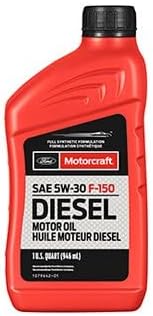
Motorcraft 5W-30 Engine Oil (1 qt)
Best Budget Engine Oil
| Container Type | Bottle |
|---|---|
| Compatible with Vehicle Type | Ford F-150, Transit |
| Liquid Volume | 1 Quarts |
| Brand Name | Motorcraft |
This Motorcraft 5W-30 comes as a single 1-quart bottle and is positioned as a factory-quality engine oil for Ford trucks and vans. It is used the same way as any conventional or synthetic blend motor oil for top-offs or oil changes and is especially convenient for DIYers who want a brand that matches factory recommendations. The product lists compatibility with Ford F-150 and Transit models and delivers typical benefits such as proper viscosity for everyday driving, dependable lubrication at common operating temperatures, and straightforward pouring from a compact bottle. Because it is a Motorcraft-branded formula, you get a close fit to factory specifications and easier parts matching when following Ford service intervals. Limitations are the single-quart pack size, which means buying multiple bottles for a full drain and fill, and that the listing does not include detailed additive or synthetic blend information so buyers seeking a specific high-mileage or performance formula should verify compatibility before purchase.
Best for: Budget-minded DIYers maintaining a Ford F-150 3.7L who want a factory-branded oil that provides reliable everyday protection and easy parts matching when topping off or doing routine service.
Less Ideal for: Drivers seeking a specialty high-mileage, performance, or explicitly full-synthetic formulation should consider dedicated alternatives with specified additive packages and larger pack sizes.
- Factory-quality Motorcraft formulation tailored for Ford vehicles
- Standard 5W-30 viscosity suitable for routine driving and temperature ranges
- Compact 1-quart bottle is convenient for top-offs and DIY maintenance
- Clear product labeling and manufacturer part number for easy match to service specs
- Sold as a single 1-quart unit so multiple bottles are needed for full oil changes
- Listing lacks detailed information about synthetic blend or additive package
Verdict: The best budget engine oil for DIYers who need reliable basic protection and routine performance while keeping purchase costs low.
Red Line 5W-20 Full Synthetic Oil Change Kit for Ford F-150 3.7L V6 (2011–2014)
Best Premium Engine Oil

| SAE Viscosity | 5W-20 |
|---|---|
| Liquid Volume | 6 Quarts |
| Compatible Vehicle Type | Truck |
| Included Components | Oil, filter, fuel cleaner, funnel |
This Red Line kit is designed to give F-150 3.7L V6 owners a ready-to-use premium oil change solution. It includes six quarts of Red Line 5W-20 full synthetic motor oil along with a high-quality filter, a bottle of SI-1 fuel system cleaner, and a funnel so you can complete a service without hunting down parts. The 5W-20 viscosity matches factory guidance for many F-150 3.7L applications, and Red Line formulas emphasize thermal stability and robust additive chemistry that help resist breakdown under higher loads and temperatures. Practically, the kit suits DIY maintenance or home-garage techs who want a top-tier oil and the convenience of bundled components. One important practical note is the six-quart supply can exceed the engine capacity listed in some manuals, so operators should confirm the exact fill volume to avoid overfilling. The kit does not include drain plugs or detailed step-by-step instructions, so basic tools and mechanical familiarity are still required.
Best for: Drivers who prioritize long-lasting, high-stability synthetic oil and want a single, brand-matched kit to perform a professional-level oil change at home or in a small shop.
Less Ideal for: People seeking a minimal-cost option or those who prefer buying oil and filters separately by exact measured quantity should consider other choices.
- Includes six quarts of full synthetic 5W-20 formulated for high thermal stability
- Comes with a high-quality oil filter matched for an oil change service
- Bundled fuel system cleaner and funnel add value and simplify a single-visit service
- Packaged specifically for Ford F-150 3.7L V6 applications to reduce compatibility guesswork
- Six quarts may be more than the actual engine capacity, creating a risk of overfilling if not checked
Verdict: The best premium engine oil for drivers who prioritize superior thermal stability, extended change intervals, and top-tier additives over price.
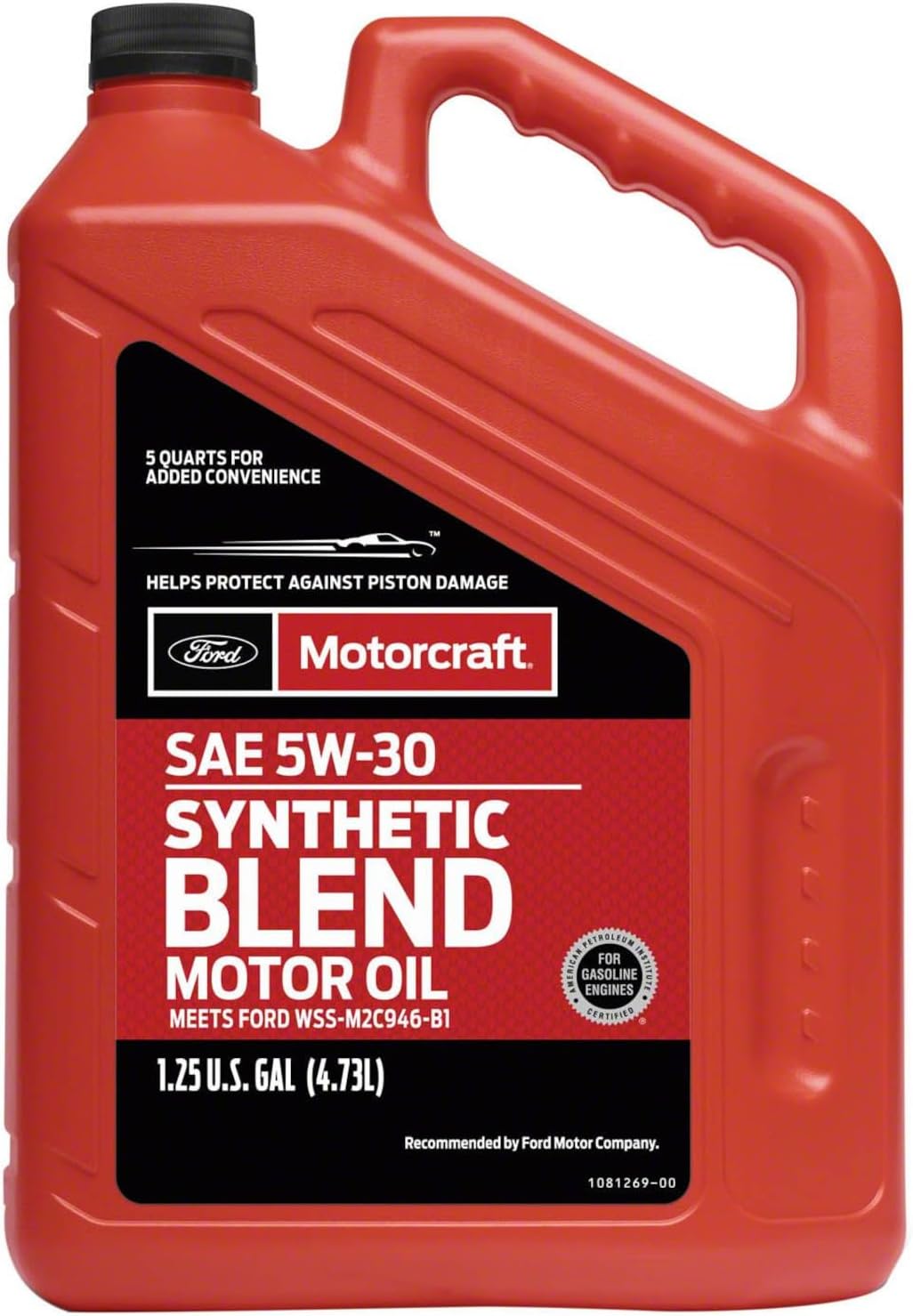
Motorcraft 5W-30 Engine Oil, 5-Quart Jug (XO5W305Q3SP)
Best 5W-30 Engine Oil
| Viscosity | 5W-30 |
|---|---|
| Size | 5-Quart Jug |
| Vehicle Service Type | Car, SUV, Truck, Van |
| Flash Point | 446 Degrees Fahrenheit |
This Motorcraft 5W-30 jug is a straightforward factory-quality motor oil intended as a direct replacement for Ford and Lincoln service schedules and everyday passenger vehicle use. It provides the familiar 5W-30 viscosity for easier cold starts and steady film strength at normal operating temperatures, making it useful for routine oil changes on vehicles that call for that grade. The product comes in a 5-quart container that is easy to handle for DIY changes and workshop use, and Motorcraft testing and brand positioning suggest compatibility with Ford specifications. Practical benefits include predictable cold-weather startup, fuel-economy-friendly viscosity, and the convenience of a single full-size jug. Limitations are typical of a single-grade offering: it is not a specialty formulation for heavy-duty towing, high-mileage conditioning, or specific aftermarket performance claims, and buyers should confirm the 5W-30 requirement for their engine before use.
Best for: Drivers who want a dependable, factory-aligned 5W-30 oil for routine maintenance and reliable cold-start behavior without chasing specialty additives.
Less Ideal for: People seeking oils formulated specifically for extended drain intervals, severe towing, track performance, or dedicated high-mileage conditioning should consider purpose-built alternatives.
- Factory-quality formulation designed for Ford and Lincoln service applications
- 5W-30 viscosity balances cold-start ease with protection at operating temperature
- Supplied in a convenient 5-quart jug suitable for DIY oil changes
- Widely recommended and tested by the brand for reliable day-to-day performance
- Not marketed as a specialty or high-mileage formulation for engines with specific needs
Verdict: The best 5W-30 engine oil when you need a widely recommended viscosity that offers dependable cold-start performance and robust protection at operating temperature.
Ford Motorcraft SAE 5W-20 Premium Synthetic Blend Motor Oil, 5 Quart
Best Synthetic-Blend Engine Oil

| Container Type | Bottle |
|---|---|
| Compatible with Vehicle Type | Car |
| Liquid Volume | 5 Quarts |
| Brand Name | Ford |
This Motorcraft 5W-20 premium synthetic blend is a factory-quality motor oil designed for routine service on compatible Ford engines. It combines synthetic/hydroprocessed base stocks with performance additives to resist high-temperature oxidation, reduce deposits and protect turbocharged components while helping reduce low-temperature gelling. For a DIY change on a Ford F-150 3.7L, the 5-quart jug covers a standard drain and refill and is easy to pour from the bottle. The friction-reducing formulation can yield modest fuel economy gains compared with 5W-30 or 10W-30 oils and the additive package targets corrosion and foaming control for longer stable performance between changes. This is a middle-ground choice for owners who want better protection than conventional oils without stepping up to full synthetic; it provides good wear control but is not a full synthetic, so maximum high-heat resistance and extended drain intervals may be less than full synthetic options.
Best for: DIY owners of a Ford F-150 3.7L who want better protection and modest fuel-economy gains over conventional oil without the higher cost of full synthetics.
Less Ideal for: Drivers who run severe-duty cycles, frequently tow, or want the longest possible drain intervals should consider a full synthetic specifically rated for those demands.
- Factory-branded formulation matched to Ford specifications for confident fitment
- Synthetic/hydroprocessed base stocks and additives help reduce engine deposits and wear
- Friction-reducing technology can improve fuel economy versus thicker conventional oils
- Available in a 5 quart jug that suits a standard DIY oil change
- Being a synthetic blend, it offers less high-heat protection and shorter potential drain intervals than full synthetic oils
Verdict: The best synthetic-blend engine oil for DIYers who want improved protection and performance over conventional oils without the cost of full synthetics.
Choosing the Right Ford F-150 3.7L Engine Oil: Key Factors to Consider
Viscosity Grade
Viscosity grade determines how the oil flows at cold start and under operating temperatures. Choosing the correct viscosity for the Ford F-150 3.7L ensures proper oil pressure on startup and maintains a protective film at operating temperature.
If you live in a colder climate, lower winter grades help pump oil quickly at startup and reduce wear. In hotter environments or when towing, a slightly higher high-temperature viscosity can preserve film strength and reduce shear thinning during long highway runs.
API and OEM Specifications
API and manufacturer specifications certify that an oil meets defined performance and compatibility benchmarks. For the 3.7L engine, using oil that meets the required API service category and Ford approvals helps protect against warranty issues and ensures the additive package is suitable for valve train and emissions systems.
Oils lacking the appropriate certifications may not control wear, deposits, or oxidation as effectively, which can shorten engine life or affect emission-control components.
Additive Chemistry and Wear Protection
Additives such as anti-wear agents, detergents, and dispersants determine how well an oil protects moving parts and controls deposits. Strong anti-wear chemistry reduces metal-to-metal contact on bearings and cam lobes, which is important for the 3.7L under load.
Detergent and dispersant levels influence sludge control and piston cleanliness. For owners who regularly tow or haul, robust wear protection and detergent capability help maintain performance under heavier stress.
Cold-Start Performance
Cold-start performance affects how quickly oil reaches critical engine components after ignition. Rapid pumpability reduces wear during the first seconds of engine operation, which is when most wear occurs. Oils with good low-temperature fluidity help maintain oil pressure and lubrication in winter or short-trip conditions.
If your driving includes many short runs or you operate in low temperatures, prioritize oils with proven cold-start characteristics to limit cumulative wear over time.
Thermal Stability and Oxidation Resistance
Thermal stability and resistance to oxidation determine how well the oil maintains its protective properties over time and at high operating temperatures. Oils that resist breakdown preserve viscosity, maintain additive effectiveness, and reduce deposit formation in the 3.7L during long highway drives or towing.
Poor oxidation resistance can lead to thicker oil, clogged oil passages, and reduced fuel economy. For extended service intervals or frequent heavy use, choose oils with stronger thermal stability.
Compatibility With Service Intervals and Emission Systems
Service interval compatibility affects how long the oil can safely remain in the engine before replacement. Oils formulated for extended drains should have matching specifications and stability. Also, compatibility with emission-system components such as catalytic converters and oxygen sensors matters for maintaining emissions performance.
If your vehicle has higher mileage or you plan longer drain intervals, select oils that balance longevity with detergency and additive renewal to avoid deposit buildup that can impair emission control.
Which Viscosity Works Best for the 3.7L
Factory recommendations typically indicate a primary viscosity range for reliable cold starts and operating protection. For the Ford F-150 3.7L, consider the climate and typical loads when selecting between common grades. A grade that provides good cold-crank performance while retaining high-temperature film strength is ideal.
If you tow regularly or run at higher highway speeds, prioritize an oil that resists thinning at temperature. For mostly city driving and cold climates, confirm the oil starts easily and reaches critical components quickly.
- Cold climates: choose a lower winter grade for faster pumpability
- Hot climates or towing: select an oil with robust high-temp viscosity retention
- Mixed use: balance cold-start flow and thermal film strength
Synthetic Vs Conventional Options
Synthetic oils typically offer better thermal stability, oxidation resistance, and cold-start flow compared with conventional oils. Those attributes can translate to reduced wear, longer service life, and more consistent performance for the 3.7L under varied driving conditions.
Conventional oils can be acceptable for light-duty use and frequent service intervals, but if you expect heavy use, longer drains, or extreme temperatures, synthetic choices generally provide clearer benefits.
- Synthetics: better stability, cold-start pumpability, and longer drain potential
- Conventional: acceptable for short, regular service cycles and mild use
High-Mileage Considerations
For F-150s with higher miles on the 3.7L, look for oils formulated to condition seals and reduce oil consumption. High-mileage-focused formulations may contain seal conditioners and additives that help restore slightly hardened seals and limit leaks.
These formulations also prioritize detergency to handle residual deposits and help maintain compression and oil control without masking underlying mechanical issues.
- Seal conditioners can reduce minor oil seepage
- Detergents help manage deposits in older engines
- Choose grade based on existing oil consumption and service history
Routine Oil Change Practices for Longevity
Regular oil and filter changes remain a cornerstone of engine care for the 3.7L. Follow service intervals aligned with your driving patterns and the chosen oil's specifications. Short trips and heavy loads typically call for more frequent changes than long highway drives.
Using the correct oil and a high-quality filter helps keep contaminants from circulating and abrading components. Keep records of each change to monitor consumption trends and detect developing issues early.
- Change intervals depend on oil type, operating conditions, and manufacturer guidance
- Always replace the oil filter at each oil change
- Monitor oil level between changes to catch leaks or consumption
Checking Oil Level and Condition
Regularly checking the oil level and visual condition gives an early warning of problems. Look for low levels, milky appearance, or heavy darkening that could indicate contamination, coolant ingress, or excessive degradation.
Measure levels with the vehicle on level ground and after the engine has cooled per manufacturer guidance. Address consistent top-offs or abnormal oil appearance with a mechanic to prevent long-term damage.
- Check oil weekly or before long trips
- Investigate rapid level drops or unusual color/odor promptly
- Keep an eye on consumption trends between services
Still looking for the perfect fit?
Select your Ford F-150 configuration to see the most relevant Engine Oils recommendations
How We Chose the Best Ford F-150 3.7L Engine Oil
We focused on factors that directly affect engine longevity and drivability for the Ford F-150 3.7L. Primary evaluation criteria included viscosity compatibility with the 3.7L engine, API and OEM specification compliance, wear protection measured by additive chemistry, and thermal and oxidative stability for extended drain intervals. We also assessed pumpability at cold start temperatures, which influences oil pressure and initial lubrication, and detergency to help control sludge and deposits under mixed driving conditions.To represent typical owner needs, we included oils suitable for normal and heavy-duty operation such as towing and highway driving, plus options that address high-mileage engines. Products lacking appropriate OEM or API approvals, unclear viscosity labeling, or poor cold-cranking performance data were excluded. We prioritized oils with clear specification backing and documented performance attributes relevant to the 3.7L engine's operating range.
Our full evaluation process is outlined in our review methodology.
FAQ
How often should I change the oil in a Ford F-150 3.7L?
Frequency depends on the oil type and driving conditions. For conventional oils under normal driving, changes are usually more frequent. Synthetic oils often allow longer intervals when matched to the vehicle's service recommendations and operating load.
Can I switch viscosity grades between seasons?
Switching to a lower winter grade in colder months can improve cold-start protection. Ensure any change still meets the vehicle's required specifications and consider manufacturer guidance for permissible grades.
Is high-mileage oil necessary for a 3.7L with 120,000 miles?
High-mileage oils can help address seal conditioning and deposit control in older engines. They are useful if you see increased oil consumption or minor leaks, but they do not correct major mechanical wear.
Will synthetic oil improve fuel economy in the 3.7L?
Synthetic oils can reduce internal friction and maintain viscosity better across temperatures, which may yield small fuel-economy improvements. The actual benefit depends on driving habits and the engine's condition.
What should I do if oil level drops between changes?
First, verify there are no visible leaks and monitor consumption rate. If consumption is steady or accelerating, inspect for leaks, burning oil signs, or have a mechanic check for worn components.
Does oil viscosity affect towing performance?
Yes. During towing, oil temperature rises and a stable high-temperature viscosity helps maintain film strength and protect bearings. Choose a grade that retains protective thickness under heat and load.
Final Verdict
Choose engine oil for the Ford F-150 3.7L by balancing viscosity needs, specification compliance, and the type of driving you do. Prioritize oils that meet required API and manufacturer specs, offer proven wear protection, and provide the cold-start or high-temperature stability your driving conditions demand.Ultimately, match oil grade to climate and load, keep to an appropriate service schedule, and monitor oil condition and level. Those steps will deliver the most reliable long-term protection for the 3.7L engine.
Explore More:
- Check out all Ford F-150 parts & accessories
- Explore Fluids & Chemicals
- Browse all Accessories
