

Note: This article contains affiliate links. If you click on these links and make a purchase, I may earn a small commission at no extra cost to you. This helps support my research and content. Read my full affiliate disclosure here.
Picking the right oil for a Ford Explorer 3.5L V6 matters more than many owners realize. The wrong viscosity or additive package can cost fuel economy, accelerate wear, or worsen cold-start performance. In this guide we shortlisted the top engine oils suited to this V6, focusing on oils that support reliable lubrication, thermal stability, and compatibility with Ford engine needs.Below we present the top picks and explain why each oil style can benefit specific driving patterns. We'll also outline the key criteria used to evaluate options and practical tips for maintenance and oil change intervals to keep your Explorer running smoothly.
Looking for other parts? See all Ford Explorer parts & accessories.
Top Picks at a Glance
| Best Overall Engine Oil The best all-around oil balancing protection, performance, and value | Motorcraft 5W-30 Engine Oil, 5-Quart Jug |  |
| Best Budget Engine Oil A low-cost oil that still meets basic protection standards | Castrol GTX Full Synthetic 5W-30 Motor Oil, 5 Quart Jug |  |
| Best Premium Engine Oil A higher-end formulation for maximum longevity and protection | Valvoline Advanced Full Synthetic SAE 5W-30 Motor Oil, 5 qt |  |
| Best Full-Synthetic Engine Oil 100% synthetic oil for optimal protection and consistent performance | Castrol EDGE 5W-30 Full Synthetic Motor Oil, 5 Quart Jug |  |
| Best Synthetic-Blend Engine Oil A partial-synthetic option that balances cost and advanced protection | Motorcraft SAE 5W-20 Synthetic Blend Motor Oil, 5-Quart Jug |  |
| Best High-Mileage Engine Oil Formulated for engines with higher miles to reduce wear and leaks | Valvoline MaxLife High Mileage 5W-30 Synthetic Blend Motor Oil, 5 qt |  |
| Best 5W-30 Engine Oil A common viscosity grade that fits many modern gasoline engines | Motorcraft 5W-30 Engine Oil (1 qt) |  |
1. Motorcraft 5W-30 Engine Oil, 5-Quart Jug
Best Overall Engine Oil
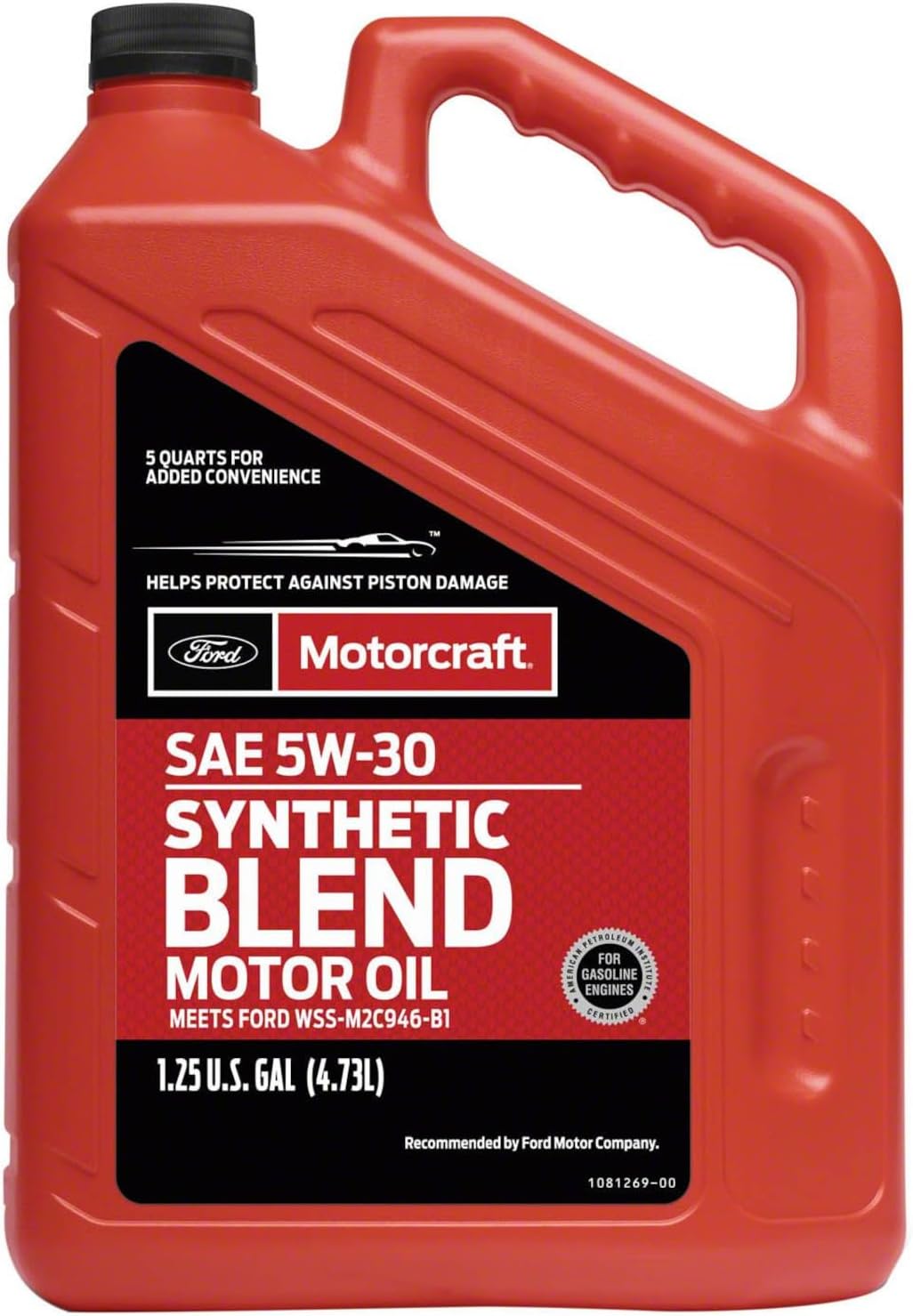
| Viscosity | 5W-30 |
|---|---|
| Size | 5-Quart Jug |
| Flash Point | 446 Degrees Fahrenheit |
| Vehicle Service Type | Car, SUV, Truck, Van |
This Motorcraft 5W-30 jug is formulated to meet factory specifications and is intended as a direct fill for routine service on the Ford Explorer 3.5L V6. It provides a common viscosity for year-round use, aiding cold starts while maintaining protection at operating temperature. Typical use is drain-and-fill maintenance; the 5‑quart size covers a full oil change without needing multiple containers. Notable features include manufacturer testing for Ford/Lincoln applications and a flash point listed at 446 F, which indicates good thermal stability. In practice the oil delivers smooth startup behavior, steady protection under normal commuting and highway driving, and simplifies parts sourcing when you prefer a factory‑matched fluid. Limitations to note are that this is described as a universal fit and not a vehicle-specific packaged kit, so always confirm spec requirements for your model year and any high-mileage needs before use. It also does not include an oil filter or accessories needed for a complete service.
Best for: Buyers who want a factory-matched, no-nonsense engine oil for routine maintenance on a Ford Explorer 3.5L V6 and prefer a single 5‑quart container for home or shop oil changes.
Less Ideal for: Drivers seeking specialized oils for high-mileage, racing, or extended-interval oil change programs should consider purpose-built alternatives.
- Formulated and branded for Ford/Lincoln vehicles to match factory fluid specifications
- 5W-30 viscosity supports reliable cold starts and stable protection at operating temperature
- 5-quart jug size covers a full oil change for the 3.5L V6 without multiple containers
- Manufacturer testing and stated thermal stability make it suitable for routine driving conditions
- Sold as oil only with no filter or installation accessories
- Labeling uses a universal fit description so buyers must verify compatibility with their exact model year and service requirements
Verdict: The best all-around engine oil for most buyers, balancing wear protection, fuel efficiency, and cost for routine maintenance and repair.
2. Castrol GTX Full Synthetic 5W-30 Motor Oil, 5 Quart Jug
Best Budget Engine Oil

| Viscosity grade | 5W-30 |
|---|---|
| Item type | Full Synthetic Motor Oil |
| Liquid Volume | 5 Quarts |
| Compatible with Vehicle Type | Car, Truck |
Castrol GTX Full Synthetic 5W-30 is a full synthetic motor oil designed to keep modern engines cleaner and protected under severe conditions. In everyday use it provides wear protection, sludge control, and resistance to viscosity breakdown, which helps maintain engine performance and fuel economy over longer drain intervals. The formula advertises improved endurance and high-temperature stability, so it is suitable for highway commuting, towing light loads, and mixed driving where keeping the 3.5L V6 in a Ford Explorer free of deposits matters. It meets common industry and manufacturer specifications cited for modern gasoline engines and comes in a convenient 5 quart jug for a full drain and fill. Limitations are that buyers aiming for the absolute lowest upfront cost may find cheaper conventional oils, and those requiring a branded factory-specified oil approval beyond the listed specs should verify compatibility with their vehicle's maintenance recommendations. Overall this oil aims to balance strong protection with practical value for daily drivers.
Best for: Buyers who want dependable, modern synthetic protection for a Ford Explorer 3.5L V6 without paying for specialty race or premium branded extras and who prioritize engine longevity over cutting upfront cost.
Less Ideal for: Drivers strictly on the lowest possible purchase price or those who must use a specific factory-branded oil requirement not listed in the product specifications.
- Full synthetic formulation for better high-temperature stability and viscosity control
- Advertised improved wear protection and sludge reduction to help extend engine life
- Meets multiple modern specifications relevant to gasoline engines
- 5 quart jug sized for a complete oil change without buying multiple containers
- Not the cheapest option compared with conventional oils
- Claims of extended drain intervals should be confirmed against Ford Explorer 3.5L V6 service schedule
Verdict: The best budget engine oil for buyers who need reliable protection and acceptable performance at the lowest reasonable price without unnecessary extras.
3. Valvoline Advanced Full Synthetic SAE 5W-30 Motor Oil, 5 qt
Best Premium Engine Oil

| SAE J300 Viscosity Grade | 5W-30 |
|---|---|
| Liquid Volume | 5 Quarts |
| Compatible with Vehicle Type | Car, Truck |
| Viscosity Level | Low to Medium |
Valvoline Advanced Full Synthetic 5W-30 is a premium motor oil designed to protect engines through tougher daily driving and short-trip duty. It uses synthetic base stocks and additive boosters to deliver claimed improvements in wear protection, deposit control, and heat resistance compared with industry baselines. Typical use is conventional fill-and-forget service for a gasoline engine; the 5 quart jug covers a standard oil change and works with factory-recommended 5W-30 grades. Notable features include enhanced low-temperature flow to reduce cold-start wear and formulations targeted at reducing sludge and varnish buildup. For a Ford Explorer 3.5L V6 this oil meets modern API and ILSAC specifications and listed OEM approvals, so it supports factory service intervals while offering stronger protection for owners who prioritize longevity and engine cleanliness. The trade-offs are typical for premium synthetics: higher cost than conventional oils and benefits that are most evident over many miles rather than immediately noticeable on short-term driving.
Best for: Buyers who want top-tier chemical protection and are willing to pay more to extend engine life and keep the engine cleaner over long service intervals on a daily-driven Ford Explorer 3.5L V6.
Less Ideal for: Drivers who prioritize lowest upfront cost or who strictly follow short-interval oil changes where premium additive longevity is less important.
- Full synthetic base oils with additive boosters for enhanced wear protection
- Improved low-temperature flow to reduce cold-start wear
- Claims stronger deposit and heat protection versus industry standards
- Meets current API and ILSAC specs and several manufacturer requirements relevant to modern gasoline engines
- Premium price compared with conventional and some mid-grade synthetics
Verdict: The best premium engine oil for owners willing to pay more for superior additives, extended drain capability, and top-tier wear and deposit protection.
4. Castrol EDGE 5W-30 Full Synthetic Motor Oil, 5 Quart Jug
Best Full-Synthetic Engine Oil

| SAE Viscosity Grade | 5W-30 |
|---|---|
| Container Type | Jug |
| Liquid Volume | 5 Quarts |
| Compatible with Vehicle Type | Car, Truck |
Castrol EDGE 5W-30 is designed to protect high-performance gasoline engines through a blend of full synthetic base stocks and proprietary additives. For a DIYer changing oil on a Ford Explorer 3.5L V6, it delivers reliable cold-start flow at 5W and maintains film strength at operating temperatures to reduce metal-to-metal wear. The formula emphasizes high-temperature stability and sludge control, which helps keep combustion components cleaner over longer drain intervals. It carries multiple industry licenses and is intended for universal passenger car and truck use, so it fits the service needs of many Ford gasoline engines that call for a 5W-30 specification. Practical benefits include improved engine cleanliness, resistance to viscosity breakdown during hot highway driving, and potential fuel economy advantages from reduced friction. Limitations are that specific performance gains depend on engine condition and that Ford service interval recommendations should be followed rather than extending drains solely based on marketing claims.
Best for: DIY owners who want a factory-quality full synthetic oil that prioritizes engine protection and stable performance across cold starts and sustained highway driving.
Less Ideal for: Drivers who strictly follow extended or specialty OEM oil programs that require a different viscosity or a manufacturer-specific oil formula should consult their dealer before switching.
- Full synthetic formulation for strong high-temperature stability and wear protection
- 5W-30 viscosity supports good cold-start flow while preserving film at operating temperature
- Formulated to reduce sludge and deposits for cleaner combustion components
- Meets multiple industry specifications, making it suitable for modern gasoline engines
- Marketing mentions long drain intervals but actual service life should follow Ford maintenance schedules
Verdict: The best full-synthetic engine oil for DIYers who prioritize maximum engine protection, cold-start performance, and long-term stability under varied driving conditions.
5. Motorcraft SAE 5W-20 Synthetic Blend Motor Oil, 5-Quart Jug
Best Synthetic-Blend Engine Oil

| SAE Viscosity Grade | 5W-20 |
|---|---|
| Liquid Volume | 5 Quarts |
| Compatible Vehicle Type | Car, SUV, Truck, Van |
| Meets Specs | WSS-M2C960-A1; SN PLUS |
This Motorcraft 5W-20 synthetic blend is designed to deliver improved wear protection and thermal stability compared with conventional oils while staying more affordable than full synthetics. It is formulated with high-viscosity-index synthetic/hydro-processed base stocks and performance additives that resist high-temperature oxidation, reduce turbocharger deposits, and help minimize engine deposits and foaming. Typical use is drain-and-fill service for compatible Ford vehicles where 5W-20 is specified; the 5-quart jug makes routine maintenance straightforward for single-oil changes. The blend includes friction-reducing chemistry that can improve fuel economy slightly versus heavier grades and the product meets Ford WSS-M2C960-A1 and API SN PLUS performance statements, which address low-speed pre-ignition concerns. Limitations: this is vehicle-specific recommended oil for Ford family engines and not a universal grade for every car, and it is a synthetic blend so it will not match the extended drain interval or ultimate high-temperature protection of a full synthetic oil.
Best for: Buyers who want better engine wear and thermal protection than conventional oil while staying cost-conscious and following Ford's recommended service practices for compatible gasoline engines.
Less Ideal for: Drivers seeking maximum high-temperature durability or the longest possible oil change intervals should choose a full synthetic oil instead.
- Factory-recommended formulation for many Ford, Lincoln, and Mercury gasoline and flex-fuel engines
- 5W-20 grade offers good low-temperature start-up flow and reduced friction compared with heavier grades
- Formulated to resist high-temperature oxidation and reduce turbocharger deposits
- Comes in a 5-quart jug sized for most single oil changes
- Meets WSS-M2C960-A1 and API SN PLUS performance specifications
- Synthetic blend provides less ultimate high-temperature protection and shorter recommended drain intervals than full synthetic oils
Verdict: The best synthetic-blend engine oil for buyers who want better thermal and wear protection than conventional oil without the full premium price of synthetics.
6. Valvoline MaxLife High Mileage 5W-30 Synthetic Blend Motor Oil, 5 qt
Best High-Mileage Engine Oil

| Viscosity | 5W-30 |
|---|---|
| Vehicle Service Type | Car, Truck |
| Flash Point | 394 Degrees Fahrenheit |
| Size | 5 qt (Pack of 1 |
Valvoline MaxLife High Mileage 5W-30 is a synthetic-blend motor oil designed for engines with significant miles on the clock. It is formulated with seal conditioners to help restore flexibility to hardened seals and reduce oil leaks and consumption, plus extra detergents and friction-fighting additives to limit sludge and wear. In use it serves as a direct replacement motor oil for routine oil changes and is intended to improve protection and fuel efficiency compared with standard oils. Notable features include claimed 20% better wear protection and 15% better sludge defense versus industry baselines and coverage of common gasoline-spec approvals. Practical benefits for a high-mileage Ford Explorer 3.5L V6 include better seal conditioning, improved deposit control, and smoother operation on older engines. Limitations are that it is a synthetic blend rather than a full synthetic, so maximum thermal performance and extended drain intervals may be less than full-synthetic options, and buyers should verify 5W-30 meets Ford’s specified viscosity and service requirements for their model year.
Best for: Buyers with a high-mileage Ford Explorer 3.5L V6 looking to reduce leaks and oil consumption while improving deposit control during regular oil change service.
Less Ideal for: Drivers seeking the highest temperature stability or longest possible oil change intervals should consider a full synthetic oil or manufacturer-recommended alternatives.
- Formulated seal conditioners aimed at reducing leaks and oil consumption in aging engines
- Extra detergents to help control sludge and deposits in high-mileage motors
- Claims improved wear protection and friction-fighting additives to support longevity
- Meets common gasoline oil specifications for broad compatibility
- Synthetic blend rather than full synthetic limits peak thermal stability and longest drain intervals
Verdict: The best high-mileage engine oil for vehicles with significant mileage, offering conditioners and sealing additives to reduce oil consumption, leaks, and wear.
7. Motorcraft 5W-30 Engine Oil (1 qt)
Best 5W-30 Engine Oil

| Container Type | Bottle |
|---|---|
| Compatible with Vehicle Type | Car |
| Liquid Volume | 946 Milliliters |
| Included Components | Funnel |
| Size | 1 Qt. |
This Motorcraft 5W-30 comes in a one-quart bottle and is positioned as a factory-quality oil for vehicles that require 5W-30. It is typically used for routine oil top-ups and changes where the vehicle manufacturer specifies 5W-30 to balance cold-start flow and high-temperature protection. The package includes a funnel for cleaner pouring. As a brand-engineered offering, it aims to match the fit and function expected for Ford and Lincoln applications and is suitable for drivers who want a direct, manufacturer-aligned oil choice. Practical benefits include predictable viscosity at low temperatures for easier starting and stable film strength at operating temperature. The main limitations are the small 1-quart size, which means multiple bottles are needed for full oil changes on larger engines, and the listing does not include detailed performance approvals or synthetic blend information, so buyers should confirm compatibility with their service interval and oil spec requirements.
Best for: Buyers who need a vehicle-maker aligned 5W-30 option to ensure proper cold-start flow and steady protection during normal driving conditions, especially for Ford-family engines.
Less Ideal for: People who perform full oil changes on larger engines and want a single multi-quart jug or those who require documented synthetic specifications and multi-standard approvals.
- Factory-aligned formulation intended for Ford and Lincoln engines
- Clear 5W-30 viscosity for reliable cold-start flow and operating protection
- Includes a funnel for easier, less messy pouring
- Small 1-quart container may require multiple bottles for a full oil change
- No explicit oil spec sheet or performance approvals listed in the product details
Verdict: The best 5W-30 engine oil for buyers who need that specific viscosity for proper cold-start flow and operating protection across typical temperature ranges.
Choosing the Right Ford Explorer 3.5L V6 Engine Oil: Key Factors to Consider
Viscosity Grade
Viscosity grade determines how the oil flows at startup and at operating temperature. For the 3.5L V6, choose a viscosity that balances cold-start protection with film strength at high engine temps. Lower first number grades improve cold flow and reduce wear during startup, but if the grade is too low it may thin excessively under sustained high-load driving.
Consider seasonal and climate effects when selecting between grades like 0W-20 and 5W-30. In colder climates a lower cold-rating helps with quick oil circulation, while warmer climates favor slightly heavier oils that resist thermal thinning. Always cross-check the selected viscosity against Ford recommendations and your driving patterns, such as towing or repeated high-speed highway use, which demand stronger film strength.
Base Oil Type
The base oil—conventional, synthetic blend, or full synthetic—affects oxidation resistance, volatility, and shear stability. Full synthetic oils provide the best thermal stability and lower volatility, which helps maintain viscosity and reduces oil burn-off in the 3.5L V6 under heavy loads.
Synthetic blends can be a middle ground for drivers seeking better protection than conventional oils without the top-tier cost. Conventional oils may suffice for low-mileage, light-duty use, but they age faster and can form deposits sooner. For consistent performance and longer drain intervals, full synthetic base stocks are usually preferred for this engine.
Additive Package and Wear Protection
Additives provide detergency, corrosion inhibition, anti-wear protection, and viscosity index improvement. For the 3.5L V6, look for oils with robust anti-wear agents such as zinc dialkyldithiophosphate or equivalent technologies that protect cam lobes, lifters, and bearings.
Detergents and dispersants keep combustion byproducts and soot in suspension, preventing sludge and varnish buildup that can impair performance. Antioxidants and corrosion inhibitors slow oil breakdown and help maintain engine cleanliness over the drain interval. The overall additive balance should match your usage—high-load or towing drivers benefit from stronger anti-wear and thermal-stability additives.
Manufacturer Specifications and Approvals
Meeting Ford-approved specifications or recommended API/ILSAC ratings ensures the oil is formulated to the tolerances common in Ford engines. These specifications relate to wear testing, deposit control, fuel economy, and emission system compatibility, which are relevant for the Explorer 3.5L V6.
Using an oil that lists the right industry approvals gives confidence the product has been tested to recognized benchmarks. This matters for long-term durability and can affect warranty considerations if the vehicle is still under coverage. Verify that the oil meets or exceeds the specification levels appropriate to the model year and driving conditions.
High-Mileage Considerations
High-mileage oils include seal conditioners and additives aimed at older engines with wear and minor leaks. For Explorers with significant miles on the 3.5L V6, these formulations can help reduce oil consumption and improve compression by conditioning seals and gaskets.
Beyond conditioners, high-mileage oils often have targeted detergent packages to clean deposits without stripping beneficial residues. They may also emphasize anti-wear protection to guard already-worn components. If your Explorer has more than moderate mileage, weigh these benefits against whether a standard synthetic with the correct viscosity might be adequate.
Oil Change Interval and Maintenance Impact
Recommended drain intervals depend on oil type, driving conditions, and manufacturer guidance. Full synthetic oils often allow longer intervals due to better oxidation resistance, but severe duty such as towing, frequent short trips, or dusty conditions will shorten usable life.
Plan oil changes based on observed oil condition and driving habits rather than fixed mileage alone. Regular oil analysis or visual inspection can help determine whether extended intervals are appropriate. Also consider filter quality and correct service procedures, because poor filtration undermines even the best oil performance.
Which Viscosity Works Best For Different Driving Conditions
Choosing between common grades like 0W-20 and 5W-30 depends on how you drive the Explorer 3.5L V6. If you do many short trips in cold weather, a 0W-20 grade improves cold-start flow and reduces startup wear. For frequent towing, long highway runs, or hotter climates, moving to 5W-30 gives stronger film strength at operating temperature.
Think about regional temperature ranges and your typical loads. You can safely switch viscosity within Ford guidelines when seasons change, but avoid repeatedly alternating grades without a clear reason.
- 0W-20: better cold-start protection and slightly improved fuel economy in mild conditions
- 5W-30: stronger protection under sustained high load and higher ambient temperatures
Synthetic Vs Conventional: Practical Tradeoffs
Full synthetic oils offer clear technical benefits: better shear stability, lower volatility, and stronger resistance to thermal breakdown. For an engine like the 3.5L V6 that sees mixed driving, these properties translate to more consistent lubrication and fewer deposits over time.
Conventional oils cost less but require more frequent changes and can form deposits sooner. Synthetic blends can be a compromise if you want some synthetic benefits without the highest cost. Consider overall maintenance budgets and whether you plan to extend drain intervals when choosing base oil type.
- Full synthetic: best for longevity and extended intervals
- Synthetic blend: partial protection improvements with lower cost than full synthetic
- Conventional: acceptable for low-mileage, light-duty use with frequent changes
High-Mileage Engines: When To Use Specialized Formulations
If your Explorer's 3.5L V6 has high mileage, specialized high-mileage oils can help manage common age-related issues. They typically contain seal conditioners to reduce leaks and additives that aim to clean deposits without over-dissolving protective residues.
These oils can be especially helpful when you notice increased oil consumption or minor seepage. However, they are not a cure-all for serious mechanical wear, and you should weigh their benefits against the overall condition of the engine.
- Look for seal conditioners if leaks or seepage are present
- Prefer formulations that balance detergency with preservation of compression
Towing And Heavy Loads: What To Prioritize
Regular towing or frequent heavy loads increase operating temperatures and stress on the oil film. Prioritize oils with strong high-temperature viscosity retention and anti-wear additives to protect bearings and valvetrain components under sustained strain.
Also pay attention to the oil's volatility rating and viscosity index. Oils that resist thermal thinning will maintain protective film thickness during extended climbs or heavy-haul scenarios, reducing the risk of accelerated wear.
- Higher shear stability preserves viscosity under load
- Anti-wear additives protect critical moving parts during heavy use
Oil Change Practices Specific To The 3.5L V6
Follow Ford's guidance for drain intervals tailored to your vehicle's year and service schedule. For many drivers, switching to a full synthetic allows longer intervals, but severe duty shortens that advantage. Always use a high-quality filter and torque drain plugs to the specified value to prevent leaks.
Inspect oil condition visually between changes. Darkening alone is not a failure indicator, but a gritty texture, strong burnt odor, or rapid level drop signals immediate attention. Keeping a consistent service record helps spot trends like rising oil consumption early.
- Use the correct filter to ensure filtration matches oil type
- Monitor oil level and condition regularly, especially after heavy use
Still looking for the perfect fit?
Select your Ford Explorer configuration to see the most relevant Engine Oils recommendations
How We Chose the Best Ford Explorer 3.5L V6 Engine Oil
We evaluated candidates based on criteria that directly affect longevity and performance in the Ford Explorer 3.5L V6. Primary filters included viscosity suitability for the engine and regional climates, API and ILSAC performance ratings, and whether the formulation meets Ford-specified specifications where applicable. We also assessed base oil type, focusing on synthetic and synthetic blend formulations for superior thermal stability and oxidation resistance.Additive chemistry was another crucial factor. Oils with robust detergent, dispersant, and anti-wear additives help control deposits and protect valve trains and bearings. We considered shear stability and viscosity index modifiers to ensure the oil maintains film strength across operating temperatures. For higher-mileage Explorers, we looked at oils with conditioners aimed at reducing leaks and preserving seals.We excluded used or re-refined oils, single-vintage samples, and formulations lacking clear performance certifications. Our selection favors widely available formulations with transparent spec sheets and manufacturer claims that align with the needs of the 3.5L V6 engine.
Our full evaluation process is outlined in our review methodology.
FAQ
How often should I change the oil in a Ford Explorer 3.5L V6?
It depends on oil type and driving conditions. With full synthetic and normal driving, many owners follow manufacturer intervals or around 7,500 to 10,000 miles. Severe use like towing or frequent short trips typically requires shorter intervals, often 3,000 to 5,000 miles.
Can I switch from 5W-30 to 0W-20 in my Explorer 3.5L V6?
Switching viscosity is possible within Ford's recommended grades, but do so considering climate and load. 0W-20 improves cold-start flow, while 5W-30 provides stronger high-temperature film. Confirm the grade is approved for your model year before changing.
Is full synthetic oil worth it for the 3.5L V6?
Full synthetic offers better thermal stability, lower volatility, and longer useful life compared with conventional oils. For mixed driving, towing, or to extend drain intervals, full synthetic is often a practical choice, though it comes with higher upfront cost.
Should I use a high-mileage oil if my Explorer has high miles?
High-mileage formulations can help reduce leaks and condition seals, and they often include detergents tuned for older engines. They are helpful when oil consumption or seepage is noticeable, but will not reverse serious mechanical wear.
Does the oil type affect fuel economy in the 3.5L V6?
Yes, viscosity and friction modifiers in oil formulations can influence fuel economy. Lower-viscosity oils like 0W-20 may yield slight efficiency gains in suitable conditions, but real-world differences are usually modest and depend on driving style.
What should I do if my oil level keeps dropping?
Frequent level drops suggest consumption or leaks. Check for visible leaks, monitor consumption rates, and consider a high-mileage oil or diagnostic inspection. Rapid loss of oil requires immediate attention to avoid engine damage.
Final Verdict
For the Ford Explorer 3.5L V6, prioritize an oil that matches your typical climate and driving load. Viscosity choice is the single biggest decision: favor lower cold-flow grades for cold climates and lighter use, and choose thicker grades for towing or sustained high-load driving. Synthetic base stocks and robust additive packages offer the best protection against thermal breakdown and wear.Weigh high-mileage formulations if you have an older engine or notice leaks, and plan oil change intervals based on duty cycle rather than a fixed mileage alone. Focusing on the factors discussed here will help you make a confident oil choice and maintain reliable engine performance.
Explore More:
- Check out all Ford Explorer parts & accessories
- Explore Fluids & Chemicals
- Browse all Accessories
