

Note: This article contains affiliate links. If you click on these links and make a purchase, I may earn a small commission at no extra cost to you. This helps support my research and content. Read my full affiliate disclosure here.
If you own a Ford Explorer with the 2.3L EcoBoost, picking the right engine oil directly affects performance, fuel economy, and long-term engine health. This guide narrows the field to seven top-rated engine oils suited to the 2.3L EcoBoost's turbocharged design, focusing on viscosity choices, additive chemistry, and protection under load. You will find shortlisted options that fit common service intervals and driving styles, plus the criteria we used to evaluate them. Read on to see which oil properties matter most for preserving boost response, controlling sludge, and protecting high-temperature components.
Looking for other parts? See all Ford Explorer parts & accessories.
Top Picks at a Glance
| Best Overall Engine Oil A well-rounded, OEM-compatible oil that balances protection and price | Sunoco 721036 5W-30 Synthetic Blend Oil Change Bundle with WIX WL10290 Filter |  |
| Best Budget Engine Oil A lower-cost option that still meets common performance specifications | Motorcraft 5W-30 Engine Oil (1 qt) |  |
| Best OEM Ford Motorcraft Oil Genuine Motorcraft/OEM oil sold in factory-approved viscosities and packages | Motorcraft 5W-30 Engine Oil, 5-Quart Jug |  |
| Best Synthetic-Blend Multi-Quart Case Economical multi-quart packaging of synthetic-blend oil for multiple services | Motorcraft 5W-20 Synthetic Blend Motor Oil — 12-Quart Case |  |
| Best Low-Viscosity 0W-20 Oil A thin, low-viscosity oil for modern engines needing improved cold flow | Motorcraft 0W-20 Engine Oil (32 fl oz) |  |
| Best Higher-Viscosity / Heavy-Duty Oil A thicker 5W-40 or 10W-30 grade for heavier loads or older engines | Motorcraft 10W-30 Engine Oil (32 fl oz) |  |
1. Sunoco 721036 5W-30 Synthetic Blend Oil Change Bundle with WIX WL10290 Filter
Best Overall Engine Oil

| Viscosity | 5W-30 |
|---|---|
| Performance Standards | API SQ, ILSAC GF-7A |
| Bundle Contents | 6 quarts oil + 1 WIX WL10290 filter |
| Compatible Engines | Ford 2.0L and 2.3L EcoBoost |
This bundle supplies six quarts of Sunoco 5W-30 synthetic blend motor oil plus a WIX WL10290 oil filter sized for compatible Ford 2.0L and 2.3L EcoBoost engines. The oil is formulated to meet API SQ and ILSAC GF-7A specs and is designed to improve wear protection, reduce sludge, and guard turbocharged engines against low-speed pre-ignition. For a DIY oil change on a Ford Explorer 2.3L EcoBoost within the stated fitment years, the kit provides the correct viscosity and enough volume to refill the engine with filter change included. The included WIX filter is a recognized brand for efficient particle capture while maintaining oil flow. Important practical limits are the filter thread note: Ford used two thread styles across some EcoBoost builds, so you must confirm your engine uses the M22-style WL10290 before relying on this kit. Also, this is a synthetic blend rather than a full synthetic, so drivers wanting maximum high-temperature protection and longer drain intervals may prefer a full synthetic alternative.
Best for: Ford Explorer 2.3L EcoBoost drivers who want a ready-to-use oil change kit that meets current manufacturer-grade performance standards and simplifies routine DIY service.
Less Ideal for: Drivers seeking a full synthetic oil for extended drain intervals or maximum high-temperature protection should consider a true full synthetic product instead.
- Matches API SQ and ILSAC GF-7A specs for modern turbocharged gasoline engines
- Provides a full oil change quantity (6 quarts) plus a branded WIX oil filter
- Formulated to help reduce sludge and protect against LSPI in EcoBoost engines
- Bundle simplifies DIY maintenance by including filter and correct viscosity oil
- Includes a WIX WL10290 filter that is incompatible with EcoBoost engines using the alternate 3/4-16 thread style
Verdict: Choose this pick for the best all-around engine oil that provides reliable wear protection, manufacturer-grade specs, and broad compatibility for routine DIY oil changes.
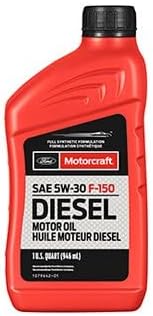
2. Motorcraft 5W-30 Engine Oil (1 qt)
Best Budget Engine Oil
| Container Type | Bottle |
|---|---|
| Compatible with Vehicle Type | Ford F-150, Transit |
| Liquid Volume | 1 Quarts |
| Brand Name | Motorcraft |
Motorcraft 5W-30 is a straightforward, factory-branded engine oil supplied in one-quart bottles for use where Ford-specified 5W-30 is required. It provides conventional protection targeted at routine service intervals rather than extended-life or high-performance applications. Typical use is top-offs between changes or regular oil changes for daily-driven vehicles; the Motorcraft branding signals compatibility with Ford engines and fit-for-purpose formulation. The oil’s primary benefit is dependable, standards-based lubrication without premium additive packages, making it a practical, wallet-friendly choice for owners who prefer a factory-recommended fluid. Limitations are that it is not marketed as a synthetic or high-mileage formulation, so drivers seeking maximum wear reduction, extended drain intervals, or extra detergency for heavily modified or high-output EcoBoost engines may prefer a full synthetic alternative. For routine maintenance on a 2.3L EcoBoost used mostly in daily driving, this oil covers basic protection and easy serviceability.
Best for: Buyers who prioritize a factory-recommended, budget-friendly oil for standard maintenance and regular service intervals on a 2.3L EcoBoost engine.
Less Ideal for: Owners running performance modifications, towing frequently, or seeking extended drain intervals should consider a full synthetic oil with advanced additive chemistry instead.
- Factory-branded formulation matched to Ford vehicle specifications
- Sold in single-quart bottles convenient for top-offs and small-volume needs
- Simple, dependable protection suitable for routine service intervals
- Not specified as full synthetic so it may offer less high-temperature and long-drain protection than synthetics
Verdict: Pick this slot if you want a dependable, wallet-friendly engine oil that covers basic protection and service intervals without premium additives.
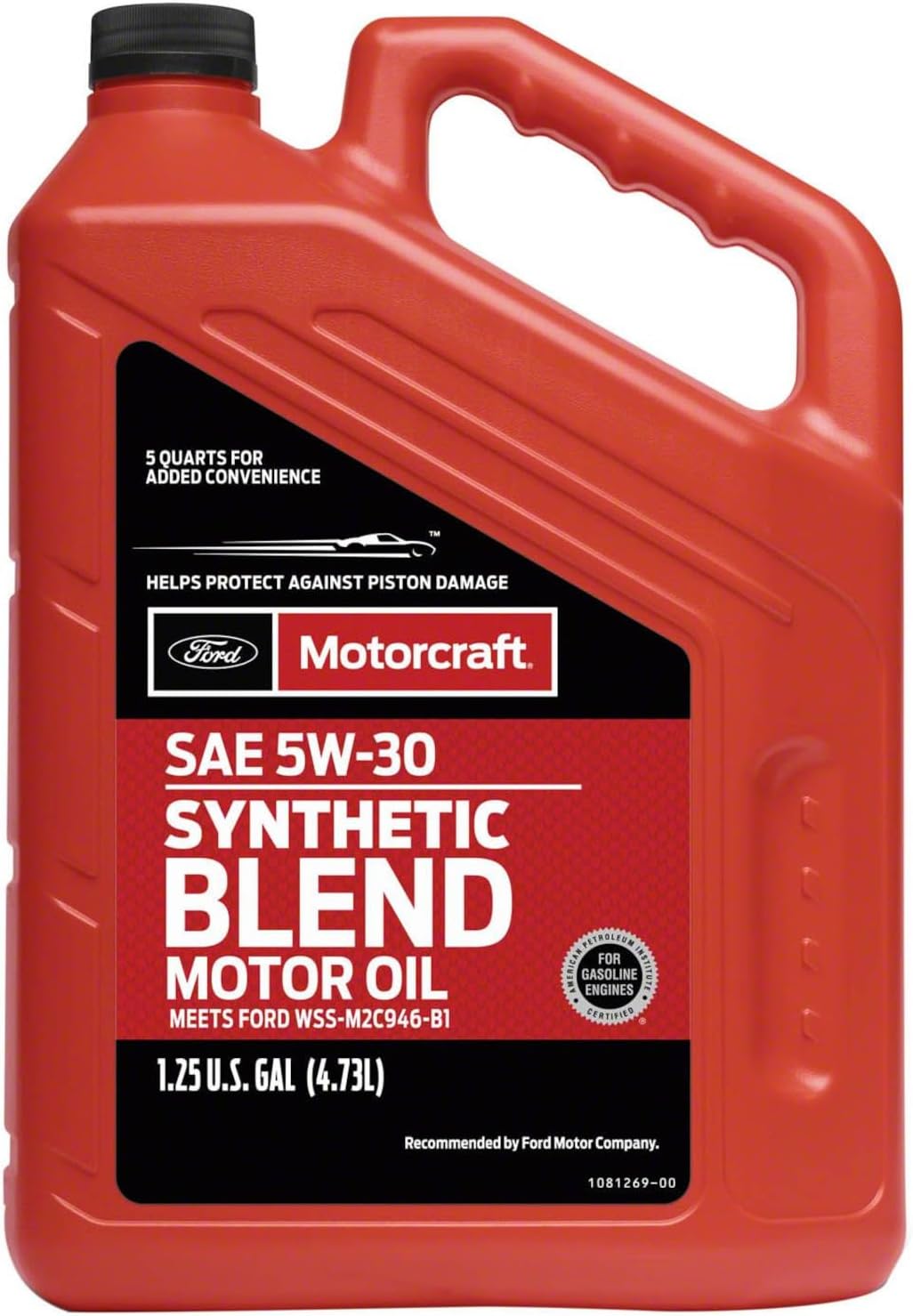
3. Motorcraft 5W-30 Engine Oil, 5-Quart Jug
Best OEM Ford Motorcraft Oil
| Viscosity | 5W-30 SAE Grade |
|---|---|
| Vehicle Service Type | Car, SUV, Truck, Van |
| Size | 5-Quart Jug |
| Flash Point | 446 Degrees Fahrenheit |
This Motorcraft 5W-30 jug is the factory-formulated engine oil designed to meet Ford specifications for passenger cars, SUVs, and light trucks. It is used like any full-synthetic or synthetic-blend service oil: pour into the engine during routine oil changes to maintain lubrication, control wear, and support cold starts. Notable features include the SAE 5W-30 viscosity grade matched to many Ford engines, a 5-quart container that covers a single drain and filter service for most vehicles, and a flash point specification that indicates thermal resilience. Because it is a Motorcraft product, it is engineered for compatibility with Ford engines and to preserve manufacturer service expectations. Limitations are straightforward: the product is a single viscosity choice so it may not be optimal for engines that require other grades, and buyers should confirm the 5W-30 spec matches the EcoBoost 2.3L oil requirement and interval recommendations before use.
Best for: Buyers who prioritize using a manufacturer-formulated oil that aligns with Ford service recommendations and want a hassle-free, warranty-friendly choice for routine oil changes on Ford vehicles.
Less Ideal for: Drivers who need a different viscosity grade, specialized performance oil, or extended-interval formulations should look at alternative products.
- Factory-formulated to Ford standards for compatibility with Ford and Lincoln engines
- Common SAE 5W-30 viscosity suitable for many modern gasoline engines
- 5-quart jug size matches typical oil change volume for single service
- Motorcraft brand backing implies consistent supply and specification matching
- Single viscosity option may not suit engines that require different grades
Verdict: Select this when you prefer factory-formulated oil built to the vehicle maker's specifications for fit, function, and warranty-friendly maintenance.
4. Motorcraft 5W-20 Synthetic Blend Motor Oil — 12-Quart Case
Best Synthetic-Blend Multi-Quart Case

| SAE J300 Viscosity Grade | 5W-20 |
|---|---|
| Container Type | Case |
| Compatible with Vehicle Type | Car, Truck |
| Liquid Volume | 12 Quarts |
This 12-quart Motorcraft case supplies 5W-20 synthetic blend motor oil intended for routine engine maintenance. Packaged as a case, it is convenient for owners who plan multiple oil changes and prefer using a brand-designed fluid for factory-recommended specs. The 5W-20 viscosity suits modern gasoline engines that call for thinner start-up flow, and the synthetic blend formulation balances improved flow and protection versus straight conventional oil. Using a branded product simplifies fitment choices and helps ensure compatibility with service intervals when the vehicle manufacturer specifies 5W-20. The main practical benefit is stocking enough oil for several service cycles, reducing trips to buy single quarts and often lowering per-quart cost. Limitations are inherent to the product type: it is a synthetic blend rather than a full synthetic, so it may offer slightly less high-temperature and long-drain protection than full-synthetic alternatives, and it only fits vehicles that require 5W-20. For a Ford Explorer 2.3L EcoBoost, confirm the engine oil viscosity recommendation before selecting this case.
Best for: Buyers who plan to perform several oil changes themselves and want the convenience and lower per-quart cost of a factory-fit multi-quart case while staying with a manufacturer-branded oil.
Less Ideal for: Drivers seeking maximum high-temperature stability or the longest possible oil-change intervals should consider full-synthetic motor oils instead.
- Large 12-quart quantity supports multiple oil changes without repeated purchases
- Brand-formulated product for vehicle-specific fit and compatibility
- 5W-20 viscosity gives good cold-start flow for modern gasoline engines
- Synthetic blend offers less extreme-temperature and extended-drain performance than full synthetic options
Verdict: Pick this option if you plan to do several oil changes and want the cost savings and convenience of buying a multi-quart case of synthetic-blend oil.
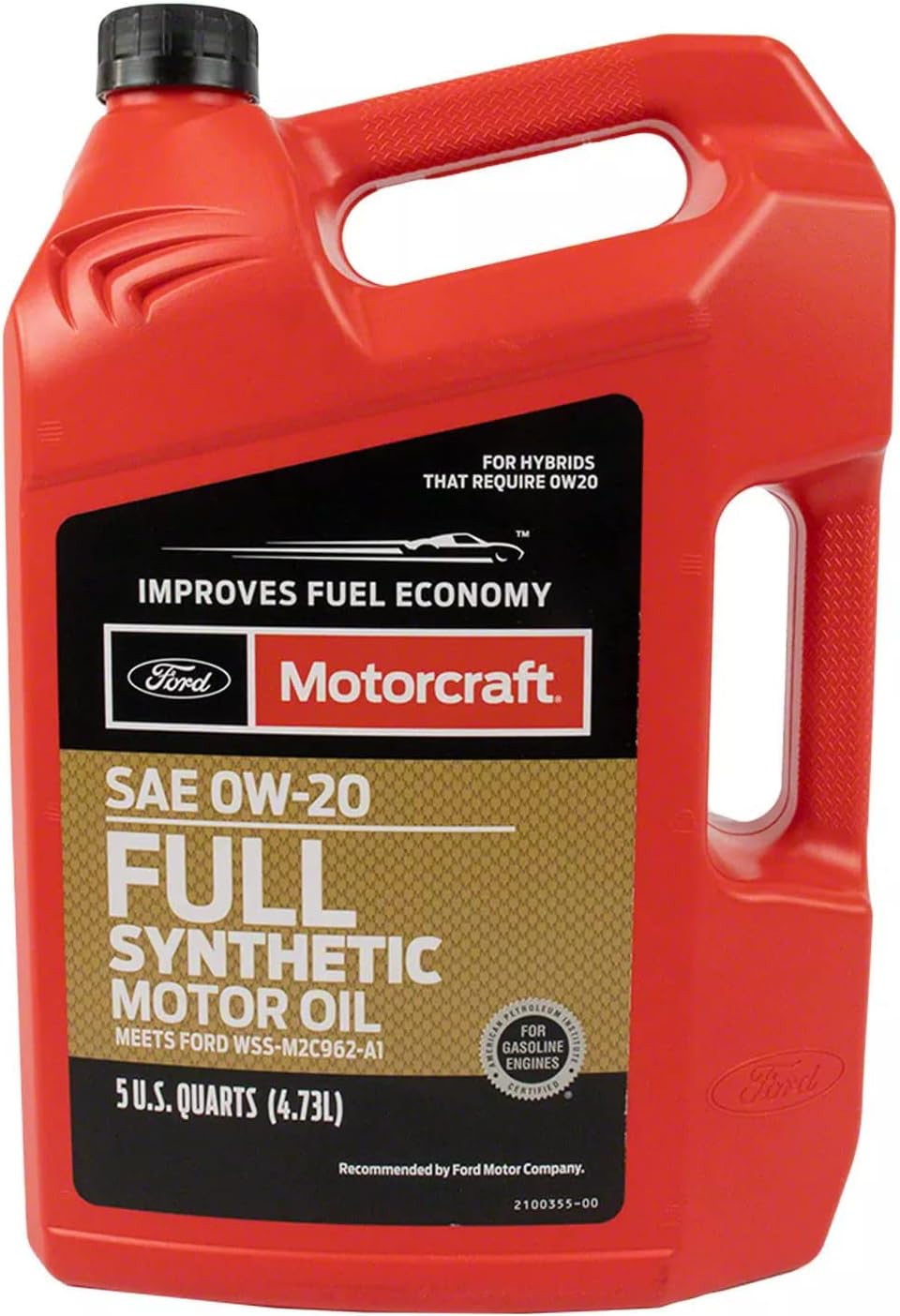
5. Motorcraft 0W-20 Engine Oil (32 fl oz)
Best Low-Viscosity 0W-20 Oil
| Liquid Volume | 32 Fluid Ounces |
|---|---|
| Container Type | Bottle |
| Compatible with Vehicle Type | Car |
| Included Components | Funnel |
Motorcraft 0W-20 is a factory-quality low-viscosity engine oil packaged in a 32-ounce bottle and supplied with a funnel for easier pouring. It is designed to deliver the thin cold-flow characteristics drivers need for quick lubrication on start-up and to support the fuel-economy benefits of modern low-viscosity formulations. You would use this as a top-up or for a full oil change in vehicles specified for 0W-20 oil, where faster oil circulation at low temperatures helps reduce wear during cold starts. The product emphasizes fit and function for Ford and Lincoln vehicles, and the included funnel makes small-capacity changes cleaner. Limitations are its single 32-ounce volume, which may require buying multiple bottles for a full drain-and-refill on engines that need more oil, and there is no detailed additive or specification chart on the label for comparing to specific manufacturer specs.
Best for: Drivers who prioritize maximum cold-start protection and improved fuel economy in engines specified for 0W-20, especially those who prefer a factory-branded oil for maintenance continuity.
Less Ideal for: Drivers who need to perform full oil changes on higher-capacity engines without buying multiple bottles or who require oils with explicitly listed spec endorsements for broader aftermarket compatibility.
- Low-viscosity 0W-20 formulation for faster cold-start lubrication
- Factory-brand formulation intended to match Ford and Lincoln service expectations
- Includes a funnel for neater pouring during top-ups
- Compact 32-ounce bottle is convenient for single-quart top-ups or partial fills
- Single 32-ounce bottle may be insufficient for full oil changes on engines requiring more volume
- Product listing does not show detailed spec approvals or additive package details for direct comparison
Verdict: Select this when you need a 0W-20 formulation to maximize cold-start protection and fuel economy in engines specified for lower-viscosity oils.
6. Motorcraft 10W-30 Engine Oil (32 fl oz)
Best Higher-Viscosity / Heavy-Duty Oil

| SAE Viscosity Grade | 10W-30 |
|---|---|
| Compatible Vehicle Type | Car, Truck |
| Viscosity Level | Medium |
| Liquid Volume | 32 Fluid Ounces |
This Motorcraft 10W-30 oil is a factory-branded engine lubricant intended as a direct-fit replacement for routine service. It provides a heavier 10W-30 viscosity that maintains a thicker film at operating temperature compared with lighter grades, so it helps protect parts under higher load or warmer running conditions. Typical use is drain-and-refill maintenance for gasoline engines in passenger cars and trucks where the manufacturer allows 10W-30. The product comes in a single 32-ounce bottle and is presented as a Motorcraft-specified option that supports factory fit and function for Ford and Lincoln vehicles. The practical benefits are straightforward: improved film strength and consistent viscosity during sustained highway driving or towing compared with lower-viscosity oils. Limitations are that it is a single-bottle solution for a partial fill on many engines and you must confirm compatibility with the 2.3L EcoBoost's specified oil grade and service specs before use to ensure correct performance and protection levels.
Best for: Buyers who prioritize a heavier, higher-viscosity oil for additional film strength during sustained highway loads, towing, or warmer operating conditions and who want a Motorcraft-branded option compatible with Ford service practices.
Less Ideal for: Drivers seeking a full-size pack for a complete oil change in one purchase or those whose vehicle manufacturer specifically calls for a lighter viscosity should look elsewhere.
- Motorcraft-branded formulation tuned for Ford and Lincoln vehicles
- 10W-30 grade offers stronger lubricating film at operating temperature
- Clear factory-aligned option for routine drain-and-fill service
- Medium viscosity suitable for higher-load driving and warmer climates
- Single 32 fl oz bottle may not be enough for a full oil change in many engines
Verdict: Choose this pick if you want a higher-viscosity or heavy-duty formulation that offers extra film strength and protection under load or higher operating temperatures.
Choosing the Right Ford Explorer 2.3L EcoBoost Engine Oil: Key Factors to Consider
Viscosity and Cold-Start Flow
Viscosity affects how quickly oil circulates at startup and how well it maintains a lubricating film under load. For the 2.3L EcoBoost, choosing a viscosity that provides adequate cold-start flow can reduce wear during the first seconds of operation, when most engine damage occurs.
Lower-viscosity oils improve cold-start circulation and can help fuel economy, but they must still protect bearings and turbocharger bearings at operating temperature. Consider seasonal temperature ranges and the manufacturer's recommended grades when selecting oil to ensure the right balance between low-temperature pumpability and high-temperature film strength.
High-Temperature Shear Stability
Turbocharged engines run hotter and place greater stress on oil film integrity. Shear stability measures an oil's ability to maintain viscosity after mechanical and thermal stress. Oils with poor shear stability thin out under pressure, reducing protective film and increasing wear risk in bearings, cam lobes, and turbocharger components.
For the 2.3L EcoBoost, prioritize oils with proven shear stability data or robust synthetic base stocks that resist viscosity loss. This helps the oil retain protective properties over the service interval, especially during sustained highway speeds or heavy towing where temperatures remain elevated.
Detergent and Dispersant Additives
Detergents and dispersants control deposits, sludge, and varnish that form when blow-by gases and combustion byproducts mix with oil. Turbocharged engines are prone to higher blow-by rates and oil contamination, which makes additive performance critical for keeping intake components and valve trains clean.
Selecting an oil with strong detergent and dispersant chemistry reduces the likelihood of sticky deposits that impair fuel economy, throttle response, and long-term reliability. This is particularly important if you run extended drain intervals or use the vehicle in stop-and-go traffic.
Turbocharger Protection
Turbochargers spin at very high speeds and rely on a clean, stable oil film for bearing lubrication and cooling. Oils must resist coking and deposit formation in the turbo center housing to avoid oil starvation and reduced turbo life.
Choose oils formulated for turbocharged applications with anti-coking and thermal stability additives. Such formulations help prevent bearing damage and maintain spool characteristics, which preserves boost response and overall engine performance.
Compatibility With Seals And Materials
Modern engines use a variety of elastomers and metal alloys. Some oil chemistries or additive packages can cause seal swelling or shrinkage, resulting in leaks. For the Ford Explorer 2.3L EcoBoost, oil compatibility with factory seals and gaskets is important to avoid unexpected oil consumption or weeping seals.
Look for oils that specify compatibility with OEM materials and meet relevant manufacturer requirements. If your vehicle has higher mileage, consider the interaction between oil additives and older seals when selecting a formulation.
Service Interval and Oil Life
How long an oil can maintain protective properties influences your maintenance schedule and total cost of ownership. Some synthetic oils are formulated for extended drain intervals, while others are optimized for standard changes with an emphasis on peak protection.
Decide whether you plan to follow Ford's standard recommended interval or prefer extended intervals for fewer changes. Choose oils with oxidation resistance and additive durability appropriate to that plan to ensure protection throughout the intended service life.
Recommended Viscosity Choices For The 2.3L EcoBoost
The 2.3L EcoBoost commonly operates across a wide temperature range and under turbocharged conditions, so picking the right viscosity is a practical first step. Multi-grade oils like 5W-30 or 0W-20 offer different tradeoffs in cold flow and high-temperature film strength. 0W-20 favors cold-start efficiency and can help fuel economy, while 5W-30 provides a thicker film at operating temperature that some owners prefer for longevity under load.
Match viscosity to your climate and driving habits. In colder regions where startup wear is a primary concern, a lower first number can help. If you routinely tow, carry heavy loads, or drive aggressively, a slightly higher operating viscosity can improve film retention at high temperatures.
- 0W-20: better cold-start flow and potential fuel economy gains
- 5W-30: stronger high-temp film for heavier duty or elevated temps
- Consult the vehicle manual for Ford recommendations and any factory requirements
Synthetic Versus Synthetic Blend
Fully synthetic oils offer superior oxidation resistance, thermal stability, and shear resistance compared with conventional and many blend formulations. These characteristics are especially valuable for a turbocharged engine like the 2.3L EcoBoost, which benefits from oils that can handle high temperatures and reduce deposit formation.
Synthetic blends may be cost-effective while still improving on conventional oil in targeted ways. If you drive the Explorer gently and adhere to regular changes, a high-quality blend can be acceptable. For aggressive driving, towing, or extended drain intervals, fully synthetic choices generally offer better protection.
- Synthetic: best thermal and oxidative stability, recommended for turbocharged engines
- Synthetic blend: balance of cost and improved protection over conventional
Oil Change Intervals And Real-World Service
Factory service intervals are designed around average driving conditions. If you frequently tow, drive in extreme heat, or see a lot of short trips where the engine does not reach full temperature, you should consider shorter intervals. Oil that maintains viscosity and resists oxidation over the selected interval reduces risk of wear between changes.
Use high-quality filters and follow proper drain and fill procedures. Track oil consumption and inspect for discoloration or unusual odors as signs that service intervals or oil choice may need adjustment.
- Short trips and heavy loads favor more frequent oil changes
- Extended drain oils require monitoring for consumption and contaminants
High Mileage Considerations
If your Explorer has higher mileage, pay attention to oil formulations that address seal conditioning and controlled detergent levels. Some high-mileage oils include additives to help reduce leaks and tame oil consumption by conditioning seals. However, heavier additive packages can sometimes lead to different deposit behavior, so monitor performance closely after switching.
For older engines, moving to a slightly higher operating viscosity can help restore oil pressure and reduce metal-to-metal contact. Balance that against cold-start needs and ensure the chosen oil meets the engine's specification.
- High-mileage oils can help temporarily reduce leaks and consumption
- Consider viscosity changes carefully and monitor for changes in smoke or oil use
Environmental And Performance Tradeoffs
Lower-viscosity oils can yield small fuel-economy gains but may sacrifice some film strength under severe conditions. Owners seeking maximum economy should weigh that against potential long-term wear when the vehicle is used for towing or spirited driving. Also consider regional temperature extremes that influence cold-start protection and long-term oxidation.
Choosing an oil that balances economy and protection rather than maximizing one at the expense of the other is often the best approach for versatile use of the Explorer.
- Cold-climate owners may prioritize low-temperature flow
- Warm-climate or heavy-use owners may prioritize viscosity retention and oxidation resistance
Still looking for the perfect fit?
Select your Ford Explorer configuration to see the most relevant Engine Oils recommendations
How We Chose the Best Ford Explorer 2.3L EcoBoost Engine Oil
We prioritized engine oils that match the Ford Explorer 2.3L EcoBoost's needs and the typical duty cycles this engine sees. Our selection criteria included viscosity compatibility with Ford-recommended ranges, high-temperature shear stability for turbocharged operation, and detergent and dispersant performance to limit sludge and varnish. We also considered oil longevity and oxidation resistance to support standard and extended drain intervals, plus friction modifiers that can help maintain fuel economy and throttle response.We excluded products that do not meet modern API or ILSAC specifications or that lack documentation for turbocharged small-displacement engines. Oils with inadequate low-temperature flow characteristics or poor aftermarket test data for shear stability were not considered. In short, we filtered for synthetic or high-quality synthetic blend formulations with clear spec compliance, robust additive packages, and performance characteristics aligned to the 2.3L EcoBoost's thermal and mechanical demands.
Our full evaluation process is outlined in our review methodology.
FAQ
How often should I change the oil in a Ford Explorer 2.3L EcoBoost?
Follow Ford's recommended interval as a baseline, but shorten intervals if you tow, do many short trips, or drive in extreme heat. Many owners opt for more frequent changes under severe-service conditions to protect turbocharger and engine components.
Can I switch from conventional to synthetic in the 2.3L EcoBoost?
Yes. Switching to a fully synthetic or high-quality synthetic blend is generally safe and can improve thermal stability and oxidation resistance. After switching, monitor for oil consumption and leaks, though issues are uncommon when using oils that meet modern specifications.
Is a lower-viscosity oil like 0W-20 suitable for the turbocharged 2.3L EcoBoost?
A 0W-20 grade can be suitable, particularly for cold climates and when fuel economy is a priority, provided the oil meets required specs and offers adequate high-temperature protection. For consistently heavy loads or high ambient temperatures, a higher operating viscosity may offer better film strength.
Does high-mileage oil help with oil leaks on an older Explorer 2.3L EcoBoost?
High-mileage oils include additives designed to condition seals and can reduce minor leaks in some cases. Results vary by vehicle condition, so monitor for changes and consult a technician if leaks persist or worsen.
What signs indicate the oil is not protecting the 2.3L EcoBoost adequately?
Look for increased oil consumption, excessive smoke, unusual noises on cold start or under boost, and rapid oil discoloration. Any of these signs warrants inspection and possibly switching to a different formulation or service interval.
Final Verdict
Prioritize viscosity and thermal stability when selecting engine oil for the Ford Explorer 2.3L EcoBoost. For everyday driving in moderate climates, lower-viscosity synthetics offer good cold-start flow and efficiency, while higher operating viscosities can provide extra film strength for towing or sustained high temperatures. Weigh the tradeoffs between fuel economy and long-term protection, and align your choice with service interval plans and real-world driving duties.Ultimately, choose an oil that meets the relevant specifications, provides strong shear and oxidation resistance for turbocharged operation, and matches your driving conditions to ensure reliable performance and longevity of the 2.3L EcoBoost engine.
Explore More:
- Check out all Ford Explorer parts & accessories
- Explore Fluids & Chemicals
- Browse all Accessories
