

Note: This article contains affiliate links. If you click on these links and make a purchase, I may earn a small commission at no extra cost to you. This helps support my research and content. Read my full affiliate disclosure here.
Choosing the right engine oil matters for the Ford Explorer ST because the ST's turbocharged engine runs hotter and puts greater stress on lubricants than a standard naturally aspirated unit. The correct oil helps preserve performance, control deposits, and maintain oil pressure and fuel economy across daily driving and spirited runs. This guide shortlists seven top-rated oils suited to the ST's needs and explains the evaluation criteria buyers should weigh.Below you will find the top picks and details on viscosity, synthetic vs conventional choices, and suitability for mileage and climate, so you can match the oil to how you drive the Explorer ST.
Looking for other parts? See all Ford Explorer parts & accessories.
Top Picks at a Glance
| Best Overall Engine Oil A balanced, top-performing oil that fits most Explorer ST needs | Castrol EDGE 5W-30 Advanced Full Synthetic Motor Oil, 5 Quart Jug |  |
| Best Budget Engine Oil An affordable, reliable oil that keeps costs low between changes | Castrol GTX Ultraclean 5W-30 Synthetic Blend Motor Oil, 5 Quart |  |
| Best Full‑Synthetic Engine Oil A premium full‑synthetic formulation for maximum protection and stability | Mobil 1 Advanced Full Synthetic Motor Oil 5W-30, 5 Quart |  |
| Best Synthetic‑Blend Engine Oil A mid‑range synthetic blend that balances price and improved protection | Castrol GTX High Mileage 5W-30 Synthetic Blend Motor Oil, 5 qt |  |
| Best OEM Motorcraft Engine Oil Genuine Ford/Motorcraft oil meeting factory specs and vehicle fitment | Motorcraft 5W-30 Engine Oil, 5-Quart Jug |  |
| Best Bulk / Case Pack Engine Oil Larger multi‑quart or case packs that lower cost per quart | Motorcraft 5W-30 Synthetic Blend Motor Oil, 12-Quart Pack |  |
| Best Extended‑Drain / Long‑Life Engine Oil Formulations marketed for longer service intervals and high stress protection | Castrol EDGE Extended Performance 5W-30 Full Synthetic Motor Oil, 5 Quart |  |
1. Castrol EDGE 5W-30 Advanced Full Synthetic Motor Oil, 5 Quart Jug
Best Overall Engine Oil

| SAE J300 Viscosity Grade | 5W-30 |
|---|---|
| Container Type | Jug |
| Compatible with Vehicle Type | Car, Truck |
| Liquid Volume | 5 Quarts |
Castrol EDGE 5W-30 is a full synthetic engine oil designed to protect modern engines under a wide range of conditions. It is used as a direct replacement during routine oil service and is intended for daily driving as well as occasional spirited use where higher temperatures and loads occur. Notable features include Castrol's advanced additive technology aimed at reducing sludge, improving high temperature performance, and maintaining viscosity control to limit wear. The 5-quart jug covers a typical service interval and the formulation lists approvals for current industry specifications, supporting compatibility with modern gasoline engines. Practical benefits include improved engine cleanliness, resistance to thermal breakdown at high temperatures, and potential fuel economy gains through reduced friction. Limitations are that vehicle-specific approvals beyond the listed industry specs should be checked against the Ford Explorer ST owner's manual, and some drivers who prefer different viscosity grades for extreme cold or heavily modified engines may need a different formulation.
Best for: Drivers of a performance-oriented Ford Explorer ST who want a single, well-rounded synthetic oil that balances wear protection, thermal stability, and everyday drivability.
Less Ideal for: Drivers running heavily modified engines with unusual oil requirements or those who need a different viscosity for extreme cold climates should consider alternative formulations.
- Advanced additive package aimed at reducing sludge and deposits
- Designed for high temperature stability and wear protection
- Factory-quality full synthetic formulation suitable for modern engines
- 5-quart jug size covers a standard oil change without multiple purchases
- Not specified for extreme cold start viscosities outside 5W-30 grade
Verdict: The Best Overall slot is for a well-rounded engine oil that delivers strong wear protection, modern additive chemistry, and broad temperature performance for everyday driving and spirited use.
2. Castrol GTX Ultraclean 5W-30 Synthetic Blend Motor Oil, 5 Quart
Best Budget Engine Oil

| SAE J300 Viscosity Grade | 5W-30 |
|---|---|
| Compatible with Vehicle Type | For Gasoline Engines |
| Container Type | Bottle |
| Liquid Volume | 5 Quarts |
| Flash Point | 200 Degrees Celsius |
Castrol GTX Ultraclean 5W-30 is a synthetic blend motor oil designed to help clean existing sludge and slow new sludge formation while protecting internal engine components. It is used like any conventional engine oil in routine oil changes for gasoline engines and comes in a five-quart bottle that covers most DIY oil-change needs. The product emphasizes sludge control with a double-action formula and claims improved protection versus baseline industry standards, plus additives to resist high-temperature deposits and viscosity breakdown. For Ford Explorer ST owners doing their own maintenance, this oil offers dependable mid-grade protection without the cost of a full synthetic, making it a practical choice for regular service intervals. Limitations include that it is a synthetic blend rather than a full synthetic, so it may not match the high-temperature and extended-interval performance of premium full-synthetic oils favored for heavy towing or track use. Also verify the 5W-30 grade meets Ford's specified oil grade and specs for your model year before use.
Best for: DIY owners of the Ford Explorer ST who prioritize reliable, factory-quality lubrication at a lower per-quart cost and perform routine oil changes themselves.
Less Ideal for: Drivers who frequently tow, drive aggressively, or run extended oil-change intervals should consider a full synthetic formulated for severe duty.
- Synthetic blend balances cost and improved protection over conventional oils
- Formulated to reduce and resist sludge buildup for cleaner engine oilways
- 5-quart bottle size suitable for a single DIY oil change
- Designed to resist high-temperature deposits and viscosity breakdown
- Not a full synthetic so less optimal for severe high-load, high-temperature, or extended-interval use
Verdict: The Budget pick is for DIYers who want dependable lubrication and OEM-level protection at a lower price per quart without unnecessary premium additives.
3. Mobil 1 Advanced Full Synthetic Motor Oil 5W-30, 5 Quart
Best Full‑Synthetic Engine Oil

| Viscosity Grade | 5W-30 |
|---|---|
| Liquid Volume | 5 Liters |
| Type | Full Synthetic Motor Oil |
| Compatible Vehicle Type | Car |
Mobil 1 Advanced Full Synthetic 5W‑30 is a factory‑quality engine oil designed to shield modern turbocharged engines from heat, deposits, and wear. For a Ford Explorer ST, this oil supplies strong high‑temperature protection and oxidation control that help preserve turbocharger and timing chain life under spirited driving. Its low‑temperature flow supports reliable cold starts, while the synthetic base and additives aim to reduce friction and limit sludge buildup between service intervals up to 10,000 miles when following manufacturer guidance. Practical benefits include improved thermal stability during sustained highway or towing runs and potential fuel economy consistency compared with conventional oils. Important limitations are that you must follow Ford’s service intervals and specifications for viscosity and approvals, and extended drain claims depend on driving conditions and proper filter use. It is not a substitute for using an oil grade or spec mandated by Ford for the Explorer ST; verify compatibility before choosing extended intervals.
Best for: Drivers of a Ford Explorer ST who prioritize maximum thermal stability and deposit control for a turbocharged engine and want an oil suited to longer intervals when following service guidance.
Less Ideal for: Owners who prefer strictly timed, short-interval oil changes or who must follow a dealership maintenance schedule without extended drain allowances.
- Full synthetic formulation for strong resistance to viscosity breakdown
- Designed to control deposits and reduce sludge buildup
- High internal heat protection suitable for turbocharged engines
- Extended 10,000‑mile drain recommendation depends on driving conditions and may not match Ford service intervals
Verdict: Choose the Full‑Synthetic pick when you want the highest resistance to viscosity breakdown, improved high‑temp protection, and the best performance for modern turbocharged engines.
4. Castrol GTX High Mileage 5W-30 Synthetic Blend Motor Oil, 5 qt
Best Synthetic‑Blend Engine Oil

| Compatible with Vehicle Type | For use in vehicles with over 75,000 miles, Passenger cars, trucks, and SUVs |
|---|---|
| SAE J300 Viscosity Grade | 5W-30 |
| Automotive Fit Type | Universal Fit |
| Container Type | Bottle |
Castrol GTX High Mileage 5W-30 is a synthetic-blend oil designed for engines with more than 75,000 miles and works as a drop-in maintenance oil for daily driving and highway use. It provides improved dispersancy to fight sludge and additives aimed at reducing metal-to-metal wear, timing-chain wear, and corrosion. The formula includes a phosphorus replacement technology that lowers harmful phosphorus levels to help protect the catalytic converter and emission system, which is useful for preserving emissions performance on older vehicles. Burn-off resistance and seal conditioners help reduce top-off frequency and limit minor leaks. As a synthetic blend it sits between conventional and full synthetic oils in cost while delivering many protection benefits, though it will not match the high-temperature shear stability or extended drain intervals of full synthetic oils. For routine oil changes on a Ford Explorer ST with a high-mileage engine, this oil offers a practical balance of protection and value but drivers seeking maximum performance under sustained high load should consider a full synthetic alternative.
Best for: Owners prioritizing stronger protection than conventional oil without the cost of full synthetic, using the vehicle for regular commuting and maintenance on a high-mileage Ford Explorer ST.
Less Ideal for: Drivers who regularly push the Explorer ST hard, track the vehicle, or want the longest possible oil change intervals should choose a full synthetic product instead.
- Formulated for high-mileage engines to reduce sludge and deposits
- Phosphorus replacement technology to help protect the catalytic converter and emission system
- Seal conditioners and additives reduce minor leaks and improve volatility resistance
- Synthetic blend offers better wear protection than conventional oils at a mid-tier cost
- Not a full synthetic so it offers less high-temperature shear stability and shorter potential drain intervals
Verdict: The Synthetic‑Blend slot suits buyers who want better protection than conventional oil at a mid‑tier price, useful for routine maintenance with some performance benefits.
5. Motorcraft 5W-30 Engine Oil, 5-Quart Jug
Best OEM Motorcraft Engine Oil
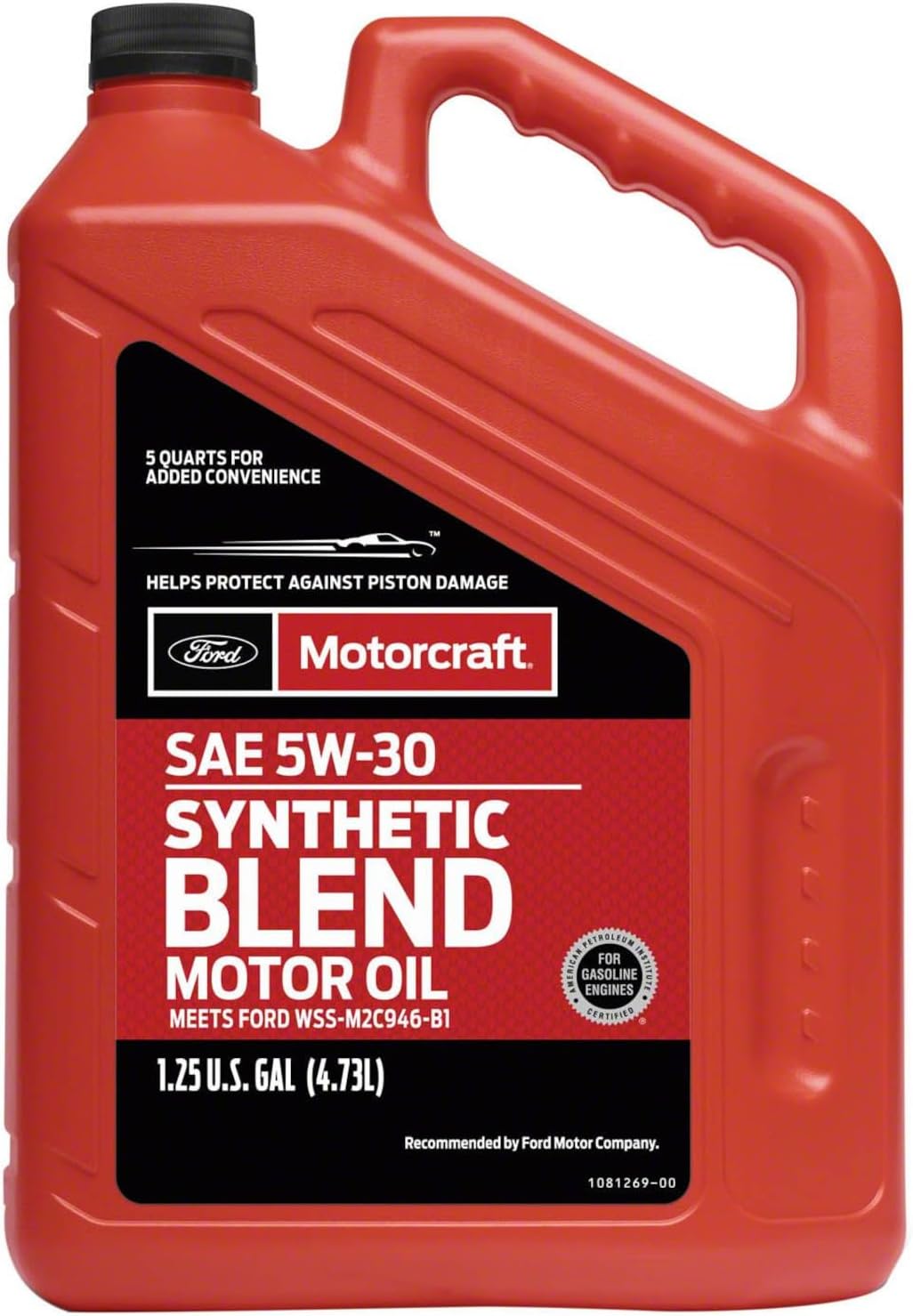
| Viscosity | 5W-30 SAE Grade |
|---|---|
| Size | 5-Quart Jug |
| Vehicle Service Type | Car, SUV, Truck, Van |
| Flash Point | 446 Degrees Fahrenheit |
This Motorcraft 5W-30 jug is a straightforward factory-style engine oil intended as a direct replacement for vehicles that call for 5W-30. It is typically used for routine oil changes where staying within manufacturer specifications and preserving factory warranty alignment are priorities. The product comes in an easy-pour 5-quart container and lists a high flash point, reflecting stable performance at higher temperatures. Because it is produced by Motorcraft, it is designed and tested to meet Ford and Lincoln service expectations and provide reliable protection for normal driving and towing loads. Practical benefits include predictable cold-start flow and broad compatibility across cars, SUVs, and trucks that require 5W-30. Limitations are that the listing does not specify full synthetic versus conventional formulation details on the main label here, so buyers who require a specific synthetic blend grade or advanced performance claims should confirm that detail before purchase.
Best for: Buyers who prioritize using the manufacturer-aligned oil for routine maintenance and want a direct, no-surprises replacement that supports warranty and service expectations for Ford vehicles.
Less Ideal for: Drivers seeking a specifically labeled high-performance synthetic or motorsport formulation should consider oils explicitly marketed with those performance claims and specifications.
- Factory-aligned formulation intended for Ford and Lincoln vehicles
- Sold in a convenient 5-quart jug for single oil change service
- Meets SAE 5W-30 viscosity grade for predictable cold and operating temperature performance
- High listed flash point indicating thermal stability under heat
- Product description does not clearly state whether it is full synthetic or conventional on the listing details provided
Verdict: Pick the OEM Motorcraft oil when you prefer factory‑recommended formulations and exact spec compliance for reliable fit, warranty alignment, and straightforward replacement.
6. Motorcraft 5W-30 Synthetic Blend Motor Oil, 12-Quart Pack
Best Bulk / Case Pack Engine Oil
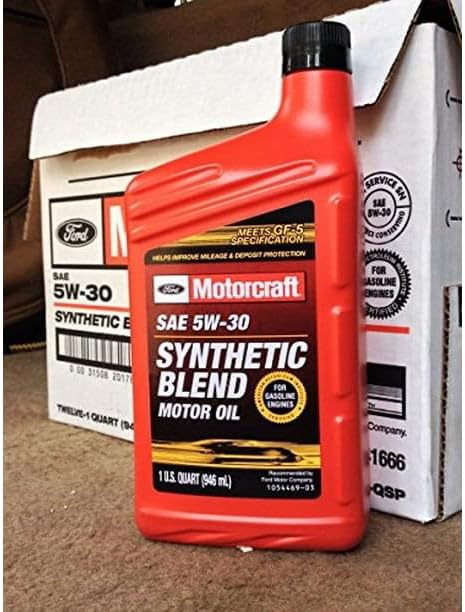
| Liquid Volume | 12 Quarts |
|---|---|
| Container Type | Bottle |
| Compatible with Vehicle Type | Car, Truck |
| Brand Name | Motorcraft |
This 12-quart Motorcraft 5W-30 synthetic blend is a bulk pack aimed at drivers who perform frequent oil changes or service multiple vehicles. It supplies enough factory-recommended 5W-30 oil for several services and uses a familiar formulation that balances protection and cost compared with full synthetics. The bottle packaging is straightforward to pour and store, and compatibility notes list cars and trucks so it fits typical service routines for mid-size performance SUVs like the Explorer ST when 5W-30 is specified. Practical benefits are lower per-quart cost and the convenience of fewer purchases and fewer trips to restock. Limitations are that it is a synthetic blend rather than a full synthetic, so extreme-interval or high-performance applications might prefer a full synthetic alternative, and buyers must confirm 5W-30 is the correct viscosity for their vehicle and driving conditions before use.
Best for: People who perform frequent oil changes or maintain multiple vehicles and prioritize a consistent, factory-brand 5W-30 supply at a lower per-quart cost.
Less Ideal for: Drivers who need full synthetic oil for extended drain intervals, heavy track use, or who require a different viscosity than 5W-30 should consider other options.
- 12-quart pack reduces trips to buy oil and lowers per-quart cost
- Factory brand formulation designed for routine engine protection
- Synthetic blend offers better cold-start flow than conventional oil
- Synthetic blend rather than full synthetic may offer lower high-temperature durability
Verdict: The Bulk/Case Pack choice is for owners who do frequent oil changes or service multiple vehicles and want the lowest cost per quart with consistent product.
7. Castrol EDGE Extended Performance 5W-30 Full Synthetic Motor Oil, 5 Quart
Best Extended‑Drain / Long‑Life Engine Oil

| Viscosity Grade | 5W-30 |
|---|---|
| Container Type | Jug |
| Compatible Vehicle Type | Car, Gasoline and Light Duty Diesel, Hybrids, Truck |
| Liquid Volume | 160 Fluid Ounces |
Castrol EDGE Extended Performance 5W-30 is a hyper-premium full synthetic motor oil intended to let you safely extend oil change intervals while protecting modern engines. It is typically used where longer drain intervals and strong high-temperature stability are desired, such as spirited highway driving or towing conditions that heat an engine. The formula meets demanding industry specifications and is boosted with proprietary additives to resist thermal breakdown, reduce wear, and limit sludge deposits. Practical benefits include improved protection under sustained high loads, potential fuel-efficiency gains from reduced friction, and the manufacturer-stated ability to support extended drains up to 25,000 miles in compatible service conditions. Limitations include the need to confirm this extended interval against your Ford Explorer ST owner manual and local driving conditions, since severe duty or warranty rules can require shorter changes. This product is sold in a convenient 5-quart jug suitable for typical DIY top-ups or full oil changes.
Best for: Buyers who want an oil that prioritizes extended drain intervals and high-temperature protection to reduce maintenance frequency while preserving engine performance.
Less Ideal for: Drivers who follow strict manufacturer-recommended short service intervals, race the vehicle, or who prefer scheduled frequent oil changes for peace of mind should consider other options.
- Full synthetic 5W-30 formulation for strong high-temperature stability
- Additive package engineered to reduce engine wear and control sludge
- Formulated and tested to meet strict industry specifications including ACEA and dexos limits
- Supports extended drain intervals when used under appropriate service conditions
- Extended 25,000-mile drain claim requires confirmation against vehicle manufacturer recommendations and driving conditions
Verdict: Choose the Extended‑Drain pick if you prefer oils designed for longer intervals and enhanced high‑temperature stability to stretch change intervals while maintaining engine protection.
Choosing the Right Ford Explorer ST Engine Oil: Key Factors to Consider
Viscosity Grade and Cold-Start Flow
Viscosity determines how the oil flows at startup and under operating temperature. For the Explorer ST's turbocharged engine, you need a viscosity that provides enough film strength at operating temperature while still flowing quickly at cold start to protect bearings and cam components.
A lower first number (0W versus 5W) improves cold-start circulation and reduces wear during short trips in cold climates. The operating number (20, 30, etc.) reflects high-temperature film thickness; higher numbers can provide a thicker lubricating film under sustained load and high coolant temperatures. Choose a grade that matches Ford's guidance and your typical climate and driving style to balance protection and fuel economy.
Full Synthetic Versus Conventional
Full synthetic oils use engineered base stocks that maintain viscosity and resist thermal breakdown better than conventional oils. For a turbocharged engine like the Explorer ST's, synthetics generally offer superior shear stability, lower volatility, and better protection against oil breakdown under sustained boost and high exhaust gas temperatures.
Conventional oils can be adequate for light, infrequent driving but may oxidize faster, increasing deposit formation and necessitating shorter service intervals. Consider synthetic options if you drive aggressively, tow, or want extended oil change intervals recommended by the vehicle manufacturer.
Detergents, Dispersants, and Deposit Control
Additive chemistry controls how well an oil keeps contaminants in suspension and prevents varnish and sludge build-up on critical components like turbocharger shaft seals and intake valves. The Explorer ST's higher operating temperatures and occasional heavy loads make deposit control essential to maintain turbocharger health and long-term performance.
Look for oils with robust detergent and dispersant additive packages and oxidation inhibitors. These help protect turbocharger internals and piston crown areas from varnish and carbon buildup, preserving compression and responsiveness over time.
Shear Stability and Viscosity Retention
Shear stability describes an oil's ability to retain its viscosity under mechanical stress. In turbocharged, high-revving conditions that the ST may see, base stocks and viscosity modifiers can shear and lead to a thinner-than-expected oil film.
Better shear-stable oils maintain specified high-temperature viscosity and film strength through repeated load cycles. This reduces wear on bearings, cam lobes, and turbocharger bearings and helps maintain consistent oil pressure during spirited driving or towing.
Compatibility With Manufacturer Specs and Seals
Oils must meet or exceed Ford's required viscosity and service specifications for the Explorer ST to protect engine components and maintain warranty considerations. Compatibility also includes seal friendliness to avoid leaks in older engines and compatibility with emissions system components.
Verify that the oil carries the relevant API, ILSAC, or manufacturer approvals indicated for the Explorer ST. Using an oil with the correct spec helps ensure proper lubrication characteristics and reduces the risk of negative interactions with gaskets and seals.
High-Mileage Considerations
Higher-mileage Explorer STs may benefit from oils formulated to condition seals and reduce oil consumption. Additives that swell or condition seals can slow leaks and help maintain oil pressure, while anti-wear additives protect aging components.
If the vehicle has significant miles, choose an oil marketed for high-mileage engines or one with additives aimed at reducing oil burn and minimizing sludge. Keep in mind those oils may be slightly thicker or include conditioners that change oil behavior compared with standard formulations.
Recommended Viscosities for Typical Climates
Pick a viscosity grade suited to the climate you drive in and the Explorer ST's operating profile. In moderate climates, 5W-30 often balances cold-start flow and high-temperature film strength. For colder regions where winter starts are frequent, 0W-20 or 0W-30 options give faster circulation at low temperatures while still protecting under load.
If you regularly tow, carry heavy loads, or drive aggressively, prioritize the higher hot-viscosity number that preserves film thickness at elevated temperatures. Always cross-check your choice with Ford's recommended viscosity ranges for the ST to avoid unintended tradeoffs.
- 0W-20 or 0W-30 for cold climates and quick cold-start protection
- 5W-30 for balanced everyday use in temperate climates
- Consider thicker hot-end viscosity when towing or sustained high load
Understanding Synthetic Formulations
Full synthetic formulations deliver more consistent performance under the wide temperature swings that the Explorer ST's turbo engine experiences. They typically show lower volatility, which reduces top-up frequency and emissions-related deposits.
Group III, PAO, and ester-based synthetics differ in base-stock chemistry and heat tolerance. While you do not need to choose by base-stock alone, look for products marketed as full synthetic with strong oxidation control and shear resistance to match the ST's demands.
- Full synthetics resist breakdown and retain viscosity better than conventional oils
- Look for explicit claims about shear stability and thermal protection
Oil Change Intervals and Monitoring
Follow Ford's oil change interval recommendations but adjust based on driving style. Short trips, frequent cold starts, heavy towing, or performance driving may warrant shorter intervals despite synthetic formulations offering longer service life in some cases.
Use oil life monitoring systems if the vehicle is equipped with one and confirm oil quality at planned services. Check oil level regularly between changes, especially after hard driving, and watch for increased consumption or discoloration that can indicate deposit formation or thermal stress.
- Shorten intervals for frequent short trips and heavy use
- Check levels after spirited driving sessions
- Rely on vehicle oil-life monitors but verify with physical checks
High-Mileage Engine Strategies
For Explorer ST engines with higher mileage, choose formulations that include seal conditioners and anti-wear additives to help reduce leaks and wear-related oil consumption. These oils can help extend the useful life of older components while maintaining compression and oil pressure.
Be cautious with drastic viscosity changes; moving up a viscosity grade can help reduce burn but may affect cold-start performance. When in doubt, prioritize an oil that meets the manufacturer's specs and offers high-mileage additive packages designed for turbocharged engines.
- Prefer oils labeled for high-mileage or with seal conditioners
- Avoid large jumps in cold-start viscosity without testing drivability
Signs You Need a Different Oil
Watch for increased oil consumption, foaming, unusual engine noise on cold start, or visible smoke that can indicate the current oil is not matching the engine's needs. Persistent deposits, reduced fuel economy, or fluctuating oil pressure are also signs to reassess oil choice.
If you notice any of these symptoms, switch to an oil with stronger deposit control or a different viscosity within the manufacturer-approved range and monitor the impact over several change cycles.
- Higher-than-normal oil consumption can signal oil thinning or leaks
- Foaming or aeration lowers lubricating ability and suggests a formulation mismatch
- Persistent deposits or varnish indicate insufficient detergent/dispersant action
Still looking for the perfect fit?
Select your Ford Explorer configuration to see the most relevant Engine Oils recommendations
How We Chose the Best Ford Explorer ST Engine Oil
We selected oils based on engineering-relevant performance attributes that matter for the Ford Explorer ST's turbocharged engine and typical owner use. Our editorial filters emphasized viscosity grades recommended by Ford for turbocharged engines, high-temperature shear stability under boost, and detergent and dispersant chemistry that resists sludge and deposits. We also prioritized full synthetic formulations where the product delivered demonstrable high-temperature protection and flow at cold start. Lubrication longevity and compatibility with common oil change intervals were weighed, as were manufacturer approvals and industry certifications such as API and ILSAC when they signaled appropriate spec compliance.Excluded items included multipurpose lubricants not formulated as engine oils, products lacking clear viscosity or spec data, and blends without performance claims relevant to turbocharged V6 engines. We evaluated oils on thermal stability, viscosity index and shear retention, deposit control, wear protection, and suitability for higher-mileage engines or extended drain schedules. The result is a concise list focused on real-world protection and serviceability for Ford Explorer ST owners.
Our full evaluation process is outlined in our review methodology.
FAQ
What viscosity should I use in a Ford Explorer ST during winter?
In cold climates, a 0W-graded oil such as 0W-20 or 0W-30 improves cold-start circulation and reduces wear. Verify the recommended hot-end viscosity from Ford and choose the lowest cold-start grade that still meets that hot viscosity.
Is full synthetic oil necessary for the Explorer ST?
Full synthetic is not strictly required, but it offers better thermal stability, shear resistance, and deposit control for a turbocharged engine. For owners who drive aggressively or tow, synthetic formulations give a clearer protection advantage.
How often should I change the oil in the Explorer ST?
Follow Ford's published intervals as a baseline, but shorten the interval for frequent short trips, heavy towing, or spirited driving. Use the vehicle's oil-life monitor if equipped and check oil level between services.
Can I switch viscosity grades when my Explorer ST has high mileage?
You can move to a slightly higher hot-end viscosity to reduce oil consumption, but avoid big changes in cold-start viscosity. Choose an oil that still meets Ford's specs and monitor performance after the change.
What should I watch for after changing to a new oil formulation?
Monitor oil consumption, engine noise, sludge signs, and oil pressure. If consumption increases or deposits form, try a different formulation within the approved viscosity and spec list and reassess after the next service interval.
Are high-mileage oils beneficial for the Explorer ST?
High-mileage oils can help condition seals and reduce leaks in older engines while providing anti-wear protection. They are useful for preserving oil pressure and limiting consumption, but make sure the product still aligns with required specifications.
Final Verdict
Prioritize an oil that meets Ford's recommended viscosity and service specifications for the Explorer ST, and match the formulation to your climate and driving habits. Synthetic oils with strong shear stability and deposit-control additives offer the best protection for a turbocharged engine, especially under spirited use or towing.Balance cold-start performance, high-temperature film strength, and additive chemistry when choosing oil for the Explorer ST. Focus on the tradeoffs between cold-flow and hot-end protection to make a confident selection that supports long-term reliability and performance.
Explore More:
- Check out all Ford Explorer parts & accessories
- Explore Fluids & Chemicals
- Browse all Accessories
