

Note: This article contains affiliate links. If you click on these links and make a purchase, I may earn a small commission at no extra cost to you. This helps support my research and content. Read my full affiliate disclosure here.
If you own a 1995-2001 Ford Explorer, choosing the right engine oil matters more than ever as mileage climbs and components age. The right oil helps control wear, maintain compression, protect valve trains, and reduce leaks in older engines. This guide groups seven top oil options suited to the Explorer's typical service demands and common operating conditions.We shortlisted oils that balance the core concerns for these model years: correct viscosity, oxidation resistance, and compatibility with older seals. Below we explain the evaluation criteria and what each type of oil delivers to help you pick the best fit for your driving and maintenance habits.
Looking for other parts? See all Ford Explorer parts & accessories.
Top Picks at a Glance
| Best Overall Engine Oil Top-performing oil balancing protection, spec coverage, and long-term value | Castrol EDGE 5W-30 Full Synthetic Motor Oil, 5 Quart Jug |  |
| Best Budget Engine Oil Affordable, dependable oil for routine oil changes on a tight budget | Pennzoil 10W-30 Conventional Motor Oil, 5-Quart |  |
| Best Full-Synthetic Engine Oil Highest-performance synthetic oils for maximum heat and wear resistance | Castrol EDGE 5W-20 Full Synthetic Motor Oil, 5 Quart Jug |  |
| Best High-Mileage Engine Oil Formulated additives for older engines to reduce leaks and condition seals | Castrol EDGE High Mileage 5W-30 Full Synthetic Motor Oil, 5 Quart |  |
| Best OEM Motorcraft Engine Oil Factory-approved Motorcraft oils matched to Ford specification requirements | Motorcraft 5W-30 Engine Oil 5-Quart Jug |  |
| Best Extended-Performance Engine Oil Oils formulated for longer drain intervals and extra high‑temp durability | Castrol Edge Extended Performance 5W-30 Full Synthetic Motor Oil, 5 Quart |  |
1. Castrol EDGE 5W-30 Full Synthetic Motor Oil, 5 Quart Jug
Best Overall Engine Oil

| SAE Viscosity Grade | 5W-30 |
|---|---|
| Liquid Volume | 5 Quarts |
| Compatible with Vehicle Type | Car, Truck |
| Brand Name | Castrol |
Castrol EDGE 5W-30 is designed as a robust full synthetic oil for routine maintenance on 1995–2001 Ford Explorer 4.0L and 5.0L engines that call for 5W-30 viscosity and modern API/ILSAC approvals. In everyday use it lubricates moving parts, resists thermal breakdown at higher temperatures, and helps keep the engine cleaner by limiting sludge and deposits. The formulation highlights stronger shear resistance and claimed extended drain capability compared with conventional oils, which translates into steadier oil pressure and consistent film strength under load. It meets multiple industry specifications so it will satisfy standard service intervals and aftermarket replacement expectations. The main limitations are that this is a single-viscosity choice suited to drivers who want a modern synthetic for typical highway and city driving rather than specialty formulations for extreme cold starts or dedicated high-mileage conditioning in older engines. For DIYers maintaining a late 1990s Explorer, it is a straightforward, factory-quality replacement that simplifies oil selection.
Best for: DIY owners of 1995–2001 Ford Explorer who want one dependable, spec-compliant synthetic oil for routine maintenance and reliable day-to-day performance.
Less Ideal for: Owners seeking specialty oils for extreme cold-start performance or formulation targeted specifically to restore seals and reduce leaks in very high-mileage engines.
- Full synthetic formula provides strong protection against wear and high-temperature breakdown
- Meets modern API and ILSAC specifications for broad compatibility with gasoline engines
- Claims improved shear resistance for stable viscosity over time
- Packaged in a 5-quart jug that covers a full oil change for most Explorer engines
- Single 5W-30 viscosity may not be optimal for extreme cold climates or very high-mileage conditioning needs
Verdict: Choose this pick if you want a single engine oil that delivers the best blend of wear protection, spec compliance, and reliable performance for typical DIY maintenance.
2. Pennzoil 10W-30 Conventional Motor Oil, 5-Quart
Best Budget Engine Oil

| SAE Viscosity Grade | 10W-30 |
|---|---|
| Compatible with Vehicle Type | Car, Truck, UTV |
| Viscosity Level | Medium |
| Container Type | Bottle |
| Liquid Volume | 160 Fluid Ounces |
Pennzoil 10W-30 is a conventional motor oil intended for everyday protection in car and light-truck gasoline engines. It is typically used for routine oil changes to maintain engine cleanliness and reduce wear between standard service intervals. The formula advertises proven wear protection and helps prevent dirt and contaminants from forming deposits, while remaining compatible with engine seals and other conventional oils for easy top-off or changeover. Its universal fit and medium viscosity make it suitable for a range of ambient temperatures where 10W-30 is recommended. The main compromise versus synthetic blends is that this conventional oil will not match the extended drain intervals, high-temperature stability, or fuel-economy benefits of full synthetics, so it is best used on regular maintenance schedules. For buyers prioritizing a low-cost, factory-style replacement that keeps older engines running reliably, this oil is a straightforward choice.
Best for: Drivers seeking a low-cost, no-frills engine oil for routine maintenance on older gasoline vehicles who want reliable protection between standard service intervals.
Less Ideal for: Owners who want extended oil change intervals, maximum high-temperature stability, or the fuel-economy advantages of full synthetic oils should choose a synthetic option instead.
- Meets SAE 10W-30 viscosity for common gasoline engines
- Formulated to reduce wear and help keep engines clean
- Compatible with other conventional oils and engine seals for easy changes
- Sold in a 5-quart bottle convenient for a full oil change
- Conventional formula lacks the high-temperature and extended-drain benefits of full synthetic oils
Verdict: Pick this oil when you need a low-cost option that still meets basic industry specifications and keeps your engine protected between standard service intervals.
3. Castrol EDGE 5W-20 Full Synthetic Motor Oil, 5 Quart Jug
Best Full-Synthetic Engine Oil
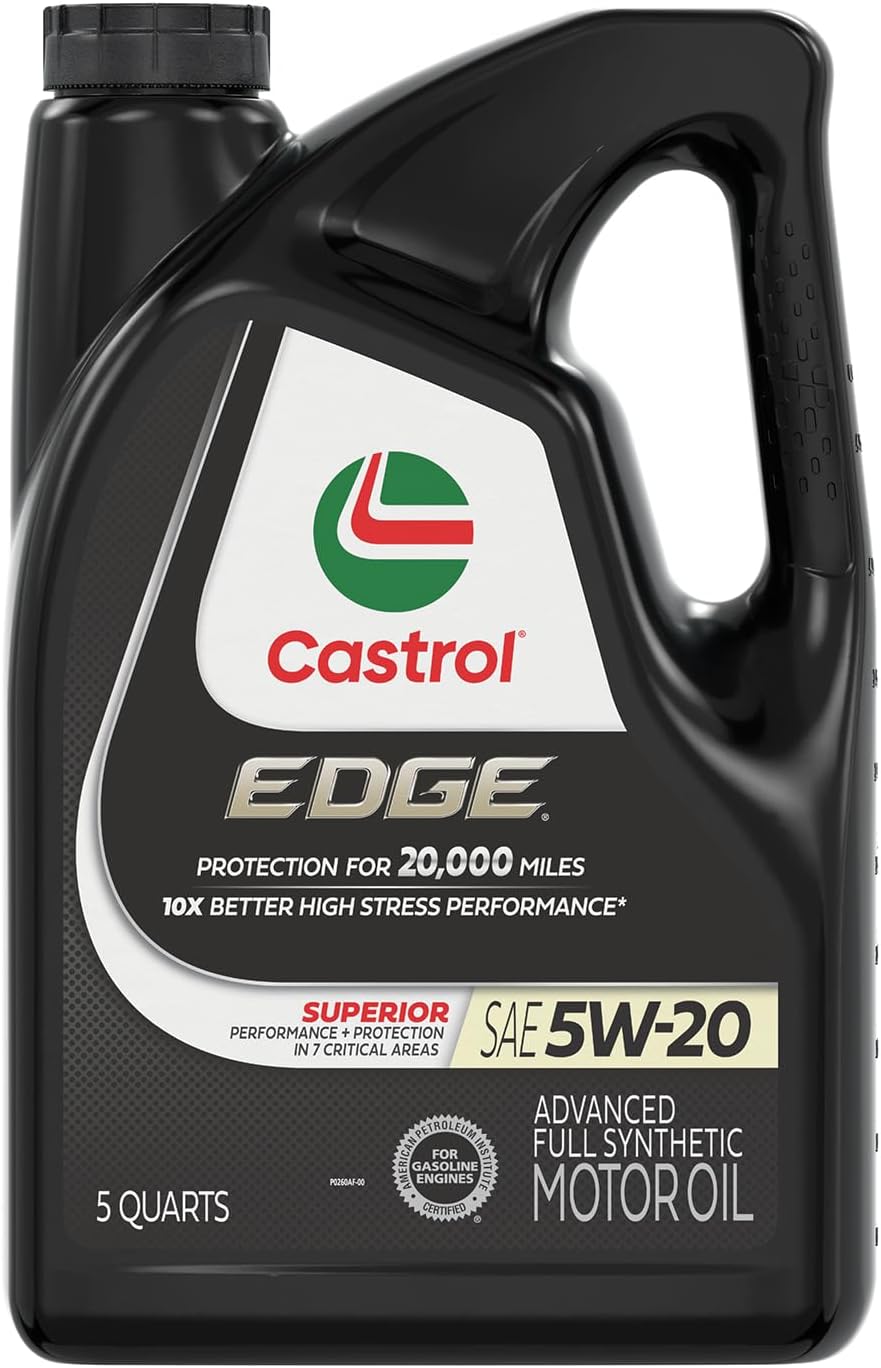
| SAE J300 Viscosity Grade | 5W-20 |
|---|---|
| Container Type | Jug |
| Compatible with Vehicle Type | Car, Truck |
| Liquid Volume | 5 Quarts |
Castrol EDGE 5W-20 is a full synthetic engine oil designed to deliver strong thermal stability and wear protection for modern gasoline engines. It is typically used as a factory-quality replacement oil for vehicles that call for 5W-20 viscosity, and it supports longer drain intervals by resisting breakdown at high temperatures. Notable features include a proprietary additive system aimed at reducing sludge, minimizing metal-to-metal wear, and helping maintain fuel economy by lowering internal friction. In real-world use you can expect cleaner-running internals, steady viscosity control during hot driving, and reduced engine wear under sustained loads. The product claims extended oil life and compatibility with gasoline engine specifications including API and ILSAC ratings. Limitations are that it is a 5W-20 grade only, so it must match the engine maker's viscosity requirement, and extended drain interval claims depend on vehicle condition and following manufacturer service recommendations.
Best for: Buyers who want a robust full-synthetic oil to protect an older Explorer driven hard or used for towing and who prioritize longer oil life and reduced engine wear.
Less Ideal for: People who follow strict manufacturer-recommended short-interval oil changes regardless of oil type or who need a different viscosity grade than 5W-20.
- Full synthetic formulation for improved thermal stability and resistance to breakdown
- Additive chemistry aimed at reducing sludge and deposits to keep the engine cleaner
- Designed to provide strong wear protection under high-pressure and high-temperature conditions
- Helps maintain fuel economy by reducing internal friction
- Available only in 5W-20 viscosity, so not suitable where a different grade is required
Verdict: Select a full-synthetic oil when you want the strongest thermal stability and wear protection for longer change intervals and harder-driving conditions.
4. Castrol EDGE High Mileage 5W-30 Full Synthetic Motor Oil, 5 Quart
Best High-Mileage Engine Oil

| SAE J300 Viscosity Grade | 5W-30 |
|---|---|
| Compatible with Vehicle Type | For vehicles with over 75,000 miles |
| Liquid Volume | 160 Fluid Ounces |
| Viscosity Level | Low to Medium |
Castrol EDGE High Mileage 5W-30 is a full synthetic motor oil designed for engines with higher mileage and is intended to be used as a regular service oil for older vehicles. It is formulated to reduce sludge and deposits, help control oil burnoff and leaks, and protect timing components and other wear-prone parts. A notable feature is Castrol’s Phosphorus Replacement Technology, which lowers phosphorus levels to reduce harm to the catalytic converter while maintaining wear protection. The label also calls out extended drain capability up to 15,000 miles or one year when service intervals and conditions allow. In practice this oil suits routine oil changes on a 1995–2001 Ford Explorer to help condition aging seals, reduce oil consumption, and keep the engine cleaner than conventional oils. Limitations include reliance on correct 5W-30 viscosity for the specific Explorer engine and that individual service interval needs vary with driving conditions so extended-change claims should be used with manufacturer guidance.
Best for: Drivers maintaining a 1995–2001 Ford Explorer who prioritize engine cleanliness, reduced oil consumption, and protecting aging emission components while keeping to routine service.
Less Ideal for: Drivers who prefer to strictly follow short factory service intervals or those with engines that require a different viscosity or specialized oil formulation.
- Formulated specifically for high‑mileage engines to reduce sludge and deposits
- Phosphorus Replacement Technology to help protect the catalytic converter and emission system
- Full synthetic base for improved volatility control and wear protection
- Manufacturer states extended drain capability up to 15,000 miles or one year under recommended conditions
- Extended drain interval depends on driving conditions and may not match manufacturer service schedules
Verdict: Pick a high‑mileage formula when maintaining an older engine to help reduce oil consumption, condition aging seals, and fight sludge buildup.
5. Motorcraft 5W-30 Engine Oil 5-Quart Jug
Best OEM Motorcraft Engine Oil
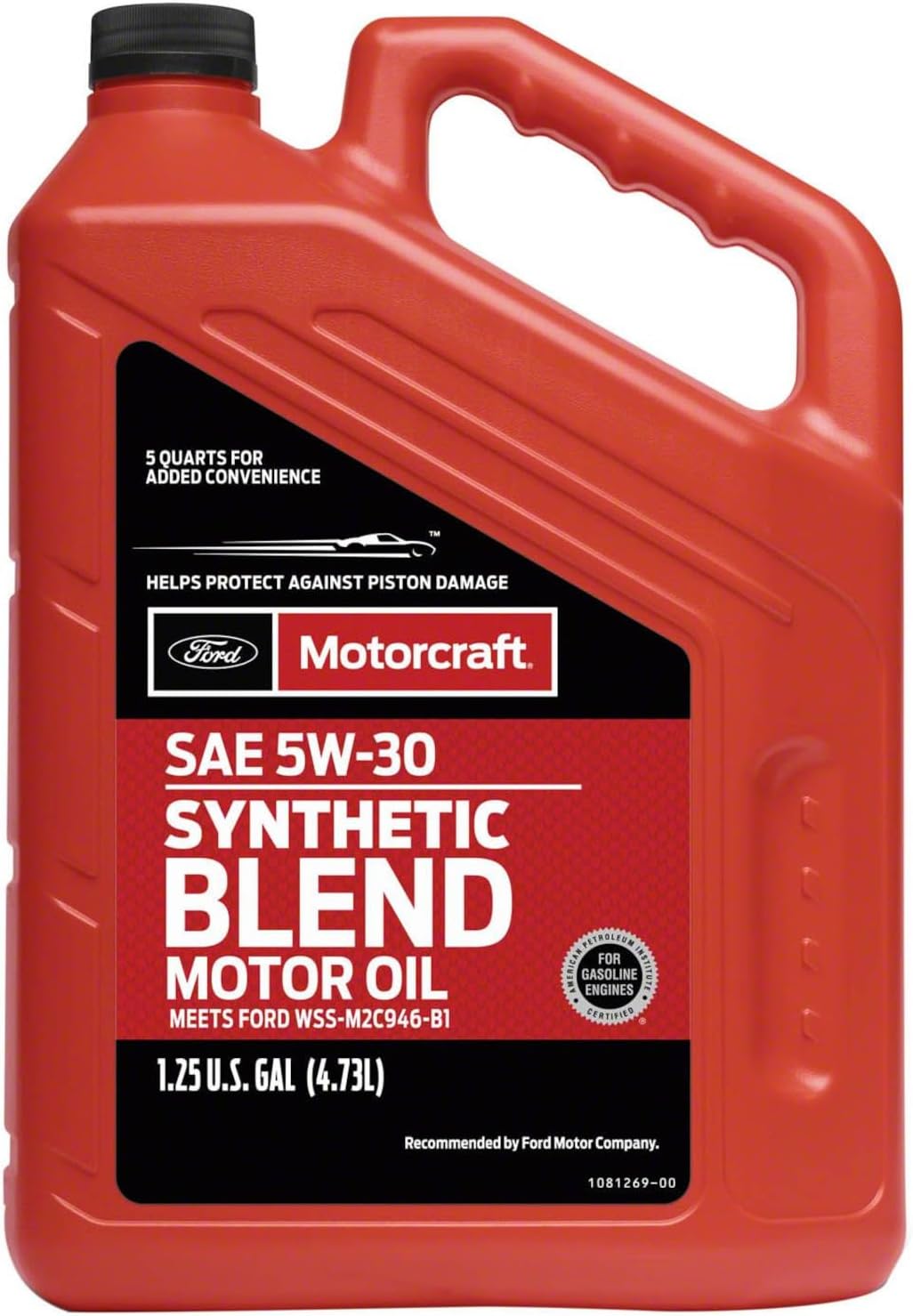
| Viscosity | 5W-30 SAE Grade |
|---|---|
| Size | 5-Quart Jug |
| Flash Point | 446 Degrees Fahrenheit |
| Vehicle Service Type | Car, SUV, Truck, Van |
This Motorcraft 5W-30 jug supplies a factory-aligned engine oil designed to meet Ford service recommendations for vehicles that call for 5W-30 viscosity. It is typically used for routine oil changes and provides the expected cold-start flow and high-temperature protection associated with a modern 5W-30 formulation. Notable features include its Motorcraft branding and a 5-quart capacity that covers a single full oil change for many V6 and four-cylinder engines. Using this oil simplifies maintenance decisions when you want to stick close to manufacturer guidance and helps preserve compatibility with Ford/Lincoln service specs. The product is a straightforward, no-frills oil jug without additives or special package extras, so buyers should pair it with the correct filter and follow service intervals appropriate for their driving conditions. Packaging is standard for retail jugs and it is presented as a universal-fit automotive oil rather than vehicle-specific labeled kits.
Best for: Buyers who prioritize using factory-specified fluids for maintenance and want an easy, OEM-aligned oil choice for routine service on Ford vehicles from the mid-1990s to early 2000s.
Less Ideal for: Drivers seeking specialty formulations such as high-mileage, synthetic blend performance upgrades, or oils with branded additive packages should consider targeted alternatives.
- Factory-branded formulation aligned with Ford service recommendations
- 5-quart jug covers a full oil change for most passenger engines
- SAE 5W-30 viscosity suitable for common temperature ranges
- Simple retail packaging makes storage and pouring easy
- No special additive or marketing extras beyond standard 5W-30 formulation
- Labeling is generic universal-fit rather than tailored to specific model years
Verdict: Choose an OEM Motorcraft oil when you want factory-specified viscosity and licensing for compatibility with original Ford service recommendations and warranty peace of mind.
6. Castrol Edge Extended Performance 5W-30 Full Synthetic Motor Oil, 5 Quart
Best Extended-Performance Engine Oil

| Viscosity Grade | 5W-30 |
|---|---|
| Volume | 5 Quarts |
| Compatibility | Car, Gasoline and Light Duty Diesel, Hybrids, Truck |
| Viscosity Level | Low to Medium |
Castrol Edge Extended Performance 5W-30 is a full synthetic motor oil built to deliver long life and strong protection under heat and stress. It is intended for routine use in gasoline and light‑duty diesel engines and can be used in vehicles where a 5W‑30 grade is recommended. The formula emphasizes thermal stability and wear protection so it resists viscosity loss at high temperatures and helps keep moving parts separated over extended drain intervals. Castrol promotes up to 25,000 miles between changes under specific conditions, which makes this oil useful for drivers who prefer longer service intervals and fewer oil changes. In practice you get improved engine cleanliness and reduced deposit buildup compared with standard conventional oils, and the product meets several major specifications for performance. Important limitations: extended drains depend on your vehicle, driving habits, and oil monitoring, so many users will still follow manufacturer interval guidance rather than the maximum marketing interval. Also stick to the correct viscosity and specification matches for older vehicles like 1995–2001 Ford Explorers when deciding suitability.
Best for: Drivers who want the option of longer oil-change intervals and stronger protection against high-temperature breakdown while using a 5W‑30 synthetic oil in compatible vehicles.
Less Ideal for: Owners who prefer strictly following original manufacturer oil change intervals regardless of oil technology or those who need a different viscosity or specification for modified or nonstandard engines.
- Full synthetic formulation for better thermal stability and reduced sludge formation.
- Engineered for extended drain intervals to reduce oil change frequency when conditions allow.
- Designed to provide strong wear protection under high pressure and temperature.
- Universal fit for cars, light trucks, hybrids and light‑duty diesel applications where 5W‑30 is recommended.
- Extended 25,000‑mile drain claim depends on specific vehicle conditions and may not apply to older engines without inspection.
- Only available in specific viscosity; not suitable if a different grade is required by the vehicle.
Verdict: Select an extended‑performance oil if you plan longer service intervals or need improved protection against viscosity breakdown and high‑temperature stress.
Choosing the Right 1995-2001 Ford Explorer Engine Oil: Key Factors to Consider
Viscosity Grade and Seasonal Performance
Viscosity affects oil film thickness and flow at different temperatures. For the 1995-2001 Ford Explorer, selecting the correct SAE grade ensures adequate cold-start lubrication and proper film strength at operating temperature. A thicker oil can help control wear in worn engines but may increase drag and reduce fuel efficiency. Conversely, a thinner grade eases cold starts but might not sustain sufficient hydrodynamic protection in high-mileage cylinders.
Consider the climate where you drive. Colder regions benefit from lower cold-crank viscosities to improve start-up protection, while warmer climates and heavy-load driving require oils that resist thinning at high temperatures. Check the vehicle's service recommendations and choose an oil grade that balances start-up protection with in-use film strength for the Explorer's engine age and condition.
Conventional Vs Synthetic Formulations
Base oil type determines oxidation resistance, volatility, and how long oil maintains protective properties. Full synthetic motor oil typically offers better thermal stability, cleaner operation, and longer drain intervals compared with conventional oils. For older Explorers, synthetics can reduce sludge formation and maintain viscosity over time, which helps engines with extensive mileage.
However, some older engines with marginal seals or long-standing buildup respond differently to synthetic conversions. Transitioning to a synthetic may free deposits and reveal leaks, so inspect seals and monitor for leaks after switching. Blended formulations can offer a compromise, improving stability without the full cleaning action of a pure synthetic.
High-Mileage Considerations
High-mileage engine oils include additives targeted at engines with higher wear and potential seal deterioration. These formulations often contain seal conditioners to help reduce minor oil leaks and conditioners that swell hardened seals slightly to improve sealing. They also commonly include higher levels of anti-wear additives and detergents formulated to manage deposits without aggressive cleaning that could expose weak areas.
If your Explorer has substantial miles, a high-mileage-specific oil can improve compression retention and reduce oil consumption. Still, evaluate the condition of seals and gaskets before relying solely on additives, and keep an eye on consumption and smoke after switching to a high-mileage product.
Additive Package and Wear Protection
The additive package determines detergency, corrosion inhibition, dispersancy, and anti-wear performance. Zinc dialkyldithiophosphate (ZDDP) and similar anti-wear chemistries are particularly important in older engines with flat tappet or mechanical lifters. Adequate anti-wear additives help protect camshafts, lifters, and timing components under boundary lubrication.
Detergents and dispersants control deposits and soot, keeping oil passages and hydraulic lifters functioning. Corrosion inhibitors and antioxidant additives extend oil life and protect metal surfaces. For the Explorer, prioritize oils with documented anti-wear content and stabilizers that maintain film strength under both highway cruising and stop-and-go driving.
Seal Compatibility and Leak Risk
As seals and gaskets age, some oils can cause hardening or shrinkage, increasing the risk of leaks. Formulations that include mild seal conditioners help preserve pliability and improve sealing on older components. When changing oil types, especially moving from conventional to synthetic, monitor for increases in seepage or dripping where seals are marginal.
Address visible leaks before converting to a different formulation when possible. Remember that oils that aggressively clean deposits can temporarily increase leak paths by removing buildup that was partially blocking gaps. If you depend on a tight, leak-free engine bay, select oils known for seal-friendly additive blends and follow up with inspections after the first few hundred miles.
Service Interval and Oxidation Stability
Oil change interval is tied to oxidation resistance and how quickly the oil degrades under heat and contamination. Synthetic and synthetic-blend oils usually resist oxidation longer, enabling longer intervals between changes, while conventional oils may require more frequent services to maintain protection. For older Explorers, longer drain intervals can be beneficial, but they must be balanced against contamination, water in the oil, and fuel dilution that can accelerate breakdown.
Choose oils whose performance claims match the type of driving you do. Short trips and stop-and-go traffic produce more contaminants and moisture, shortening useful oil life. Conversely, consistent highway driving is gentler on oil and can support longer intervals with high-quality formulations. Always follow recommended inspection intervals and adjust change frequency based on observed oil condition.
Recommended Viscosity Choices for These Model Years
The 1995-2001 Explorer commonly calls for mid-range SAE grades. For most climates, a 5W-30 grade offers a good balance of cold-start flow and hot-running film strength. In colder regions, a 5W-30 still helps with start-up, while 0W-20 grades are generally too thin for older high-mileage powertrains and are rarely recommended for these model years.
If your engine shows higher oil consumption or has higher clearances, consider staying toward the thicker end of the manufacturer's recommended window. Conversely, if you experience hard cold starts, lower cold-flow viscosity helps reduce wear during the first seconds after cranking.
- 5W-30 is a versatile choice for mixed climates and older engines.
- Use thicker grades only if engine wear or consumption justifies them.
- Avoid ultra-low-viscosity oils unless the engine was built for them.
When to Use High-Mileage Formulations
High-mileage oils are designed for vehicles with significant miles on the odometer and can be helpful in reducing leaks and improving compression retention. These oils include conditioners that may rejuvenate slightly hardened seals and additional detergents and anti-wear agents to address older engine conditions.
Consider high-mileage formulations if your Explorer is over 75,000 miles or shows increasing oil consumption or minor seepage. Track changes in oil consumption and check for visible leaks during the first service interval after switching.
- Best for engines with elevated wear or minor leaks.
- May temporarily reveal leaks as deposits are cleaned.
- Monitor oil consumption and compression after switching.
Switching Between Conventional and Synthetic
Switching to a synthetic or synthetic-blend oil can improve stability and cleanliness, but it may also mobilize deposits that have been sealing minor gaps. When converting, perform a full oil and filter change and inspect seals and gaskets after a few hundred miles. If heavy sludge is present, consider addressing deposits before a full synthetic conversion.
For routine maintenance, periodic use of synthetic blends can offer some benefits of full synthetics without a dramatic change in cleaning action. Always follow correct service procedures and check the oil level more frequently in the weeks following a change.
- Full synthetics offer superior oxidation resistance.
- Blends provide a middle ground between performance and transition risk.
- Inspect seals after conversion for any new seepage.
Oil Change Intervals and Practical Service Tips
Change intervals should reflect driving habits and oil type. Short-trip, city-driven Explorers accumulate moisture and contaminants that shorten oil life, while highway driving is less punishing. With quality synthetic oils, many owners extend intervals, but older engines with contamination or coolant ingress should follow more conservative schedules.
Always replace the oil filter at each change and use the correct capacity and grade when topping off. Record the mileage and date of each service and check oil level between fills to detect consumption trends early.
- Short trips require more frequent oil changes.
- Always replace the filter with each oil change.
- Keep a log of oil top-offs to monitor consumption.
Diagnosing Oil-Related Symptoms
Common oil-related symptoms in older Explorers include increased consumption, bluish exhaust smoke, rough idling due to deposits, or visible seepage from valve cover gaskets. These signs help determine whether a different viscosity, additive set, or engine service is needed. For example, blue smoke often indicates oil burning and may point to worn rings or valve guides rather than the oil choice itself.
Use visual inspections, compression or leak-down tests, and monitor oil consumption over several hundred miles to distinguish between an oil issue and mechanical wear. Address root mechanical problems when possible rather than relying solely on oil changes to mask symptoms.
- Blue smoke suggests oil burning and possible internal wear.
- Seepage may respond to seal-conditioner additives temporarily.
- Compression testing helps diagnose ring or valve guide issues.
Environmental and Driving Condition Impact
Climate, towing, and frequent short trips all influence oil selection. Towing or heavy-load driving increases oil temperatures and shear, requiring oils with strong high-temperature film strength. Cold climates demand lower cold-crank viscosities to protect the engine on start-up. Consider your typical usage when selecting between standard, synthetic-blend, and full synthetic oils.
If you frequently tow or carry heavy loads with your Explorer, prioritize oils rated for higher thermal stability and robust anti-wear performance to protect bearings and cam components under sustained stress.
- Towing increases thermal and mechanical stress on oil.
- Cold starts are more damaging in frigid climates without low-temperature flow.
- Match oil choice to your dominant driving conditions.
Still looking for the perfect fit?
Select your Ford Explorer configuration to see the most relevant Engine Oils recommendations
How We Chose the Best 1995-2001 Ford Explorer Engine Oil
We evaluated oils for the 1995-2001 Ford Explorer using criteria that reflect the mechanical needs and typical service history of these model years. Primary evaluation factors included viscosity suitability for the Explorer's engines, formulation type and additive package, long-term oxidation and thermal stability under varied driving conditions, and compatibility with older seals and gaskets. We also considered wear protection metrics, such as anti-wear additives and high-pressure extreme-pressure performance, because many vehicles in this range have elevated miles.Our process favored oils that offer clear technical backing for detergency and soot control, as these influence oil life and engine cleanliness. We screened for oils that meet or exceed the API service categories appropriate for gasoline engines of this era and for those with proven shear stability to preserve film strength over drain intervals. We excluded products that lack documented specifications or that are explicitly formulated only for modern engines requiring low-viscosity or specialty standards incompatible with older valve seals. The final list balances real-world service needs, manufacturer-recommended viscosity windows, and formulations that help extend component life without requiring engine modification.
Our full evaluation process is outlined in our review methodology.
FAQ
Can I switch to full synthetic oil in my 1999 Explorer?
Often you can, and many older Explorers benefit from the improved stability of full synthetics. Monitor for leaks after switching, since synthetics can free deposits that temporarily reveal seepage. Change the oil and filter and check the engine closely for the first few hundred miles.
Is 5W-30 a good choice for a 1996 Explorer in winter?
Yes. 5W-30 balances cold-start protection with adequate hot-running film strength for these engines. It performs well in many climates and is a common recommendation for mixed-season use in this model range.
When should I use a high-mileage oil in the Explorer?
Consider high-mileage formulations once the vehicle has substantial miles or shows increasing consumption or minor leaks. These oils include seal conditioners and additives that can help reduce seepage and improve compression retention in older engines.
How often should I check oil level after changing oil type?
Check the oil level within the first week and then at regular intervals for the next few hundred miles. This helps you catch increased consumption or leaks that may follow a change in formulation or viscosity.
Will a thinner oil improve fuel economy in my Explorer?
Thinner oils can modestly improve fuel economy by reducing internal drag, but the gain is usually small. Ensure any thinner grade still provides enough film strength for an older engine with higher clearances before changing solely for economy.
Should I use an oil with extra ZDDP for older valve trains?
Extra anti-wear additives like ZDDP can help protect older cam and lifter designs, especially in engines with flat tappets. Look for formulations that document adequate anti-wear performance for older gasoline engines.
Final Verdict
When selecting engine oil for a 1995-2001 Ford Explorer, prioritize the correct viscosity for your climate and the engine's condition, choose a formulation that provides reliable anti-wear protection, and consider high-mileage blends if the vehicle has substantial mileage. Balance the benefits of synthetics against the risk of freeing deposits and monitor seals after any change.Ultimately, pick an oil that matches the Explorer's operating conditions and maintenance goals, inspect the engine after service, and adjust change intervals based on real-world driving and oil condition to protect longevity and performance.
Explore More:
- Check out all Ford Explorer parts & accessories
- Explore Fluids & Chemicals
- Browse all Accessories
