

Note: This article contains affiliate links. If you click on these links and make a purchase, I may earn a small commission at no extra cost to you. This helps support my research and content. Read my full affiliate disclosure here.
If you own a 2011-2019 Ford Explorer, the transmission fluid you choose directly affects shift quality, longevity, and repair risk. Using the appropriate fluid helps preserve valve body function, clutch pack performance, and hydraulic pressure control that modern Explorer transmissions rely on. This guide shortlists seven top options suited to the Explorer's factory requirements and common driving patterns, and it explains the technical decision points you should weigh.We evaluated options against durability, thermal performance, and compatibility with Ford-specified fluids to produce a focused short list. Read on for what matters when selecting fluid and how each key attribute impacts real-world operation.
Looking for other parts? See all Ford Explorer parts & accessories.
Top Picks at a Glance
| Best Overall Transmission Fluid A well‑rounded pick that balances OEM specs, protection, and price | Motorcraft XT105Q3LV Mercon LV Automatic Transmission Fluid, 5 Quart |  |
| Best Budget Transmission Fluid A low‑cost ATF that covers basic lubrication and shifting needs | Valvoline MaxLife Multi-Vehicle Full Synthetic ATF, 1 Quart |  |
| Best OEM Ford Transmission Fluid Factory‑specified fluid formulated to meet Ford/Motorcraft MERCON requirements | Motorcraft MERCON LV Automatic Transmission Fluid (1 qt) |  |
| Best Full‑Synthetic Transmission Fluid A premium full‑synthetic ATF for improved thermal stability and wear protection | Valvoline MaxLife Multi-Vehicle Full Synthetic ATF, 1 Gallon |  |
| Best 1‑Gallon Transmission Fluid Single‑gallon size for DIY mechanics doing full fluid changes or multiple top‑offs | Castrol Transmax ATF/CVT Universal Automatic Transmission Fluid, 1 Gallon |  |
| Best Ultra‑Low‑Viscosity (ULV) Transmission Fluid Low‑viscosity ATF designed for modern low‑friction, fuel‑saving transmissions | TRIAX ULV ATF Full Synthetic Ultra Low Viscosity Automatic Transmission Fluid (1 Gallon) |  |
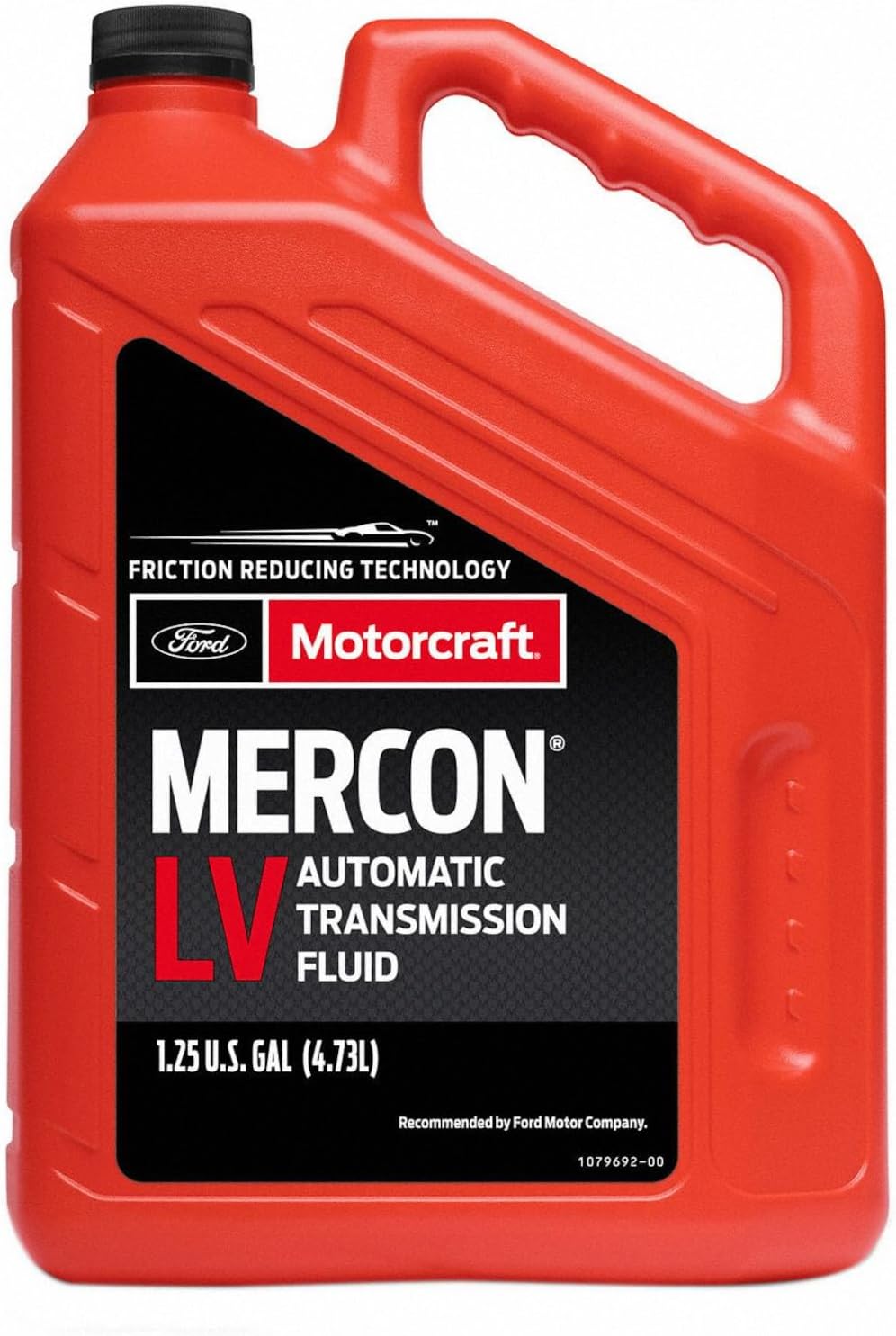
1. Motorcraft XT105Q3LV Mercon LV Automatic Transmission Fluid, 5 Quart
Best Overall Transmission Fluid
| Material | MERCON LV |
|---|---|
| Liquid Volume | 5 Quarts |
| Manufacturer | Motorcraft |
| Viscosity Level | High |
| Model | XT105Q3LV |
This Motorcraft Mercon LV transmission fluid is a factory-focused replacement intended for routine service and fluid top-ups on Ford and Lincoln models that specify Mercon LV. Packaged in a 5-quart jug, it supplies enough fluid for a typical drain-and-fill or to top the pan after a service. The formula is designed to preserve shift feel and protect against corrosion while matching the vehicle maker's specification, so shifting remains consistent and components stay lubricated over extended service intervals. Because it is a brand-specified fluid, installation is straightforward for DIYers following factory fill procedures and fluid capacity. Limitations include its vehicle focus: this product is for applications calling for Mercon LV and is not a universal ATF for vehicles requiring other specifications. Also, you should follow Ford-recommended drain and refill practices rather than assuming a full flush will match dealer procedures.
Best for: A DIY owner servicing a 2011–2019 Ford Explorer who wants a factory-specified transmission fluid to preserve shift quality and follow manufacturer guidance during routine drain-and-fill maintenance.
Less Ideal for: Drivers with non-Ford/Lincoln transmissions or those whose vehicles call for a different ATF specification should choose a fluid matched to their manufacturer requirements.
- Meets Mercon LV specification for Ford and Lincoln transmissions
- Sold by Motorcraft, engineered to match factory fit and performance
- 5-quart jug covers common DIY drain-and-fill or top-up services
- Formulated to maintain consistent shift quality and prevent corrosion
- Only appropriate for transmissions that specifically require Mercon LV
- Not intended as a universal substitute for other ATF specifications
Verdict: Pick this when you want a single transmission fluid that meets common manufacturer specs and gives reliable shifting and long fluid life for routine DIY service.
2. Valvoline MaxLife Multi-Vehicle Full Synthetic ATF, 1 Quart
Best Budget Transmission Fluid

| Material | Synthetic |
|---|---|
| Liquid Volume | 1 Quarts |
| Flash Point | 394 Degrees Fahrenheit |
| Specific Uses For Product | Automatic Transmission Fluid Replacement, CVT Transmissions, Preventing Leaks |
Valvoline MaxLife Multi-Vehicle ATF is a full synthetic transmission fluid designed for broad compatibility across light-duty automatics and many CVT systems. It is typically used for scheduled fluid changes or top-ups where a multi-vehicle solution is preferred. The formula emphasizes thermal and viscosity stability, anti-wear chemistry, and conditioners that help keep seals supple to reduce leaks and prolong transmission life. In practice that means smoother shifts, better protection under heat, and a longer service interval compared with conventional fluids. The bottle is a convenient 1-quart size for DIY refills or partial drain-and-refill jobs. It is not a vehicle-specific factory replacement, so for transmissions that require a precise manufacturer-specified fluid you should verify compatibility before a full flush. Also, while marketed for many vehicles, very few high-end or specialized transmissions require their own factory-specific formulations that this multi-vehicle fluid may not match exactly.
Best for: Buyers who want an affordable, widely compatible full synthetic ATF for regular maintenance and occasional top-offs rather than a vehicle-specific factory match.
Less Ideal for: Owners seeking a manufacturer-prescribed transmission fluid for a specific Ford Explorer model or high-performance/transmission-rebuild situations should choose a fluid specified by the vehicle manufacturer.
- Full synthetic formula offers better thermal and viscosity stability than conventional ATF
- Multi-vehicle compatibility simplifies purchases for routine top-offs and DIY maintenance
- Additives include seal conditioners to help prevent leaks and reduce wear
- 1-quart bottle is convenient for partial service or topping off
- Not a manufacturer-specific fluid for transmissions that require a unique formulation
Verdict: Choose this if you need an affordable, serviceable ATF for routine top‑offs or scheduled changes without paying for premium synthetic chemistry.
3. Motorcraft MERCON LV Automatic Transmission Fluid (1 qt)
Best OEM Ford Transmission Fluid

| Brand | Motorcraft |
|---|---|
| Item Form | Liquid |
| Unit Count | 16.0 Fluid Ounces |
| Material | MERCON LV |
| SAE J300 Viscosity Grade | 10W |
This is a factory-quality MERCON LV automatic transmission fluid sold in a one-quart bottle for topping or service fills. It is formulated with hydroprocessed base oils and performance additives to deliver stable viscosity, good low-temperature flow, and protection against wear, oxidation, sludge and corrosion. For electronically controlled Ford transmissions it helps maintain smooth shift feel and reduce shudder while being dyed red to make leak checks easier. Typical use is in routine transmission service, fluid top-offs, and small repairs for Ford and Lincoln models that call for MERCON LV. Important limitations: it must not be used where other Ford fluid types are specified such as MERCON V, MERCON SP (except TorqShift), MERCON ULV, FNR5, CVT chain fluids, Type F, or Motorcraft Premium ATF. Also this listing is a single quart bottle, so you may need multiple units for full pan drains on many vehicles.
Best for: Buyers who need a direct factory-spec replacement that preserves the original shift feel and additive chemistry in Ford transmissions and want an exact-match fluid for routine service and top-offs.
Less Ideal for: If you need a fluid specified as MERCON V, MERCON SP (non-TorqShift), FNR5, CVT chain fluid, or Type F, choose the corresponding specified fluid instead.
- Meets Ford MERCON LV specification for correct friction and additive match
- Formulated for stable thermal, oxidation and shear performance to protect transmission components
- Good low-temperature fluidity for reliable cold shifting and reduced shudder
- Dyed red for easier leak detection during maintenance
- Sold as a single 1-quart bottle so multiple bottles are required for full fluid changes on most vehicles
Verdict: Use this when you want a direct OEM‑spec replacement that matches the original friction and additive requirements called for by Ford transmissions.
4. Valvoline MaxLife Multi-Vehicle Full Synthetic ATF, 1 Gallon
Best Full‑Synthetic Transmission Fluid

| Material | Synthetic |
|---|---|
| Liquid Volume | 1 Gallons |
| Viscosity | 1 |
| Flash Point | 394 Degrees Fahrenheit |
| Model | MaxLife Multi-Vehicle ATF |
Valvoline MaxLife Multi-Vehicle Full Synthetic ATF is a full-synthetic transmission fluid designed to reduce wear, help prevent leaks, and keep gear changes smooth in many light-duty automatic and belt/chain CVT systems. In practice you pour it into the fluid reservoir during a service or top-up; its advanced additive package conditions seals to limit leaks, improves thermal and viscosity stability for consistent operation, and includes frictional enhancements for smoother engagements. That makes it useful for high-mileage or higher-stress drivetrains where oxidation and shear stability matter. The product lists compatibility with many manufacturer ATF specifications and CVT types, so it is a convenient, broadly compatible full-synthetic option. Limitations are that you must still verify the Explorer's specific Ford MERCON variant required for 2011–2019 models before use, and multi-vehicle claims mean this single fluid may not match every manufacturer-specialized formulation exactly for every transmission design.
Best for: Buyers seeking a durable, full-synthetic ATF to protect a higher-mileage or higher-stress automatic drivetrain and extend service intervals while retaining smooth shifts.
Less Ideal for: Owners who require a transmission fluid specified exactly by a single manufacturer formula or vehicles that mandate a unique factory-only fluid should choose the exact factory-recommended product instead.
- Full synthetic base with additives for improved oxidation and viscosity stability
- Seal-conditioning agents aimed at preventing and reducing leaks
- Frictional enhancements to promote smooth gear engagements
- Wide stated compatibility with many automatic and many CVT specifications
- Formulated to improve durability for high-mileage transmissions
- Not guaranteed to match every manufacturer-specific ATF formulation exactly; confirm the correct MERCON type for your vehicle
Verdict: Select a full‑synthetic option when you need maximum oxidation resistance, shear stability, and longer service intervals for a high‑stress or high‑mileage drivetrain.
5. Castrol Transmax ATF/CVT Universal Automatic Transmission Fluid, 1 Gallon
Best 1‑Gallon Transmission Fluid

| Brand Name | Castrol |
|---|---|
| Item Form | Liquid |
| Liquid Volume | 1 Gallons |
| Viscosity | 32 centistokes |
Castrol Transmax ATF/CVT Universal in the one-gallon size is designed as a multivehicle, full-synthetic transmission fluid that covers both conventional stepped automatics and CVTs. It is typically used for drain-and-refill service or to keep on hand when servicing multiple vehicles, delivering Smooth Drive Technology intended to adjust friction under changing pressure for smoother shifts. Notable features include enhanced friction durability, high-temperature oxidation resistance, and corrosion protection for copper components. In practice this means stable shift feel and longer fluid life under normal highway and city driving. As a universal formulation it simplifies buying one product for mixed-service garages and DIYers doing a full gallon service. Important limitations: because Castrol markets this as a broad-application ATF/CVT, you should still verify Ford Explorer 2011–2019 transmission specifications and manufacturer fluid requirements before use rather than assuming blanket compatibility, since some late-model transmissions require specific factory-designated fluids.
Best for: Buy this gallon if you plan to do a full drain-and-refill yourself on a Ford Explorer 2011–2019 or if you want a single, ready supply to service multiple vehicles without buying many quarts.
Less Ideal for: Do not pick this if you need a fluid that explicitly names a particular Ford transmission specification or if following a dealer-prescribed proprietary fluid is required.
- Full-synthetic formula for improved high-temperature stability and oxidation resistance
- Designed to work in both stepped automatic and CVT applications, reducing product confusion
- Includes friction-modifying Smooth Drive Technology for smoother shift feel
- One-gallon container provides enough fluid for a full drain-and-refill or multiple services
- Not guaranteed to meet every factory-specified Ford transmission fluid spec; always confirm compatibility with your Explorer's transmission
Verdict: Pick the gallon size if you plan to do a full drain/refill yourself or want enough fluid to service multiple vehicles without buying many quarts.
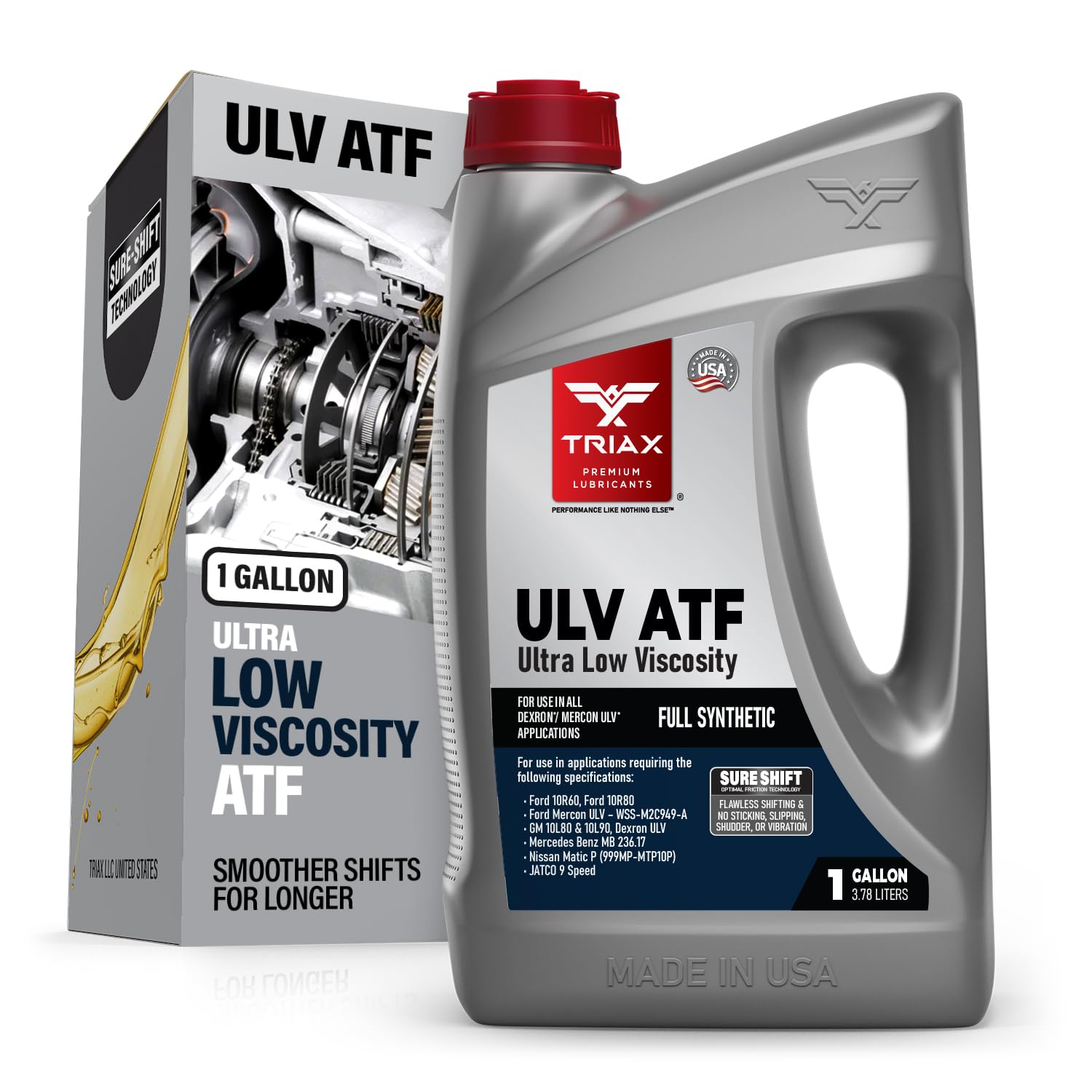
6. TRIAX ULV ATF Full Synthetic Ultra Low Viscosity Automatic Transmission Fluid (1 Gallon)
Best Ultra‑Low‑Viscosity (ULV) Transmission Fluid
| Unit Count | 128.0 Fluid Ounces |
|---|---|
| Viscosity | Ultra low viscosity |
| Material | Synthetic Lubricant |
| Container Type | Bottle |
TRIAX ULV ATF is a full synthetic, ultra-low-viscosity transmission fluid designed to meet the requirements of modern multi-speed gearboxes that call for ULV formulations. It is typically used as a factory-quality replacement where manufacturers require Mercon ULV, Dexron ULV, or similar specs for tighter-tolerance clutches and valve bodies. Notable features include extended drain capability advertised for long service intervals, cold-weather performance to very low pour points, and stated compatibility with 9- and 10-speed Ford and GM transmissions. In practice this means smoother, quicker shifts and potential small fuel-economy gains when the vehicle specifically requires a ULV fluid. Limitations are that it is only appropriate when the vehicle manual specifies ULV-compatible ATF and that compatibility claims cover a range of OEM codes rather than a single stamped spec, so confirm your Explorer's exact fluid requirement before use. For routine service follow manufacturer fill volumes and change intervals rather than assuming the longest advertised drain interval.
Best for: Buyers looking for a ULV transmission fluid to restore crisp shifts and maintain fuel economy in Explorers that require Mercon ULV/Dexron ULV or equivalent formulations.
Less Ideal for: Do not choose this fluid if your Explorer's service manual specifies a different ATF family or non-ULV fluid or if you prefer dealer-specified fluids for warranty-sensitive repairs.
- Formulated for ultra-low-viscosity modern 9- and 10-speed transmissions to improve shift quality.
- Full synthetic base for thermal stability and oxidation resistance.
- Cold-weather pour point designed to preserve flow and shift performance in low temperatures.
- Stated compatibility with Mercon ULV and Dexron ULV families and several Ford 10R/10R60 applications.
- Not suitable if the vehicle manufacturer specifies a conventional or different-spec ATF.
- Compatibility is broad across OEM codes so buyers must verify the exact factory fluid spec for their model.
Verdict: Choose ULV fluid when your transmission calls for a low‑viscosity formulation to improve shift quality and fuel economy in newer, tightly‑toleranced gearsets.
Choosing the Right 2011-2019 Ford Explorer Transmission Fluid: Key Factors to Consider
Specification and Compatibility
Confirming the fluid meets Ford's stated specifications is the most important step. Many Explorer transmissions require fluids with specific friction modifiers and viscosity grades; using a fluid outside the specified rating can change clutch engagement, trigger shift harshness, or prevent proper torque converter lockup.
Compatibility also matters for vehicles that had previous fluid top-ups of a different chemistry. If the exact factory specification is not used, expect potential long-term consequences for clutch life and valve body operation. Always cross-check the vehicle's build year and transmission type when selecting a fluid.
Friction Characteristics and Shift Quality
Frictional properties determine how smoothly clutches and bands engage. Fluids formulated with the right friction modifiers deliver consistent, predictable shifts and reduce shudder during low-speed engagement or torque converter lockup.
For the Explorer, inconsistent friction characteristics can lead to judder, delayed engagement, or rough downshifts under load. Choose a fluid whose friction profile matches the transmission's design to maintain the OEM shift feel and reduce wear caused by slip and chatter.
Thermal Stability and Oxidation Resistance
Transmissions operate at high temperatures, especially during towing or in hot climates. Fluids with strong thermal stability resist thickening or varnish formation as they age, which preserves hydraulic control and prevents blocked passages or sticking valves.
Oxidation can also generate corrosive acids and deposits that accelerate wear. A fluid with proven high-temperature performance extends service intervals and reduces the chance of overheating-related failures in Explorer transmissions subjected to heavier duty cycles.
Wear Protection and Additive Package
A robust additive package helps protect steel and bronze surfaces inside the transmission from wear, particularly on clutch plates, gears, and pump surfaces. Anti-wear and anti-corrosion additives slow component degradation and maintain efficiency over many miles.
For Explorers with higher mileage or frequent towing, prioritize fluids that list strong anti-wear chemistry and offer detergency to keep internal components clean. Additives that reduce foam and maintain film strength under pressure are also important for consistent hydraulic operation.
Viscosity and Cold-Start Performance
Viscosity affects how quickly the fluid circulates and builds hydraulic pressure during cold starts. A fluid that is too thick at low temperatures can delay engagement and increase wear, while one that thins excessively at operating temperature can reduce protective film strength.
Choose a fluid with a viscosity profile suitable for the climates where the Explorer is used. For owners in cold regions, better low-temperature flow helps immediate shift quality. For warmer climates, stable high-temperature viscosity preserves protection under load.
Service Life and Maintenance Considerations
Service interval recommendations vary between fluid formulations. Some offer extended-life chemistry that can lengthen drain intervals, while others are intended for more frequent replacement. Longer drain intervals can lower maintenance burden but may carry higher upfront cost or require strict condition monitoring.
Consider the vehicle's mileage, towing usage, and your willingness to adhere to recommended intervals. Also factor in whether a filter change or pan drop is practical during service, since contamination control can be as important as the fluid choice itself.
Understanding Your Explorer's Transmission Types
Between 2011 and 2019, the Explorer used a few transmission families depending on engine and trim. Identifying whether your vehicle has the six-speed automatic, six-speed manual, or later six-speed automatic with revised calibrations is the first step toward choosing proper fluid. The correct fluid chemistry depends on the internal clutch materials, valve body design, and torque converter characteristics specific to the transmission variant.
If you are unsure which transmission is installed, check the owner's manual or vehicle service information for the factory fluid specification. Using the correct fluid type for that transmission preserves shift quality and reduces the chance of adaptive learning issues that can occur after fluid changes.
- Confirm transmission type before selecting fluid.
- Different transmissions may require distinct friction characteristics.
- Owner manual specifications are the authoritative reference.
Fluid Change Procedures and Best Practices
A full fluid and filter service is the recommended way to refresh the hydraulic system. Partial top-offs can dilute additives and mix chemistries, which may change friction behavior. When changing fluid, warm the transmission to operating temperature for a better drain and to help remove settled contaminants.
Use a clean pan, replace the filter when applicable, and torque fasteners to spec on reassembly. If the transmission has a service fill and drain, follow manufacturer instructions for fill volumes and procedures to avoid overfilling or underfilling.
- Warm transmission before draining for more complete fluid removal.
- Replace filter and gasket where applicable to maintain cleanliness.
- Follow the exact fill method and volume specified for your Explorer.
Towing and Heavy Use Considerations
If you tow regularly or carry heavy loads, prioritize fluids with higher thermal tolerance and enhanced anti-wear chemistry. Towing raises operating temperatures and places sustained pressure on clutch packs and torque converters, so fluids designed for higher stress maintain hydraulic control and protect against accelerated degradation.
Also consider more frequent fluid inspections and possibly shorter change intervals when the vehicle endures repeated heavy duty cycles. Monitoring fluid color and odor can provide early warning of overheating or contamination.
- Choose fluids rated for higher temperature performance for towing.
- Inspect fluid more often under heavy duty use.
- Shorten drain intervals if operating under frequent heavy loads.
Interpreting Fluid Labels and Specs
Product labels list industry standards, OEM approvals, viscosity classes, and intended transmission types. Look for explicit statements about Ford compatibility or references to the relevant performance specifications. Viscosity grade and any mention of friction modifiers provide clues about expected shift feel.
Be cautious with generic wording and focus on documented specifications rather than marketing claims. Technical data sheets often reveal the intended use cases and thermal performance figures that are not on the retail label.
- Seek fluids that explicitly list compatibility with Ford transmissions for the model years in question.
- Consult technical datasheets for viscosity and thermal stability details.
- Avoid fluids with vague wording about cross-compatibility when precise specs are required.
When To Consider A Flush Versus A Drain
A pan drain replaces only a portion of the fluid, while a machine flush can exchange nearly all fluid from torque converter to cooler lines. Flushing can be beneficial when a transmission has heavy contamination or varnish deposits, but it also carries risk if the system has worn clutches or loose deposits that a flush may dislodge and clog passages.
For routine maintenance on a well-maintained Explorer, a pan drop with filter change is often sufficient. Reserve mechanical flush procedures for diagnostic situations or where service history indicates significant internal contamination, and consult a qualified technician familiar with Explorer transmissions before proceeding.
- Pan drop and filter change is standard for routine service.
- Consider flush only if contamination or varnish is suspected.
- Have a technician evaluate risk before machine flushing an older transmission.
Still looking for the perfect fit?
Select your Ford Explorer configuration to see the most relevant Transmission Fluids recommendations
How We Chose the Best 2011-2019 Ford Explorer Transmission Fluid
We started by limiting candidates to fluids compatible with the 2011-2019 Ford Explorer's transmission specifications and common service intervals. Selection emphasized fluids that meet or exceed manufacturer viscosity and friction requirements and that are designed for either the Explorer's automatic transmissions or optional manual gearboxes as applicable. We then scored options on four practical technical dimensions: frictional stability and shift feel, high-temperature oxidation resistance, wear protection and anti-foam performance, and hydraulic property retention under load. Service life and drain interval guidance were included to reflect real maintenance realities.We excluded specialty formulations intended solely for racing or off-road motorsport use, additives marketed only for emergency repairs, or products lacking published performance data against industry standards. Final picks balanced compatibility, proven thermal and anti-wear chemistry, and documented support for Explorer model years 2011 through 2019. The resulting list reflects fluids suitable for typical street driving, towing within rated limits, and routine maintenance scenarios.
Our full evaluation process is outlined in our review methodology.
FAQ
How often should I change transmission fluid in a 2011-2019 Explorer?
Intervals depend on the fluid formulation and usage. Many owners follow the manufacturer's recommendation for routine service, but more frequent changes are sensible if you tow, drive in extreme heat, or do a lot of stop-and-go driving. Check fluid condition and follow the service manual for specific intervals.
Can I mix different types of transmission fluid in my Explorer?
Mixing fluids with different chemistries or friction modifiers is not recommended because it can change shift feel and long-term clutch behavior. If a different fluid was used previously, consult service data and consider a full drain and filter change when switching to the correct specification.
What are signs my Explorer needs a transmission fluid change?
Look for darker fluid color, burnt odor, rough or delayed shifts, slipping under load, or unusual noises. These symptoms often indicate oxidation, contamination, or degraded friction properties and warrant inspection and likely a fluid service.
Is there a difference between ATF and automatic transmission fluid terms for my Explorer?
ATF is shorthand for automatic transmission fluid. What matters is the specific formulation and specification rather than the label. Ensure the fluid meets the Explorer's recommended performance requirements and viscosity range.
Should I change the filter when replacing transmission fluid?
Yes. Replacing the filter during a fluid service helps remove trapped debris and prevents recontamination. A filter change with a pan drop yields a more effective service than a drain-only procedure.
Can adding a high-mileage additive help an older Explorer transmission?
Some additives can condition seals and marginally improve shift feel, but they are not a cure for internal wear or mechanical issues. Use additives cautiously and focus on selecting a fluid with appropriate anti-wear and detergency properties. Consult a technician if you suspect internal component wear.
Final Verdict
Choosing the right transmission fluid for a 2011-2019 Ford Explorer comes down to matching the vehicle's transmission specification, prioritizing thermal stability, and ensuring compatible friction characteristics. Owners who tow or subject the vehicle to heavy duty cycles should favor fluids with stronger anti-wear and high-temperature performance. For routine driving, focus on fluids that meet Ford's documented requirements and maintain service intervals with regular filter changes.Weigh the tradeoffs between extended-life formulations and more frequent, conservative drain intervals; selecting the correct fluid chemistry for your Explorer will preserve shift quality and reduce the chance of costly transmission repairs over time.
Explore More:
- Check out all Ford Explorer parts & accessories
- Explore Fluids & Chemicals
- Browse all Accessories
