

Note: This article contains affiliate links. If you click on these links and make a purchase, I may earn a small commission at no extra cost to you. This helps support my research and content. Read my full affiliate disclosure here.
Picking the right oil for your Ford Explorer XLT matters more than many owners realize. The oil you choose affects cold starts, fuel economy, engine wear, and how long major components last under daily driving and towing. This guide covers seven shortlisted options that suit the XLT configuration and explains the criteria used to evaluate them.You will find options that prioritize cold-weather flow, high-mileage protection, and synthetic formulations. We assess each choice for viscosity compatibility, additive package, and long-term protection to help you pick an engine oil that fits how you drive your Explorer XLT.
Looking for other parts? See all Ford Explorer parts & accessories.
Top Picks at a Glance
| Best Overall Engine Oil Top all-around oil balancing protection, performance, and broad compatibility | Motorcraft SAE 5W-20 Synthetic Blend Motor Oil 5-Quart |  |
| Best Budget Engine Oil Low-cost option that still meets basic protection and service requirements | Valvoline High Mileage with MaxLife Technology SAE 5W-20 Synthetic Blend Motor Oil, 5 qt |  |
| Best Premium Engine Oil Higher-end formulation focused on extended protection and superior additives | Castrol EDGE 5W-20 Full Synthetic Motor Oil, 5 Quart Jug |  |
| Best Full Synthetic Engine Oil 100% synthetic oil for maximum protection, flow, and thermal stability | Castrol EDGE Extended Performance 5W-20 Full Synthetic Motor Oil, 5 Quart |  |
| Best Synthetic Blend Engine Oil A compromise between cost and performance with partial synthetic base oils | Motorcraft SAE 5W-20 Synthetic Blend Motor Oil 1-Quart |  |
| Best High-Mileage Engine Oil Formulated with seal conditioners and anti-wear additives for older engines | Castrol EDGE High Mileage 5W-30 Full Synthetic Motor Oil, 5 Quart |  |
| Best 5W-20 Engine Oil Specific viscosity choice for engines requiring 5W-20 operating characteristics | Motorcraft SAE 5W-20 Full Synthetic Motor Oil, 1 Qt. |  |
1. Motorcraft SAE 5W-20 Synthetic Blend Motor Oil 5-Quart
Best Overall Engine Oil

| SAE J300 Viscosity Grade | 5W-20 |
|---|---|
| Liquid Volume | 5 Quarts |
| Compatible with Vehicle Type | Car, SUV, Truck, Van |
| Viscosity Level | Low to Medium |
| Meets | WSS-M2C960-A1; SN PLUS |
This Motorcraft 5W-20 synthetic blend is designed as a factory-recommended motor oil for many Ford vehicles, including applicable Explorer model years, and is intended for routine oil changes. It uses hydro-processed base stocks and performance additives to reduce deposits, control oxidation and protect turbochargers, while friction-reducing technology helps lower internal wear and improve fuel economy versus thicker oils. Typical use is regular DIY or shop maintenance where you want a factory-quality, vehicle-specific fluid that meets Ford WSS-M2C960-A1 and SN PLUS specifications. The product comes in a convenient 5-quart jug that covers a full oil change without mixing. Limitations are that it is a synthetic blend rather than a full synthetic, so it may offer slightly less high-temperature longevity than full-synthetic alternatives, and it is specific to engines calling for 5W-20 so it is not a universal fit for engines requiring other viscosities or specs.
Best for: Buyers who want a vehicle-specific, factory-recommended oil for routine DIY maintenance on compatible Ford vehicles and prioritize reliable protection and fuel economy over the absolute highest-end synthetic performance.
Less Ideal for: Drivers seeking the longest drain intervals or maximum thermal stability should consider a full synthetic 5W-20 alternative or oils specified for different viscosities or service requirements.
- Factory-recommended formulation for many Ford and Lincoln gasoline engines
- Designed to reduce engine deposits and protect turbochargers
- Friction-reducing additives that can improve fuel economy compared with thicker oils
- Sold in a 5-quart jug that covers a typical oil change without extra bottles
- Synthetic blend rather than full synthetic, so lower high-temperature endurance compared with some premium full synthetics
Verdict: The best all-around engine oil that balances wear protection, cleanliness, and performance for most DIY maintenance needs.
2. Valvoline High Mileage with MaxLife Technology SAE 5W-20 Synthetic Blend Motor Oil, 5 qt
Best Budget Engine Oil

| SAE J300 Viscosity Grade | 5W-20 |
|---|---|
| Compatible with Vehicle Type | Car, Truck |
| Container Type | Bottle |
| Liquid Volume | 5 Quarts |
Valvoline High Mileage 5W-20 is a synthetic blend designed to help older engines run cleaner and reduce leaks and oil consumption. It is typically used at oil change intervals for cars and trucks with higher mileage, and the formula includes extra anti-wear additives, detergents to limit deposits, and seal conditioners to help rejuvenate aging gaskets. For a budget-minded DIYer it offers practical benefits: good protection versus basic conventional oils, compatibility with common 5W-20 service requirements, and a familiar brand formulation trusted in routine maintenance. The product meets modern API and ILSAC specifications so it fits typical engine requirements for many vehicles where 5W-20 is recommended. Limitations are that it is a synthetic blend rather than a full synthetic, so it does not offer the maximum thermal stability or longest drain intervals of top-tier full synthetics, and it is targeted at high-mileage engines rather than performance-tuned or extreme-duty applications.
Best for: Budget-conscious DIYers who want a product tailored to older engines and acceptable factory-service compliance without paying for a full synthetic upgrade.
Less Ideal for: Drivers seeking the highest thermal stability and extended drain intervals for performance or severe-duty use should opt for a full synthetic oil instead.
- Formulated for high-mileage engines with seal conditioners to reduce leaks
- Includes anti-wear additives and detergents to limit deposits and sludge
- Meets modern API and ILSAC viscosity and service specifications for 5W-20
- Available in a 5-quart bottle suitable for DIY oil changes
- Synthetic blend rather than full synthetic so drain intervals and high-temperature protection are more limited
Verdict: The best low-cost engine oil for budget-conscious DIYers that still provides adequate protection and meets common API and OEM specifications.
3. Castrol EDGE 5W-20 Full Synthetic Motor Oil, 5 Quart Jug
Best Premium Engine Oil
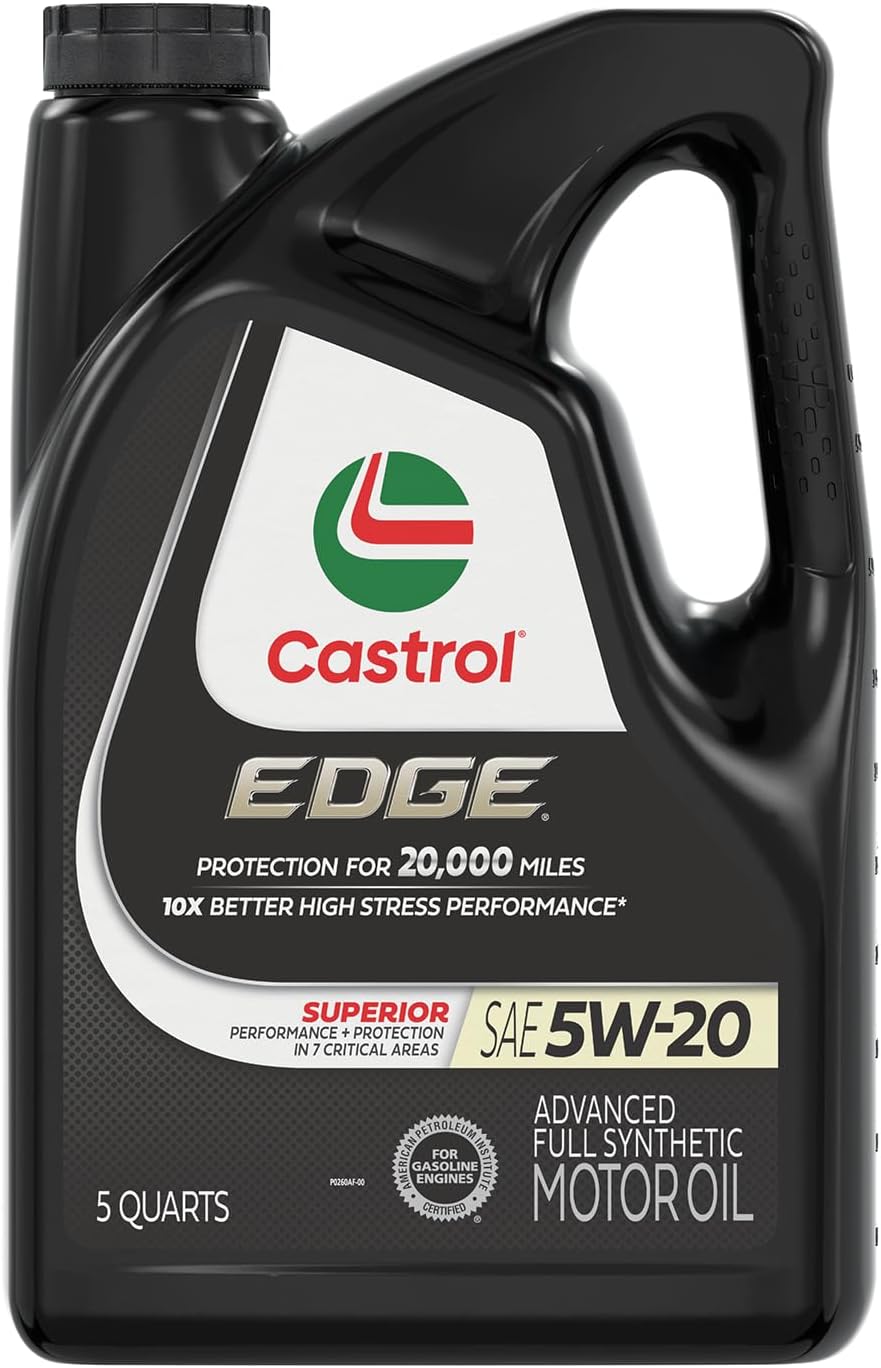
| SAE J300 Viscosity Grade | 5W-20 |
|---|---|
| Container Type | Jug |
| Liquid Volume | 5 Quarts |
| Compatible with Vehicle Type | Car, Truck |
Castrol EDGE 5W-20 is a premium full synthetic motor oil designed to protect modern passenger engines under normal and demanding driving. In use it replaces factory-recommended 5W-20 oil and is poured into the engine oil filler when performing routine oil changes. The formula emphasizes thermal stability and wear reduction with an additive package aimed at controlling sludge, reducing friction, and preserving viscosity under heat. Notable features include Castrol's advanced additive technology and manufacturer notes about extended drain potential and improved high-temperature performance. For a Ford Explorer XLT that calls for 5W-20, this oil helps keep the engine cleaner and maintain fuel economy by minimizing friction and deposits. Important trade-offs are that it is specific to the 5W-20 viscosity grade and therefore only appropriate where the vehicle manual approves that grade, and the extended drain claims depend on driving conditions and service intervals recommended by Ford.
Best for: Drivers who prioritize engine longevity and top-tier cleanliness and are willing to pay for a premium full synthetic when the vehicle calls for 5W-20.
Less Ideal for: Drivers who need a different viscosity grade or who prefer lower-cost conventional oils for high-mileage vehicles with loose tolerances.
- Full synthetic formulation for improved high-temperature stability and reduced breakdown
- Additive package targets sludge control and wear protection to help keep engines cleaner
- Manufacturer notes support longer oil life under appropriate service intervals
- Widely available 5-quart jug suits full oil changes without multiple containers
- Only supplied in 5W-20 viscosity so not suitable where other grades are specified
Verdict: The best premium engine oil for people willing to pay more for enhanced longevity, advanced additives, and top-tier engine cleanliness.
4. Castrol EDGE Extended Performance 5W-20 Full Synthetic Motor Oil, 5 Quart
Best Full Synthetic Engine Oil

| SAE Viscosity Grade | 5W-20 |
|---|---|
| Container Type | Bottle |
| Liquid Volume | 5 Quarts |
| Compatible Vehicle Type | Car, Gasoline and Light Duty Diesel, Hybrids, Truck |
Castrol EDGE Extended Performance 5W-20 is a hyper-premium full synthetic motor oil designed to protect modern engines under heat and pressure while supporting longer service intervals. It is typically used in gasoline and light-duty diesel passenger vehicles and hybrids that call for a 5W-20 viscosity. Key features include Castrol’s proprietary additive technology, claimed superior wear protection, high thermal stability, and formulation to reduce sludge and deposits for cleaner internals over time. The product is licensed to meet several industry specs including API and GM dexos1 Gen 3 and is positioned for extended drain intervals up to 25,000 miles under specified conditions. For DIY mechanics this oil offers robust high-temperature performance and good cold-start flow as a 5W-20, so it helps protect engines during both hot driving and startup. Limitations to consider are that the extended drain claim depends on manufacturer recommendations and driving conditions, and not all engines require or approve extended service intervals, so always follow Ford’s maintenance guidance for the Explorer XLT.
Best for: DIY mechanics who prioritize maximum high-temperature stability, cold-start performance, and longer oil life when maintaining a vehicle like the Ford Explorer XLT.
Less Ideal for: Drivers who strictly follow factory scheduled shorter oil change intervals or who need a different SAE grade than 5W-20 should choose an oil matched to those requirements.
- Full synthetic formulation for improved thermal stability and wear protection
- Meets multiple industry licenses including GM dexos1 Gen 3 and API specifications
- Formulated to reduce sludge and deposits for cleaner engine internals
- Designed for extended drain intervals under qualifying conditions
- Extended 25,000-mile drain interval is conditional and may not align with Ford maintenance schedules
Verdict: The best full synthetic engine oil for DIY mechanics who want maximum high-temperature stability, cold-flow performance, and long-term engine protection.
5. Motorcraft SAE 5W-20 Synthetic Blend Motor Oil 1-Quart
Best Synthetic Blend Engine Oil

| SAE Viscosity Grade | 5W-20 |
|---|---|
| Container Type | Bottle |
| Compatible with Vehicle Type | Car, SUV, Truck, Van |
| Flash Point | 446 Degrees Fahrenheit |
| Liquid Volume | 1 Quarts |
This Motorcraft 5W-20 synthetic blend is formulated for gasoline and flex-fuel Ford family engines and is sold as a single 1-quart bottle for top-up or oil-change use. It combines hydro-processed synthetic base oils with performance additives to help minimize engine deposits, resist high-temperature oxidation and turbocharger deposits, and reduce rust and foaming. The lower-viscosity 5W-20 rating helps cold-start flow and can yield modest fuel-economy gains versus 5W-30 or 10W-30 oils, while friction-reducing technology aims to lower wear under normal driving. Practical benefits include factory-recommended compatibility for Ford, Lincoln, and Mercury engines and a familiar fill volume for DIY maintenance. Limits to expect are that this is a synthetic blend rather than a full synthetic, so extreme-performance or extended-interval service needs may be better served by a full synthetic with a specified extended-change interval, and buyers should always verify the 5W-20 weight is correct for their Explorer XLT engine before use.
Best for: Buyers who want better protection and slightly improved fuel economy over conventional oil while staying aligned with Ford's recommended fluid specifications for routine maintenance.
Less Ideal for: Drivers seeking the longest possible oil-change intervals or maximum high-performance protection should consider a full synthetic product designed for extended service.
- Formulated to meet Ford recommendations for Ford, Lincoln, and Mercury gasoline and flex-fuel engines
- Synthetic/hydro-processed base oils and additives that reduce deposits and protect against high-temperature oxidation
- 5W-20 viscosity improves cold-start flow and can contribute to better fuel economy versus heavier grades
- Sold as individual 1-quart bottles convenient for top-offs and DIY oil changes
- Synthetic blend rather than full synthetic, so it may not match extended drain interval performance of some full synthetics
Verdict: The best synthetic blend engine oil for buyers who want improved protection and performance over conventional oils without the full synthetic price.
6. Castrol EDGE High Mileage 5W-30 Full Synthetic Motor Oil, 5 Quart
Best High-Mileage Engine Oil

| SAE Viscosity | 5W-30 |
|---|---|
| Volume | 5 Quarts |
| Intended Use | Vehicles with over 75,000 miles |
| Specs Met | API SP, ILSAC GF-6 |
Castrol EDGE High Mileage 5W-30 is designed to protect older engines by addressing common high-mileage issues like seal shrinkage, increased metal wear, and deposit buildup. It is used as a direct replacement engine oil during routine changes and claims additives that condition seals, reduce oil burnoff, and lower phosphorus to protect the catalytic converter. For a Ford Explorer XLT with many miles, this oil provides anti-wear chemistry and dispersants to keep pistons and rings cleaner, which can help maintain performance and reduce smoking or oil consumption. The product meets modern specifications including API SP and ILSAC GF-6 and is rated for 15,000 miles between oil changes under its guidelines, which may appeal to owners who prefer longer drain intervals. The main limitations are that longer intervals depend on driving conditions and manufacturer recommendations, and some owners may prefer an oil with a different viscosity if their engine shows specific consumption or leakage behavior under load.
Best for: Owners of higher-mileage Ford Explorer XLTs who want an oil that conditions seals, reduces deposits, and emphasizes anti-wear protection to extend engine life.
Less Ideal for: Drivers who follow strict manufacturer-prescribed short service intervals, run severe duty cycles, or need a different viscosity than 5W-30 should consider other options.
- Formulated specifically for vehicles with over 75,000 miles to address high-mileage issues
- Phosphorus Replacement Technology to reduce catalytic converter wear while still providing wear protection
- Dispersants and detergents help control sludge and deposits for cleaner combustion
- Meets current API SP and ILSAC GF-6 specifications for modern engine protection
- Longer advertised drain intervals depend on duty cycle and may not suit severe driving conditions
Verdict: The best high-mileage engine oil for engines with many miles that need extra seal conditioning, anti-wear protection, and reduced oil consumption.
7. Motorcraft SAE 5W-20 Full Synthetic Motor Oil, 1 Qt.
Best 5W-20 Engine Oil

| Container Type | Bottle |
|---|---|
| Compatible with Vehicle Type | Automotive |
| Automotive Fit Type | Vehicle Specific Fit |
| Liquid Volume | 1 Quarts |
This Motorcraft 5W-20 is a full synthetic motor oil sold in a one-quart bottle intended as a direct-fit factory-quality replacement for applications calling for 5W-20. DIYers will find it straightforward to use for routine oil changes thanks to the familiar packaging and standard quart size. As a full synthetic it improves cold-start flow and maintains stable film strength at operating temperatures, helping reduce engine wear during start-up and normal driving. The product is manufactured to meet fit, form, and function expectations for vehicle-specific applications and carries Motorcraft branding, which aligns with factory-replacement positioning. Limitations are its single-quart packaging for those who want bulk value and the lack of explicit performance specifications listed on the label in the provided data, so buyers should confirm compatibility with their engine manufacturer recommendations before purchase.
Best for: DIYers who need the correct 5W-20 viscosity for routine oil changes and prefer a factory-aligned, ready-to-use quart for one-vehicle servicing.
Less Ideal for: Drivers who change oil frequently on multiple vehicles or who prefer to buy larger bulk containers for cost savings should consider larger-volume options.
- Full synthetic formulation for improved cold-start flow and stable protection at operating temperature
- Packaged in a standard one-quart bottle that is easy to handle for DIY oil changes
- Brand manufactured to meet vehicle-specific fit, form, and function expectations
- Sold as single quart units which can be more expensive per quart than bulk containers
- No explicit performance certifications or specifications shown in the provided product details
Verdict: The best 5W-20 engine oil for DIYers seeking the correct viscosity grade that ensures proper cold-start flow and operating protection where 5W-20 is specified.
Choosing the Right Ford Explorer XLT Engine Oil: Key Factors to Consider
Viscosity Grade And Cold-Start Performance
Viscosity determines how quickly oil circulates at startup and how well it protects moving parts under operating temperatures. For the Explorer XLT, selecting the correct SAE grade is crucial because too-thick oil at low temperatures delays lubrication on startup and increases wear during the first moments of operation.
Cold-start performance is particularly important in regions with freezing winters. Oils with strong low-temperature flow ratings reduce engine drag at startup, improve cranking, and lower the risk of oil starvation. Conversely, oils that maintain stable viscosity at operating temperature preserve oil film strength under load, which matters for towing or highway speeds.
Additive Package And Detergency
The additive package influences deposit control, corrosion resistance, and sludge prevention. Detergents and dispersants keep combustion byproducts in suspension so they can be removed during an oil change, reducing varnish and sludge formation in the Explorer XLT's oil passages.
Antioxidants and anti-wear agents extend oil life by resisting thermal breakdown and protecting metal surfaces. For higher-mileage Explorers, additives that condition seals and minimize leaks are also beneficial. Choosing oils with balanced additive chemistry helps preserve engine cleanliness and consistent performance between services.
Compatibility With Emissions And Aftertreatment Systems
Modern engines rely on precise control of emissions and may use catalytic converters or oxygen sensors that are sensitive to certain additive chemistries. Using oil that is compatible with emissions hardware ensures the Explorer XLT maintains correct sensor readings and emission performance.
Low-ash or API/ILSAC-compliant formulations help protect catalytic converters from premature degradation. Selecting oils that meet manufacturer or industry standards reduces the risk of fouling downstream components and helps maintain emissions compliance over the vehicle's life.
Synthetic Versus Conventional Base Stocks
Synthetic base stocks provide more uniform molecular structure, which improves cold-flow, thermal stability, and shear resistance compared with conventional oils. For drivers who tow, commute long distances, or operate in extreme temperatures, synthetic motor oil often delivers superior protection and longer intervals between changes.
Conventional oils can be appropriate for mild-use vehicles or those driven infrequently, but for the Explorer XLT many owners will find synthetic formulations offer better overall protection and consistency, especially under stress.
High-Mileage Considerations
Engines with higher miles often show increased oil consumption, worn seals, and greater internal clearances. High-mileage formulations include conditioners that swell and renew seals, reduce leaks, and incorporate additives targeting older engines' wear modes.
If your Explorer XLT has significant miles, a high-mileage engine oil can help reduce smoke and consumption while improving low-speed sealing. These oils can also provide detergency tuned to remove accumulated deposits without stripping beneficial surface films.
Manufacturer Specifications And Warranty Requirements
Following Ford-recommended specifications and approved viscosity grades ensures compatibility with the Explorer XLT's engine design and preserves warranty coverage when relevant. Always check the owner's manual for specific API, ILSAC, or Ford specification numbers required for your model year and engine variant.
Using an oil that lists the correct OEM specifications indicates it has passed tests for wear, volatility, and performance. This matters when assessing long-term protection and the suitability of an oil for particular driving patterns or service intervals.
Choosing The Right Viscosity For Your Climate
Your local climate dictates the best viscosity choice for cold starts and operating protection. In colder climates, lower winter-grade oils improve start-up circulation and reduce engine wear during initial minutes of operation. In consistently warm regions, slightly higher viscosity within the recommended range can maintain a robust oil film at temperature.
- Check the owner's manual for Ford-recommended SAE grades for your XLT engine.
- Use a lower first number (for example 0W versus 5W) if you regularly start the vehicle in sub-freezing temperatures.
- Stick to the upper-end viscosity recommendation when you do frequent towing or high-speed driving to preserve film strength.
When To Consider High-Mileage Formulations
If your Explorer XLT has over 75,000 miles, high-mileage oils offer benefits beyond basic lubrication. These formulations include seal conditioners and additives that address common wear and leakage issues in older engines. They can reduce oil consumption, minimize smoke, and help tighten sealing surfaces.
- High-mileage oils often contain conditioners that help rejuvenate elastomer seals.
- They can be particularly helpful if you notice slight leaks or increased oil consumption.
- High-mileage formulas still need correct viscosity grade selection for cold-weather performance.
Synthetic Oil Benefits For Towing And Heavy Use
Synthetic motor oils resist thermal breakdown and shear better than conventional oils, which is valuable when the Explorer XLT experiences frequent towing, long highway runs, or high-temperature operation. The consistent viscosity profile of synthetics preserves oil film and reduces wear under sustained loads.
- Synthetics typically show better volatility control, reducing top-up needs.
- They support longer drain intervals when used with proper monitoring, but always follow service recommendations.
- Synthetic oils improve low-temperature starts without sacrificing high-temperature protection.
Oil Change Intervals And Monitoring
Modern oils and vehicles make longer intervals possible, but interval length depends on driving style, payload, and operating conditions. Severe driving such as stop-and-go traffic, frequent short trips, and towing should shorten the interval. Routine monitoring of oil level and condition helps catch issues early.
- Check oil level monthly and after long trips or towing.
- Follow the manual for recommended intervals, and shorten them under severe use.
- Look for signs of contamination, burning smell, or excessive darkening between services.
How Viscosity And Additives Affect Fuel Economy
Viscosity influences frictional losses in the engine. Choosing the lower acceptable viscosity grade can yield modest fuel economy gains, especially in city driving, due to reduced internal drag. However, that must be balanced with the need for adequate film thickness under load.
- ILSAC-grade or low-viscosity synthetics can contribute to small fuel savings.
- Never drop below the manufacturer's recommended viscosity to chase economy.
- Consider a compromise grade if you alternate between cold starts and towing.
Still looking for the perfect fit?
Select your Ford Explorer configuration to see the most relevant Engine Oils recommendations
How We Chose the Best Ford Explorer XLT Engine Oil
Our selection process focused on the technical and real-world demands specific to the Ford Explorer XLT. We prioritized oils that meet or exceed the manufacturer-recommended specifications and SAE viscosity grades relevant to this model. Key evaluation criteria included viscosity range and cold-flow performance, additive chemistry and detergency, wear protection under load, compatibility with emissions systems, and suitability for high-mileage engines.We also considered oil change interval recommendations and the demonstrated ability to maintain film strength during towing and highway driving. Oils that lacked clear OEM specification compliance, had limited low-temperature performance data, or used unconventional additive blends without supporting lab or field evidence were excluded. The resulting shortlist balances durability, fuel economy potential, and protection across varied driving conditions for the Explorer XLT.
Our full evaluation process is outlined in our review methodology.
FAQ
What oil viscosity should I use in my Ford Explorer XLT during winter?
It usually depends on the engine and year, but choose a lower winter rating like 0W or 5W if the owner's manual allows it. Lower cold-start viscosity improves circulation and reduces wear during startup in freezing temperatures.
Can I switch between conventional and synthetic oil in the Explorer XLT?
You can switch between conventional and synthetic, though full-synthetic offers better low-temperature flow and thermal stability. When switching, follow the recommended viscosity and monitor for leaks or consumption changes in older engines.
How often should I change the engine oil on an Explorer XLT that tows regularly?
If you tow regularly, shorten oil change intervals compared with normal-service recommendations. Frequent towing increases thermal and mechanical stress, so more frequent monitoring and earlier changes will help preserve engine life.
Is high-mileage oil necessary for an Explorer XLT with 100,000 miles?
High-mileage oil can be beneficial for engines around 100,000 miles because it includes seal conditioners and detergents aimed at older engines. It is not strictly required, but it can reduce leaks and oil consumption in many high-mileage engines.
Will using a lower-viscosity oil improve fuel economy in my Explorer XLT?
A lower-viscosity oil within the manufacturer's recommended range can yield modest fuel economy gains by reducing frictional losses. The effect is usually small and should not outweigh the need for proper protection under load.
How do I know if an oil meets Ford's specification for my XLT?
Check the oil label and product literature for the specific Ford or API/ILSAC designations recommended in your owner's manual. Products that list the appropriate OEM or industry specs indicate they have passed required performance tests.
Final Verdict
Prioritize matching the owner's manual viscosity and specified standards for your Ford Explorer XLT, then refine your choice based on climate, driving habits, and mileage. Synthetic formulations generally offer better cold-start behavior and thermal stability, while high-mileage options help older engines manage leaks and consumption.Balance fuel economy, protection under load, and emissions compatibility when deciding. Use the criteria above to pick an oil that fits how you drive the Explorer XLT and maintain consistent monitoring and regular oil checks to protect long-term engine health.
Explore More:
- Check out all Ford Explorer parts & accessories
- Explore Fluids & Chemicals
- Browse all Accessories
