

Note: This article contains affiliate links. If you click on these links and make a purchase, I may earn a small commission at no extra cost to you. This helps support my research and content. Read my full affiliate disclosure here.
If your 2009-2013 Subaru Forester feels loose at the front end or pulls after hitting rough roads, worn control arms could be the cause. Choosing the right control arm matters because fitment, bushing type, and ball-joint quality directly affect steering precision, tire wear, and long-term durability for this model.This guide covers the top shortlisted control arms for the 2009-2013 Subaru Forester and explains the evaluation criteria used to compare them. We highlight what to expect from different bushing materials, how fitment impacts alignment, and which installation considerations matter. Read on to find control arms that best match your driving needs and maintenance goals.
Looking for other parts? See all Subaru Forester parts & accessories.
Top Picks at a Glance


1. Detroit Axle 4‑Piece Front Control Arms Kit with Ball Joints and Outer Tie Rods for 2009–2013 Subaru Forester

| Fitment years | 2009-2013 Subaru Forester |
|---|---|
| Included parts | 2 lower control arms, 2 outer tie rod ends |
| Warranty | 10-Year Warranty |
This Detroit Axle kit supplies two front lower control arms with integrated ball joints plus two outer tie rod ends to restore worn suspension components on 2009–2013 Subaru Forester models. It is intended as a direct replacement for front-end parts and is typically used when owners notice looseness, uneven tire wear, or steering play. The components are tested for impact, wear, and fatigue and come as a matched set so both sides are renewed at once, which simplifies installation and alignment. Practical benefits include replacing multiple wear items in one purchase, restoring steering responsiveness, and saving time versus sourcing parts individually. The kit is backed by a long-term warranty, which provides additional confidence. Expect installation to require basic suspension tools and a post-install alignment; the parts are focused on restoring factory-style handling rather than performance tuning. If you need upgraded geometry or heavy-duty off-road components, this factory-replacement style kit is not a performance modification but a solid option for balanced, reliable restoration of the front suspension.
Best for: Owners wanting to replace worn front suspension parts on a 2009–2013 Forester with a ready-matched kit that restores steering feel and addresses play or uneven tire wear.
Less Ideal for: Drivers seeking performance uprated control arms or heavy-duty off-road components should look at specialty aftermarket options instead.
- Comprehensive kit replaces both lower control arms and both outer tie rod ends in one purchase
- Components undergo impact, wear, and fatigue testing for improved durability
- Matched set simplifies installation and helps restore balanced front-end geometry
- Includes ball joints integrated with the control arms for fewer separate parts to install
- Long 10-year warranty offers extended coverage
- Designed as factory-style replacements and does not change suspension geometry for performance gains
- Installation requires suspension tools and an alignment after fitting
Verdict: A convenient matched front-end replacement kit that reliably restores factory-style steering and suspension feel on 2009–2013 Subaru Forester models.
2. TRQ Front Steering & Suspension 6-Piece Control Arm Kit with Ball Joints

| Fit Type | Vehicle Specific Fit |
|---|---|
| Auto Part Position | Front Lower |
| Unit Count | 1.0 Count |
| Exterior | Machined |
This TRQ 6-piece front steering and suspension kit bundles two front lower control arms with ball joints, two outer tie rods, and two sway bar links to restore steering precision and suspension geometry on compatible Subaru Forester and Impreza models. Designed as vehicle-specific direct-fit replacements, the parts arrive pre-greased and anti-corrosion coated to simplify installation and extend surface life. In use the control arms and ball joints firm up road feel and help reduce play in the front end while the included tie rods and sway bar links make the steering response more consistent after wear-related looseness is addressed. The kit is practical for a performance-minded DIYer rebuilding the front suspension without needing multiple suppliers. It is not a performance upgrade in the sense of altered geometry or heavier-duty components, so drivers expecting race-oriented stiffness or adjustable settings should look elsewhere. For typical street or spirited driving this kit brings restored handling and a straightforward installation path.
Best for: Drivers focused on restoring tight, predictable front-end response on a 2009–2013 Subaru Forester who prefer a single, vehicle-specific kit for a DIY suspension refresh.
Less Ideal for: Those seeking motorsport-grade components, adjustable suspension geometry, or heavier-duty aftermarket pieces for track use should consider performance-oriented alternatives.
- Complete front kit includes control arms, ball joints, tie rods, and sway bar links for coordinated replacement
- Vehicle-specific direct-fit design reduces the need for modifications during installation
- Pre-greased components lower initial maintenance and simplify installation
- Anti-corrosion coating helps extend the visible life of metal surfaces
- Parts are factory-style replacements and do not provide adjustable or performance-tuned geometry
Verdict: Buy this kit if you want a single, direct-fit set of front control arms and steering components to restore sharp, factory-quality steering and handling on a 2009–2013 Forester.
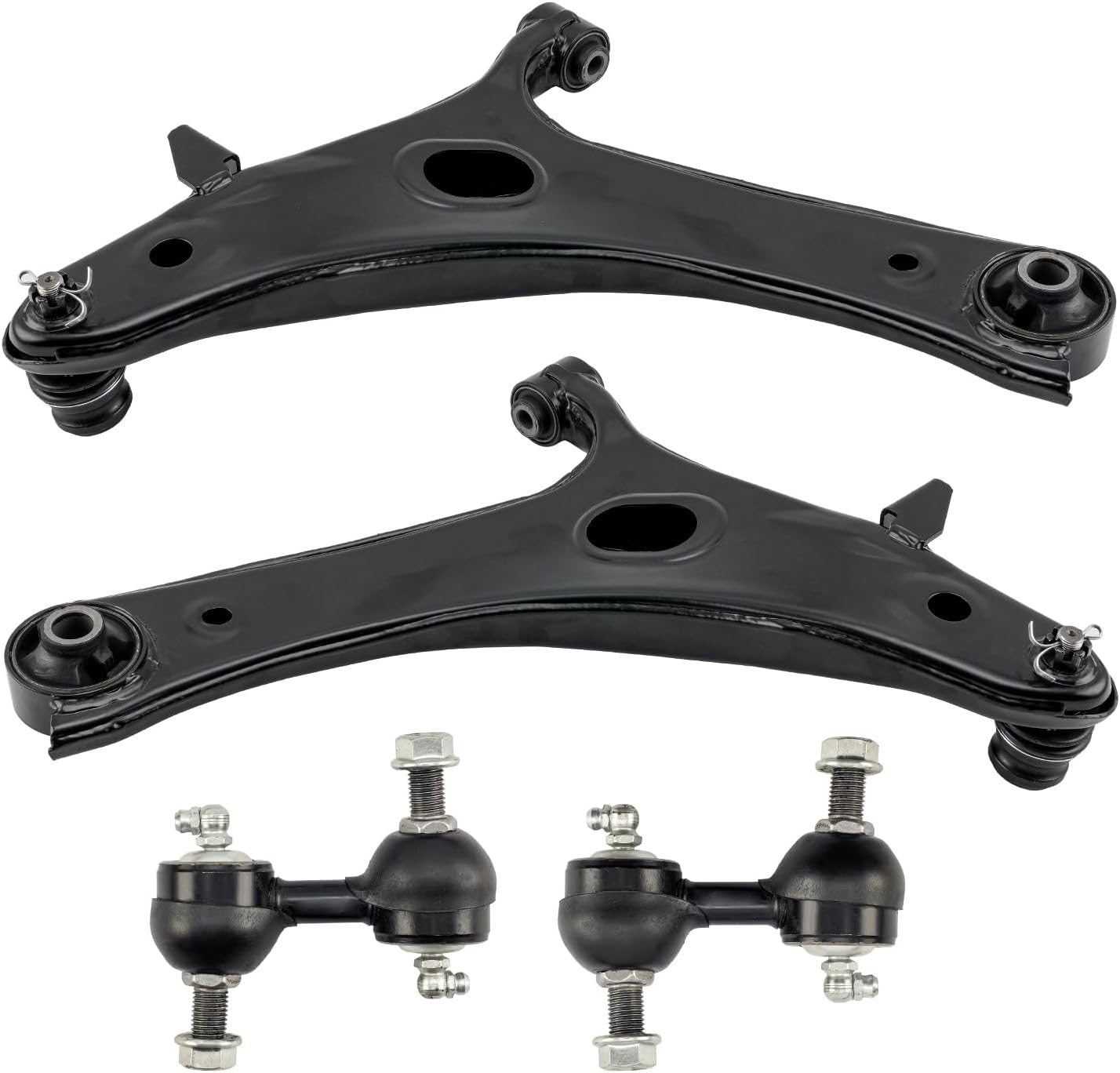
3. KAX Front Lower Control Arms with Ball Joint & Sway Bar Links (fits 2009–2013 Subaru Forester)
| Fit Type | Vehicle Specific Fit |
|---|---|
| Auto Part Position | Front |
| Material Type | Steel |
| Unit Count | 1 Count |
This KAX kit replaces the front lower control arms and adds sway bar end links to restore steering feel and suspension geometry on 2009–2013 Subaru Forester models. It includes driver and passenger lower control arms with pre-greased ball joints plus two sway bar end links so you can address wear items in one job. Built from high-strength steel with a corrosion-resistant coating and reinforced rubber bushings, the parts aim to reduce vibration and noise while improving steering response compared with worn factory components. Pre-greased ball joints simplify installation and the kit is designed for a bolt-in fit without drilling or modification. Expect a noticeable improvement in alignment stability and cornering feel after installation, though professional alignment is still required after replacing control arms. This is a practical, OEM-style replacement kit for owners focused on restoring handling rather than performance tuning.
Best for: Buyers who want a straightforward, factory-style replacement to restore steering and ride quality on a 2009–2013 Forester with worn front lower suspension components and prefer a bundled kit to minimize repeat labor.
Less Ideal for: Drivers seeking performance upgrades, custom suspension geometry, or those replacing suspension across multiple vehicle areas who need a full control-arm overhaul rather than a lower-arm kit.
- Complete front kit: driver and passenger lower control arms plus two sway bar end links included for one-stop replacement.
- Pre-greased ball joints reduce initial maintenance and simplify installation.
- High-strength steel construction with corrosion-resistant coating for durability.
- Bolt-in vehicle-specific fit designed for 2009–2013 Forester, no drilling or modification required.
- Does not include upper control arms or tie rods so additional worn suspension parts may still need replacement.
Verdict: A practical, bolt-in front lower control arm and sway bar link kit that restores factory handling for 2009–2013 Subaru Forester owners looking for a reliable, no-modification replacement.
4. Detroit Axle Front Left Lower Control Arm with Ball Joint Assembly

| Fit Type | Vehicle Specific Fit |
|---|---|
| Auto Part Position | Front Left |
| Auto Part Orientation | Drivers Side |
| Manufacturer Warranty Description | 10-Year |
This Detroit Axle front left lower control arm replaces the driver-side lower control arm and includes the ball joint for a single, direct-fit swap on 2009-2013 Subaru Forester and compatible Impreza/WRX models. It is intended for routine suspension repair or restoring steering geometry after wear or damage. The part is cast from a premium alloy and finished in corrosion-resistant coating, which the brand says improves durability and rigidity compared with worn factory parts. Because the ball joint is pre-installed, installation is faster and avoids the need to press in a new joint. The control arm is positioned as a budget-friendly aftermarket option that aims for factory-quality fit and function and carries a long coverage warranty. Expect the same mounting points and a straightforward replacement process, though professional alignment after installation is still required. For drivers who want a cost-effective way to refresh front suspension without modifying ride characteristics, this is a practical choice.
Best for: Buyers looking to restore worn front suspension on a tight budget who want a direct-fit replacement that reduces install time and avoids sourcing a separate ball joint.
Less Ideal for: Drivers seeking heavy-duty upgraded suspension for off-road or performance tuning should consider reinforced or performance-specific control arms instead.
- Vehicle-specific direct-fit for 2009-2013 Forester and compatible Impreza/WRX models
- Includes pre-installed ball joint so you do not need to press in a separate joint
- Premium alloy construction with corrosion-resistant finish for improved durability
- Designed to match factory mounting points for straightforward installation
- Backed by a long 10-year manufacturer warranty
- Sold as a single arm so replacing both sides or multiple worn components may require additional purchases
Verdict: A budget-friendly, direct-fit replacement control arm with a pre-installed ball joint that makes getting a worn Forester front suspension back to factory-like condition quick and affordable.
5. MOOG RK622787 Front Left Lower Control Arm with Ball Joint

| Fit Type | Vehicle Specific Fit |
|---|---|
| Auto Part Position | Front |
| Included Components | Control Arm and Ball Joint Assembly |
| Material Type | Alloy Steel, Stainless Steel, or Aluminum |
The MOOG RK622787 is a direct-fit front lower control arm with an integrated ball joint intended to replace worn suspension on select Subaru vehicles. Installed as a front left assembly, it restores suspension geometry and steering responsiveness by replacing a fatigued or damaged arm and ball joint in a single unit. MOOG emphasizes enhanced structural strength through heat-treated components and corrosion-resistant coatings that help the part withstand repeated loads and road exposure. The unit ships as a complete assembly so installation is faster than rebuilding separate components, which is helpful for DIY mechanics and shops aiming for predictable alignment results after replacement. Limitations include vehicle-specific fitment, so make sure the part number matches your Forester, and the assembly adds the usual weight of a robust metal control arm compared with lightweight aftermarket options. For buyers focused on long-term reliability and straightforward replacement, this MOOG assembly offers a durable, serviceable solution that simplifies front suspension repairs.
Best for: Buyers who prioritize a durable, factory-quality replacement that restores handling and reduces the need for frequent repairs will appreciate this assembled control arm.
Less Ideal for: If you want the lightest possible performance upgrade or a universal aftermarket arm for multiple vehicles, this vehicle-specific, heavier replacement is not the best choice.
- Direct-fit assembly that includes control arm and ball joint for faster installation
- Heat-treated design aimed at improved structural strength under repeated loads
- Coatings on studs and surfaces to reduce corrosion and extend service life
- Designed to restore suspension geometry and steering response
- Fitment is vehicle-specific so compatibility must be confirmed before purchase
- Made from metal alloys which are heavier than some lightweight aftermarket alternatives
Verdict: Choose this MOOG assembled control arm when you want a durable, corrosion-resistant, direct-fit front replacement that reliably restores steering and suspension geometry.
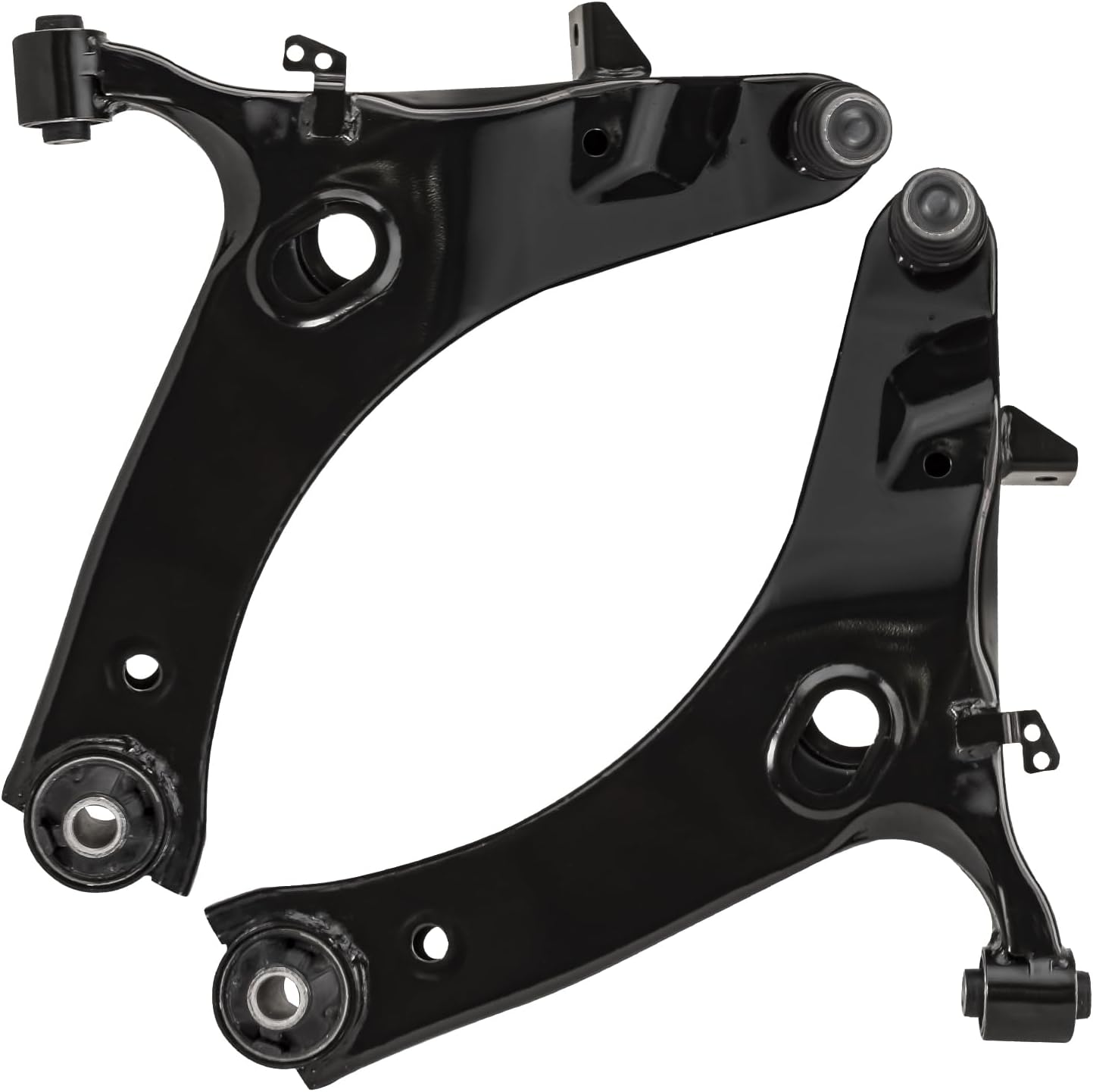
6. Detroit Axle Front Lower Control Arms with Ball Joints — Pair for 2009–2013 Subaru Forester / 2011–2014 Impreza
| Fitment | 2009-2013 Subaru Forester; 2011-2014 Subaru Impreza (WRX; Sedan) |
|---|---|
| Position | Front Lower |
| Quantity | Pair with ball joints |
| Manufacturer | Detroit Axle |
These Detroit Axle front lower control arms replace both driver and passenger sides and come with preinstalled ball joints so you can restore front suspension geometry without chasing separate parts. They are marketed as direct-fit, vehicle-specific replacements intended for 2009–2013 Forester and 2011–2014 Impreza sedans; installation follows the same steps as a factory-style swap and should fit the original mounting points. The housings are described as a premium alloy with enhanced structural strength and corrosion resistance to handle repeated impacts and road wear. For everyday drivers this kit brings a firmer, more predictable front end after worn arms cause looseness or uneven tire wear. Keep in mind these are replacement suspension parts not performance upgrades, and any wheel alignment after installation is required to ensure proper handling and tire life. Also expect typical shop or DIY labor to remove pressed-in components if they are seized on older cars.
Best for: Buyers who want a tested, ready-to-install replacement to eliminate play in the front suspension and restore factory handling on a Forester or Impreza.
Less Ideal for: Drivers seeking performance-tuned suspension parts, lowered ride height setups, or multi-vehicle compatibility should look at specialty performance control arms instead.
- Includes both left and right front lower control arms with ball joints for a complete axle-side refresh
- Designed as direct-fit, vehicle-specific replacements for the listed Subaru model years to simplify installation
- Premium alloy construction and reinforced structure aimed at improved wear resistance and corrosion protection
- Not a performance or upgraded suspension component—designed to restore factory-level fit and function
- Installation may require shop tools and alignment after fitting to correct geometry
Verdict: A convenient, vehicle-specific pair of front lower control arms with ball joints that reliably restores factory fit and front-end stability for the specified Subaru models.
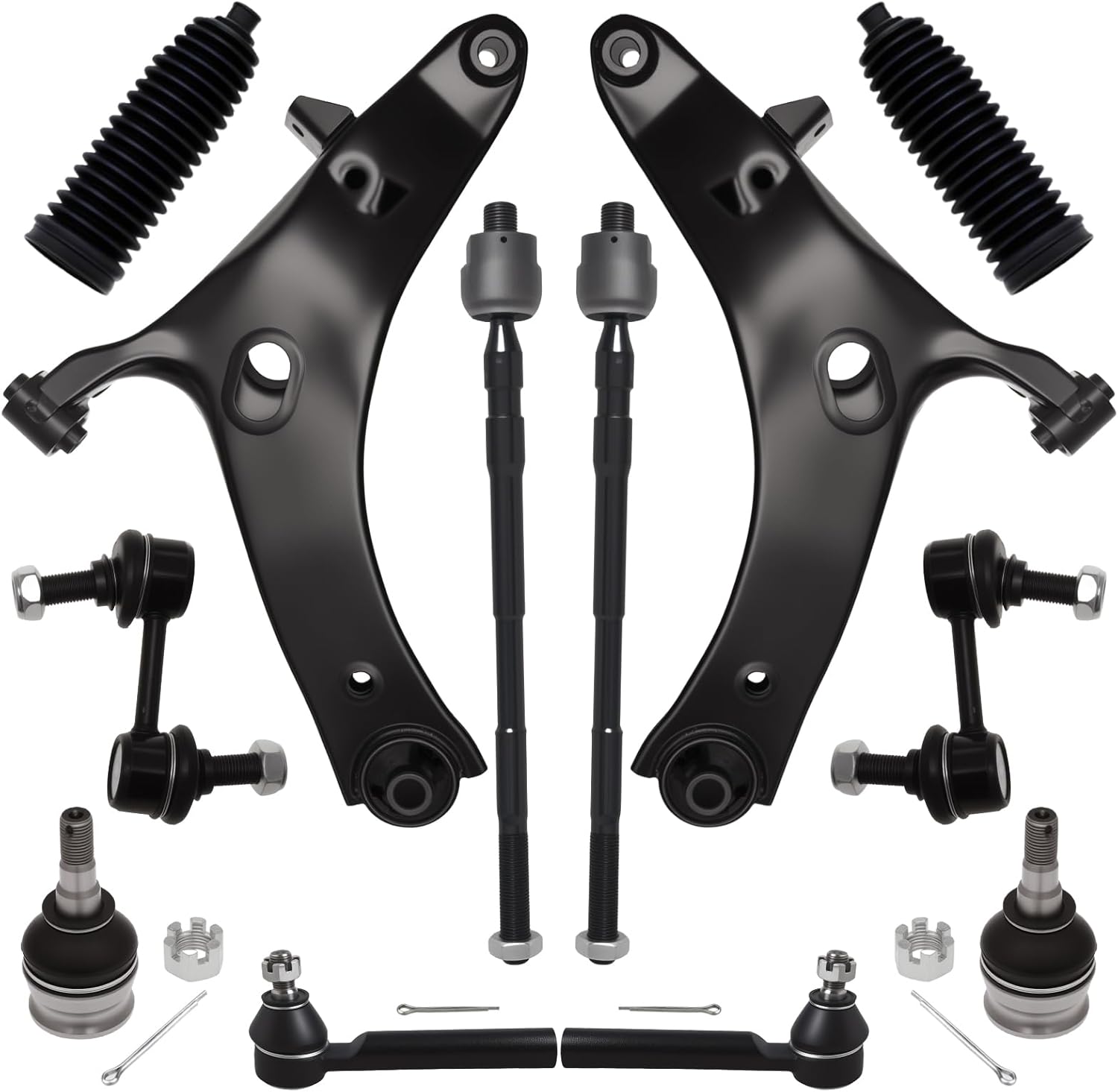
7. AUQDD 12-Piece Front Suspension Control Arm Kit for 2009–2013 Subaru Forester
| Fit Type | Vehicle Specific Fit |
|---|---|
| Auto Part Position | Front |
| Material Type | Alloy Steel |
This AUQDD 12-piece front suspension kit is a vehicle-specific replacement package for 2009–2013 Subaru Forester S12 models, covering both lower control arms and the common front-end wear items. It includes two lower control arms, two ball joints, inner and outer tie rod ends, two sway bar end links, and rack-and-pinion boots so you can refresh the entire front suspension at once. For a risk-averse buyer the major benefit is convenience and parts matching: everything arrives designed to work together and uses stamped alloy-steel components intended to match factory function. Installation restores steering stability and reduces play from worn joints, which improves alignment retention after a shop install. The kit is best fitted by a professional or experienced DIYer since ball-joint and control-arm work often requires presses, alignment, and torque to spec. The parts appear to be aftermarket replacements rather than factory units, so expect good value but not necessarily upgraded longevity compared with higher-end OEM-equivalent or performance parts.
Best for: A Forester owner who prefers a cautious, all-in-one replacement to restore front-end stability without sourcing individual parts, and who plans to have the kit installed and aligned by a shop or experienced DIYer.
Less Ideal for: Buyers seeking upgraded performance components or extended-life premium suspension parts should consider aftermarket performance or OEM-sourced alternatives instead.
- Comprehensive kit replaces multiple front suspension wear parts at once, simplifying repairs
- Vehicle-specific fitment for 2009–2013 Forester S12 reduces fitment guesswork
- Includes both inner and outer tie rod ends plus rack boots to address steering play sources
- Made from alloy steel components intended to match factory function
- Aftermarket parts may not match the long-term durability of higher-end OEM or premium replacements
- Installation requires proper tools and a post-install alignment to ensure correct steering geometry
Verdict: Buy this kit if you want a single, vehicle-specific package to replace all common front suspension wear parts on a 2009–2013 Forester and get steering feel and alignment stability back to factory expectations.
Choosing the Right 2009-2013 Subaru Forester Control Arm: Key Factors to Consider
Fitment And Mounting
Correct fitment is the top priority for the 2009-2013 Subaru Forester because improper mounting can change suspension geometry and hamper alignment. Verify that bolt hole spacing, bushing orientation, and ball-joint angle match factory points so the arm installs without forcing or altering control arm pick-up locations.
An arm that requires bracket modification or different mounting hardware may introduce alignment issues and unpredictable handling. When shopping, check whether the part is specified for the 2009-2013 Forester and whether it preserves the factory arm length and rake. Proper fitment reduces installation time, preserves steering geometry, and lowers the risk of premature tire wear.
Bushing Material And Compliance
Bushing material dictates the tradeoff between comfort and steering precision. Softer rubber or elastomer bushings absorb road noise and small impacts, which helps maintain a comfortable ride on an older Forester with worn components. Stiffer polyurethane bushings improve steering response and control but transmit more vibration into the cabin.
Consider your driving priorities: daily commuting and a quiet ride favor compliant bushings, while spirited driving or towing benefits from firmer materials. Also check whether bushings are bonded or replaceable. Replaceable bushings can be serviced later and may extend total service life without replacing the entire arm.
Ball-Joint Design And Serviceability
If the control arm includes an integrated ball joint, its design impacts both durability and future maintenance. Sealed, low-friction ball joints with grease fittings are easier to maintain and can extend service life in environments with moisture and road salt. Press-fit or permanently sealed joints simplify initial replacement but may require full-arm replacement when they wear.
Examine whether the ball joint has a protective boot and whether replacement is possible. For a Forester that sees harsh winters or rough roads, a robust boot and good sealing are critical to prevent early failure. Serviceable joints can reduce long-term ownership costs.
Corrosion Resistance And Finish
Road salt and moisture contribute to corrosion, particularly on older Foresters. A durable finish and corrosion-resistant coatings help maintain structural integrity and simplify future removal. Look for powder coating, e-coating, or other rust-inhibiting processes applied to mounting surfaces and threaded areas.
Corrosion-resistant hardware also helps during installation, reducing the chance of snapped bolts or seized fasteners. For owners in coastal or northern climates, investing in a well-finished arm decreases the likelihood of late-life failures and eases servicing.
Alignment Stability And Geometry Preservation
Control arms affect camber, caster, and toe when mounted. Arms that preserve factory geometry allow the Forester to return to correct alignment settings after replacement. Any deviation in arm length, bracket position, or bushing offset can change alignment values and lead to uneven tire wear or a pull to one side.
Choose arms designed to match factory geometry or specify adjustable options only if you plan to have a professional alignment. Stability under load matters too; the arm should resist deflection that changes alignment during cornering or when carrying cargo.
Installation Complexity And Required Tools
Installation difficulty varies from simple bolt-on swaps to jobs requiring ball-joint presses or spring compression. For the 2009-2013 Forester, consider whether you have the tools and experience to press out bushings or ball joints, or whether you prefer a direct replacement that uses the existing hardware.
Factor in labor time, the need for an alignment after installation, and whether the arm comes with necessary hardware. Simpler installations reduce downtime and the chance of installation errors that could affect handling or safety.
Common Symptoms That Point To A Worn Control Arm
Recognizing early signs of control arm wear helps you avoid secondary damage like uneven tire wear or damaged steering components. Typical symptoms on a 2009-2013 Forester include a pronounced clunk when going over bumps, wandering or pull to one side, and a loose or vague steering feel.
You may also notice vibration through the steering wheel at certain speeds or accelerated inner tire wear on the front axle. Some symptoms overlap with wheel bearing or tie-rod issues, so use a process of elimination: inspect bushings for visible cracks or play, and check ball-joint free play before concluding the control arm is the culprit.
- Clunking noise on bumps or during braking
- Pulling to one side or persistent drift
- Vibration or looseness felt in the steering wheel
- Visible bushing cracks or torn protective boots
- Accelerated inner tire wear on the front tires
Deciding Between Replacement Bushings And Full-Arm Swap
If the control arm body is corrosion-free and structurally sound, replacing worn bushings or the ball joint can be a cost-effective option. This approach preserves the original arm and may be simpler if you have access to a press and replacement components matched to the Forester.
A full-arm swap is often preferable when the arm has surface corrosion, bent mounting points, or integrated components that are sealed. New arms eliminate concerns about hidden damage and can reduce future labor if the arm would otherwise need repeated disassembly.
- Bushing replacement saves cost when the arm is otherwise good
- Full-arm replacement reduces risk of hidden structural issues
- Consider long-term serviceability and availability of replacement bushings
How Control Arm Choice Affects Alignment And Tire Wear
Control arms that match factory geometry help maintain camber and toe settings after installation. If an aftermarket arm alters arm length or bushing offset, it can change static alignment and accelerate uneven tire wear unless corrected with a professional alignment.
Adjustable control arms can be useful for correcting alignment on lowered or modified Foresters, but for a mostly stock vehicle keeping OEM geometry is safer. Always plan for a post-installation alignment to confirm settings and avoid premature tire replacement.
- Non-matching arms can shift camber or toe out of spec
- Adjustable arms require careful setup and alignment
- Post-replacement alignment is recommended to preserve tire life
Practical Installation Tips For Owners
Prepare by measuring existing arm dimensions and photographing mount orientations before disassembly to ensure correct reinstallation. Use penetrating lubricant on fasteners, and support the hub and control arm during unbolting to prevent sudden suspension drop.
Torque new fasteners to factory specifications and install hardware in the same order removed. If the replacement arm uses different hardware, choose grade-equivalent bolts and follow recommended torque values. Finally, have a professional alignment performed after installation to confirm handling and tire wear.
- Photograph and measure before removal
- Use penetrating oil on stubborn fasteners
- Support suspension components during disassembly
- Torque to factory specs and perform an alignment
Maintenance Steps To Extend Control Arm Life
Regular visual inspections for torn boots, cracked bushings, and surface corrosion catch issues early. Clean mounting points and apply anti-seize to bolts during any service to simplify future removal.
Grease serviceable joints per manufacturer guidance and address torn protective boots immediately to prevent contamination. For Foresters in salty climates, periodic underbody rinses help reduce corrosion and prolong component life.
- Inspect bushings and boots every oil-change interval
- Grease serviceable joints and apply anti-seize to bolts
- Rinse underbody after exposure to road salt
Still looking for the perfect fit?
Select your Subaru Forester configuration to see the most relevant Control Arms recommendations
How We Chose the Best 2009-2013 Subaru Forester Control Arm
Our selection focused on replacements and upgraded control arms that suit the suspension geometry and service points of the 2009-2013 Subaru Forester. We prioritized fitment first, including correct mounting locations, bushing orientations, and ball-joint angles to avoid interfering with factory alignment ranges. Durability was the second key filter, focusing on bushing materials, corrosion-resistant finishes, and ball-joint design that resist common wear modes for Forester use.We also evaluated ease of installation and serviceability, looking at models that allow straightforward bolt-on replacement with common tools or that keep press-fit components accessible. Ride quality and NVH considerations were assessed by comparing bushing stiffness and the tradeoffs between compliance and steering feedback. Finally, warranty coverage and manufacturer documentation were counted as signals of consistent quality. Exclusions included arms that required major suspension modifications, non-repairable one-piece subassemblies that do not match factory mounting, or items lacking clear fitment information for 2009-2013 Forester models.
Our full evaluation process is outlined in our review methodology.
FAQ
How can I tell if a control arm is bad on my 2009-2013 Forester?
Look for clunking noises over bumps, excessive play in the wheel hub, torn bushing boots, or visible movement at the ball joint. A mechanic can isolate the control arm by checking for play with the wheel off and testing bushing and ball-joint movement.
Is it better to replace the whole control arm or just the bushing?
If the arm is corrosion-free and straight, replacing the bushing can be cost-effective. If the arm shows rust, bent mounting points, or the ball joint is integrated and worn, a full-arm replacement is often the more reliable long-term solution.
Will replacing a control arm fix alignment issues on the Forester?
Replacing a worn control arm can restore geometry but you should expect to have a professional alignment afterward. If a replacement arm does not match factory geometry precisely, alignment adjustments will be needed to correct toe and camber.
Can I install a replacement control arm myself?
Many Forester owners can perform a bolt-on swap with basic tools, but pressing out bushings or ball joints requires specialty tools and experience. If the job involves seized hardware or press-fit components, professional installation is recommended.
How long do control arm bushings typically last on a Forester?
Bushing life varies widely depending on driving conditions and climate. In normal conditions they often last many years, but exposure to salt, rough roads, or heavy loads accelerates wear, sometimes necessitating service sooner.
What causes control arm ball joints to fail prematurely?
Contamination from torn boots, lack of lubrication, and persistent exposure to moisture and road salt are common causes. Physical impacts or off-road use that overloads the joint can also accelerate failure.
Final Verdict
When choosing control arms for a 2009-2013 Subaru Forester, prioritize correct fitment and geometry preservation to maintain steering feel and tire life. Balance bushing material against your priorities for ride comfort versus steering precision, and consider ball-joint serviceability if you expect to maintain components over time.Plan on a post-installation alignment and use corrosion-resistant hardware in harsh climates. By matching the arm to how you drive and the Forester's service history, you can select an option that restores handling and reduces the need for repeated repairs.
Explore More:
- Check out all Subaru Forester parts & accessories
- Explore Control Arms Maintenance & Repair Guides
- Explore Suspension & Steering
- Browse all Auto Parts
