

Note: This article contains affiliate links. If you click on these links and make a purchase, I may earn a small commission at no extra cost to you. This helps support my research and content. Read my full affiliate disclosure here.
If your 1998-2002 Subaru Forester feels loose, wanders, or thumps over bumps, worn control arms can be the culprit. Selecting the right control arms restores steering precision, keeps suspension geometry correct, and reduces vibration that can accelerate tire wear. This guide covers the top shortlisted control arms for the specified Forester years and explains the practical differences that matter for ownership and repair.We assess each option for fitment, bushing and ball-joint quality, and ease of installation so you can pick a durable replacement that suits daily driving or higher-mileage needs. Read on for the evaluation criteria and common symptoms to watch for before you replace parts.
Looking for other parts? See all Subaru Forester parts & accessories.
Top Picks at a Glance
| Best Overall The best all-around choice for most situations | Whiteline KTA289 Front Lower Suspension Control Arm Kit |  |
| Best Quality Built to a higher standard if you want something more solid | MOOG RK640741 Front Left Lower Suspension Control Arm |  |
| Best Value The sweet spot between price and what you get | YIYIBYUS Front Lower Control Arm with Ball Joint Kit (Left & Right) |  |
| Best Budget The cheapest option that still gets the job done reliably | WsrrLun Front Lower Control Arm with Ball Joint Kit (pair) |  |
| Highest Rated A top-rated pick with lots of positive feedback | Dorman 520-477 Front Driver Side Lower Suspension Control Arm |  |
| Most Popular A crowd favorite that many people choose with confidence | Metrix Premium Chassis Parts Left Rearward Control Arm (Fits Subaru Forester 1998–2002) |  |
| Best Seller A high-volume bestseller chosen again and again | TRQ Front Steering & Suspension 10-Piece Kit for 1998–2002 Subaru Forester |  |
1. Whiteline KTA289 Front Lower Suspension Control Arm Kit

| Manufacturer | Whiteline |
|---|---|
| Model | KTA289 |
| Item Weight | 20.5 pounds |
The Whiteline KTA289 is a front lower control arm kit sold as a complete assembly to simplify replacement on compatible Subaru models. It arrives as a ready-to-install unit that replaces worn lower arms and restores front suspension geometry and steering response. The kit emphasizes durability and consistent performance through engineered components and heavier-duty construction compared with basic aftermarket arms. For a DIY or shop install the complete assembly reduces parts matching and press-fit operations, which speeds labor and lowers the chance of incorrect bushings or hardware. Trade-offs are that this is a direct replacement style part rather than an adjustable performance arm, so it focuses on restoring factory handling rather than tuning camber or caster. It also carries typical suspension part weight and size, which installers should plan for during removal and fitment. Overall this kit is practical for someone wanting a robust, drop-in lower control arm assembly to get a Forester steering and ride feel back to expected specification.
Best for: Drivers looking for a reliable, drop-in front lower control arm that restores factory steering and ride without extra setup, ideal for routine repair or refurbishment projects.
Less Ideal for: Enthusiasts seeking adjustable or performance-tuning control arms who need custom alignment settings or track-focused geometry.
- Supplied as a complete lower arm assembly to simplify installation and reduce shop time
- Engineered components intended for consistent performance and durability
- Replaces worn suspension geometry to restore steering feel and handling
- Non-adjustable design does not allow camber or caster tuning
Verdict: Choose this Whiteline lower control arm kit when you want a durable, ready-to-install replacement that restores front suspension performance without aftermarket adjustments.
2. MOOG RK640741 Front Left Lower Suspension Control Arm

| Auto Part Position | Front Left Lower |
|---|---|
| Fit Type | Vehicle Specific Fit |
| Material Type | Alloy Steel |
This MOOG RK640741 front left lower control arm is a direct-fit replacement designed to restore steering precision and suspension geometry on compatible Subaru models. It is built from alloy steel with heat-treated sections and corrosion-resistant coatings so it stands up to road impacts and repeated loads. Installation is straightforward for anyone replacing a worn control arm, and the part’s vehicle-specific fit reduces the need for adjustment after mounting. In everyday use it helps eliminate steering play, uneven inner tire wear, and the wandering feel caused by failing suspension links, returning a firmer, more controlled front end. The unit focuses on structural strength and longevity rather than performance tuning, so drivers seeking aggressive handling upgrades will not get different suspension geometry or adjustable linkages. For most owners replacing a tired stock arm, this MOOG delivers reliable, factory-quality replacement with improved durability.
Best for: Drivers who prioritize restoring precise steering and a stable front end on a 1998–2002 Subaru Forester and want a durable, factory-quality replacement part.
Less Ideal for: Enthusiasts looking for an adjustable or performance-tuned control arm for altered suspension geometry should consider aftermarket performance links instead.
- Vehicle-specific direct-fit design simplifies installation and alignment
- Alloy steel construction with heat-treated sections for added structural strength
- Coatings to inhibit corrosion and extend service life
- Restores steering feel and helps correct premature inner tire wear
- Non-adjustable design does not provide aftermarket alignment or performance tuning options
Verdict: Choose this MOOG control arm to reliably restore factory steering response and front-end stability on a 1998–2002 Subaru Forester.
3. YIYIBYUS Front Lower Control Arm with Ball Joint Kit (Left & Right)

| Fit Type | Vehicle Specific Fit |
|---|---|
| Auto Part Position | Front Left Lower |
| Included Components | 2* Control Arms |
| Material Type | Alloy Steel |
These front lower control arms replace the factory lower arm assemblies and include the ball joints, making them a direct-replacement pair for the specified Subaru models. Constructed from SPHC alloy steel and finished in black, the arms are intended to restore steering geometry and wheel control after wear or damage. Typical use is a one-time replacement during front suspension repair; the set covers both left and right lower positions so you can replace both sides at once for balanced handling. Notable features include vehicle-specific fitment for late 1990s to early 2000s Subaru platforms and preinstalled ball joints that save the time of transferring components. Practical benefits are restored tire wear patterns, improved steering response compared with worn arms, and corrosion-resistant material for longer life. Important limitations are that fitment is limited to the listed model years and Subaru platforms, and professional installation is recommended since alignment is required after replacement. The kit does not include additional hardware beyond the two control arms, so expect to reuse or separately buy mounting fasteners if needed.
Best for: Buyers who want a direct, value-minded replacement to restore front suspension geometry on supported Subaru models and who prefer replacing both lower arms at once for consistent handling.
Less Ideal for: Drivers looking for performance upgrades, adjustable components, or parts for vehicles outside the listed Subaru years should consider other options.
- Includes both left and right front lower control arms for a complete side-to-side replacement.
- Integrated ball joints eliminate the need to press out and install separate ball joints.
- Made from SPHC/alloy steel for corrosion and wear resistance compared with untreated cast parts.
- Vehicle-specific design intended to match suspension geometry on the covered Subaru models.
- Fitment is restricted to specified Subaru model years and will not suit other vehicles.
- Does not include mounting hardware beyond the control arms, so additional fasteners may be required.
Verdict: A practical, ready-to-install pair of front lower control arms with ball joints that restores factory steering geometry for the listed Subaru model years.
4. WsrrLun Front Lower Control Arm with Ball Joint Kit (pair)

| Included Components | 2* Control Arms |
|---|---|
| Fit Type | Universal Fit |
| Auto Part Position | Front |
| Material Type | SPHC |
| Manufacturer Part Number | 20200AC200F 20200AC210F |
These WsrrLun front lower control arms replace the factory lower arms and include pressed-in ball joints to restore steering geometry and suspension control on compatible Subaru vehicles. Sold as a pair, they are direct-replacement parts intended for the front lower position and are made from stamped SPHC steel with a black finish. In use they transfer wheel forces to the chassis and reestablish correct wheel trajectory after worn arms are removed, which helps correct wandering, uneven tire wear, and loose steering feel. The kit lists multiple OEM interchange numbers and is supplied ready to install, though professional installation is recommended because alignment and safe ball joint torqueing are important. Being a universal-fit aftermarket kit, buyers should verify exact part numbers against their vehicle during purchase; the stamped construction is durable for everyday driving but may not match the fit-and-finish or long-term fatigue life of higher-end forged replacements.
Best for: Buyers looking to restore tight steering and correct front suspension geometry on a tight budget for a 1998–2002 Forester and similar Subaru models and who prioritize economy over premium materials.
Less Ideal for: Drivers seeking the highest-strength forged or performance suspension parts for heavy-duty or motorsport use should choose a purpose-built aftermarket upgrade instead.
- Sold as a pair so both sides are refreshed at once
- Direct-replacement design with listed OEM interchange numbers for easier compatibility checking
- Integrated ball joints included, eliminating the need to press in separate joints
- Stamped SPHC steel construction offers solid durability for daily driving
- Compact package and straightforward install for mechanics familiar with Subaru front suspension
- Universal-fit description may require careful cross-checking to ensure precise fit on a given chassis variant
Verdict: If you need an affordable, direct-replacement pair to restore front suspension control on a 1998–2002 Subaru Forester, this kit delivers the essentials without frills.
5. Dorman 520-477 Front Driver Side Lower Suspension Control Arm

| Fit Type | Vehicle Specific Fit |
|---|---|
| Auto Part Position | Front |
| Auto Part Orientation | Drivers Side |
| Material Type | Steel |
This Dorman front lower control arm replaces the factory part on compatible Subaru models and is intended to restore suspension geometry and steering stability. Installers use it when the original control arm has worn bushings, ball joints, or corrosion; it mounts in the same location and orientation as the factory unit. Notable features include steel construction, vehicle-specific fitment, and Dorman quality testing aimed at reliable performance and sustained stability. In practice it returns predictable handling and helps eliminate play or noise caused by a failing arm, making it a straightforward repair for aging Foresters. Limitations are that fitment is vehicle- and trim-dependent so you must confirm your year and trim, and this is a single-arm replacement rather than a paired kit. For buyers prioritizing a long-lasting, factory-style repair, this part offers a practical way to regain OEM-like ride and tracking without modifying suspension geometry.
Best for: Drivers who want a dependable, factory-style replacement to restore steering stability and eliminate play from an aging suspension on compatible Subaru models.
Less Ideal for: People seeking a complete suspension refresh or performance upgrades who would prefer upgraded or matched-pair components.
- Steel construction for durability and resistance to road wear
- Vehicle-specific fit designed to match factory mounting points
- Rigorously tested to restore directional stability and handling
- Direct replacement that reinstates proper suspension geometry
- Sold as a single control arm rather than a paired set
Verdict: Choose this Dorman control arm if you need a tested, factory-style front lower replacement to reliably restore handling on compatible Subaru Forester models.
6. Metrix Premium Chassis Parts Left Rearward Control Arm (Fits Subaru Forester 1998–2002)

| Fit Type | Vehicle Specific Fit |
|---|---|
| Material Type | Steel |
| Manufacturer Part Number | 57156MT |
| OEM Equivalent Part Number | 20250FE320, 20255AA013 |
| Warranty | 3 Year / 36,000 miles Limited Warranty |
This Metrix left control arm replaces the rearward arm on specified Subaru models and is intended as a direct-fit suspension replacement. Constructed from steel and delivered pre-greased with a housing included, it connects the wheel knuckle to the frame to restore alignment, steering stability, and quiet operation after a worn OEM arm is removed. Metrix highlights a greasable design for routine maintenance, cataphoresis coating for corrosion resistance, and factory-quality fitment backed by industry certifications. Installation is typical for control arms: lift the vehicle, remove the wheel, swap the arm, torque fasteners, and check wheel alignment. The part carries a 3 year/36,000 mile limited warranty. Expect a durable, economical replacement that performs like a factory part for street-driven Foresters, though heavier steel construction may not match the weight savings of aluminum aftermarket arms and buyers should plan for a post-install alignment to avoid uneven tire wear.
Best for: Buyers who want a reliable, factory-quality replacement for a worn rearward control arm on a 1998–2002 Subaru Forester and prioritize fitment confidence and documented quality standards.
Less Ideal for: This part is not aimed at performance tuners seeking lightweight suspension upgrades or those wanting a full suspension overhaul kit in a single purchase.
- Vehicle-specific fit for 1998–2002 Subaru Forester and listed Subaru models
- Pre-greased and greasable design eases installation and maintenance
- Steel construction with corrosion-resistant coating for long service life
- Includes housing and is certified to IATF 16949 and ISO 9001 quality standards
- Steel construction is heavier than aluminum alternatives which may be less favorable for weight-conscious builds
- Sold as a single arm so matching-side replacement may be needed for symmetry
Verdict: If you need a dependable, factory-quality left rearward control arm for a 1998–2002 Subaru Forester, this Metrix steel replacement delivers reliable fitment and longevity backed by certification and a warranty.
7. TRQ Front Steering & Suspension 10-Piece Kit for 1998–2002 Subaru Forester
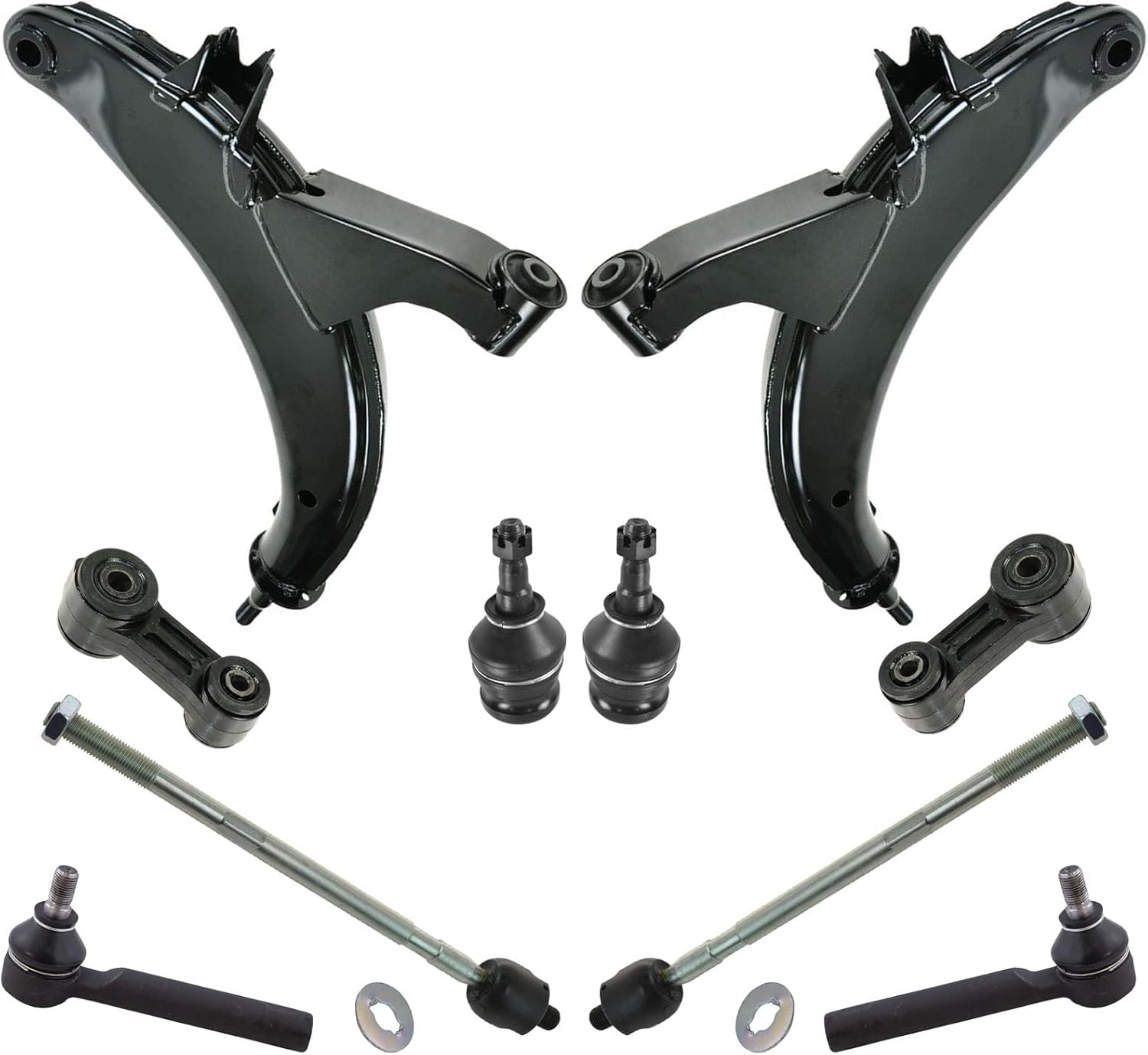
| Fit Type | Vehicle Specific Fit |
|---|---|
| Auto Part Position | Front |
| Material | Alloy Steel |
| Unit Count | 1.0 Count |
| Model | TRQ PSA65995 10 Piece Steering & Suspension Kit |
This TRQ 10-piece front steering and suspension kit bundles the lower control arms, inner and outer tie rods, lower ball joints, and sway bar links needed to refresh a Forester's front-end steering and suspension. Designed as direct-fit, pre-greased components, the kit is intended for straightforward DIY replacement without modifications and includes anti-corrosion coatings for longer surface life. In practice the parts restore steering feel and handling while reducing play and alignment drift that come from worn joints. TRQ emphasizes vehicle-specific fitment and provides extensive installation videos, which is helpful if you plan to do the work yourself. The kit value is strong because it addresses most common front-end wear points at once, but it does not include related items like struts or wheel bearings, so expect additional parts or alignment service after installation. Buyers should also verify fitment for the exact year and submodel before ordering.
Best for: Buyers who prioritize a low-risk, factory-style restoration of front-end steering on a 1998–2002 Forester and prefer a single kit that replaces common wear items with prepped, direct-fit parts.
Less Ideal for: Those looking to replace the entire front suspension (including struts or bearings) in one purchase or installers who need aftermarket performance upgrades rather than factory-quality replacements.
- Complete front 10-piece kit covers control arms, ball joints, tie rods, and sway bar links so multiple failure points are addressed at once
- Pre-greased components reduce prep work and initial maintenance during installation
- Vehicle-specific design and anti-corrosion coating improve fit and surface longevity
- Extensive installation video library from the maker simplifies DIY replacements
- Does not include struts, wheel bearings, or alignment services, so additional parts or shop work may be needed after installation
Verdict: If you want a low-risk, factory-style refresh of the Forester front steering and suspension, this all-in-one 10-piece TRQ kit gives the most common worn parts in one vehicle-specific package.
Choosing the Right 1998-2002 Subaru Forester Control Arm: Key Factors to Consider
Fitment and Year-Specific Compatibility
Correct fitment is the single most important factor for a 1998-2002 Subaru Forester control arm. Even small differences in mounting points, bolt diameters, or bracket locations can change suspension geometry and require additional modifications.
Verify that the replacement arm explicitly covers the 1998 through 2002 model years for the Forester and matches any configuration details specific to your vehicle. Mismatched parts can cause alignment issues and uneven tire wear, and may necessitate extra work during installation. When in doubt, cross-reference the part numbers or fitment notes to ensure the arm uses the same mounting pattern as the original.
Bushing Construction and Material
Bushings isolate vibration and control movement at suspension pivots, so their design directly impacts steering feel and ride comfort. Rubber bushings typically offer a quieter, more compliant ride but can degrade faster, while polyurethane variants last longer and provide firmer steering feedback.
For Forester owners, consider bushing durometer and whether the bushing is bonded, pressed, or serviceable. Heavier-use or high-mileage vehicles benefit from more durable materials, but very stiff bushings can transfer more road noise and harshness into the cabin. Also check whether bushings are replaceable or integral to the arm if long-term maintenance is important.
Ball-Joint Type and Serviceability
Many front control arms incorporate a ball joint that links the arm to the steering knuckle. The ball joint type—sealed, greasable, or replaceable—affects lifespan and maintenance needs. Sealed joints are low maintenance but require full-arm replacement when they fail. Greasable or replaceable ball joints can extend service life if maintained regularly.
Assess whether the ball joint meets your maintenance preferences and whether replacement requires special tools. A worn ball joint often produces play in the front end and uneven tire wear, so choosing an arm with a durable ball joint construction reduces the chance of repeat repairs.
Metal Quality and Corrosion Protection
The structural arm must resist fatigue and environmental corrosion, especially in regions with road salt or heavy moisture exposure. Look for arms made from stamped or forged steel with robust welds and a protective coating to prevent rust. Thicker metal and quality fabrication reduce the risk of cracks or deformation under load.
Corrosion can accelerate wear at mounting points and compromise bushings or ball joints. Protective finishes and rust-resistant hardware increase service life and preserve alignment integrity over time.
Installation Complexity and Alignment Impact
Some control arms are bolt-on direct replacements while others require modification, additional hardware, or alignment correction after installation. Consider whether you will install the arm yourself or use a shop, and whether the arm allows reusing OE bolts or needs new fasteners.
Many replacements will require a wheel alignment. Understand the likely alignment adjustments and whether the arm has shims or eccentric bushings that simplify setting camber and toe. A part that simplifies alignment saves time and reduces the chance of persistent steering pull or uneven tire wear.
Warranty and Expected Service Life
Warranty terms and the expected lifespan of the control arm reflect manufacturer confidence and product durability. Longer warranties often correlate with better materials and quality control, which matters for owners planning to keep the Forester long term.
Factor expected service life into the decision: a higher-durability arm can justify a larger upfront effort to install because it reduces the likelihood of repeat labor. Confirm warranty coverage for bushings and ball joints where possible, and note any exclusions tied to installation or off-road use.
Common Symptoms of Worn Control Arms
Worn control arms or bushings produce several recognizable symptoms on a 1998-2002 Subaru Forester. You may notice a clunking or banging noise when driving over bumps or during quick turns, which usually indicates bushing deterioration or a loose ball joint. Excessive play in the wheel when lifted and checked by hand can also point to ball-joint wear.
Other symptoms include steering wander, a pulling sensation to one side, and irregular tire wear across the tread. Vibrations at certain speeds often stem from excessive movement at the control-arm pivots. Identifying these signs early can prevent secondary damage to tires and alignment-sensitive components.
- Clunking over bumps — likely bushing or ball-joint wear
- Steering wander or pull — alignment geometry affected
- Uneven tire wear — camber or toe drift from excessive play
- Vibration at cruising speeds — pivot movement transmitting NVH
When to Replace Vs. Rebuild Control Arm Components
Deciding between full-arm replacement and rebuilding saved components depends on the type of arm and serviceability of its parts. Arms with pressed-in, non-replaceable bushings or sealed ball joints are typically replaced as a unit. If the arm allows the bushing or ball joint to be serviced separately, rebuilding may save cost and retain original alignment settings.
Consider the overall condition of the arm: surface rust, cracks, or previous weld repairs warrant full replacement. For high-mileage vehicles with otherwise sound metal and replaceable joints, component-level service can be a practical option.
- Replace the arm if bushings are non-serviceable or ball joints are sealed
- Rebuild when bushings or ball joints are replaceable and metal is in good condition
- Inspect mounting points and welds for corrosion before deciding
Alignment Considerations After Control Arm Work
Any time you replace front control arms on the Forester, plan to perform a four-wheel alignment afterward. Even correct-fit arms can shift camber or toe enough to affect handling and tire life. Some replacement arms include eccentric bushings or slot adjustments that make setting alignment easier, while others require adjustable control arms or shim plates to hit factory specs.
If you are doing the work yourself, mark original positions before removal to reduce the extent of adjustment needed. Shops will usually recommend a post-install alignment check and road test to confirm the steering center and handling are restored.
- Expect a four-wheel alignment after replacement
- Eccentric bushings and adjustable arms simplify alignment
- Mark original bushings to minimize adjustment needs
DIY Installation Tips for Forester Owners
If you plan to perform the control arm installation yourself, gather the correct torque specs, replacement hardware if needed, and any specialty tools for ball-joint removal. A pry bar, torque wrench, and a method to safely support the vehicle are essential. Follow a sequence that relieves suspension load before removing bolts to prevent sudden component movement.
Use anti-seize or proper thread locker where recommended, and torque fasteners to factory specifications with the vehicle on the ground when required. After installation, do a visual check for proper clearance and perform a short, careful test drive to detect unusual noises before heading for an alignment.
- Support the vehicle safely and relieve suspension load before unbolting
- Replace hardware if bolts show corrosion or stretch
- Torque fasteners to spec and perform a test drive prior to alignment
How Bushing Choices Affect Ride Quality
Bushing material has a direct impact on ride and steering. Softer rubber bushings absorb road impacts and reduce transmitted noise and vibration, which suits daily drivers seeking comfort. Firmer polyurethane bushings reduce deflection under load, improving steering precision and response at the cost of increased cabin noise.
Balance your priorities: if you drive primarily on paved roads and want comfort, lean toward compliant bushings. If you need crisper handling, such as for spirited driving or heavier loads, consider firmer compounds while acknowledging the trade-off in NVH.
- Rubber: quieter, more compliant, shorter service life
- Polyurethane: firmer, longer-lasting, increases NVH
- Match bushing choice to typical driving conditions
Still looking for the perfect fit?
Select your Subaru Forester configuration to see the most relevant Control Arms recommendations
How We Chose the Best 1998-2002 Subaru Forester Control Arm
We shortlisted control arms for the 1998-2002 Subaru Forester using criteria that reflect real-world durability and fitment needs. First, correct fitment for the specified year range was mandatory; any part lacking direct fitment information for these Forester years was excluded. Second, we prioritized bushing construction and material, since bushing wear is the most common failure mode that affects steering feel and NVH. Third, ball-joint design and serviceability were evaluated because a sealed or replaceable ball joint changes long-term ownership costs and repair options. Fourth, fatigue resistance of the arm itself and corrosion protection were considered, because arms that rust or crack transmit unpredictable handling changes.We also weighed installation considerations, including whether the arm allows reuse of OE hardware and if alignment adjustments are needed after fitment. Parts with ambiguous fitment, poor bushing specifications, or known alignment issues were excluded from the shortlist. The resulting picks balance installation practicality, likely lifespan, and the ability to restore proper suspension geometry for the Forester.
Our full evaluation process is outlined in our review methodology.
FAQ
How can I tell if a control arm bushing is worn on my Forester?
Common signs include clunking noises over bumps, excessive play when you move the wheel by hand with the car lifted, and visible cracking or separation in the bushing material. A test drive that reproduces the noise and a visual inspection of the bushing under load usually confirm the issue.
Will replacing control arms fix alignment issues on a 1998-2002 Forester?
Replacing worn control arms often restores the ability to hold alignment settings, but an alignment is still required after installation. Control arms that have shifted geometry or worn mounting points can cause persistent alignment drift until corrected with proper adjustments.
Are upper control arms different from lower control arms on the Forester?
Yes. Upper and lower control arms serve different positions and loads in the suspension. The lower arm typically carries more load and is more susceptible to bushing and ball-joint wear; the upper arm may have different mounting geometry and wear patterns. Service needs and replacement frequency can vary between them.
Can I reinstall original bolts when doing a control arm replacement?
You can reuse original bolts if they are undamaged and not stretched or corroded, but many technicians recommend replacing hardware that shows corrosion or any sign of deformation. Using fresh fasteners ensures clamping force is reliable and reduces the risk of future loosening.
How long should a replacement control arm last on the Forester?
Longevity depends on materials and driving conditions. Arms with higher-quality bushings and corrosion protection typically last several years longer than basic replacements, while harsh climates or rough roads will shorten service life. Warranties and construction details give a reasonable expectation of durability.
What are common causes of front control arm failure on these Forester years?
Frequent causes are bushing degradation from age and exposure, ball-joint wear due to contamination or load, and corrosion at mounting points. Impact damage from potholes or off-road use can also cause bending or cracks that necessitate replacement.
Final Verdict
When selecting control arms for a 1998-2002 Subaru Forester, prioritize correct fitment, durable bushing construction, and a reliable ball-joint design. Balance comfort and longevity by choosing bushing materials that reflect your driving habits, and ensure the arm has adequate corrosion protection for your climate.Plan for professional alignment after installation and inspect mounting hardware during service. Focusing on these tradeoffs will help you restore steering precision and extend the lifespan of related suspension components with confidence.
Explore More:
- Check out all Subaru Forester parts & accessories
- Explore Control Arms Maintenance & Repair Guides
- Explore Suspension & Steering
- Browse all Auto Parts
