

Note: This article contains affiliate links. If you click on these links and make a purchase, I may earn a small commission at no extra cost to you. This helps support my research and content. Read my full affiliate disclosure here.
If you own a Honda Civic Hybrid, swapping to the right brake pads makes a measurable difference in noise, pedal feel, and how long the pads last. Civic Hybrid brake pads need to balance smooth, quiet operation with consistent friction that suits the car's lighter-weight regenerative braking behavior.This guide covers six shortlisted options selected for fitment to the Civic Hybrid and evaluates them across braking performance, durability, and compatibility with stock hardware. Read on to understand the tradeoffs so you can pick the pads that best match your driving style and maintenance preferences.
Looking for other parts? See all Honda Civic parts & accessories.
Top Picks at a Glance
| Best Overall The best all-around choice for most situations | A-Premium Front Ceramic Brake Pads Set for Honda Civic 2003–2011 and Acura ILX 2013–2014 (4-Pack) |  |
| Best Quality Built to a higher standard if you want something more solid | BOSCH QuietCast Premium Ceramic Front Disc Brake Pad Set (BC465A) |  |
| Best Value The sweet spot between price and what you get | ECCPP Front Ceramic Disc Brake Pad Set (4 pcs) |  |
| Highest Rated A top-rated pick with lots of positive feedback | Bendix Premium SBC621 Ceramic Front Brake Pads |  |
| Most Popular A crowd favorite that many people choose with confidence | Detroit Axle Front Brake Rotor and Ceramic Pad Kit for 2006–2011 Honda Civic Hybrid |  |
| Best Seller A high-volume bestseller chosen again and again | Detroit Axle Front Drilled & Slotted Brake Kit with Ceramic Pads for 2006–2011 Honda Civic Hybrid |  |
1. A-Premium Front Ceramic Brake Pads Set for Honda Civic 2003–2011 and Acura ILX 2013–2014 (4-Pack)

| Position | Front |
|---|---|
| Manufacturer Part Number | APBPD481 |
| OEM Part Number | D948 |
| Formulation | MTF602 carbon ceramic |
These ceramic front brake pads are a direct-fit replacement for the listed Honda Civic Hybrid years and Acura ILX models and are intended for routine street use. Manufactured with a low-dust MTF602 carbon ceramic formula and meeting a low-copper requirement, they reduce brake dust and are engineered to run quietly. The kit includes mounting hardware and high-temperature grease to simplify installation, and the pads passed a 72-hour salt spray test for improved corrosion resistance. In practice they suit daily driving where quiet operation and cleaner wheels are priorities; several user reports note straightforward installation and near-silent braking. Limitations to expect are the usual ones for ceramic pads: they prioritize low noise and dust over extreme fade resistance under repeated heavy track-style braking, and long-term life depends on driving style and conditions. If your Civic Hybrid sees mostly city and highway commuting, these pads deliver quieter stops and cleaner wheels with an easy install, but drivers who need aggressive track performance should consider a different compound.
Best for: Buyers who want a quiet, low-dust factory-style replacement for everyday commuting and light highway use and who value easy installation and cleaner wheels.
Less Ideal for: Drivers who regularly perform aggressive driving, towing, or track sessions and need pads engineered primarily for high-temperature fade resistance should look at performance-oriented compounds instead.
- Low-dust ceramic formulation helps keep wheels cleaner
- Includes mounting hardware and high-temperature grease for easier installation
- Manufactured to meet low-copper limits to reduce environmental copper exposure
- Designed for quiet operation with reports of minimal brake noise
- Salt spray tested for improved corrosion resistance of components
- Not optimized for repeated high-heat, track-style braking where metallic compounds offer better fade resistance
Verdict: A-Premium ceramic front pads are a quiet, low-dust direct replacement built for everyday Civic Hybrid commuting with simple installation and included hardware.
2. BOSCH QuietCast Premium Ceramic Front Disc Brake Pad Set (BC465A)
| Material Type | Ceramic |
|---|---|
| Auto Part Position | Front |
| Manufacturer | Bosch Automotive |
| Manufacturer Part Number | BC465A |
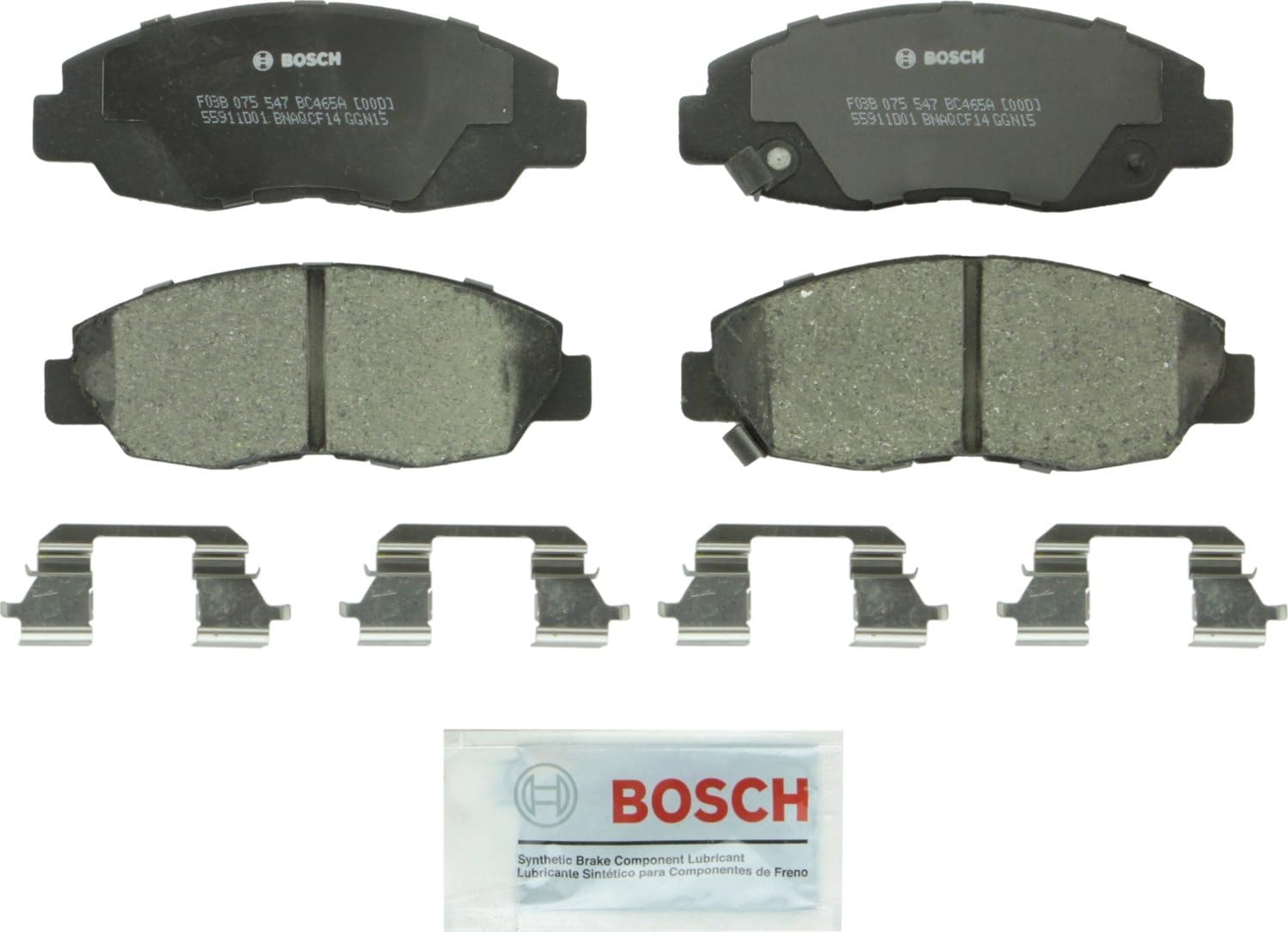
The Bosch QuietCast BC465A is a front-axle ceramic brake pad kit built as a direct-fit replacement for compatible Civic models. It combines a ceramic friction compound with Bosch molded shim technology to deliver quiet stops, low dust, and predictable pedal feel during daily driving and spirited use. The kit arrives ready to install with powder-coated backing plates, OE-style slots and chamfers for consistent fit, and supplied lubricant and hardware where required. In practice the ceramic formula gives solid stopping power without the harshness or rotor wear associated with aggressive semi-metallic pads, and customers report minimal noise after break-in. This makes the BC465A well suited for drivers who want improved civility and long pad life while still keeping confident braking under heavier deceleration. Limitations are that it is a street-oriented ceramic pad rather than a track or high-performance race compound, so drivers seeking maximum fade resistance under repeated high-speed stops should consider a performance-specific pad instead.
Best for: Drivers of Honda Civic hybrids who prioritize quiet, low-dust daily driving and reliable, factory-quality stopping performance over track-level braking.
Less Ideal for: Racers or drivers who frequently perform high-speed, repeated heavy braking who should choose a dedicated performance or track pad designed for high-temperature fade resistance.
- Vehicle-specific fit and OE-style shims reduce noise and improve fitment consistency
- Ceramic friction formula provides quiet operation with low brake dust
- Includes hardware and synthetic lubricant for a straightforward installation
- Powder-coated backing plates resist corrosion to extend pad life
- Not formulated for track or repeated high-temperature, high-speed stops where a performance compound is needed
Verdict: Choose the Bosch QuietCast BC465A if you want a quiet, low-dust, factory-quality ceramic front pad that delivers dependable everyday and performance-oriented stopping for your Civic hybrid.
3. ECCPP Front Ceramic Disc Brake Pad Set (4 pcs)

| Auto Part Position | Front |
|---|---|
| Automotive Fit Type | Vehicle Specific Fit |
| Included Components | brake pads |
| Specification Met | OEM |
These ECCPP front ceramic brake pads are a budget-friendly replacement option engineered to match factory fit for a range of Honda and Acura vehicles. They are supplied as a 4-piece front set with included hardware and a small packet of lubricant for installation. In normal daily driving they deliver quiet, solid braking with low dust and minimal squeal, and several buyers report an easy, direct fit. The pads use a ceramic/semi-metal blend intended to reduce rotor wear compared with harder compounds while still providing dependable stopping power for commuting and light highway use. Expect straightforward DIY installation on cars listed in the fitment; a few users noted occasional minor fitment filings required on older vehicles so check fitment before you start. These are not a performance racing pad, so drivers who need high-temperature fade resistance for track work should choose a different compound. For routine maintenance and cost-conscious replacements on compatible Civics and similar models, these pads are a practical choice.
Best for: Drivers who prioritize reliable, low-dust, and quiet everyday braking on compatible Honda/Acura cars and want an affordable, near-factory replacement they can install themselves.
Less Ideal for: Enthusiasts who regularly do track days or heavy towing and need high-friction, high-temperature brake compounds should look at performance-oriented pads instead.
- Factory-style fit for listed Honda and Acura models minimizes installation hassle
- Ceramic formulation produces low brake dust for cleaner wheels
- Includes hardware and lubricant to simplify a complete pad replacement
- Quiet operation in everyday driving with minimal squeal reported
- Some users reported needing to grind or file edges for a perfect fit on certain vehicles
- Not intended for high-performance or track use where high-temperature fade resistance is required
Verdict: A practical, low-dust front pad set that delivers quiet, dependable braking for everyday Civic Hybrid driving at a budget-friendly price.
4. Bendix Premium SBC621 Ceramic Front Brake Pads
| Material | Ceramic |
|---|---|
| Auto Part Position | Front |
| Specification Met | OEM |
| Automotive Fit Type | Vehicle Specific Fit |
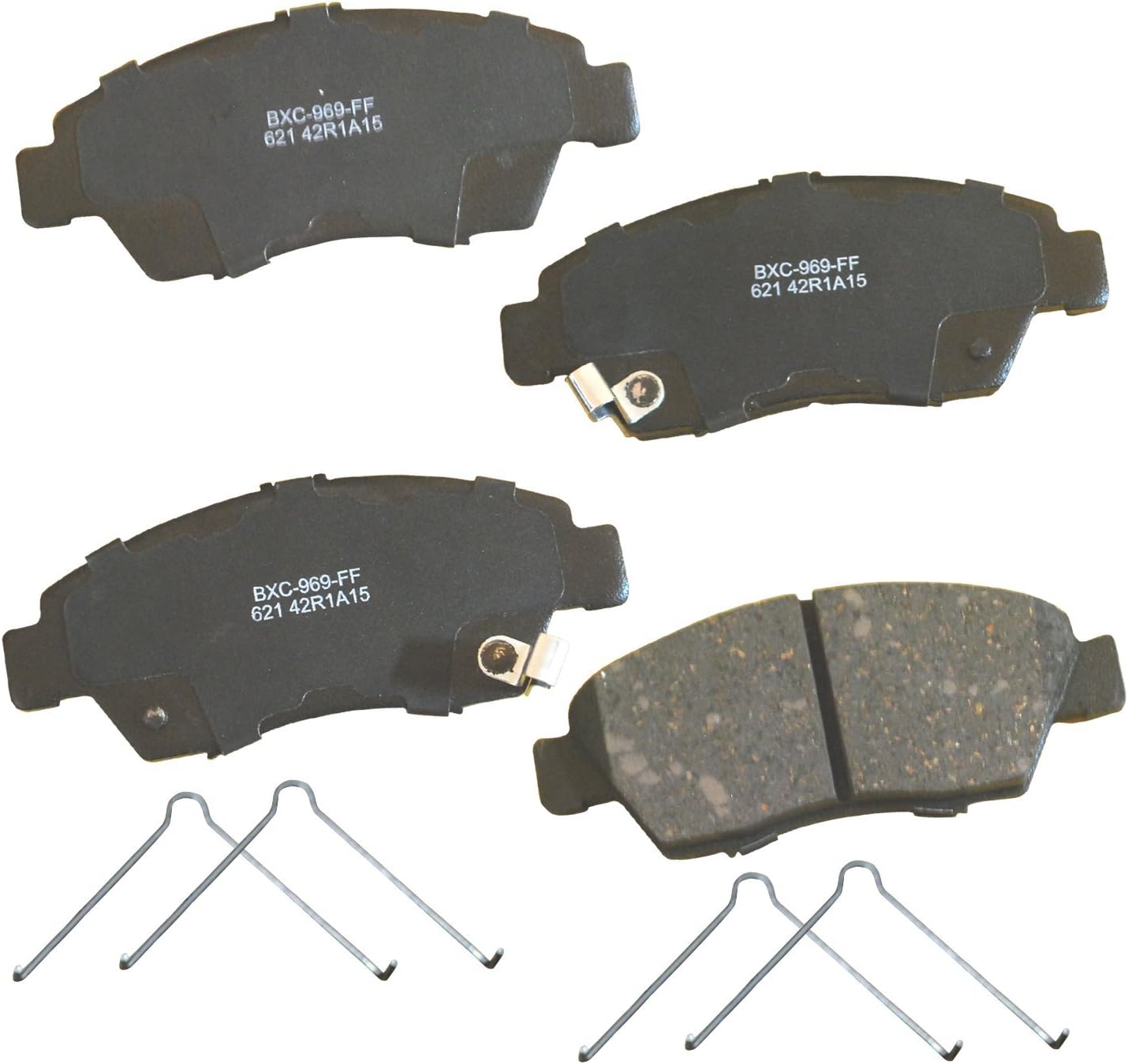
Bendix Premium SBC621 are ceramic front replacement brake pads designed to replace factory-spec pads on select Acura and Honda models including many Civic Hybrid years. They are used the same way as OEM pads: swap the worn fronts for these pads, transfer or replace hardware, and bed them in for quiet, consistent stopping. Notable features include a ceramic friction material that reduces dust and tends to run quieter, painted backing plates and included shims/clips in most listings to simplify installation. In everyday driving they deliver smooth, predictable pedal feel and strong stopping power for commuting and light city/highway use. Because they are vehicle-specific, fitment is straightforward when your model is listed, which reduces installation surprises. Limitations: these are not performance or heavy-duty pads for track use or towing, and compatibility excludes some regional Civic Hybrid variants so confirm fitment for your exact vehicle before buying.
Best for: Buyers who prioritize dependable, factory-like braking for daily driving and want a quiet, low-dust ceramic replacement that installs like the original parts.
Less Ideal for: Drivers who need high-temperature or heavy-duty stopping power for track days, towing, or aggressive driving should choose performance-oriented pads instead.
- Ceramic compound offers quiet operation and reduced brake dust compared with semi-metallic pads.
- Designed to match factory fit and function for listed Acura and Honda models, simplifying installation.
- Includes shims and clips in most kits to ease assembly and reduce noise.
- Durable construction with painted backing plates helps resist corrosion over time.
- Not intended for high-performance, heavy-load, or track applications where higher-temperature pads are needed.
- Fitment excludes certain regional Civic Hybrid models so it may not work for every Civic Hybrid variant.
Verdict: Choose these Bendix ceramic front pads when you want a reliable, quiet, factory-equivalent replacement for a Honda Civic Hybrid.
5. Detroit Axle Front Brake Rotor and Ceramic Pad Kit for 2006–2011 Honda Civic Hybrid
| Fitment | 2006–2011 Honda Civic Hybrid (Hybrid, Hybrid L) |
|---|---|
| Kit contents | 2 front rotors, 2 front ceramic pads, hardware, 10 oz cleaner, 12 oz brake fluid |
| Rotor feature | Vented with zinc plating |
| Pad material | 100% ceramic |
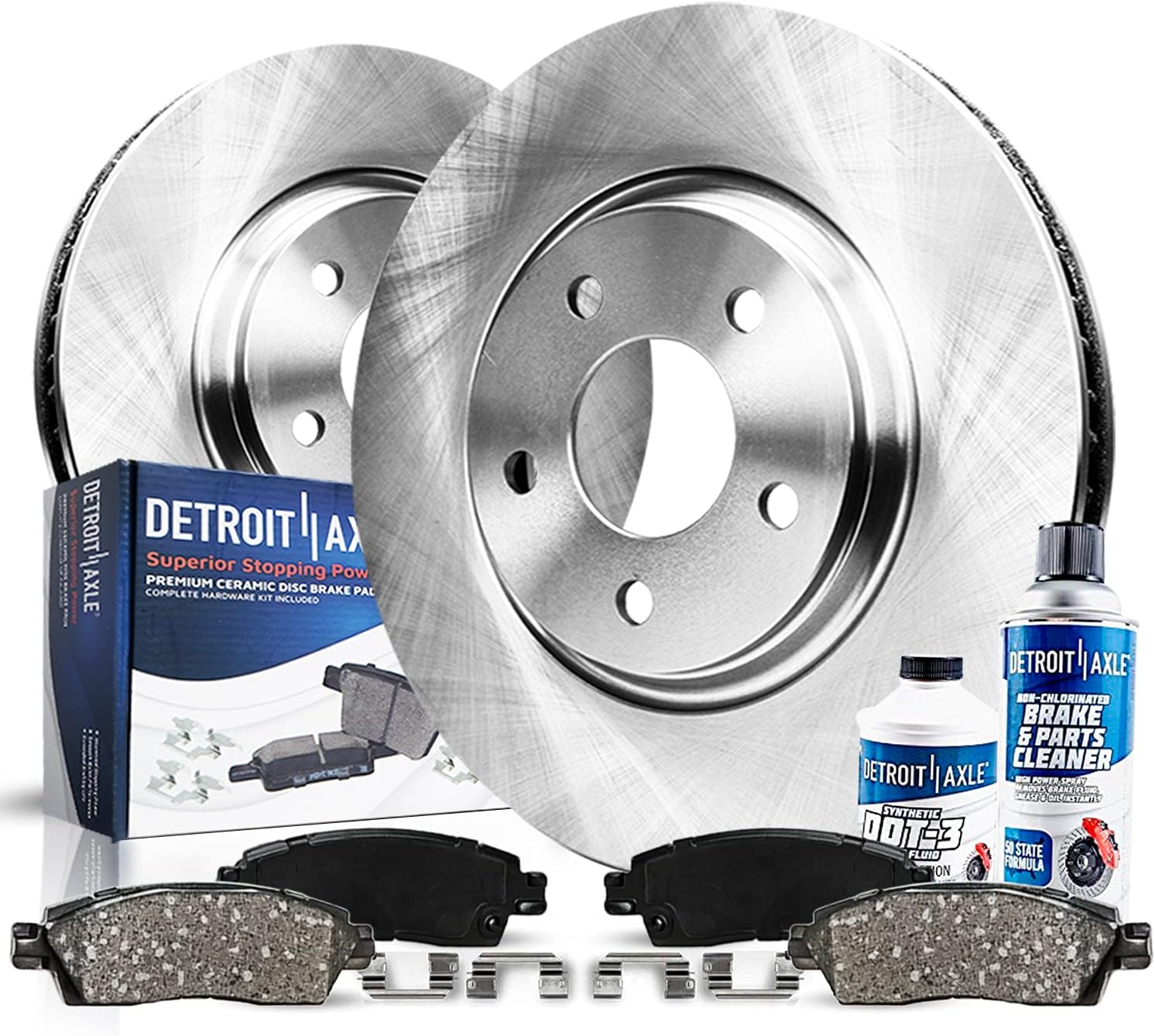
This Detroit Axle kit combines replacement front disc rotors and ceramic pads into a single package intended for 2006–2011 Honda Civic Hybrid (Hybrid, Hybrid L) vehicles. The rotors are vented and zinc plated to help with heat dissipation and corrosion resistance while the included ceramic pads offer low-noise, low-dust braking with no metallic content. The kit arrives with installation hardware plus a 10 oz brake cleaner and a 12 oz bottle of brake fluid so you have consumables needed for a basic pad and rotor job. Fitment uses machined locating holes to match factory mounting for bolt-on installation without modification. Practical benefits are straightforward: a ready-to-install set that reduces parts-sourcing time and aims to restore stopping performance with quieter operation and less wheel dust. Limitations to note are that the pads are ceramic, which usually gives quieter street performance but can wear faster under heavy track or towing use and may not provide the same initial bite as some semi-metallic options. Also this kit is for front brakes only, so rear service will require a separate purchase.
Best for: Buyers who want a single, confidence-inspiring replacement package that restores front braking on a Civic Hybrid with quiet, low-dust ceramic pads and minimal parts‑sourcing hassle.
Less Ideal for: Drivers who push their Civic on track, tow frequently, or prioritize maximum high-temperature friction should consider performance or semi-metallic brake options instead.
- Complete kit includes rotors, ceramic pads, hardware, brake cleaner, and brake fluid for a single front-axle service
- Vented rotors with zinc plating improve cooling and resist corrosion for longer visual life
- Ceramic pads produce lower noise and reduced wheel dust compared with many metallic pads
- Machined locating holes for direct-fit installation matching factory mounting
- Ceramic pads can offer less initial bite and may wear faster under high-temperature or heavy-load conditions
- Kit covers front brakes only so rear components must be purchased separately
Verdict: An all-in-one front brake kit that makes replacing rotors and ceramic pads on a 2006–2011 Civic Hybrid fast and tidy while delivering quieter, low-dust street braking.
6. Detroit Axle Front Drilled & Slotted Brake Kit with Ceramic Pads for 2006–2011 Honda Civic Hybrid
| Fitment | 2006–2011 Honda Civic Hybrid (Front) |
|---|---|
| Kit contents | 2 rotors, 2 ceramic pads, hardware, brake cleaner, brake fluid |
| Rotor type | Drilled and slotted, vented |
| Pad material | 100% ceramic |
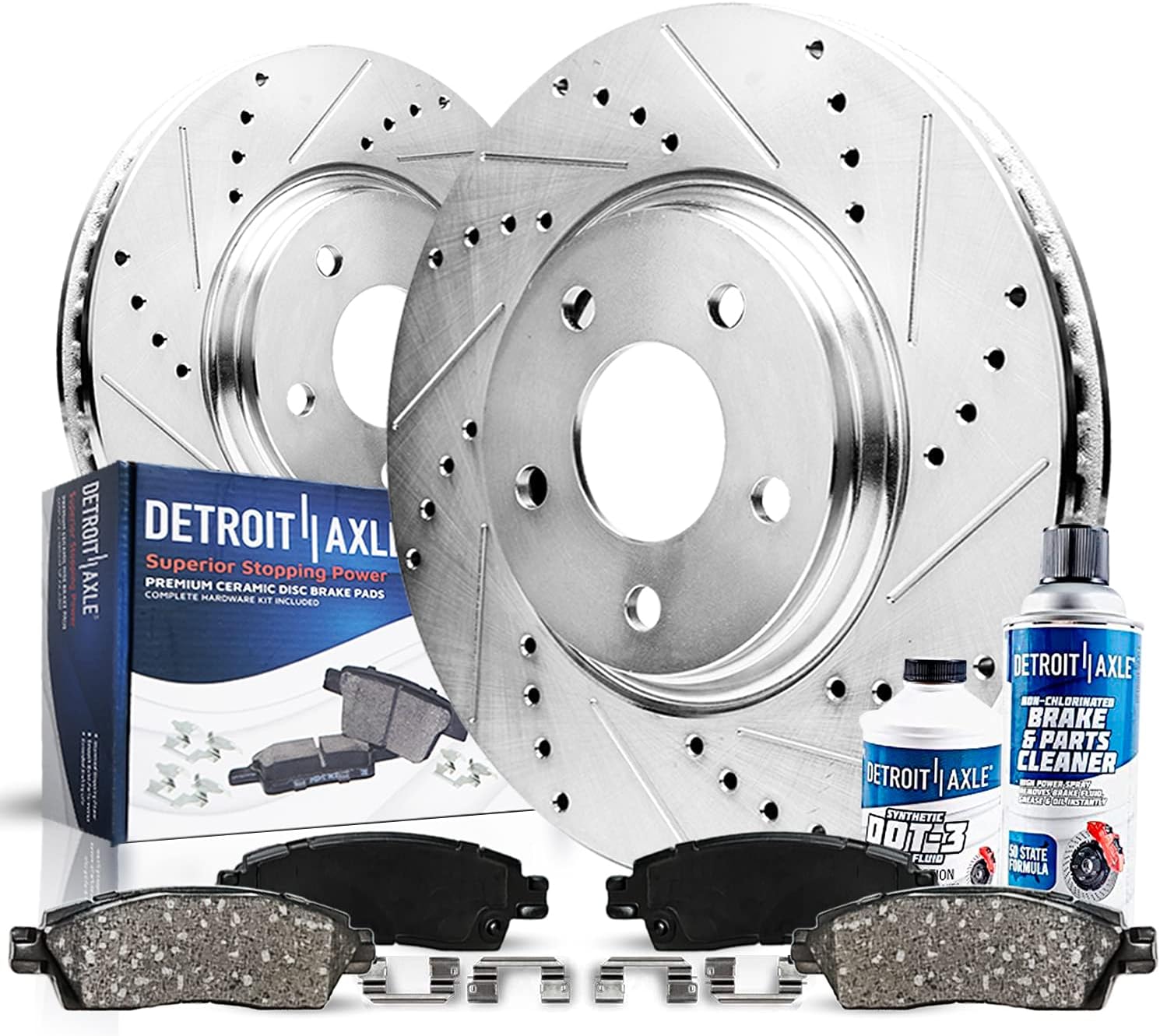
This Detroit Axle front brake kit replaces the Civic Hybrid's front rotors and pads with drilled and slotted rotors plus ceramic pads, and includes brake cleaner and a small bottle of brake fluid for a one-stop refresh. The rotors are vented and zinc plated for corrosion resistance and faster cooling, while the ceramic pads are metal-free to reduce dust and cabin noise. Installation is straightforward for a competent DIYer or a shop because the rotors are machined to align with factory locating holes and hardware is included. In real-world driving the kit should restore firm, predictable stopping power and quieter braking compared with metallic pads, and the drilled/slotted surface helps shed heat under heavier use. Limits to expect are that ceramic pads give slightly less initial bite than some performance compounds and drilled rotors may be more vulnerable to cracking under extreme track use; this kit is aimed at street driving and everyday commuting rather than motorsport. For someone who wants a near-factory feel with easier maintenance and lower dust, this kit covers the essentials without extra complexity.
Best for: A buyer focused on reliable, low-maintenance street braking for a Honda Civic Hybrid who wants a direct replacement that reduces dust and noise and is easy to install or have installed by a shop.
Less Ideal for: Drivers who prioritize maximum track performance, aggressive initial bite, or frequent high-temperature braking sessions should consider performance-oriented rotors and pads instead.
- Complete kit includes two front drilled and slotted rotors, ceramic pads, installation hardware, brake cleaner, and brake fluid
- Zinc plating on rotors resists corrosion and helps keep wheel areas cleaner
- Ceramic pads produce lower dust and quieter operation compared with metallic pads
- Rotors are vented and machined to factory locating holes for straightforward, bolt-on fitment
- Ceramic pads typically provide slightly less initial bite than semi-metallic performance pads
- Drilled rotors are not intended for extreme track use and can be more susceptible to cracking under repeated high-heat cycling
Verdict: Choose this kit if you want a factory-style, low-dust, quiet front brake replacement that restores dependable street stopping for a 2006–2011 Honda Civic Hybrid.
Choosing the Right Honda Civic Hybrid Brake Pads: Key Factors to Consider
Material Type and Friction Characteristics
Pad material determines initial bite, noise, dust, and longevity. Organic and ceramic compounds tend to be quieter and produce less rotor wear, which suits the Civic Hybrid's city-focused driving pattern where low noise and smooth modulation matter.
Semi-metallic and performance-oriented materials offer stronger bite and heat resistance but can be louder and increase rotor wear. For a Civic Hybrid, choose a material that matches your driving: quiet, low-dust ceramics for daily commuting or a higher-friction compound if you frequently carry heavy loads or drive aggressively.
Wear Life and Daily Driving Duty Cycle
How long pads last depends on material, driving habits, and the Civic Hybrid's regenerative braking reducing mechanical brake use. Pads optimized for long life will often have lower initial bite and more forgiving wear patterns, which can be beneficial if you do mostly urban driving with frequent light braking.
Conversely, if your driving includes long downhill stretches or towing accessories, prioritize compounds with better sustained friction and slower wear under heat. Review expected thickness and warranty guidance from manufacturers to estimate replacement intervals.
Noise, Vibration, and Harshness (NVH)
Brake noise and vibration are common concerns in compact hybrids, where lighter vehicle mass can make clicks and squeals more noticeable. Good pad pairing with shims, chamfers, and quality backing plates reduces squeal and vibration.
Look for pads that include anti-squeal shims or that are specified to minimize NVH. Installation technique and proper bedding also influence noise outcomes, so factor in whether the pads come with hardware or require additional parts to control NVH.
Rotor Compatibility and Wear
Some pad compounds are harsher on rotors and can accelerate scoring or thinning. For Civic Hybrid owners who want to preserve original rotors, select compounds labeled rotor-friendly or ceramic blends that produce less abrasive dust.
If you are replacing rotors at the same time, you can opt for higher-friction compounds safely, but when reusing existing rotors prioritize materials that avoid aggressive wear and reduce resurfacing frequency.
Fitment and Ease of Installation
Correct fitment to the Civic Hybrid caliper and hardware is essential for safe braking and even wear. Pads that match the vehicle configuration reduce installation time and ensure proper engagement with caliper pistons and anti-rattle clips.
Consider whether the pads include necessary hardware, shims, or instructions. Ease of access to the front and rear calipers and whether the parking brake system requires specific rear pad types matter for a smooth swap.
Brake Dust and Cleanliness
Brake dust affects wheel appearance and cleaning frequency. Ceramic and low-dust compounds reduce visible residue on alloy wheels, which many Civic Hybrid owners prefer for aesthetic reasons.
If you keep a close eye on wheel condition, choose pads formulated for low dust. Keep in mind that very low-dust compounds can trade off slightly in initial bite compared with more abrasive mixes.
Understanding Hybrid Brake Behavior
The Honda Civic Hybrid combines regenerative braking with conventional friction brakes. That means the mechanical brake system often sees lighter loads in normal commuting but still needs predictable feel when the friction brakes engage. Pads that deliver consistent pedal modulation at low temperatures are particularly valuable for hybrids.
Because regenerative systems reduce everyday wear, pad selection should anticipate longer service intervals and occasional use under higher thermal stress. Prioritize compounds that balance quiet operation with stable friction when the mechanical brakes do the work.
- Regenerative braking reduces average pad duty but not peak demand.
- Low-temperature bite is important for short trips and stop-and-go traffic.
- Hybrid owners may go longer between pad swaps, so longevity matters.
Front Vs Rear Brake Pad Roles on the Civic Hybrid
Front pads handle most of the braking load due to weight transfer under deceleration, so choose front compounds with reliable stopping power and balanced wear. Rear pads complement the front but often see less stress on a hybrid because regenerative braking can reduce rear caliper activity.
When planning maintenance, inspect both axles. Rear pads and hardware condition affect parking brake performance and overall braking balance, so replacing rear pads along with fronts can be wise if wear is uneven.
- Front pads: primary stopping force and most wear.
- Rear pads: balance and parking brake function.
- Inspect hardware and caliper slides for smooth operation.
Managing Brake Noise and Dust
Brake noise is one of the top complaints after a pad change. Look for pads with properly bonded shims, chamfers, and smooth backing plates to reduce squeal. Proper bedding-in reduces noise and helps pads reach their ideal friction profile.
Brake dust levels vary by compound. Ceramic blends typically leave finer, lighter-colored dust that is easier to clean from wheels. Regular inspection and cleaning help preserve wheel finish and reveal early signs of uneven wear.
- Use anti-squeal shims and proper torque on caliper bolts.
- Perform a controlled bedding routine after installation.
- Clean wheels periodically to check for unusual dust patterns.
Installation Tips and What To Inspect
Before installing new pads, inspect caliper pistons, slide pins, and rotor surface condition. Corroded hardware or sticky slide pins cause uneven wear and noise, so service these parts as needed. Lubricate contact points with the correct high-temperature brake grease during reassembly.
Verify pad orientation, fitment, and that any wear sensors are correctly positioned. If the pads do not include hardware, reuse good-quality clips and shims or replace them if corroded. After installation, follow a bedding procedure and recheck torque after a short break-in mileage.
- Check rotor thickness and surface for scoring before reuse.
- Replace or clean slide pins and lubricate contact points.
- Confirm parking brake operation after rear pad work.
When To Consider Upgrading Other Brake Components
If pads are wearing unevenly, producing vibration, or causing rotor damage, consider resurfacing or replacing rotors and renewing caliper hardware. Upgrading to better-quality rotors or new caliper hardware can improve pedal feel and pad life.
Also inspect wheel bearings and suspension components if you notice abnormal wear patterns, since these can influence pad contact and braking performance. For Civic Hybrid owners who retain the vehicle long term, investing in quality rotors and hardware can reduce maintenance frequency.
- Resurface or replace rotors that are scored or below thickness spec.
- Replace worn hardware to ensure even pad travel.
- Evaluate related suspension parts when wear is asymmetric.
Matching Pad Choice to Driving Style
If your Civic Hybrid is primarily a commuter, prioritize quiet operation, low dust, and longevity. For drivers who occasionally carry heavier loads or frequently drive hilly routes, select pads with stronger sustained friction and better heat tolerance.
Consider how often you drive in stop-and-go traffic versus highway cruising. Higher mileage on short trips benefits from pads with reliable cold bite, while highway-heavy use demands materials that resist fade over repeated braking events.
- Commuter focus: quiet, low dust, long life.
- Mixed driving: balanced compound for heat tolerance and comfort.
- Occasional spirited driving: stronger friction but expect more dust.
Still looking for the perfect fit?
Select your Honda Civic configuration to see the most relevant Brake Pads recommendations
How We Chose the Best Honda Civic Hybrid Brake Pads
We focused on fitment, braking performance, durability, material type, and installation practicality when building this list of options for the Honda Civic Hybrid. Primary evaluation criteria included friction consistency under normal city and highway use, pad material and backing plate quality, resistance to noise and vibration, and expected wear characteristics specific to hybrid brake duty cycles.We also considered rotor friendliness to avoid excessive rotor wear, ease of installation with the Civic Hybrid's caliper geometry, and compatibility with original equipment hardware and sensor provisions. Heat tolerance and fade resistance were included to account for occasional spirited driving or mountain descents.Excluded items were pads designed solely for track use, aggressive compounds that require upgraded rotors or calipers, and options that do not list explicit fitment for the Civic Hybrid configuration. Our process prioritized real-world usability for daily drivers while flagging tradeoffs between longevity and initial bite.
Our full evaluation process is outlined in our review methodology.
FAQ
How often should I check brake pads on a Civic Hybrid?
Check pads visually every 6 months or at every oil change interval. Because regenerative braking reduces wear, physical inspection is still important to catch uneven wear, contaminant buildup, or thin pads before they affect stopping performance.
Can I use ceramic pads on my Civic Hybrid?
Yes. Ceramic pads are a common choice for Civic Hybrid owners seeking quieter operation and less dust. Keep in mind they may offer slightly different initial bite compared with other compounds, so pick a ceramic formula designed for everyday street use.
What are common brake pad wear symptoms to watch for?
Listen for squealing or grinding noises, notice longer stopping distances, or feel vibration through the pedal. Visual signs include thin lining material or uneven thickness across the pad face. Address these symptoms promptly to prevent rotor damage.
Should I replace front and rear pads at the same time?
It depends. Front pads typically wear faster and may need replacement sooner than rears. If rear pads show substantial life left, you can replace fronts only, but inspect rears for even wear and ensure parking brake operation remains correct.
How can I reduce brake pad noise after installation?
Use quality shims and chamfered pads, apply proper high-temperature grease on contact points, and follow a bedding-in procedure. Tighten caliper and wheel fasteners to spec and inspect hardware for wear that can cause vibration.
What pad thickness spec should I be concerned about?
Manufacturers list minimum thickness for safe operation. When lining material approaches the minimum, plan replacement. Also watch for uneven thickness across the pad, which can indicate caliper problems or hardware issues.
Final Verdict
Choosing the right brake pads for a Honda Civic Hybrid means balancing quiet operation, predictable pedal feel, and reasonable wear life given reduced mechanical brake duty from regenerative braking. Prioritize pad materials and compounds that match your driving patterns and preserve rotor condition.Focus on fitment, NVH control, and rotor friendliness when making a selection. With those priorities in mind you can pick pads that deliver reliable stopping performance and sensible maintenance intervals for your Civic Hybrid.
Explore More:
- Check out all Honda Civic parts & accessories
- Explore Brake Pads Maintenance & Repair Guides
- Explore Brake System
- Browse all Auto Parts
