

Note: This article contains affiliate links. If you click on these links and make a purchase, I may earn a small commission at no extra cost to you. This helps support my research and content. Read my full affiliate disclosure here.
Picking the right brake pads for a Honda Civic affects safety, comfort, and routine maintenance costs. The pads you choose determine pedal feel, stopping distance, dust levels, and how often you need service.This guide shortlists the top options for Honda Civic brake pads and explains the evaluation criteria we used, including material composition and braking performance. Read on to understand which attributes matter most and why these choices made our list.
Looking for other parts? See all Honda Civic parts & accessories.
Top Picks at a Glance
| Best Reviewed A top-rated pick with lots of positive feedback | Bosch QuietCast BC537 Rear Ceramic Brake Pad Set |  |
| Most Popular A crowd favorite that many people choose with confidence | Bendix Premium Ceramic Rear Brake Pads (vehicle-specific fit) |  |
| Best Quality Built to a higher standard if you want something more solid | PowerStop Z17 Front Brake Kit — Rotors and Ceramic Pads (KOE1043) |  |
| Best Budget The cheapest option that still gets the job done reliably | Haruma D465A Front Ceramic Brake Pads Kit (4 pcs) |  |
| Most Sold A high-volume bestseller chosen again and again | Bosch QuietCast Premium Ceramic Front Brake Pad Set (BC914) |  |
| Best Value for Money The sweet spot between price and what you get | Bendix Premium SBC621 Ceramic Front Brake Pads |  |
| Best Overall The best all-around choice for most situations | Detroit Axle Front Brake Kit for 2006–2011 Honda Civic (Rotors + Ceramic Pads) |  |
1. Bosch QuietCast BC537 Rear Ceramic Brake Pad Set

| Brand | Bosch |
|---|---|
| Material | Ceramic |
| Auto Part Position | Rear |
| Specification Met | OEM |
The Bosch QuietCast BC537 is a rear ceramic brake pad set engineered to replace factory rear pads on compatible Honda and Acura models. It is typically installed as a direct, vehicle-specific replacement on one axle and includes hardware where applicable and lubricant for sliding contact points. Notable features include Bosch Molded Shim Technology with pre-attached multilayer rubber-core shims to reduce noise and improve corrosion resistance, a ceramic friction compound formulated for strong stopping power with low dust, and powder-coated backing plates to limit rust. In practical use the pads deliver quieter stops and cleaner wheels compared with many budget alternatives, and the included shims and lubricant make installation smoother for a DIYer or technician. Limitations are that fitment depends on exact trim and year so verification is required, and users replacing only one axle should match to the front for balanced wear; there are no performance upgrades for heavy-duty or track use. These are a reliable, near-factory replacement aimed at everyday driving needs.
Best for: Reliability-focused buyers who prioritize quiet, low-dust, factory-quality replacements for daily-driven Hondas and want a durable, hassle-minimizing service item.
Less Ideal for: Drivers seeking track-oriented, heavy-duty, or high-temperature braking upgrades should choose a performance-oriented pad instead.
- Pre-attached multilayer rubber-core shims reduce noise and improve corrosion resistance.
- Ceramic friction material offers strong stopping power with low brake dust.
- Powder-coated backing plates help resist rust for longer service life.
- Includes hardware kit where available and synthetic lubricant for smoother installation.
- Fitment is vehicle- and trim-dependent so you must verify exact compatibility before buying.
- Not intended for high-performance or heavy-load applications where upgraded compounds are preferable.
Verdict A quiet, low-dust ceramic rear pad that delivers near-factory braking and durability for reliability-minded Honda owners.
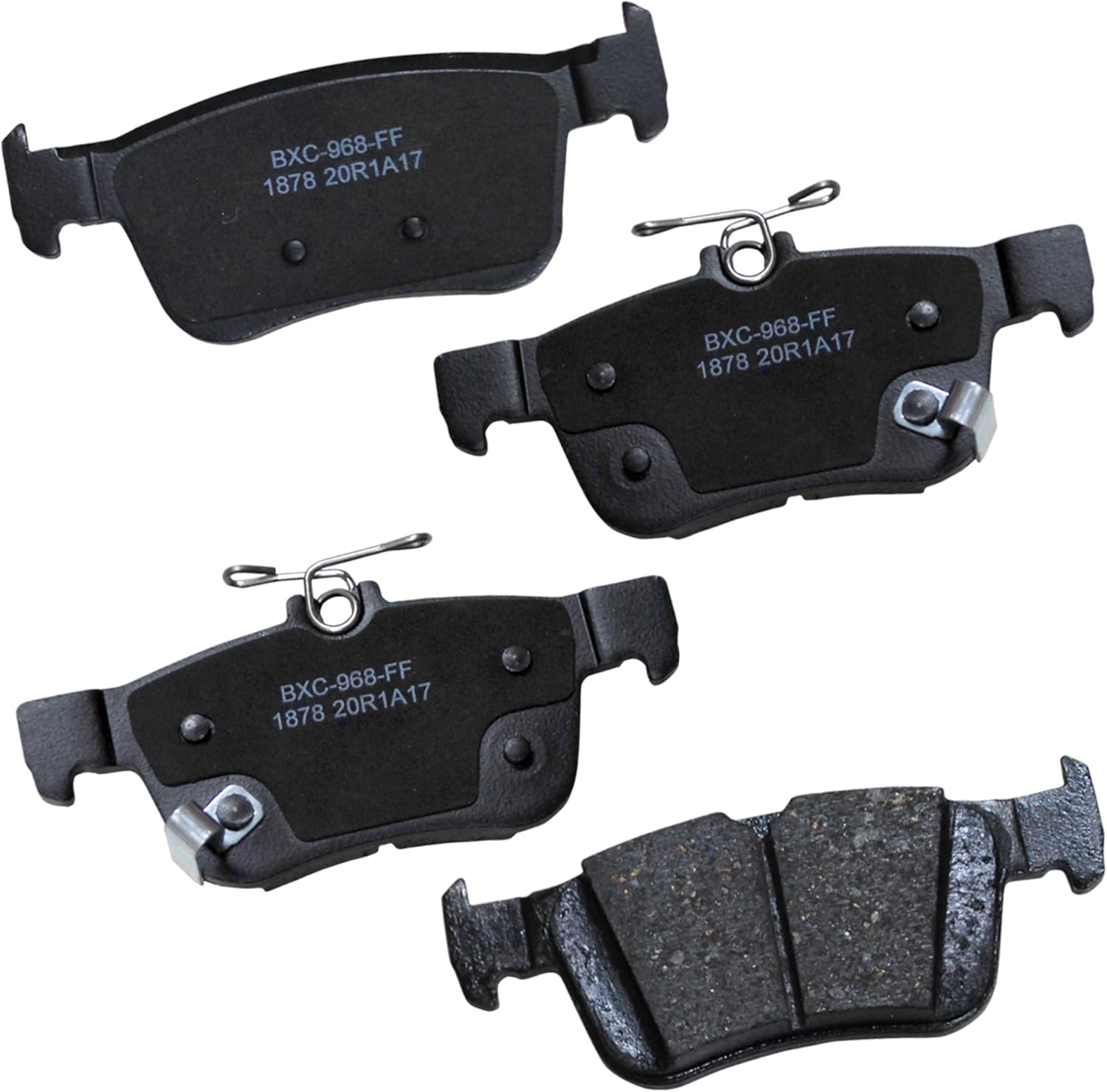
2. Bendix Premium Ceramic Rear Brake Pads (vehicle-specific fit)
| Material | Ceramic |
|---|---|
| Auto Part Position | Rear |
| Specification Met | OEM |
| Automotive Fit Type | Vehicle Specific Fit |
These Bendix Premium ceramic rear brake pads are a direct replacement designed to match factory fit, form, and function for applicable Honda Civic years. They are used as a like-for-like service part for rear disc brakes and typically install the same way as OEM pads, with the included hardware simplifying DIY swaps. Notable features include a ceramic friction material that reduces dust and noise compared with semi-metallic pads and machined exterior faces for consistent bedding. The ceramic compound and manufacturing focus on resisting wear and minimizing brake fade during everyday driving, making them well suited to commuting and city use. Some users report quiet operation and easy installation, though ceramic pads can offer a slightly different pedal feel than other materials and are not optimized for heavy track use. If you expect aggressive repeated high-speed stops you may prefer a higher-performance compound, but for routine Civic driving these pads balance quiet, low dust, and predictable stopping power.
Best for: A convenience-driven buyer who wants a low-dust, quiet rear pad that installs like a factory replacement and keeps a daily-driver Honda Civic performing reliably between services.
Less Ideal for: Drivers who regularly do track days, heavy towing, or aggressive driving should choose a performance-oriented pad designed for higher temperatures and extreme stopping demands.
- Vehicle-specific design for a direct fit on compatible Civic rear calipers
- Ceramic material reduces brake dust and tends to run quieter than many semi-metallic pads
- Includes hardware and machined surfaces to simplify installation and improve initial bedding
- Manufactured to match factory-spec fit and function for routine driving
- Ceramic formulation is not intended for high-heat, track-style braking where performance compounds perform better
- Only rear pad set is listed so front/rear replacement planning may be required
Verdict A factory-fit ceramic rear pad that delivers quiet, low-dust braking for everyday Honda Civic use but is not intended for high-heat performance applications.
3. PowerStop Z17 Front Brake Kit — Rotors and Ceramic Pads (KOE1043)

| Position | Front |
|---|---|
| Brake Pad Type | Z17 Ceramic |
| Fit Type | Vehicle Specific Fit |
| Manufacturer | POWERSTOP |
| Exterior | Machined |
This PowerStop Z17 front brake kit replaces the front rotors and pads with a bolt-on package intended for daily-driven Hondas and similar cars. The kit includes low-dust Z17 ceramic pads that are chamfered and slotted for quick bedding, two mill-balanced replacement rotors, stainless installation hardware, and shims. In real use the pads run quietly and produce less wheel dust than semi-metallic options, delivering confident stopping for street driving and spirited commuting. The rotors are precision-milled to minimize vibration and provide a smooth pedal feel after installation. Installation is straightforward for a DIYer or shop since the kit supplies the necessary hardware and a break-in guide, though some reviewers swapped or modified included clips when fitment differences occurred. Limitations to consider are that ceramic pads sacrifice a bit of initial bite compared with aggressive performance compounds and a small number of buyers reported fitment mismatches on certain model years, so confirming vehicle fit is important before ordering.
Best for: Performance-oriented buyers who prioritize quiet, low-dust braking and a factory-style upgrade for street and daily spirited driving.
Less Ideal for: Drivers who need maximum track-capable stopping power or very aggressive initial bite should choose a more track-focused pad compound instead.
- Complete front kit with pads, two rotors, shims, and stainless-steel hardware for one purchase
- Z17 ceramic pads offer low dust and quiet operation for daily driving
- Mill-balanced replacement rotors help reduce vibration and improve pedal feel
- Bolt-on design and included hardware simplify DIY or shop installation
- Ceramic compound has less initial bite than aggressive performance pads
- Some buyers reported mismatched hardware or rotor bolt patterns on specific model years
Verdict A convenient, performance-minded street kit that delivers quiet, low-dust braking and smooth rotor performance but check fitment and expect subdued initial bite compared with aggressive pads.
4. Haruma D465A Front Ceramic Brake Pads Kit (4 pcs)

| Material | Ceramic |
|---|---|
| Auto Part Position | Front |
| Specification Met | OEM |
| OEM Part Number | D465A |
These Haruma front ceramic brake pads are a budget-focused, vehicle-specific replacement for Honda Civic front brakes. They install as a direct fit for compatible Civic model years and come with lubricant and cooling grooves intended to help with heat dissipation and reduce dust. In everyday use they deliver quiet, stable stopping and the ceramic compound keeps wheel grime lower than some semi-metallic pads. The kit is useful for DIYers who want an inexpensive, OEM-matched replacement that restores confident braking without aftermarket tweaks. Expect typical ceramic behavior: smooth and quiet braking with modest dust and less rotor wear, but not the same high-temperature fade resistance as performance pads under repeated heavy track use. Haruma also notes customer support and a three-year after-sales service promise which can be helpful if fitment issues appear. If you want the cheapest swap that brings Civic braking back to normal with low dust and minimal noise, this is a practical choice; if you frequently tow, carry heavy loads, or drive aggressively, a performance-oriented pad would be safer.
Best for: Budget-conscious Civic owners who prioritize a low-cost, quiet replacement that restores everyday braking performance and minimizes wheel dust.
Less Ideal for: Drivers who push their Civic hard on track days, tow frequently, or require heavy-duty fade resistance should choose a performance-oriented brake pad instead.
- Vehicle-specific fit for Honda Civic front brakes simplifies installation and reduces adjustment
- Ceramic compound produces lower dust than many semi-metallic pads, keeping wheels cleaner
- Designed for quiet, stable braking in everyday driving conditions
- Includes lubricant and cooling grooves to help with heat management and pad seating
- Ceramic formulation is less suited to repeated high-heat, track-style braking compared with performance pads
- Limited customer feedback volume available despite high average rating
Verdict A cost-effective, low-dust ceramic front pad option that restores quiet, everyday braking for Honda Civic owners who want a budget replacement.
5. Bosch QuietCast Premium Ceramic Front Brake Pad Set (BC914)

| Material | Ceramic |
|---|---|
| Auto Part Position | Front |
| Specification Met | OEM |
| Manufacturer | Bosch Automotive |
These Bosch QuietCast front brake pads are a vehicle-specific ceramic replacement engineered to deliver quiet stops and reduced dust on compatible Honda Civic and related models. They install like a direct factory replacement and come with pre-attached multilayer rubber-core shims that help cut vibration and noise without extra insulation work. Bosch includes a hardware kit where applicable and synthetic lubricant to ease slider movement, which simplifies a DIY brake job or makes a technician's job faster. The powder-coated backing plates resist corrosion and the pads include OE-style slots and chamfers for predictable fit and braking feel. Some users report the supplied hardware clips do not always match older or certain trim variants, so you may need to reuse OEM clips in those cases. Fitment depends on year and trim, so confirm compatibility before ordering. For a risk-averse buyer who prefers factory-quality replacements, these pads offer proven performance and quieter operation but watch the hardware fitment on edge-case vehicle years.
Best for: Risk-averse mainstream buyers who prioritize a proven, factory-quality replacement and quiet, low-dust braking for routine street driving.
Less Ideal for: Drivers seeking high-performance track brake pads or specialty materials optimized for extreme thermal loads should consider performance-specific options instead.
- Factory-style multilayer rubber-core shims reduce noise and vibrations
- Ceramic friction material formulated for strong stopping power with low dust
- Powder-coated backing plates improve corrosion resistance and longevity
- Includes hardware kit (where applicable) and synthetic lubricant to streamline installation
- Hardware clips in the kit have been reported to mismatch on some model years requiring reuse of OEM clips or minor modification
- Fitment varies by trim and year so buyer must verify vehicle compatibility before purchase
Verdict A reliable, factory-quality ceramic front pad set that delivers quiet, low-dust braking for Honda Civic owners who want a conservative, OEM-style replacement.
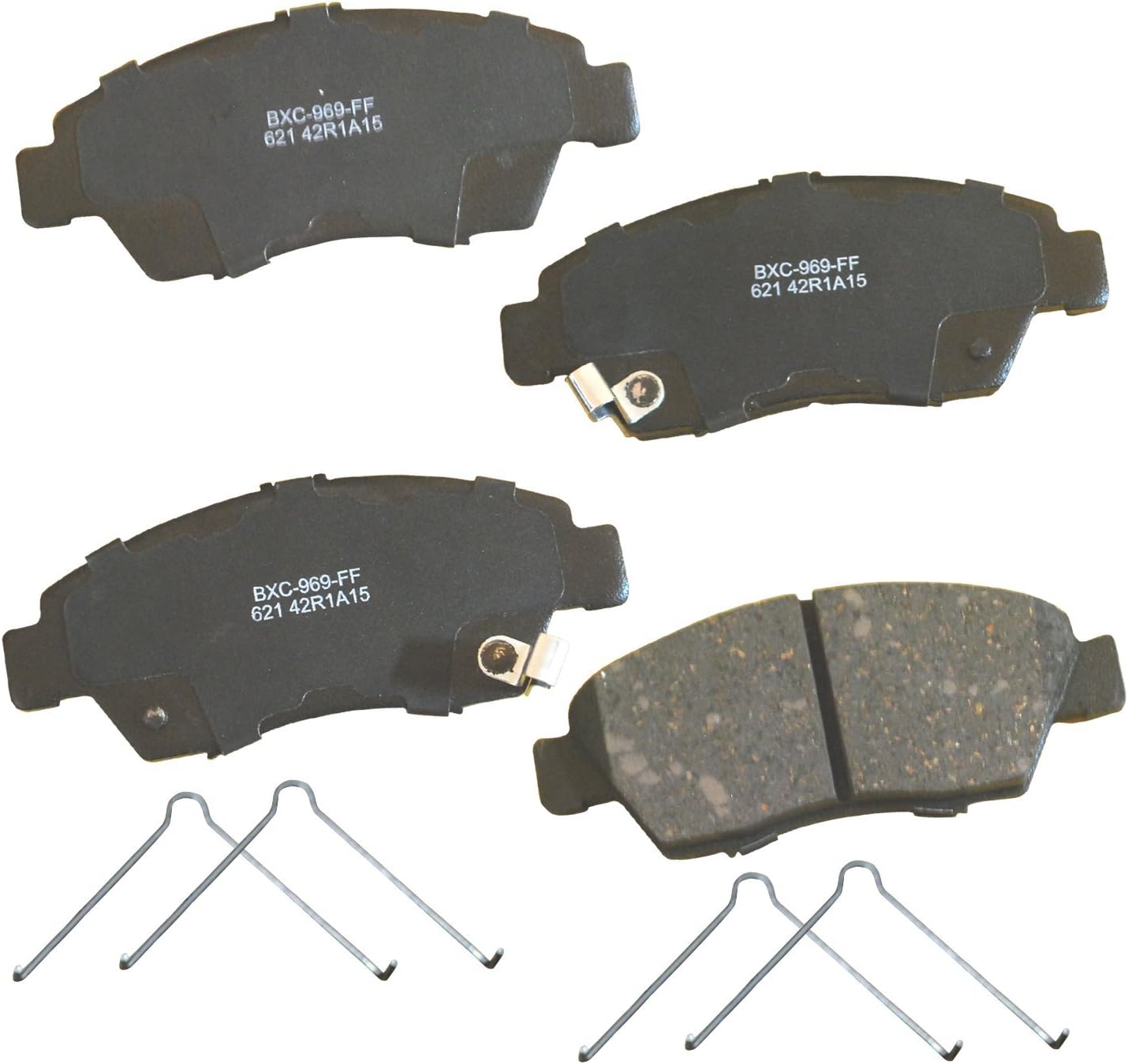
6. Bendix Premium SBC621 Ceramic Front Brake Pads
| Material | Ceramic |
|---|---|
| Auto Part Position | Front |
| Specification Met | OEM |
| OEM Part Number | 45022S5AJ00 |
These Bendix Premium SBC621 pads are a direct-fit ceramic front replacement designed to replicate factory fit, form, and function for compatible Acura and Honda models. They are used as a daily-driver upgrade or routine replacement and install like a standard OEM-style pad set. Notable features include ceramic friction material for quieter operation and lower dust, painted backing plates, and manufacturer-listed OEM-equivalent part numbers for easy cross-reference. In practice the pads deliver smooth, confident stopping with minimal squeal and reduced rotor contamination compared with some semi-metallic options, and many users report an easy install. The pads are aimed at longevity and corrosion resistance but may be slightly softer than high-performance compounds under aggressive track use, so fade resistance at sustained high temperatures will be limited compared with performance pads. Also confirm exact Civic Hybrid model fitment before buying because compatibility is vehicle-specific.
Best for: Practical optimizers who prioritize a quiet, low-dust, factory-quality replacement that balances cost and everyday performance for a Honda Civic Hybrid.
Less Ideal for: Drivers who regularly push brakes to extreme temperatures or need race-track level fade resistance should choose a performance-oriented compound instead.
- Ceramic formulation reduces brake dust and tends to run quieter than many semi-metallic pads
- Made to match factory fit and function for the listed vehicle applications for straightforward replacement
- Painted backing plates and corrosion-resistant construction improve longevity
- Includes shims and hardware compatibility noted by multiple users for easier installation
- Not formulated for sustained high-temperature performance so not ideal for track or heavy-duty towing use
- Compatibility is vehicle-specific so you must confirm exact Civic Hybrid model fitment before purchase
Verdict A practical, low-dust ceramic front pad that replicates factory fit and delivers solid everyday braking at a good value for Civic Hybrid owners.
7. Detroit Axle Front Brake Kit for 2006–2011 Honda Civic (Rotors + Ceramic Pads)

| Compatible vehicles | 2006–2011 Honda Civic (DX, EX, LX; Coupe, Sedan) |
|---|---|
| Kit contents | 2 front rotors, 2 front ceramic pads, hardware included |
| Position | Front |
| Exterior | Zinc |
This Detroit Axle front brake kit supplies everything needed to replace the front rotors and pads on 2006–2011 Honda Civic DX/EX/LX models. The package includes two disc rotors, two ceramic brake pads and the hardware required for installation, so it is useful for a complete front brake job at home or in a shop. The rotors are advertised to meet or exceed factory fit and finish, and the ceramic pads are quieter and wear more smoothly than many metallic aftermarket pads, which helps reduce vibration and improve pedal feel. Home mechanics will appreciate the included hardware and generally direct fitment, though installing the stainless slider clips can be fiddly and may take extra time. Some users report higher-than-expected brake dust and occasional fitment issues with slide hardware on other models, so plan to inspect components before installation. For routine maintenance on a Civic this kit balances value, convenience, and factory-style performance, making it a sensible option for most owners who want a full front brake refresh.
Best for: Balanced owners who want a straightforward, factory-quality front brake refresh for a 2006–2011 Honda Civic and value convenience, reliability, and predictable stopping performance.
Less Ideal for: Drivers seeking ultra-low-dust or high-performance track pads should consider specialty compounds instead, and those unwilling to spend time on careful hardware installation may prefer professional fitting.
- Complete front kit with rotors, ceramic pads, and installation hardware for one-stop replacement
- Engineered to match factory fit and finish for 2006–2011 Honda Civic front brakes
- Ceramic pads deliver quieter, smoother stopping and typically longer pad life than generic metallic pads
- Includes hardware which simplifies installation for home mechanics
- Some users report noticeable brake dust from the pads
- Installation of stainless slider clips can be awkward and time consuming for DIYers
- A few reviewers noted fitment problems with slide components on non-Civic applications
Verdict A complete, value-oriented front brake kit that delivers factory-style fit and quieter ceramic braking for 2006–2011 Honda Civic owners, with minor dust and hardware installation caveats.
Choosing the Right Honda Civic Brake Pads: Key Factors to Consider
Pad Material and Friction Level
Pad material determines how the pads bite and how they behave under different temperatures. Organic formulations are often quieter but may wear faster, while semi-metallic compounds provide stronger initial bite and heat tolerance for spirited driving.
Material and friction level also influence modulation and pedal feel. Higher-friction compounds can shorten stopping distances but may increase rotor wear and noise. When choosing for a Honda Civic, balance stopping power with expected driving style to match the material's friction characteristics to your needs.
Heat Resistance and Fade Performance
Brake pads must resist glazing and loss of performance when exposed to repeated heavy braking. Heat resistance matters if you drive in hilly areas, tow light loads, or often perform hard stops, because insufficient fade resistance leads to longer stopping distances over time.
Look for pads with formulations and backing plate construction designed to dissipate heat and resist fade. Consistent braking under elevated temperatures preserves safety and reduces the chance of needing premature replacement due to degraded friction material.
Noise, Vibration, and Harshness
Some pads produce audible squeal or vibration that can be annoying and may signal uneven wear or poor bedding. Noise and vibration are influenced by pad compound, backing plate design, shims, and how well the pad interfaces with the caliper.
For daily-driven Civics, quieter pads with proper anti-rattle features tend to offer a more comfortable experience. Consider pads with noise-dampening shims and proven compound formulations to minimize squeal without sacrificing braking performance.
Dust Generation and Rotor Condition
Brake dust affects wheel appearance and, over time, can impact rotor surface if abrasive. Some compounds create fine dust that spreads across wheels, while others generate minimal residue. Dust level correlates with material composition and how the pads wear.
If maintaining clean wheels is a priority, choose lower-dust formulations. Also consider rotor condition and compatibility, because aggressive compounds can accelerate rotor wear and increase the need for resurfacing or replacement.
Fitment and Ease of Installation
Accurate fitment to the Honda Civic's caliper and carrier is essential for proper function and safety. Pads designed for correct alignment reduce the risk of uneven wear and ensure consistent braking force across the pad surface.
Ease of installation matters for owners who perform maintenance themselves. Pads that include clear fitment notes, appropriate hardware, and compatible backing plate dimensions simplify installation and reduce the chance of installation errors that can affect braking performance.
Wear Life and Maintenance Intervals
Expected wear rate determines how often you will replace pads and affects long-term maintenance planning. Heavier materials or more aggressive compounds may offer better performance but can shorten service intervals.
Consider driving habits, commute distance, and typical load when estimating wear life. A balance between longevity and braking characteristics helps you pick pads that match your maintenance preferences and keep replacement intervals predictable.
FAQ
How often should I check brake pads on my Honda Civic?
Check pads at least every 10,000 miles or during routine inspections. Visual checks for remaining pad material, any uneven wear, and listening for noise can help spot issues early. Driving style and conditions may require more frequent checks.
What are common brake pad wear symptoms to watch for?
Listen for consistent squeal or grinding noises, notice decreased pedal responsiveness, or feel vibration during braking. Visual signs include very thin friction material or metal-to-metal contact. These symptoms often indicate it is time for replacement or further inspection.
Can I mix front and rear pad types on the same vehicle?
Front and rear pads often serve different roles and can have different friction characteristics. It is usually best to use pads specified for each position to preserve balanced braking. Mismatching types can change pedal feel and braking bias, so follow guidance appropriate to the Honda Civic's brake design.
Are ceramic brake pads a good choice for daily driving?
Ceramic pads tend to offer quiet operation, low dust, and stable performance under normal driving. They often provide consistent pedal feel and reduce wheel contamination. For routine commuting and light spirited driving, ceramic formulations are frequently a practical choice.
What causes brake pad noise like squeal or grinding?
Noise can stem from glazing, worn material, loose hardware, or lack of proper shims and anti-rattle components. Contaminants on the pad or rotor surface can also cause squeal. Addressing installation fitment and ensuring correct bedding can reduce most noise issues.
How do I know the correct pad thickness specification?
Manufacturer service manuals list original thickness and minimum allowable thickness for replacement decisions. Measuring remaining material and comparing to the specified minimum helps determine if pads need replacement. If in doubt, a qualified inspection can confirm safe thickness levels.
How We Chose the Best Honda Civic Brake Pads
We focused on features that matter specifically for Honda Civic owners and for real-world driving conditions. Our selection criteria prioritized braking material and friction consistency, fitment accuracy for Civic brake assemblies, heat resistance and fade characteristics, dust and noise generation, and longevity measured by expected wear rates. We also considered ease of installation and compatibility with common Civic rotor types. Exclusions: we did not include pads that require significant caliper modification, specialty race-only compounds, or units with unclear fitment documentation. The final list balances reliable stopping performance with acceptable noise and dust levels, accurate fitment to the Honda Civic braking system, and predictable wear patterns under everyday driving loads.
Our full evaluation process is outlined in our review methodology.
Conclusion
Choosing Honda Civic brake pads means balancing stopping performance, noise, dust, and expected wear life. Prioritize the attributes that match your driving conditions, whether that is quieter daily commuting or stronger bite for occasional spirited driving.Pay attention to material type, heat resistance, and accurate fitment to the Civic brake assemblies. Making tradeoffs consciously will give you predictable maintenance intervals and the braking behavior you expect.
Explore More:
- Check out all Honda Civic parts & accessories
- Explore Brake Pads Maintenance & Repair Guides
- Explore Brake System
- Browse all Auto Parts
