

Note: This article contains affiliate links. If you click on these links and make a purchase, I may earn a small commission at no extra cost to you. This helps support my research and content. Read my full affiliate disclosure here.
Upgrading or replacing the front brake rotors on your Honda Civic matters for safety and confidence behind the wheel. Worn, warped, or undersized rotors can cause vibration, reduced braking performance, and uneven pad wear, so choosing the right replacement keeps braking consistent in daily driving and during harder stops.This guide covers seven carefully shortlisted front rotors that fit the Honda Civic, focusing on fitment accuracy, heat dissipation, and long-term durability. We evaluated factors such as rotor thickness and runout tolerance, heat-management design, and compatibility with common pad compounds. Read on to see which rotor styles and features match your driving priorities before you inspect product listings below.
Looking for other parts? See all Honda Civic parts & accessories.
Top Picks at a Glance


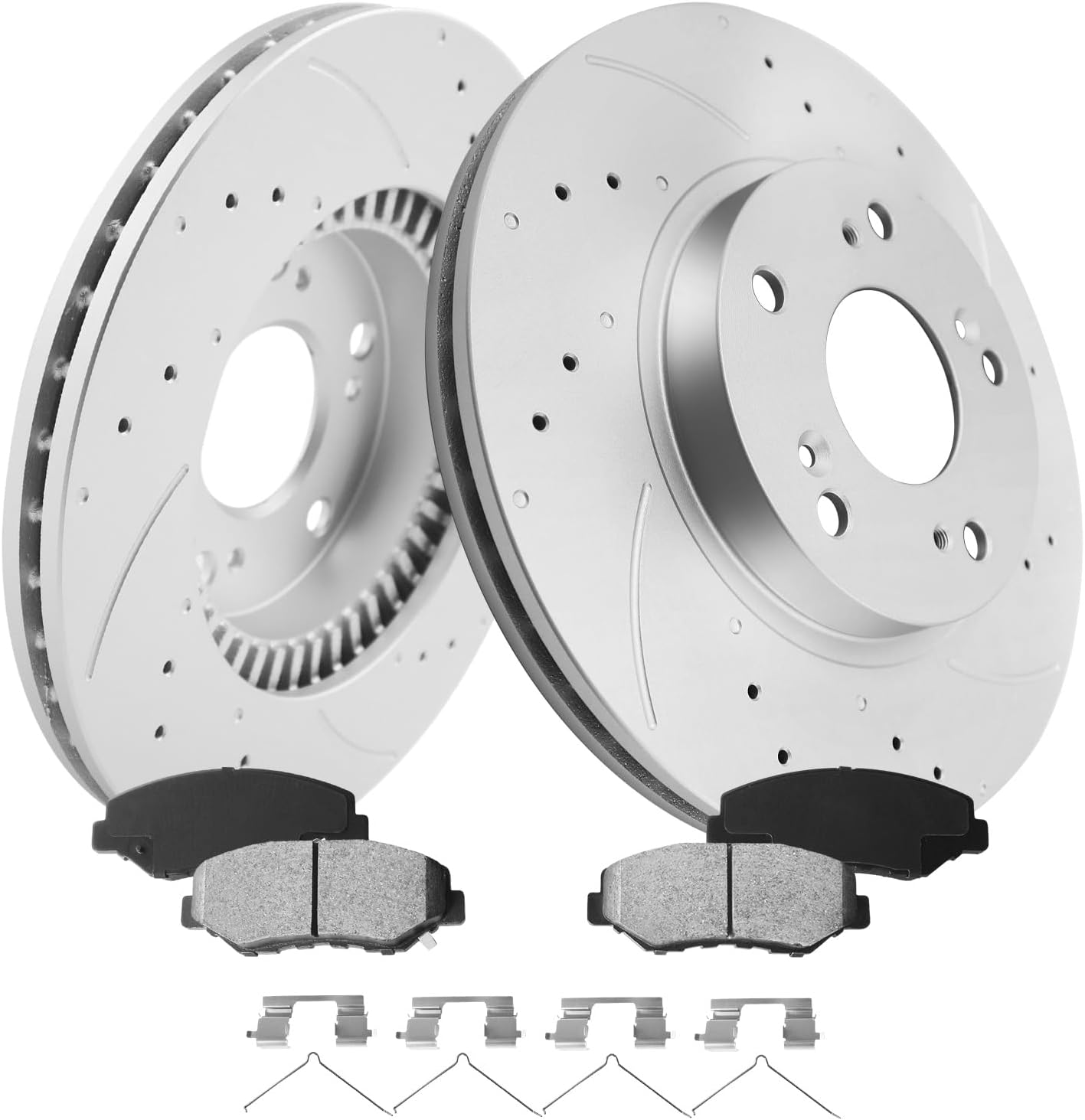
1. Motorevo Front Brake Kit for Honda Civic (2013–2021) — Drilled & Slotted Rotors with Ceramic Pads
| Compatible vehicles | 2013–2021 Honda Civic LX/EX/EX-L/SE/Touring/Sport (281.6mm front rotor fitment only) |
|---|---|
| Rotor diameter | 281.6 mm |
| Included components | 2 front rotors and 4 ceramic brake pads (hardware included) |
| OEM equivalent | Rotor 31305, Pad D914-7795 |
This Motorevo front brake kit replaces the Civic's front rotors and pads with drilled, slotted, vented rotors and ceramic pads engineered for everyday driving and occasional spirited use. The rotors use a high-carbon alloy and Geomet anti-corrosion coating to resist rust on non-friction surfaces while the drilled holes and slots help shed heat, gases, and debris to maintain consistent braking under load. Ceramic pads keep dust and high-frequency squeal to a minimum and are described as easier to clean than metallic pads. The kit is sold specifically for 281.6mm front rotor applications on select 2013–2021 Civic trims and includes hardware for a direct-fit installation that the maker says can be completed in about 45 minutes. Practical benefits are improved thermal control, lower dust, and a factory-fit replacement that pairs rotors and pads matched to the original part numbers. Limitations are strict fitment to the 281.6mm rotor variant of particular years and trims, so buyers must verify rotor diameter and transmission/trim specifics before ordering.
Best for: Buyers who want a balanced, dependable brake upgrade that improves heat control, reduces dust and noise, and installs as a matched front kit for select Civic front rotors.
Less Ideal for: Drivers who are unsure of their rotor diameter or trim fitment, or those seeking a purely performance-track braking setup tuned for extreme motorsport use.
- Drilled, slotted, and vented rotor design improves heat dissipation and helps reduce brake fade.
- Geomet anti-corrosion coating protects non-friction surfaces against rust.
- Ceramic pads produce low dust and reduced high-frequency noise for cleaner wheels and quieter operation.
- Kit includes matched rotors, pads, and hardware for a direct-fit installation.
- Manufacturer states improved stopping performance and longer rotor life versus standard blanks.
- Fits only the 281.6mm front rotor variant and specific Civic years/trims so incorrect selection will not fit.
- Claims about lifespan and stopping-distance improvements are manufacturer-stated and may vary with driving conditions.
Verdict: A well-rounded, direct-fit front brake kit for Civics using 281.6mm rotors that delivers better thermal control, lower dust, and quieter braking for everyday drivers.
2. PowerStop K7574 Z23 Front and Rear Brake Kit with Drilled & Slotted Rotors and Carbon-Fiber Ceramic Pads

| Vehicle fit | 2016–2021 Honda Civic (specified trims listed) |
|---|---|
| Pad type | Z23 carbon-fiber ceramic |
| Rotor style | Drilled and slotted, zinc plated |
| Position | Front, Rear |
| Hardware included | Stainless steel installation hardware |
This PowerStop K7574 kit is a full front-and-rear brake upgrade tailored for Honda Civic 2016–21 applications. It swaps factory rotors and pads for zinc-plated, drilled-and-slotted rotors plus Z23 carbon-fiber ceramic pads, and includes stainless hardware and rubberized shims for quieter operation. In day-to-day use the Z23 formula delivers stronger initial bite and noticeably lower dust compared with typical ceramic replacements, while the drilled and slotted rotors help shed heat and gas during heavier stops so fade is reduced on spirited drives or prolonged downhill braking. Installation is bolt-on with provided hardware, but some Civic-specific fasteners require the right drivers and attention to parking brake reset procedures. Buyers should expect a firmer pedal feel and better temperature control versus stock, although a few users report fitment or pad movement issues on certain model years, so confirming exact fitment before install is important. This kit is aimed at drivers who want a clear performance lift over factory pieces without moving to big brake conversions.
Best for: Drivers who prioritize stronger, lower-dust braking and improved thermal control for daily driving and occasional spirited use and who want a bolt-on kit to replace both front and rear components in one go.
Less Ideal for: If you need track-focused, high-temperature race pads or a full big-brake conversion this kit is not the best choice; also avoid if you prefer an exact OEM feel without firmer pedal response.
- Complete front-and-rear kit includes rotors, pads, stainless hardware, and shims for a single purchase and install
- Z23 carbon-fiber ceramic pads provide stronger stopping power with lower dust than many stock-style pads
- Drilled and slotted, zinc-plated rotors improve cooling and resist surface rust for longer cosmetic life
- Rubberized dual-layer shims and included hardware reduce noise and simplify bolt-on installation
- A few reports of pad fitment or rattle on certain Civic model years mean fitment should be double-checked before installation
Verdict: Buy this kit if you want a straightforward, bolt-on upgrade that boosts stopping power, reduces dust, and improves rotor cooling for 2016–21 Honda Civics.
3. Detroit Axle Front Brake Rotors and Ceramic Pad Kit for 2006–2011 Honda Civic

| Position | Front |
|---|---|
| Exterior | Zinc |
| Manufacturer | Detroit Axle |
| Manufacturer Part Number | 4PR1700020 |
This Detroit Axle front brake kit replaces the Civic's front rotors and pads with factory-style rotors and premium ceramic pads supplied with installation hardware. It is intended for routine brake jobs on 2006–2011 Civic models and is used like any complete kit: remove the old rotors and pads, transfer or replace hardware, and install the new parts. Notable features include rotors built to meet or exceed factory fit and finish, ceramic compound pads for quieter, smoother stops, and included hardware to simplify installation. For a home mechanic this kit reduces parts hunting and saves time compared with buying pieces separately, and the ceramic pads typically produce less initial dust and noise than generic metallic pads. Some users report heavier brake dust and occasional fitment issues with slide hardware on certain vehicles, so check the slider clips during assembly and be prepared to reuse OEM slides if needed. The kit is a straightforward, value-oriented solution for restoring front braking performance on the specified Civic models.
Best for: Buyers who want a pragmatic, time-saving brake refresh for a 2006–2011 Civic and prefer a complete parts kit that simplifies a DIY replacement.
Less Ideal for: Drivers seeking ultra-low dust or specialty performance brake compounds should consider dedicated low-dust or performance pads instead.
- Complete kit includes two front rotors, two ceramic pads, and hardware for a single-job replacement
- Rotors manufactured to meet or exceed factory fit and finish for straightforward installation
- Ceramic pads offer smooth, quiet initial braking compared with many metallic pads
- Designed for home mechanics so common hand tools are sufficient and online fitment guidance is available
- Some customers report increased brake dust from the pads compared with lower-dust options
- A few reports of brake slide hardware not fitting perfectly, occasionally requiring reuse of OEM slides
Verdict: A budget-conscious complete front brake kit that delivers factory-style fit and ceramic pad refinement to quickly restore braking for 2006–2011 Honda Civic models.
4. ACDelco Silver Front Brake Rotor (18A367A)

| Material Type | Cast Iron |
|---|---|
| Automotive Fit Type | Vehicle Specific Fit |
| Exterior Finish | Non-coated |
| Compatible with Vehicle Type | Car, Sedan |
This ACDelco Silver front rotor is a straightforward replacement part designed to restore front braking performance on compatible compact sedans. It is a single cast iron rotor with an application-specific vane design that helps dissipate heat and reduce brake fade during everyday driving. The rotor is ground with a non-directional finish and mill-balanced to reduce vibration and noise, which helps minimize steering wheel pulsation after installation. In practice it is used as a direct-fit swap when replacing worn or warped rotors and pairs well with quality brake pads to maintain consistent stopping power and extend pad life. Compared with higher-tier options this Silver rotor focuses on value, so it may be thinner than some factory items and lacks special coatings, but it still offers dependable fit and durability for routine street use. Buyers should verify fitment with VIN or vehicle-specific fit tools and expect a basic, no-frills replacement rather than a performance upgrade.
Best for: Shoppers prioritizing reliable, affordable front rotors for routine street driving who want a straightforward, vehicle-specific replacement that restores braking performance without premium features.
Less Ideal for: Drivers seeking performance-oriented rotors for track use or those who need corrosion-resistant coated rotors for harsh climates should consider other options.
- Vehicle-specific direct fit reduces installation fuss and alignment issues
- Multi-alloy vane configuration improves heat dissipation to limit brake fade
- Non-directional ground finish and mill-balancing help reduce noise and vibration
- Cast iron construction offers familiar durability for daily driving
- No protective coating increases risk of surface rust in wet climates
Verdict: A practical, budget-focused front rotor that restores smooth, dependable braking on compatible Hondas while keeping costs low.
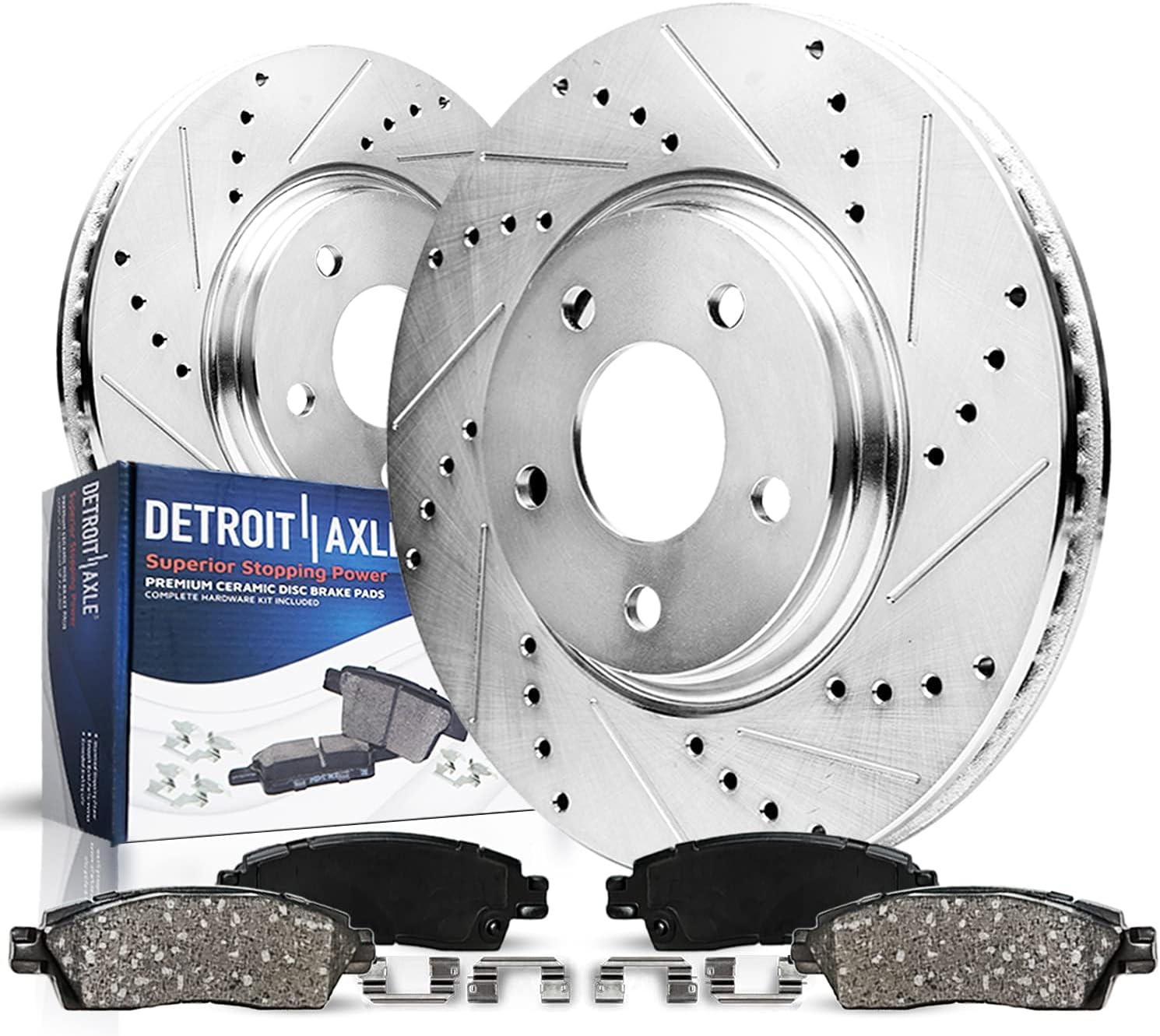
5. Detroit Axle Front Drilled & Slotted Brake Kit with Ceramic Pads for 2006–2011 Honda Civic
| Compatible vehicle years | 2006-2011 Honda Civic (front) |
|---|---|
| Kit includes | 2x drilled & slotted rotors, 2x front ceramic pads, hardware |
| Orientation | Front |
| Automotive fit type | Vehicle Specific Fit |
This Detroit Axle front brake kit replaces the two front rotors and pads on compatible 2006–2011 Honda Civics and is designed as a bolt-on, vehicle-specific repair. The rotors are drilled and slotted to help dissipate heat and clear debris, while the ceramic pads aim to deliver quieter, longer-lasting stops than basic metallic pads. Zinc plating on the rotor faces improves corrosion resistance and the locating holes are machined for accurate fit, so installation is straightforward for a DIYer or shop without modifications. In daily driving the kit provides consistent stopping power and many owners report low noise and minimal vibration when installed and bedded correctly. Expect slightly different bed-in behavior compared with factory parts because of the drilled-and-slotted surface; some careful bedding and checking for caliper hardware alignment may be needed to avoid intermittent rubbing or noise. The kit focuses on practical, reliable braking performance rather than high-performance track use.
Best for: Buyers who prioritize dependable, maintainable replacement brakes that fit directly and deliver quiet, consistent stopping for everyday driving and commuting.
Less Ideal for: Drivers seeking track-focused performance or maximum high-temperature fade resistance should consider dedicated performance rotors and pads instead.
- Vehicle-specific fit for 2006–2011 Honda Civic front applications simplifies installation
- Drilled and slotted rotors improve heat dissipation and debris removal under repeated braking
- Ceramic pads are quieter and generally longer-lasting than generic metallic pads
- Zinc plating on rotors reduces visible corrosion and wheel-dust buildup
- Drilled-and-slotted rotors can require more careful bedding and occasional hardware checks to eliminate low-speed rubbing or noise
Verdict: A straightforward, reliable direct-fit front brake kit that upgrades to drilled-and-slotted rotors with ceramic pads for quieter, consistent everyday braking on 2006–2011 Honda Civic models.
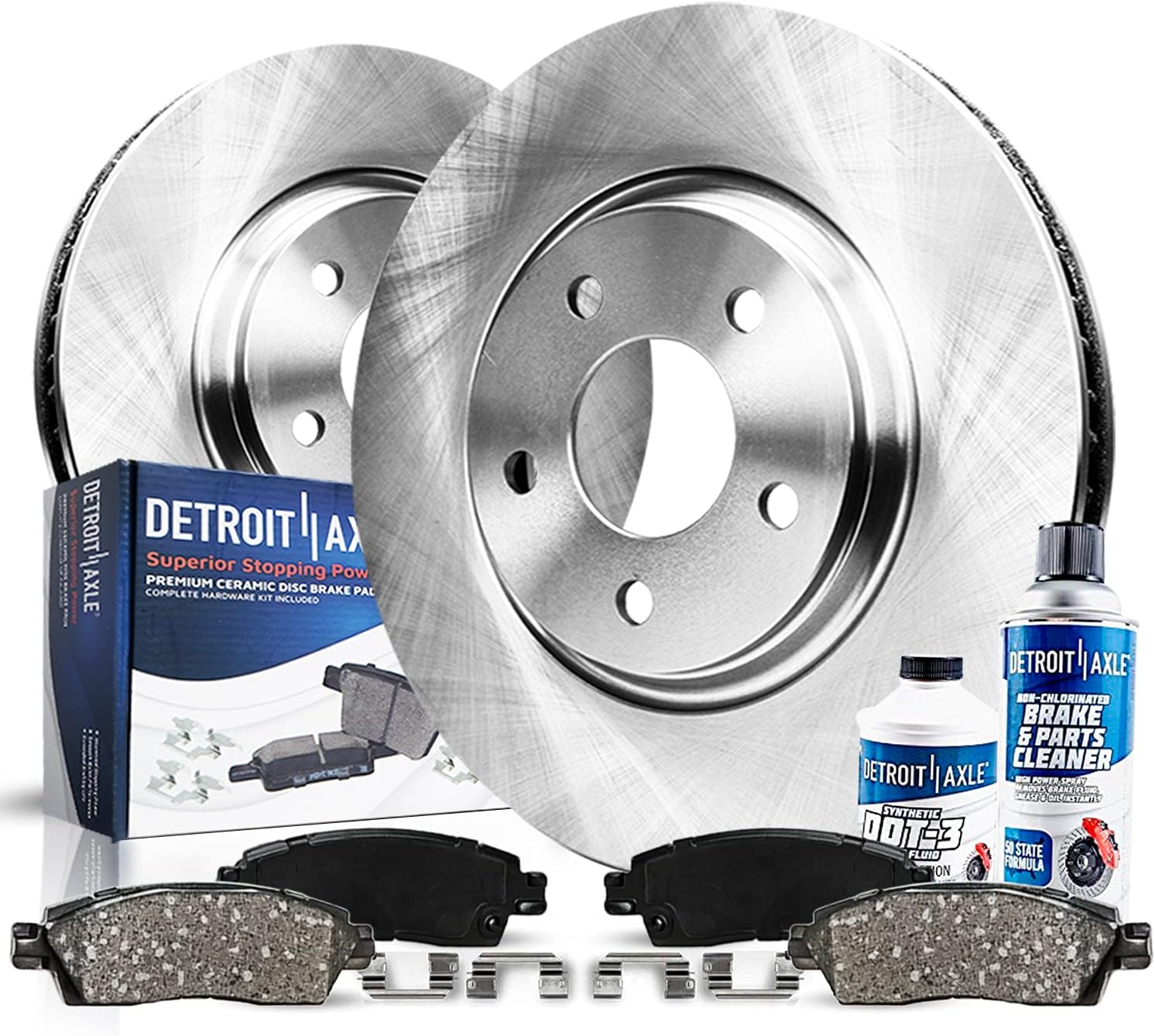
6. Detroit Axle Front Brake Kit with 10.31" Rotors and Ceramic Pads for 2012–2015 Honda Civic
| Fitment years | 2012–2015 Honda Civic (listed trims) |
|---|---|
| Rotor diameter | 10.31 inch (262 mm) |
| Pad type | Ceramic |
| Orientation | Front |
This Detroit Axle front brake kit bundles everything needed to refresh the Civic front brakes: a pair of vented 10.31 inch rotors, two ceramic pads with installation hardware, a brake cleaner spray, and a bottle of brake fluid. The zinc plating on the rotors helps resist surface corrosion and the vented design aids cooling for more consistent stopping under repeated use. Ceramic pads run quieter and produce less dust than semi-metallic pads, so the kit is practical for daily drivers focused on low noise and cleaner wheels. Parts are machined with locating holes intended to fit like factory replacements so installation should be straightforward for a DIYer or a shop. Limitations to keep in mind are that ceramic pads offer gentler initial bite than some performance compounds and are optimized for street use rather than track abuse. Also the kit is specified for particular Civic trims and rotor diameter so confirm exact fitment before buying.
Best for: Buyers who want a full front-brake refresh that prioritizes quiet operation, low dust, and a near-factory fit without sourcing parts separately. Ideal for owners who value documented user feedback and prefer a kit that covers consumables needed for installation.
Less Ideal for: Not the best choice for drivers who frequently track the car or need high-friction pads for aggressive driving where metallic or performance compounds are preferred.
- Complete kit includes rotors, ceramic pads, installation hardware, brake cleaner, and brake fluid for a single front-axle service.
- Vented, machined rotors with zinc plating improve cooling and help resist surface corrosion for longer visual life.
- 100% ceramic pads reduce brake dust and operate with lower noise compared with many semi-metallic alternatives.
- Parts are machined with locating holes to match factory fitment, simplifying installation for experienced DIYers or professional shops.
- Ceramic pads have a milder initial bite and are not optimized for high-temperature track use.
Verdict: A convenient, all-in-one front brake replacement that delivers quiet, low-dust ceramic pads and vented zinc-plated rotors for street-focused Honda Civic drivers.
7. PowerStop KOE1043 Front Brake Kit — Z17 Ceramic Pads with OE Replacement Rotors

| Brand | PowerStop |
|---|---|
| Model | KOE1043 |
| Pad Type | Z17 Ceramic |
| Position | Front |
| Fit Type | Vehicle Specific Fit |
This PowerStop front brake kit combines Z17 ceramic pads with mill-balanced replacement rotors and the stainless-steel hardware needed for a bolt-on swap. Intended as a daily-driver, factory-replacement style option, the ceramic pads are low-dust, chamfered, and slotted to speed break-in and reduce noise while providing predictable stopping for street use. The rotors are precision-milled non-coated units that aim to deliver a smooth pedal feel and minimal vibration once installed. The kit includes shims, pad hardware, and a bedding procedure which helps simplify an at-home or shop install. A few users reported imperfect hardware fitment on older vehicles and one fitment error for a specific ILX year, so double-check fit before installing, but most buyers find the parts match factory fit and perform quietly. For someone replacing pads and rotors together on a Civic or similar Honda model, this kit is a straightforward, value-minded choice that balances clean operation with easy installation.
Best for: Buyers who want a straightforward, factory-style front brake replacement for everyday driving and prioritize quiet, low-dust performance and an easy bolt-on install.
Less Ideal for: Drivers seeking high-performance or track-capable pads and rotors or those who do not want to verify vehicle fitment before purchase should consider other specialized options.
- Includes both ceramic pads and mill-balanced rotors for a complete front brake replacement
- Z17 ceramic pads are low-dust and designed for quiet, predictable daily driving
- Comes with stainless-steel hardware and shims to simplify installation
- Rotors are precision milled to reduce vibration and improve pedal feel after installation
- Some buyers reported mismatched or marginal fit for the included hardware compared with factory parts
- One reported incorrect rotor bolt pattern for a specific vehicle year, so fitment checks are necessary
Verdict: A complete, low-dust ceramic pad and rotor kit that gives a quiet, factory-style front brake replacement for daily-driven Honda Civics when fitment is confirmed.
Choosing the Right Honda Civic Front Brake Rotors: Key Factors to Consider
Fitment and OEM Specifications
Correct fitment is the first requirement for front brake rotors on a Honda Civic. Rotors must match the Civic s bolt pattern, center bore, and thickness specifications. If rotor dimensions differ from factory specs, you can encounter wheel rubbing, hub stress, or ABS sensor misalignment. Always verify the rotor s nominal thickness and minimum service thickness against Honda s specifications before buying.
Runout tolerance also matters. Excess lateral runout at the rotor surface leads to pedal pulsation and uneven pad contact. Select rotors with tightly controlled runout figures or reputation for low manufacturing variation to reduce the chance of vibration after installation. Proper fitment reduces the need for additional machining or adapter hardware during installation.
Rotor Thickness and Minimum Service Limits
Rotor thickness determines how much material is available to absorb heat and resist warping. Thicker rotors generally retain structural integrity under repeated high-load braking, while thin rotors reach critical temperatures faster and may warp or crack. Check the new rotor s nominal thickness and the vehicle s minimum service thickness to ensure it will meet your maintenance interval expectations.
When evaluating rotor thickness, consider the Civic s typical driving patterns. If you do frequent stop-and-go commuting, light thickness may be adequate. For drivers who push the vehicle or tow light loads, choosing rotors with a higher nominal thickness offers a longer service life and better resistance to thermal degradation.
Heat Management and Venting Design
Front rotors on the Civic dissipate most of the braking heat, so venting and internal vane design greatly affect fade resistance. Vented rotors with efficient directional vanes move air through the rotor to cool the friction surface more rapidly during repeated stops. This lowers the chance of brake fade and maintains consistent pedal feel.
Look for rotors with optimized vane geometry and a solid balance of mass and venting. Overly thin vented rotors may cool quickly but lack mass to stabilize temperatures. Conversely, heavy rotors manage heat well but can increase unsprung weight and affect ride feel. Choose a design that matches how you drive the Civic.
Surface Treatment and Corrosion Resistance
Road salt, moisture, and brake dust can accelerate surface corrosion on rotors, leading to uneven wear or reduced service life. Protective coatings, such as phosphate or advanced anti-corrosion finishes on non-friction surfaces, help maintain appearance and prevent rust buildup where it matters for fit and braking consistency.
Keep in mind that coating should not compromise the friction surface. Evaluate whether surface treatments are applied only to the hat and edge, leaving the friction area untreated or properly masked. Better corrosion resistance reduces the need for early replacement in regions with harsh weather.
Rotor Surface Design: Plain, Slotted, or Drilled
The surface pattern affects pad bite, gas evacuation, and debris clearing. Plain rotors provide a smooth, quiet contact surface that suits daily driving and reduces pad wear. Slotted rotors help remove brake gas and debris from the contact patch and can restore pad bite during aggressive braking. Drilled rotors aid cooling and water evacuation but may introduce stress points that can crack under extreme thermal cycling.
For most Civic owners, slotted or plain designs balance longevity and performance. If you regularly drive in wet conditions or do occasional spirited driving, slotted patterns offer a practical improvement. Reserve drilled designs for specific situations where improved water shedding outweighs potential durability tradeoffs.
Compatibility With Brake Pads and Brake System
Not all rotors pair equally with every pad compound. Some rotor finishes and surface textures work better with semi-metallic pads, while others complement ceramic pads to minimize noise and dust. Choose rotors whose surface conditioning and thermal mass suit the pad families you intend to use to avoid problems like glazing or accelerated wear.
Also consider the Civic s caliper clearance and brake hardware. Some aftermarket rotors require specific anti-rattle clips or longer lug bolts. Confirm that the rotor will not interfere with the caliper piston or wheel backspace. Compatibility reduces installation surprises and ensures expected braking performance.
When To Resurface Rotors Versus Replace Them
Resurfacing can restore flatness and remove minor scoring if the rotor remains above the vehicle s minimum service thickness and has no thermal cracks. For many Honda Civic rotors, light machining will correct minor runout or surface irregularities and prolong service life.
Replace the rotor if it is at or below minimum thickness, has visible heat cracks, or if the vane structure is compromised. Modern replacement rotors with corrosion-resistant finishes may be preferable to resurfacing in areas with heavy road salt because resurfaced surfaces can rust quickly.
- Resurface when thickness and structural integrity are intact and runout is the main issue
- Replace when minimum thickness is reached or heat cracking is present
- Consider replacement over resurfacing for heavily corroded rotors
How To Measure Rotor Thickness and Runout
Measure rotor thickness using a micrometer at multiple points near the braking surface and compare to Honda s minimum service thickness. Record the lowest reading and subtract it from the nominal thickness to estimate remaining life. Measuring at two opposing points around the rotor cup helps detect taper.
Check lateral runout with a dial indicator mounted to the hub while rotating the wheel. Even small runout values can produce felt pedal pulsation, so ensure the indicator reading falls within the vehicle s acceptable tolerance. If runout is excessive, the hub surface, wheel bearings, or improper mounting may also be the root cause.
- Use a calibrated micrometer for thickness measurements
- Take at least three readings around the rotor surface
- Use a dial indicator to assess lateral runout against manufacturer tolerance
Single-Piece Versus Two-Piece Rotor Considerations
Single-piece cast rotors are common and provide a cost-effective, durable solution for the Civic s front brakes. They offer consistent heat transfer across the friction surface and minimal assembly complexity. Two-piece rotors separate the hat from the friction ring, reducing unsprung weight and allowing replacement of the friction ring alone in some designs.
Two-piece rotors can improve thermal stability and reduce rotational mass, which benefits handling and heat control in aggressive driving. However, they introduce more parts and possible points of corrosion at the interface. Consider your Civic s driving style and maintenance priorities when choosing between these designs.
- Single-piece rotors: simpler, durable, usually less costly
- Two-piece rotors: lower unsprung weight, potentially better heat control
- Assess long-term serviceability and exposure to road corrosion
Signs of Brake Rotor Wear on the Honda Civic
Common symptoms include a pulsing sensation in the brake pedal during braking, audible scratching or squeal when braking, and visible scoring or grooving on the rotor surface. These signs often indicate uneven material removal, runout, or pad debris embedded in the rotor face. Tire feel and steering feedback during braking can also reveal rotor issues.
Early detection through routine inspection prevents progression to more serious problems like rotor cracking. Track mileage since the last service and compare observed wear against the rotor s specified minimum thickness and expected service life for the Civic.
- Pedal pulsation during braking
- Scraping or grinding noises
- Visible grooves, scoring, or rust flakes on the friction surface
Installation Tips to Avoid Common Problems
Clean the hub face and mating surfaces before installing new rotors to ensure accurate seating. Surface corrosion on the hub can cause wheel and rotor runout even with a correctly manufactured rotor. Use a wire brush or light abrasive to remove rust and then verify the hub is flat.
Torque wheel lug nuts in the recommended star pattern to the correct specification to avoid introducing rotor warp. After installation, bed in the new rotors and pads according to pad manufacturer guidance or general bedding procedures: gradual, repeated moderate stops to build a uniform transfer layer without overheating.
- Clean hub and mating surfaces before installation
- Use proper torque sequence and specification
- Perform a controlled bed-in procedure after installation
Still looking for the perfect fit?
Select your Honda Civic configuration to see the most relevant Brake Rotors recommendations
How We Chose the Best Honda Civic Front Brake Rotors
We used a practical, vehicle-focused framework to narrow hundreds of rotor options to the seven entries on this list. Key evaluation criteria included fitment accuracy to Honda Civic specifications, rotor thickness and minimum allowable dimensions, and runout tolerances that affect pedal vibration. Heat-management characteristics such as vent design, directional vanes, and surface features were assessed because the front rotors handle the majority of braking load on the Civic.Durability factors included corrosion-resistant coatings, material quality, and resistance to thermal cracking under repeated heavy use. We also prioritized rotors that match common pad compound families to avoid glazing or accelerated wear. Ease of installation and whether the rotor requires special hardware or machining were considered. Exclusions: rotors that do not match Honda Civic factory bolt pattern or center bore, one-off race-only components, and options lacking published specifications were left out. The final list balances real-world reliability, serviceability, and performance for everyday and spirited driving on the Civic.
Our full evaluation process is outlined in our review methodology.
FAQ
How often should I check front rotor thickness on my Honda Civic?
Check rotor thickness at regular service intervals or whenever you replace brake pads. Many owners inspect rotors every 20,000 to 30,000 miles, but driving habits and local conditions can require more frequent checks.
Can I resurface Civic front rotors at every brake service?
You can resurface only while the rotor remains above the minimum service thickness and shows no thermal cracking. Repeated machining reduces thickness and eventually necessitates replacement, so plan resurfacing sparingly.
Are slotted rotors better for wet climates in a Civic?
Slotted rotors help clear water and debris from the pad contact area and can improve initial bite in wet conditions. They are a practical choice if you frequently encounter rain, but plain rotors remain adequate for typical commuting.
Will changing rotor type affect my ABS or brake sensor function?
Not typically, provided the replacement rotor matches the Civic s OEM dimensions and runout tolerances. Ensure the rotor does not alter wheel clearance or interference with sensors; mismatched fitment can affect ABS behavior.
How do I know if a rotor needs replacement instead of resurfacing?
Replace the rotor if it is at or below the vehicle s minimum service thickness, has visible heat cracking, or the structural vane area is damaged. Excessive corrosion that undermines the friction surface is also a reason to replace.
Can using a different rotor surface cause more brake dust?
Brake dust depends mainly on the pad compound and driving conditions, but rotor surface texture can influence how dust accumulates and disperses. Some surface finishes reduce visible dust buildup, while aggressive patterns may generate and expose more dust.
Final Verdict
When choosing front brake rotors for a Honda Civic, prioritize correct fitment, adequate rotor thickness, and effective heat management for your driving style. Consider surface treatment for corrosion resistance and select a rotor surface pattern that balances noise, longevity, and wet-weather performance.Weigh the tradeoffs between resurfacing and full replacement based on minimum thickness and condition, and ensure compatibility with your chosen pad compound. Focusing on these criteria will help you select front rotors that restore strong braking performance and deliver predictable service life for your Civic.
Explore More:
- Check out all Honda Civic parts & accessories
- Explore Brake Rotors Maintenance & Repair Guides
- Explore Brake System
- Browse all Auto Parts
