

Note: This article contains affiliate links. If you click on these links and make a purchase, I may earn a small commission at no extra cost to you. This helps support my research and content. Read my full affiliate disclosure here.
Picking the right brake pads for a 2001-2005 Honda Civic matters for safety, drivability, and long-term maintenance costs. These Civics, often referenced as the 2001-2005 (ES, EM, and EP) generation in owner forums, respond differently to pad compounds and bedding procedures than newer models, so choosing pads that match your driving style and vehicle condition is important.This guide shortlists seven top options suited to the 2001-2005 Civic and explains the real-world tradeoffs between stopping feel, noise, dust, and pad life. We evaluated candidates against braking performance and longevity so you can pick pads that meet your priorities. Read on for practical fitment and installation notes before the detailed product list.
Looking for other parts? See all Honda Civic parts & accessories.
Top Picks at a Glance
| Best Overall The best all-around choice for most situations | TRQ Ceramic Front & Rear Brake Pad and Rotor Kit for 2001–2005 Honda Civic |  |
| Best Quality Built to a higher standard if you want something more solid | BOSCH QuietCast Premium Ceramic Front Brake Pad Set (BC465A) |  |
| Best Value The sweet spot between price and what you get | Detroit Axle Front and Rear Brake Kit for 1996–2005 Honda Civic / 1997–2000 Acura EL |  |
| Best Budget The cheapest option that still gets the job done reliably | Auto Shack Front Ceramic Brake Pad Set (front) |  |
| Highest Rated A top-rated pick with lots of positive feedback | Bendix Premium SBC465AK2 Ceramic Rear Brake Pad with Hardware |  |
| Most Popular A crowd favorite that many people choose with confidence | Detroit Axle 1.7L Front and Rear Brake Kit for 2001–2005 Honda Civic (Drilled Rotors, Ceramic Pads) |  |
| Best Seller A high-volume bestseller chosen again and again | Bendix Priority1 CFC465AK2 Ceramic Front Brake Pads with Hardware |  |
1. TRQ Ceramic Front & Rear Brake Pad and Rotor Kit for 2001–2005 Honda Civic

| Fitment | 2001–2005 Honda Civic (specified models listed) |
|---|---|
| Brake pad material | Ceramic |
| Front rotors | Included, machined finish |
| Rear components | Brake shoes and drums included |
This TRQ kit supplies everything needed for a full front-and-rear brake refresh on supported 2001–2005 Honda Civic configurations: a front ceramic pad set, two front rotors, a rear brake shoe set and two rear drums. It is aimed at DIYers who want a direct-replacement solution that reduces shop time by bundling matched components and supplying pre-machined rotors and installation videos. Ceramic pads typically run quieter and produce less brake dust than semi-metallic alternatives, making daily driving cleaner and more pleasant; the machined rotors arrive ready to mount and the rear drum parts cover models that use drum brakes. Expect straightforward installation for a mechanically competent owner, though a few reviewers reported minor fitment fiddling with clips or snug pad fit in brackets that may need light adjustment. The kit is a practical value for restoring stopping performance without upgrading to performance rotors or pads, but it is not intended for heavy-duty towing, motorsport, or aggressive track use.
Best for: Drivers who want a balanced, all-in-one replacement to restore factory-style braking on 2001–2005 Civic models and prefer a quieter, low-dust ceramic option while doing the work themselves.
Less Ideal for: Not a good choice for drivers who need heavy-duty, high-temperature performance for towing, frequent track use, or aggressive driving where performance brake components are required.
- Complete kit covers front pads, front rotors, rear shoes and rear drums for a full axle-to-axle replacement
- Ceramic friction material tends to run quieter and produce less brake dust than semi-metallic pads
- Pre-machined rotors and included hardware reduce prep time and simplify DIY installation
- Manufacturer provides extensive installation videos and compatibility guidance
- Some users reported tight pad fit or retention clips that required minor adjustment or bending
Verdict: A convenient, factory-style full brake kit for 2001–2005 Honda Civics that restores quiet, low-dust braking with parts and guidance geared to DIY installation.
2. BOSCH QuietCast Premium Ceramic Front Brake Pad Set (BC465A)
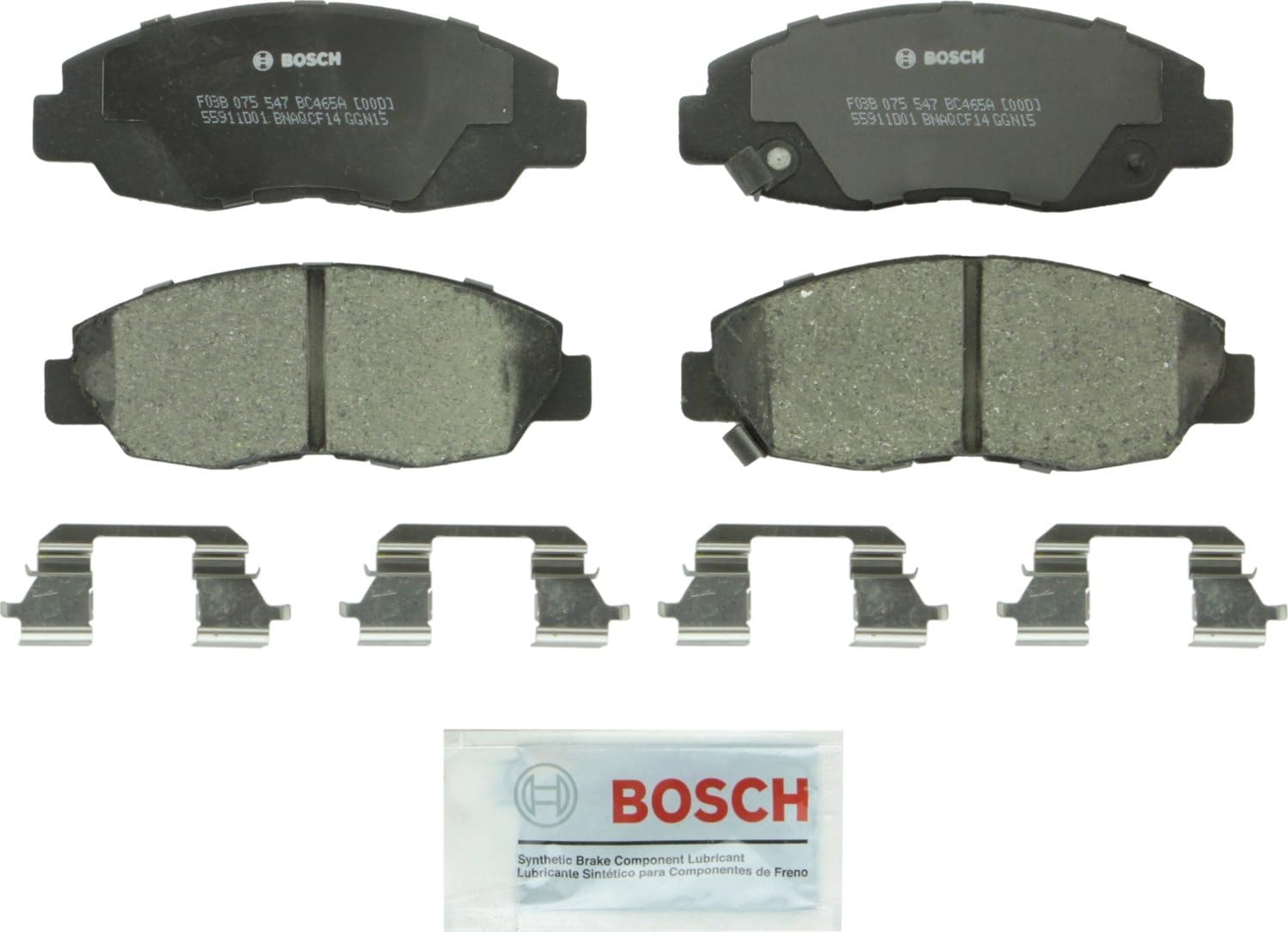
| Auto Part Position | Front |
|---|---|
| Model Number | BC465A |
| Material Type | Ceramic |
| Automotive Fit Type | Vehicle Specific Fit |
The Bosch QuietCast BC465A is a ceramic front brake pad kit designed as a direct-fit replacement for compatible 2001–2005 Honda Civic applications. It uses Bosch’s molded multilayer rubber-core shim and powder-coated backing plates to reduce noise and resist corrosion while the ceramic friction formula provides strong stopping power with minimal dust. The kit arrives ready to install with pads for one axle plus lubricant and, where required, the accompanying hardware. In real-world use this pad set is aimed at daily-driven Civics where quiet operation and rotor-friendly braking matter more than aggressive track performance. Expect a short bedding-in period and consistently low dust on wheels compared with semi-metallic options. Trade-offs are that ceramic pads generally produce slightly less initial bite in very high-performance or repeated heavy-stop scenarios compared with severe-duty semi-metallic compounds, so drivers who push their Civic hard may prefer a performance-oriented friction material instead.
Best for: A Civic owner who prioritizes quiet, low-dust braking and reliable, factory-quality replacement performance for everyday driving and commuting.
Less Ideal for: Drivers who frequently do track days, towing, or sustained aggressive braking should consider purpose-built performance or severe-duty pads instead.
- Factory-style rubber core multilayer shim for reduced noise and improved corrosion resistance
- Ceramic friction material delivers quiet stops with low wheel dust
- Powder-coated backing plates and included lubricant reduce corrosion and improve longevity
- Includes pads for one axle plus hardware and lubricant for straightforward installation
- Not formulated for sustained high-temperature stop cycles typical of track or aggressive performance driving
Verdict: Choose these Bosch QuietCast front ceramic pads if you want a quiet, low-dust, factory-quality replacement for 2001–2005 Honda Civic daily driving.
3. Detroit Axle Front and Rear Brake Kit for 1996–2005 Honda Civic / 1997–2000 Acura EL

| Brand Name | Detroit Axle |
|---|---|
| Auto Part Position | Front, Rear |
| Automotive Fit Type | Vehicle Specific Fit |
| Material Type | Ceramic |
This Detroit Axle kit supplies both front ceramic brake pads and rear semi-metallic shoes along with installation hardware and a packet of brake cleaner and fluid, so it covers a full axle service on compatible Civic and Acura EL models. The ceramic front pads are marketed to match factory stopping performance while staying quiet and producing less dust than semi-metallic alternatives. The kit is intended for do-it-yourself replacement and arrives with the basic hardware and grease you need to install the pads; reviewers regularly report an exact fit and good stopping power. Because it is a vehicle-specific fit, installation is straightforward if you know whether your calipers are single or dual piston. Limitations include included hardware quality, which some users found weaker for rear applications, and the kit does not include tools or detailed step-by-step instructions, so plan for basic mechanical competence or a shop install if unsure. For routine brake maintenance this kit gives a near-factory replacement at a practical value point.
Best for: Buyers who want a cost-effective, vehicle-specific brake kit that replaces both front pads and rear shoes and prefer a DIY-friendly package with the essentials included.
Less Ideal for: If you need premium track-capable pads, a noise-optimized aftermarket set, or a full hardware/caliper rebuild, this all-in-one service kit is not the best match.
- Includes both front ceramic pads and rear semi-metallic shoes for a more complete brake service
- Front ceramic material reduces dust and tends to run quieter than semi-metallic pads
- Comes with installation hardware plus brake cleaner and grease for DIY installs
- Vehicle-specific fit aimed at correct fit and finish for listed Civic and Acura EL models
- Some customers reported the included hardware clamps are lower quality for certain rear brake setups
Verdict: A practical, vehicle-matched kit that replaces front pads and rear shoes at good value while including the basic hardware and cleaners needed for a DIY service.
4. Auto Shack Front Ceramic Brake Pad Set (front)

| Auto Part Position | Front |
|---|---|
| Material Type | Ceramic |
| Included Components | Ceramic Brake Pad Set |
| Unit Count | 4.0 Count |
These Auto Shack front ceramic pads are a straightforward replacement set intended to restore everyday braking performance on compatible Honda and Acura cars. They are used just like any direct-fit replacement: remove the wheel, swap the old pads for the new ones, and follow a short break-in procedure. The ceramic friction material is formulated for quieter stops and reduced wheel dust, which keeps wheels cleaner between services. The listing emphasizes consistent friction and extended rotor life, so they are a practical choice for daily drivers who want reliable, low-noise braking without upgrading to performance compounds. Fitment is vehicle-specific so verifying the application for a 2001 to 2005 Civic is important before ordering. These pads come without clips and include four pad pieces in the set; buyers should expect a basic aftermarket fit and may need to reuse or source hardware if their caliper kit requires it. The product carries a short six-month part warranty and is aimed at budget-focused replacements rather than long-term performance upgrades.
Best for: Buyers looking for an affordable, no-frills replacement that restores quiet, low-dust braking on older Civics and similar daily drivers. Ideal for owners prioritizing cost and clean wheels over performance braking.
Less Ideal for: Drivers seeking heavy-duty, high-temperature or performance brake compounds for track use or towing should choose purpose-built performance pads instead.
- Ceramic compound for quieter stops and lower wheel dust
- Designed to reduce rotor wear for longer rotor life
- Vehicle-specific fitment for direct replacement on listed Hondas and Acuras
- Includes a full front set of four pads for a complete axle replacement
- Does not include mounting clips or extra hardware with the pad set
- Warranty is limited to six months and covers only the part itself
Verdict: A cost-conscious front ceramic pad set that returns quiet, low-dust braking and reliable everyday stopping for older Civics.
5. Bendix Premium SBC465AK2 Ceramic Rear Brake Pad with Hardware

| Auto Part Position | Rear |
|---|---|
| Compatible with Vehicle Type | Cars, SUV, Truck |
| Material Type | Copper |
| Included Components | Brake pad set with installation hardware |
| Specification Met | OEM |
Bendix Premium SBC465AK2 is a vehicle-specific ceramic rear brake pad set intended as a factory-quality replacement for daily-driven Civics and similar cars. It replaces worn pads while preserving the original fit and caliper behavior, and ships with installation hardware so you get the clips and shims needed for a straightforward swap. The ceramic compound is formulated to reduce brake fade and produce quieter operation after bedding in, and many users report a quick, trouble-free install and solid stopping power on commuter cars. Because these are designed to match factory performance, they prioritize smooth, predictable pedal feel over aggressive bite. Expect some initial bedding noise for the first few drives and average dust levels typical of ceramic pads. Longevity appears good in user reports but will depend on driving style and rotor condition. These pads are a sensible choice if you want a durable, low-noise replacement that behaves like factory parts and comes ready to install.
Best for: Buyers who prioritize dependable, factory-like braking for daily-driven Honda Civics and want a durable, low-noise replacement that installs without fuss.
Less Ideal for: Drivers seeking high-performance track pads or heavy towing/heavy-load braking should choose a performance-oriented or heavy-duty pad instead.
- Vehicle-specific fit for a direct swap with factory-style pedal feel
- Includes installation hardware and shims for easier installation
- Ceramic compound reduces fade and becomes quiet after bedding
- Manufactured to OEM-equivalent specifications for consistent performance
- May produce average brake dust and is not targeted at high-performance or heavy-duty braking scenarios
Verdict: Choose these Bendix premium ceramic rear pads when you want a reliable, factory-style replacement that installs easily and delivers quiet, consistent stopping for daily-driven Civics.
6. Detroit Axle 1.7L Front and Rear Brake Kit for 2001–2005 Honda Civic (Drilled Rotors, Ceramic Pads)

| Fitment | 2001–2005 Honda Civic 1.7L |
|---|---|
| Front rotors | Drilled and slotted, zinc plated |
| Front pads | Ceramic |
| Rear brakes | Brake drums with semi-metallic shoes |
| Includes | Brake cleaner and DOT3 brake fluid |
This Detroit Axle kit supplies everything needed to replace both front and rear braking components on a 2001–2005 Honda Civic 1.7L. The kit pairs drilled-and-slotted front rotors with ceramic front pads for quicker heat dissipation and quieter, smoother stops, while the rear drums and semi-metallic shoes handle rear braking and parking brake duties. Included accessories such as brake cleaner, a bottle of DOT3 fluid, and anti-seize packets make the job more convenient for a DIYer. Rotors are zinc plated to resist corrosion and machined locating holes aim to simplify fitment. In real use the combination delivers predictable stopping power once bedding is done, and many buyers report good fit and durability. Expect some variability in small hardware pieces and packaging: a few customers noted missing or misfit clips and an occasional damaged pad that required replacement. The kit is best for owners comfortable doing their own installation or who can follow online instructions, since the set does not include detailed step-by-step guidance.
Best for: DIY-minded Civic owners who want a full front-and-rear replacement kit that balances stopping performance and quiet operation while relying on peer reviews and real-world reports to validate fit and durability.
Less Ideal for: Drivers who prefer fully bolted-onto professional service with step-by-step guidance or who need upgraded high-performance pads for track or heavy towing use.
- Complete kit covering front rotors, front ceramic pads, rear drums and shoes plus cleaner and brake fluid
- Drilled and slotted front rotors improve heat dissipation and help reduce brake fade under repeated stops
- Zinc plating on rotors helps resist corrosion and wheel dust buildup
- Ceramic front pads offer smoother, quieter initial engagement compared with many metallic pads
- Machined locating holes intended for direct fitment without modification
- Some buyers reported mismatched or low-quality small hardware in the accessory bags
- No comprehensive printed installation instructions included with the kit
- A minority of units arrived with damaged pads requiring replacement by the seller
Verdict: A convenient all-in-one replacement kit that delivers OEM-style fit and quiet, reliable stopping for 2001–2005 Civic 1.7L owners who are comfortable installing their own brakes.
7. Bendix Priority1 CFC465AK2 Ceramic Front Brake Pads with Hardware

| Auto Part Position | Front |
|---|---|
| Material Type | Ceramic |
| Automotive Fit Type | Vehicle Specific Fit |
| Included Components | Brake pad set with installation hardware |
Bendix Priority1 CFC465AK2 front brake pads are a ceramic vehicle-specific replacement set designed to match factory fit and function while reducing noise and dust. They are used as a direct replacement for the front pads on compatible Civics in the 1996–2011 applications listed, and the kit includes shims, slots, chamfers, and spring hardware to simplify installation and deliver quiet operation. The ceramic friction material provides consistent stopping power for daily driving and is formulated to resist fade under higher temperatures, which helps maintain pedal feel during heavier use. Customers report an OEM-like fit, low dust, and included grease for pins and pad tips, which reduces post-install fuss. Limitations include that ceramic pads typically trade a bit of initial bite and may wear faster under heavy towing or aggressive driving compared with semi-metallic options. Also the set is vehicle-specific so you must confirm exact fitment for a 2001–2005 Civic before purchase.
Best for: Buyers who prioritize quiet, low-dust braking and want a direct-fit, factory-spec replacement for everyday driving on a 2001–2005 Civic.
Less Ideal for: Drivers who regularly tow heavy loads or do aggressive/high-heat driving should consider semi-metallic or performance-oriented pads instead.
- Factory-quality fit and hardware included for straightforward replacement
- Ceramic formulation that runs quiet and produces low wheel dust
- Shims, slots and chamfers designed to reduce noise and improve bedding-in
- Includes grease and replacement spring/hardware to ease installation
- Ceramic pads can have slightly softer initial bite compared with some semi-metallic pads
Verdict: Choose these Bendix Priority1 ceramic front pads if you want a quiet, low-dust, factory-quality replacement for routine daily driving on a 2001–2005 Honda Civic.
Choosing the Right 2001-2005 Honda Civic Brake Pads: Key Factors to Consider
Friction Compound and Stopping Power
The pad compound determines initial bite, fade resistance, and how the pedal feels during normal and emergency stops. Organic compounds tend to offer quieter operation but wear faster and produce more dust, while semi-metallic and ceramic blends provide stronger initial bite and better heat tolerance. For a 2001-2005 Civic, choose a compound that delivers confident pedal feel without creating excessive rotor wear, since many of these cars still run original or lightly reconditioned rotors.
Consider the typical driving you do. Daily city commuting with frequent light stops benefits from a compound optimized for low noise and low dust. If you do highway driving or carry heavier loads, prioritize materials that resist fade and maintain friction over longer deceleration events.
Fitment and Backing Plate Design
Correct pad shape, backing plate thickness, and retention method matter because the 2001-2005 Civic calipers and hardware can be sensitive to aftermarket variations. Poor fitment can cause uneven wear, pad movement, or contact with the caliper piston, leading to noise or premature failure. Always confirm pad profiles match the ES, EM, and EP era caliper pockets and that any included shims or clips align with the factory hardware.
A backing plate with proper anti-rattle features and chamfers helps reduce noise and ensures consistent contact across the pad surface. If the pads require additional clips or springs, make sure those parts are compatible with your Civic's hardware to avoid installation headaches.
Rotor Compatibility and Dust Generation
Some compounds are abrasive and can accelerate rotor wear, creating the need for resurfacing or replacement sooner than expected. For older 2001-2005 Civics, many owners prefer pad materials that are rotor-friendly to avoid excess machining of rotors that may already be near minimum thickness. Low-dust or semi-low-dust formulations reduce wheel soiling and make cleaning easier.
Assess the current condition of your rotors. If they are glazed or close to the minimum thickness spec, choose less aggressive compounds and plan for rotor inspection or resurfacing during the pad change to ensure consistent contact and long life.
Noise Control and Vibration Dampening
Brake squeal and vibration are common complaints on older Civics if pads do not include proper shims, chamfers, or damping layers. Noise can originate from pad vibration, uneven transfer layers on the rotor, or loose hardware. Pads designed with multi-layer shims or bonded damping materials will reduce squeal and provide a quieter daily driving experience.
Pay attention to installation details like anti-rattle clips, caliper bolt torque, and caliper slide cleanliness, as these installation variables interact with the pad design to influence noise outcomes.
Longevity and Wear Patterns
Pad life depends on compound, driving habits, and vehicle condition. For the 2001-2005 Civic, which may see a mix of city and highway miles, choose pads that strike a balance between lifespan and consistent braking performance. Uniform wear across the pad surface indicates good caliper function and correct installation. Look for pads with documented wear expectations and consider whether you prefer longer intervals between changes or a compound that prioritizes bite and fade resistance.
Regular inspection for uneven wear, contamination, or glazing can extend rotor and pad life. If your Civic has any caliper sticking history, address caliper servicing when replacing pads to prevent premature wear.
Ease of Installation and Hardware Included
Some replacement pads include shims, clips, and hardware while others assume you will reuse original components. For a 2001-2005 Civic, hardware condition can vary widely, so padded kits that include fresh mounting clips and anti-rattle hardware reduce installation time and future noise issues. Pads that match the factory service procedure and do not require caliper modification simplify the DIY process.
Confirm whether the pads need special bedding or break-in steps and whether the kit includes clear instructions. Kits that omit necessary clips or shims will add cost and complexity when the old hardware is corroded or damaged.
Front Vs Rear Brake Considerations for the Civic ES, EM, and EP
Front and rear pads perform different roles on the 2001-2005 Civic. The front pads handle the majority of braking force and therefore see higher heat and wear. When selecting front pads, prioritize compounds with stable friction under repeated stops and good heat tolerance to avoid fade.
Rear pads generally wear slower and can be chosen with quieter, less aggressive compounds if most braking demand is handled by the front axle. If your Civic has a drum-in-hat parking brake on some trim levels, verify whether the rear service involves pads or shoes and confirm fitment for the rear braking assembly.
- Inspect rotor thickness on the front axle before selecting an aggressive front compound.
- Consider quieter compounds for rear pads to reduce in-cabin noise during light braking.
- If replacing only one axle, match compound characteristics to avoid uneven pedal feel.
Bedding In New Pads on a 2001-2005 Civic
Proper bedding helps establish an even transfer layer on the rotor and reduces the chance of noise or uneven braking. For these Civics, a conservative bedding procedure of moderate stops from 30 to 40 mph with cooling intervals typically works well. Avoid heavy repeated stops until the pads and rotors reach operating temperature and a transfer layer has been established.
After initial bedding, monitor pedal feel and check wheels for excess dust or glazing. If you experience strong noise or pulsation, re-inspect rotor surface and pad seating; rotor resurfacing or a longer break-in sequence may be necessary.
- Start with 8 to 12 progressive stops from 30 mph, avoiding full panic stops.
- Allow cooling periods of a few minutes between sequences to prevent overheating.
- Recheck hardware torque and caliper slides after the first few hundred miles.
Common Brake Pad Wear Symptoms and Troubleshooting
Understanding wear symptoms helps you decide whether pads alone are the issue or if additional brake system service is needed. Typical signs include reduced braking performance, a grinding sound that indicates metal-on-metal contact, or a squeal that suggests glazing or missing shims. For a 2001-2005 Civic, these symptoms often point to either worn pads, contaminated pads, or caliper hardware issues.
Regular visual inspections can catch problems early. Look for uneven pad thickness, scoring on the rotor surface, or excessive dust accumulation. If you see exposed backing plate or hear a consistent grinding noise, stop driving and inspect the braking components to avoid rotor damage.
- Squeal at light braking often indicates glazing, missing shims, or slight vibration.
- Grinding usually means the friction material is gone and the backing plate is contacting the rotor.
- Uneven wear can signal caliper slide problems or sticky pistons.
Brake Pad Thickness Specs and Measuring Wear
Knowing the pad thickness spec for replacement helps determine when to service the brakes. New replacement pads typically range from 8 to 12 millimeters of friction material depending on the design. For the 2001-2005 Civic, follow the service manual minimum thickness guidelines and measure pads across multiple points to confirm even wear.
When measuring, remove the wheel and use calipers or a ruler to check remaining material from backing plate to friction face. Replace pads before they fall to the minimum spec to protect rotors and maintain safe stopping distances.
- Measure at several points across the pad to detect tapering.
- If pads are within 2 mm of the minimum spec, plan replacement soon.
- Record measurements to track wear rate over time.
Aftermarket Fitment Guide and What to Verify
Aftermarket pads can vary slightly in shape, shim placement, and backing plate thickness. Before purchasing, verify the part fits the 2001-2005 Civic ES, EM, and EP caliper profile and that mounting points line up with your vehicle's hardware. Check whether the kit includes anti-rattle clips, shims, and any retaining pins that your Civic requires.
If reusing old shims or hardware, inspect them for corrosion or deformation. Replacing corroded hardware at the same time as pads often reduces post-install noise and ensures proper pad retention.
- Confirm pad profile against OEM diagrams or fitment listings specific to 2001-2005 Civic ES, EM, and EP.
- Prefer kits that include shims and clips if your original hardware shows wear.
- Note whether pads require additional bedding steps or special torque values for caliper bolts.
Still looking for the perfect fit?
Select your Honda Civic configuration to see the most relevant Brake Pads recommendations
How We Chose the Best 2001-2005 Honda Civic Brake Pads
We prioritized criteria that directly affect braking performance and ownership experience for 2001-2005 Honda Civic owners. Primary evaluation factors included stopping power across normal and emergency braking, measured by available friction characteristics and user feedback on pedal feel. Durability came next, focusing on compound wear rates and indications of even pad wear under typical Civic use. Noise and vibration history were considered to minimize squeal and prevent rotor glazing on these older front- and rear-disc setups. Compatibility and fitment detail mattered because the ES, EM, and EP era caliper geometry and pad backing plate dimensions vary slightly across trims. Ease of bedding and break-in characteristics were noted to reduce the risk of early rotor scoring or uneven deposits. We also looked at brake dust generation and rotor friendliness to help owners avoid premature rotor resurfacing.Exclusions: we excluded any pad options lacking clear fitment data for 2001-2005 Civic chassis codes or those with unverified performance claims. Low-quality aftermarket listings without technical spec sheets were not considered. The final shortlist balances real-world user reports, published specs, and the specific physical fitment requirements of the ES, EM, and EP era Civic.
Our full evaluation process is outlined in our review methodology.
FAQ
How often should I replace brake pads on a 2001-2005 Honda Civic?
It depends on driving habits, but pads often last between 30,000 and 60,000 miles. City driving with frequent stops shortens lifespan, while highway miles extend it. Inspect pads visually every 10,000 miles to monitor wear.
Can I replace just the front or rear pads and keep the others?
Yes, you can replace only one axle if the opposite pads still have sufficient thickness. However, match pad compound characteristics to avoid uneven pedal feel and inspect rotors and hardware on both axles.
What does a grinding noise mean when braking?
Grinding typically indicates the friction material is worn through and the backing plate is contacting the rotor. Stop driving and inspect components as continued use can damage the rotor and increase repair scope.
Are ceramic pads a good option for these Civics?
Ceramic pads offer low noise and low dust, which suit daily-driven 2001-2005 Civics. They may be less aggressive under high-heat conditions than some semi-metallic blends, so consider your driving style when choosing.
How do I check pad thickness without special tools?
Remove the wheel and visually inspect the gap between the caliper and rotor. Use a ruler to estimate remaining friction material from the backing plate to the pad surface. If uncertain, consult a mechanic for a precise measurement.
Will new pads fix vibration or pulsation I feel in the pedal?
Not always. Pedal pulsation often stems from warped or uneven rotors rather than the pads themselves. Inspect rotors for runout and thickness variation before assuming pads will solve the issue.
Final Verdict
Focus on matching pad compound and fitment to how you drive your 2001-2005 Honda Civic. Prioritize front-pad compounds that deliver stable bite and heat resistance, and choose quieter, rotor-friendly materials for rear service when appropriate. Address caliper hardware, rotor condition, and proper bedding at installation time to reduce noise and ensure even wear.Balance stopping performance against dust and rotor wear based on your priorities. With the right pad type and careful installation, you can restore confident braking and prolong both pad and rotor life on ES, EM, and EP era Civics.
Explore More:
- Check out all Honda Civic parts & accessories
- Explore Brake Pads Maintenance & Repair Guides
- Explore Brake System
- Browse all Auto Parts
