

Note: This article contains affiliate links. If you click on these links and make a purchase, I may earn a small commission at no extra cost to you. This helps support my research and content. Read my full affiliate disclosure here.
If you own a 2008-2012 Honda Accord, worn or noisy pads can undermine safety and driving comfort. Replacing the right brake pads restores predictable stopping power, preserves rotor life, and reduces annoying squeal or vibration that often appears with aging linings. This guide focuses on the specific needs of the 2008–2012 Accord platform and highlights the top shortlisted options for front and rear service.We evaluated pads for pedal feel, longevity, noise suppression, and fitment to the Accord braking system so you can pick a solution that matches your driving style and maintenance goals. Read on for practical guidance and the factors that matter most for this vehicle, then review the selected products tailored for the Accord years listed.
Looking for other parts? See all Honda Accord parts & accessories.
Top Picks at a Glance
| Best Overall The best all-around choice for most situations | Detroit Axle Front and Rear Brake Kit with Ceramic Pads and 11.10" Rotors for 2008–2012 Honda Accord |  |
| Best Quality Built to a higher standard if you want something more solid | Akebono ProACT Ultra Premium Ceramic Front and Rear Brake Pad Set with Hardware |  |
| Best Value The sweet spot between price and what you get | SIPAUTEC Ceramic Front and Rear Brake Pad Set for 2008–2012 Honda Accord |  |
| Best Budget The cheapest option that still gets the job done reliably | MILLISEC Rear Ceramic Brake Pads Set — Rear, Ceramic (fits 2008–2017 Honda Accord / 2009–2014 Acura TSX) |  |
| Highest Rated A top-rated pick with lots of positive feedback | Bendix Priority1 CFC1451 Ceramic Rear Brake Pad Kit |  |
| Most Popular A crowd favorite that many people choose with confidence | BOSCH QuietCast Premium Ceramic Rear Brake Pad Set |  |
| Best Seller A high-volume bestseller chosen again and again | BOSCH QuietCast Premium Ceramic Front Disc Brake Pad Set (BC914) |  |
1. Detroit Axle Front and Rear Brake Kit with Ceramic Pads and 11.10" Rotors for 2008–2012 Honda Accord
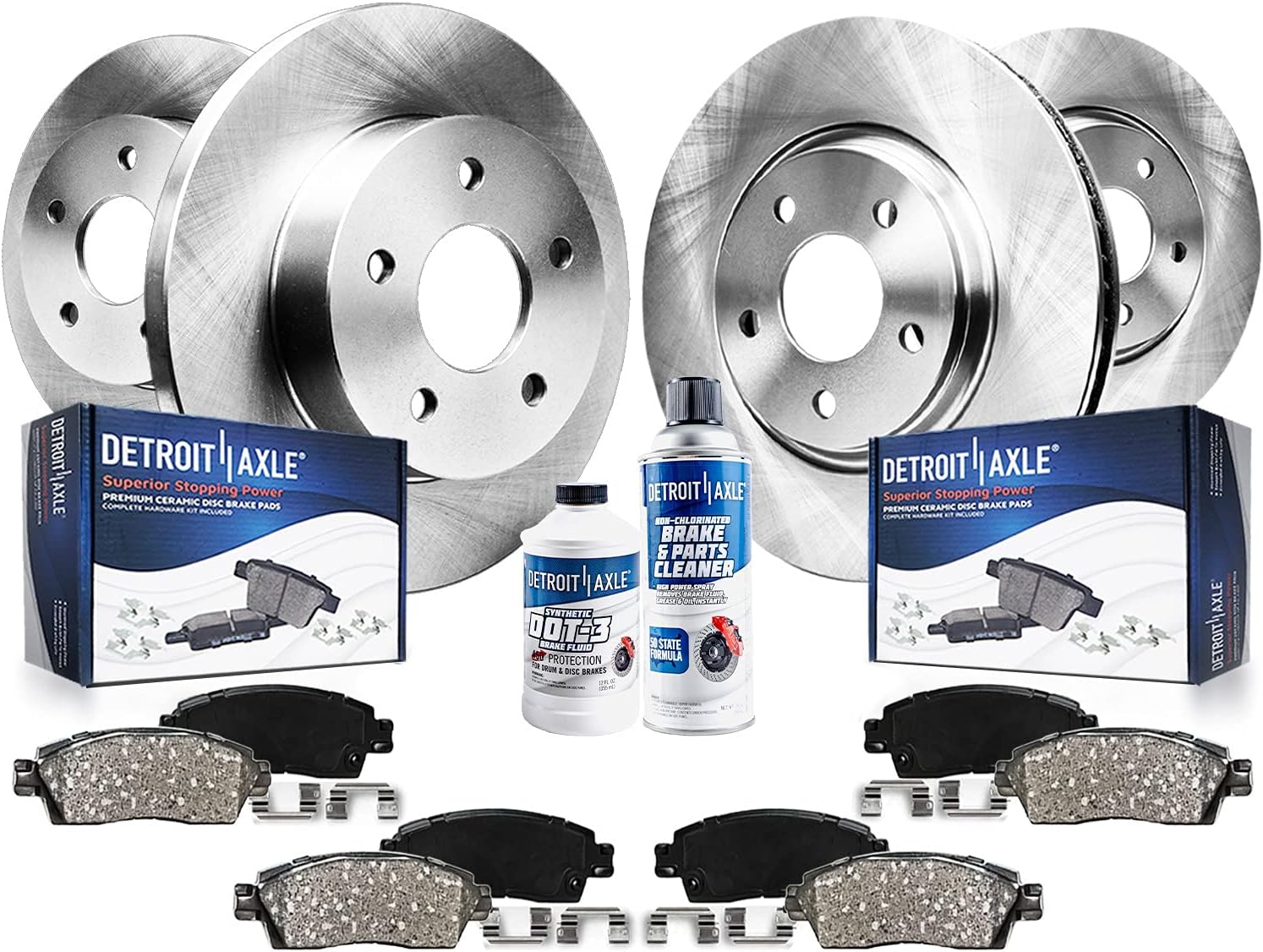
| Fitment | 2008-2012 Honda Accord (Sedan; LX, LX-P, SE) with 11.10" rotors |
|---|---|
| Rotor type | Vented, zinc plated |
| Pads | Ceramic with hardware included |
| Kit contents | Front and rear rotors, front and rear pads, 10oz brake cleaner, 12oz brake fluid |
This Detroit Axle kit supplies everything needed to replace both front and rear brakes on 2008–2012 Honda Accord sedans that use 11.10 inch rotors. The package includes matched front and rear rotors, ceramic pads with hardware, a can of brake cleaner and a bottle of brake fluid so you can complete a full axle-to-axle job without buying miscellaneous extras. The rotors are vented and zinc plated to help cooling and resist corrosion, and the pads are ceramic for quieter operation and reduced dust compared with semi-metallic compounds. Fitment is vehicle-specific and most buyers report straightforward installation and factory-quality alignment of the locating holes. Expect solid stopping performance and a clean appearance out of the box, though some users noted minor hardware fit issues on certain installs and the kit does not supply rotor mounting screws if your vehicle requires them. This is a practical, value-focused option for owners who want a full-service replacement that balances longevity, noise control, and ease of DIY installation.
Best for: Buyers who want a single purchase to replace all four rotors and pads on a 2008–2012 Accord and prefer a balance of quiet operation, corrosion resistance, and value for a DIY or budget-conscious repair.
Less Ideal for: Drivers seeking track-focused high-performance braking or aggressive pad compounds should choose purpose-built performance rotors and pads instead.
- Complete kit includes front and rear rotors and ceramic pads plus brake cleaner and brake fluid for a full job
- Vented, zinc-plated rotors improve heat dissipation and help resist surface corrosion
- Ceramic pads are quieter and produce less brake dust than many semi-metallic pads
- Vehicle-specific fit and machined locating holes make installation accurate and straightforward
- Does not include rotor mounting screws if your vehicle requires them
- Some customers reported minor fitment issues with front pad clips or hardware tolerances
Verdict: A convenient, vehicle-specific full brake kit that delivers quieter ceramic pads and corrosion-resistant vented rotors for reliable, wallet-friendly replacement on 2008–2012 Honda Accord sedans.
2. Akebono ProACT Ultra Premium Ceramic Front and Rear Brake Pad Set with Hardware

| Material Type | Ceramic |
|---|---|
| Auto Part Position | Front, Rear |
| Specification Met | OEM |
| Manufacturer Warranty Description | 1 year Warranty |
These Akebono ProACT ceramic pads replace both front and rear with a vehicle-specific fit and stainless hardware included. They are designed to cut noise, vibration, and harshness so braking feels smooth and quiet from the first stop with no lengthy break-in required. The ceramic compound produces very low wheel dust and is rotor-friendly, which helps keep rotors and wheels cleaner and can extend rotor life under typical driving. In real-world use this set works well for daily commuting, highway driving, and occasional hard stops thanks to steady, predictable bite and stopping power. Because they are tuned for consistent performance rather than track-level friction, they do not offer the extreme heat capacity or aggressive bite of race or heavy-duty street/track pads. Made in the USA and marketed as a direct replacement to restore factory-style ceramic performance, these pads are a practical upgrade if you want quieter braking, less dust, and dependable stopping in a street-driven 2008–2012 Honda Accord.
Best for: Buyers who want a quiet, low-dust, factory-quality ceramic replacement that restores dependable street braking for a 2008–2012 Accord and prioritize everyday drivability over track performance.
Less Ideal for: Drivers who need aggressive friction for track days or heavy towing should choose a performance-oriented or heavy-duty pad formulated for high heat and fade resistance instead.
- Vehicle-specific fit for front and rear simplifies installation
- Ceramic formula provides low dust and quiet operation
- Includes stainless hardware for corrosion resistance and complete kit
- Rotor-friendly design aimed at extending rotor life
- Not formulated for track use or extreme high-temperature braking
Verdict: Choose these pads to restore quiet, low-dust, factory-style ceramic braking with consistent street performance for a 2008–2012 Honda Accord.
3. SIPAUTEC Ceramic Front and Rear Brake Pad Set for 2008–2012 Honda Accord

| Compatible models | 2008–2012 Honda Accord EX, EX-L |
|---|---|
| Material Type | Ceramic |
| Number of Items | 8 |
| Automotive Fit Type | Vehicle Specific Fit |
This SIPAUTEC kit supplies four front and four rear ceramic pads plus small packets of lubricant for a complete brake service on 2008–2012 Accord EX and EX-L models. The pads are described as chamfered and slotted to mirror factory-style fit and to cut noise and dust; ceramic material aims for quiet operation and reduced wheel soiling compared with semi-metallic compounds. Installation is typical for a pad swap and can be done at home or by a shop, but the kit does not include mounting hardware or clips so reuse of original hardware or separate purchase may be necessary. Users report crisp stopping feel and low dust in daily driving, though a few reviews note premature noise or vibration on some installs, suggesting variable quality control. For a practical buyer the set offers OEM-equivalent fitment and straightforward performance for street driving, but expect to verify hardware compatibility and inspect for any fit/finish issues at installation.
Best for: Buyers who prioritize a low-dust, quiet daily driving brake replacement with factory-style fitment and want a full front-and-rear kit for scheduled maintenance.
Less Ideal for: Drivers who need heavy-duty or track-focused braking performance or who prefer a brand with extensive dealer-backed support should consider alternative friction materials or premium branded options.
- Complete 8-piece kit covers both front and rear pad replacement in one purchase.
- Ceramic compound targets quiet operation and lower wheel dust versus many metallic pads.
- Chamfered and slotted faces designed to reduce noise and improve bedding behavior.
- Vehicle-specific fit for 2008–2012 Accord EX/EX-L simplifies selection and installation.
- Mounting hardware and clips are not included so additional parts may be required.
- Some buyers have reported noise or premature issues on a minority of installs, indicating inconsistent quality control.
Verdict: If you want an affordable, vehicle-specific ceramic pad set to restore quiet, low-dust braking on a 2008–2012 Accord EX/EX-L, this SIPAUTEC kit is a practical full-service option.
4. MILLISEC Rear Ceramic Brake Pads Set — Rear, Ceramic (fits 2008–2017 Honda Accord / 2009–2014 Acura TSX)
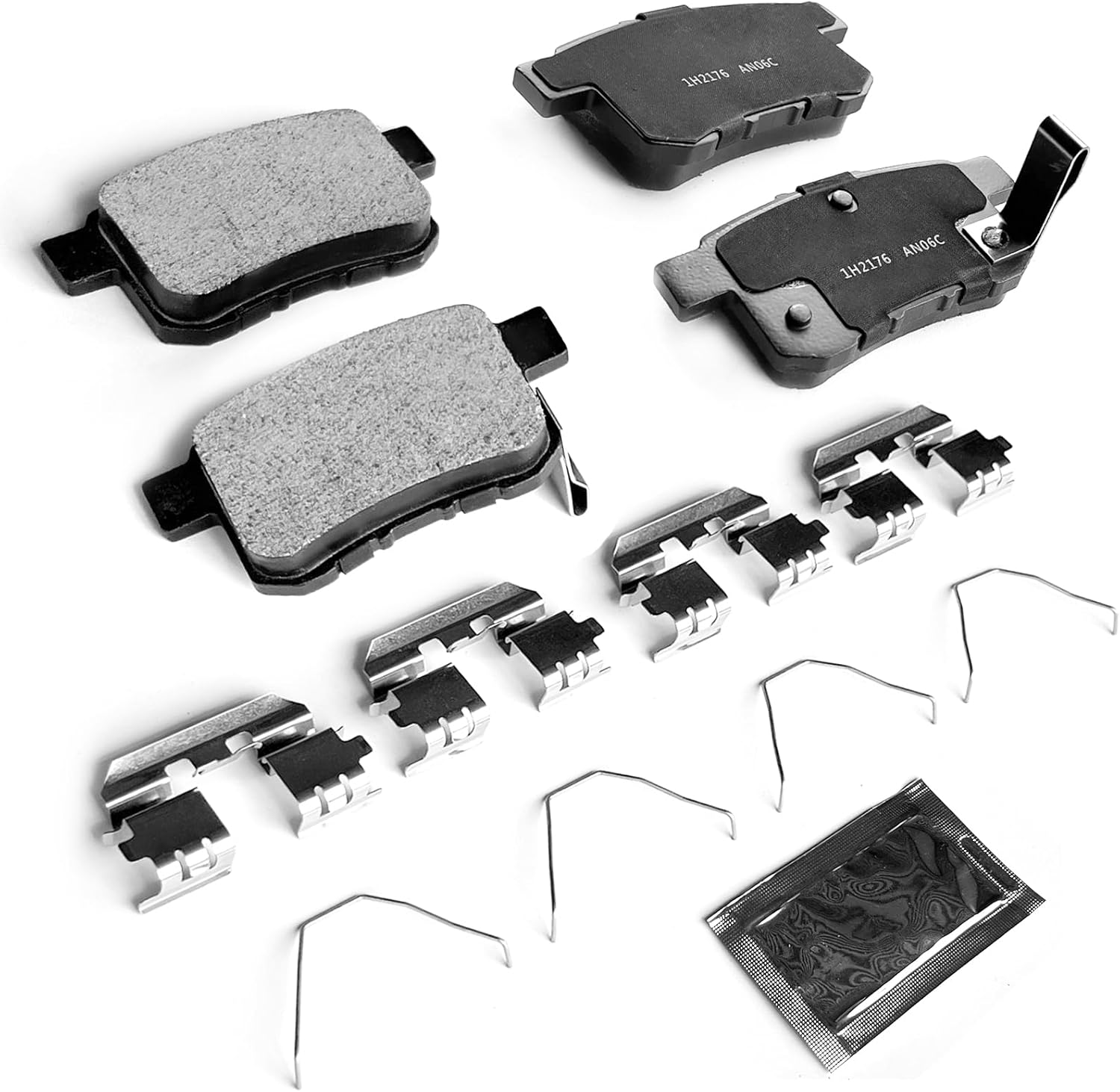
| Auto Part Position | Rear |
|---|---|
| Compatible with Vehicle Type | 2009-2014 ACURA TSX; 2008-2017 HONDA Accord |
| OEM Equivalent Part Number | BC1451 |
| Material Type | Stainless Steel |
These MILLISEC rear ceramic pads are a budget-friendly, vehicle-specific replacement designed for late 2000s to mid-2010s Honda Accord and Acura TSX rear brakes. The pads use a low-dust ceramic compound and include chamfers, slots, and stainless-steel hardware to reduce noise, control vibration, and resist heat-related cracking during repeated stops. In everyday use they deliver quieter operation and cleaner wheels compared with metallic pads, and the product claims improved pad life thanks to a hybrid formulation that boosts stopping power under heavier braking. Fitment is listed to match factory specifications and the set replaces OEM part BC1451, so installation is straightforward for a DIYer with basic tools or for a shop to swap in. Limitations are typical of ceramic compounds: they may produce slightly less initial bite than high-performance metallic pads in aggressive driving or track use, and buyers should verify exact year and trim fitment before ordering. The kit includes stainless hardware intended to simplify installation and reduce corrosion over time.
Best for: Buyers needing an affordable, low-dust rear pad replacement for routine street driving on the specified Accord or TSX years who prioritize quiet operation and easy fitment.
Less Ideal for: Drivers who frequently do aggressive driving, towing, or track laps and need maximum initial bite and fade resistance should consider performance-oriented metallic pads instead.
- Low-dust ceramic formulation keeps wheels cleaner than metallic pads
- Chamfered and slotted faces reduce heat cracks and help quiet operation
- Includes stainless-steel hardware for easier installation and corrosion resistance
- Vehicle-specific fit listed to replace OEM BC1451 for straightforward swap
- Ceramic compounds can feel less immediate under aggressive or track-style braking compared with metallic pads
Verdict: A cost-conscious, low-dust ceramic rear pad set that provides quiet, factory-style braking and easy fitment for the listed Accord and TSX model years.
5. Bendix Priority1 CFC1451 Ceramic Rear Brake Pad Kit

| Brand | Bendix |
|---|---|
| Auto Part Position | Rear |
| Automotive Fit Type | Vehicle Specific Fit |
| Material Type | Ceramic |
The Bendix Priority1 CFC1451 rear ceramic pad kit is a direct-fit replacement designed to match factory fit, form, and function while offering quieter operation and reduced dust compared with many economy pads. It ships with installation hardware and a packet of brake lube so you can complete a routine rear pad change without hunting for extra parts. In everyday use these pads provide predictable stopping power and resist fade during normal commuting and highway driving, and the included shims, slots, and chamfers help keep noise to a minimum. Customers report straightforward installation and thicker-than-average friction material at delivery, which helps longevity and inspection margins. A few isolated reports note fitment or hardware alignment issues on uncommon vehicles, so double-check the part shape against your existing pads before installation. These are not a performance or heavy towing upgrade but they are a solid, quiet, factory-quality replacement for routine driving.
Best for: Buyers who prioritize dependable, low-noise factory-quality replacements for daily driven Accords and similar vehicles and want a kit that includes hardware to simplify installation.
Less Ideal for: Drivers who need track-capable pads, aggressive performance stopping, or heavy-duty towing pads should choose a performance-graded or heavy-duty friction compound instead.
- Ceramic formulation gives quiet braking and lower wheel dust
- Includes installation hardware and silicone brake lube for a full rear pad replacement
- Engineered to meet factory fit, form, and function for straightforward installation
- Designed to resist brake fade for consistent daily driving performance
- Not intended for performance driving or heavy towing applications
- Occasional reports of included hardware not fitting specific caliper designs
Verdict: A quiet, factory-quality ceramic rear pad kit that gives reliable, low-dust braking and includes the hardware needed for a straightforward replacement on everyday cars.
6. BOSCH QuietCast Premium Ceramic Rear Brake Pad Set
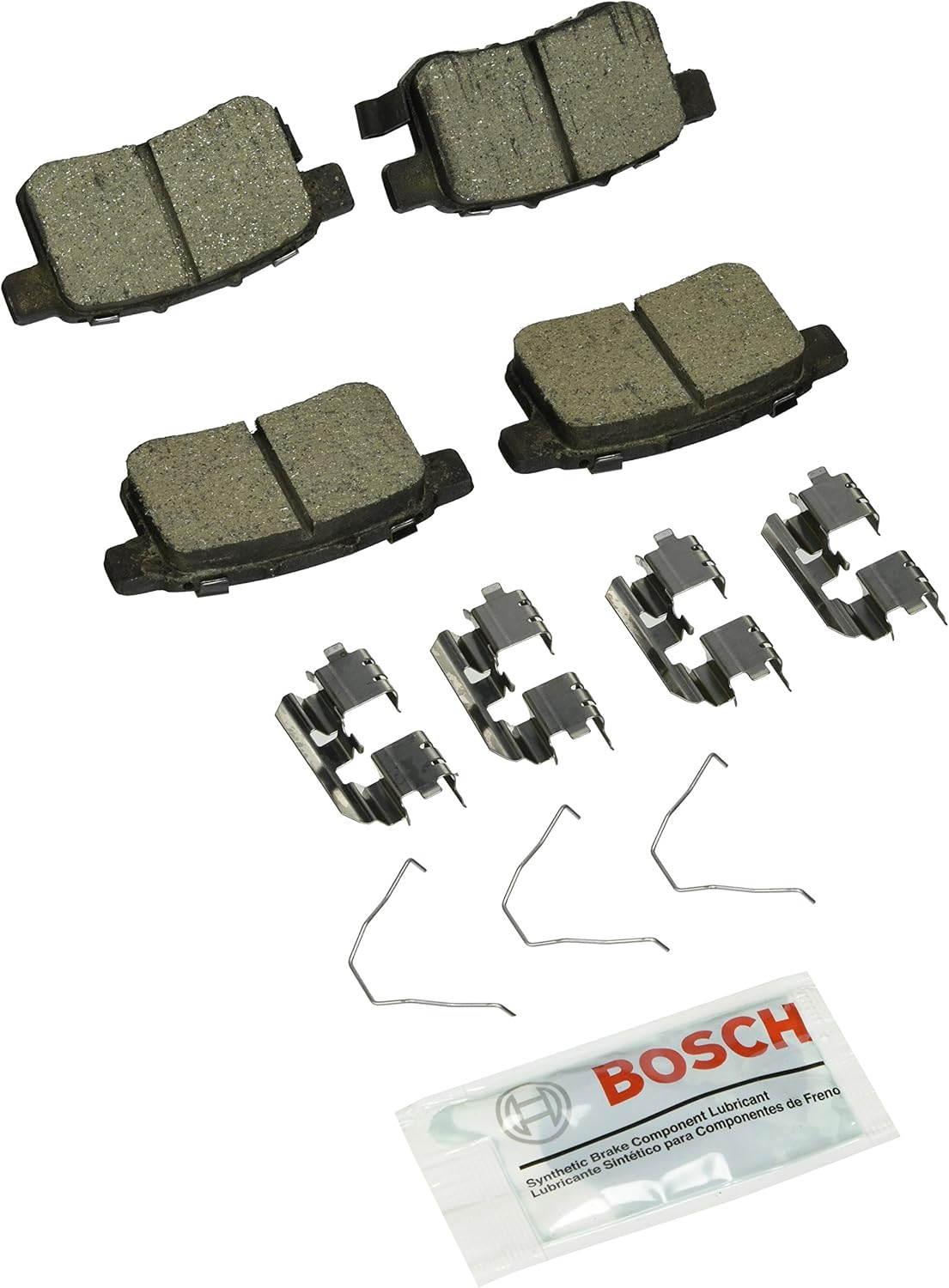
| Material | Ceramic |
|---|---|
| Auto Part Position | Rear |
| Specification Met | OEM |
| Manufacturer | Bosch Automotive |
These Bosch QuietCast rear brake pads are a ceramic, vehicle-specific replacement intended for Honda Accord models in the 2008–2017 fitment range and Acura TSX where listed. They use Bosch Molded Shim Technology with pre-attached multilayer rubber-core shims to reduce noise and vibration, and the ceramic friction material is formulated for firm stopping power with minimal dust. The kit includes pads for one axle, hardware where applicable, and a packet of synthetic lubricant to ease installation and reduce slide resistance. Powder-coated backing plates and OE-style slots and chamfers help maintain fit and resist corrosion over time. In practice they suit DIY brake jobs well: users report straightforward installation and quiet operation once bedded in. Limitations are that hardware fit can vary by trim or caliper design, so some customers kept old clips, and as with most ceramic pads they prioritize low dust and comfort over ultra-high performance for aggressive track use.
Best for: Buyers who want a reliable, low-noise, low-dust rear replacement pad that matches factory fit and performs well for everyday driving and DIY brake jobs.
Less Ideal for: Drivers who need track-oriented or heavy-duty high-temperature brake performance should consider performance-specific pads instead.
- Pre-attached multilayer rubber-core shims for reduced noise and vibration
- Ceramic friction material delivers consistent stopping with low dust
- Powder-coated backing plates resist corrosion for longer service life
- Includes hardware kit where applicable and synthetic lubricant for installation
- Hardware clips may not fit every caliper configuration, requiring reuse of existing clips
Verdict: A quiet, low-dust factory-quality ceramic rear pad set that gives dependable stopping and straightforward DIY installation for 2008–2012 Accord owners.
7. BOSCH QuietCast Premium Ceramic Front Disc Brake Pad Set (BC914)

| Material | Ceramic |
|---|---|
| Auto Part Position | Front |
| Specification Met | OEM |
| Manufacturer | Bosch Automotive |
The Bosch QuietCast BC914 is a front axle ceramic brake pad set engineered for a direct, vehicle-specific replacement on compatible Hondas and Acuras. It uses Bosch Molded Shim Technology with pre-attached multilayer rubber-core shims to reduce noise and improve shim-to-backing bond, and the ceramic friction compound is formulated for strong stopping power with reduced dust. Bosch supplies powder-coated backing plates to resist corrosion, plus OEM-style slots and chamfers to aid fit and reduce bedding issues. The kit arrives ready to install with pads for one axle and synthetic lubricant for sliding contact points; where applicable Bosch includes a hardware kit. In real-world use this pad works like a conservative, factory-quality replacement: it calms brake squeal, limits rotor contamination from dust, and gives predictable pedal feel for everyday driving. Some buyers report mismatched or ill-fitting hardware on particular model years or trims, so confirm fitment for your specific Accord and be prepared to reuse OEM clips if needed.
Best for: Buyers who prioritize a reliable, factory-quality replacement that minimizes noise and dust and want predictable, conservative braking performance for daily driving on a 2008–2012 Accord.
Less Ideal for: Those seeking high-performance or track-oriented brake pads with aggressive initial bite or heavy-duty fade resistance should look at sport or performance-specific compounds instead.
- Ceramic compound gives strong, quiet stopping with low brake dust.
- Pre-attached multilayer rubber-core shims reduce noise and improve durability.
- Powder-coated backing plates resist corrosion for longer life.
- Includes lubricant and, where applicable, a hardware kit for a more complete install.
- Some included hardware/clips have mismatched dimensions for certain model years or trims, requiring reuse of factory clips.
Verdict: Choose the Bosch QuietCast BC914 when you want a quiet, low-dust, factory-style front brake pad replacement for your Accord that prioritizes predictable everyday braking.
Choosing the Right 2008-2012 Honda Accord Brake Pads: Key Factors to Consider
Friction Material and Stopping Power
The pad compound determines initial bite and how braking force develops under pressure. Organic and ceramic blends typically give smooth, predictable modulation ideal for daily driving, while semi-metallic compounds can offer stronger initial bite and higher heat tolerance. For the 2008–2012 Accord, choose a compound that provides reliable deceleration without requiring an overly firm pedal input.
Material choice also affects rotor wear. Harder, high-metal-content pads can increase rotor scoring if not matched to driving conditions. Consider how you drive the Accord when choosing a compound: commuting and family use favor quieter, low-dust compounds, while heavier loads or more spirited driving justify compounds with greater thermal stability.
Noise, Vibration, and Harshness (NVH)
Brake squeal and vibration are common concerns on this generation of Accord. NVH performance hinges on compound formulation, backing plate design, and whether the pad includes shims or chamfers to interrupt resonant frequencies. Properly designed pads with effective shims reduce high-frequency squeal and lessen feedback through the pedal.
Installation details like correct torque, clean contact surfaces, and use of recommended anti-squeal lubricant also affect NVH. When selecting pads, look for features such as bonded or multi-layer shims and chamfered edges to minimize noise and eliminate vibrations that are often mistaken for other drivetrain issues.
Fitment Accuracy and Brake Hardware
Exact fit to the Accord's calipers ensures even wear and prevents movement that can cause noise or premature failure. Pads intended for this specific 2008–2012 Accord range will align with the caliper piston face, retaining clips, and mounting slots. Poorly fitting pads can lead to inconsistent contact, uneven wear patterns, and reduced braking performance.
Also consider whether replacement pads include necessary hardware such as new clips or shims. If hardware is omitted, plan to reuse or replace old clips to maintain correct pad movement and alignment. Correct fitment reduces installation time and lowers the risk of post-install issues like rattling or uneven pad transfer on the rotor surface.
Wear Life and Dust Production
Pad longevity matters for maintenance frequency and total ownership cost. More durable compounds extend service intervals but can trade off with rotor friendliness. For the Accord, a balance is usually best: pads that last through typical mileage cycles while producing moderate dust that is easy to clean.
Dust characteristics differ by compound. Ceramic-rich pads usually generate finer, lighter-colored dust that clings less to wheels, while semi-metallic pads can leave darker, harder-to-clean residue. If wheel appearance is a concern, prioritize lower-dust formulations while still maintaining acceptable wear rates.
Thermal Performance and Fade Resistance
Under repeated heavy braking or hill descents, pads heat up and can lose friction, a phenomenon known as fade. The Accord's non-performance brake system can be sensitive to temperature, so pads with predictable friction curves and good thermal stability reduce fade risk during demanding driving.
Look for pads with friction formulations and backing plate features aimed at dissipating heat. For drivers who frequently encounter steep grades, tow, or perform spirited driving, choose pads rated for higher operating temperatures to maintain stopping power and reduce the chance of glazing under heat.
Front Versus Rear Application
The front and rear pads serve different roles; the front pads typically handle a larger share of braking force and therefore wear faster. Selecting pads that are appropriately matched front to rear maintains balanced braking feel and predictable ABS engagement. Using a much higher-friction compound at the rear while leaving the front stock can upset pedal feedback and ABS thresholds.
When replacing only one axle, be aware of matched compound recommendations and bedding procedures. If front pads are nearing replacement sooner, consider replacing both front pads together and inspect the rear for wear to preserve consistent braking performance across the Accord's system.
Understanding Brake Pad Fitment for the 2008–2012 Accord
Fitment for the 2008–2012 Honda Accord requires matching pads to the specific caliper type and rotor size used on your vehicle variant. Confirm whether your Accord has standard or larger rotors on the front axle when ordering replacements to ensure correct backing plate shape and mounting clip placement.
Accurate fitment reduces installation hassles and helps avoid common issues like pad movement, uneven wear, and noise. When in doubt, verify the caliper mounting style and piston count before selecting pads to ensure a bolt-on fit.
- Inspect current pad shape and mounting hardware before ordering
- Note any included anti-rattle clips or shims with replacement pads
- Confirm front and rear pad part differences; they are not interchangeable
Bedding In New Pads on the Accord
Proper bedding transfers a uniform friction layer from the pad to the rotor and establishes predictable braking performance. A typical bedding procedure involves progressive stops from moderate speeds with cooling intervals to avoid glazing.
For the Accord, avoid aggressive, repeated hard stops immediately after installation. Start with several gentle to moderate stops to seat the pads, then perform a few firmer stops to finish the process while monitoring for unusual noise or pull.
- Make 8 to 12 progressive stops from 30–40 mph, allowing cooling between runs
- Avoid stationary brake dragging right after bedding to prevent hot spots
Common Brake Pad Wear Symptoms and What They Mean
Listen and look for early indicators of pad wear. Squeal at low speed often signals retained vibration or failing shims, while a grinding noise usually means the friction material is exhausted and metal backing is contacting the rotor.
Uneven wear across the pad face can point to caliper slide or piston issues. If you notice a spongy pedal, uneven stopping, or longer stopping distances, inspect pad thickness and the condition of rotors and calipers to identify the root cause.
- Squeal: check shims, pad seating, and possible glazing
- Grinding: immediate inspection required to prevent rotor damage
- Uneven wear: inspect caliper hardware and slides
Ceramic Versus Semi-Metallic Choices for Daily Driving
Ceramic pads generally offer quieter operation, lower dust, and a stable pedal feel for most daily driving scenarios common to Accord owners. They are comfortable for commuting and preserve wheel finish better than some other compounds.
Semi-metallic options provide stronger initial bite and improved heat tolerance, useful if you frequently carry heavier loads or drive in hilly terrain. The tradeoff is typically increased dust and the potential for more rotor wear over time.
- Choose ceramic for quiet, low-dust commuting
- Consider semi-metallic for higher thermal demands or occasional spirited driving
Maintenance Tips to Extend Pad and Rotor Life
Regular inspections help catch wear before it affects safety or causes rotor damage. Measure pad thickness at each oil change interval and listen for developing noise. Clean and lubricate guide pins and replace hardware when corroded to ensure even pad retraction and wear.
Resurfacing or replacing rotors when they show scoring or runout preserves the life of new pads and maintains smooth braking. Addressing minor issues early reduces the chance of larger, more expensive repairs down the road.
- Check pad thickness every 6,000 to 8,000 miles
- Replace missing or worn shims and clips during pad service
- Have rotors measured for runout and thickness before fitting new pads
Still looking for the perfect fit?
Select your Honda Accord configuration to see the most relevant Brake Pads recommendations
How We Chose the Best 2008-2012 Honda Accord Brake Pads
Our selection process prioritized criteria that directly affect performance and ownership experience on the 2008–2012 Honda Accord. We focused on braking effectiveness under everyday driving and occasional spirited use, looking for consistent pedal modulation and short stopping distances without creating excessive rotor wear. Durability and life expectancy were weighed using manufacturer friction formulations and common material properties for this vehicle class.Noise and vibration control mattered because Accord owners frequently report squeal and judder when pads are mismatched or poorly bedded. We examined pad compounds and backing plate features that reduce high-pitch noise and checked for anti-rattle hardware compatibility. Fitment accuracy was required; only pads designed to match the Accord's caliper geometry and mounting points were considered.Thermal performance and fade resistance were included for drivers who tow, carry loads, or do repeated stop-start driving. We excluded any pads lacking documented friction specs, pads intended solely for racing use, and poorly documented aftermarket listings. Final selections balanced stopping power, longevity, and NVH behavior to suit typical and slightly aggressive driving on the Accord.
Our full evaluation process is outlined in our review methodology.
FAQ
How often should I replace brake pads on a 2008–2012 Accord?
It depends on driving habits but typically every 30,000 to 60,000 miles. Frequent city driving or heavy braking will shorten service life, while highway miles usually extend it. Inspect thickness periodically and follow the pad manufacturer's minimum thickness guidance.
Can I replace only the front pads and keep the rear pads on the Accord?
Yes, you can replace a single axle, but for balanced braking feel and consistent performance it is often recommended to replace pads in pairs on the same axle. If fronts are much more worn, address them first and inspect the rear pads for remaining life.
What are common brake pad wear symptoms I should watch for?
Listen for squeal indicators at low speeds, grinding noises that suggest worn-out material, and check for decreased pedal firmness or longer stopping distances. Visual checks for thin linings and uneven wear help catch problems early.
Are ceramic brake pads a good choice for my Accord?
Ceramic pads are a solid option for most Accord owners seeking quiet operation and low dust. They offer predictable pedal feel for daily driving, though drivers who need higher heat tolerance might prefer a different compound.
Will switching to aftermarket brake pads affect ABS performance?
In most cases ABS will function normally as long as the replacement pads match the original specifications for thickness and fitment. Significant differences in friction characteristics can subtly change ABS thresholds, so choose pads with compatible friction behavior.
What causes brake pad noise or grinding after installation?
Noise can stem from improper bedding, missing or damaged shims, incorrect torque on caliper bolts, or contaminated pad surfaces. Grinding usually means pads are worn through to the backing plate and require immediate attention to avoid rotor damage.
Final Verdict
Choose brake pads for your 2008–2012 Honda Accord by balancing stopping power, NVH performance, and longevity. Prioritize precise fitment and compounds that match your driving conditions: quiet, low-dust ceramics for daily commuting or higher-tolerance blends if you demand more thermal stability.Weigh the tradeoffs between initial bite and rotor friendliness, and replace pads in matched sets when practical to maintain balanced braking. Follow proper bedding and maintenance practices to get consistent performance and longer service life from whichever pads you choose.
Explore More:
- Check out all Honda Accord parts & accessories
- Explore Brake Pads Maintenance & Repair Guides
- Explore Brake System
- Browse all Auto Parts
