

Note: This article contains affiliate links. If you click on these links and make a purchase, I may earn a small commission at no extra cost to you. This helps support my research and content. Read my full affiliate disclosure here.
If you drive a Honda Accord V6, choosing the right brake pads has a major impact on safety, drivability, and long-term maintenance costs. The wrong pads can increase stopping distances, create persistent noise, or wear out rotors prematurely. This guide looks at the top shortlisted options for Accord V6 brake pads and explains the real-world tradeoffs between stopping power, noise, and lifespan.We evaluated pads based on braking performance, rotor friendliness, and expected service intervals so you can pick a set that fits your driving style and maintenance goals. Below are the top picks and the criteria we used to narrow them down.
Looking for other parts? See all Honda Accord parts & accessories.
Top Picks at a Glance
| Best Overall The best all-around choice for most situations | Detroit Axle Brake Kit for 2003–2007 Honda Accord V6 — Front & Rear Rotors with Ceramic Pads |  |
| Best Quality Built to a higher standard if you want something more solid | Bosch QuietCast BC537 Premium Ceramic Rear Brake Pad Set |  |
| Best Value The sweet spot between price and what you get | TRQ Ceramic Front and Rear Brake Pad and Rotor Kit for 2003–2007 Honda Accord V6 |  |
| Best Budget The cheapest option that still gets the job done reliably | ALADICHE Ceramic Front and Rear Brake Pads for 2003–2007 Honda Accord V6 |  |
| Highest Rated A top-rated pick with lots of positive feedback | Detroit Axle Front & Rear Drilled and Slotted Brake Kit for 2003–2007 Honda Accord V6 |  |
| Most Popular A crowd favorite that many people choose with confidence | Max Advanced Brakes StyleMAX Front & Rear Cross‑Drilled Rotors and Ceramic Pad Kit for 2003–2007 Honda Accord (2.4L/3.0V6) |  |
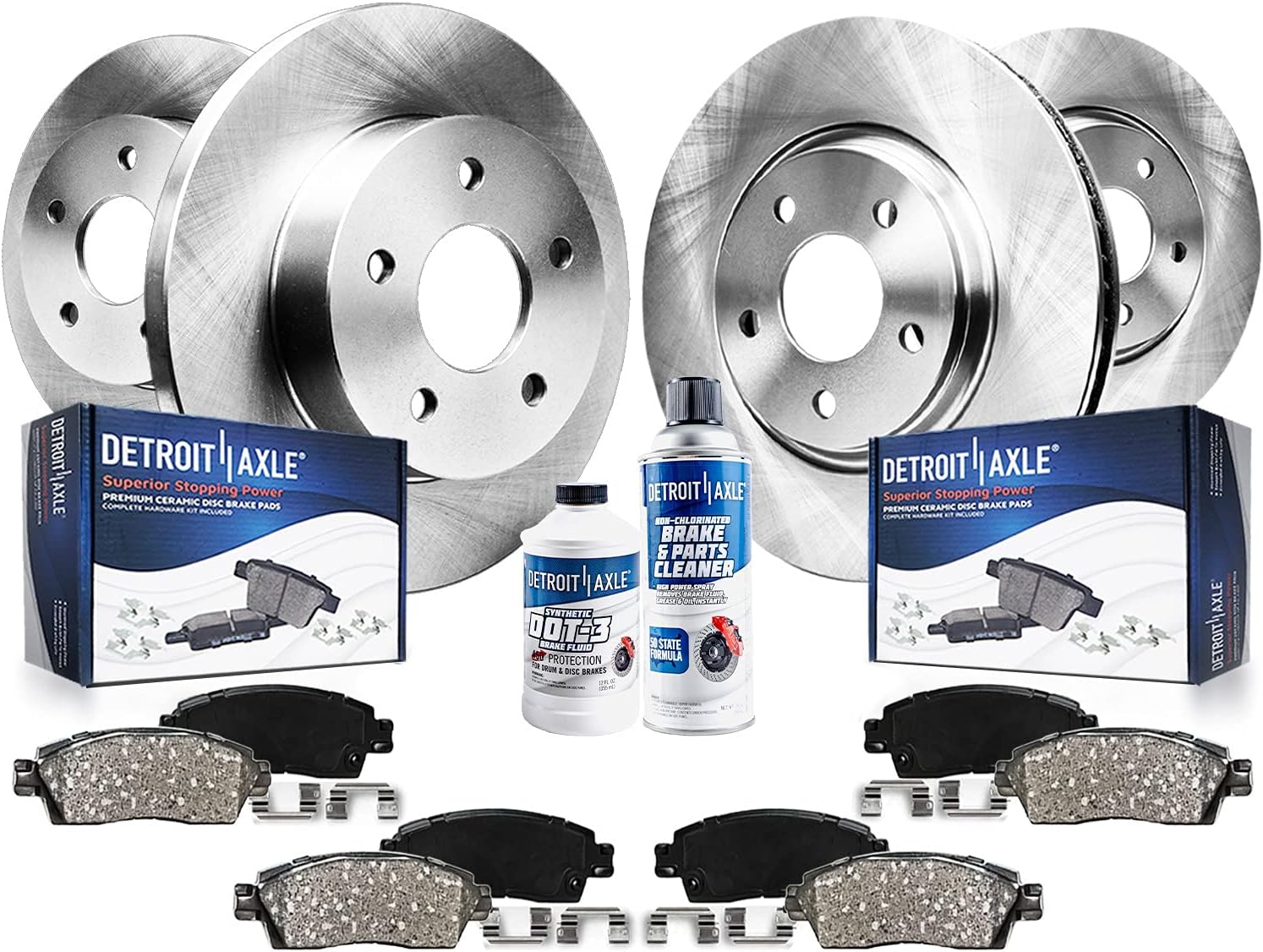
1. Detroit Axle Brake Kit for 2003–2007 Honda Accord V6 — Front & Rear Rotors with Ceramic Pads
| Front Rotor Size | 11.10 inch (282mm) |
|---|---|
| Rear Rotor Size | 10.23 inch (260mm) |
| Pad Type | Ceramic (0% metallic) |
| Fitment | 2003–2007 Honda Accord V6, rear disc models only |
This Detroit Axle brake kit supplies everything needed for a full front and rear brake service on 2003–2007 Honda Accord V6 models with rear disc brakes. The kit includes two front and two rear rotors, front and rear ceramic pads with installation hardware, a brake cleaner can, and a bottle of brake fluid. The rotors are zinc plated to resist corrosion and are machined with accurate locating holes so they fit without modification. Ceramic pads promise low noise and low metallic dust for everyday driving and the included hardware speeds installation. Practical benefits are clear: you get matched rotors and pads sized for the Accord, plus consumables so you can complete the job in one visit to the garage. Be aware that some buyers received smooth rotors instead of drilled/slotted and a few reported faster-than-expected surface rust or pad dust/noise under heavy stop-and-go use, so expect typical aftermarket variability compared with dealer parts. For a balanced buyer looking for value and a full kit, this is a convenient, install-ready option.
Best for: Buyers who want a single, value-minded kit to replace all brake rotors and pads on a 2003–2007 Accord V6 and prefer ready-to-install parts and included consumables to finish the job in one go.
Less Ideal for: Shoppers seeking premium performance rotors or specialty drilled/slotted designs for track use or aggressive braking should consider high-performance aftermarket alternatives instead.
- Complete kit includes front and rear rotors, front and rear ceramic pads, hardware, brake cleaner, and brake fluid
- Rotors machined to fit accurately and zinc plated to help reduce visible corrosion
- 100% ceramic pads designed for quieter operation and reduced metallic dust
- Matched front and rear components sized specifically for 2003–2007 Accord V6 rear disc models
- Some units arrived with smooth rotors rather than drilled or slotted variants advertised
- A minority of users reported surface rust and pad noise or dust developing under certain driving conditions
Verdict: A convenient, all-in-one brake replacement kit that delivers matched ceramic pads and factory-fit rotors for 2003–2007 Accord V6 owners who want solid value and an install-ready package.
2. Bosch QuietCast BC537 Premium Ceramic Rear Brake Pad Set

| Material | Ceramic |
|---|---|
| Auto Part Position | Rear |
| Specification Met | OEM |
| Manufacturer | Bosch Automotive |
The Bosch QuietCast BC537 rear brake pad set is a ceramic, vehicle-specific replacement designed to deliver quiet, confident stopping for compatible Hondas and similar models. It uses Bosch Molded Shim Technology with multilayer rubber-core shims and powder-coated backing plates to reduce noise, resist corrosion, and extend pad life. The kit arrives with pads for one axle plus hardware where applicable and synthetic lubricant for slide points, making installation straightforward for anyone comfortable with brake work. In daily driving it provides strong, linear braking with lower dust than many semi-metallic pads and noticeably reduced squeal thanks to the pre-attached shims and chamfered edges. Limitations: ceramic pads can feel slightly less aggressive under extreme repeated high-load stops compared with some performance-oriented metallic compounds, and fit varies by trim so verify vehicle compatibility before buying. Overall this is a solid factory-quality replacement that balances quiet operation, low dust, and dependable stopping for everyday and spirited street driving.
Best for: Drivers who prioritize quiet, low-dust braking with reliable, factory-quality performance for everyday and moderately spirited V6 Accord use.
Less Ideal for: Track drivers or those who frequently perform heavy repeated high-speed stops should choose a high-temperature metallic or race-oriented pad instead.
- Ceramic friction formulation for quiet braking and reduced wheel dust
- Pre-attached multilayer rubber-core shims to minimize noise and vibration
- Powder-coated backing plates for improved corrosion resistance and durability
- Includes hardware kit (where available) and synthetic lubricant for easier installation
- Ceramic compound can provide less fade resistance than aggressive metallic performance pads under sustained high-heat braking
Verdict: Choose these QuietCast rear ceramic pads when you want factory-quality, quiet braking with low dust and dependable stopping for V6 Accord street driving.
3. TRQ Ceramic Front and Rear Brake Pad and Rotor Kit for 2003–2007 Honda Accord V6

| Compatible with Vehicle Type | Car |
|---|---|
| Automotive Fit Type | Vehicle Specific Fit |
| Friction Material Composition | Ceramic |
| Front Brake Rotor Venting Type | Vented |
| Rear Brake Rotor Venting Type | Solid |
This TRQ kit replaces both front and rear brake pads and rotors with ceramic friction material and factory-style rotors sized to match the listed Accord V6 fitments. It includes front and rear ceramic pad sets plus two front and two rear rotors, with vented front rotors and solid rear rotors where required. In everyday use the ceramic pads should deliver quieter braking and reduced dust compared with semi-metallic pads, while the matched rotor set lets you service both axles at once for consistent pedal feel. TRQ advertises direct-fit, preassembled components and provides installation videos, which helps DIYers save time and avoid modifications. Limitations to note are that this is a vehicle-specific kit for certain Accord V6 years and configurations only, and ceramic pads can feel slightly less bite-y under repeated hard track-style stops than aggressive performance compounds. Expect good street braking, lower dust, and an easier single-purchase brake service when replacing both rotors and pads together.
Best for: Buyers who want a practical, all-in-one replacement to restore everyday braking performance on the specified Accord V6 models and prefer lower dust and quieter operation while doing the job themselves.
Less Ideal for: Drivers seeking track-focused, high-temperature braking performance or those who need a universal kit that fits multiple vehicle types should look elsewhere.
- Complete kit covers front and rear pads plus four rotors for one-stop brake jobs
- Ceramic friction reduces dust and tends to run quieter than semi-metallic pads
- Vented front and solid rear rotors matched to fitment support consistent pedal feel
- Preassembled direct-fit components and installation videos simplify DIY installation
- Fitment is limited to specific 2003–2007 Accord V6 configurations so it is not universal
- Ceramic pads may offer less initial bite under aggressive track or heavy towing conditions
Verdict: A convenient, vehicle-specific ceramic pad and rotor kit that restores quiet, low-dust street braking for 2003–2007 Honda Accord V6 owners doing a single comprehensive brake service.
4. ALADICHE Ceramic Front and Rear Brake Pads for 2003–2007 Honda Accord V6

| Compatible models | 2003-2007 Honda Accord V6 w/ automatic transmission, rear disc only |
|---|---|
| Material type | Ceramic |
| Number of items | 8 |
| Manufacturer warranty description | 1 year |
These ALADICHE brake pads are a complete front-and-rear ceramic replacement kit sold as eight pieces for 2003–2007 Honda Accord V6 models with automatic transmission and rear disc brakes. Designed as a vehicle-specific fit, the ceramic formulation aims to deliver quieter stops, reduced brake dust, and consistent stopping power for everyday driving. Typical use is a direct swap during a brake service where improved cabin noise and cleaner wheels are priorities. Buyers report solid stopping feel and low dust in normal driving, though the set does not include caliper clips or lubricant so you may need to buy hardware separately if your calipers or clips are worn. The pads come with a one year manufacturer warranty and are best for drivers wanting a low-noise, low-dust replacement at a budget-friendly price. Expect factory-style performance for daily commuting rather than sport or heavy towing use; installation is straightforward for someone comfortable with brake work but plan for small additional purchases if you need new hardware or grease.
Best for: Drivers replacing worn pads on a 2003–2007 Honda Accord V6 who prioritize a quiet, low-dust ceramic option and want a complete front-and-rear pad set at an affordable cost.
Less Ideal for: Drivers who need upgraded performance pads for spirited driving, heavy towing, or track use should choose a performance-oriented compound instead.
- Ceramic compound reduces brake dust compared with semi-metallic pads
- Designed as vehicle-specific fit for 2003–2007 Accord V6 automatic with rear disc brakes
- Quieter braking claimed and reported by users
- Comes as a full front-and-rear eight-piece set for a complete pad replacement
- Does not include caliper clips or lubricant, which may require separate purchase
- Targeted at everyday driving and not intended for heavy-duty or performance use
Verdict: A budget-friendly ceramic front-and-rear pad kit that gives quieter, low-dust braking for 2003–2007 Accord V6 daily drivers.
5. Detroit Axle Front & Rear Drilled and Slotted Brake Kit for 2003–2007 Honda Accord V6

| Front rotor size | 282 mm (11.10 in) |
|---|---|
| Rear rotor size | 260 mm (10.23 in) |
| Pad type | Ceramic |
| Includes | Front and rear rotors, front and rear pads, hardware, brake cleaner, brake fluid |
| Fitment | 2003–2007 Honda Accord V6 (rear disc models only) |
This Detroit Axle kit supplies everything needed to replace both front and rear rotors and pads on a 2003–2007 Honda Accord V6 with rear disc brakes. The set includes drilled and slotted front and rear rotors, front and rear ceramic pads with hardware, a small bottle of brake fluid and a can of brake cleaner, which makes it convenient for a single DIY job. Drilled and slotted rotors help shed heat and moisture for more consistent stopping during heavier use, while the zinc plating reduces surface corrosion and visible wheel dust. The ceramic pads tend to run quiet and provide predictable bite for daily driving. Fitment is vehicle-specific for the listed Accord V6 configurations and customers report easy installation when basic tools and some mechanical ability are available. Expect to follow the provided bedding instructions and allow a break-in period for best performance. Some buyers note occasional issues with peripheral hardware fitment or missing instructions, so keep standard hand tools and replacement clips on hand if you want a smoother install experience.
Best for: Drivers who prioritize dependable, factory-quality replacement braking for regular use and want a full kit to do the job themselves rather than sourcing parts separately.
Less Ideal for: If you prefer a plug-and-play experience from a professional shop that supplies full installation service and checks hardware fitment, this DIY-focused kit may be less convenient.
- Complete kit includes front and rear rotors, ceramic pads, hardware, brake cleaner and brake fluid for a single install
- Drilled and slotted rotors improve heat dissipation and help reduce brake fade under heavier use
- Zinc plating helps resist surface corrosion and reduces visible wheel dust compared with bare rotors
- Vehicle-specific fitment for 2003–2007 Honda Accord V6 rear-disc configurations simplifies selection
- Installation assumes some DIY experience and basic tools since printed instructions are minimal or inconsistent
Verdict: A complete, vehicle-specific rotor-and-pad kit that delivers reliable, heat-resistant braking for 2003–2007 Accord V6 drivers who want a DIY-ready factory-quality replacement.
6. Max Advanced Brakes StyleMAX Front & Rear Cross‑Drilled Rotors and Ceramic Pad Kit for 2003–2007 Honda Accord (2.4L/3.0V6)

| Included Components | Brake Rotors, Brake Pads, Hardware |
|---|---|
| Automotive Fit Type | Vehicle Specific Fit |
| Orientation | Dual |
| Manufacturer | Max Advanced Brakes |
This StyleMAX kit bundles four cross-drilled rotors, eight carbon-infused ceramic pads, and installation hardware to provide a complete brake refresh for the listed Accord V6 fitments. The drilled rotor faces improve heat dissipation which helps resist fade during frequent stops, while the non-directional finish and balanced machining aim to reduce vibration and speed bedding-in. The carbon-ceramic pads are formulated to produce less dust and lower low-speed noise, giving cleaner wheels and a quieter daily drive compared with many semi-metallic pads. Because the kit is vehicle-specific and includes hardware, installation is straightforward for a DIYer or tech following factory procedures. Expect improved pedal feel in city and highway use without changing calipers or braking geometry. Limitations: cross-drilled rotors can corrode faster in very wet or salted environments than plain rotors and drilled designs can be slightly noisier under heavy cold braking compared with plain vented rotors; also long-term pad lifespan will depend on driving style.
Best for: Drivers who prioritize cleaner wheels, quieter everyday braking, and a fit-and-forget replacement that matches their Accord V6's factory-style setup while preferring documented performance features and user feedback.
Less Ideal for: Enthusiasts who frequently track their car or demand maximum high-temperature endurance should consider competition-grade rotors and pads instead.
- Complete kit includes front and rear rotors, pads, and installation hardware for a single purchase
- Cross-drilled rotors improve heat dissipation to reduce brake fade during repeated stops
- Carbon-infused ceramic pads produce substantially less dust and reduce low-speed noise
- Vehicle-specific fitment designed for direct bolt-on installation without modifications
- Cross-drilled rotor design can be more prone to surface corrosion or cracking under extreme thermal cycling compared with plain vented rotors
Verdict: Buy this kit if you want a complete, vehicle-specific rotor-and-pad replacement that cuts dust and improves daily braking feel for the 2003–2007 Accord V6.
Choosing the Right Honda Accord V6 Brake Pads: Key Factors to Consider
Brake Friction Material and Stopping Power
The friction material determines how quickly the vehicle decelerates and how the pedal feels during stops. Different formulations produce varying coefficients of friction across temperature ranges, which affects initial bite and repeatable stopping under heavier loads.
For the Accord V6, choose a material that provides confident stopping at highway speeds but also resists fade during repeated stops. Higher-friction materials typically reduce stopping distance but can increase rotor wear and generate more dust. Consider the balance between immediate stopping power and long-term rotor health when selecting pads.
Longevity and Wear Characteristics
Pad life affects how often you need replacement and influences long-term ownership costs. Materials with better abrasion resistance last longer but sometimes trade off with reduced initial bite or increased noise.
Think about your typical mileage and driving style. If you do a lot of highway cruising with occasional hard stops, prioritize compounds with good heat stability and slower wear. If you frequently encounter city traffic, choose a pad designed for predictable, consistent wear through many stop-start cycles.
Rotor Compatibility and Surface Impact
Some pads are harsher on rotors and can cause grooves or accelerated thinning, which leads to rotor replacement sooner than expected. Others are formulated to be rotor-friendly, reducing the need for machining or replacement.
For the Accord V6, matching pad abrasiveness to your rotor condition is important. If your rotors are factory thickness and in good condition, favor pads labeled for rotor friendliness. If rotors are already worn, be aware that aggressive pads can exacerbate surface damage.
Noise, Vibration, and Harshness (NVH)
Noise and vibration can make a replacement feel like a downgrade even if braking performance improves. Different pad compounds and backing plate designs affect squeal tendencies and vibration transfer to the pedal and cabin.
Look for pads with chamfers, shims, and noise-damping layers if quiet operation matters. Keep in mind that some high-friction compounds are inherently noisier, so decide how much noise you are willing to trade for stronger braking.
Dust Generation and Cleanliness
Brake dust affects wheel appearance and can lead to more frequent cleaning. Some compounds produce high volumes of dark dust that clings to alloy wheels, while ceramic and low-dust mixes keep wheels cleaner.
If you have light-colored or premium wheels on your Accord V6, consider lower-dust formulations. Also factor in that dust production can indicate higher material transfer to rotors and calipers, which has maintenance implications over time.
Fitment, Hardware, and Installation Ease
Correct pad fitment for the Accord V6 ensures proper contact area and consistent braking behavior. Pads that match the vehicle's mounting features reduce the risk of installation issues and uneven wear.
Check whether new pads include necessary shims, clips, or anti-rattle hardware. Ease of installation can reduce labor time if you do the job yourself. Also verify compatibility with any pad wear sensors used on your model to maintain proper warning functionality.
Understanding Brake Pad Types and Tradeoffs
Brake pads are commonly offered in organic, semi-metallic, and ceramic-like formulations, each with strengths and weaknesses. Organic and semi-metallic pads often provide strong initial bite but may generate more noise and dust. Ceramic-style pads usually run quieter and produce less visible dust while offering stable performance across a wide temperature range.
For the Accord V6, consider your driving style when selecting material. Daily commuting and highway driving lean toward quieter, lower-dust options, while spirited driving or frequent heavy braking may justify a compound with greater fade resistance even if it produces more dust.
- Organic: softer, quieter, moderate wear
- Semi-metallic: good heat tolerance, more dust
- Ceramic-style: quiet, low dust, consistent feel
Front Vs Rear Brake Pads on the Accord V6
The front pads typically do more braking work on the Accord V6 because of weight transfer under deceleration. Front pads usually wear faster and need different material choices to handle higher temperatures and loads. Rear pads act more as stabilizers and can use a compound tuned for smooth engagement and longevity.
When replacing pads, evaluate both axles. Installing a matched set that considers front and rear roles can improve overall pedal feel and reduce uneven wear. In some cases, replacing only the front pads is appropriate, but check remaining rear pad thickness and condition before delaying replacement.
- Front pads: higher load, prioritize heat resistance
- Rear pads: longevity and balanced modulation
- Inspect both axles to avoid mismatched service intervals
Interpreting Brake Pad Wear Symptoms
Common wear symptoms include squeal or chirp at light braking, grinding when pads are worn to the backing plate, and a soft or spongy pedal that can indicate glazed pads or contamination. Visual inspection of pad thickness is a straightforward way to assess remaining life.
For the Accord V6, pay attention to changes in pedal feel and any noises that develop after installation. Early detection of abnormal wear patterns helps avoid rotor damage and keeps stopping performance consistent.
- Squeal: often shim or material-related
- Grinding: usually indicates worn-through pads
- Uneven wear: caliper or installation issue
Maintenance Tips to Extend Pad and Rotor Life
Proper installation and routine checks extend component life. Keep mounting slides and caliper pins clean and lubricated with the correct high-temperature grease. Replace hardware like clips and shims if corroded or damaged during service.
Bed-in new pads according to a conservative procedure: a series of gradual stops from moderate speeds to transfer a uniform layer of friction material to the rotor. Avoid hard repeated stops until the bedding process is complete to reduce the risk of glazing.
- Lubricate contact points and slides during installation
- Replace worn hardware and check rotor thickness
- Perform a controlled bed-in routine after installation
Measuring Pad Thickness and When To Replace
Pad thickness is a direct indicator of remaining service life. Many Accord V6 owners replace pads when friction material reaches about 3 to 4 millimeters, but manufacturer recommendations and measured rotor condition should guide decisions. Always measure thickness across several areas to detect uneven wear.
If pads are below the suggested thickness, or if you notice vibration or reduced braking performance, plan replacement soon to avoid rotor damage and maintain safe stopping distances.
- Check thickness at multiple points for uneven wear
- Inspect rotor surface when pads are low
- Replace pads before backing plates contact rotors
Aftermarket Options and Fitment Guidance
Aftermarket pads offer a range of compounds and hardware options for the Accord V6. When selecting aftermarket parts, verify that the pad shape, mounting points, and any wear sensor interfaces match the vehicle. Proper fitment ensures consistent contact and avoids installation stress on caliper components.
Choose aftermarket suppliers that provide clear fitment references and include necessary clips or shims. If a pad requires a different backing plate design or unique hardware, ensure compatibility to prevent rattles, uneven wear, or brake drag.
- Confirm exact pad shape and sensor compatibility
- Prefer kits that include anti-rattle clips and shims
- Avoid pads that need modified hardware unless upgrading calipers
Still looking for the perfect fit?
Select your Honda Accord configuration to see the most relevant Brake Pads recommendations
How We Chose the Best Honda Accord V6 Brake Pads
Our selection process prioritized attributes that matter specifically for the Honda Accord V6 drivetrain and typical use cases. We focused on braking performance under normal and repeated stops, measuring expected friction characteristics and how they affect stopping distance and pedal feel. Durability and pad life were judged by expected material wear rates and heat resistance to reflect real maintenance intervals for V6-equipped Accords.We also evaluated rotor compatibility and the likelihood of glazing or scoring, since rotor damage drives repair costs on this model. Noise and dust generation were considered because Accord owners often expect quiet daily driving. Fitment and installability were checked against factory mounting points and sensor compatibility to ensure straightforward replacement.Excluded items included specialty racing compounds and pads that require modified calipers or bespoke hardware, because they are outside the typical maintenance scope for this vehicle. The final list emphasizes balanced choices that match factory fitment while offering clear tradeoffs between performance, longevity, and NVH.
Our full evaluation process is outlined in our review methodology.
FAQ
How often should I replace brake pads on a Honda Accord V6?
It depends on driving habits and pad material. Many owners replace pads between 30,000 and 70,000 miles, with city driving on the lower end. Regular inspections and measuring pad thickness give the most reliable schedule.
Can I replace only the front pads if they are worn more than the rear?
Replacing only the front pads is acceptable if the rear pads have sufficient material and show even wear. However, matched performance across axles improves pedal feel, so check the rear pads and consider replacing both axles if they are near the same wear level.
What does a high-pitched squeal mean after installing new pads?
A squeal often results from material characteristics, lack of proper shims, or insufficient bedding. It can also be an indicator of surface glazing. Address noise by checking shims, torque, and performing a controlled bed-in procedure before assuming a defect.
Will ceramic-style pads reduce brake dust on my Accord V6?
Ceramic-style pads typically produce less visible, lighter dust compared with many semi-metallic compounds. They can help keep wheels cleaner, but dust production still varies by driving style and compound formulation.
Is it safe to mix different pad materials front to rear?
Mixing materials is sometimes done, but it can alter pedal balance and modulation. For consistent braking behavior, choose pads that complement each axle's role and avoid pairing compounds with drastically different friction characteristics.
How can I tell if my rotors need machining or replacement when changing pads?
Measure rotor thickness and inspect for deep grooves, heavy scoring, or vibration under braking. If thickness is below the manufacturer minimum or surface damage is significant, replacement is recommended to ensure proper braking performance.
Final Verdict
Prioritize a balance of stopping performance, rotor friendliness, and noise control when selecting brake pads for the Accord V6. Your driving style determines tradeoffs: choose higher-friction compounds for aggressive stopping needs and lower-dust, quieter options for daily commuting.Focus on correct fitment, check pad thickness regularly, and follow a proper bed-in routine. By weighing longevity against performance and NVH, you can select pads that keep braking consistent and predictable for this vehicle.
Explore More:
- Check out all Honda Accord parts & accessories
- Explore Brake Pads Maintenance & Repair Guides
- Explore Brake System
- Browse all Auto Parts
