

Note: This article contains affiliate links. If you click on these links and make a purchase, I may earn a small commission at no extra cost to you. This helps support my research and content. Read my full affiliate disclosure here.
If you own a 2008-2012 Honda Accord and the brakes feel softer, vibrate, or squeal, replacing both pads and rotors at once can save time and restore confident stopping. A matched brake pad and rotor kit addresses uneven rotor wear, inconsistent pedal feel, and common noise problems that develop over years of driving.This guide highlights seven shortlisted brake pad and rotor kits specifically selected for the 2008-2012 Accord. We focus on real-world decision factors like pad compound, rotor specification, fitment, and expected longevity so you can pick a kit that fits your driving style. Read on for what matters and which features to prioritize before you buy.
Looking for other parts? See all Honda Accord parts & accessories.
Top Picks at a Glance


1. Detroit Axle Brake Kit with Drilled & Slotted Rotors and Ceramic Pads for 2008–2012 Honda Accord
| Fitment | 2008–2012 Honda Accord (models with 11.10 in front and rear rotors) |
|---|---|
| Kit contents | 2 front drilled & slotted rotors, 2 rear drilled & slotted rotors, front and rear ceramic pads, hardware |
| Warranty | 10 – Year |
| Automotive fit type | Vehicle Specific Fit |
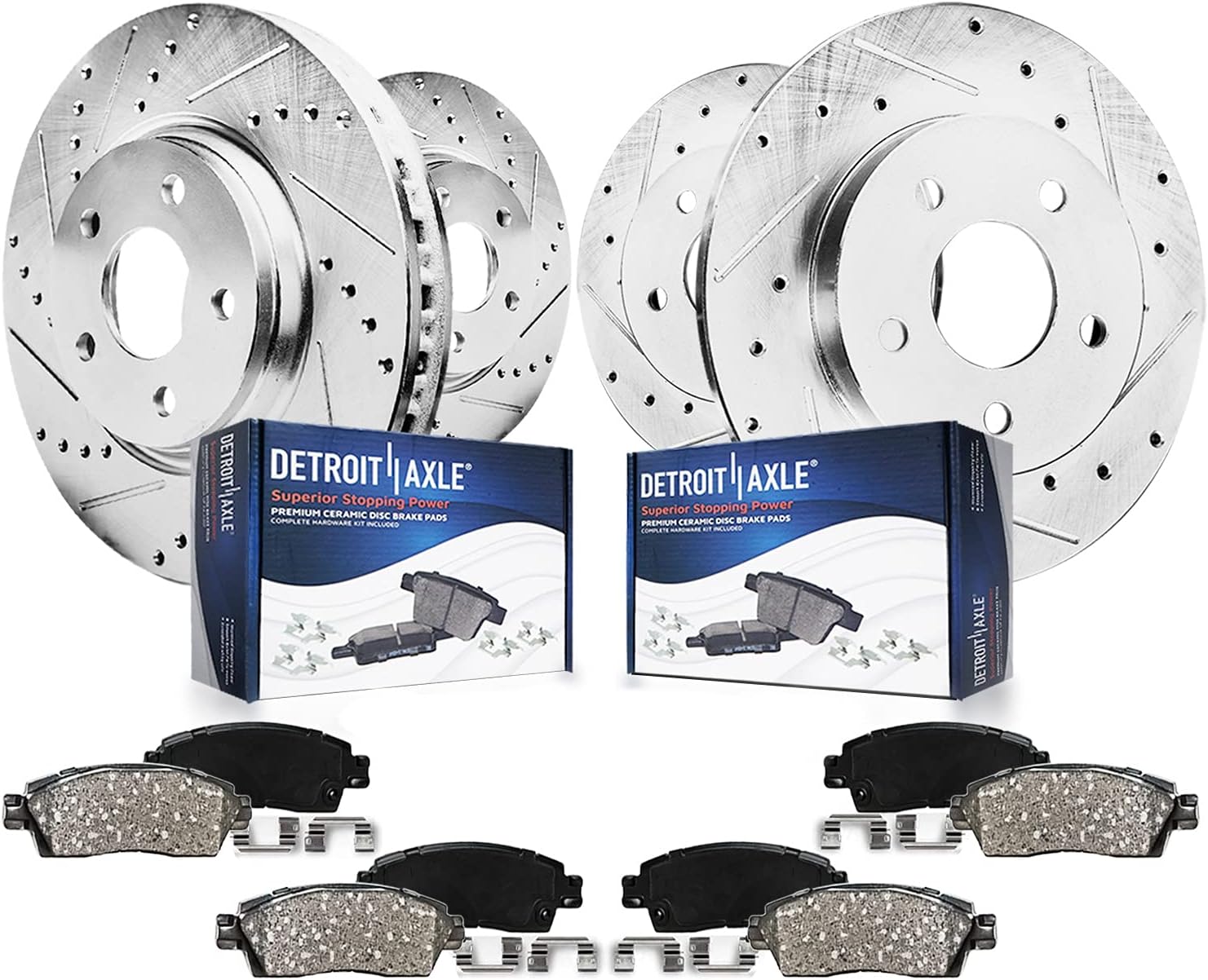
This Detroit Axle brake kit supplies both front and rear drilled and slotted rotors plus matching ceramic pads for Honda Accord models that use 11.10 inch rotors. It is intended as a full replacement kit so you get two front and two rear rotors along with front and rear ceramic pads and necessary hardware for a like-for-like swap. The drilled and slotted rotor design helps heat dissipation and water evacuation to reduce fade during spirited driving or repeated stops, while the zinc plating resists corrosion and visible wheel dust. Ceramic pads deliver quieter, smoother braking and tend to wear more predictably than basic metallic pads. Installation should be straightforward for a DIYer or a shop since locating holes are machined to factory alignment. Limitations to note are the vehicle-specific fit requirement and the kit is sized only for models with 11.10 inch rotors, so confirm rotor diameter before purchasing; drivers seeking track-oriented pad compounds or upgraded calipers will need a different solution.
Best for: Drivers who want a balanced, all‑around replacement that refreshes both rotors and pads for improved cooling, quieter stopping, and corrosion resistance without upgrading the braking system hardware.
Less Ideal for: Enthusiasts who prioritize track performance, aggressive pad bite, or upgraded calipers and anyone whose Accord does not use 11.10 inch rotors should look elsewhere.
- Complete front and rear kit includes drilled and slotted rotors plus matching ceramic pads and hardware
- Drilled and slotted rotors improve cooling and help prevent brake fade under repeated use
- Zinc plating on rotors reduces visible corrosion and wheel dust
- Ceramic pads offer quieter, smoother stopping performance compared with generic metallic pads
- Fitment is limited to Accord models with 11.10 inch (282 mm) rotors so verification is required before purchase
- Not designed for high‑track or racing use where more aggressive pad compounds are preferred
Verdict: A convenient, vehicle-specific full brake replacement that refreshes rotors and pads for quieter, cooler, and corrosion-resistant braking on 2008–2012 Honda Accords with 11.10 inch rotors.
2. R1 Concepts eLINE Front and Rear Drilled Slotted Brake Kit with Ceramic Pads and Hardware

| Compatible vehicles | 2009–2014 Acura TSX; 2008–2012 Honda Accord EX/EX-L Coupe and Sedan |
|---|---|
| Kit includes | Front and rear drilled slotted rotors, 8 ceramic pads, hardware |
| Rotor protection | Zinc coated |
| Pad material | Ceramic |
This R1 Concepts eLINE kit supplies both front and rear drilled slotted rotors plus a full set of ceramic pads and the small hardware needed for installation. It is designed as a direct-fit replacement for compatible 2008–2014 Accord and 2009–2014 TSX applications so installation requires no modification for properly matched models. The rotors are zinc coated to resist corrosion, use diamond slots and cross-drilled holes to help shed heat and debris, and include rotor wear indicators to signal replacement. The included ceramic pads aim for low noise and low dust with OEM-like feel that suits daily driving, light towing, and occasional spirited use. Practical benefits are improved stopping feel and reduced rotor glazing compared with worn stock parts, plus cleaner wheels and an install-ready package. Limitations to expect are variable pad longevity reported by owners and some quality inconsistencies between sets, so consider checking pad condition early or swapping to a preferred pad compound if you need long life under aggressive use.
Best for: Buyers who want a single, vehicle-specific brake upgrade that improves pedal feel and heat management for daily driving with occasional performance use.
Less Ideal for: Drivers seeking long-term track-only stopping components or maximum pad life under heavy commercial use should choose purpose-built performance or heavy-duty kits instead.
- Complete front and rear kit includes rotors, ceramic pads, and hardware for a single install
- Drilled and diamond-slotted rotors help dissipate heat and reduce pad glazing during spirited or repeated stops
- Zinc coating on rotors provides corrosion protection and better long-term appearance
- Ceramic pads are formulated for low noise and reduced wheel dust compared with many semi-metallic pads
- Some users report faster-than-expected pad wear and uneven wear on certain sets
- Quality and fitment have occasional inconsistencies so pre-check components before installation
Verdict: A ready-to-install, vehicle-specific rotor and ceramic pad kit that noticeably sharpens braking feel and heat control for Honda Accord/Acura TSX daily drivers looking for a performance-minded upgrade.
3. TRQ Ceramic Front and Rear Brake Pad and Rotor Kit for 2008-2017 Honda Accord
| Included Components | Front and rear ceramic brake pad sets and four rotors |
|---|---|
| Friction Material Composition | Ceramic |
| Front Brake Rotor Venting Type | Vented |
| Rear Brake Rotor Venting Type | Solid |
| Automotive Fit Type | Vehicle Specific Fit |
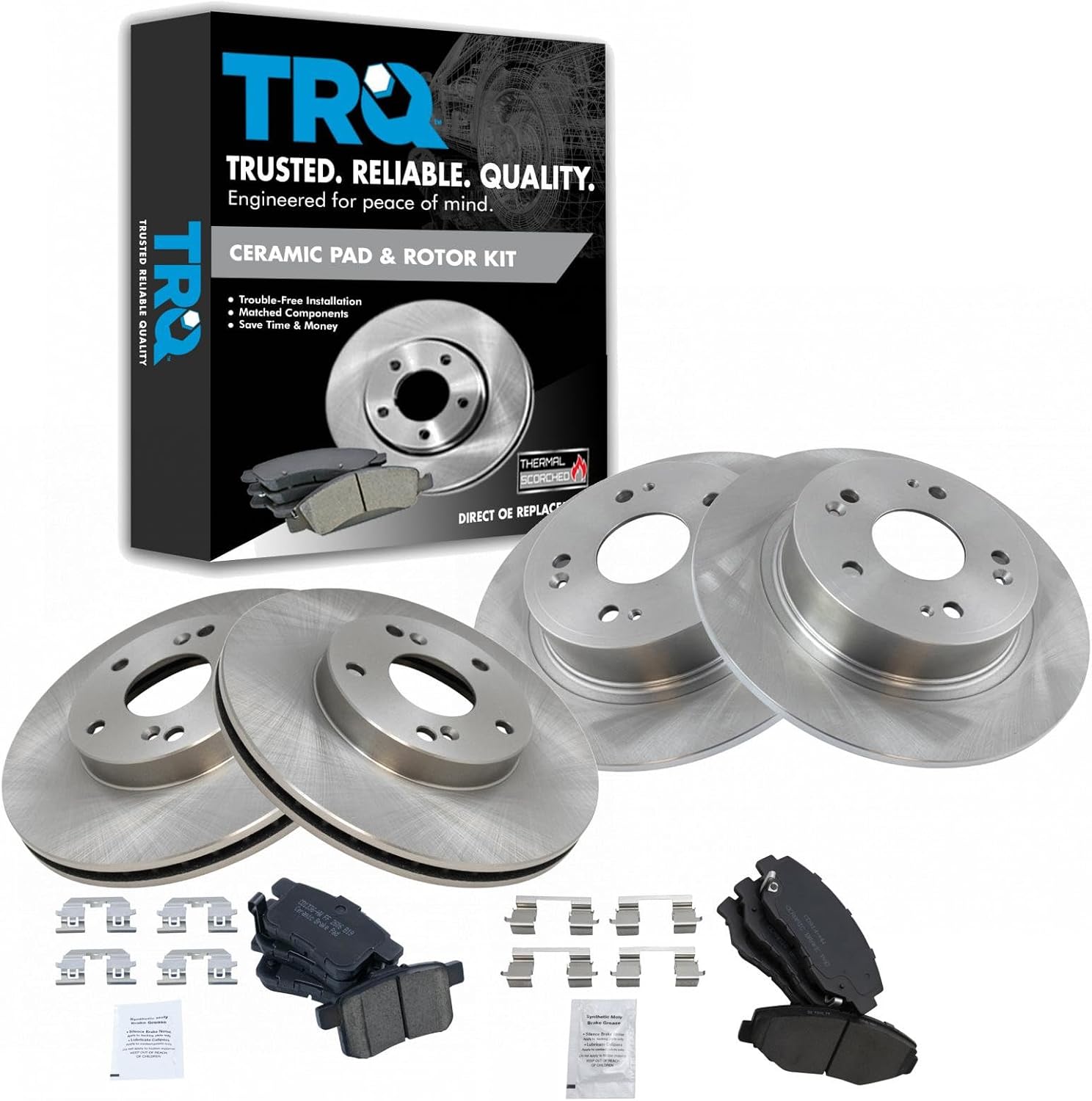
This TRQ kit replaces both front and rear pads and rotors in a single package to restore stopping performance on compatible Honda Accord models. It pairs ceramic friction pads with two vented front rotors and two solid rear rotors, which reduces dust and delivers a quieter pedal feel compared with basic semi-metallic pads. The kit is sold as a direct-fit, vehicle-specific set and comes with pre-matched rotors to simplify installation for a DIYer or a shop. Notable conveniences include TRQ installation videos and factory-equivalent part references to help confirm fitment. Expect improved day-to-day braking and less wheel cleanup, but the ceramic compound typically generates slightly different bite than sport or heavy-duty pads, so drivers after aggressive track use or maximum fade resistance should consider performance alternatives. For routine street driving and timely maintenance this kit offers a straightforward, all-in-one refresh of pads and rotors.
Best for: Buyers who want a practical, one-stop replacement to restore factory-style braking and reduce dust and noise for everyday driving on a 2008–2012 Accord.
Less Ideal for: Drivers who prioritize track performance, heavy towing, or very aggressive braking demands should opt for performance-oriented brake compounds and rotors instead.
- Complete front and rear kit includes both pads and rotors for a full axle refresh
- Ceramic pads reduce brake dust and tend to run quieter than many semi-metallic options
- Vehicle-specific direct-fit design simplifies installation and reduces modification needs
- Front rotors are vented for heat dissipation while rear rotors are solid for rear braking stability
- Ceramic friction offers less aggressive initial bite than some performance-oriented pads
Verdict: A convenient vehicle-specific ceramic pad and rotor kit that refreshes braking performance, cuts dust, and simplifies a full front-and-rear replacement for 2008–2012 Accords.
4. Mecaniko Rear Brake Kit with Solid Rotors and Ceramic Pads (fits 2008-2017 Accord / 2009-2014 TSX)

| Compatible Vehicles | 2008-2017 Honda Accord; 2009-2014 Acura TSX |
|---|---|
| Position | Rear |
| Rotor Type | Solid |
| Bundle Contains | 2x rear solid disc rotors and 2x ceramic brake pads with hardware |
| Mounting Bolt Hole Quantity | 5 |
This Mecaniko rear brake kit supplies two solid rear rotors and a pair of ceramic brake pads with hardware for a direct-fit replacement on specified Accord and TSX model years. It is typically used when rear braking components are worn, offering a straightforward rotor-and-pad swap during a brake service. The solid rotors are simple in design and work well for everyday driving, while the ceramic pads tend to run quieter and produce less dust than semi-metallic alternatives. Fitment data and interchangeable part numbers make matching to the vehicle easier for DIY mechanics or independent shops. Limitations include the solid rotor design, which does not provide the extra cooling or fade resistance of vented or slotted rotors, so it is best suited to normal street use rather than heavy towing or aggressive driving. The kit includes hardware and carries manufacturer-listed warranties for rotors and pads, giving added peace of mind for cost-focused buyers seeking a complete rear brake refresh.
Best for: Buyers wanting an affordable, ready-to-install rear brake replacement for routine street driving who prioritize straightforward fitment and lower maintenance nuisance like dust and noise.
Less Ideal for: Drivers who frequently tow, carry heavy loads, or do spirited driving and need rotors engineered for extra cooling and fade resistance should consider performance or vented designs instead.
- Complete rear kit includes two rotors plus ceramic pads and installation hardware
- Vehicle-specific fitment with listed interchange numbers simplifies part matching
- Ceramic pads typically produce less dust and reduced noise compared with many semi-metallic pads
- Solid rotors lack slots or drilling for enhanced cooling and performance under heavy use
Verdict: A budget-friendly, vehicle-specific rear brake kit that gives a complete, quiet, low-dust replacement for everyday Accord and TSX use.
5. A-Premium Front and Rear Drilled & Slotted Brake Rotor and Ceramic Pad Kit (12-piece)

| Compatible Vehicle Type | Car |
|---|---|
| Automotive Fit Type | Vehicle Specific Fit |
| Rotor Material | G3000 Metallurgy |
| Pad Material | Ceramic |
| Mounting Bolt Hole Quantity | 5 |
This 12-piece kit bundles drilled and slotted rotors with ceramic pads for a full front-and-rear replacement on compatible Honda Accord models. The rotors are described as G3000 metallurgy with five mounting holes and include pad wear indicators, while the kit ships with high-temperature grease and basic installation hardware to simplify fitment. Drilled and slotted rotors help shed heat and resist glazing when driven aggressively, and ceramic pads provide quiet, low-dust braking suitable for everyday driving. The complete package saves time sourcing parts and reduces the chance of mismatched components. Limitations to note are that the product is vehicle-specific so correct year and trim matching is essential, and while the kit includes basic hardware it does not replace calipers or sensors beyond wear indicators. Expect a middle-ground performance that improves braking feel and thermal resistance over worn stock parts but may not match premium performance rotors for track use.
Best for: Buyers who prioritize a reliable, matched brake refresh for daily-driven 2008–2012 Honda Accords and want an easy, time-saving kit that improves braking feel and dust control.
Less Ideal for: Drivers seeking track-level stopping power or heavy towing upgrades should look at performance-oriented rotor and pad options instead.
- Complete front-and-rear kit includes matched rotors, pads, lubricant, and installation hardware for easier replacement
- Drilled and slotted rotor design improves heat dissipation and helps prevent glazing under heavier use
- Ceramic pads offer quiet operation and produce less brake dust than many semi-metallic pads
- Pad wear indicators included to help monitor remaining pad life
- Kit is vehicle-specific so buyers must confirm exact year and trim compatibility before purchasing
- Hardware included is basic and some installers may prefer to reuse or upgrade factory fasteners or sensors
Verdict: A convenient, vehicle-specific rotor and ceramic pad kit that refreshes braking reliability and reduces dust for everyday driving on 2008–2012 Honda Accords.
6. Detroit Axle Brake Kit — Drilled & Slotted Rotors with Ceramic Pads for 2008–2012 Honda Accord (11.10 in)

| Fitment | 2008–2012 Honda Accord (Sedan; LX, LX-P, SE) with 11.10 in rotors |
|---|---|
| Rotor type | Drilled & slotted, zinc plated |
| Brake pads | Ceramic, includes hardware |
| Included consumables | 10 oz brake cleaner and 12 oz DOT3 brake fluid |
| Orientation | Dual (front and rear) |
This Detroit Axle kit bundles everything needed to replace both front and rear rotors and pads on 2008–2012 Honda Accord sedans that use 11.10 inch rotors. The kit includes matched drilled and slotted rotors for front and rear, ceramic brake pads with hardware, a 10 oz brake cleaner, and a 12 oz bottle of DOT3 fluid. Drilled and slotted rotors help bleed heat and shed moisture faster than plain rotors, while zinc plating reduces surface corrosion and visible wheel dust. The pads are quiet when bedded properly and the locating holes and machining are reported to match factory fitment so installation is straightforward for a DIYer with basic tools. You should expect to spend time bedding the pads and may need to source vehicle-specific sensors or reuse factory clips in some cases since a few users reported inconsistent hardware fit and no printed installation manual is included. When installed and broken in correctly the kit delivers predictable stopping power and good value compared with buying parts separately.
Best for: Buyers who want a single aftermarket kit that replaces both front and rear braking surfaces with parts that match factory fit and provide improved cooling, and who value social proof of reliability when shopping.
Less Ideal for: Drivers who need premium track-oriented pads or are unwilling to perform bedding and basic installation themselves should consider higher-performance or professionally installed options instead.
- Complete kit covers front and rear rotors and pads plus brake cleaner and fluid for one purchase
- Drilled and slotted rotors improve heat dissipation and reduce moisture buildup for more consistent braking
- Zinc plating on rotors helps resist corrosion and limits visible wheel dust
- Machined locating holes and vehicle-specific fit reduce installation adjustments
- No printed step-by-step instructions included so some DIYers will need to reference online guides
- Some accessory hardware packs have been reported inconsistent and may require reusing factory clips or sourcing replacements
Verdict: A cost-effective all-in-one replacement kit that gives factory-fit drilled and slotted rotors plus ceramic pads for 2008–2012 Accord drivers who prefer a complete DIY solution backed by many user reviews.
7. Detroit Axle Front and Rear Brake Kit with Ceramic Pads and 11.10" Rotors for 2008–2012 Honda Accord
| Fitment | 2008–2012 Honda Accord (Sedan; LX, LX-P, SE) with 11.10" rotors |
|---|---|
| Rotors | Vented, zinc plated |
| Brake Pads | Ceramic (front and rear) |
| Kit includes | Rotors, pads, hardware, 10oz brake cleaner, 12oz brake fluid |
| Manufacturer warranty | 10 Year |
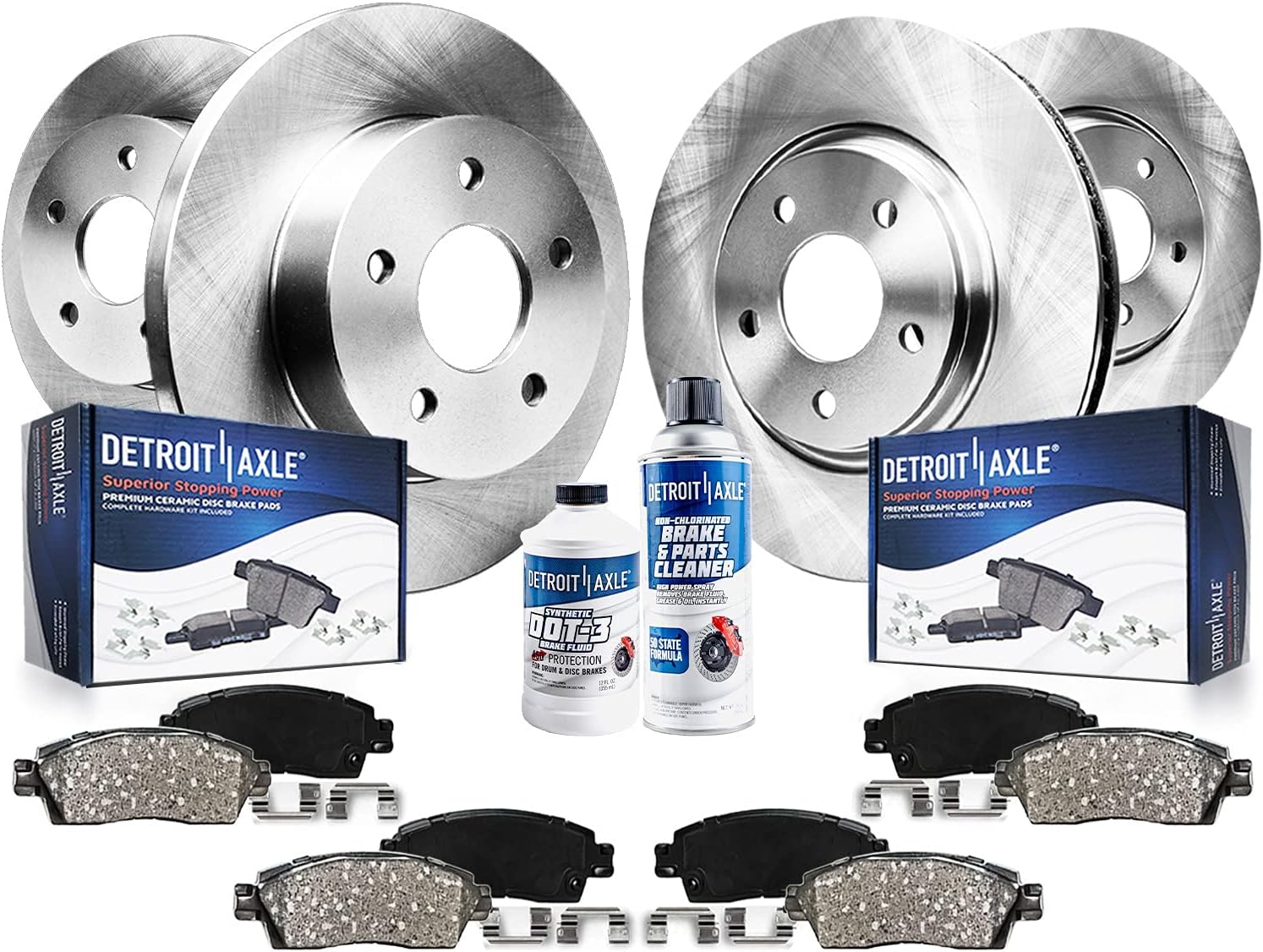
This Detroit Axle kit supplies matching front and rear 11.10 inch rotors plus ceramic pads and a small hardware package so you can replace brakes on a 2008–2012 Honda Accord sedan (LX, LX-P, SE). It is designed as a complete refresh: rotors are zinc plated to resist corrosion, vents help dissipate heat, and the pads are ceramic for quieter braking. The kit also includes a can of brake cleaner and a bottle of DOT brake fluid which simplifies a single-visit job. In practice the rotors are machined with accurate locating holes for direct fitment and most buyers report straightforward installation with factory-style fit and finish. Expect solid stopping performance and reduced dust compared with cheaper aftermarket pads. Limitations to consider are the small hardware packets provided and occasional reports of slightly mis-sized clips, so keep basic hand tools and a few replacement fasteners or grease on hand. This kit is best for owners who want a full, matching front-and-rear replacement without sourcing parts separately.
Best for: Buyers who prioritize a conservative, reliable full-brake refresh that fits the 2008–2012 Accord sedan and want a matched set that minimizes parts sourcing and installation unknowns.
Less Ideal for: Drivers seeking performance-focused rotors or aggressive track use should choose performance or drilled/slotted options instead, and DIYers who prefer to reuse existing high-quality hardware may find the included small accessory kit redundant.
- Complete four-wheel kit includes front and rear rotors plus ceramic pads and basic fluids for a one-stop replacement
- Zinc-plated, vented rotors improve corrosion resistance and heat dissipation
- Machined locating holes and vehicle-specific fit reduce modification or trial-and-error during installation
- Ceramic pads designed for lower noise and dust compared with semi-metallic pads
- Hardware packets are minimal and some users report fitment issues with front clips requiring replacement or adjustment
Verdict: A complete, vehicle-specific front-and-rear brake kit that gives a risk-averse Accord owner a straightforward, factory-quality replacement in a single box.
Choosing the Right 2008-2012 Honda Accord Brake Pad & Rotor Kit: Key Factors to Consider
Pad Compound and Friction Characteristics
Pad compound determines initial bite, noise tendency, dust generation, and wear rate. Ceramic-style compounds tend to be quieter and produce less dust, while semi-metallic or metallic blends usually offer stronger initial bite and better heat dissipation for aggressive driving. For daily commuting in the Accord, a compound that balances low noise with predictable pedal feel will be preferable.
Friction characteristics are often expressed as a coefficient of friction or a recommended operating temperature range. Higher friction numbers can shorten stopping distances but may increase rotor wear and noise. When choosing a kit, look for compound information and buyer feedback about cold and hot braking behavior to match your driving style.
Rotor Specification and Construction
Rotor thickness, diameter, and hat design must match the 2008-2012 Accord specifications to maintain proper caliper clearance and braking geometry. Rotors that are undersized or too thin risk early warping and reduced heat capacity, which leads to fade under repeated braking. Confirm the rotor's minimum thickness and initial thickness to understand service life expectations.
Construction details such as full cast versus slotted or drilled patterns affect heat management and water dispersion. Slotted or directional features can help clear gases and improve fade resistance, but aggressive drilling may accelerate cracking under high thermal stress. For typical Accord use, prioritize rotors with adequate mass and a finish that resists corrosion while offering good heat-shedding characteristics.
Fitment and Hardware Completeness
Correct fitment to the Accord's front or rear hub is critical. Kits should explicitly list compatibility with the 2008-2012 Accord and indicate left/right orientation where applicable. Missing hardware like shims, anti-rattle clips, pad wear sensors, or mounting bolts can complicate installation and impact noise performance.
Hardware completeness saves time during a brake service and reduces the chance of improper installation. Also check whether the kit provides instructions or torque specifications. For owners replacing both front and rear assemblies, confirming separate front and rear fitment avoids returns and rework.
Noise and Vibration Control
Brake noise after replacement is a frequent concern. Noise and vibration result from pad compound, rotor surface condition, improper bedding, or missing shims and anti-rattle hardware. Kits that include shims, chamfered pads, and anti-squeal coatings address common sources of squeal and groan.
Surface finish and pad geometry also influence vibration modes that create pedal pulsation or steering wheel shudder. Consider kits that emphasize noise control features and follow recommended bedding-in procedures to minimize post-installation complaints on the Accord.
Thermal Capacity and Fade Resistance
Thermal capacity relates to how much heat the rotor and pad can absorb before braking performance degrades. Drivers who frequently tow, drive in hilly terrain, or perform repeated stops will benefit from kits designed for higher heat tolerance. Rotors with greater mass, vents, or improved vanes help move heat away from the braking surface.
Pad formulations designed for higher operating temperatures resist glazing and maintain more consistent friction under stress. Even for non-sporting Accord owners, a kit with decent fade resistance increases safety margins during prolonged descents or heavy city traffic.
Longevity and Maintenance Considerations
Brake life is a function of pad material, rotor design, and driving habits. Some compounds trade longer pad life for slightly reduced initial bite, while others prioritize maximum stopping force at the expense of accelerated wear. Consider how often you want to service the braking system and whether you prefer rotors that can be resurfaced versus replaced.
Also factor in corrosion resistance and protective coatings. Rotors with protective finishes slow rust on the hat and edges, which helps during storage and extends usable life. If you plan to keep the Accord long-term, prioritize kits that balance pad life and rotor serviceability to minimize total ownership work.
Understanding Fitment for the 2008-2012 Accord
Fitment for the 2008-2012 Honda Accord depends on year and whether you are replacing front or rear components. Confirm the kit lists specific compatibility with the Accord years in the scope before purchase to avoid mismatched rotor diameter or caliper clearance issues.
If you are unsure which end requires replacement, inspect the rotor diameter and any stamped part numbers on the original components. Front rotors often differ in thickness and venting from rear rotors, so ensure the kit distinguishes front and rear sets.
- Verify front versus rear listing and rotor thickness specifications
- Check for included shims, clips, and wear indicators
- Look for notes about hub-centric fitment or hat-to-hub compatibility
Ceramic Vs Metallic Pads: What Suits the Accord
Ceramic-style pads are generally quieter and produce less dust, which keeps wheels cleaner. They perform well in normal commuting and moderate spirited driving, offering comfortable initial bite and long life for many Accord owners.
Metallic and semi-metallic pads offer stronger bite and better heat transfer, useful if you push the Accord harder or encounter steep descents frequently. However, they may produce more dust and slightly more noise, and they can accelerate rotor wear compared with ceramic compounds.
- Choose ceramic for lower dust and quieter operation
- Choose semi-metallic for higher thermal tolerance and aggressive braking
Rotors: Resurface or Replace?
Deciding whether to resurface existing rotors or replace them depends on remaining thickness and surface condition. If rotors are above the manufacturer minimum thickness and only show minor scoring, resurfacing can restore a smooth contact surface and extend life.
However, rotors with deep grooves, significant runout, or thickness at or below minimum should be replaced. Replacement rotors included in kits eliminate uncertainties about runout and surface finish, and they often come with coatings that reduce corrosion.
- Measure rotor thickness against factory minimums before opting to resurface
- Replace rotors with excessive runout, thermal cracking, or deep scoring
- Consider replacement when upgrading pad compound to avoid poor bedding
Bedding-In Procedures for Best Performance
Proper bedding-in helps transfer an even layer of pad material to the rotor surface and reduces early noise, uneven wear, and inconsistent braking. Follow a progressive bedding routine that uses moderate stops from low speed progressing to firmer stops without coming to a full halt after each stop.
Avoid hard repeated stops until the new pads and rotors reach operating temperature range recommended for the chosen compound. After bedding, inspect for even pad wear and check for any unusual noises or vibration.
- Start with gentle stops and progressively increase braking force
- Allow cooling periods between repeated harder stops
- Re-torque wheel lug nuts after initial bedding cycle per manufacturer spec
Tools and Time Needed for a Front or Rear Brake Job
A typical front or rear pad and rotor replacement on the Accord can be completed with common hand tools and basic garage equipment. Essential items include a jack and stands, torque wrench, caliper piston tool or C-clamp, a breaker bar for lug nuts, and a dial indicator if checking rotor runout.
Allow a couple of hours for one axle when working carefully and following bedding procedures. If you are replacing both front and rear, factor additional time for bleeding the brake system if lines are opened, and for proper inspection of associated hardware.
- Essential tools: jack and stands, torque wrench, caliper spreader, sockets
- Optional but helpful: dial indicator for runout, anti-seize for hub faces
- Plan for 1.5 to 3 hours per axle depending on experience
Common Post-Installation Issues and How to Address Them
Squeal or chirp after installation is often caused by missing shims, improper bedding, or small surface contaminants on the rotor. Cleaning rotors with brake cleaner before installation and ensuring shims and anti-rattle hardware are correctly positioned mitigates many noise issues.
Pedal pulsation is usually related to rotor runout or uneven rotor surface. If pulsation appears immediately, recheck rotor mounting, hub surface cleanliness, and torque sequence. If it develops later, verify the rotors are at acceptable thickness and that caliper slide pins move freely.
- Clean mating surfaces and use correct torque patterns to limit runout
- Ensure shims and shims orientation match manufacturer guidance
- Check caliper slides and lubricate with high-temperature brake grease
Still looking for the perfect fit?
Select your Honda Accord configuration to see the most relevant Brake Pad & Rotor Kits recommendations
How We Chose the Best 2008-2012 Honda Accord Brake Pad & Rotor Kit
We began by filtering kits engineered specifically for the 2008-2012 Honda Accord chassis years to ensure direct fitment and correct hardware. Our initial pool was narrowed using objective criteria that matter to drivers: rotor diameter and thickness to match factory tolerances, pad compound and friction rating to deliver predictable bite and wear rates, hat and hub compatibility for the Accord front and rear spindle interfaces, and inclusion of necessary hardware such as clips, shims, and anti-rattle components for straightforward installation.Next we assessed durability indicators like rotor coating or finish, pad backing plate construction, and any abrasion-resistant treatments that improve corrosion resistance. Heat tolerance and fade resistance were considered by looking at compound types and recommended operating ranges. We also checked whether kits included torque or installation notes to reduce common fitment issues.Excluded from consideration were kits lacking clear vehicle-specific fitment data, those missing essential installation hardware, and options that only listed universal fitment without Accord-specific confirmation. The final seven kits balance stoppage performance, noise control, longevity, and installation completeness for the 2008-2012 Accord.
Our full evaluation process is outlined in our review methodology.
FAQ
How often should I replace brake pads and rotors on a 2008-2012 Accord?
It depends on driving habits, but pads commonly last 30,000 to 70,000 miles and rotors longer when well maintained. Inspect pads and rotor thickness at regular intervals and replace when pads reach minimum thickness or rotors fall below manufacturer minimums.
Can I replace just the pads and resurface the rotors on the Accord?
Yes, resurfacing is acceptable if rotors are above minimum thickness and free of cracks. However, resurfaced rotors may have less life remaining and could be more prone to warping than new replacement rotors.
Will ceramic pads reduce brake dust on my Accord?
Often yes. Ceramic-style pads typically produce less visible dust than metallic compounds, which helps keep wheels cleaner during regular driving.
What causes brake noise after replacement and how can I fix it?
Noise can come from missing shims, improper bedding, contaminated rotor surfaces, or incompatible pad geometry. Address it by cleaning mating surfaces, installing anti-rattle hardware, and following a proper bedding-in procedure.
Do I need to bleed the brakes when replacing pads and rotors?
Usually bleeding is not required when only changing pads and rotors, unless you open the hydraulic lines or observe spongy pedal feel. If the caliper pistons are pushed back forcefully or fluid overflows, check fluid level and bleed if necessary.
Are slotted or drilled rotors better for the Accord?
Slotted or directional designs can improve pad bite and gas removal under higher load. For everyday driving, lightly slotted rotors offer a good balance; heavily drilled rotors may risk cracking under thermal stress and are typically unnecessary for normal Accord use.
Final Verdict
When replacing brake pads and rotors on a 2008-2012 Honda Accord, prioritize correct fitment, a pad compound that matches your driving style, and rotors that meet the factory thickness and heat-management needs. Addressing hardware completeness and following a proper bedding procedure reduces common issues like noise and uneven wear.Balance tradeoffs between quiet operation and thermal performance based on how you drive. Focus on kits that explicitly list Accord fitment and include the necessary installation hardware so you get reliable braking performance and predictable service life.
Explore More:
- Check out all Honda Accord parts & accessories
- Explore Brake Pad & Rotor Kits Maintenance & Repair Guides
- Explore Brake System
- Browse all Auto Parts
