

Note: This article contains affiliate links. If you click on these links and make a purchase, I may earn a small commission at no extra cost to you. This helps support my research and content. Read my full affiliate disclosure here.
If you drive a 2003–2007 Honda Accord, the condition of your brakes directly affects safety, pedal feel, and noise. Replacing pads and rotors together is often the most reliable way to restore consistent stopping power and even pad wear. This guide covers six shortlisted brake pad & rotor kits selected specifically for this Accord generation and explains the tradeoffs you should weigh when choosing between longevity, noise control, and brake feel.Below you will find the top kits we considered along with clear evaluation criteria to help you pick the right option for your driving style and maintenance goals.
Looking for other parts? See all Honda Accord parts & accessories.
Top Picks at a Glance
| Best Overall The best all-around choice for most situations | Max Advanced Brakes StyleMAX Front & Rear Cross-Drilled Rotor and Ceramic Pad Kit for 2003–2007 Honda Accord |  |
| Best Quality Built to a higher standard if you want something more solid | PowerStop Z17 Ceramic Front and Rear Brake Kit with Semi-Coated Rotors |  |
| Best Value The sweet spot between price and what you get | Detroit Axle 10-piece Brake Kit for 2003–2007 Honda Accord (2.4L) |  |
| Highest Rated A top-rated pick with lots of positive feedback | Detroit Axle Brake Kit for 2003–2007 Honda Accord (2.4L) — Drilled & Slotted Rotors with Ceramic Pads |  |
| Most Popular A crowd favorite that many people choose with confidence | Detroit Axle Front and Rear Brake Kit for 2003–2007 Honda Accord 2.4L (4-Wheel Disc) | |
1. Max Advanced Brakes StyleMAX Front & Rear Cross-Drilled Rotor and Ceramic Pad Kit for 2003–2007 Honda Accord

| Compatible models | 2003–2007 Honda Accord (specified engine/rotor fitment) |
|---|---|
| Included components | Front and rear rotors, ceramic brake pads, hardware |
| Pad type | Carbon-infused ceramic |
| Rotor feature | Cross-drilled |
This StyleMAX kit supplies everything needed to refresh the front and rear brakes on compatible 2003–2007 Honda Accords. The set includes two cross-drilled rotors, four ceramic pads per axle (eight total), and installation hardware for a bolt-on replacement. Cross-drilled rotors help shed heat during repeated stops, which reduces fade on longer commutes or light towing, while the carbon-infused ceramic pads aim to cut dust and low-speed noise compared with semi-metallic options. The kit is marketed as vehicle-specific fitment for the listed Accord engine/rotor size so installation is straightforward for a DIYer or shop familiar with this model. Expect cleaner wheels and a firmer pedal feel versus heavily worn parts. Limitations: cross-drilled rotors can be less durable under severe track use than slotted or solid directional designs, and ceramic pads trade a little initial bite for lower dust and quietness. Also rely on the vehicle-fit confirmation to ensure the specified front rotor diameter matches your Accord configuration.
Best for: A balanced buyer who wants a straightforward, all-in-one brake refresh for city and highway driving that favors lower dust, quieter stops, and improved pedal feel without chasing track-level performance.
Less Ideal for: Drivers who primarily do aggressive track days, heavy towing, or require maximum high-temperature fade resistance should choose a performance slotted or heavy-duty rotor and a more aggressive pad compound instead.
- Complete kit includes front and rear rotors, pads, and hardware for a single refresh.
- Cross-drilled rotors improve heat dissipation to reduce brake fade during repeated stops.
- Carbon-infused ceramic pads produce lower dust and reduced low-speed noise compared with many metallic pads.
- Cross-drilled rotor design is not the best choice for heavy track or extreme performance use due to potential cracking risk under extreme heat.
Verdict: Buy this kit if you want a hassle-free, vehicle-specific brake replacement that delivers cleaner wheels, quieter stops, and better fade resistance for everyday driving.
2. PowerStop Z17 Ceramic Front and Rear Brake Kit with Semi-Coated Rotors

| Included Components | Brake Rotors, Brake Pads, Pad Hardware |
|---|---|
| Brake Pad Type | Z17 Low-Dust Ceramic |
| Rotor Finish | Semi-Coated |
| Manufacturer Warranty Description | 24 Month / 24,000 Mile Warranty |
This PowerStop Z17 kit supplies everything needed to refresh the brakes on a 2003–2007 Honda Accord: Z17 low-dust ceramic pads, four semi-coated rotors, rubberized dual-layer shims, and stainless-steel installation hardware. The ceramic pads are chamfered, slotted, and thermally scorched for faster bed-in and quieter operation, while the semi-coated rotors are mill-balanced and G3000 cast to resist cracking and corrosion where it matters. For daily-driven Accords the result is predictable, firm stopping with noticeably less wheel dust and reduced noise compared with many metallic pads. Installation is bolt-on using the included hardware and lubrication packet, so a home mechanic or a shop can complete the swap without extra parts. The kit is tuned for street use rather than track abuse, so drivers seeking aggressive high-temperature fade resistance or race compounds will want a different pad. Still, for commuters who prioritize clean wheels, quiet daily drivability, and a straightforward complete kit, this is a sensible, ready-to-install option.
Best for: Drivers who want a straightforward, full replacement that improves daily braking feel, reduces wheel dust, and installs with minimal parts or modification on a 2003–2007 Accord.
Less Ideal for: Enthusiasts who prioritize maximum track performance, extreme fade resistance, or aggressive racing compounds should choose a performance-specific pad and rotor setup instead.
- Complete kit includes front and rear ceramic pads, four rotors, stainless-steel hardware, and lubrication for a single install
- Low-dust Z17 ceramic compound helps keep wheels cleaner compared with semi-metallic pads
- Semi-coated rotors are mill-balanced and cast to reduce runout and resist corrosion
- Dual-layer rubberized shims and chamfered/ slotted pads reduce noise for quiet braking
- Ceramic pad compound is optimized for street use and not ideal for heavy track or repeated high-temperature braking
Verdict: A complete, easy-to-install brake refresh that delivers quieter, low-dust everyday braking and improved rotor durability for 2003–2007 Accord drivers.
3. Detroit Axle 10-piece Brake Kit for 2003–2007 Honda Accord (2.4L)
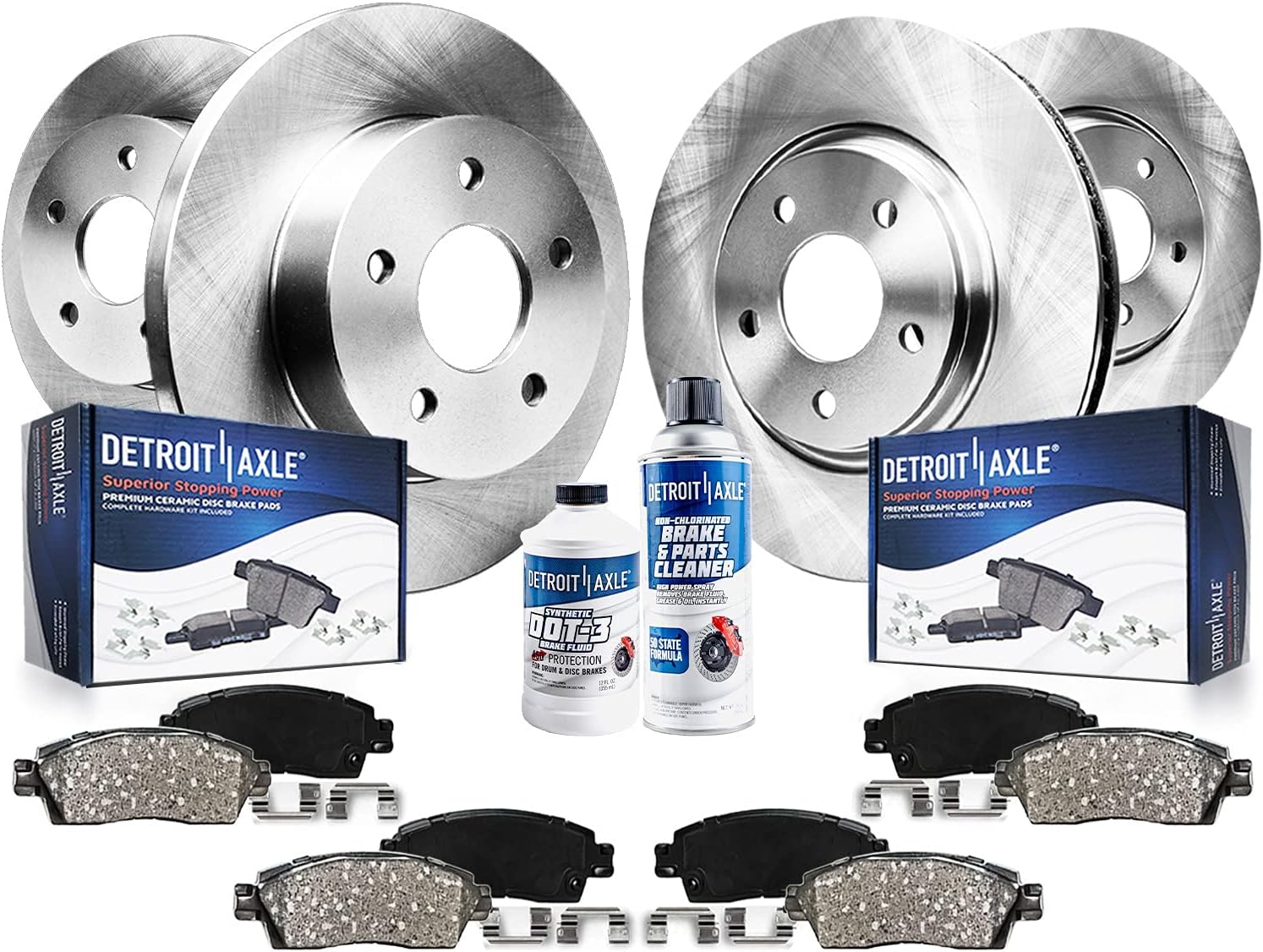
| Fitment | 2003–2007 Honda Accord 2.4L (11.10" front / 10.24" rear rotors) |
|---|---|
| Includes | Front and rear rotors, front and rear ceramic pads with hardware, 10oz brake cleaner, 12oz brake fluid |
| Rotors | Zinc plated, ventilated with machined locating holes |
This Detroit Axle 10-piece brake kit supplies everything needed to service both front and rear disc brakes on 2.4L Honda Accords with 11.10 inch front and 10.24 inch rear rotors. The kit includes two front and two rear rotors, matching ceramic pads with hardware, a 10 oz brake cleaner, and a 12 oz bottle of brake fluid so you can complete pads and rotors in one visit to the garage. The rotors are zinc plated to resist corrosion and feature ventilation for faster cooling during repeated stops. Ceramic pads tend to be quieter and produce less dust than semi-metallic alternatives, which is handy for daily drivers focused on low maintenance. Fitment notes and machined locating holes aim for factory-style alignment to simplify installation. The main limitations are that the kit is specific to the 2.4L Accord rotor sizes shown and includes service consumables only; you should still inspect calipers, hoses, and hardware before reuse. For someone doing a planned brake overhaul this kit saves time and provides a bundled, corrosion-resistant option with cleaner operation compared with buying parts separately.
Best for: Buyers who want a practical, no-surprises brake overhaul that replaces rotors and pads on a 2.4L Accord in a single purchase and value lower dust and quieter braking.
Less Ideal for: Anyone who needs parts for a different engine or rotor size, or who prefers performance-oriented pads and rotors for track use.
- Complete kit covers both front and rear brakes including rotors, ceramic pads, hardware, cleaner, and brake fluid
- Zinc plating on rotors helps resist corrosion and reduces visible wheel dust
- Ventilated/precision-machined rotors promote faster cooling and straightforward alignment
- Ceramic pads are designed for lower noise and reduced dust compared with many semi-metallic pads
- Fitment limited to Accords with the specified 11.10" front and 10.24" rear rotor sizes
Verdict: A convenient, corrosion-resistant complete pad and rotor kit that lets practical DIYers or shops replace both front and rear brakes on 2.4L Accords in one go.
4. Detroit Axle Brake Kit for 2003–2007 Honda Accord (2.4L) — Drilled & Slotted Rotors with Ceramic Pads

| Fitment | 2003–2007 Honda Accord 2.4L with 4-wheel disc brakes |
|---|---|
| Front Rotor Size | 11.10 inch (282 mm) |
| Rear Rotor Size | 10.24 inch (260 mm) |
| Pad Material | Ceramic |
| Includes | Front and rear rotors, front and rear pads, brake cleaner, brake fluid |
This Detroit Axle kit bundles front and rear drilled and slotted rotors with matching ceramic pads plus brake cleaner and a bottle of DOT3 fluid to provide a full replacement solution for 2.4L Accords with 4-wheel disc brakes. The rotors are zinc plated and vented to resist corrosion and help dissipate heat, while the drilled and slotted surface aims to reduce fade under heavier use. Ceramic pads offer quieter operation and predictable bite for everyday driving. The kit is meant for DIY installation and arrives with the hardware needed for basic fitment, though the boxes are not labeled by axle and the package includes only brief bedding instructions rather than step-by-step installation guidance. Fitment is vehicle-specific so parts install without modification when matched to the stated rotor sizes. Expect solid, factory-style stopping performance and good corrosion resistance, but plan on basic mechanical skill and common tools to complete the job and set the brakes properly during break-in.
Best for: Buyers who prioritize dependable, factory-style replacements and want a complete front-and-rear kit for routine driving and occasional heavier braking, and who are comfortable performing a DIY brake job with standard tools.
Less Ideal for: Drivers seeking track-focused high-performance pads or those who prefer a fully professional install where every component and instruction is supplied by the technician should consider other options.
- Complete kit includes front and rear rotors, front and rear ceramic pads, brake cleaner and DOT3 fluid
- Drilled and slotted vented rotors help dissipate heat and reduce fade during repeated stops
- Zinc plating provides corrosion resistance for longer rotor life in wet or salty conditions
- Vehicle-specific fitment and machined locating holes allow straightforward installation without modifications
- No detailed installation instructions included and rotor boxes are not axle-marked which can slow a DIY install
- Some accessory hardware in the kit may not always match OEM quality and could require reusing original clips
Verdict: A full, vehicle-specific brake replacement kit that delivers reliable, factory-style stopping and corrosion resistance for 2003–2007 Accord 2.4L owners doing a DIY brake job.
5. Detroit Axle Front and Rear Brake Kit for 2003–2007 Honda Accord 2.4L (4-Wheel Disc)
| Compatible with Vehicle Type | Car |
|---|---|
| Automotive Fit Type | Vehicle Specific Fit |
| Orientation | Dual |
| Included Components | Front & rear rotors, front & rear pads, hardware, cleaner, fluid |
This Detroit Axle kit supplies everything needed to replace both front and rear brakes on 2.4L Honda Accords equipped with 4-wheel disc brakes. The set includes two front and two rear vented rotors, ceramic front and rear pads with hardware, a brake cleaner spray and a small bottle of brake fluid. The rotors are zinc plated to resist corrosion and have ventilation to help dissipate heat during repeated stops while the pads use ceramic friction material for quieter braking and less dust. Fitment is vehicle-specific for models with 11.10 inch front and 10.24 inch rear rotors so installation should be straightforward without modifications. Buyers should note this is for 2.4L models with full disc brakes only and not compatible with DX or value-package cars; professional installation is recommended if you are not comfortable with brake work. For a homeowner doing all four corners at once, the kit covers parts and small consumables in one purchase and leans toward longevity and low noise rather than track performance.
Best for: Buyers who prioritize a single, vehicle-matched replacement package with parts sized for a 2.4L Accord and who value quiet, low-dust ceramic pads and corrosion-resistant rotors.
Less Ideal for: Drivers seeking high-performance or track-oriented braking upgrades or anyone with a non-2.4L or drum-rear Accord should look at performance-specific or model-matched alternatives.
- Complete kit includes front and rear rotors, front and rear ceramic pads, hardware, brake cleaner and brake fluid.
- Zinc-plated, vented rotors designed for improved corrosion resistance and faster cooling.
- Vehicle-specific fit for the 2.4L Accord rotor sizes aimed at straightforward installation without modification.
- Fitment limited to 2.4L Accords with 4-wheel disc brakes and specific rotor sizes, so it will not fit other configurations.
Verdict: If you want a one-purchase, vehicle-specific brake replacement for 2.4L Accords that emphasizes quiet operation and corrosion resistance, this all-in-one Detroit Axle kit is a practical choice.
Choosing the Right 2003-2007 Honda Accord Brake Pad & Rotor Kit: Key Factors to Consider
Correct Fitment and Rotor Diameter
Accurate fitment is the foundation of a successful brake job. The 2003–2007 Accord uses specific rotor diameters, caliper mounts, and hat dimensions that affect rotor centering and caliper alignment. Choosing a kit with the exact rotor diameter and hat profile for your Accord prevents vibration, uneven wear, and installation hassles.
Incorrect fitment can lead to warped-rotor symptoms even on new parts because the rotor may not seat flush on the hub or may contact the dust shield. Verify part numbers and any tolerance notes to ensure the rotor thickness and diameter match the vehicle's factory specifications.
Pad Compound and Braking Feel
Pad compound determines initial bite, fade resistance, dust generation, and noise. For the Accord, everyday driving usually benefits from a compound that balances firm initial feel with modulation for stop-and-go traffic. Ceramic-based compounds typically offer quieter operation and lower dust, while metallic compounds can deliver stronger bite and better heat tolerance under heavier loads.
Consider your driving conditions: frequent highway braking or towing-like loads push you toward higher heat-capacity compounds. For city-centric use, a quieter compound that provides predictable modulation is often more pleasant and requires less rotor upkeep.
Rotor Material, Vanes, and Cooling
Rotor construction influences heat dissipation and longevity. Solid rotors work for light use but vented rotors are preferable for the Accord if you encounter repeated heavy stops or hilly terrain because they dissipate heat more effectively. Rotor vane design and thickness affect how quickly the rotor cools between stops and how well it resists warping over time.
Also evaluate the rotor surface finish. Some rotors are machined to a smooth finish for improved pad bedding while others come with a protective coating to resist corrosion. For longevity in climates with road salt or moisture, a coated hat or zinc finish can reduce rust on the rotor hat and mounting surface.
Hardware and Installation Accessories
A complete front or rear brake kit should include necessary hardware such as retaining clips, anti-rattle shims, and correct fasteners. Missing hardware often forces you to reuse worn parts or source components separately, adding time and potential fit issues.
Quality hardware reduces noise and ensures pad travel remains consistent. Look for kits that specify inclusion of shims, grease for slide pins if applicable, and any alignment clips that match the Accord's caliper design to avoid post-install squeal or uneven pad wear.
Rotor Thickness and Minimum Specs
New rotors must meet or exceed the vehicle's specified rotor thickness to maintain safe braking margins. Thin rotors heat up faster and are more prone to warp, reducing braking performance and potentially causing vibration.
Check the nominal thickness and the minimum allowable thickness stamped on the rotor or listed in the kit documentation. If a rotor is near the minimum spec after minimal machining, it will have a shorter service life. For the Accord, prefer rotors that allow light resurfacing while remaining well above the minimum thickness.
Noise, Dust, and NVH Control
Noise and dust are frequent concerns after a brake job. The pad backing plate design, shim quality, and pad compound all contribute to NVH performance. Kits that include multi-layer shims or bonded insulators help dampen vibration that causes squeal.
Dust control matters for wheel appearance and cabin air quality. Ceramic-lean compounds typically produce less visible dust. If you prioritize a quiet, clean daily driver experience in your Accord, emphasize kits that highlight low-dust compounds and include anti-rattle hardware.
Understanding Front Versus Rear Brake Kits For the Accord
Front and rear kits serve different roles on the 2003–2007 Accord. The front brakes handle the majority of braking force and therefore often require rotors and pads designed for higher thermal loads and initial bite. Rear kits, while smaller, contribute to balanced braking and stability, especially during light braking and emergency stops.
- Front kits: prioritize rotor cooling, pad bite, and resistance to fade.
- Rear kits: focus on consistent engagement and parking brake integration when applicable.
- Install both axles within a short interval to maintain balanced pedal feel.
DIY Replacement Tips Specific to the 2003–2007 Accord
If you plan to replace pads and rotors yourself, prepare the right tools and workspace. The Accord's caliper guide pins and mounting bolts should be inspected and cleaned or replaced. Lightly lubricate slide pins with high-temperature brake grease and torque caliper bolts to factory specs to avoid binding or noise.
Always check rotor and hub mating surfaces for corrosion; clean them for proper rotor seating. If the rotor requires machining, verify the post-machine thickness meets the vehicle's minimum specification before installation.
- Use a torque wrench on wheel lug nuts and caliper bolts.
- Compress caliper pistons evenly to avoid pad misalignment.
- Bleed or at least check brake pedal firmness after installation.
When to Resurface Rotors Versus Replace Them
Resurfacing rotors can be cost-effective if the rotor thickness remains well above the minimum and runout is minimal. However, many modern rotors are inexpensive and thin, making replacement the safer option in many cases. For the Accord, review rotor thickness and surface condition: deep scoring, heat cracks, or significant thickness variation are reasons to replace.
If you choose resurfacing, ensure the service removes only a small amount of material and that the rotor is balanced afterward. Excessive machining reduces heat capacity and can shorten service life.
- Replace if thickness is below or near minimum spec.
- Resurface only if runout and scoring are minor and final thickness is safe.
- Check for heat spots or cracking as signs to replace rather than resurface.
How Pad Bedding Affects Noise and Performance
Bedding in pads and rotors is a simple but critical step after installation that affects noise, initial bite, and even pad transfer onto the rotor surface. A proper bedding routine creates a thin, consistent transfer layer that enhances braking performance and reduces squeal for many pad compounds.
Follow the pad maker's recommended bedding cycles if available. Typical bedding involves a series of gradual stops from moderate speeds to transfer pad material without overheating the rotor. Avoid aggressive repeated stops immediately after installation.
- Start with light stops to seat material, then progress to firmer braking.
- Cool the brakes between heavy stops; avoid parking immediately after bedding.
Selecting Upgrades for Higher Performance Needs
Owners seeking stronger fade resistance or more aggressive bite should consider higher heat-capacity rotor and pad combinations. Slotted or cross-drilled rotors can help gas and dust escape under demanding use, but they may increase pad wear and noise in everyday driving. For the Accord used on spirited drives or in hilly areas, choose a compound and rotor pair that manage heat without excessive dust or noise.
Balance is key: extreme performance choices can trade shorter pad life and higher noise for braking strength. Consider how often you drive aggressively versus routine commuting when deciding on an upgraded kit.
- Slotted rotors: improved bedding and gas evacuation, possible increased pad wear.
- Cross-drilled rotors: visual appeal and heat management, may be prone to cracking under severe heat cycles.
- Match pad compound aggressiveness to your typical driving conditions.
Still looking for the perfect fit?
Select your Honda Accord configuration to see the most relevant Brake Pad & Rotor Kits recommendations
How We Chose the Best 2003-2007 Honda Accord Brake Pad & Rotor Kit
Our editorial selection focused on kits that specifically fit the 2003–2007 Honda Accord front and rear brake configurations and that meet a baseline for safety and durability. We prioritized proper fitment, rotor material and thickness, pad compound options, and manufacturing tolerances relevant to the Accord's OEM caliper geometry. Stopping performance under typical city and highway conditions, noise and dust characteristics, and heat resistance were weighted heavily because these affect daily driving and longevity.We also considered ease of installation for DIYers and pros: kits that include essential hardware, correct rotor centering, and clear fitment documentation scored higher. Exclusions: kits without explicit fitment for the 2003–2007 Accord, rotor blanks under minimum thickness specifications, or pads lacking basic friction data were removed from consideration. Final choices represent a balance of stopping performance, expected pad life, and NVH control suitable for this vehicle generation.
Our full evaluation process is outlined in our review methodology.
FAQ
Can I replace only the pads on my 2003–2007 Accord and leave the rotors?
You can replace just the pads if the rotors are within thickness and runout specs and show only light wear. However, pairing new pads with old rotors can lead to uneven bedding and noise, so inspect rotor condition carefully before deciding.
How do I know if my Accord's rotors need resurfacing or full replacement?
Measure rotor thickness against the stamped minimum, check for deep scoring, heat spotting, or cracking, and test runout. If the rotor is near minimum thickness or shows structural damage, replacement is the safer choice.
Will ceramic pads reduce brake dust on my Accord?
Ceramic-lean pad compounds typically produce less visible dust than metallic compounds. They also tend to be quieter, though they may have slightly different initial bite characteristics compared with metallic pads.
Is it necessary to replace front and rear kits at the same time on the Accord?
It is not strictly necessary, but replacing both axles within a short interval helps maintain balanced pedal feel and consistent braking performance. If fronts are heavily worn and rears are not, prioritize the front but monitor the rear for matching wear.
What causes brake noise after replacement and how can I prevent it?
Noise often stems from improper pad bedding, missing or worn shims, or insufficient hardware lubrication. Use quality shims and anti-rattle clips, bed the pads per instructions, and ensure slide pins are clean and lubricated to reduce squeal.
Can I use slotted or drilled rotors on a daily-driven Accord?
Yes, but expect tradeoffs. Slotted or drilled rotors can aid heat and gas evacuation but may increase pad wear and noise. For routine commuting, a smooth, vented rotor with the right pad compound often provides the best balance of life, quiet, and performance.
Final Verdict
For a 2003–2007 Honda Accord, prioritize correct fitment and a pad compound that matches your driving habits. Front kits should emphasize rotor cooling and initial bite while rear kits should ensure consistent engagement and integration with the parking brake when applicable. Balance NVH, pad life, and heat resistance based on whether you drive mostly in the city or subject the brakes to heavier use.Focus on kits that include proper hardware, meet rotor thickness specifications, and offer clear bedding guidance. That approach produces the most predictable stopping performance and longest service life for your Accord.
Explore More:
- Check out all Honda Accord parts & accessories
- Explore Brake Pad & Rotor Kits Maintenance & Repair Guides
- Explore Brake System
- Browse all Auto Parts
