

Note: This article contains affiliate links. If you click on these links and make a purchase, I may earn a small commission at no extra cost to you. This helps support my research and content. Read my full affiliate disclosure here.
Your Honda CR-V depends on reliable front brake pads for everyday safety and predictable stopping under load. Choosing the right front pads affects pedal feel, stopping distance, noise, and how often you need a brake service. This guide distills the top shortlisted options for the CR-V, focusing on fitment, material, and real-world durability so you can choose what matches your driving style. Below you will find the top picks for front brake pads, followed by practical buying criteria and maintenance tips to help you make a confident decision.
Looking for other parts? See all Honda CR-V parts & accessories.
Top Picks at a Glance
| Best Overall The best all-around choice for most situations | Bosch Blue BE2036H Ceramic Front Brake Pad Set with Hardware |  |
| Best Quality Built to a higher standard if you want something more solid | PowerStop Z23 Carbon-Fiber Ceramic Front Brake Pads with Hardware |  |
| Best Value The sweet spot between price and what you get | PowerStop Z17 Evolution Front Ceramic Brake Pads with Hardware (17-914) |  |
| Best Budget The cheapest option that still gets the job done reliably | PowerStop Z16 Evolution Front Ceramic Brake Pads (16-914) |  |
| Highest Rated A top-rated pick with lots of positive feedback | Bendix Premium Ceramic Front Brake Pads (SBC1521) |  |
| Most Popular A crowd favorite that many people choose with confidence | Detroit Axle Front & Rear Brake Kit with Drilled & Slotted Rotors and Ceramic Pads for 2012–2016 Honda CR-V (AWD) |  |
| Best Seller A high-volume bestseller chosen again and again | BOSCH QuietCast Premium Ceramic Front Brake Pad Set (BC914) |  |
1. Bosch Blue BE2036H Ceramic Front Brake Pad Set with Hardware

| Material Type | Ceramic |
|---|---|
| Auto Part Position | Front |
| Manufacturer | Bosch Automotive |
| Automotive Fit Type | Vehicle Specific Fit |
The Bosch Blue BE2036H front brake pad set is a ceramic, vehicle-specific replacement engineered for everyday driving on Honda CR-V models. It provides OE-style slots and chamfers and a multi-layer shim to reduce noise, plus a rust-inhibitive coating on the backing plates to slow corrosion. Bosch supplies a hardware kit and synthetic lubricant so the pads are ready to install for one axle, and the platform-specific friction formulation aims to balance stopping power with low dust and long life. In real-world use this means confident, quiet stopping in daily commuting and light highway driving without aggressive pad squeal. The pads are not aimed at track or heavy towing use where higher-temperature, more aggressive compounds would be needed. Installation is straightforward for a competent DIYer or technician, and the towel-wrapped packaging and included grease make handling cleaner. If you prioritize a quiet, factory-style feel and corrosion resistance for regular driving, these pads do that well; drivers needing extreme performance or heavy-duty duty-cycle durability should choose a different compound.
Best for: Drivers seeking a quiet, factory-style front brake replacement for regular commuting and light highway use who value low dust and corrosion resistance.
Less Ideal for: Drivers who frequently tow, carry heavy loads, or do spirited driving and need a high-temperature performance brake compound.
- Ceramic friction formulated for reduced brake dust and consistent everyday stopping.
- OE-style multi-layer shim and slots/chamfers for effective noise dampening.
- Rust-inhibitive coating on backing plates to resist corrosion and extend pad life.
- Includes hardware kit and synthetic lubricant for a ready-to-install axle set.
- Not designed for high-temperature track use or heavy towing where semi-metallic or performance pads perform better.
Verdict: Choose these Bosch Blue ceramic front pads for a quiet, factory-quality replacement that balances stopping power, low dust, and corrosion resistance for everyday CR-V driving.
2. PowerStop Z23 Carbon-Fiber Ceramic Front Brake Pads with Hardware

| Auto Part Position | Front |
|---|---|
| Material Type | Carbon Fiber, Ceramic |
| Automotive Fit Type | Vehicle Specific Fit |
| Included Components | Brake Pad Set |
The PowerStop Z23 front brake pads are a direct-fit upgrade aimed at drivers who want stronger, more consistent braking without losing everyday drivability. Designed for daily-driven cars and SUVs, the carbon-fiber infused ceramic material increases stopping power and resists fade at higher temperatures compared with standard replacements. The kit arrives with stainless-steel hardware, pin bushings, rubberized dual-layer shims and high-temp lubricant, so installation is straightforward for a DIYer and stays quiet in regular use. Low-dust formulation helps keep wheels cleaner and the powder-coated backing plate fights corrosion to extend service life. In practical terms you get shorter, repeatable stops in city driving and light spirited use while avoiding the noise and heavy wear of aggressive track pads. Limitations are that these are tuned for daily driving rather than extreme performance braking, and only a front pad set is included so a full-axle refresh requires buying the matching rear pads separately.
Best for: Buyers who prioritize stronger, more consistent braking for daily-driven Hondas and want a quiet, low-dust upgrade that is simple to install themselves.
Less Ideal for: Drivers seeking extreme track-grade friction or heavy towing performance should choose a competition-oriented pad designed for sustained high-temperature use.
- Carbon-fiber ceramic formula for improved stopping power and fade resistance
- Includes premium stainless-steel hardware, pin bushings, shims and lubricant for easy installation
- Low-dust compound helps keep wheels cleaner
- Dual-layer rubberized shims reduce noise during everyday driving
- Engineered for daily driving rather than heavy track use or towing applications
Verdict: Choose these Z23 front pads if you want a quiet, low-dust carbon-fiber ceramic upgrade that improves everyday stopping for your CR-V without sacrificing comfort.
3. PowerStop Z17 Evolution Front Ceramic Brake Pads with Hardware (17-914)

| Auto Part Position | Front |
|---|---|
| Automotive Fit Type | Vehicle Specific Fit |
| Material Type | Ceramic |
| Included Components | Pads and installation hardware |
The PowerStop Z17 Evolution front ceramic pads are a straightforward, vehicle-specific replacement aimed at daily drivers. They provide a low-dust ceramic compound with chamfered and slotted faces plus dual-layer rubberized shims to reduce noise and help keep wheels cleaner. Thermal scorching and positive mold manufacturing help produce a fast break-in and consistent pedal feel, while the included stainless-steel hardware simplifies installation for a bolt-on swap. In real use these pads deliver predictable, linear braking that is less grabby than some factory pads and tends to stay quiet when fitted correctly. Limitations to note are occasional mismatch of included retainer clips on some applications and reports that coating the pad backs can be necessary to avoid squeal in a few cases. These are not a high-performance or heavy-duty towing option but they strike a practical balance of cleanliness, comfort, and dependable stopping for everyday CR-V use.
Best for: Buyers who want a quiet, low-dust, factory-quality front pad for everyday driving on a CR-V and value an easy, hardware-included installation.
Less Ideal for: Drivers who need high-temperature, heavy-tow, or sport performance braking should choose a performance-oriented pad instead.
- Ceramic formula produces low brake dust for cleaner wheels
- Chamfered and slotted surfaces plus dual-layer shims for quieter, smoother stops
- Thermal scorched surface for faster break-in and consistent performance
- Includes stainless-steel installation hardware for a complete bolt-on replacement
- Some vehicles report mismatched retainer clips in the hardware kit that may require reusing OEM clips
Verdict: If you want a quiet, low-dust, factory-style front pad for routine CR-V driving with easy installation, the PowerStop Z17 is a sensible, practical choice.
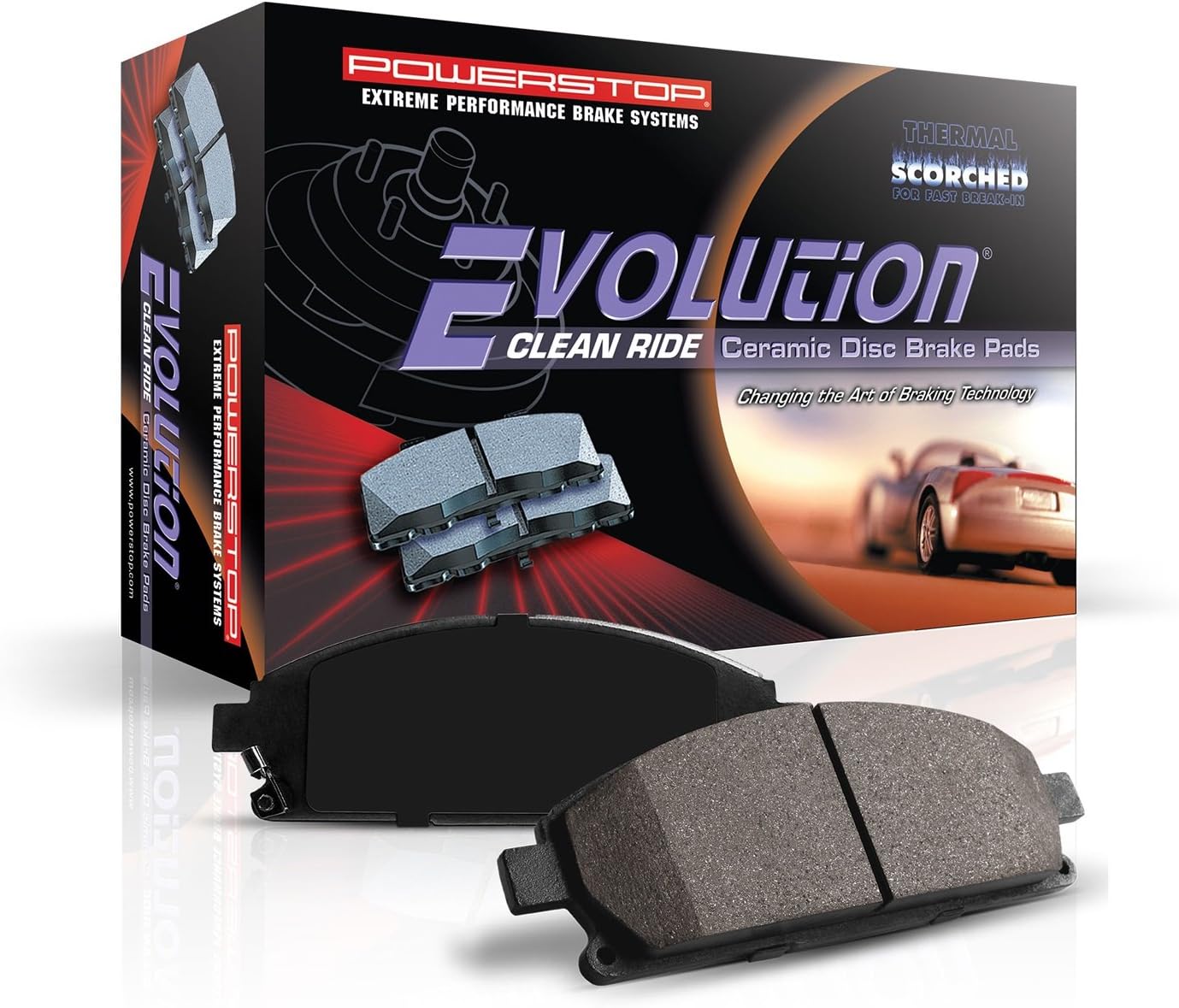
4. PowerStop Z16 Evolution Front Ceramic Brake Pads (16-914)
| Material Type | Ceramic |
|---|---|
| Auto Part Position | Front |
| Specification Met | OEM |
| Automotive Fit Type | Vehicle Specific Fit |
| Manufacturer Warranty Description | 91 Day / 3,000 Mile Warranty |
The PowerStop Z16 Evolution front ceramic pads are a budget-friendly, vehicle-specific replacement aimed at daily-driven Hondas and similar cars. They install as a direct bolt-on without modifications and are thermal scorched with chamfers and slots for quicker break-in and consistent stopping. The ceramic compound produces low brake dust, helping wheels stay cleaner between washes, while dual-layer rubberized shims reduce noise and vibration for quiet operation in stop-and-go and commuting use. These pads are intended as an affordable stock-replacement option rather than a high-performance or track product, so they focus on steady, fade-resistant braking for everyday driving instead of aggressive bite under heavy use. Hardware is not included, which can add a small extra step and cost if yours needs replacement. For routine maintenance or swapping worn fronts on a Honda CR-V, they deliver dependable stopping, minimal dust, and a quiet ride at a modest price point.
Best for: Drivers who prioritize a low-cost, quiet, and low-dust front brake replacement for daily commuting and general use on a Honda CR-V.
Less Ideal for: Enthusiasts who need track-capable stopping power or drivers who want a complete hardware kit included with the pads.
- Vehicle-specific bolt-on fit for compatible front applications
- Low-dust ceramic compound keeps wheels cleaner
- Dual-layer rubberized shims and chamfered/slotted design reduce noise and vibration
- Thermal scorching speeds break-in for consistent early performance
- Installation hardware is not included
- Not designed for heavy track use or aggressive braking demands
Verdict: A practical, low-dust ceramic front pad set that gives quiet, dependable daily-driving braking at a budget-friendly price.
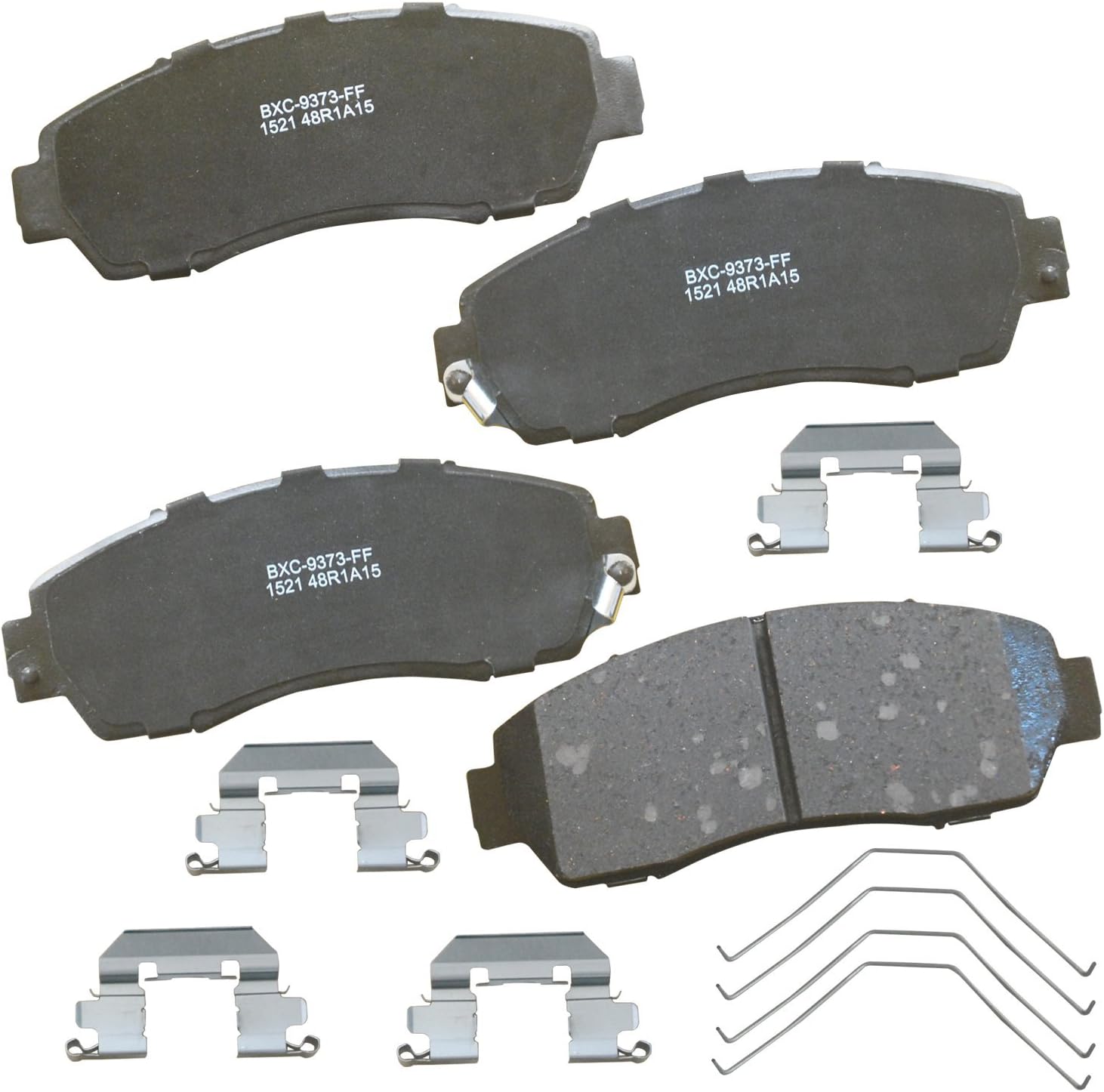
5. Bendix Premium Ceramic Front Brake Pads (SBC1521)
| Material | Ceramic |
|---|---|
| Auto Part Position | Front |
| Specification Met | OEM |
| Automotive Fit Type | Vehicle Specific Fit |
The Bendix Premium ceramic front pads are a direct-fit replacement designed to match the factory fit, form, and function for compatible vehicles. They are used as a straightforward service part for daily-driven cars and SUVs where smooth, quiet stopping and predictable pedal feel matter. Construction uses ceramic friction material and painted backing plates, and the set includes shims and hardware where applicable, so installation is typical of a standard pad swap. In practice these pads deliver low noise, reduced vibration, and steady bite without excessive dust, which helps keep wheels cleaner. Bendix highlights durability and resistance to wear and corrosion, so they are a sensible choice if you want long service life between changes. The main limitation is that they are tuned for everyday driving rather than heavy towing or track use, so drivers who push brakes hard or need maximum fade resistance under repeated high-heat stops may prefer a performance or semi-metallic compound instead.
Best for: Buyers who prioritize dependable, quiet everyday braking and long service intervals for daily-driven vehicles and want a near-factory replacement.
Less Ideal for: Drivers who frequently tow heavy loads, perform spirited driving, or need pads tuned for track performance should consider higher‑temperature or performance-specific compounds instead.
- Factory-style fit and finish for a direct replacement
- Ceramic compound offers quiet operation and low dust
- Includes shims and standard hardware for straightforward installation
- Designed to resist wear and corrosion for longer service life
- Not optimized for heavy-duty, track, or repeated high-temperature braking scenarios
Verdict: Choose these Bendix ceramic front pads when you want quiet, reliable, factory-quality braking for daily driving on a Honda CR-V.
6. Detroit Axle Front & Rear Brake Kit with Drilled & Slotted Rotors and Ceramic Pads for 2012–2016 Honda CR-V (AWD)

| Fitment | 2012–2016 Honda CR-V (AWD ONLY) |
|---|---|
| Kit contents | Front & rear drilled/slotted rotors, front & rear ceramic pads, hardware, cleaner, fluid |
| Rotor type | Drilled and slotted, vented |
| Pad material | Ceramic |
| Warranty | 10-Year |
This Detroit Axle kit supplies everything needed to refresh the braking system on an AWD 2012–2016 Honda CR-V: two front and two rear drilled and slotted rotors plus matching ceramic pads, hardware, brake cleaner, and brake fluid. The rotors are vented and zinc plated to help with heat dissipation and corrosion resistance, while the drilled and slotted faces aid water and gas evacuation for firmer wet-weather stopping. Ceramic pads are quieter and produce less dust than semi-metallic pads, making them a practical choice for daily driving and highway use. The kit is supplied as a vehicle-specific fit and the rotors are machined with locating holes for direct installation, so a professional or experienced DIYer will find installation straightforward. Buyers should note this is specified for AWD CR-Vs only and ceramic pads favor low-noise comfort over aggressive fade resistance under repeated track-style heavy braking. If you prioritize complete replacement parts and cleaner operation for street and light-towing duties, this kit delivers a balanced, ready-to-install option.
Best for: Buyers who want a full, ready-to-install brake refresh for their AWD 2012–2016 CR-V and place a high value on quieter, low-dust ceramic pads and visible corrosion resistance backed by many user reviews.
Less Ideal for: Drivers seeking aggressive track-capable pads or repeated high-temperature braking performance should consider aftermarket performance-oriented rotors and pads instead.
- Complete kit includes front and rear rotors, matching ceramic pads, hardware, brake cleaner, and brake fluid
- Drilled and slotted, vented rotors improve cooling and help remove moisture and gases for more consistent stops
- Zinc plating on rotors reduces visible corrosion and wheel-dust buildup for cleaner appearance and longer life
- Vehicle-specific machining and locating holes enable straightforward installation without modifications
- Fitment limited to AWD 2012–2016 Honda CR-V only, so it is not suitable for other drivetrains or models
Verdict: Choose this kit if you want a complete, vehicle-specific brake replacement that prioritizes quiet operation, reduced dust, and improved rotor cooling for everyday AWD CR-V driving.
7. BOSCH QuietCast Premium Ceramic Front Brake Pad Set (BC914)

| Material | Ceramic |
|---|---|
| Auto Part Position | Front |
| Specification Met | OEM |
| Manufacturer | Bosch Automotive |
Bosch QuietCast BC914 is a front axle ceramic brake pad set engineered to deliver quiet, OEM-style stopping for compatible Honda and Acura vehicles. Designed for direct replacement, these pads use Bosch Molded Shim Technology with pre-attached multilayer rubber core shims to reduce noise and improve corrosion resistance. The ceramic friction material is formulated for consistent stopping power with reduced dust, and the set includes a hardware kit where applicable plus lubricant for sliding contact points to make installation cleaner. Powder-coated backing plates resist rust to extend service life, while slots and chamfers help with bedding and reduce squeal under normal driving. Some buyers report supplied hardware may not perfectly match every trim or year, so check fitment carefully and be prepared to reuse OEM clips if needed. For risk-averse shoppers who want a well-known brand, these pads offer a close-to-factory feel and predictable performance, though minor fitment quirks with included hardware can occur on certain model years.
Best for: Buyers who prioritize quiet, factory-quality braking and predictable, low-dust performance from a trusted brand and want a near-direct replacement for compatible Honda CR-V front brakes.
Less Ideal for: Drivers seeking high-performance or heavy-duty pads for aggressive driving or towing should consider performance-oriented compounds instead; also avoid if you cannot verify exact year/trim fitment.
- Ceramic compound delivers consistent stopping power with low brake dust
- Pre-attached multilayer rubber-core shims reduce noise and improve corrosion resistance
- Powder-coated backing plates for improved rust resistance and longevity
- Includes hardware kit and lubricant to simplify installation where applicable
- Included hardware may not fit every trim or year and some users needed to reuse OEM clips
Verdict: Choose these Bosch QuietCast front pads if you want quiet, factory-grade ceramic braking and low dust from a trusted aftermarket brand for your Honda CR-V.
Choosing the Right Honda CR-V Front Brake Pads: Key Factors to Consider
Pad Material and Compound
Pad material determines bite, heat tolerance, wear rate, and dust. Organic and ceramic-style compounds often provide quieter operation and lower dust for daily driving, while higher-friction semi-metallic blends can offer stronger initial bite and better fade resistance under heavy use.
For the CR-V, choose a compound that matches your driving: commuting and light hauling favor ceramic-style pads for comfort and low dust, while heavier-duty use or frequent steep descents may justify a more robust compound. Material also influences rotor wear; harder compounds tend to be more aggressive on rotors, which affects long-term maintenance costs.
Stopping Performance and Modulation
How a pad translates pedal input into braking force affects confidence and stopping distances. Good pads deliver linear modulation so you can control deceleration precisely without a grabby or mushy pedal feel.
For the Honda CR-V, consistent performance in wet and dry conditions is important because this vehicle is often used for mixed driving. Look for pads with predictable friction curves and stable performance as they warm up. Reports of reduced stopping distance and even brake feel under repeated stops are useful indicators of appropriate performance for this vehicle.
Noise, Vibration, and Harshness (NVH)
Brake noise is a common complaint on passenger vehicles. Good pad kits include shims, chamfers, and friction formulations that minimize squeal and vibration. NVH affects driver perception far more than a small difference in stopping power for daily commuting.
For CR-V owners who use the vehicle for errands, commuting, and family transport, low-noise pads maintain a more comfortable cabin. Pay attention to reported squeal on cold stops and vibration under light braking; pads designed for quiet operation will reduce nuisance noise without sacrificing safety.
Pad Thickness and Wear Rate
Initial pad thickness and the compound's wear characteristics determine how long a set will last before replacement. Thicker pads generally provide a longer service life, but compound and driving style are the primary wear drivers.
Confirm the pad thickness specification and compare expected mileage estimates. For the CR-V, which often sees mixed urban and highway miles, a moderate wear rate that balances longevity with consistent performance usually offers the best value. Also consider whether replacement hardware will be needed when pads wear to the wear indicators.
Fitment and Hardware Inclusion
Correct fitment for the CR-V front calipers is essential. Pads that do not seat properly can cause uneven wear, noise, and compromised braking performance. Kits that include anti-rattle clips, shims, and wear sensors where applicable reduce installation time and prevent common NVH issues.
When assessing options, confirm the kit is specified for the CR-V front axle and includes the necessary mounting hardware. If hardware is not included, budget time and cost for separate components to ensure a complete, trouble-free installation.
Rotor Compatibility and Dust
Some pad compounds generate more brake dust or accelerate rotor wear. Dust may affect wheel finish and require more frequent cleaning, while rotor wear affects long-term maintenance budgets.
Choose pads whose dust levels and aggressiveness align with your priorities. For CR-V owners concerned with clean wheels and lower maintenance, low-dust formulations that are rotor-friendly are preferable. If rotors are older or resurfaced, consider pads designed to mate well with previously used rotor surfaces to avoid uneven bedding.
Understanding Front Brake Pad Types
Front brake pads are made from different materials and each has tradeoffs in braking feel, longevity, and noise. Ceramic-style compounds are common for daily-driven compact crossovers because they produce less dust and tend to be quieter, while semi-metallic options deliver stronger high-temperature performance but can be louder and more abrasive to rotors.
For the CR-V, think about your typical driving and choose a pad type that matches it. If you do a lot of city stop-and-go driving, quieter low-dust pads improve cabin comfort and keep wheels cleaner. If you regularly tow or descend long grades, a higher-temperature-capable compound may be a better fit.
- Ceramic-style: quieter, lower dust, comfortable pedal feel
- Semi-metallic: higher friction at elevated temperatures, more dust
- Low-metallic organic: compromise between noise and heat tolerance
Signs Your CR-V Needs New Front Pads
Several practical signals show front pads may need replacing. A high-pitched squeal on soft application often indicates the wear indicator contacting the rotor. Grinding or a metal-on-metal sound typically means pads are worn through and the backing plate is contacting the rotor, requiring immediate attention.
Other signs include reduced braking responsiveness, a soft or spongy pedal, or increased stopping distances. Visual inspection through the wheel can also reveal pad thickness; if the friction material looks thin compared to the backing plate, schedule a replacement.
- Squeal on light braking can signal approaching wear
- Grinding sound indicates urgent replacement
- Reduced pedal feel or longer stopping distance warrants inspection
How to Measure Pad Thickness and When to Replace
Measure pad thickness by checking the remaining friction material, not the backing plate. Many manufacturers recommend replacement when friction material reaches approximately 3 mm, but check the vehicle service recommendations for exact limits. Keep in mind that some aftermarket pads start with different thicknesses, so compare remaining material against the initial spec.
If you lack a caliper for measurement, remove the wheel and visually assess the pad edge. Consistent wear across the pad is ideal; uneven wear may point to caliper or hardware problems that should be addressed during replacement.
- Replace when friction material approaches 2 to 3 mm depending on spec
- Inspect caliper slides, pistons, and hardware if wear is uneven
- Record mileage at replacement to track wear rate over time
Installation Tips to Avoid Noise and Uneven Wear
Proper installation reduces noise and extends pad life. Clean the pad mounting surfaces, lubricate guide pins with a high-temperature brake grease, and replace any worn clips or shims. Ensure pads sit flush and the rotor faces are clean before reassembly.
Bedding new pads to the rotors according to a modest stop sequence helps establish a stable friction layer. Avoid aggressive repeated hard stops during initial bedding to prevent glazing or uneven transfer layers that can cause squeal.
- Use anti-squeal lubricant where specified on pad backing plates
- Replace hardware if corroded or worn
- Perform progressive bedding stops to establish friction layer
Maintenance Intervals and What Affects Longevity
Pad life depends on driving habits, local traffic conditions, and the pad compound. City driving with frequent stops accelerates wear versus highway use. Weather and terrain, such as hilly areas or frequent towing, also shorten service life.
Track your mileage between replacements to build an expected replacement interval for your CR-V. Inspect pads during routine tire rotations to catch accelerated wear early and prevent rotor damage from worn pads.
- Higher city stop rates reduce pad life
- Aggressive driving and towing increase wear and heat exposure
- Regular inspections at tire service intervals help forecast replacements
Rotor Condition and When to Resurface
Rotors should be smooth and within thickness specification for reliable braking. Deep scoring, heat spots, or warping can reduce contact and lead to vibration under braking. If rotors are beyond the service limit or show severe wear, replacement is necessary.
Minor surface irregularities can often be corrected by resurfacing, but resurfacing reduces rotor thickness and may shorten future life. When fitting new pads to the CR-V front axle, inspect rotor thickness and runout and decide whether resurfacing or replacement will provide the best long-term result.
- Measure rotor thickness before resurfacing; do not go below minimum spec
- Replace rotors with heavy scoring or heat damage
- Surface smoothing can improve quietness and pad bedding for new pads
Still looking for the perfect fit?
Select your Honda CR-V configuration to see the most relevant Brake Pads recommendations
How We Chose the Best Honda CR-V Front Brake Pads
We applied a focused editorial framework to identify the front brake pads that best suit the Honda CR-V. Our selection criteria prioritized proper fitment for CR-V front calipers, consistent stopping performance under normal and emergency braking, and material durability across a range of driving conditions. Ride comfort and noise control were measured by reported pedal feel and customers citing reduced squeal or vibration. We also evaluated dust generation, longevity estimates based on compound and typical mileage, and hardware or shim quality included with pad sets. Excluded were pads that did not explicitly fit Honda CR-V front assemblies or those designed solely for track use that sacrifice noise and pad life for peak friction. We also filtered out kits lacking basic anti-squeal hardware or clear thickness specifications. The final shortlist balances stopping power, noise management, pad life, and proper physical fit to provide reliable options for everyday drivers of the Honda CR-V.
Our full evaluation process is outlined in our review methodology.
FAQ
How often should I inspect front brake pads on my CR-V?
Inspect front brake pads at least every 10,000 to 12,000 miles or during every tire rotation. More frequent checks are advisable if you do a lot of city driving or tow regularly.
Are ceramic-style front pads a good choice for the CR-V?
Ceramic-style pads are often a strong choice for the CR-V because they tend to produce less dust and quieter operation in everyday driving. They may wear faster under heavy towing or repeated high-heat stops compared with performance-oriented compounds.
What does a grinding noise from the front brakes mean?
Grinding usually indicates the friction material is worn down and the backing plate is contacting the rotor. This requires immediate inspection and replacement to avoid rotor damage and compromised braking.
Can I replace just the front pads myself on a CR-V?
Many owners can replace front pads with basic tools and a jack, but proper caliper retraction, hardware inspection, and bedding procedure are critical. If you are not comfortable with the steps or do not have the right tools, professional installation is recommended.
Will new front pads reduce brake dust on my CR-V?
Yes, selecting a low-dust compound can significantly reduce visible brake dust. Keep in mind wheel finish and driving style also influence how noticeable dust appears.
How do I know if the rotor needs resurfacing when I change pads?
Inspect rotor thickness, runout, and surface condition. If you see deep grooves, heat discoloration, or feel vibration during braking, resurfacing or replacement is likely needed. Always confirm the rotor will remain above minimum thickness after machining.
Final Verdict
Prioritize proper fitment, a pad compound that suits your driving pattern, and inclusion of quality hardware when choosing front brake pads for your Honda CR-V. Tradeoffs are unavoidable: quieter, low-dust pads usually sacrifice some high-temperature bite, while higher-performance compounds may wear rotors faster and be noisier. Match the pad material to how you drive and keep a regular inspection schedule to avoid unexpected wear. Focus on pads that offer predictable modulation, acceptable wear rates, and clear fitment for the CR-V front axle to make a confident, practical choice for daily driving and occasional heavy use.
Explore More:
- Check out all Honda CR-V parts & accessories
- Explore Brake Pads Maintenance & Repair Guides
- Explore Brake System
- Browse all Auto Parts
