

Note: This article contains affiliate links. If you click on these links and make a purchase, I may earn a small commission at no extra cost to you. This helps support my research and content. Read my full affiliate disclosure here.
If you own a 1997-2001 Honda CR-V, choosing the right brake pads matters for safety, comfort, and maintenance costs. Worn or improper pads can increase stopping distance, cause excessive noise, or accelerate rotor wear, so picking pads matched to your driving habits and the CR-V's brake system is important. This guide highlights the top shortlisted options for the 1997-2001 CR-V, focusing on durable compounds, reliable fitment, and predictable brake feel.Below you will find the vetted picks and a clear explanation of the criteria used to evaluate them, including stopping performance and pad life, plus practical advice on installation, bed-in, and common symptoms that signal replacement time.
Looking for other parts? See all Honda CR-V parts & accessories.
Top Picks at a Glance
| Best Overall The best all-around choice for most situations | Detroit Axle Brake Kit for 1997–2001 Honda CR-V (Front Rotors, Ceramic Pads, Rear Drums & Shoes) |  |
| Best Quality Built to a higher standard if you want something more solid | Bendix Premium SBC503 Ceramic Front Brake Pads |  |
| Best Value The sweet spot between price and what you get | KAX D503 Front Ceramic Brake Pads Kit |  |
| Best Budget The cheapest option that still gets the job done reliably | Auto Shack Front Ceramic Brake Pad Set (front) |  |
| Highest Rated A top-rated pick with lots of positive feedback | Bendix Priority1 CFC503 Ceramic Front Brake Pads (front) |  |
| Most Popular A crowd favorite that many people choose with confidence | Max Advanced Brakes Front Brake Kit — ValueMAX Front Rotors and Ceramic Pads |  |
| Best Seller A high-volume bestseller chosen again and again | Detroit Axle Front Brake Kit with Ceramic Pads and Rotors |  |
1. Detroit Axle Brake Kit for 1997–2001 Honda CR-V (Front Rotors, Ceramic Pads, Rear Drums & Shoes)

| Fitment | 1997-2001 Honda CR-V |
|---|---|
| Front pads | Ceramic (hardware included) |
| Front rotors | Vented, zinc plated |
| Rear braking | Drums and shoes included |
| Warranty | 10-Year |
This Detroit Axle kit supplies the main components needed to service the brakes on a 1997–2001 Honda CR-V. It bundles two vented front rotors, rear brake drums and shoes, ceramic front pads with hardware, plus a brake cleaner spray and a small bottle of brake fluid so you can complete a basic brake job without sourcing multiple parts. The rotors are zinc plated for corrosion resistance and feature ventilation slots intended to help cooling and moisture removal. Ceramic pads are quieter and produce less dust than semi-metallic options, which makes them a good fit for everyday driving and street use. Fitment is advertised as direct replacement and locating holes are machined to match factory placement, so installation should be straightforward for a competent DIYer or independent shop. Limitations to note are that the kit targets standard passenger use rather than heavy towing or track abuse and it does not include calipers, hardware for the rear drums, or large-volume brake fluid for a full system service. For owners seeking a balanced, ready-to-install replacement set, this kit covers the essential parts for a front and rear brake refresh on the specified CR-V years.
Best for: Buyers who want a balanced, do-it-yourself friendly brake refresh that covers both front and rear systems on a 1997–2001 Honda CR-V and value low noise and straightforward fitment.
Less Ideal for: Enthusiasts who need high-performance or heavy-duty braking upgrades or technicians needing a complete professional caliper-and-hardware overhaul should consider other options.
- Complete kit contains front rotors, rear drums and shoes, ceramic front pads, brake cleaner, and a bottle of brake fluid for a one-stop service.
- Vented front rotors with zinc plating resist corrosion and help dissipate heat for more consistent stopping performance.
- Ceramic pads reduce noise and brake dust compared with many metallic pads, improving daily driving comfort.
- Not intended for heavy-duty or high-performance use such as towing or track driving.
- Does not include calipers or extensive rear drum hardware, so additional parts may be needed for a full brake system overhaul.
Verdict: A convenient, factory-style brake refresh kit that supplies the most common front and rear components needed to restore everyday stopping performance on 1997–2001 Honda CR-Vs.
2. Bendix Premium SBC503 Ceramic Front Brake Pads

| Auto Part Position | Front |
|---|---|
| Material Type | Ceramic |
| Automotive Fit Type | Vehicle Specific Fit |
| Included Components | Brake Pad Set with Installation Hardware |
| Specification Met | OEM |
The Bendix Premium SBC503 are ceramic front brake pads designed as a direct, vehicle-specific replacement for older Hondas and Acuras including 1997–2001 CR-Vs. They arrive as a single-pad set with installation hardware and install like a factory-style unit, so routine DIY swaps are straightforward. The ceramic material aims to reduce noise and brake fade compared with basic economy pads, and several owners report quiet, smooth stopping after the initial bedding-in period. Included hardware and built-in shims help limit rattle and squeal and make the pads sit correctly against the caliper. Expect typical ceramic behavior: lower dust than semi-metallic pads and good comfort for daily driving, though ceramics can generate slightly less initial bite under very aggressive braking. Some users note the kit does not include grease and a few report noise on specific vehicles during bedding, so plan for a proper bedding procedure and anti-squeal compound if desired. Overall these pads suit someone restoring predictable, comfortable braking to an older CR-V without changing rotors or brake feel dramatically.
Best for: Drivers who want a factory-quality, low-dust replacement that restores calm, predictable braking to an older CR-V for daily driving and occasional spirited use.
Less Ideal for: Drivers who frequently do aggressive track sessions or heavy towing and need maximum high-temperature stopping power should consider a semi-metallic or dedicated performance pad instead.
- Vehicle-specific fit for 1997–2001 Honda CR-V and similar models for straightforward installation
- Ceramic compound reduces dust and promotes quiet, smooth braking for daily driving
- Includes installation hardware and shims to help prevent rattle and ensure correct positioning
- Does not include grease or lubricant for caliper hardware
- Ceramic pads may offer less initial bite under very aggressive or track-style braking compared with semi-metallic performance pads
Verdict: Choose these Bendix Premium ceramic pads to restore quiet, low-dust, factory-style braking to a 1997–2001 Honda CR-V without changing rotor hardware.
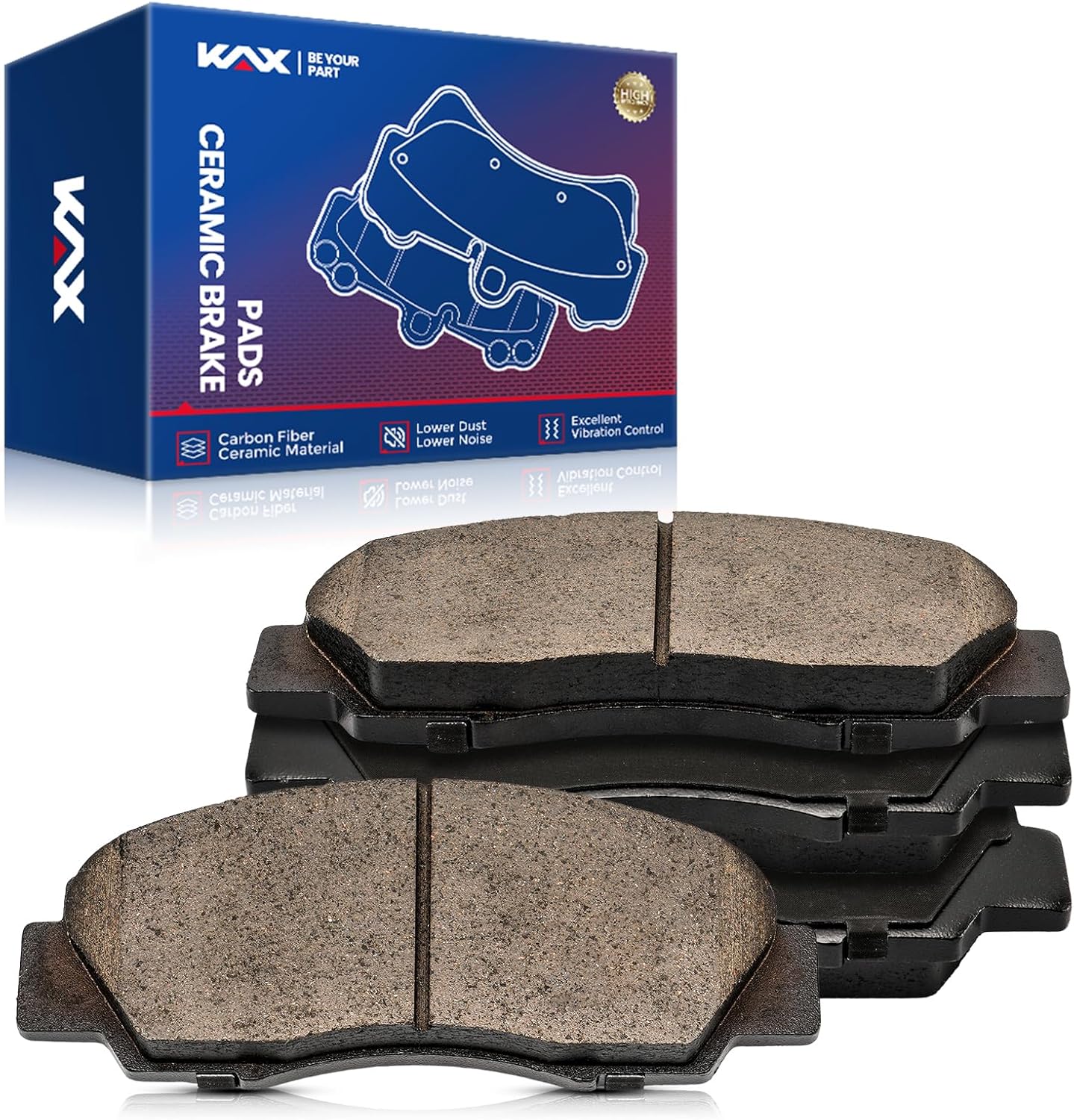
3. KAX D503 Front Ceramic Brake Pads Kit
| Auto Part Position | Front |
|---|---|
| Material Type | Ceramic |
| Model Number | D503 |
| Number of Items | 4 |
These KAX D503 front ceramic brake pads are a direct-fit replacement intended for older Honda platforms including the 1997–2001 CR-V. They use a ceramic friction compound with chamfered and slotted faces to reduce noise, help shed dust, and improve heat dissipation during repeated braking. In everyday driving you can expect quieter stops and lower rotor contamination compared with many metallic formulations, and the vendor claims longer service life and good fade resistance for sustained braking. The slot and chamfer geometry also help bedding-in and can reduce vibration that shows up as squeal. Installation is typical for a front pad change and no special modifications are required when the pads match the vehicle reference. Limitations are that performance under extreme track use will not match dedicated metallic or race pads and ceramic pads sometimes require more careful bedding to reach peak bite; also buyers must verify part reference D503 and vehicle fit before ordering. Overall these pads are a practical choice for street-driven CR-Vs that need quieter, low-dust stopping and reliable everyday braking.
Best for: Buyers who prioritize low noise, reduced dust, and a durable street-oriented replacement for a 1997–2001 Honda CR-V looking for a straightforward swap that restores everyday braking feel.
Less Ideal for: Drivers who plan aggressive track sessions or need maximum fade-resistant stopping power should consider high-performance metallic or track-focused pads instead.
- Ceramic compound delivers quieter braking and lower rotor dust than semi-metallic pads
- Chamfered and slotted surfaces improve bedding, reduce vibration, and aid heat dissipation
- Designed as a vehicle-specific fit for older Honda models, simplifying installation
- Not optimized for extreme or track-focused braking compared with performance metallic pads
Verdict: A low-dust, quiet ceramic front pad kit that restores reliable street braking for 1997–2001 Honda CR-Vs with easy vehicle-specific fitment.
4. Auto Shack Front Ceramic Brake Pad Set (front)

| Auto Part Position | Front |
|---|---|
| Material Type | Ceramic |
| Included Components | Ceramic Brake Pad Set |
| Unit Count | 4.0 Count |
These Auto Shack front ceramic pads are a budget-friendly replacement designed for many late 1990s to early 2000s Honda and Acura front applications including CR-V models from 1997 to 2001. They provide the typical ceramic advantages of quieter operation and reduced brake dust, which helps keep wheels cleaner between washes. The listing highlights pads formulated to protect rotors and deliver steady friction, so you can expect predictable stopping for daily driving and light commuting. Installation is standard for a front pad swap but the kit does not include clips or hardware, so plan to reuse factory retaining pieces or source new hardware if needed. Fitment is vehicle-specific, so double-check the fit tool or part numbers before purchasing to avoid returns. These pads come from a seller-backed offering with a six month part-only warranty, which is decent for cost-focused buyers but does not cover installation or labor. For someone replacing worn pads on an everyday CR-V and prioritizing low cost with acceptable comfort, these are a practical choice.
Best for: Buyers replacing front pads on a daily-driver CR-V who want a low-cost option that prioritizes quiet operation and low dust over premium performance.
Less Ideal for: Drivers who demand track-level friction, heavy towing performance, or a full hardware kit included should look at higher-end or complete rotor-and-hardware packages.
- Ceramic material for quieter braking and lower dust accumulation
- Formulated to reduce rotor wear for longer rotor life
- Vehicle-specific fit designed for direct front replacement on listed models
- Simple swap for routine front brake pad replacement, suitable for DIYers
- Does not include clips or hardware, so additional parts may be needed for a complete install
- Warranty covers only the part for six months and excludes labor
Verdict: A cost-conscious front ceramic pad set that delivers quiet, low-dust braking and rotor-friendly performance for routine CR-V driving.
5. Bendix Priority1 CFC503 Ceramic Front Brake Pads (front)

| Auto Part Position | Front |
|---|---|
| Compatible with Vehicle Type | Cars, SUV, Truck |
| Material Type | Ceramic |
| Included Components | Brake pad set with installation hardware |
| Specification Met | OEM |
These Bendix Priority1 CFC503 ceramic front pads are a vehicle-specific replacement engineered to meet factory fit, form, and function for select late 1990s and early 2000s Hondas and Acuras. They are used as a direct front-pad swap and come with installation hardware and purpose-built shims, slots, and chamfers intended to reduce noise during braking. The ceramic friction material is formulated to deliver predictable stopping power and resistance to fade under typical daily driving and occasional heavier loads. Practical benefits include a near-factory feel after installation, quieter operation compared with many semi-metallic pads, and consistent performance across city and highway driving. Limitations are that ceramic pads can produce less initial bite in very cold conditions and are not optimized for aggressive track use, so drivers seeking maximum high-temperature performance should consider performance-specific compounds. For reliability-focused daily drivers these pads offer a conservative, low-maintenance replacement that prioritizes smooth, dependable braking.
Best for: Buyers who prioritize a reliable, low-noise front brake replacement for daily driving and want parts that match factory fit and feel without frequent maintenance.
Less Ideal for: Drivers who plan aggressive track use or require maximum high-temperature stopping performance should choose a performance-oriented friction compound instead.
- Vehicle-specific design for a factory-quality fit and easy installation
- Ceramic friction material for quieter braking and consistent stop feel
- Includes installation hardware and designed shims to reduce vibration and noise
- Formulated to resist brake fade during normal daily driving
- Not intended for track or heavy performance driving where high-temperature friction is critical
Verdict: A dependable, quiet ceramic front pad set that restores factory-style braking for reliability-focused daily drivers.
6. Max Advanced Brakes Front Brake Kit — ValueMAX Front Rotors and Ceramic Pads

| Included Components | Brake Rotors, Brake Pads, Hardware |
|---|---|
| Orientation | Front |
| Automotive Fit Type | Vehicle Specific Fit |
| OEM Equivalent Part Number | 503 3296 9177 |
This Max Advanced Brakes ValueMAX front kit supplies both rotors and ceramic pads plus hardware for a direct bolt-on replacement on supported 1997–2001 Honda CR-V applications. The rotors are precision machined cast iron with a non-directional finish to speed bedding and reduce vibration, while the carbon ceramic pads are formulated to cut dust and lower noise with rubberized shims. In routine city and highway driving the kit delivers consistent stopping power and quiet operation, and customers report straightforward installation when fitment is correct. The package includes the parts needed for a front brake job so you do not have to hunt for extra hardware. Be careful to confirm the specific rotor diameter for your CR-V before ordering because there are multiple fitment variants across model years and trims; selecting the wrong size will require a return or exchange. For a risk-aware buyer focused on reliable, low-noise everyday braking, this kit balances factory-style performance with cost-effective value.
Best for: Buyers who want a complete, factory-style front brake replacement that prioritizes quiet, low-dust daily driving and values social proof from many positive user experiences.
Less Ideal for: People who need high-performance track pads or heavy-duty commercial braking should choose a purpose-built performance or heavy-load brake solution instead.
- Includes front rotors, ceramic brake pads, and installation hardware for a complete front brake replacement
- Precision-machined cast-iron rotors with non-directional finish for reduced vibration and quicker bedding
- Carbon ceramic pads designed for low dust and reduced noise with dual-layer rubberized shims
- Vehicle-specific fitment when the correct size is chosen, enabling a direct bolt-on installation
- Multiple rotor/pad size variants exist across years and trims, so ordering the wrong fitment is a common risk
Verdict: A complete, vehicle-specific front brake kit that delivers quiet, low-dust everyday braking and an easy bolt-on installation when you confirm the correct rotor size for your CR-V.
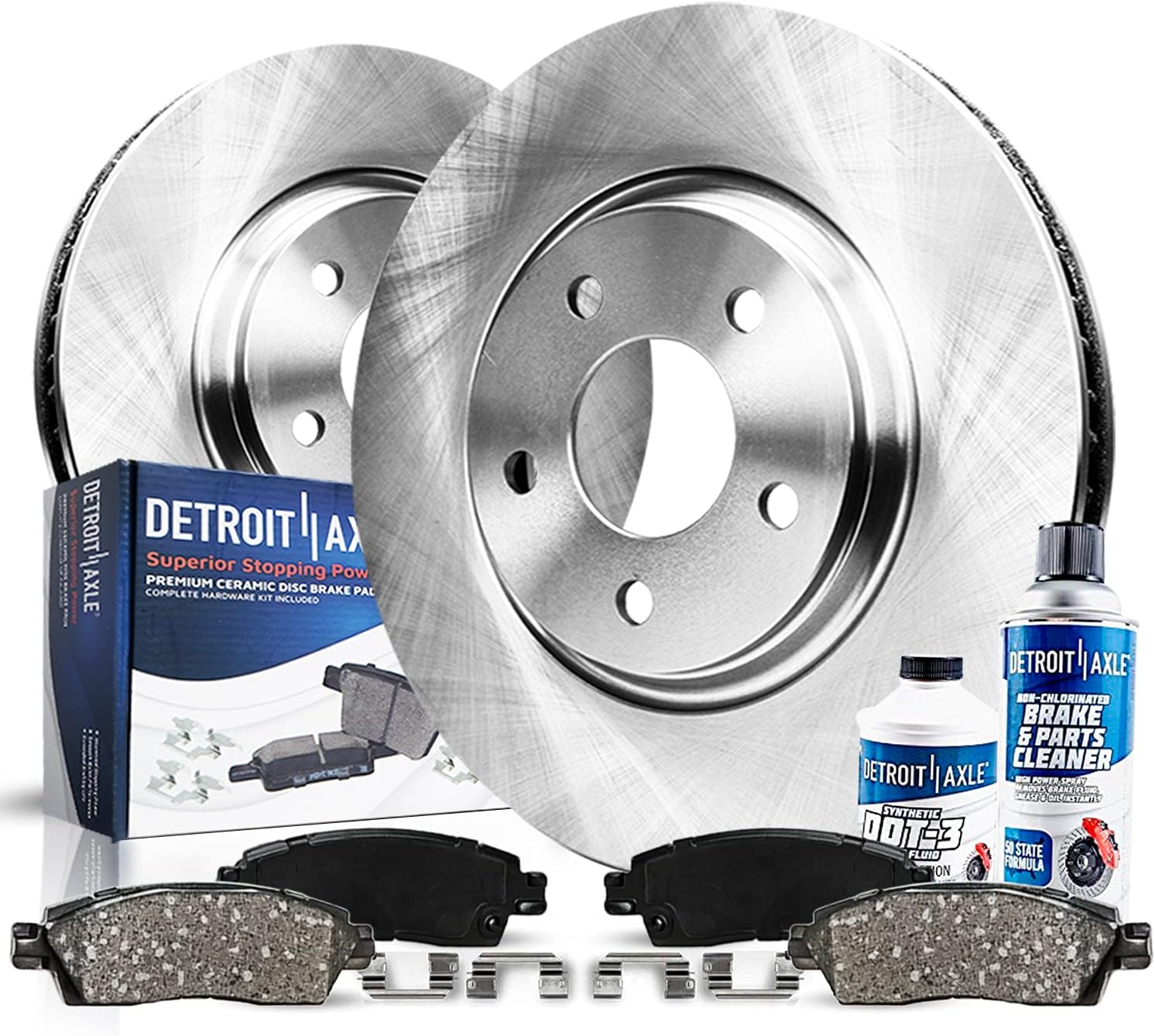
7. Detroit Axle Front Brake Kit with Ceramic Pads and Rotors
| Orientation | Front |
|---|---|
| Compatible with Vehicle Type | Car |
| Kit Includes | 2 rotors, 2 ceramic pads w/clips, brake cleaner, brake fluid |
This Detroit Axle front brake kit supplies everything needed to refresh the front braking system on compatible late 1990s Hondas and select Acuras. The kit includes two vented rotors machined with locating holes, a pair of ceramic pads with clips, a 10 oz brake cleaner, and a 12 oz bottle of brake fluid so you can complete a basic replacement job without buying extras. The zinc-plated rotors and ventilation slots are intended to resist corrosion and help cooling under normal street use, while the ceramic pads aim to lower dust and noise compared with semi-metallic compounds. Fitment is machined to factory-style locating holes for direct installation on the listed vehicles. Expect a sensible, value-oriented upgrade for routine maintenance or when rotors and pads are worn; this is not a high-performance or track-oriented kit so drivers seeking aggressive fade resistance or race pads should look elsewhere. Overall the bundle simplifies a front brake service and reduces the parts-matching guesswork for mainstream, risk-conscious DIYers and independent shops.
Best for: Buyers who want a low-risk, all-in-one front brake replacement that simplifies a routine service and restores factory-style performance without extra parts sourcing.
Less Ideal for: Drivers who need track-capable braking, heavy-duty fade resistance, or performance-oriented pad and rotor combos should choose a dedicated high-performance kit instead.
- Complete kit includes rotors, ceramic pads, pad clips, brake cleaner, and brake fluid for a one-stop front service.
- Vented, machined rotors with locating holes designed for direct fit and improved cooling during normal driving.
- Zinc plating on rotors helps resist surface corrosion and reduces wheel dust visibility compared with bare rotors.
- Not formulated for high-performance, track, or heavy towing use where extreme fade resistance is required.
Verdict: If you need a straightforward, factory-style front brake refresh for late 1990s Hondas, this kit supplies the matched rotors, ceramic pads, and fluids to finish the job with minimal fuss.
Choosing the Right 1997-2001 Honda CR-V Brake Pads: Key Factors to Consider
Pad Compound and Performance
The compound determines initial bite, modulation, and how the pads behave under repeated stops. Organic and ceramic-style compounds tend to offer quieter operation and lower dust, while semi-metallic types often provide stronger initial bite and better heat tolerance. For the 1997-2001 CR-V used mostly for commuting and errands, a compound that delivers consistent friction without aggressive wear on the stock rotors is usually preferable.
Consider how you drive day to day. If you frequently carry heavy loads or tow light trailers, a compound with better heat resistance will reduce fade and prolong pad life. Conversely, if you prioritize low dust and quietness, a ceramic-style compound will often be the best compromise for this vehicle.
Fitment and Backing Plate Design
Proper fitment is critical to avoid movement, uneven wear, or caliper stress. The 1997-2001 CR-V uses specific pad dimensions and clip locations; pads that match those specifications reduce the risk of installation headaches and ensure even contact across the rotor.
Backing plate rigidity and the presence of anti-rattle features or integrated shims affect NVH levels. A well-designed backing plate reduces vibration and keeps the pad seated securely during hard stops. Verify fitment details and compare mounting points, retaining clip interfaces, and whether the set includes the necessary hardware for a straightforward swap.
Wear Rate and Rotor Impact
Pad longevity and how aggressively a pad wears the rotor are both important maintenance considerations. A very hard compound may last longer but can accelerate rotor wear, increasing the chance of needing rotor machining or replacement on the CR-V. Conversely, very soft compounds may require more frequent pad changes.
Balance expected pad life against the cost and condition of the CR-V's rotors. If the vehicle's rotors are in good condition, choose a pad that preserves rotor surface quality while delivering acceptable life. If rotors are nearing service limits, a less abrasive compound can extend overall brake system economy.
Noise, Vibration, and Harshness (NVH)
Brake noise is a common concern for older vehicles like the 1997-2001 CR-V. Squeal or vibration can arise from pad resonance, poor backing plate contact, or lack of proper shims. Opting for pads with built-in noise-control features, quality shims, or included anti-rattle hardware reduces the likelihood of squeal.
Installation technique also matters. Proper cleaning of the caliper and hardware, correct torque on caliper bolts, and following bed-in procedures all reduce NVH. When comparing options, look for pads with proven quiet operation in everyday driving situations.
Compatibility With Front Versus Rear Brake Duties
Front and rear pads often have different shapes, compound needs, and wear rates because the fronts carry the bulk of braking force. On the 1997-2001 CR-V, front pads usually wear faster and must handle higher temperatures and loads. Choose front pads with stronger fade resistance and reliable bite, while rear pads can emphasize smooth release and lower noise.
When replacing pads, evaluate the condition of both axles. Mismatched compounds between front and rear can change brake balance and pedal feel, so aim for complementary choices that preserve predictable brake modulation.
Installation and Maintenance Practicalities
Ease of installation affects ownership experience, especially for DIY enthusiasts. Look for pads that include necessary clips, shims, and clear fitment documentation. Some sets include anti-squeal material pre-applied or offer hardware kits that reduce the need to source parts separately.
Also consider break-in procedures and whether the manufacturer provides clear bedding instructions. Proper bed-in ensures the pads mate to the rotor surface uniformly, improving initial performance and reducing early noise or uneven wear.
Common Brake Pad Wear Symptoms on a 1997-2001 CR-V
Owners often notice reduced stopping power, a longer pedal travel, or a softer brake pedal as pads thin. These are practical signs that pad thickness has dropped to a serviceable level and require inspection. Metal-on-metal contact is a late-stage symptom that can damage rotors quickly.
Squealing or grinding noises under braking are another clear indicator. High-pitched squeal can be caused by glazing, contaminated pads, or missing shims, while grinding usually means the friction material is gone and metal is contacting the rotor. Pay attention to how the noise changes with speed and load to narrow down the cause.
- Shorter stopping distances that suddenly increase
- Vibration or pulsing through the pedal during braking
- Visible pad thickness below a common threshold
- Brake dust concentrated in one area of the wheel
Measuring Pad Thickness and When to Act
A visual inspection through the wheel or after removing the wheel gives a quick read on pad remaining. Many technicians recommend replacement when pad material measures 3 mm to 4 mm, but conservative owners may choose replacement earlier to avoid rotor damage. For the CR-V, check both inner and outer pad faces for even wear.
If you detect uneven thickness between the inner and outer pad surfaces, it could indicate caliper slide binding or piston issues. Address the underlying problem as part of the pad replacement to prevent rapid re-wear.
- Recommended minimum pad thickness: inspect at or below 3–4 mm
- Look for glazing or cracking on the pad surface
- Check for embedded debris that can score rotors
Front Versus Rear Brake Duties on This CR-V
The front brakes handle most of the braking force and heat, so front pads typically use a compound that resists fade while keeping dust and noise manageable. Rear pads often prioritize smooth engagement and stability under light braking. When selecting sets, confirm that front and rear compounds complement each other to maintain balanced pedal feel.
Routine inspections should include both axles because a worn rear pad set can alter brake bias and affect ABS activation patterns. If you replace only one axle, try to match compound characteristics to preserve overall system behavior.
- Front pads: higher thermal demands
- Rear pads: lower wear rates but important for balance
- Avoid mixing vastly different compound types on front and rear
Bedding In New Pads and Break-In Tips
Proper bed-in creates a stable transfer layer on the rotor and maximizes early stopping performance. A typical procedure involves a series of gradual stops from moderate speed, avoiding full-lock braking, then allowing cooling periods. Follow any manufacturer instructions included with the pads for best results.
Avoid aggressive, repeated hard stops during the first few hundred miles. Doing so can deposit uneven material on the rotor or cause glazing. After bedding, verify pedal feel and check for unusual noise or vibration, which may indicate uneven transfer or installation issues.
- Perform progressive stops to transfer material evenly
- Allow cooling between high-energy stops
- Re-check torque and hardware after the first drive
Practical Tips for DIY Replacement on the 1997-2001 CR-V
Have the proper tools ready: a torque wrench, caliper piston tool or C-clamp, brake cleaner, and anti-seize for non-friction surfaces. Clean the caliper bracket and apply brake lubricant where the backing plate contacts metal to prevent noise. Always follow safety procedures and support the vehicle on rated stands.
Inspect hardware such as slide pins, boots, and rotor condition while the wheel is off. Replace any corroded clips or missing shims to ensure the new pads seat correctly. After installation, perform a short low-speed test to confirm normal operation before regular driving.
- Torque caliper bolts to factory specs
- Clean rotors before installation to remove oil or protective coatings
- Bleed brakes if the hydraulic system was opened or if pedal feel is spongy
Still looking for the perfect fit?
Select your Honda CR-V configuration to see the most relevant Brake Pads recommendations
How We Chose the Best 1997-2001 Honda CR-V Brake Pads
We prioritized factors that directly affect braking performance and long-term ownership for the 1997-2001 Honda CR-V. Our evaluation criteria included stopping performance under normal and repeated braking, measured by consistent pad friction and fade resistance; pad compound durability, which influences pad life, dust generation, and rotor wear; exactness of fitment to the CR-V's caliper and rotor dimensions to avoid installation issues and uneven wear; noise and vibration characteristics, since squeal and judder are common owner complaints; and ease of installation including backing plate design, available hardware, and whether shims or clips are integrated.We also considered thermal behavior for typical commuter and light-duty driving rather than track use, and we favored compounds that balance bite with low dust. Exclusions included pads designed exclusively for racing or heavy commercial applications, and any options lacking published fitment data for the 1997-2001 CR-V. The resulting shortlist reflects products that meet those practical, vehicle-specific requirements and deliver predictable, serviceable braking for everyday driving.
Our full evaluation process is outlined in our review methodology.
FAQ
How often should I replace brake pads on a 1997-2001 Honda CR-V?
It depends on driving habits and pad compound. Many owners see 30,000 to 60,000 miles between pad changes under normal commuting conditions, but aggressive driving or heavy loads shorten that interval. Inspect pads periodically and replace when thickness approaches 3–4 mm or when stopping performance deteriorates.
Can I replace only the front or only the rear pads on this CR-V?
Yes, you can replace one axle at a time, but try to match the compound characteristics between front and rear to preserve brake balance. If one axle shows significantly more wear, address potential underlying causes such as caliper binding before fitting new pads.
What causes brake pad noise and how can I reduce it?
Noise often stems from resonance, glazing, or missing anti-rattle hardware. Using pads with proper shims, applying recommended lubricants on backing plate contact points, and ensuring hardware is in good condition will reduce squeal. Proper bed-in also helps minimize early noise.
Do ceramic-style pads work well on a 1997-2001 CR-V?
Ceramic-style compounds are commonly chosen for this vehicle because they offer quiet operation and low dust, which is beneficial for daily driving. They may trade off some initial bite compared with more aggressive semi-metallic options, so select a ceramic that balances bite and longevity if you prioritize consistent stopping performance.
How can I tell if my rotors need machining when replacing pads?
Look for deep scoring, visible warping, uneven thickness, or measurements below the rotor minimum thickness spec. If you feel pedal pulsation after new pads are installed, that can indicate rotor runout. When in doubt, measure rotor thickness and runout against the vehicle's service limits.
Is there a recommended bedding procedure for new pads on this vehicle?
A conservative bedding routine involves a series of 8 to 12 moderate stops from progressively higher speeds without coming to a full lock, followed by cool-down periods. Specific steps vary by pad compound, so follow any instructions provided with the pads for optimal results.
Will aftermarket brake pads fit the 1997-2001 CR-V reliably?
Many aftermarket pads are made to the CR-V's specifications and fit reliably, but verify published fitment details and included hardware. Choose vendors that document dimensions and mounting interfaces to avoid installation issues.
Final Verdict
When choosing brake pads for a 1997-2001 Honda CR-V, prioritize a compound that balances consistent stopping, low dust, and reasonable rotor friendliness for everyday driving. Ensure exact fitment and proper backing plate design to minimize noise and uneven wear. Address any caliper or rotor issues during replacement to protect the new pads and maintain predictable brake bias.Focus on the tradeoffs between noise, longevity, and bite depending on how you use the CR-V. With careful selection and a proper bed-in, you can restore confident, quiet braking and extend the life of the braking system.
Explore More:
- Check out all Honda CR-V parts & accessories
- Explore Brake Pads Maintenance & Repair Guides
- Explore Brake System
- Browse all Auto Parts
