

Note: This article contains affiliate links. If you click on these links and make a purchase, I may earn a small commission at no extra cost to you. This helps support my research and content. Read my full affiliate disclosure here.
If you own a 2007-2011 Honda CR-V, worn or warped rotors directly affect braking feel, pedal response, and safety. Choosing the right brake rotors matters because this CR-V generation commonly accumulates mileage and mild corrosion that accelerate wear. Replacing rotors with options matched to the vehicle's specifications restores consistent pedal firmness and reduces noise and vibration.This guide covers seven carefully shortlisted rotor options specifically for the 2007-2011 Honda CR-V. We evaluated fitment, material and machining quality, and thickness tolerances to help you pick rotors that match your driving style and maintenance goals. Read on for the key factors that matter and practical guidance on inspection and installation.
Looking for other parts? See all Honda CR-V parts & accessories.
Top Picks at a Glance
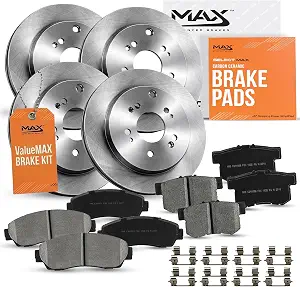


1. Max Advanced Brakes Front and Rear Brake Rotors and Carbon Ceramic Pads Kit for 2007–2016 Honda CR-V AWD
| Compatible models | 2007-2011 CR-V, 2012-2016 CR-V AWD |
|---|---|
| Included components | Front and rear rotors, brake pads, hardware |
| Fit type | Vehicle Specific Fit |
| Manufacturer warranty | 1 year for combined kits; 4 months for individual pads/rotors |
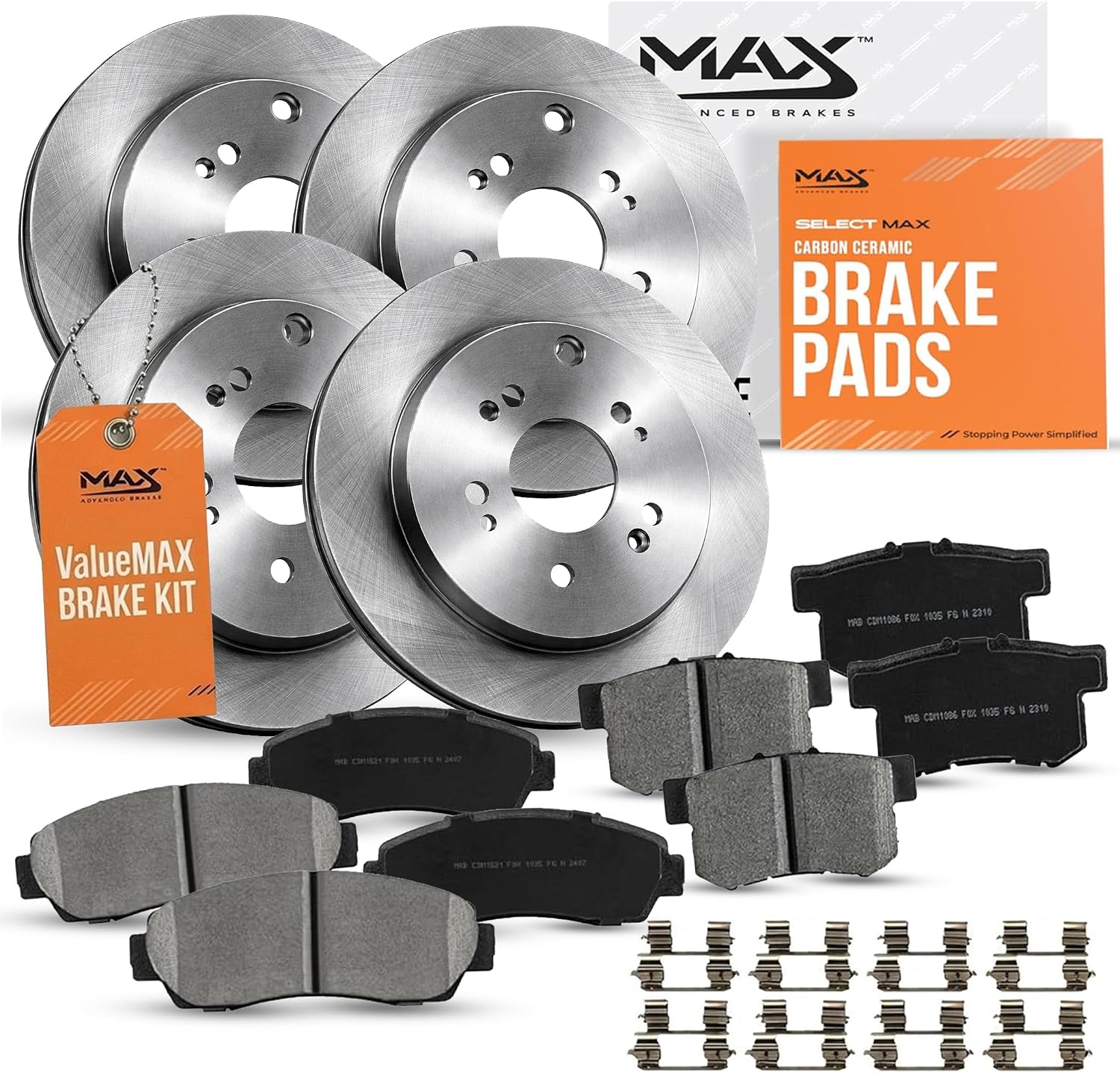
This Max Advanced Brakes kit supplies both front and rear rotors plus carbon ceramic-style brake pads and hardware as a direct-fit replacement for compatible 2007–2011 and 2012–2016 Honda CR-V AWD models. It is intended for routine street driving and city use, offering precision-machined cast-iron rotors to reduce vibration and speed bedding in, plus pads formulated to limit dust and minimize noise. The kit includes all four rotors, pads, and needed mounting hardware for a straightforward bolt-on installation, so you can replace the whole braking system in one job. Practical benefits include consistent stopping feel, quieter operation during light-to-moderate stops, and cleaner wheels thanks to the lower dust compound. Limitations to note are that longevity can vary with driving style compared with higher-end aftermarket or performance options, and some customers have reported occasional packaging or missing-part issues that delayed installation. For a balanced, value-focused rebuild of the CR-V braking system this kit covers the essentials without requiring additional parts for most owners.
Best for: Buyers seeking a balanced, cost-conscious full brake replacement that restores reliable day-to-day stopping and cleaner wheels with minimal extra work are the best fit for this kit.
Less Ideal for: Drivers who demand track-capable stopping performance or the longest possible pad and rotor life under heavy towing or aggressive driving should consider performance or heavy-duty alternatives.
- Complete front-and-rear kit with rotors, pads, and hardware for one-stop replacement
- Precision-machined rotors designed to reduce vibration and promote faster bedding
- Carbon ceramic-style pads formulated for lower brake dust and quieter stops
- Vehicle-specific fitment for 2007–2011 and 2012–2016 Honda CR-V AWD makes installation straightforward
- Packaging and shipping problems have occasionally led to missing parts on arrival
- Durability may be shorter than premium or performance-grade brake components under aggressive use
Verdict: A complete, value-oriented front-and-rear kit that gives Honda CR-V AWD owners a straightforward way to restore quiet, low-dust everyday braking.
2. PowerStop Z23 Front and Rear Brake Kit with Drilled & Slotted Rotors and Carbon-Fiber Ceramic Pads (K229)

| Included Components | Rotors, brake pads, installation hardware, brake lube |
|---|---|
| Manufacturer Warranty Description | 60-day/36,000-mile limited warranty |
| Automotive Fit Type | Vehicle Specific Fit |
| Item Type Name | Front and Rear Z23 Carbon Fiber Brake Pads with Drilled & Slotted Brake Rotors Kit |
This PowerStop Z23 kit is a bolt-on upgrade that replaces both front and rear rotors and pads for compatible CR-Vs, designed to deliver stronger, cleaner stopping without a complicated install. The Z23 carbon-fiber ceramic pads use a low-dust formula and stainless-steel shims to reduce noise and wheel grime while offering higher fade resistance than many factory replacements. The rotors are drilled and slotted with rounded slots and zinc plating to help channel heat and debris away from the pad contact surface and resist rust behind the wheels. PowerStop includes stainless hardware and basic lubricants so installation is straightforward for a competent DIYer or mechanic. Expect firmer, more consistent pedal feel under repeated stops and less visible brake dust on alloy wheels. On the downside this is an upgrade kit for daily-driven performance rather than track-only use, and the drilled pattern can slightly increase wear on aggressive pad compounds over very long term heavy use.
Best for: Drivers who want a clear step up from factory brakes on a daily-driven CR-V, prioritizing stronger, fade-resistant stopping with lower dust and quiet operation.
Less Ideal for: Those who primarily track their vehicle or require purpose-built race rotors and pads should choose motorsport-specific components instead.
- Complete front-and-rear kit includes pads, drilled and slotted rotors, stainless hardware, and brake lube for a one-stop upgrade.
- Low-dust carbon-fiber ceramic pads reduce wheel contamination and use shims/chamfers to minimize noise.
- Drilled and slotted rotors improve cooling and help keep pad contact clean while zinc plating slows corrosion behind wheels.
- Drilled rotors are optimized for heat dissipation but are not intended as a dedicated track racing rotor and may wear faster under extreme track abuse.
Verdict: A practical, bolt-on brake upgrade for 2007–2011 Honda CR-V owners who want stronger, low-dust stopping and improved rotor cooling without complex installation.
3. Max Advanced Brakes Front Brake Kit with Cross-Drilled Rotors and Carbon-Ceramic Pads

| Compatible vehicles | 2007-2011 Honda CR-V; 2012-2016 Honda CR-V (AWD); select Acura RDX, Crosstour models |
|---|---|
| Included components | Brake rotors, brake pads, hardware |
| Pad material | Carbon-infused ceramic |
| Rotor style | Cross-drilled |
| Orientation | Front |
This front brake kit replaces the factory front rotors and pads with cross-drilled rotors and carbon-infused ceramic pads designed for enhanced everyday performance. It is intended as a direct bolt-on replacement for compatible CR-V and related models and includes the mounting hardware so you can complete the swap without sourcing extra parts. The cross-drilled rotor design helps dissipate heat during repeated stops, which can reduce brake fade on long drives, and the carbon-ceramic pads are formulated to cut visible dust and suppress low-speed squeal for cleaner wheels and quieter operation. In practical use the kit improves pedal feel over stock entry-level replacements and delivers consistent stopping in city and highway driving. Some users note exposed rotor surfaces can surface-rust and a few report fitment or packing mistakes from the seller, so check parts and confirm vehicle fit before installation. For DIY installers the included hardware and direct-fit design make this a straightforward upgrade for daily-driven vehicles.
Best for: Buyers who want a practical, budget-conscious upgrade that improves everyday braking feel and reduces wheel dust without changing driving habits.
Less Ideal for: Drivers seeking race-oriented or heavy-duty commercial braking solutions should choose performance or heavy-duty brake components designed for track or towing use.
- Complete kit includes both front rotors, pads, and installation hardware for a single purchase
- Cross-drilled rotors improve heat dissipation and help reduce brake fade during repeated stops
- Carbon-infused ceramic pads produce less visible dust and reduce low-speed noise
- Vehicle-specific fitment and direct bolt-on design simplify DIY installation
- Rotor top hat is uncoated and may show surface rust over time on exposed areas
Verdict: A cost-effective, direct-fit front brake kit that cleans up dust and improves daily stopping performance for practical CR-V owners.
4. Auto Shack Front Vented Brake Rotors (pair) for 2007–2016 Honda CR‑V and compatible Acura models

| Material Type | Alloy Steel |
|---|---|
| Included Components | Brake Rotor |
| Automotive Fit Type | Vehicle Specific Fit |
| Exterior Finish | Silver |
These Auto Shack front rotors are a straightforward vehicle-specific replacement for 2007–2016 Honda CR‑V and several Acura models. Supplied as a pair, the rotors are vented alloy-steel units sized to match the factory front discs and designed for everyday driving. Installers will appreciate the basic, no-frills construction that restores stopping power and resists heat better than solid discs, which helps maintain consistent pedal feel during normal commuting and light towing. The product listing emphasizes fitment verification, so double-check stud count and rotor diameter before buying; the set targets common factory brake setups rather than performance upgrades. Expect standard corrosion-prone silver finish typical of budget rotors and a limited six-month part-only warranty. These rotors are best when you want a cost-effective, like-for-like replacement that gets a higher-mileage CR‑V back on the road without changing brake characteristics, but they are not intended for aggressive track use or high-performance braking builds.
Best for: Buyers who need an affordable, direct replacement to restore factory braking on a daily-driven CR‑V and prioritize getting reliable, like-for-like parts on a budget.
Less Ideal for: Drivers seeking upgraded performance rotors for track use or heavy towing should consider premium or slotted/drilled alternatives instead.
- Vehicle-specific fit for 2007–2016 CR‑V and listed Acura models reduces fitment guesswork
- Vented construction helps dissipate heat for consistent everyday braking
- Sold as a pair so both front rotors are replaced together
- Alloy steel material offers solid durability for routine driving
- Six-month warranty covers only the part and not installation or related costs
Verdict: If you want a budget-friendly, vehicle-specific pair of vented front rotors to restore factory-style braking on a 2007–2011 CR‑V, this set is a practical buy.
5. Motorevo Front Brake Kit for Honda CR-V (2007–2011; 2012–2016 AWD) — Geomet Coated Drilled/Slotted Rotors & Ceramic Pads

| Compatible with Vehicle Type | 2007-2011 CR-V All Models; 2012-2016 AWD Fronts Only |
|---|---|
| Included Components | 2 rotors and 4 ceramic pads with hardware |
| Rotor Diameter | 296mm (11.7 in) for listed option |
| Orientation | Front |
| OEM Equivalent Part Number | 31455 & D1521-7994 |
This Motorevo front brake kit replaces the factory front rotors and pads with Geomet-coated, drilled and slotted high-carbon alloy rotors and ceramic pads. It is designed for direct fitment to 2007–2011 CR-Vs and 2012–2016 AWD front applications and ships with two rotors and four pads plus hardware. The drilled and slotted rotor pattern and vented construction help dissipate heat and clear debris, which reduces brake fade during heavier or repeated stops. The Geomet coating protects non-friction surfaces from corrosion, and the ceramic pads aim for low dust and reduced noise compared with metallic pads. Buyers installing these will typically use them as a like-for-like replacement to restore braking performance or to upgrade to lower-dust, quieter pads. Expect relatively simple installation for a front kit with no extra assembly required. Limitations to note are the model-specific fit: the 2012–2016 set is for AWD fronts only and will not fit FWD variants, and performance claims about lifespan and stopping-distance improvements come from the maker rather than independent testing.
Best for: Buyers who prioritize dependable, factory-style braking upgrades that lower dust and noise and want parts engineered to fit the 2007–2011 CR-V front end with a focus on long-term durability.
Less Ideal for: Drivers seeking a performance race or track-focused rotor and pad set or those who need parts for 2012–2016 FWD CR-Vs should look at other options.
- Direct replacement kit with rotors and pads plus hardware for a single front axle
- Geomet anti-corrosion coating protects non-friction surfaces from rust
- Drilled, slotted and vented rotor design improves heat dissipation and debris removal
- Ceramic pads produce low dust and reduced high-frequency noise
- Fitment is model-specific and the 2012–2016 option fits AWD fronts only and will not fit FWD models
Verdict: A practical, corrosion-protected front brake kit that provides a direct-fit, lower-dust replacement for 2007–2011 CR‑V owners seeking reliable, quiet braking.
6. Detroit Axle Complete Front and Rear Drilled & Slotted Brake Kit for 2007-2011 Honda CR-V / 2010-2012 Acura RDX (FWD)

| Fitment | 2007-2011 Honda CR-V; 2010-2012 Acura RDX (FWD) |
|---|---|
| Rotor types | Drilled and slotted (front and rear) |
| Pad material | Ceramic brake pads |
| Includes | Brake cleaner spray and DOT3 brake fluid |
| Warranty | 10 Year Warranty |
This Detroit Axle kit supplies everything needed to replace both front and rear brake rotors and pads on the specified Honda CR-V and Acura RDX FWD models. It ships with drilled and slotted rotors front and rear plus matching ceramic pads, clips, a can of brake cleaner and a bottle of DOT3 fluid so you do not have to source small consumables separately. The rotors are zinc plated to resist corrosion and machined locating holes aim to ensure a direct fit to the hub. Drilled and slotted faces help heat dissipation and reduce pad glazing during spirited stops, while ceramic pads are tuned for quieter operation with minimal dust. Practical strengths are the complete kit format and vehicle-specific fitment that simplify a DIY brake job. Limitations to expect are the lack of detailed paper instructions in some boxes and occasional mismatched hardware reported by buyers, so bring basic brake knowledge, the right tools, and inspect hardware before installation. Proper bedding and anti-seize on the hub are recommended to avoid noise and future seizure.
Best for: Buyers who value documented customer results and want a ready-to-install, vehicle-specific brake kit for a DIY replacement on a CR-V or RDX FWD, and who prefer buying a complete set rather than sourcing parts individually.
Less Ideal for: Drivers who prefer premium performance pads or quieter OEM-matching rotors for low-noise luxury driving, or those who want a plug-and-play installer experience with step-by-step paper instructions included.
- Complete kit includes front and rear drilled/slotted rotors, ceramic pads, clips, brake cleaner and DOT3 fluid
- Zinc-plated rotors resist corrosion and reduce wheel dust
- Drilled and slotted rotor design improves heat dissipation and helps prevent pad glazing
- Vehicle-specific machining and locating holes for straightforward fitment
- No detailed printed installation instructions included with some shipments
- Some buyers reported occasional incorrect or poor-fit small hardware in the accessory packs
Verdict: If you want a single, vehicle-specific kit that replaces both rotors and pads with corrosion-resistant drilled and slotted rotors and ceramic pads, this Detroit Axle set is a practical, DIY-friendly choice backed by many user reports.
7. Acinoparts Front and Rear Drilled & Slotted Brake Rotor and Ceramic Pad Kit

| Fitment | Honda CR‑V 2007–2011, CR‑V AWD 2012–2016, Acura RDX FWD 2010–2012 |
|---|---|
| Includes | 2 front rotors, 2 rear rotors, 4 front pads, 4 rear pads, hardware |
| Pad type | Ceramic |
| Rotor style | Drilled and slotted |
| Exterior finish | Antiox full coating |
This Acinoparts kit supplies both front and rear drilled and slotted rotors together with matching ceramic brake pads and necessary hardware for a direct vehicle-specific replacement. It is sold as a complete kit so you replace all four rotors and all pads at once, which simplifies installation and restores braking performance and appearance at the same time. The rotors use drilled and slotted machining to help evacuate gas and dust and to improve heat dissipation, while the pads are a ceramic compound designed for lower dust and quieter operation. The rotors are coated to resist surface rust and the pads include hardware for a straightforward swap. Expect a short bedding-in period before peak bite and plan for professional installation if you want to ensure even rotor mounting and correct torque. Fitment is limited to specified AWD or FWD CR‑V/RDX model years so double-check your drivetrain before ordering.
Best for: Buyers who want a full, matched rotor-and-pad replacement that restores braking performance and reduces maintenance hassle while minimizing noise and dust, and who prefer a ready-to-install kit over sourcing parts piecemeal.
Less Ideal for: Drivers who need a high‑performance or track-oriented braking upgrade or those who require cross‑vehicle compatibility should look at dedicated performance rotors or pads instead.
- Complete front and rear kit with rotors and ceramic pads included for a coordinated replacement
- Drilled and slotted rotors improve heat dissipation and aid debris evacuation under heavy use
- Ceramic pads reduce dust and tend to run quieter than semi‑metallic compounds
- Rotors come with an anti‑rust full coating to limit surface corrosion and cleaning needs
- Hardware included for pads makes the swap more convenient and reduces parts hunting
- Fitment is vehicle and drivetrain specific so it will not fit every CR‑V/RDX variant
Verdict: If you need a complete, vehicle-specific replacement to restore stopping performance with lower dust and quieter ceramic pads, this all-in-one kit is a practical, low-risk choice for CR‑V AWD and RDX FWD fitments.
Choosing the Right 2007-2011 Honda CR-V Brake Rotors: Key Factors to Consider
Correct Fitment and Dimensions
Exact dimensional compatibility with the 2007-2011 Honda CR-V is the most important factor. Rotors must match hub diameter, center bore, bolt pattern, and overall thickness to sit flush with the hub and allow the caliper to operate without binding. Incorrect fitment can cause uneven pad wear, noise, or even caliper damage.
Measure or confirm OEM specifications before purchase. Many replacement rotors will list the full dimensional data; use that to cross-check against your vehicle. Proper fitment reduces installation complexity and minimizes the need for additional machining or adaptation.
Material Quality and Heat Management
Rotor material and casting quality dictate heat capacity and resistance to cracking. For a CR-V that sees mixed city and highway use, rotors that dissipate heat evenly help maintain consistent stopping power and reduce the risk of warping under repeated moderate braking.
Look for rotors with uniform metallurgy and minimal internal porosity. Venting design and vane count affect airflow; better airflow helps cool rotors during long descents or towing. Higher quality castings also resist surface break-up that leads to accelerated wear.
Thickness, Thickness Variation, and Minimum Spec
Starting thickness and tolerance across the rotor face determine how long a rotor remains within safe service limits. Rotors are sold at different nominal thicknesses; ones closer to OEM thickness generally allow more service life before hitting the minimum specification.
Also consider thickness variation across the rotor. Excessive variation contributes to pulsation and vibration. If you plan to resurface rotors, confirm the minimum allowable thickness and whether resurfacing will leave adequate material for safe reuse.
Machining Quality and Runout
Surface finish, concentricity, and lateral runout affect pedal feel and noise. Well-machined rotors with low runout help the brake pads contact evenly and reduce the chance of shimmy or vibration through the steering wheel on the 2007-2011 CR-V.
Tolerance data or manufacturer-runout specifications are useful. During installation, measure runout at the hub to ensure the rotor is seated correctly; excessive runout sometimes indicates hub issues rather than rotor defects.
Corrosion Resistance and Coatings
Road salt, moisture, and brake dust can cause surface rust that affects the rotor contact area and hat section. Coatings on non-friction surfaces, such as zinc or ceramic-based paints, slow corrosion and make future removal easier on the CR-V.
Coatings do not belong on the friction surfaces but applied to the hat and edges they extend service life and reduce maintenance difficulty. Consider coated rotors if you live in a wet or salty climate.
Design Features: Vented, Slotted, or Drilled
Different rotor designs offer tradeoffs. Vented rotors with effective vane designs improve cooling for sustained braking. Slotted or drilled rotors can help with gas and water evacuation, potentially improving initial bite and wet braking response.
However, slotted or drilled faces may wear pads faster and can be more susceptible to cracking under heavy repeated stress. For most CR-V owners who drive on roads and occasional highways, venting and quality machining are often more important than aggressive drilling or slotting.
How to Inspect Rotors on a 2007-2011 CR-V
Regular inspection helps catch issues before they affect safety. Start with a visual check for grooves, scoring, or heavy rust on the friction surface. Look for uneven wear patterns that might indicate caliper or pad problems.
Measure rotor thickness at multiple points and compare to the manufacturer minimum specification for the 2007-2011 CR-V. Also check for lateral runout while the wheel is mounted to the hub; a dial indicator can quantify any wobble that causes pedal pulsation.
- Remove wheel and inspect both faces and the hat for corrosion or cracks
- Use a micrometer to measure thickness in several radial locations
- Check for blueing or discoloration that indicates overheating
- Spin the hub and use a dial indicator to measure lateral runout
When to Resurface Versus Replace Rotors
Resurfacing removes light scoring and restores a flat contact surface, but it also reduces rotor thickness. For the 2007-2011 CR-V, resurfacing is an option only if the rotor will remain above the manufacturer minimum thickness after material removal and if there are no cracks or severe corrosion.
Replace rotors when they are below minimum thickness, exhibit deep grooves, radial cracks, or have excessive runout that resurfacing cannot correct. Also consider replacement when corrosion around the hat or ventilation vanes compromises structural integrity.
- Resurface if damage is minor and final thickness will be safe
- Replace if cracks, deep scoring, or corrosion are present
- Always check pad thickness and caliper operation when deciding
Understanding Slotted, Drilled, and Solid Faces
Slotted and drilled faces are marketed for improved heat and gas evacuation. For everyday driving of the 2007-2011 CR-V, moderate slotting can help clear debris and water from the pad contact area, but aggressive drilling increases the risk of stress concentration and cracking.
Solid or plain-faced rotors with good venting and quality metallurgy often provide the most consistent wear and the least noise for normal commuting and occasional highway use.
- Slotted: helps clear pads but increases pad wear
- Drilled: may aid initial cooling but can crack under heavy use
- Solid: reliable, quieter, and often longer-lived under typical driving
Installation Tips Specific to the CR-V
Ensure the hub mating surface is clean and free of corrosion before installing a new rotor. Even small debris or rust layers can cause runout and vibration on the 2007-2011 CR-V. Use the correct torque specifications for wheel studs and caliper bracket bolts to avoid distortion.
When replacing rotors, replace pads or at least verify pad condition and bed-in new rotors with the recommended bedding procedure. After installation, test brakes at low speed to confirm pedal feel and absence of noise before normal driving.
- Clean hub contact surface thoroughly
- Use factory torque specs on fasteners
- Bed-in new rotors and pads with progressive stops
Signs Your CR-V Needs New Rotors
Several symptoms indicate rotor replacement is due. Pulsation or vibration through the brake pedal during normal stops usually points to lateral runout or thickness variation. A grabbing or grabbing followed by a squeal can indicate reduced friction surface or glazing.
Visible cracks, deep scoring, or severe rust on the braking surface are clear signs to replace. Also monitor brake performance after long descents; fading or longer stopping distances can signal diminished rotor heat capacity.
- Brake pedal pulsation during stops
- Squealing, grinding, or abnormal noises
- Visible cracks, deep grooves, or heavy rust
Still looking for the perfect fit?
Select your Honda CR-V configuration to see the most relevant Brake Rotors recommendations
How We Chose the Best 2007-2011 Honda CR-V Brake Rotors
We focused editorial selection on criteria that directly affect performance, longevity, and fitment for the 2007-2011 Honda CR-V. Primary evaluation points included dimensional compatibility with the CR-V's brake assemblies, including hub diameter, bolt pattern, and factory thickness specifications. We prioritized material quality and metallurgy because rotor composition influences heat dissipation, cracking resistance, and long-term wear.Machining and runout tolerances were considered to reduce vibration and ensure even pad contact. We also weighed cooling features such as vane design and venting for front and rear rotor duties on this vehicle. Corrosion resistance treatments and protective coatings were included as selection filters because road salt and moisture can accelerate surface pitting on this generation of CR-V.We excluded rotors that lacked clear fitment specs for 2007-2011 CR-V or that had inconsistent thickness and runout data. Products without measured dimensions, ambiguous vehicle coverage, or poor documented manufacturing tolerances were not considered. The final list balances durability, correct fit, and predictable brake performance for everyday driving and typical maintenance scenarios.
Our full evaluation process is outlined in our review methodology.
FAQ
How often should I check rotors on my 2007-2011 CR-V?
Inspect rotors at least every 12,000 miles or during every brake pad replacement, whichever comes first. Frequent checks are wise if you do a lot of stop-and-go city driving or live where roads are salted.
Can rotors be resurfaced on the 2007-2011 CR-V?
Resurfacing is possible if the rotor remains above the minimum thickness after machining and shows no cracks or severe corrosion. Verify the vehicle's rotor minimum spec before deciding to resurface.
Are slotted or drilled rotors necessary for normal CR-V use?
For typical commuting and highway driving, high-quality vented plain-face rotors usually offer the best balance of longevity and quiet operation. Slotted or drilled options have benefits but can increase pad wear or cracking risk under heavy use.
What causes rotor warping on my CR-V?
Warping usually results from excessive heat cycles, uneven pad contact, or hub mounting problems. In many cases, perceived warping is lateral runout from hub corrosion rather than true metallurgical warping.
How do I measure rotor thickness correctly?
Use a micrometer to measure rotor thickness at several points around the friction surface and compare the smallest reading to the vehicle minimum specification. Measuring at multiple radial locations helps identify thickness variation that causes pulsation.
Final Verdict
Prioritize correct fitment, sufficient thickness, and good material quality when selecting rotors for a 2007-2011 Honda CR-V. Consider venting design and corrosion-resistant coatings if you drive in hilly terrain or wet climates, and avoid aggressive drilling unless you need the specific benefits and accept the tradeoffs.Balance the cost of replacement against remaining material if resurfacing is an option, and always confirm runout and mounting surfaces during installation. Choosing rotors that meet the vehicle's dimensional specs and have consistent machining will restore reliable braking and reduce the likelihood of vibration or premature wear.
Explore More:
- Check out all Honda CR-V parts & accessories
- Explore Brake Rotors Maintenance & Repair Guides
- Explore Brake System
- Browse all Auto Parts
