

Note: This article contains affiliate links. If you click on these links and make a purchase, I may earn a small commission at no extra cost to you. This helps support my research and content. Read my full affiliate disclosure here.
If you own a 2007-2011 Honda CR-V, choosing the right brake pads affects safety, pedal feel, and repair frequency. Brake pads are the wear item most likely to influence everyday driving confidence and maintenance costs, whether you cover mostly highway miles or a lot of city stop-and-go.This guide highlights seven shortlisted brake pad options suited to the 2007-2011 CR-V chassis, explaining the evaluation criteria we used and what each pad type means for noise, stopping performance, and pad life. Read on to understand how to match pad construction and compound to your driving needs and inspection routine before you replace the pads on your CR-V.
Looking for other parts? See all Honda CR-V parts & accessories.
Top Picks at a Glance
| Best Overall The best all-around choice for most situations | Max Advanced Brakes StyleMAX Carbon Ceramic Brake and Rotor Kit (Front & Rear) |  |
| Best Quality Built to a higher standard if you want something more solid | Max Advanced Brakes Front Brake Kit with Carbon Ceramic Pads and Cross-Drilled Rotors |  |
| Best Value The sweet spot between price and what you get | cciyu Ceramic Front and Rear Brake Pad Set (vehicle-specific fit) |  |
| Best Budget The cheapest option that still gets the job done reliably | RevivaParts Ceramic Front and Rear Brake Pads — 8‑Piece Set |  |
| Highest Rated A top-rated pick with lots of positive feedback | Bendix Premium SBC1521 Ceramic Rear Brake Pads |  |
| Most Popular A crowd favorite that many people choose with confidence | Detroit Axle Brake Kit with Drilled & Slotted Rotors and Ceramic Pads for 2007–2011 Honda CR-V / 2010–2012 Acura RDX (Front & Rear) |  |
| Best Seller A high-volume bestseller chosen again and again | BOSCH QuietCast Premium Ceramic Rear Brake Pad Set (BC1086) |  |
1. Max Advanced Brakes StyleMAX Carbon Ceramic Brake and Rotor Kit (Front & Rear)

| Compatible vehicles | 2007-2011 Honda CR-V, 2012-2016 Honda CR-V (AWD), 2010-2012 Acura RDX (FWD) |
|---|---|
| Included components | Brake rotors, brake pads, hardware |
| Pad material | Carbon ceramic |
| Rotor style | Cross-drilled |
| Automotive fit type | Vehicle Specific Fit |
This StyleMAX kit supplies a full front-and-rear replacement: cross-drilled rotors, carbon-ceramic pads, and the necessary hardware for bolt-on installation. It is aimed at daily drivers who want a noticeable improvement in pedal feel and cleaner wheels without stepping up to track-focused components. The cross-drilled rotors help dissipate heat during repeated stops, which reduces fade on long commutes or light towing, while the carbon-infused ceramic pads are formulated for lower dust and less low-speed noise thanks to dual-layer rubberized shims. Fitment is vehicle-specific, so installation is straightforward when matched to the listed CR-V/Acura fit. Practical limitations include the cosmetic-focused rotor drilling, which can be less durable under heavy track use compared with slotted or full-drilled performance rotors, and ceramic pads typically produce different bite characteristics than semi-metallic pads, so initial bedding and driver adjustment may be required. For balanced daily use the kit offers a good blend of cleaner wheels, quieter stops, and consistent street performance.
Best for: Drivers who want a balanced, low-dust, quieter upgrade for daily commuting and occasional light hauling on the specified CR-V or Acura RDX applications and value a complete bolt-on kit.
Less Ideal for: Enthusiasts who frequently track their vehicle or demand maximum fade resistance under extreme braking should consider track-focused rotor and pad combinations instead.
- Complete front and rear kit includes rotors, pads, and installation hardware for one purchase
- Cross-drilled rotors improve heat dissipation to reduce brake fade during repeated stops
- Carbon-infused ceramic pads produce notably lower dust and reduced low-speed noise
- Vehicle-specific fit simplifies installation and ensures proper alignment with listed models
- Cross-drilled rotor design can be less ideal than slotted or plain rotors for aggressive track use
- Carbon-ceramic pads can require a bedding period and feel different from stock semi-metallic pads
Verdict: A convenient, vehicle-specific full brake kit that lowers dust and noise while giving everyday CR-V drivers improved, heat-managed stopping performance.
2. Max Advanced Brakes Front Brake Kit with Carbon Ceramic Pads and Cross-Drilled Rotors

| Compatible models | 2007-2011 Honda CR-V; 2012-2016 CR-V AWD; select Acura RDX and Crosstour years |
|---|---|
| Included components | Brake rotors, brake pads, hardware |
| Pad type | Carbon-infused ceramic |
| Rotor style | Cross-drilled |
| Orientation | Front |
This Max Advanced Brakes front kit replaces the full front braking assembly with two cross-drilled rotors, four carbon-infused ceramic pads, and the required hardware so you can do a direct bolt-on swap. The drilled rotor surface helps dissipate heat faster under repeated stops, which reduces fade during spirited city and highway driving. The carbon-ceramic pads are formulated to cut visible brake dust and suppress low-speed squeal, giving cleaner wheels and quieter operation compared with basic semi-metallic pads. Included hardware simplifies installation for a DIY replacement or a quick shop job. Some users report solid pedal feel and good stopping power for daily performance use, but there are occasional quality-control complaints about incorrect pad shipments and the rotor top hat is uncoated so surface rust can appear if exposed to moisture. If you prioritize sharper braking response and lower dust for a CR-V used on streets and occasional aggressive stops, this kit delivers a noticeable upgrade over economy replacements.
Best for: Drivers who want a street-focused performance upgrade for their CR-V that gives better pedal feel, reduced dust, and improved fade resistance for daily driving and occasional hard stops.
Less Ideal for: Buyers seeking track-only or heavy towing brake components or those who need fully rust-protected rotors should consider purpose-built performance or coated rotor options instead.
- Cross-drilled rotors improve heat dissipation to help reduce brake fade during repeated stops
- Carbon-infused ceramic pads generate significantly less brake dust and reduce low-speed noise
- Complete kit includes rotors, pads, and installation hardware for direct bolt-on replacement
- Designed for vehicle-specific fitment to match factory mounting and alignment
- Rotor top hat is not coated which can lead to surface rust on non-brazed areas
- Some customers have reported shipping or packaging errors where incorrect pads were sent
Verdict: A direct-fit front kit that sharpens everyday braking with cross-drilled rotors and low-dust carbon-ceramic pads, ideal for CR-V drivers who want improved pedal feel and cleaner wheels.
3. cciyu Ceramic Front and Rear Brake Pad Set (vehicle-specific fit)

| Material Type | Ceramic |
|---|---|
| Automotive Fit Type | Vehicle Specific Fit |
| Auto Part Position | Front |
| Model Number | ATD1089C, ATD1086C |
These cciyu ceramic brake pads are a direct replacement set intended to restore stopping performance and reduce noise compared with worn factory pads. Made from a ceramic organic formulation, they are used as full front and rear pad kits on compatible Honda and Acura vehicles and include chamfered edges to help the pads seat against rotors and reduce squeal. In everyday driving the higher friction compound shortens stopping distance and the quieter compound produces less dust than many semi-metallic options. Installation is the same as a standard pad swap and the pads are offered as vehicle-specific fitment, so they line up with the factory caliper hardware. Expect improved NVH, modest gains in pad life, and compatibility with standard rotors without needing upgrades. Limitations are typical of ceramic pads: they can run slightly warmer under heavy towing or track use and are not aimed at high-performance or extreme-duty braking where heavy-duty or performance compounds perform better.
Best for: Drivers who prioritize quiet daily driving, lower dust, and an affordable factory-style replacement that restores braking feel without changing rotors or calipers.
Less Ideal for: Drivers who regularly tow heavy loads, engage in spirited driving, or need pads tuned for track performance should choose a heavy-duty or performance brake compound instead.
- Ceramic compound for quieter braking and reduced dust compared with many metallic pads
- Chamfered design helps initial bedding and minimizes brake noise
- Sold as a matched front and rear set for complete system replacement
- Vehicle-specific fit intended to align with factory caliper hardware
- Not optimized for heavy towing, repeated hard stops, or track use where performance compounds are preferable
Verdict: A quiet, low-dust ceramic pad set tailored for practical drivers who want a reliable factory-style replacement for compatible 2007–2012 Honda and Acura models.
4. RevivaParts Ceramic Front and Rear Brake Pads — 8‑Piece Set

| Material Type | Ceramic |
|---|---|
| Auto Part Position | Front, Rear |
| Number of Items | 8 |
| Manufacturer Warranty Description | 1 year |
| OEM Equivalent Part Number | D1086, D1089 |
These RevivaParts ceramic pads replace both front and rear pads in one 8-piece kit for the specified Honda CR‑V model years. They are meant for everyday driving and light-duty use, delivering consistent stopping power through ceramic friction material that emphasizes quiet operation and reduced dust. In practice the pads will keep wheels cleaner than semi‑metallic options and cut down on squeal and vibration, which makes them a good fit for drivers who prioritize a quiet, low‑maintenance brake setup. Because they are vehicle-specific fitment parts, installation is straightforward for a mechanic or an experienced DIYer and covers both axles in one purchase. The kit lists equivalent part numbers D1086 and D1089 and comes with a one year manufacturer warranty. Limitations are typical of ceramic pads: they trade some high-heat fade resistance and ultimate bite for lower dust and noise, so drivers who tow heavily or demand aggressive track braking may prefer different compounds.
Best for: Buyers looking for an affordable, low‑dust, quiet replacement set for routine daily driving on a 2007–2011 Honda CR‑V who prefer a simple one‑purchase solution for both axles.
Less Ideal for: Drivers who frequently tow heavy loads, drive aggressively, or demand maximum fade resistance should consider performance-oriented brake compounds instead.
- Vehicle-specific fit covering both front and rear in one 8-piece kit
- Ceramic material reduces wheel dust and keeps wheels cleaner
- Designed for quiet braking with reduced squeal and vibrations
- Includes manufacturer part equivalents (D1086, D1089) for easier verification
- Ceramic compound offers less high‑temperature fade resistance than performance or track-oriented pads
Verdict: A budget-friendly, vehicle-specific ceramic kit that delivers quiet, low-dust braking for everyday driving on the 2007–2011 Honda CR‑V.
5. Bendix Premium SBC1521 Ceramic Rear Brake Pads
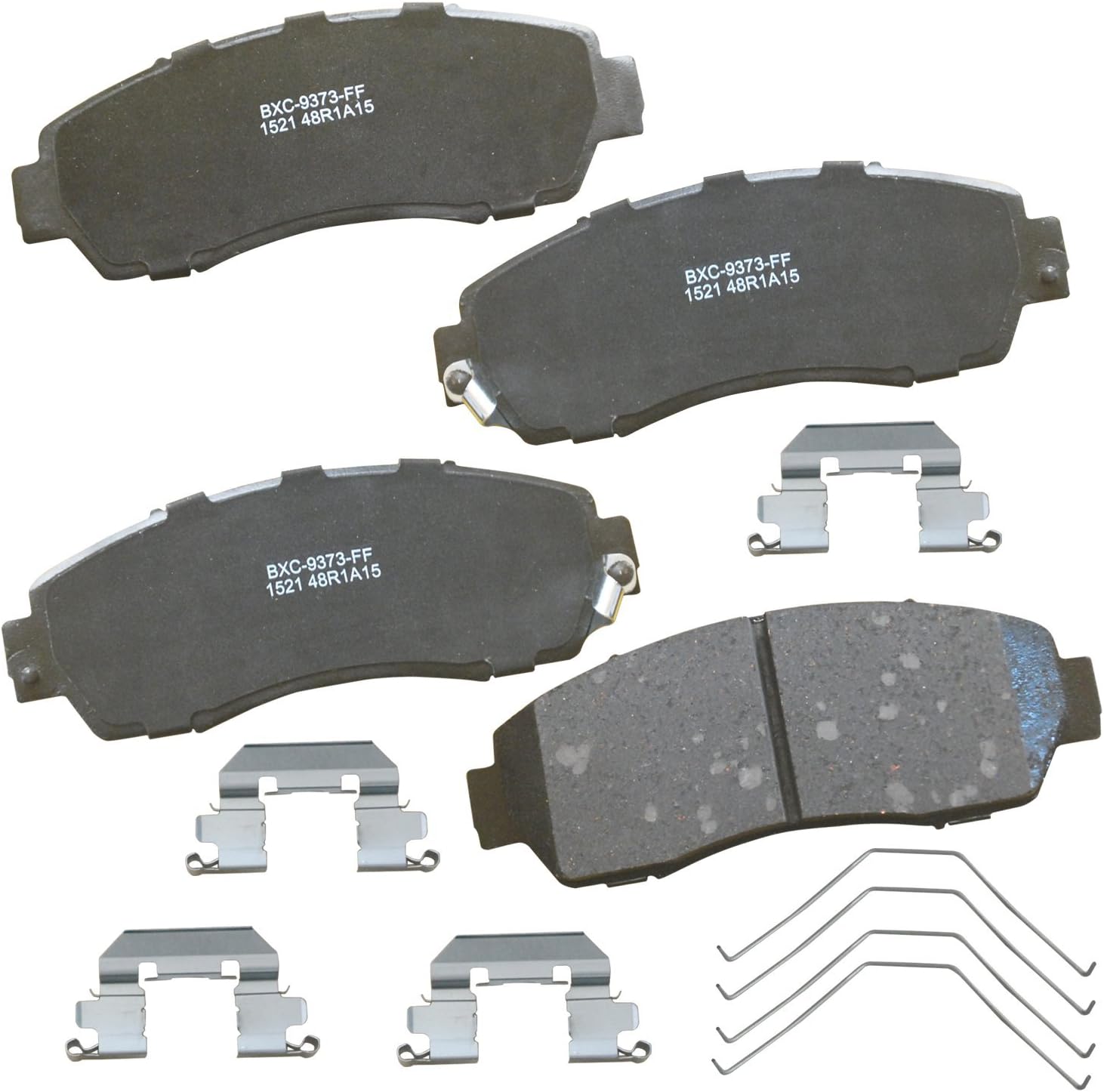
| Material | Ceramic |
|---|---|
| Auto Part Position | Rear |
| Specification Met | OEM |
| Automotive Fit Type | Vehicle Specific Fit |
These Bendix Premium ceramic rear brake pads are a vehicle-specific replacement designed to match factory fit and function for compatible cars including 2007–2011 Honda CR-V models. They are intended for routine road use and daily commuting, offering smooth, quiet braking thanks to the ceramic formulation and included shims and clips. Bendix emphasizes durable materials and corrosion resistance, so the pads should hold up well under normal driving and resist premature wear. Installation is straightforward for a DIY job and the pads fit like the originals, which reduces installation fuss and the need for extra modification. On the downside these are aimed at street use rather than heavy towing or track duty, so drivers who demand extreme fade resistance under repeated high‑temperature stops may prefer semi‑metallic or performance compounds. Also the listing notes grease is not included so you should plan to supply brake grease for the hardware. For a reliability-first replacement on a CR-V these pads provide factory-quality feel, quiet operation, and predictable stopping for everyday driving.
Best for: Buyers who prioritize a reliable, quiet factory-quality replacement for everyday driving on a 2007–2011 Honda CR-V and prefer parts that install with minimal fuss.
Less Ideal for: Drivers who regularly tow heavy loads, carry frequent heavy passengers, or push brakes hard on track days should choose a performance or semi-metallic pad instead.
- Vehicle-specific fit that matches factory fit and function for a seamless replacement
- Ceramic compound delivers quiet, smooth braking with reduced stopping vibration
- Durable, corrosion-resistant construction for longer service life in daily driving
- Includes shims and clips to simplify installation and reduce noise
- Not optimized for heavy towing or high-temperature track use compared with semi-metallic options
Verdict: A dependable, factory-quality ceramic rear pad that gives quiet, predictable braking for daily-driven 2007–2011 Honda CR-Vs.
6. Detroit Axle Brake Kit with Drilled & Slotted Rotors and Ceramic Pads for 2007–2011 Honda CR-V / 2010–2012 Acura RDX (Front & Rear)

| Fitment | 2007–2011 Honda CR-V; 2010–2012 Acura RDX (FWD) |
|---|---|
| Rotors included | Front and rear drilled & slotted rotors |
| Brake pads | Front and rear ceramic pads with clips |
| Extras included | Brake cleaner spray and DOT3 brake fluid |
| Orientation | Dual |
This Detroit Axle kit supplies everything needed to replace both front and rear rotors and pads on compatible CR-V and RDX FWD models. The kit bundles drilled-and-slotted rotors (zinc plated), matching ceramic pads with clips, basic hardware, a can of brake cleaner and a small bottle of DOT3 fluid so a DIYer can do a full brake job in one purchase. Drilled and slotted rotors help with heat dissipation and moisture evacuation while the ceramic pads aim for quieter operation and predictable feel. Fitment is vehicle-specific and many users report straightforward installation and good stopping power after proper bedding. Practical downsides are that boxes are not labeled by axle and the kit does not include step-by-step paper instructions beyond bedding notes, so some mechanical experience or reference to online guides is helpful. A few customers reported occasional incorrect or damaged accessory bags but replacements were sent. For someone who prefers a one-stop factory-quality replacement with added cooling features, this kit covers the basics and extras you would use during installation.
Best for: Buyers who want a single purchase that replaces all rotors and pads with components sized for their CR-V or RDX and who value clear social proof of consistent fit and performance when doing the job themselves.
Less Ideal for: Drivers who expect plug-and-play hand-holding with full printed instructions or users who prefer premium performance pads for aggressive driving should consider pro installation or an upgrade kit.
- Complete kit includes front and rear drilled/slotted rotors, ceramic pads, hardware, brake cleaner and DOT3 fluid
- Drilled and slotted rotor design and ventilation promote faster cooling and reduced fade
- Zinc plating on rotors helps resist corrosion and reduces visible wheel dust
- Vehicle-specific fitment for 2007–2011 Honda CR-V and 2010–2012 Acura RDX FWD simplifies installation
- Boxes and rotor packaging are not labeled by axle which can add a small step to identify front vs rear
- Limited printed installation instructions included so novice installers will likely need online guides or experience
- Some buyers reported occasional mismatched or damaged accessory bags that required replacement requests
Verdict: A convenient, all-in-one factory-quality replacement kit that delivers improved cooling and dependable stopping for CR-V/RDX owners doing a complete DIY brake refresh.
7. BOSCH QuietCast Premium Ceramic Rear Brake Pad Set (BC1086)

| Material | Ceramic |
|---|---|
| Auto Part Position | Rear |
| Specification Met | OEM |
| Manufacturer | Bosch Automotive |
Bosch QuietCast BC1086 is a rear ceramic brake pad set designed as a direct-fit replacement for compatible Honda CR-V and select Acura/Honda rear applications. It uses Bosch Molded Shim Technology with pre-attached multilayer rubber-core shims to reduce noise and vibration, and a powder-coated backing plate to resist corrosion. In real-world use the pads deliver predictable, responsive stopping with low dust and noticeably quieter operation compared with many semi-metallic alternatives. The kit ships ready to install with pads for one axle, basic hardware where applicable, and synthetic lubricant to ease slider movement. Installation is straightforward for anyone comfortable with a simple DIY brake job and the fit matches factory geometry so rotors and calipers seat correctly. A few users report missing specialty shims in rare kits, so check contents before disassembly; also ceramic pads can be slightly less effective under extreme heavy towing or track use compared with heavy-duty performance compounds. For everyday street driving and routine maintenance the QuietCast BC1086 balances quiet, longevity, and OEM-style feel.
Best for: Buyers who prioritize a quiet, low-dust factory-quality replacement and want a reliable, easy-to-install rear pad set for routine street driving and maintenance.
Less Ideal for: Drivers who regularly tow heavy loads, drive aggressively, or need track-grade stopping power should consider heavy-duty or performance friction compounds instead.
- Ceramic formulation gives quiet braking and low dust.
- Pre-attached multilayer rubber-core shims reduce noise and improve corrosion resistance.
- Powder-coated backing plates resist rust and extend pad life.
- Includes hardware where available and lubricant to simplify installation.
- Factory-style slots and chamfers provide reliable fit and function.
- Some kits have been reported missing a vehicle-specific shim required by certain caliper brackets.
Verdict: Choose the Bosch QuietCast BC1086 when you want a factory-style, quiet, low-dust rear brake pad set for everyday Honda CR-V use.
Choosing the Right 2007-2011 Honda CR-V Brake Pads: Key Factors to Consider
Pad Material and Compound
Pad material determines braking behavior, noise, and rotor wear. Ceramic compounds tend to run quieter and produce less dust, which helps maintain wheel appearance and reduces cleanup during routine maintenance. Semi-metallic pads usually offer stronger initial bite and better heat dissipation, but they can generate more noise and accelerate rotor wear if used extensively in urban stop-and-go driving.
For the 2007-2011 CR-V, consider how you drive. If you commute in traffic and prioritize low noise and clean wheels, a ceramic-oriented compound will be more comfortable. If you frequently encounter steep grades or need a firmer pedal for heavier loads, a more aggressive compound with higher thermal capacity may be the better choice. Balance expected service life against how the material affects rotors and noise on this chassis.
Stopping Power and Pedal Feel
Stopping power is how effectively a pad converts pedal input to deceleration, while pedal feel describes how progressive and predictable the braking response is. Some compounds deliver a sharp initial bite that feels confident but can be grabby at low speeds. Other pads offer smoother modulation that helps in everyday driving and parking maneuvers.
On a CR-V, consistent pedal feel is important because the vehicle is often driven with light passenger loads and mixed city/highway use. Prioritize pads that provide predictable bite across a variety of temperatures so you avoid sudden changes in feel as the pads warm up or cool down.
Noise, Vibration, and Harshness (NVH)
Noise and vibration are common buyer concerns because excessive NVH affects perceived quality and long-term comfort. Pads with proper shims, chamfers, and a damping layer reduce squeal and vibration transmission into the pedal and steering column. Some materials are inherently louder, especially metallic blends, while ceramics and well-engineered semi-metallics can minimize squeal.
For the 2007-2011 CR-V, choose pads with attention to NVH if you value quiet daily driving. Also factor in the rotor condition: worn or glazed rotors can amplify noise regardless of pad quality, so pairing pads with rotor inspection or resurfacing can be necessary to reach expected NVH performance.
Wear Life and Dust
Wear life affects maintenance frequency and total ownership cost. Different compounds wear at different rates and produce varying amounts of brake dust. Ceramic-oriented pads tend to produce less visible dust and often show a slower visual degradation, keeping CR-V alloy wheels cleaner between services. Semi-metallic pads can last longer under heavy braking but typically leave darker, more visible dust.
Assess your typical annual mileage and brake usage. If you drive many miles each year, prioritize longer-lasting compounds and plan regular inspections. Remember that measured pad thickness and the accepted wear limit for the CR-V should guide replacement timing to avoid rotor damage.
Fitment and Installation Considerations
Correct fitment is critical for safe operation and ease of service. Pads must match the 2007-2011 CR-V caliper geometry, backing-plate dimensions, and any required hardware such as shims or anti-rattle clips. Poor fit can lead to uneven wear, noise, or reduced braking efficiency.
When evaluating options, check whether pads include necessary shims or require additional hardware. Consider how easy they are to install during a routine brake job, and whether the design makes future maintenance, such as pad removal and caliper retraction, straightforward on the CR-V.
Rotor Compatibility and Heat Management
Pads interact with rotors, so you should consider rotor condition and the pad's ability to manage heat. Some compounds are better at dissipating heat and resisting fade under repeated braking. If your driving involves lots of downhill runs or towing light loads, choose pads with higher thermal thresholds to avoid a drop in braking effectiveness.
Also consider whether rotors will be resurfaced or replaced when installing new pads. Matching pad aggressiveness to rotor condition reduces the risk of premature rotor scoring and maintains consistent braking performance on the CR-V.
Understanding the 2007-2011 CR-V Brake System
The 2007-2011 Honda CR-V uses a conventional front disc and rear disc setup on most configurations, with caliper designs that are straightforward to service. Knowing the basic layout and common maintenance points makes it easier to choose pads that fit correctly and perform as expected.
Familiarize yourself with inspection points such as pad thickness, rotor surface condition, caliper slider mobility, and hardware wear. Addressing these items during a pad replacement helps avoid common problems like uneven wear or persistent noise.
- Check pad thickness at regular intervals to catch wear before the rotor is affected.
- Inspect rotor surface for scoring or glazing and resurface or replace as needed.
- Ensure caliper guide pins move freely and are properly lubricated to prevent uneven pad wear.
Front Vs Rear Brake Pad Choices
Front and rear pads on the CR-V often experience different loads. Front pads typically wear faster because they handle a larger share of braking force during deceleration. This means front pad selection is particularly important for overall stopping performance and rotor preservation.
When replacing pads, consider replacing both front pads together and evaluating the rears at the same time. Matching compound characteristics front-to-rear reduces the chance of uneven braking feel or stability changes during hard stops.
- Prioritize front pad compound for bite and heat tolerance.
- Choose rear pads to complement the front for balanced modulation and stability.
When to Inspect and Replace Brake Pads
Routine inspection keeps the CR-V safe and saves on more expensive repairs. Look for visible wear indicators, changes in braking performance, or increased stopping distance. Many owners find visual checks every 6,000 to 10,000 miles helpful, with replacement intervals depending on driving style and pad compound.
Be alert for specific symptoms such as grinding, persistent squeal, or a soft pedal. These can indicate worn pads, glazing, or issues with the caliper or rotor that should be addressed immediately.
- Inspect pads visually during tire rotations and check thickness against the manufacturer spec.
- Replace pads before they reach the minimum thickness to avoid rotor damage.
Rotor Maintenance and Matching Pads to Rotors
Rotors and pads are a paired system. Installing new pads onto worn or scored rotors can limit stopping performance and increase noise. Light resurfacing can restore a smooth mating surface and extend the life of new pads, while severely damaged rotors should be replaced.
Consider pad bedding procedures recommended for the chosen compound to ensure even transfer layers form on the rotor. Proper bedding reduces initial noise and helps achieve consistent bite on the CR-V.
- Resurface or replace rotors if deep grooves or uneven thickness are present.
- Follow recommended bedding steps for the pad compound to stabilize performance.
Common Brake Pad Symptoms and Troubleshooting
Certain symptoms point to specific issues. Grinding usually means the pad material is worn to the backing plate and requires immediate replacement. Squeal can be caused by contamination, glazing, or missing shims. Uneven wear often indicates caliper slide problems or improperly installed hardware.
A methodical inspection addressing pads, rotors, hardware, and caliper operation will resolve most issues. Keep notes on when symptoms began and any driving conditions that coincide with the problem to help diagnose intermittent noise or performance changes.
- Grinding calls for immediate inspection and likely pad replacement.
- Squeal may be mitigated by using pads with quality shims and checking rotor finish.
Aftermarket Options and Fitment Guidance
Aftermarket brake pads provide a range of compounds and construction choices. When selecting aftermarket options for the 2007-2011 CR-V, verify physical dimensions, mounting features, and whether shims or updated hardware are included. Proper fitment prevents functional issues and simplifies installation.
When in doubt, compare backing plate shapes and clip locations to the pads you are replacing and check technical specifications provided by the manufacturer or supplier to confirm compatibility with the CR-V caliper geometry.
- Confirm backing plate shape and clip positions before purchase.
- Look for complete hardware kits when the existing clips or shims are worn.
Still looking for the perfect fit?
Select your Honda CR-V configuration to see the most relevant Brake Pads recommendations
How We Chose the Best 2007-2011 Honda CR-V Brake Pads
We focused on specifications and real-world suitability for the 2007-2011 Honda CR-V chassis to build a practical shortlist. Key evaluation criteria included stopping performance under typical passenger-vehicle loads, pad compound and material characteristics, longevity estimates and wear patterns, and noise and vibration behavior. We also checked physical specifications that affect fitment and serviceability such as backing-plate quality, shim presence, and compatibility with the CR-V's caliper design. Heat tolerance and fade resistance were considered for drivers who tow light loads or encounter steep grades. Finally, we assessed documented ease of installation and whether standard hardware or shims are required.We excluded options that lack verified fitment for the 2007-2011 CR-V or that require caliper modification. Also excluded were pads intended only for race or off-road use where daily drivability and noise become impractical. The result is a list emphasizing safety, predictable wear, and a straightforward installation experience for typical CR-V owners.
Our full evaluation process is outlined in our review methodology.
FAQ
How often should I check brake pad thickness on my 2007-2011 CR-V?
Check pad thickness visually every 6,000 to 10,000 miles or during routine tire rotations. Replacement intervals vary with driving style and compound, but inspecting at those intervals helps prevent rotor damage.
What are common signs that CR-V brake pads need replacing?
Common signs include increased stopping distance, grinding noises, persistent squeal, or a change in pedal feel. Grinding typically means the pads are worn through and require immediate replacement.
Can I mix different pad compounds front to rear on the CR-V?
You can match compounds front to rear, but mixing very different materials may change brake modulation. It is generally better to choose front and rear pads that have compatible characteristics for predictable braking behavior.
Will new pads reduce brake dust on my CR-V wheels?
Pads with ceramic-rich formulations usually produce less visible dust than semi-metallic pads. However, rotor condition and driving habits also influence the amount and visibility of dust.
Is rotor resurfacing necessary when replacing pads on the CR-V?
Resurfacing is recommended if rotors have glazing, scoring, or uneven thickness. Light resurfacing restores a good mating surface for new pads, but severely damaged rotors should be replaced.
Why do my new pads squeal on the CR-V after installation?
Squeal can result from improper bedding, contaminated rotor surfaces, missing shims, or glazed pads. Ensuring clean rotors, proper shims, and following bedding steps usually reduces squeal.
Final Verdict
Choosing the right brake pads for a 2007-2011 Honda CR-V comes down to balancing noise, longevity, and stopping performance for how you drive. Prioritize pad compounds that match your typical driving conditions, ensure correct fitment and hardware, and address rotor condition during installation to get predictable braking and longer service life.Focus on the tradeoffs between quieter ceramic-oriented compounds and more aggressive semi-metallic options when you need extra heat tolerance. With attention to the factors above, you can pick pads that deliver confident, consistent stopping on your CR-V without surprises.
Explore More:
- Check out all Honda CR-V parts & accessories
- Explore Brake Pads Maintenance & Repair Guides
- Explore Brake System
- Browse all Auto Parts
