

Note: This article contains affiliate links. If you click on these links and make a purchase, I may earn a small commission at no extra cost to you. This helps support my research and content. Read my full affiliate disclosure here.
If your Honda CR-V is showing longer stopping distances, vibration under braking, or a pulsing pedal, replacing the front brake rotors can make a noticeable difference in safety and driving feel. This guide focuses on the top front brake rotors suited to the CR-V, covering the key choices that affect fit, durability, and heat control so you can pick the right rotor for how you drive.The shortlist that follows includes seven well-considered options for front rotors. We evaluated each one against practical criteria—fitment accuracy, rotor material and coatings, heat-dissipation characteristics, and serviceability—so you can move from diagnosis to confident replacement. Read on for details to match a rotor to your driving conditions and maintenance preferences.
Looking for other parts? See all Honda CR-V parts & accessories.
Top Picks at a Glance


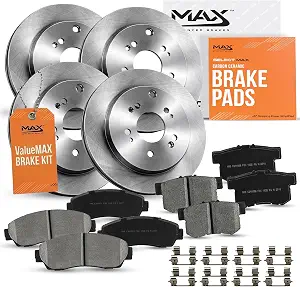
1. Detroit Axle 10‑Piece Brake Kit for 2017–2025 Honda CR‑V (Front and Rear Rotors with Ceramic Pads)

| Fitment rotor sizes | 12.28" front / 12.20" rear |
|---|---|
| Includes | Front and rear rotors, front and rear ceramic pads with hardware, brake cleaner, brake fluid |
| Rotor type | Vented, zinc plated |
| Pad material | Ceramic |
This Detroit Axle kit supplies both front and rear replacement rotors plus ceramic pads and basic hardware so you can refresh the entire braking system in one job. The rotors are vented for improved cooling and come zinc plated to resist corrosion and reduce visible wheel dust, while the ceramic pads aim for quieter operation and lower dust compared with semi‑metallic pads. The kit also includes a small brake cleaner and a bottle of fluid to make a single‑vehicle service more convenient. Fitment is targeted at CR‑V models using 12.28" front and 12.20" rear rotors, and locating holes are machined for direct install without modification. Real‑world benefits are straightforward: cohesive component matching, cleaner rotors out of the box, and parts that reduce noise and keep wheels cleaner. Limitations to note are that pad longevity may vary by driving style and some reviewers reported issues with rear hardware fitment and occasional packaging damage to grease packets; expect to have basic old‑clip reuse or minor adjustments on hand for installation.
Best for: Buyers who want a factory‑style, full replacement kit that refreshes both rotors and pads in a single purchase and prioritize quiet, low‑dust braking for daily driving.
Less Ideal for: Drivers seeking high‑performance or track‑oriented brake components or those who prioritize maximum pad longevity under aggressive use should consider dedicated performance pads or rotors instead.
- Complete kit covers both front and rear rotors and pads so you can do a full brake service at once.
- Vented rotor design improves heat dissipation for more consistent braking under repeated use.
- Zinc plating reduces corrosion and visible wheel dust compared with bare rotors.
- Ceramic pads are formulated for lower noise and dust than many semi‑metallic alternatives.
- Some customers report short pad life in heavy use and variability in pad durability.
- Rear hardware clips may not fit every caliper exactly and could require reuse of original clips or minor adjustments.
Verdict: A convenient, factory‑style full brake kit that refreshes front and rear braking with low‑noise ceramic pads and corrosion‑resistant vented rotors ideal for everyday CR‑V use.
2. Motorevo Front Brake Kit for Honda CR-V (2007–2016) — Geomet Coated Drilled & Slotted Rotors with Ceramic Pads

| Compatible Vehicle Type | 2007-2011 CR-V All Models; 2012-2016 AWD Models ONLY |
|---|---|
| Rotor Diameter | 296 mm (11.7 in) |
| Included Components | 2 rotors and 4 ceramic pads with hardware |
| Orientation | Front |
This Motorevo front brake kit replaces both front rotors and pads for specified Honda CR‑V model years and is designed for drivers who want better stopping performance and durability than basic replacements. The kit pairs drilled, slotted, and vented high‑carbon rotors with low‑dust ceramic pads; the rotor geometry and vents help shed heat and gases while the slots scrape pad glaze to keep friction consistent during repeated braking. Geomet anti‑corrosion coating protects non‑friction surfaces from rust, and the pads are chamfered for quieter engagement and reduced dust. Installation is intended to be straightforward and the rotors are machined for direct fitment to the listed CR‑V front hubs. Limitations: this specific option fits 2007–2011 CR‑V all models and 2012–2016 AWD models only and will not fit FWD 2012–2016 CR‑Vs, so buyers must confirm drivetrain and year before purchasing. Also, drilled rotors can be less ideal than plain slotted designs for extreme track use where crack resistance is the top priority.
Best for: Drivers who prioritize stronger, fade‑resistant braking and cleaner, quieter pads for daily driving and spirited road use on compatible CR‑V models.
Less Ideal for: Those who need parts for 2012–2016 FWD CR‑Vs or buyers planning aggressive track days where evenly slotted or solid rotors rated for racing are preferable.
- Drilled, slotted, and vented rotor design improves heat dissipation and helps prevent brake fade under repeated stops.
- Geomet anti‑corrosion coating protects non-friction surfaces and extends rotor life in wet or salty conditions.
- High‑carbon alloy construction and precision machining aim for a close fit and longer service life compared with basic rotors.
- Ceramic brake pads reduce dust and noise while providing smooth initial bite.
- Kit includes rotors, pads, and necessary hardware for a complete front brake replacement.
- Fitment is limited to 2007–2011 CR‑V all models and 2012–2016 AWD CR‑Vs only and will not fit 2012–2016 FWD models.
- Drilled rotor surfaces may be more susceptible to cracking than plain or fully slotted rotors under very aggressive track use.
Verdict: Choose this kit if you want a direct-fit front rotor and pad upgrade for compatible CR‑Vs that improves heat control, reduces dust, and delivers quieter, more consistent braking.
3. Detroit Axle Front Disc Brake Rotors (11.65")

| Measurement | 11.65 inch (296 mm) |
|---|---|
| Kit includes | 2x Front Disc Brake Rotors |
| Exterior finish | Zinc |
| Material type | Ceramic |
These Detroit Axle front rotors are a direct-fit replacement designed to restore braking performance on compatible Honda CR-V, Crosstour and Acura RDX models that use the 11.65 inch (296 mm) rotor. Sold as a two-piece kit, the rotors are vented for improved heat dissipation and feature zinc plating to limit corrosion and visible wheel dust. Machined locating holes and factory-style machining help them seat without modification and work with standard ceramic brake pads to reduce noise. In real-world use they suit routine street driving and light towing where consistent stopping and longevity matter more than sporty bite. Expect a straightforward installation for anyone with basic mechanical skills or a shop; the ventilation and plating help durability but these are conventional replacement rotors rather than performance-slotted or drilled specialty rotors. If you need increased fade resistance for track use or a cosmetic drilled look this is not the option, but for practical, cost-conscious maintenance this kit covers the common needs of daily-driven CR-Vs and similar vehicles.
Best for: Buyers looking to replace worn front rotors on their daily-driven Honda CR-V or similar vehicles who prioritize correct fitment, quiet operation, and corrosion resistance at a reasonable cost.
Less Ideal for: Drivers building track-focused or high-performance brake systems who need drilled, slotted, or specialty rotors for maximum fade resistance and aggressive pad bite.
- Direct-fit, machined locating holes for bolt-on installation
- Vented design improves heat dissipation during repeated stops
- Zinc plating resists corrosion and reduces visible wheel dust
- Includes two front rotors so both sides are replaced for consistent braking
- Not a drilled or slotted performance rotor, so less aggressive cooling for track use
Verdict: A practical, factory-style pair of zinc-plated vented front rotors that restore quiet, reliable braking for daily-driven Honda CR-Vs.
4. Auto Shack Front Brake Rotors for Honda & Acura, 11.65 in vented pair

| Rotor Construction | Vented |
|---|---|
| Outer Diameter | 11.65 in (296 mm) |
| Wheel Bolt Holes | 5 |
| Material Type | Alloy Steel |
These Auto Shack front rotors are a budget-friendly replacement option for Honda and Acura front braking systems. Sold as a pair, the rotors are vented alloy steel units with a 11.65 inch diameter and five lug holes intended to restore everyday stopping performance on compatible CR-V, RDX and Crosstour models. In normal use they provide consistent, balanced braking for daily driving and commuting rather than performance or track duty. The rotors arrive ready-to-install but buyers should verify rotor size, stud/lug count and vehicle fitment before ordering to avoid returns. Practical benefits include straightforward compatibility with many common front brake setups and a silver finish that resists surface corrosion during storage. Limitations are predictable for an economy replacement: they are aimed at standard service life and do not offer upgraded pads, cross‑drilling, or slotted surfaces for enhanced cooling or bite. Expect acceptable braking feel for street use and plan routine inspection and bedding with new pads after installation.
Best for: A practical buyer seeking an affordable, factory-style front rotor replacement for daily-driven Honda CR-Vs and similar models who prioritizes reliable stopping over performance upgrades.
Less Ideal for: Drivers who want high-performance braking upgrades, track-focused components, or specialty rotors with slotted or drilled surfaces should look at performance-oriented options instead.
- Sold as a matched pair for front axle replacement
- Vented rotor design for improved heat dissipation versus solid rotors
- Vehicle-specific fit simplifies selection for listed Honda and Acura applications
- Alloy steel construction intended for standard replacement durability
- No performance features such as slots or cross-drilling for aggressive cooling or reduced fade
Verdict: A cost-conscious, vehicle-specific pair of vented front rotors that restores dependable everyday braking on compatible Honda CR-V models.
5. PowerStop Front Brake Kit for Honda CR-V (Z17 Ceramic Pads & OE Replacement Rotors)

| Included components | 2 OE Brake Rotors, Z17 Ceramic Brake Pads, Installation Hardware, Brake Lube |
|---|---|
| Orientation | Front |
| Compatible with Vehicle Type | Car, Truck |
| Model Year fit | 2017-19 and 2020-25 Honda CR-V GAS |
This PowerStop front brake kit replaces the CR-V's front rotors and pads in one package aimed at reliable, quiet everyday braking. It includes Z17 ceramic pads with chamfers, slots, and rubberized shims for low dust and reduced noise, plus mill-balanced OE replacement rotors and stainless-steel installation hardware for a straightforward bolt-on swap. For routine commuting and family driving the kit delivers predictable stopping power, quick bedding-in thanks to the cross-hatched rotor finish, and cleaner wheels from the ceramic compound. The stainless hardware and precision-milled rotors help avoid installation hassles and vibration-related brake judder. Limitations to note are that this is a stock-replacement style kit rather than a performance or heavy-duty towing upgrade, and the rotors are non-coated so they will show surface corrosion over time in wet climates if not regularly used or protected.
Best for: Buyers who prioritize dependable, low-maintenance braking for daily driving and want a complete front replacement that installs cleanly and restores factory-style performance.
Less Ideal for: Not the best choice for drivers seeking track-capable or heavy-duty towing brake upgrades or for those who need corrosion-resistant coated rotors for harsh environments.
- Complete bolt-on kit with both rotors and pads plus stainless-steel installation hardware for easier DIY replacement
- Z17 ceramic pads formulated for low dust and quiet operation to keep wheels cleaner
- Mill-balanced, precision-machined rotors and cross-hatched finish for smooth bedding and reduced vibration
- Rotors are non-coated, so surface rust can appear in wet or salty conditions if left idle
Verdict: A dependable, all-in-one front brake replacement that restores quiet, low-dust, factory-style performance for Honda CR-V daily drivers.
6. Detroit Axle Front & Rear Brake Kit for 2012–2016 Honda CR-V (AWD) — Drilled & Slotted Rotors with Ceramic Pads

| Fitment | 2012-2016 Honda CR-V (AWD ONLY) |
|---|---|
| Kit contents | Front & rear drilled/slotted rotors, front & rear ceramic pads, brake cleaner, brake fluid |
| Rotor finish | Zinc plated |
| Orientation | Dual |
This Detroit Axle kit supplies everything needed to refresh braking on an AWD 2012–2016 Honda CR-V: two drilled and slotted front rotors, two drilled and slotted rear rotors, front and rear ceramic pads, and brake cleaner and fluid. The rotors are zinc plated and vented to help with corrosion resistance and faster cooling during repeated stops, while the ceramic pads aim to reduce dust and noise compared with semi-metallic compounds. Fitment is vehicle-specific and the locating holes are machined to match factory mounting for straightforward installation without modification. Practical benefits include improved heat dissipation from the drilled and slotted pattern and a near–factory fit that simplifies a DIY replacement. Limitations to note are that drilled rotors can be more prone to cracking under extreme track use, and ceramic pads trade some ultimate cold bite for lower dust and quieter operation. The kit carries a long warranty and is a good midrange aftermarket option for drivers who want a full parts refresh and cleaner everyday performance rather than race-level braking.
Best for: Buyers who want a full, vehicle-specific brake refresh with easily installed parts and quieter, lower-dust ceramic pads backed by broad customer feedback.
Less Ideal for: Drivers seeking race-oriented brake components or maximum track performance should choose high-temperature track rotors and competition pads instead.
- Complete front-and-rear kit includes rotors, ceramic pads, brake cleaner, and fluid for a single purchase replacement
- Drilled and slotted, vented rotors improve heat dissipation and help clear debris and moisture
- Zinc plating on rotors reduces corrosion and visible wheel dust
- Vehicle-specific machining and locating holes for direct fit without modifications
- Drilled rotors are less suitable for aggressive track use where solid rotors withstand thermal cycling better
- Ceramic pads may provide less initial cold stopping power compared with some semi-metallic options
Verdict: A complete, vehicle-matched kit that gives AWD CR-V owners an easy way to restore everyday braking performance with lower dust and improved cooling.
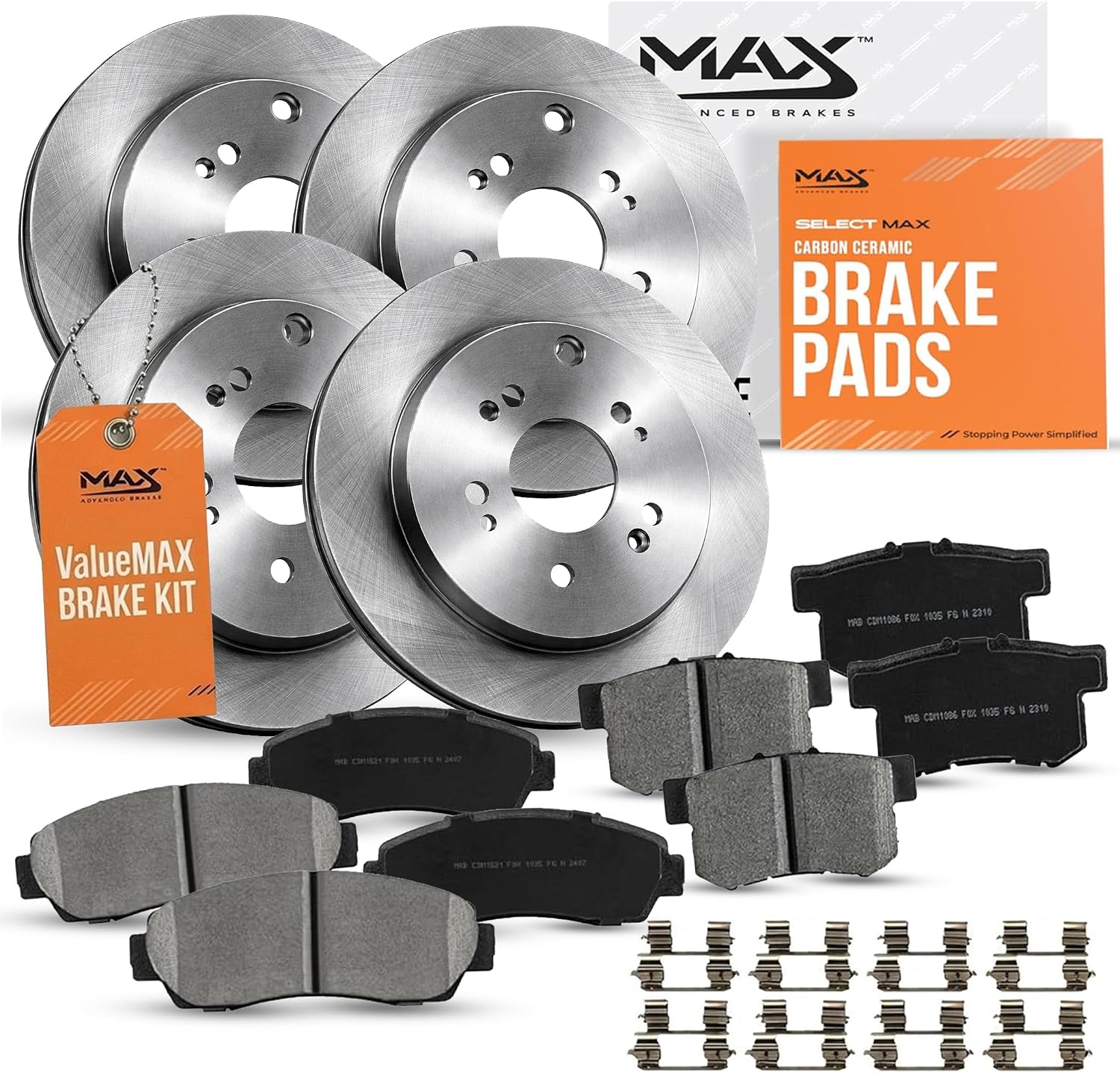
7. Max Advanced Brakes Front and Rear Brake Kit with Carbon Ceramic Pads and Machined Rotors
| Compatible vehicles | 2007-2011 Honda CR-V; 2012-2016 Honda CR-V AWD; 2010-2012 Acura RDX FWD |
|---|---|
| Included components | Front rotors, rear rotors, brake pads, hardware |
| Pad type | Carbon ceramic-style |
| Rotor material | Cast iron, precision machined |
| Automotive fit type | Vehicle Specific Fit |
This Max Advanced Brakes kit supplies both front and rear rotors plus pads and the necessary hardware for a direct vehicle-specific replacement on compatible Honda CR-V applications. It pairs precision-machined cast-iron rotors with carbon ceramic-style pads intended to reduce dust and lower noise, so installations deliver smoother, quieter stops in daily driving and city traffic. The rotors are finished non-directionally to speed bedding and help cut vibration, and the kit includes both halves of the braking system so you can replace front and rear at the same time for even braking performance. Buyers report straightforward bolt-on fitment and acceptable longevity for the price, though packaging errors have occasionally delayed replacement parts. This kit is best used for routine driving and scheduled maintenance rather than high-performance or track use; if you need heavy-duty or performance-focused braking, consider specialty rotors or pads designed for that environment.
Best for: Buyers seeking a straightforward, factory-replacement style brake kit that restores predictable, quiet braking for everyday driving and prioritizes low risk and ease of installation.
Less Ideal for: Not the best choice for drivers who demand track-level performance, heavy towing braking, or specialty high-temperature pads and rotors; consider performance-oriented components for those uses.
- Complete front-and-rear set includes rotors, pads, and hardware for a single coordinated replacement.
- Precision-machined rotors with non-directional finish promote faster bedding and reduced vibration.
- Carbon ceramic-style pads are formulated to produce less brake dust and quieter stopping.
- Vehicle-specific fitment intended to match factory mounting for direct bolt-on installation.
- Widely reviewed with many users reporting solid everyday performance and acceptable durability.
- Occasional packaging or missing-part issues reported that can delay installation.
Verdict: Choose this kit if you want a complete, factory-style front-and-rear brake replacement that prioritizes quiet, low-dust stopping and straightforward bolt-on fitment for everyday driving.
Choosing the Right Honda CR-V Front Brake Rotors: Key Factors to Consider
Compatibility and Exact Fitment
Accurate fitment to the CR-V hub, bolt pattern, and caliper clearance matters first. A rotor that is not the correct diameter, thickness, or hat height can cause brake drag, uneven pad wear, or require machining that adds time and cost.
Confirming the rotor's center bore, mounting-face thickness, and any offset ensures the rotor seats properly and that the caliper pistons and pads maintain the correct relationship to the rotor surface. For front rotors, even small runout or misalignment translates to pedal pulsation or steering-wheel vibration during braking.
Rotor Material and Casting Quality
Cast iron remains the standard for rotor strength and thermal capacity, but casting quality varies. Higher-grade iron with consistent grain and fewer inclusions resists cracking and warping under repeated heat cycles.
The manufacturing process affects porosity and balance. Better casting reduces the chance of hotspots that lead to uneven wear. For owners who drive in hilly areas or tow light loads, prioritize rotors specified for higher thermal loads to avoid premature failure.
Heat Dissipation and Venting Design
Front rotors absorb most of the braking energy, so venting design and mass distribution directly influence how quickly heat is shed. Two-piece or directional vents, internal vanes, and thicker peripheral mass improve heat transfer and lower peak temperatures.
Lower peak temperatures reduce brake fade and the chance of thermal cracking. If you drive in stop-and-go traffic or make repeated downhill descents, choose rotors with proven venting characteristics to maintain consistent braking feel.
Surface Treatment and Corrosion Resistance
Road salt and moisture accelerate rust on rotor faces and hats, which can make future removal difficult and promote uneven pad transfer layers. Coatings on the rotor hat and non-contact surfaces protect against corrosion and reduce long-term service issues.
Some surface treatments also improve initial bedding behavior and reduce squeal by promoting a more even pad transfer layer. Consider the expected climate and wash frequency for your CR-V when weighing coated versus bare finishes.
Thickness, Runout, and Service Limits
New rotor thickness and the minimum service thickness stamped by manufacturers determine how many resurfacings or replacements you can expect. Measuring and comparing initial thickness and minimum acceptable thickness helps plan maintenance.
Excessive lateral runout causes pedal pulsation and uneven pad wear, so look for rotors with tight runout tolerances or that are precision-balanced at the factory. Keeping an eye on thickness and runout during routine service prevents safety issues before they become critical.
Design Features: Slotted, Drilled, or Plain
Slotted and drilled patterns influence pad bite, debris removal, and heat dispersion. Slotted rotors help clear gases and surface deposits for more consistent friction, while drilled holes can improve wet-weather performance and reduce unsprung mass.
However, drilled patterns can be more prone to crack initiation under heavy thermal cycling, and slots may accelerate pad wear. Match the design feature to your driving: daily city commuting and occasional highway use often favor plain or slotted rotors for longevity, while more aggressive driving may justify performance-oriented patterns.
When To Replace Front Rotors On Your CR-V
Brake rotor wear can be gradual. Look for symptoms like a pulsating brake pedal, a steering-wheel shimmy while braking, scored rotor surfaces, or a visible lip at the outer edge of the rotor face. These are clear indicators that the rotor has worn past the point where resurfacing will restore original performance.
- Pedal pulsation during moderate to firm braking
- Visible grooves, scoring, or a raised outer lip
- Check rotor thickness versus the stamped minimum specification
- Cracks around drilled holes or pronounced rust at the pad contact area
Measuring Rotor Thickness And Runout
To measure rotor thickness, use a micrometer at several points around the braking surface and compare the smallest measurement to the manufacturer-defined minimum thickness. For runout, mount a dial indicator to the hub or an adjacent stable surface and rotate the wheel assembly to identify lateral variation in the rotor surface.
Measuring thickness in multiple locations accounts for uneven wear. If the rotor is below the minimum thickness or runout exceeds the vehicle tolerance, replacement is the safer option. Proper measurement helps decide between resurfacing and replacement.
- Micrometer readings at 3 to 6 locations around the surface
- Dial indicator check for lateral runout while rotating the hub
- Compare measurements to factory service limits before deciding
Slotted Versus Drilled Versus Plain Rotors
Each pattern has tradeoffs. Slotted rotors assist in maintaining a clean pad surface and reducing gas buildup, which gives steadier friction during repeated stops. Drilled rotors can help with initial bite and wet-weather water evacuation but may be susceptible to crack initiation if used under extreme thermal stress.
For most CR-V owners who use the vehicle for daily driving, slotted or plain rotors provide a good balance of longevity and performance. Reserve more aggressive drilled or specialty patterns for drivers who regularly push brakes hard on long descents or spirited drives.
- Slotted: better pad cleaning and consistent bite
- Drilled: faster water evacuation, increased initial bite, potential crack risk under heavy use
- Plain: longest wear life and quietest operation in typical driving
Resurfacing Versus Full Replacement
Resurfacing can restore a smooth braking surface when wear is minor and the rotor remains above minimum thickness. It is a practical option if runout and thickness tolerances are acceptable. However, repeated resurfacing reduces thickness and shortens rotor lifespan.
Full replacement is required when thickness is below the service limit, runout cannot be corrected, or when cracks or severe heat damage are present. For front rotors on the CR-V where braking safety is paramount, replacement is the right choice whenever structural integrity is in doubt.
- Resurface only if rotor thickness and runout are within spec
- Replace if cracks, severe heat discoloration, or thickness below minimum are present
- Always check hat area and mounting surfaces for corrosion when considering reuse
Brake Rotor Wear Symptoms And Diagnosis
Wear symptoms include pulsing under braking, noise such as squeal or growl, and reduced pedal responsiveness. Visual inspection may show grooves, rust flaking at the contact area, or a blue tint which indicates high heat exposure.
Combine visual checks with thickness and runout measurements for a reliable diagnosis. Addressing wear promptly prevents uneven pad wear and potential loss of braking performance.
- Pulsating pedal or steering vibration under braking
- Blue discoloration or heat spots on the rotor face
- Uneven pad wear or scoring visible on the rotor surface
Still looking for the perfect fit?
Select your Honda CR-V configuration to see the most relevant Brake Rotors recommendations
How We Chose the Best Honda CR-V Front Brake Rotors
We prioritized criteria that directly affect real-world braking performance and long-term ownership for Honda CR-V owners. Fitment and compatibility with the CR-V hub and caliper geometry were the first filter; rotors that required uncommon hub machining or extensive hardware changes were excluded. Material and construction were evaluated for thermal stability and resistance to warpage, since front rotors handle the majority of braking load on this vehicle.Heat-management properties such as vent design, slotting or drilling patterns, and mass distribution were considered for their impact on fade resistance during heavy braking. Corrosion resistance and surface coatings were factored in for longevity in wet or salted-road environments. Serviceability and availability of replacement parts like bolts and hats were also considered because routine rotor changes should be straightforward for typical DIY or shop work.We excluded options that are designed only for motorsport use, require altered suspension geometry, or lack documented fitment for the CR-V. Final selections balance ride comfort, noise, and wear characteristics to suit daily driving as well as occasional spirited use.
Our full evaluation process is outlined in our review methodology.
FAQ
How often should I inspect front rotors on my Honda CR-V?
Usually inspect the front rotors at every brake pad change or at least once a year. Frequent city driving or towing increases wear, so check more often if you notice noise, vibration, or decreased braking performance.
Can I resurface CR-V front rotors instead of replacing them?
You can resurface rotors if they are above the minimum thickness and runout is within specification. Resurfacing removes material and cannot be repeated indefinitely, so replacement is needed when thickness limits are approached.
What thickness should I expect for a new front rotor?
New rotor thickness varies by rotor design and year, but the important value is the stamped minimum thickness on the rotor. Measure at multiple points and replace if any measurement falls below that minimum or if runout is excessive.
Are slotted or drilled rotors better for daily driving?
For most daily driving on a CR-V, slotted or plain rotors provide the best balance of longevity and quiet operation. Drilled rotors can help in wet conditions or for initial bite but may be more vulnerable under heavy thermal cycling.
What causes a pulsing brake pedal after rotor replacement?
A pulsing pedal can come from excessive lateral runout, improper wheel torque, warped rotors, or uneven pad transfer layers. Ensuring correct installation torque and checking runout after mounting usually identifies the cause.
How do I know when rotor resurfacing is no longer safe?
Resurfacing is unsafe when the rotor will be below the minimum thickness once material is removed, or if there are cracks, severe heat damage, or structural deformation. Measure thickness and inspect the rotor closely before deciding.
Final Verdict
When choosing front brake rotors for a Honda CR-V, prioritize exact fitment, thermal capacity, and corrosion resistance to maintain consistent stopping performance. Balance design choices such as slotted or plain faces against expected driving demands; select rotors with sufficient thickness and venting for the loads you routinely place on the brakes.In short, replace front rotors when measurements or visual inspection indicate compromised integrity, and choose a rotor whose construction and treatment match your driving environment. That approach helps ensure reliable braking, predictable pedal feel, and longer service life.
Explore More:
- Check out all Honda CR-V parts & accessories
- Explore Brake Rotors Maintenance & Repair Guides
- Explore Brake System
- Browse all Auto Parts
